

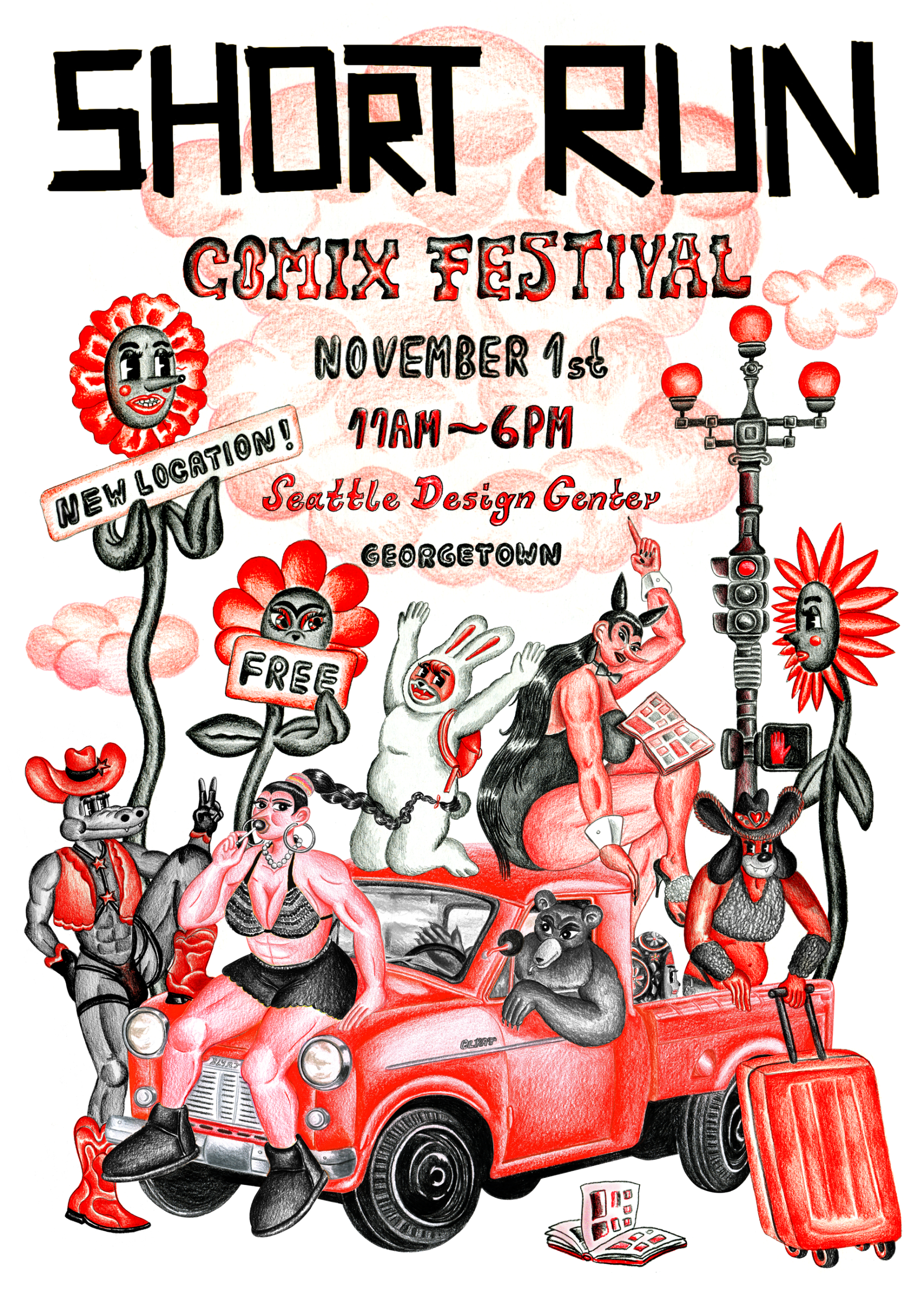
The night before Short Run, I was working at high speeds assembling zines in my parents’ Seattle kitchen on a rainy Halloween. I had arrived a few days prior, but the comics I had shipped prior to my arrival had not. In the grand tradition of celebrating the day prior to an indie comics event, I had resolved at about 4 pm to print out and assemble a new series of zines out of older comics, spending the next 8 hours doing just that with my wonderful husband and friend (all images provided by Ocean Jones and Charley Praither unless otherwise noted). It was a relatively successful undertaking, wherein I only yelled at the printer 6 times, and only stormed out twice. Later that week, my father would commend me for how calm I was.
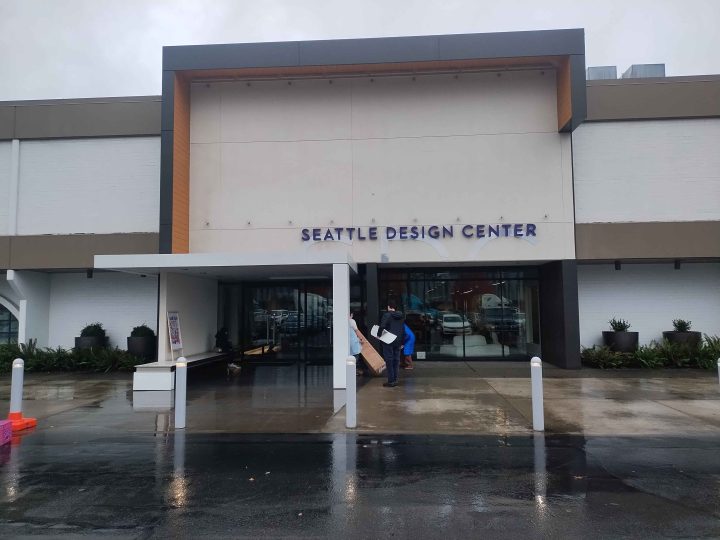
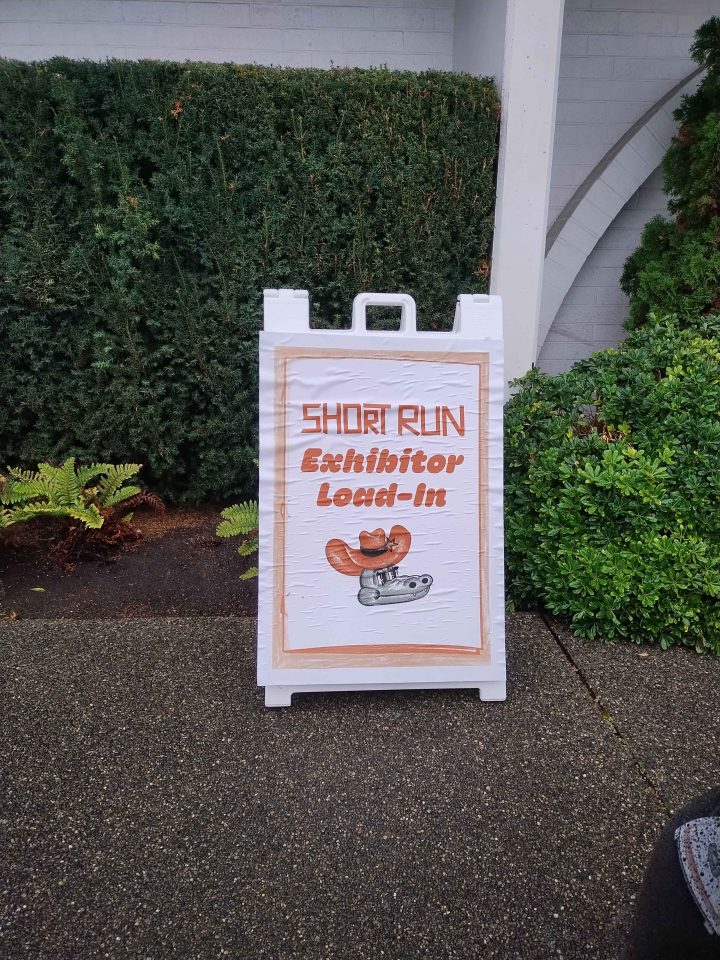
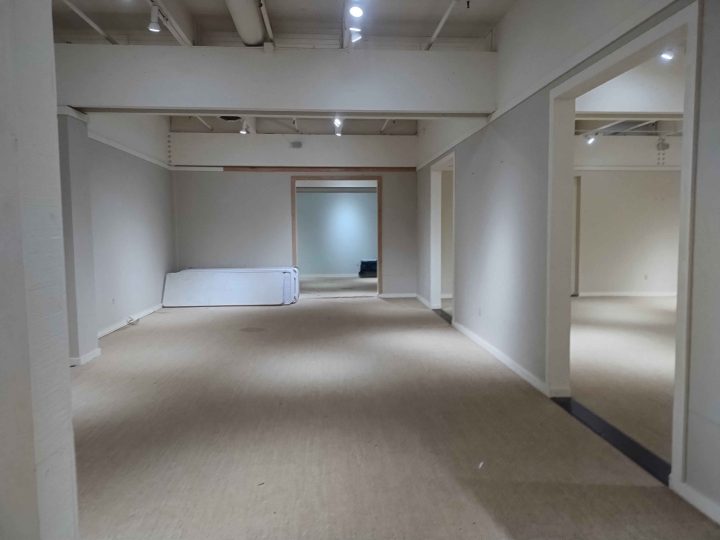
Perhaps unsurprisingly, November 1st was a rainy morning also, with a slightly above average raindrop density for Seattle precipitation, which is usually just (as my father calls it) “spitting”. Loading in was a particularly wet affair, and I appreciated the clarity the Short Run team had provided in their instructions emailed earlier in the week. I (alongside box-carrying loved ones) entered through an unfinished area of the Seattle Design Center. The Short Run staff had exhibitors enter through a series of nondescript rooms.
Exiting, what in the parlance of the 2020s, would be described as “The Backrooms", the showroom floor felt grandiose. This was Short Run’s first year in the Seattle Design Center, upon the moment of entering, it immediately seemed like a good pick. There was almost a sense of relief coming upon a large and beautiful space from such a confined one. I’m never certain what the vibe will be with a show that’s new to me, but on entering the floor it was clear that Short Run gave me the same giddiness gifted by other large shows. My exhaustion from the previous night quickly dissipated. I got to my table, and immediately started shooting the shit with the other cartoonists while frantically setting up my table (along with the help of my wonderful husband and friend).
Prior to this year, Short Run took place at Fisher Pavilion, a location closer to the heart of downtown Seattle. Fisher Pavilion has a larger amount of foot traffic than average due to its proximity to the Space Needle, MOPOP, and the planetarium theater where I went on a date to see a Pink Floyd laser light show when I was 15.
The Seattle Design Center is in Georgetown, an area South of Downtown Seattle I don’t know well, but in my experience is where people go to drink and watch the Dodgers win the world series. Despite the bar scene and shops down there, foot traffic seemed a little lighter than Fisher Pavilion. Getting to this new location generally seemed more challenging, with transit to the space often requiring two or more buses, and despite a few small lots, there wasn't a large amount of immediate parking spaces around. My expectation going in was that there would be a smaller crowd than previous years.
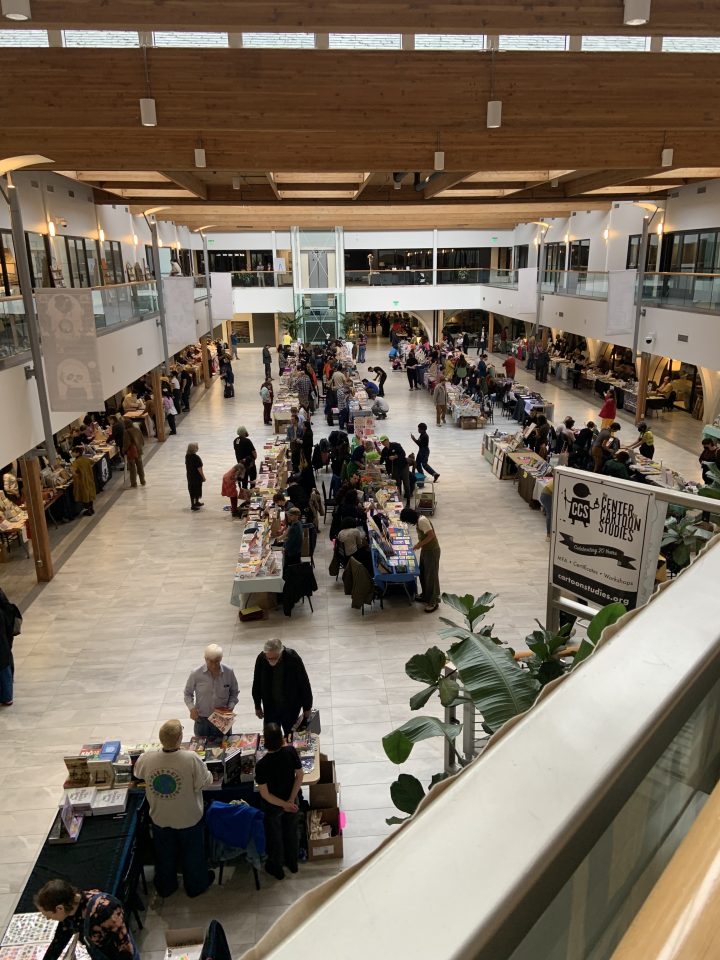
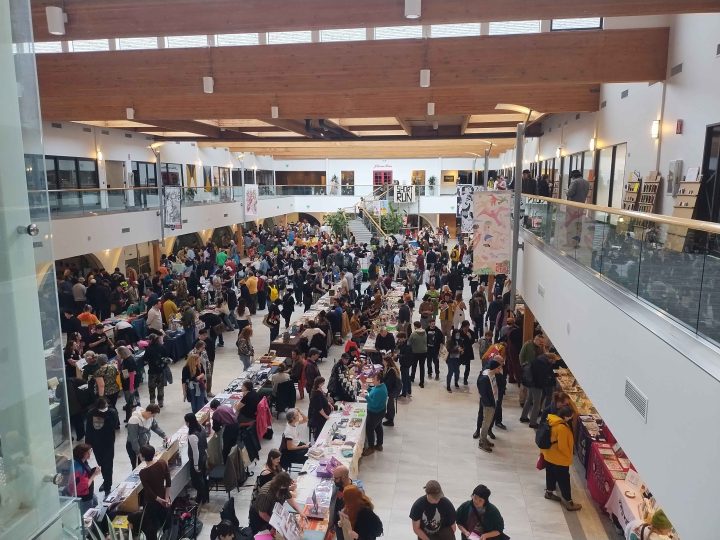
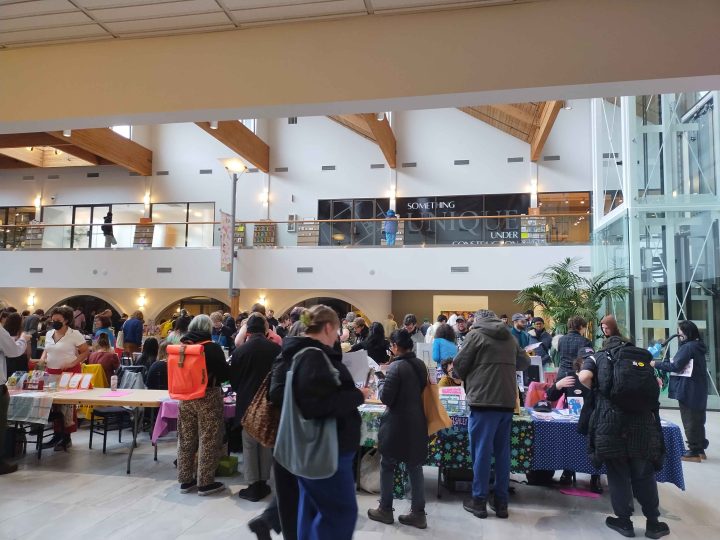
This did not turn out to be the case, at least not to a noticeable extent. Short Run ran from 11am to 6pm, and I was told going in that the show historically would be packed for the majority of the time, with the herd thinning out about 2 hours before closing. This year seemed similar with a large crowd for much of the event, a drop off at about 3pm, and then a slow trickle at the end. I wondered if this was indicative of an excitement for the event, that fans wanted to show up early to experience it all, or a reflection of the caliber of the audience?
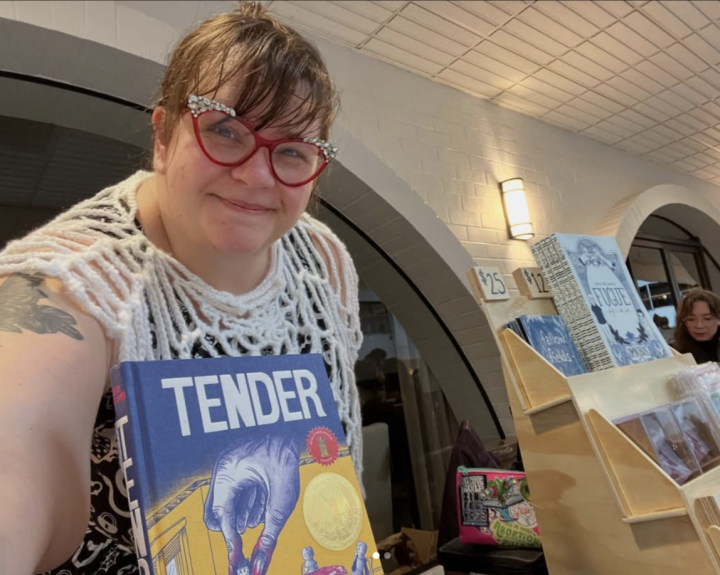
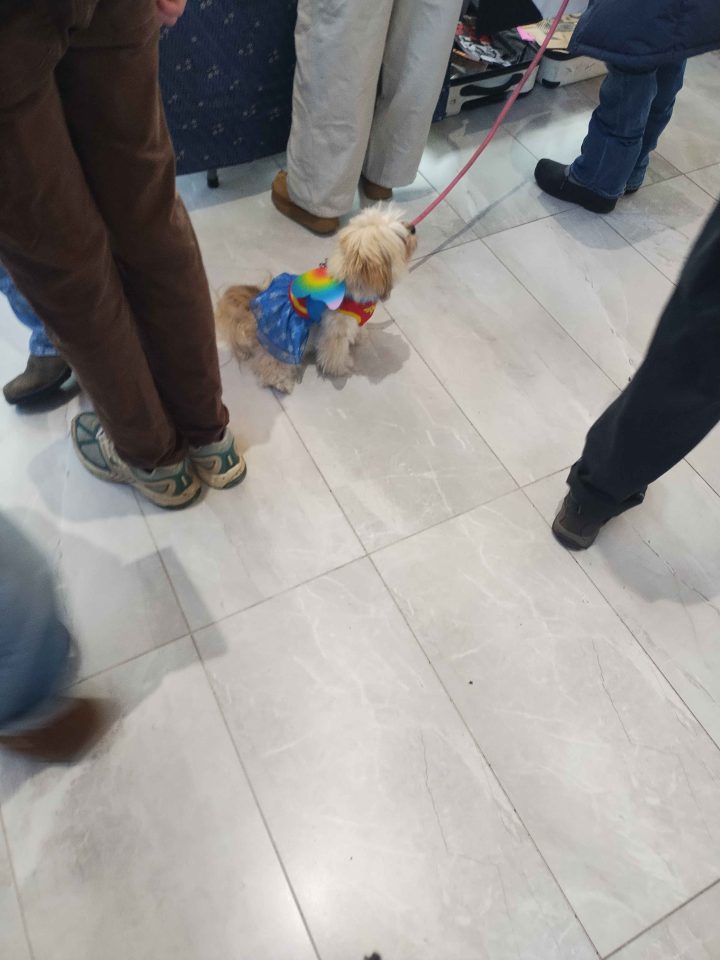
The crowd seemed to match the demographics of Seattle and the Pacific Northwest: a largely white crowd, tending towards primarily people in their late 20s to early 40s, though though the first hour, the crowd trended older, with folks in their 50s-70s. There were a lot of couples (including half a dozen I knew from high school and their spouses), groups of friends, and single men circulating the show, but not very many children or solo women. Hot off the heels of the holiday, there were a few costumes floating around the show, both on humans (Tender author, Beth Hetland wore a spooktacular spiderweb cape) and dogs. A person in a Voodoo doll costume came up to the group where I was tabling and asked if they wanted to place any curses on people. She had notes pinned to her with names of prominent political leaders, domestic terrorist organizations, and “meanies.” She told me that I seemed too nice to curse anyone an inaccurate and kind compliment (there's no crime in being a poor judge of character), and left before I could add to her collection; but I think meanies covers everyone I would have put on there anyway.
I heard from several exhibitors that the crowd skewed upper middle class and, visibly, “normie.” There were a few punks, a few visibly “alt” people, and as one person noted, no furries. This seemed reflected in the art I saw at the show, very few pieces of erotic work or furry work. There was a good deal of “Free Palestine” art, but most political work appeared less overt, or at least felt hard to find. What I saw at Short Run was primarily established cartoonists, people who had about a decade or so of work in their catalog, had a few books, etc. These comics certainly ran a gamut of tastes, from comedic gag work to the depression memoirs, and everywhere between, but mostly I saw people tabling with books of around 80 pages or more. There were definitely a good amount of zine sellers too, but most of them seemed pretty established. I saw like 5-10 people “new to the game” and these folks had some of the best zines at Short Run.
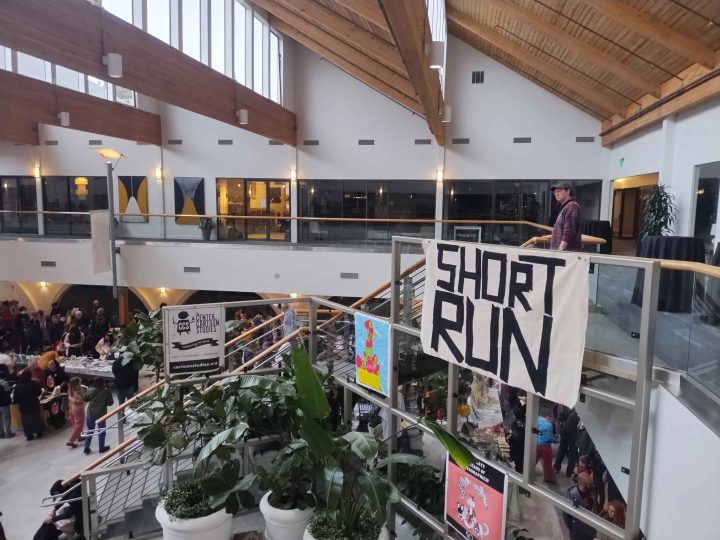
Stationed as I was, near the entryway, I saw when the wave of people started to come in early. I’ve never fully been able to grasp how long people stay at comics shows, but my wonderful husband went back and forth between my table at one end of the space, and another at the far end (where a friend was tabling) and reported that there were many people he had seen two or three hours ago at my table still wandering, so retention seemed high.
The size of the crowd had me expecting the sales to be particularly good, but profits across the show seemed to be mixed. Some seasoned exhibitors I know sold only a few items, and many more sold a below average, but still reasonable amount. I heard from many that merchandise (hats, bags, calendars, stickers, etc.) sold reasonably well, while zines and books sold relatively poorly. This was not a universal truth, as some exhibitors sold out of their stock of books and zines, but the vast majority of people I spoke to pointed to this trend. I also heard that zines with special gimmicks sold well; special covers, game books, fold-out pages, etc. seemed to be more alluring to the crowd than saddle-stitch and stack-bound zines.
When I talked to attending friends and family, there was mention of an awkward self-consciousness about looking at zines on the tables and not purchasing them. This definitely exists for audiences at every show, but it was felt notably like there was a hesitation from the crowd to flip through books and zines. Whether that behavior is simply too much fear of disappointing sellers for the members of the audience to truly engage I was unsure. Seattle is an expensive city to live in, and with a slew of recent tech layoffs, it wouldn’t surprise me if purse strings are tighter and attendees just don’t want to disappoint sellers.
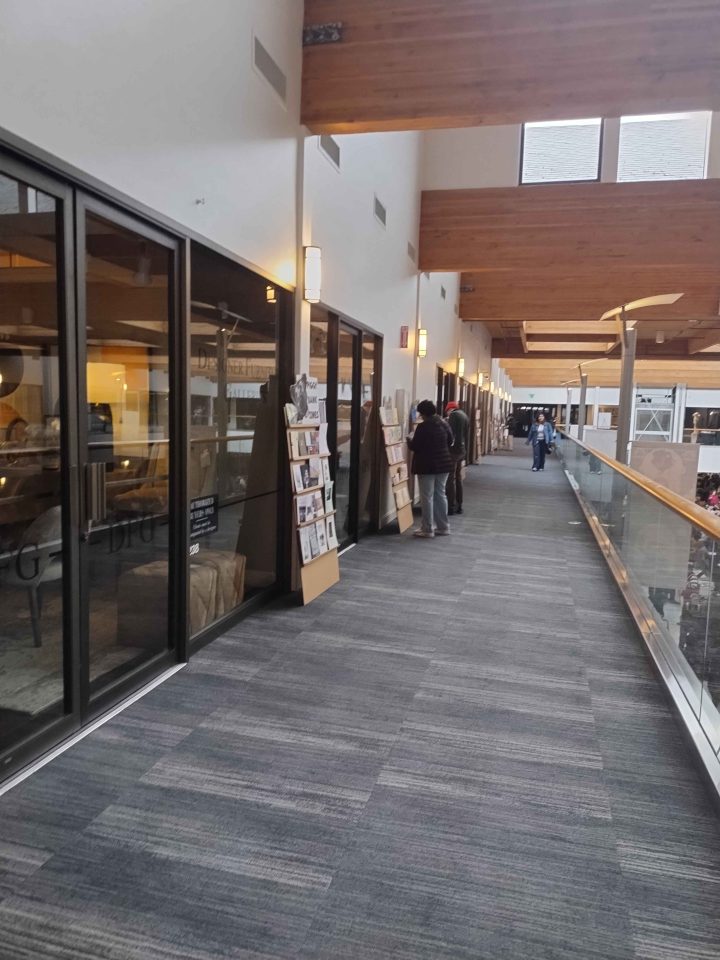
Whatever the cause of mixed sales, the consensus among exhibitors, volunteers, and special guests all spoke highly of the show itself. Short Run is a well-run event with intention and care, and that these things have been true of Short Run throughout its time. When you go to a lot of shows throughout the country, it’s the little particulars that differentiate them and make them special, my favorite elements of these occasions. Upstairs surrounding the main floor were collections of zines from a variety of clubs and collectives, including some from Reed College’s Zine Club and from Cleveland High School. The collections showed off my favorite types of comics: the ones that tell you about people’s top 5 favorite animals, soups, and hats.
Towards the front entrance there was a table with a banner across the front saying “Talk With a Mom” and chairs set up for attendees, tablers, volunteers, whoever to sit and chat with some lovely moms. I was having a rare-for-me bad hair moment later in the day, and one of the moms gave me some good suggestions about how to style it in an updo to last the remainder of the event.
There was sustenance available for purchase, both in the form of snacks inside the venue, and by the El Pirata Tortas y Burritos food truck out front. A friend of mine got a Cubana torta and declared it to be one of the best sandwiches he had ever had. While other snacks were relatively nondescript, several vendors mentioned they were grateful for even the option to buy something to eat.
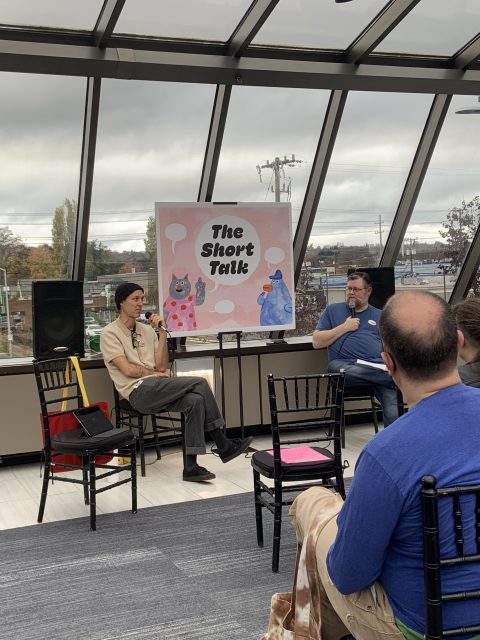
Short Run featured programming with special guests going on a skybridge on the second floor, including a conversation about the Indonesian comics scene with Yudha Sandy and Rod Driver, and interviews with Anders Nilsen and Ann Telnaes. All of these were fun to hear, but I was distracted by how cool the skybridge itself was as a venue. The day had started a little too rainy, but by the time these talks occurred, the weather turned beautifully overcast, and the skybridge made for a cozy spot to listen to these artists speak.
Short Run may be built on all these small choices, but I also heard from Yasmeen Abedifard and Secret Room Press and several West Coast and Seattle based exhibitors that an additional element of the draw of Short Run is that it simply is a large, well-run alt comics show on the West Coast. The West Coast seems to have few alt comics shows (CALA, PZS, etc.), and the scenes those shows take place in seem to be more decentralized than those on the East Coast. I imagine this is primarily the effect of West-cost geographical constraint; the amount of cities with large comics scenes are fewer and the distance between those cities is larger.
No matter what comics show I'm at, I always spend the last hour doing the same thing: hustling in a frenzy to briefly chat with every person I’ve been meaning to talk to all day. Short Run was no different, and at 6, I happened to be standing at the Purgatory Press table underneath festival co-director, Kelly Froh, as she spoke to the expo from the second floor. Amidst cheers and claps, she thanked the exhibitors, applauded the labor the Short Run team had put in, and announced that the show was over.
My wonderful husband and I packed up our table as I chatted until the very last second (what else is a show for?). We scurried home to my parents’ house to drop off books, change our outfits, and eat a quick bowl of Costco broccoli cheddar soup, and turn around to come back to Georgetown for the after-show events, including a conversation between Katie Fricas, Nate McDonough and Larry Reid, at the Fantagraphics store and an animation showcase down the street at Georgetown's oldest bar, jules maes saloon. Audibly nearby a drag show was simultaneously taking place, I passed a drag queen at the pulpit (some might call it podium) at the entryway to the event, a good portent in any storm. Everyone was very tired and wanted nothing more to hang out, imbibe, and watch animations or the World Series.
One of the things I had been told, specifically by Jas Hice, going into Short Run was that the after party (and after-after party) were great, and despite the icy night air, this seemed perfectly true to me. The Short Run organized events like the Underground Animation Showcase and Making Nonfiction Comics book release the following day, seemed filled with people who were excited about how the show went, and glad to be around each other. And the unorganized events, like playing dice at a Georgetown bar with just about every East Coast cartoonist there, felt like home too.
The post You look radiant in that raincoat! A scene report from behind the tables at Short Run 2025 appeared first on The Comics Journal.


 Hello, my name is Jack Sparrow. I'm a 50 year old self-employed Pirate from the Caribbean.
No comments:
Post a Comment