

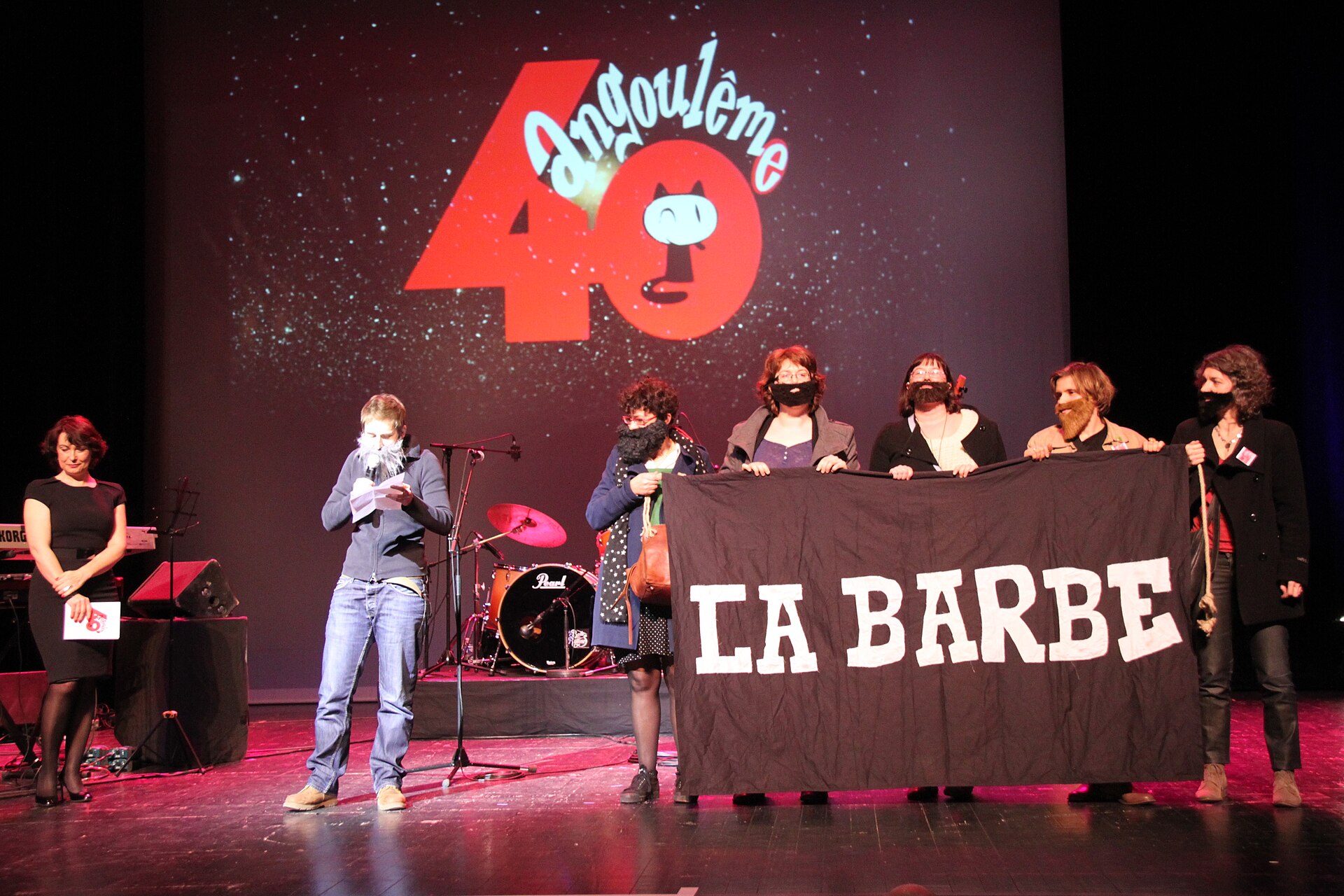
The comics world held its breath as hundreds of artists, authors and even some publishers threatened to boycott the 2026 Angoulême International Comics Festival—Europe's premier comics gathering. The threat was stark: hundreds of empty signing tables, vacant panels, a festival stripped of its creators. The professionals’ grievance centered on the festival association's controversial partnership with management company 9eArt+, accused of toxic practices and authoritarian control. The breaking point came when journalist Lucie Servin's investigation in L'Humanité revealed that a 9eArt+ employee named Élise had been raped by a festival contractor during the 2024 edition, reported the assault to director Franck Bondoux, and was subsequently fired for "gross misconduct"—allegedly for "misrepresenting the festival's image."
The threat worked. On December 1st, 2025, the festival was cancelled entirely—the first time in its 53-year history.
But what if this threatened absence had materialized? What if the “empty tables” wasn't just a withdrawal—what if it had been an opportunity to stage the most radical cultural experiment in festival history?
The Hollow Shell
The mere prospect of hundreds of empty tables proved too devastating to contemplate. The thought experiment of the "hollow shell" that would transform the Festival into pure commerce —the world's largest temporary bookstore— didn’t have to become material reality. This is economic warfare at its most efficient: winning without fighting.
Dare to picture it: rows upon rows of empty signing tables, vacant panels rooms echoing with silence, publisher booths staffed only by sales representatives hawking their wares to confused visitors. No artists, no spontaneous conversations about craft, no late-night bar discussions at the Mercure or Le Chat Noir. Just books as commodities. This wouldn’t have been just a failure but revelation. The absence of creators would have made starkly visible what the comics industry desperately tries to obscure: its fundamental dependence on the very artists it systematically undervalues. Without the magnetic presence of creators, what remains is the skeleton of an economic system—publishers, distributors, retailers—all dressed up with nowhere meaningful to go.
The empty tables have always been a powerful symbol of protest. From Pussy Riot to civil rights demonstrations, absence speaks louder than presence. At Angoulême, the threat of hundreds of empty signing tables became a weapon so potent it destroyed the target before deployment. Festival organizers chose institutional death over public humiliation. They understood that those empty tables would become a massive installation piece—an accidental monument to labor exploitation in the creative industries.
What makes this moment particularly potent is how it inverts traditional power dynamics without creators having to sacrifice all they have. For decades, festivals have operated on the assumption that artists need them more than they need artists. Creators travel vast distances, pay their own expenses, and donate their time to sign autographs and pose for photos—all in service of "exposure" and the nebulous promise of career advancement. This same exposure economy has been weaponized by publishers, even those that purport to be independent and alternative, who demand constant social media promotion from their creators, turning artists into unpaid marketing departments for their own work.
The irony deepens when we consider that some of these very publishers joined the girlcott—a strange hall of mirrors where the exploiters and exploited united against a system they helped create. The threatened girlcott flipped the entire script. Suddenly, the festival had to reckon with its own expendability in an age when creators can build direct relationships with audiences through social media, crowdfunding, and digital platforms. The boycott revealed that while artists might benefit from festivals, festivals cannot exist without artists.
Gregory Sholette's theory of "dark matter" in the art world offers a precise framework for understanding this dynamic. In his book Dark Matter, Sholette describes the art economy as orbiting around a few selected star-artists while obscuring the 98% of invisible labor—studio assistants, adjunct teachers, MFA students—whose gravitational pull stabilizes the entire system. The metaphor comes from astrophysics: astronomers attempting to compute the mass of the universe found their calculations didn't match observations. The visible stars—the bright, articulated signals of success—couldn't account for the gravitational forces holding everything together. The missing mass was dark matter: invisible, unobservable, yet essential to the universe's stability.
Many aspiring artists look at the art world from afar and see only the success cases—the Yayoi Kusamas, the Damien Hirsts or the Chris Wares and the Marjane Satrapis in comics—without registering the vast dark matter of failed careers, unpaid labor, and precarious work that makes those bright stars possible. They double down on their ambitions, believing they'll be the exception, unaware they're more likely to become part of the invisible 98% subsidizing the visible 2%. The Angoulême boycott made this dark matter suddenly visible. When that 98% threatened to withdraw, the 2% discovered they had nothing left to orbit.
If the boycott had proceeded as originally threatened, Angoulême 2026 would have become a laboratory for uncomfortable questions. If publishers could sell just as many books without creator involvement, it would reveal something troubling about the commodification of art. If consumers buy books based on covers and marketing copy alone, then the industry might learn that the performance of artistic community was always more fragile than anyone wanted to admit. We never had to answer these questions because the festival organizers already knew the answers. They understood that sales would plummet, that attendee satisfaction would crater, that the hollow shell would prove exactly what creators have long suspected: they are the irreplaceable heart of the comics ecosystem. The cancellation is an admission that the experiment would have exposed truths the industry desperately wanted to keep obscured.
What Actually Happened: The Real Experiment
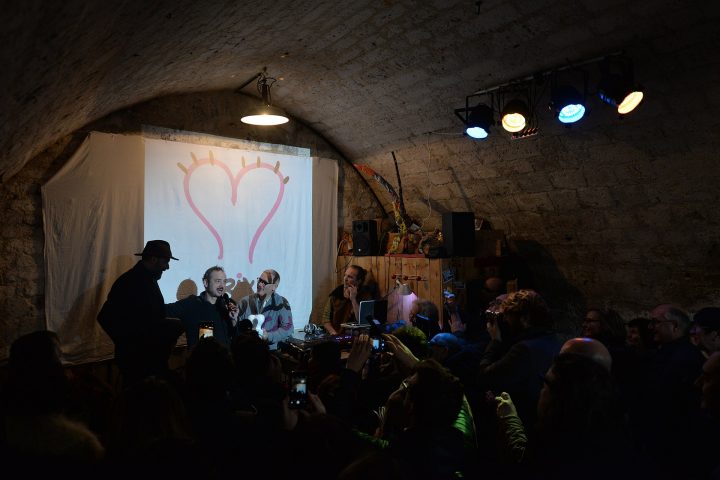
The threatened boycott represented a maturation of creator consciousness, a recognition that passion doesn't pay rent and that cultural work deserves economic dignity. In the space left by the official festival, Le Grand Off emerged: organized in eight weeks by local collectives, 150+ events across 60+ venues, free for attendees with creators actually paid for appearances—proof that independent structures can exist outside commercial frameworks, even if at modest scale compared to the 200,000+ who attended previous official festivals.
Le Grand Off provides different answers to different questions. Can festivals exist without corporate sponsorship and exploitative labor practices? Yes. Can small independent structures provide meaningful alternatives to commercial mega-events? Yes. Will they match the economic impact and international prestige of traditional models? That remains to be seen, and frankly, it may be the wrong question. The right question is: what kind of cultural infrastructure do we want? One that extracts maximum value from creators while providing minimum compensation, justified by "exposure"? Or one that treats artistic labor with dignity, even if it operates at smaller scale?
The full tables at Le Grand Off prove something more important: that ethical alternatives aren't just possible—they're already here.
The Ongoing War
The old guard refuses to accept its obsolescence quietly. Franck Bondoux and 9eArt+ are suing the Association pour le développement de la BD à Angoulême (ADBDA) for "unfair competition and parasitism" over plans to organize a reformed festival in 2027. Think about that: the organization that destroyed a 53-year-old cultural institution through toxic management is now using legal weapons to prevent alternatives from emerging. It's a final admission that their model cannot compete on ethical grounds, only legal ones. The lawsuit reveals everything about how these power structures operate. When you can't compete, litigate. When you can't build something better, prevent others from building. When your business model depends on exploitation, call ethical alternatives "unfair competition." The phrase itself is an Orwellian masterpiece: apparently, paying artists fairly and treating them with dignity constitutes cheating.
But consider the most elegant proof of what Angoulême avoided—a perfect illustration of Sholette's dark matter theory in action: in a 2014 interview with artist Martin Krenn, Sholette discusses Microsoft's Gigapixel Art Zoom project in Seattle. In 2013, Microsoft developers created a state-of-the-art panoramic image of downtown Seattle but were disappointed to find the streets nearly empty of people. This presented a problem: how do you showcase cutting-edge technology with an image that inadvertently documents the desolation of American downtowns after 5pm—those corporate ghost towns where workers flee to suburbs the moment the office day ends? Their solution? Contract dozens of local artists—art students, community artists, some affiliated with the Seattle Art Museum—to perform on streets throughout downtown, populating the image with "fascinating people and activities" for viewers to discover by zooming in. Artists became literally invisible infrastructure—their labor erased into the background of a corporate technology demonstration. They were the dark matter Microsoft needed to make their product appear alive. A hi-definition photograph of an empty city, populated by contracted performers to create the illusion of life.
That's what Angoulême would have been: a hi-definition photograph of festival infrastructure, emptied of its reason to exist, with only the corporate machinery humming along. Instead of artists filling empty streets to validate corporate technology, their threatened absence simply cancelled the photograph entirely. The festival organizers understood they would be exposing the same logic Microsoft relied on: that artists are content, that creative labor is infrastructure, that people are pixels to be zoomed into.
The Angoulême boycott inverted this entirely. No photograph was taken. No empty panorama exists to haunt the archive. Just the space where an institution used to stand, and the new structures built in its absence.
Angoulême was only the beginning. Next boycott? Instagram.
The post The Empty Table Revolution: How Angoulême’s Cancellation Proved the Girlcott’s Power appeared first on The Comics Journal.


 Hello, my name is Jack Sparrow. I'm a 50 year old self-employed Pirate from the Caribbean.
No comments:
Post a Comment