

A hush falls over the club, various tweedy persons rubbing elbows under a thick cloud of cigar smoke. The back room is a cozy place for presentation, walls of dense hard wood, dotted with cozy apportioned rows of erudite tomes and select oils.
“Friends,” I say, over the hushed whispers of the crowd. “I come before you to speak on the most important question of our time.” At these words select titters from across the assembly, a few chortles at my confidence. “Indeed, I speak to the heart of the matter in so many of our lives - yes, of what else can I speak but Utopia?”
The room erupts. The well heeled and learned members of the nation’s elite seem in a moment as a crate of mousetraps assaulted by the sudden intrusion of a table tennis ball. I slam the small gavel on its block, usually a noise of purely symbolic import, but in this instance a necessary cudgel against the scandal of the crowd.
“Surely you are mad,” comes the cry, old Carruthers from the back of the house. “Speak to the Bolsheviks of Utopia.” The crowd hoots in approval.
“Aren’t we all Bolsheviks, today?” I counter, to a few polite chuckles. “At least that’s what we all have to say at work.” Another laugh.
“Get to the point,” stocky Danforth rumbles. “We’ve got shrimp coming.”
At the comment, the men rumble as one. I confess I may rumble, too. We do indeed have shrimp coming.
“But the shrimp has not arrived, and we know full well how long we have to wait,” say I, as the room glances as one towards the clock on the wall. “Until then, perhaps you can pause to hear a few words on the subject of utopia. It pertains to another favorite of yours, dear Carruthers - anime girls.”
At the riposte the crowd erupts again, and not without some salutation.
“Who else remains to shepherd us into the new era of utopian literature but the anime girl herself, symbol of the age? It it is in the context of fiction portraying the peradventures of various voluntary associations of women that we see the question of utopian necessity most discretely and yet insistently framed. For I ask: what other social organization but the hallowed utopia itself allows for the existence of the ‘yuri harem’ as a -”
And with that phrase - I admit, intentionally incandescent - the crowd erupts, as though spattered with scalding naphtha. An old argument, allow us merely to allude.
“You’ve gone too far,” comes a voice from the back; from the front row, “you’re a fool.”
And again from Carruthers, between puffs of his enormous cigar: “I used to believe you were mad, but now I know you are downright dangerous.”
“You say that, Carruthers, when your own investigations have shown the precursor texts in plain sight.” We all glance at the well thumbed set of Becoming a Princess Knight and Working at a Yuri Brothel stacked in honor on a shelf wall to the rear of the library.
“Balderdash!” he yells, shredding his voice in rage. He attempts to rise from his seat, foaming at the mouth to rush the podium. His neighbors restrain him. I hammer the gavel.
“Gentlemen, yelling at me won’t make the shrimp get here any faster.” The grumbles became whispers. I continue.
You remember Nokotan, yes? My Deer Friend Nokotan? I told you it was a rich text, load-bearing for so much of the world to come. Not the first, certainly, but a watershed. A crossover moment, at least inasmuch as I did my best to scream about it. If you recall: I recorded a forty-three minute long video of just me reading the first volume of My Deer Friend Nokotan and posted it to YouTube two years ago.
Do you know how many people have watched my video about My Deer Friend Nokotan? 87 people. This isn’t a bit. This isn’t part of the framing sequence. I put my chit on the table two years ago that this was the cultural movement of and for the coming world. If it maybe didn’t feel like it yet, well. You know, struggles to be born and all that. 87 people know I’m right.
But those are the stakes, really: can your form of government not just tolerate but materially support the rights of women to live free and self-determined lives?
Oh, that, you say. I thought this was a bit.
Well, of course it’s a bit. What else is a book review, after all, but a bit you read on the john?
It’s a serious question. Poke around the corners of the story you’re given. What is the artist trying to tell you about this world, whose existence is a precondition of the story? The world of Maid to Skate is a placid place, one that appears on first glance to have far fewer problems than our own. The titular skating maids are members of some kind of order, young skating maids living in a communal house and splitting their time between the two disciplines.
Is this part of a larger system, a world built around franchises of skating maids in the same way that so many fantasy worlds are built around the fixture of heroic guilds? Who knows, the answers are not given. What we’re given is just a small glimpse of a world. A better world, no doubt, but just a glimpse all the same.
Perhaps the conceit is too diaphanous to support any more weight than what is precisely on the page before us. What does it matter? It holds together precisely as closely as you with to press the matter.
At a signal, the lights dim in the hall, and the overhead projector is engaged.
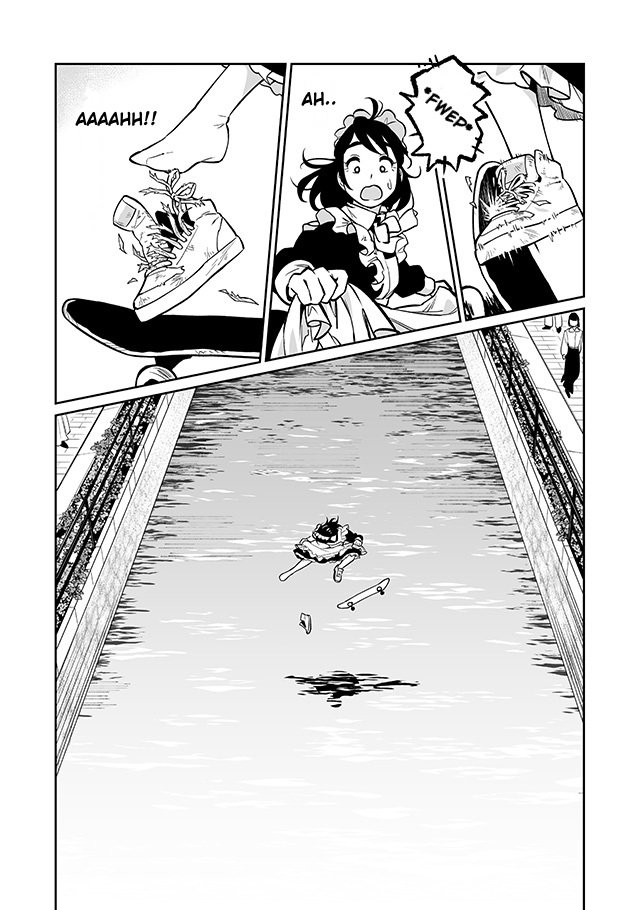
“And just how closely do you wish to press the matter, gentlemen?” I say, with as much gravitas as the moment requires. With a click of the panel my first image is reflected across the screen: a page featuring our central skating maid, Hana, trying on a pair of Vans. Showing off a bit of a shapely ankle, as the voluminous folds of her elaborate maid uniform and apron.
A gasp travels across the crowd. A muffled cry of “by Toth!” heard from a middle row.
“Indeed, gentlemen,” I lean into the moment, “I have said: utopia. Do you see those folds? Those exquisite ruffles?”
Yes, friends: we speak of the wrinkles - the drapery. All those classic Burne Hogarth impulses. Tell me, were you also gifted the Burne Hogarth drawing series as a young child? Though I’m not an artist I received the early training of one, a process which included poring over the Burne Hogarth drawing manuals proffered one special Christmas. I did my absolute best to understand the utter witchcraft on display, but alas.
The drawings that eventually became the present volume, Maid to Skate (Viz), first appeared online a few years back. They went viral and the artist - Suzushiro - was commissioned to turn the images into a story. That story was published on the seinen webcomics site matogrosso. It’s an ongoing concern, with a second volume extant but not scheduled for release in this country until November. It’s something to look forward to, across these foul-tempered days of endless torpor.
As for the artist, I fear we butt up against the limits of my poor parochial education. Google reveals little. The volume in question very deliberately avoids even deploying a pronoun. More power to them. We are left merely with the work in front of us to infer a character.
The affection for skating feels real. The book is defined by frequent digressions on skating basics, from building and refurbishing boards to moves and shoes. And, it must be emphasized: Suzushiro can draw. They can really draw. No shortcuts. Get out your jeweler’s loupe. Those frills are serious business. Serious enough to break your heart.
A strange artifact, then. Ultimately, what is it? Well, you’d be hard pressed to actually call it yuri, inasmuch as there’s nothing at all romantic afoot. But we’re also within a completely female social dynamic, one primarily defined by friendly - if occasionally flustered - competition between women who don’t appear to know any men whatsoever. I mean, it’s no Iwa-Kakeru! Climbing Girls, but what is?
“Nothing under god’s baleful sun!” comes the voice from the back of the hall, as the crowd murmurs in assent.
“Indeed,” I agree, “we live in the shadow of that sentinel.”
An age of miracles and wonders, for those who have but the courage to see.
It strikes me as a surpassingly horny work, but completely under the chiffon, so to speak. Maybe not quite as horny as the Climbing Girls, but that stands as one of the most filthy documents yet produced by the species. Suzushiro draws hands well but they don’t necessarily frame their compositions in the same way, certainly not compared to Sal Jiang or Nekotaru. Examine, please, Nekotaru’s series, The Fed-Up Office Lady Wants to Serve the Villainess, if you want truly, incandescently erotic cartooning. It’s all in the hands, you must understand. Any cartoonist who draws women’s hands with such great care, always placing them at the center of her compositions, almost certainly has seen Iwa-Kakeru! Climbing Girls. Possibly more than once, if you know what I mean.
So, yes. Not quite that horny- but what is? There are still ample close-up illustrations of women fixing their skateboards, or performing skateboard tricks, even feats of derring-do. There’s a sequence at the top of the program where Hana has to save a little girl’s balloon by jumping over a house on her skateboard - that kind of thing. Laid out with the precision of a professional storyboard. By Toth, indeed.
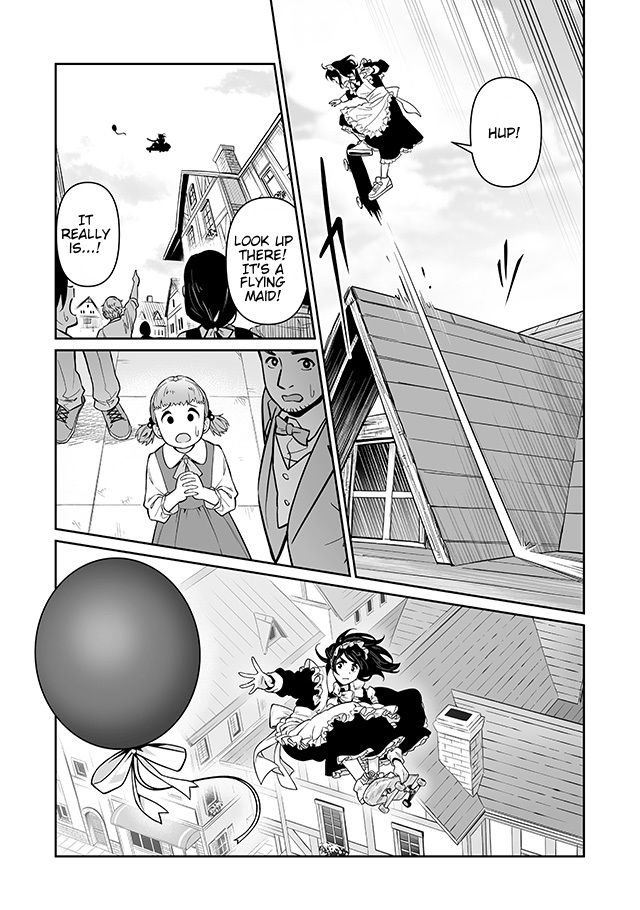
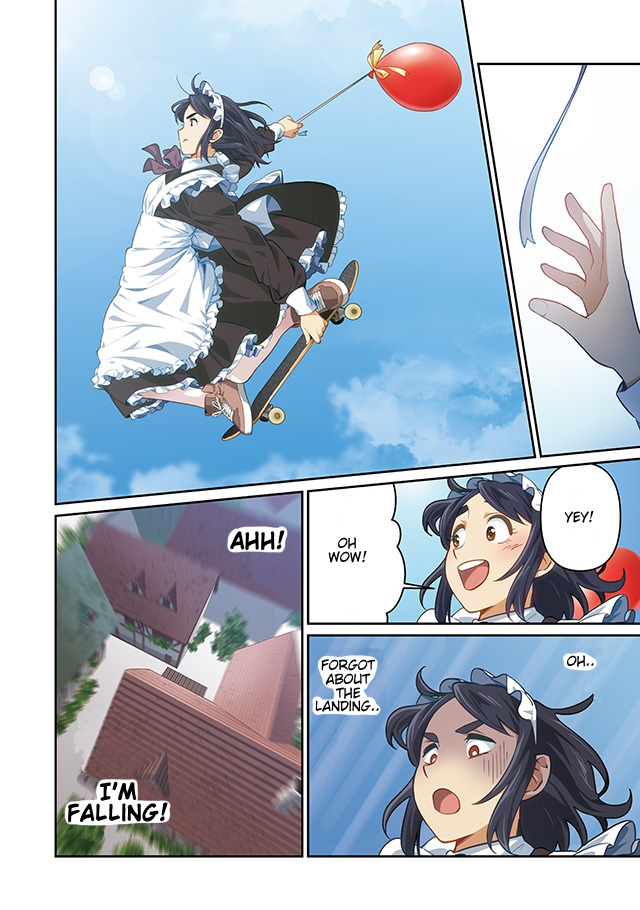
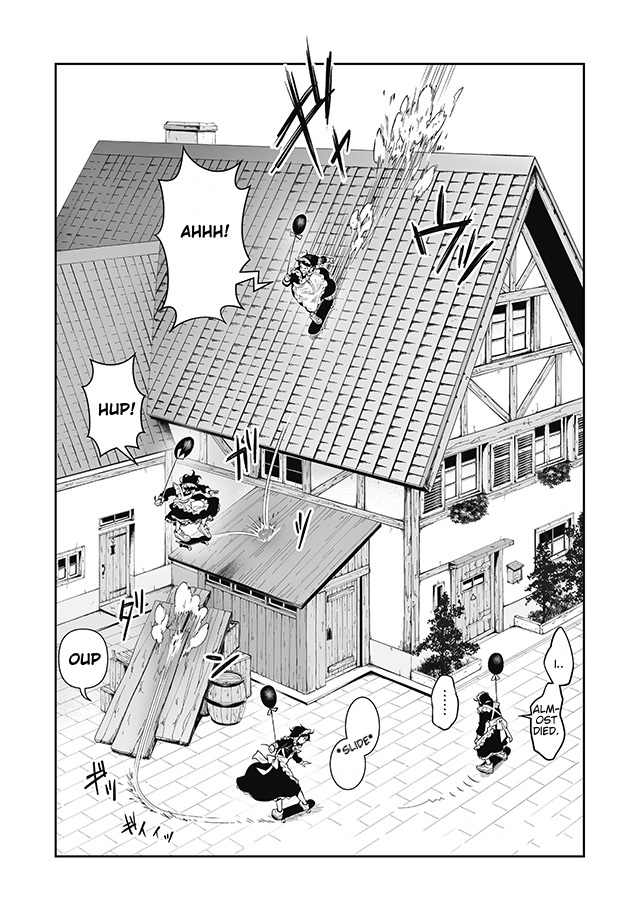
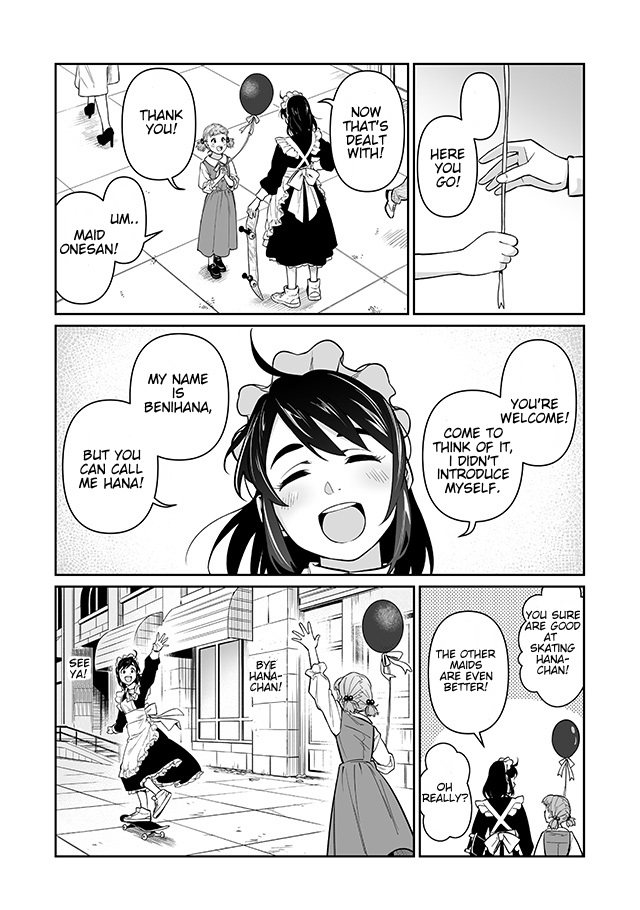
The skating maids go around doing good deeds because that’s what you do when you’re a maid on a skateboard. A group of young women are living their very best lives, skating and wearing maid uniforms. Does that particular element seem retrograde? Chum, that might well be true. But if you intend to get anywhere in this life you need to understand the fact that some people will indeed pay extra for that.
It seems the best possible life, indeed. If not utopia, how would you call it?
At that the doors at the rear of the hall open and the director announces that the shrimp have arrived. Through the double doors we see rows and rows of shrimp - every kind of shrimp laid out for the taking, accompanied by great gelid vats of cocktail sauce. The room stands as one and files out with great excitement, intellectual peregrinations forgotten for the moment, perhaps forever.
The post Maid to Skate appeared first on The Comics Journal.


 Hello, my name is Jack Sparrow. I'm a 50 year old self-employed Pirate from the Caribbean.
No comments:
Post a Comment