

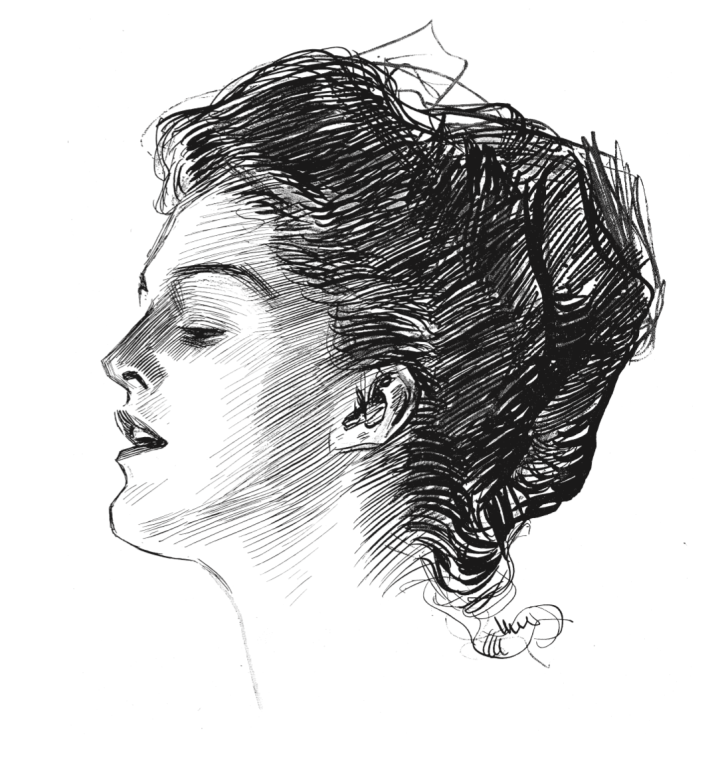
Decades before Action Comics, the austere, highly dignified personages of Charles Dana Gibson's incredible artwork adorned the pages of weekly magazines in the United States and Europe, looking as serious as can be while maintaining a wry sense of humor in the captions that feels more at home with highbrow literature than the nascent comic industry which Gibson inspired.
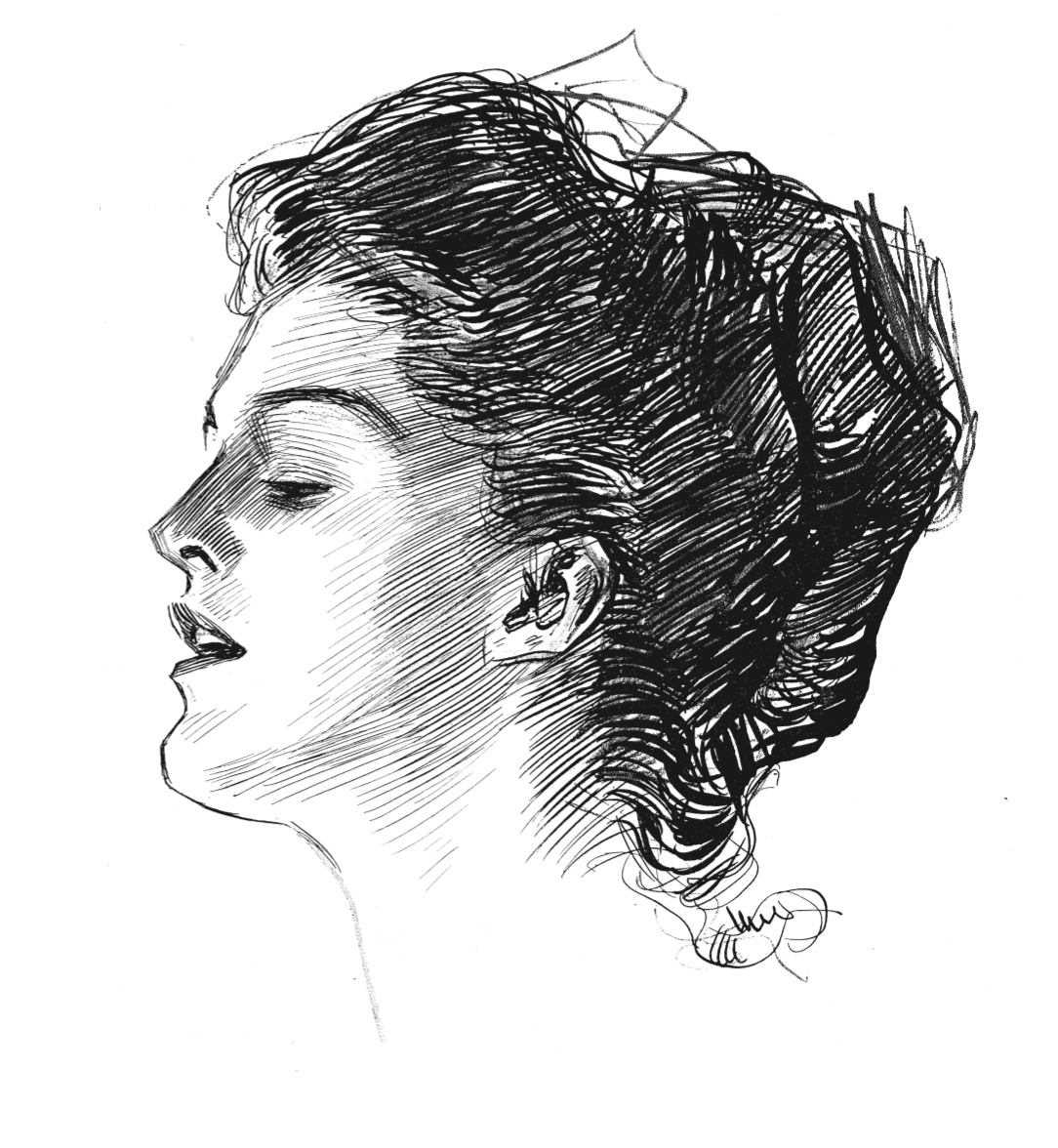
In a strange irony, I don't hear Gibson come up too often in discussions of comic history, considering he was such an important cultural figure, but likely it would not have occurred to any of his contemporaries to pigeonhole him with such a label. The austere Gibson Girl is symbolic of the late Gilded Age, an aspirational beauty that dominates every composition, cool and composed as men fall to pieces around her. The Gibson Girl as actually drawn by Gibson is posed not just to provide an appealing image, but to exert her strength on the world around her by sheer force of will. Even holding onto her fashionable hat in the face of a powerful wind is enough to make men swoon around her.
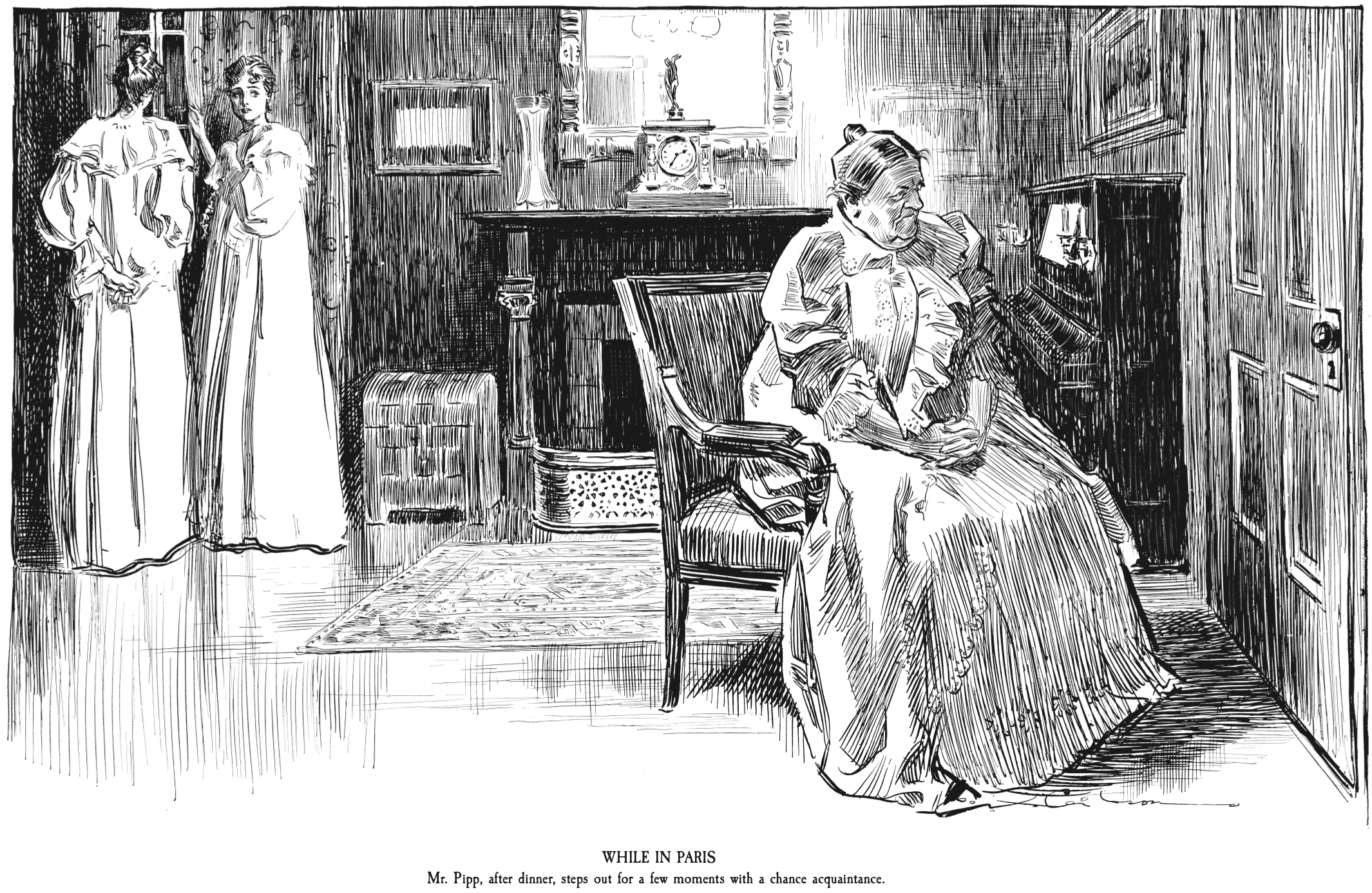
It's a testament to Gibson's range that the first of the three stories listed here, The Education of Mr. Pipp is about a grouchy industrialist who's bullied by his wife and daughters into taking a trip to Europe. What's especially remarkable about The Education of Mr. Pipp is how well it reads sequentially, when every individual illustration is designed to work as a stand-alone image. Gibson packs such a huge range of emotion into the linework that every incidental encounter Mr. Pipp has with the world around him feels all too familiar and relatable even today. The text has aged so well because the sort of high society novel Mr. Pipp is riffing on is now immortalized as a part of the literary canon.
As Sean Michael Robinson's introduction goes over in exacting detail, Gibson's work marked the genesis of wide-scale mechanical reproduction. Part of this was technological, but just as much of his imagery came to be iconic because it mastered the synthesis of technique necessary to make mechanically produced images with excellent clarity. His shading communicates depth, even in black-and-white, his landscapes have tremendous contrast. What few flaws might exist in his draftsmanship are often easy enough to ignore, once you catch the eye of a Gibson Girl looking straight at you, her expression perfectly encapsulating the mood of the moment.
We can never hope to replicate the exact same mood as the turn of the last century, but the editing of this volume goes a long way to prompting the reader to continue focusing on that lingering feeling. Throughout The Education of Mr. Pipp, full images on the right page side are flanked by singular posing figures on the left page side. This serves an excellent dual-purpose. The white space on the left draws attention to the magnificent way the characters are posed and crafted. But the full backgrounds on the right also benefit from the white space because they call attention to how seamlessly the characters are integrated into the environment. Even where you can see the cross-hatches, the illusion is entirely convincing.
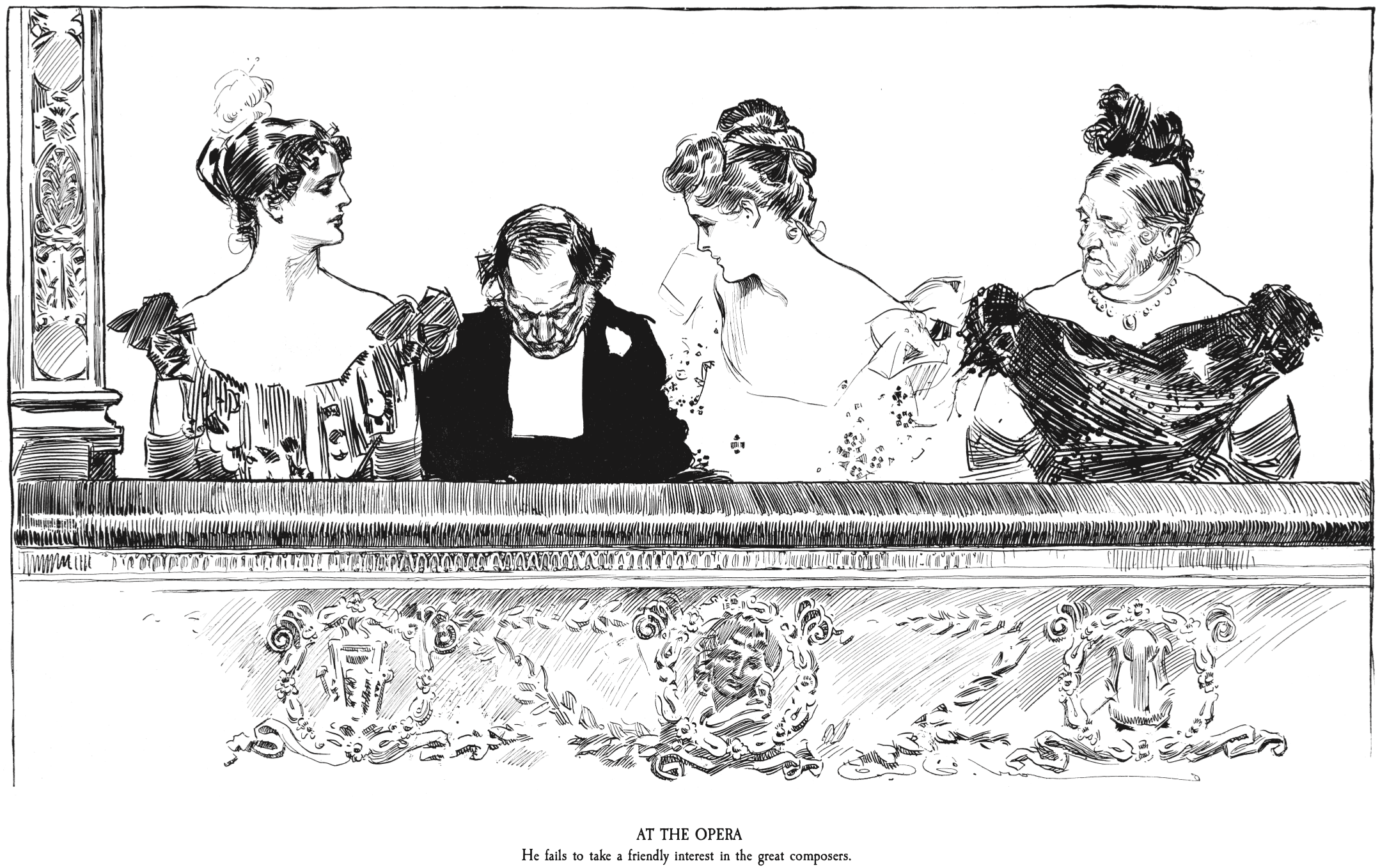
This presentation also serves to give The Education of Mr. Pipp that epic, graphic novel-feeling. Without them, the story is too obviously short to feel like a proper novel. A novella, perhaps, but there's so much life, and so much understated implied action between illustrations, that Mr. Pipp always seems to be on a grand adventure. Gibson understates or even excludes romantic scenes entirely, yet his craftsmanship allows those stern gazes to communicate an erotic yet chaste intensity.
The one problem this collection has by opening up with The Education of Mr. Pipp is that the latter collected works feel a bit underdone by comparison. Americans Drawn By consists entirely of stand-alone illustration and captions. Some are full page length, while others are half-page length, two to a page. After the genuflection prompted by the presentation of The Education of Mr. Pipp, it's often harder to appreciate just how good Gibson's composition is when there's so much more linework on the page. Gibson's vignettes also tend to be wordier, and need to spell out a lot more context. This has the strange effect of explaining just why The Education of Mr. Pipp worked as such an engaging concept despite the weekly publication cycle creating breaks in continuity. A single look at Mr. Pipp's crooked gaze creates an instant familiarity with the kind of crotchety man he is, unburdening the casual reader to allow an appreciation of the smaller details of his world that much more. Even facing away from the reader, Mr. Pipp communicates volumes.
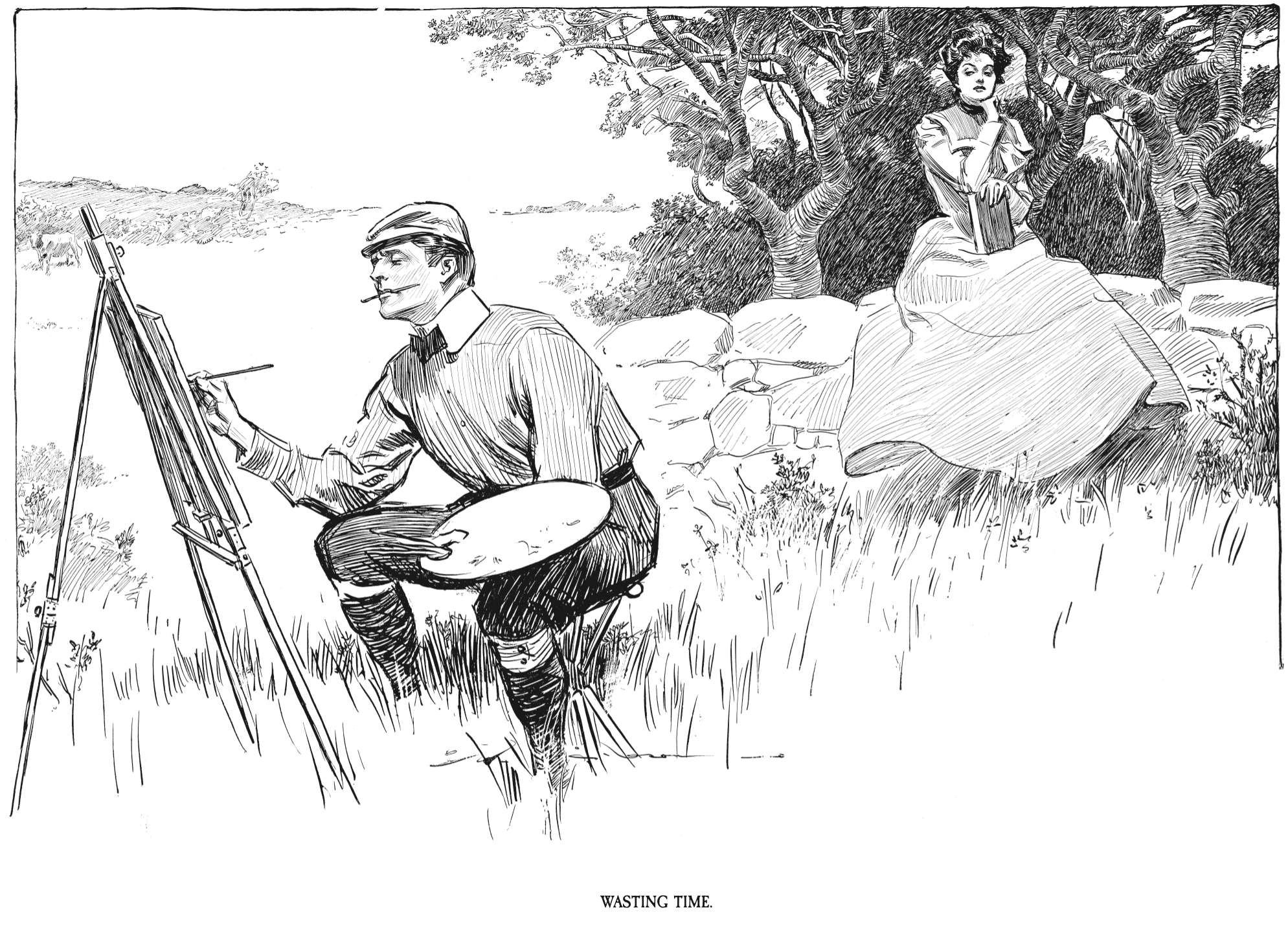
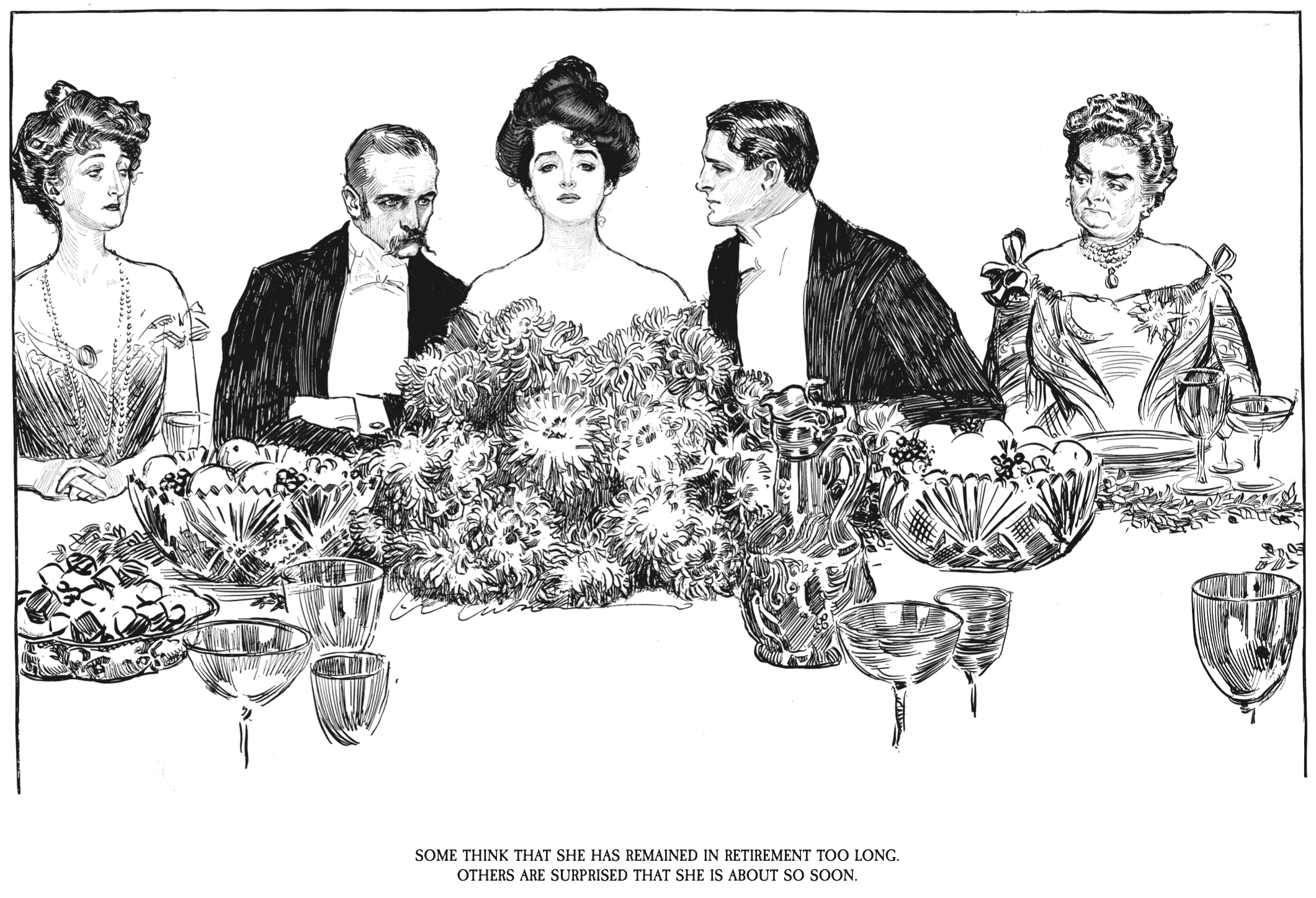
The final work in the collection, A Widow and Her Friends functions as a sort of halfway point between The Education of Mr. Pipp and Americans Drawn By. The titular widow is found grieving at the start of the series, but gradually comes out of it. This Gibson Girl is more constrained by archetype, resulting in a less compelling character than Mr. Pipps. While we can see her narrative evolve, ultimately her story is one of consistent, austere dignity. And even that story can only go on so far, once again turning into vignettes.
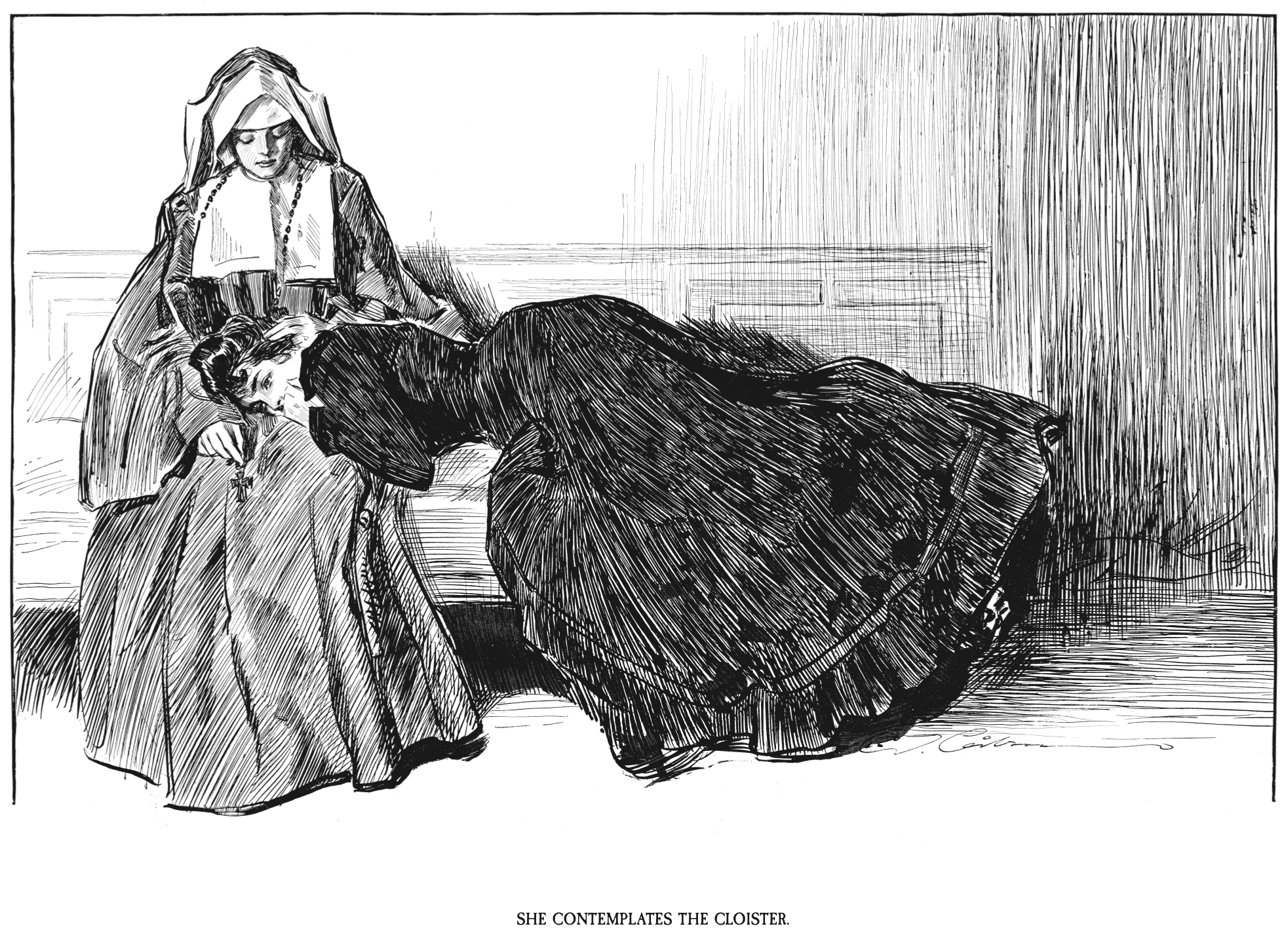
Even if the collection doesn't start as strong as The Education of Mr. Pipp, that's only a testament to just how impressive The Education of Mr. Pipp is as a singular work. A Widow and Her Friends still ends on a definite high point, and a thematically appropriate one too, with a couple deep in the snow, unable to finish saying goodbye. This is imagery that defined an entire generation and I must agree with Sean Michael Robinson that it's a bit shocking that Gibson's work hasn't appreciated in value. Still only $5000 for the pen and ink originals. Far more money in 1901 than today, by an especially incredible margin considering how genuinely impressive the art remains even as a smaller sized reprint.
The post The Complete Charles Dana Gibson, Vol. 1— A Widow and Her Friends (1899-1901) appeared first on The Comics Journal.


 Hello, my name is Jack Sparrow. I'm a 50 year old self-employed Pirate from the Caribbean.
No comments:
Post a Comment