

Here’s something I’ve been thinking about for a while now. If a comic convention or arts festival rents out a gymnasium to host their show, it should come with the mandatory caveat that the wall-mounted hoops and shiny wood floors be used. Pack your pickleball paddles for CAKE! Bring your sweatbands and hightops to Brooklyn Expo of Comics next year! I would love nothing more than to put some fellow critics in a low-post spin cycle and Dream Shake them out of their orthopedic New Balances. Speaking of taking shots, this month we’re doing something at “Arrivals and Departures” that hasn’t been done since March of 2025: looking at artists I’ve already written about in the past. It’s the Second Shot Showdown …
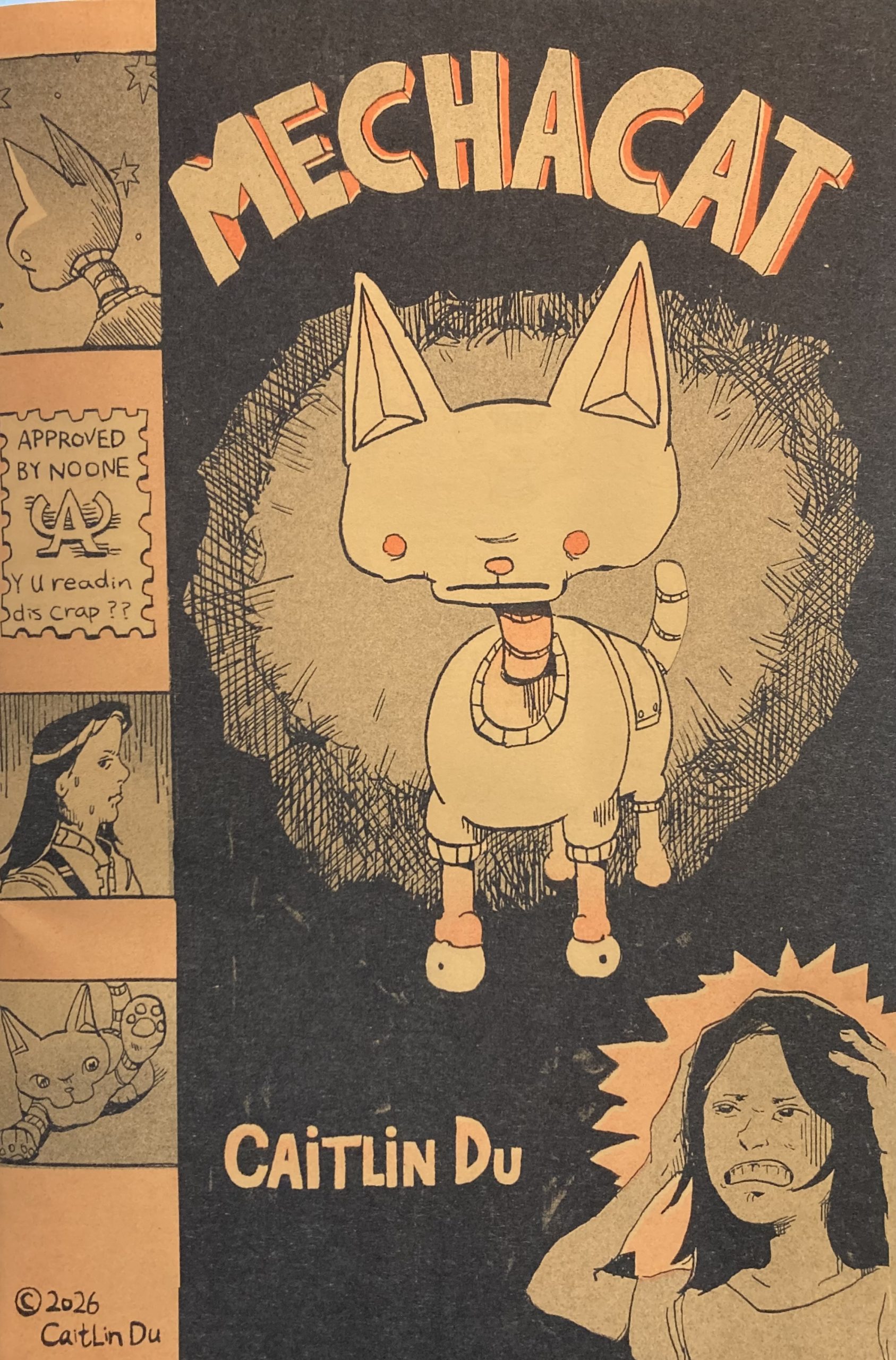
MechaCat by Caitlin Du
What I Said Last Time: “The tone, the rhetorical questioning, the yearning for something, anything, outside the workaday — [this] reads obviously like the work of a young person. Nonetheless, the technical skills Du possesses here are monumental.”
The siren song of risograph has sunk another vessel. Caitlin Du is one of the most thoughtful watercolorists that the medium has, but she docked herself by going with the shadowy blues and oranges this time. I don’t think that printing method works here at all, unless you count the inside front and back cover “end pages” pattern of MechaCat’s spinning head. But what is MechaCat? It’s an end-all, be-all, cure-all robot that speaks in platitudes, not unlike Baymax from Big Hero 6. The only real human character in the comic, Ying, finally breaks down and purchases one after being bombarded with daily advertisements. It comes in the mail, but it is nothing like she expected.
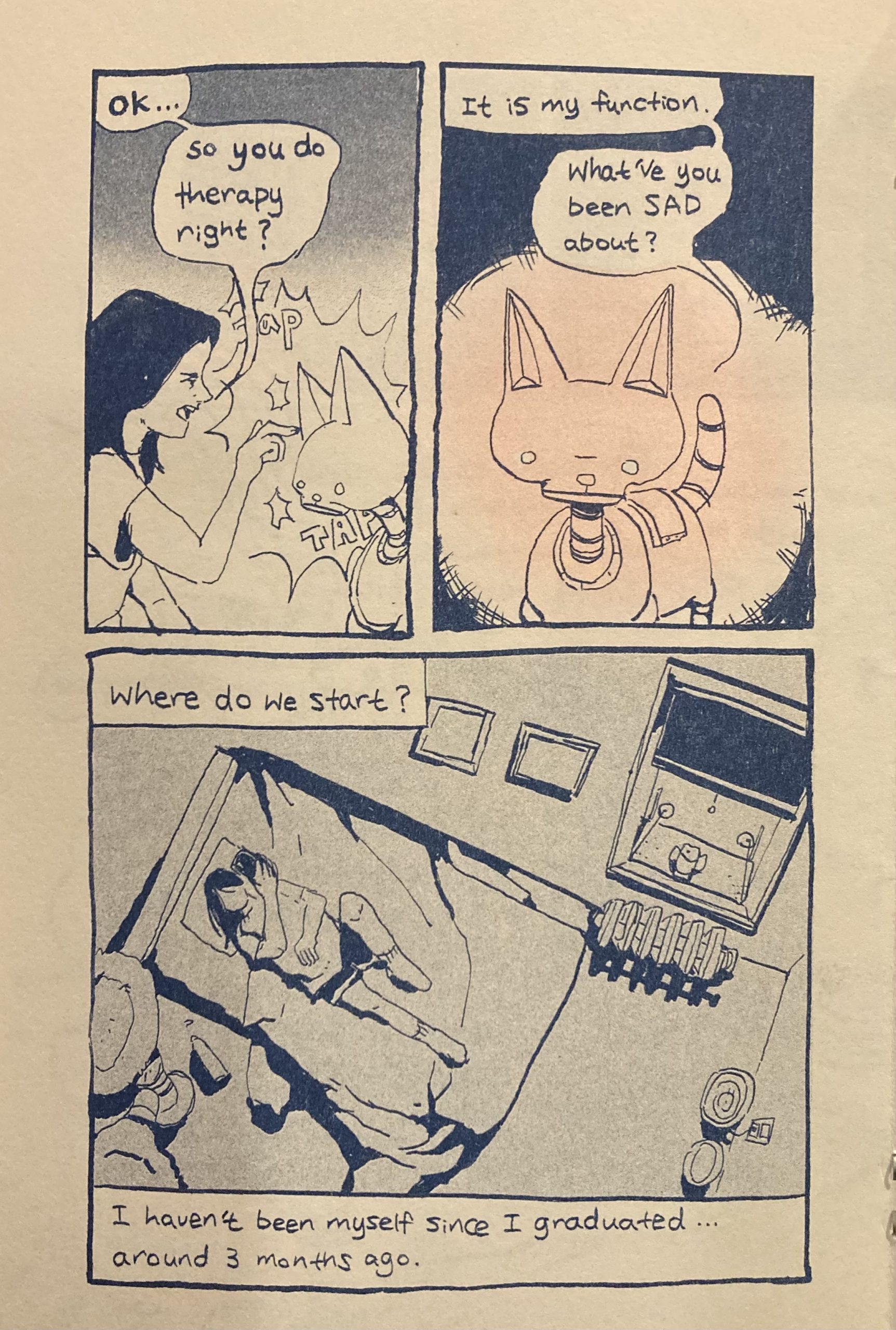
Du focuses on the therapy aspect of the artificial feline and has Ying confide about the death of her pet, a recent breakup, graduating college, and an unsuccessful job hunt all in rapid succession. MechaCat tabulates the information given then offers clueless solutions. In one instance Ying discusses her visa issues and Du aptly and, perhaps predictably, has MechaCat take a fascistic turn by suggesting its owner is an “unproductive member of society” and should “go back to where she came from.” Ying hits the robot, breaking her hand, but can’t call an ambulance because she doesn’t have insurance. Out of fear and the amount of inconvenient hoops to jump through to contact customer service, Ying decides to keep her new companion in the end.
There’s a social/technological commentary here that borders on satire and it mostly works. I still think Du needs to go harder though. As I alluded to in my last review of Du’s work, she feels like a young artist that has the ability to be the cream of the crop, yet might be too concerned with what’s palatable, what will please, what might make an animation producer chuckle and take notice. I still think down the road Du has a standout opus in her, but to eventually lead the orchestra you’re going to have to turn your back to the crowd.
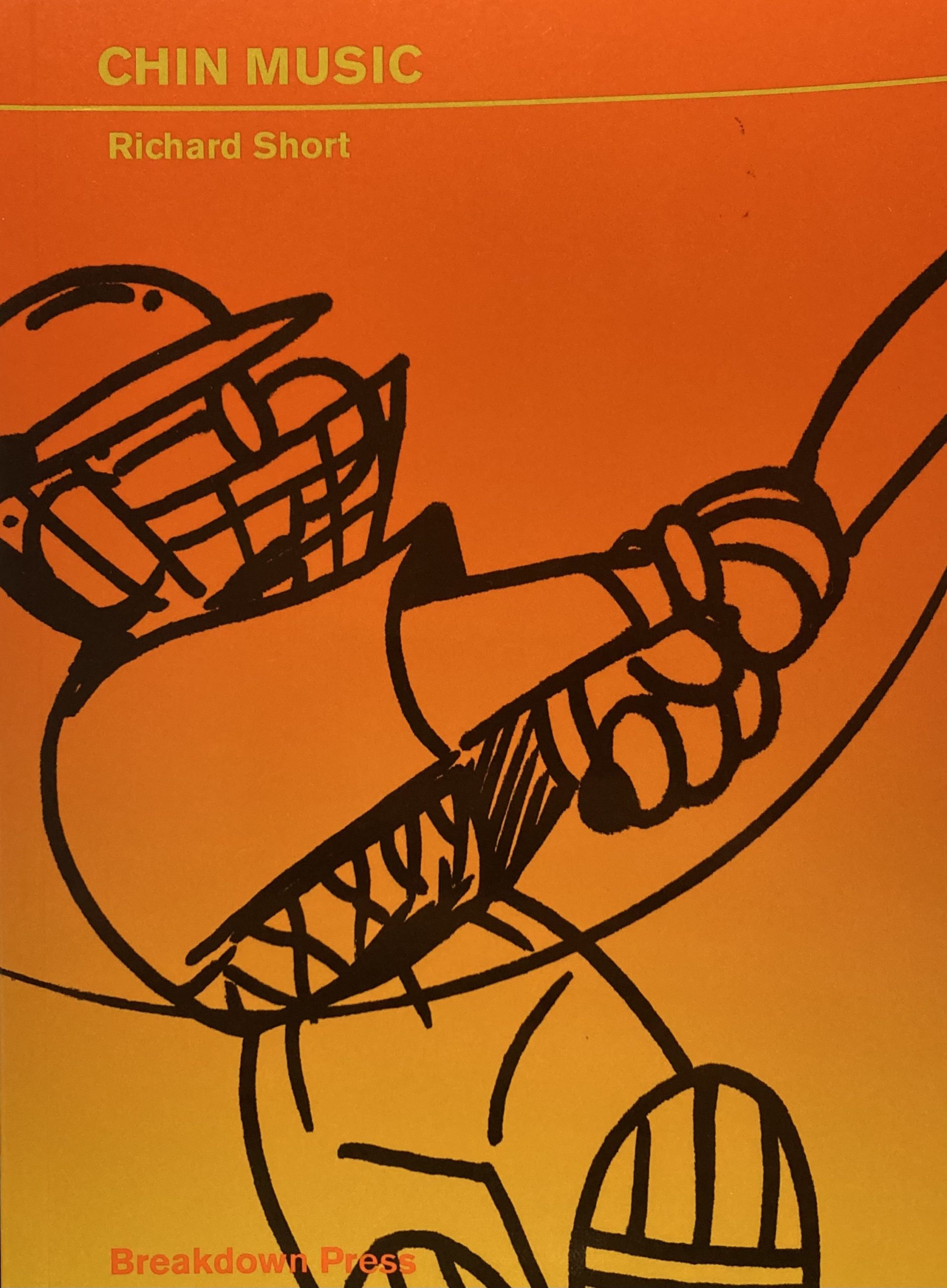
Chin Music by Richard Short
What I Said Last Time: “[These comics] are satisfyingly pleasant, even when the cats and rats that fill the pages are toiling in anguish or delusion. Richard Short makes it possible for readers to be at ease, even if the characters are not.”
That was in 2017! Remember when I used to write longer reviews and conduct even longer interviews? At that time, Short had a serialized venture called Klaus and I knew a lot about that cat. Now it’s 2026 and I know nothing about cricket. In spite of that, it’s hard not to be ensnared by the swirling sports vortex when the cartoonist in question is able to draw panels of a pitcher winding up to throw like a spinning zoetrope and the let-loose ball flying through the air like Yuichi Yokoyama’s bullet train.
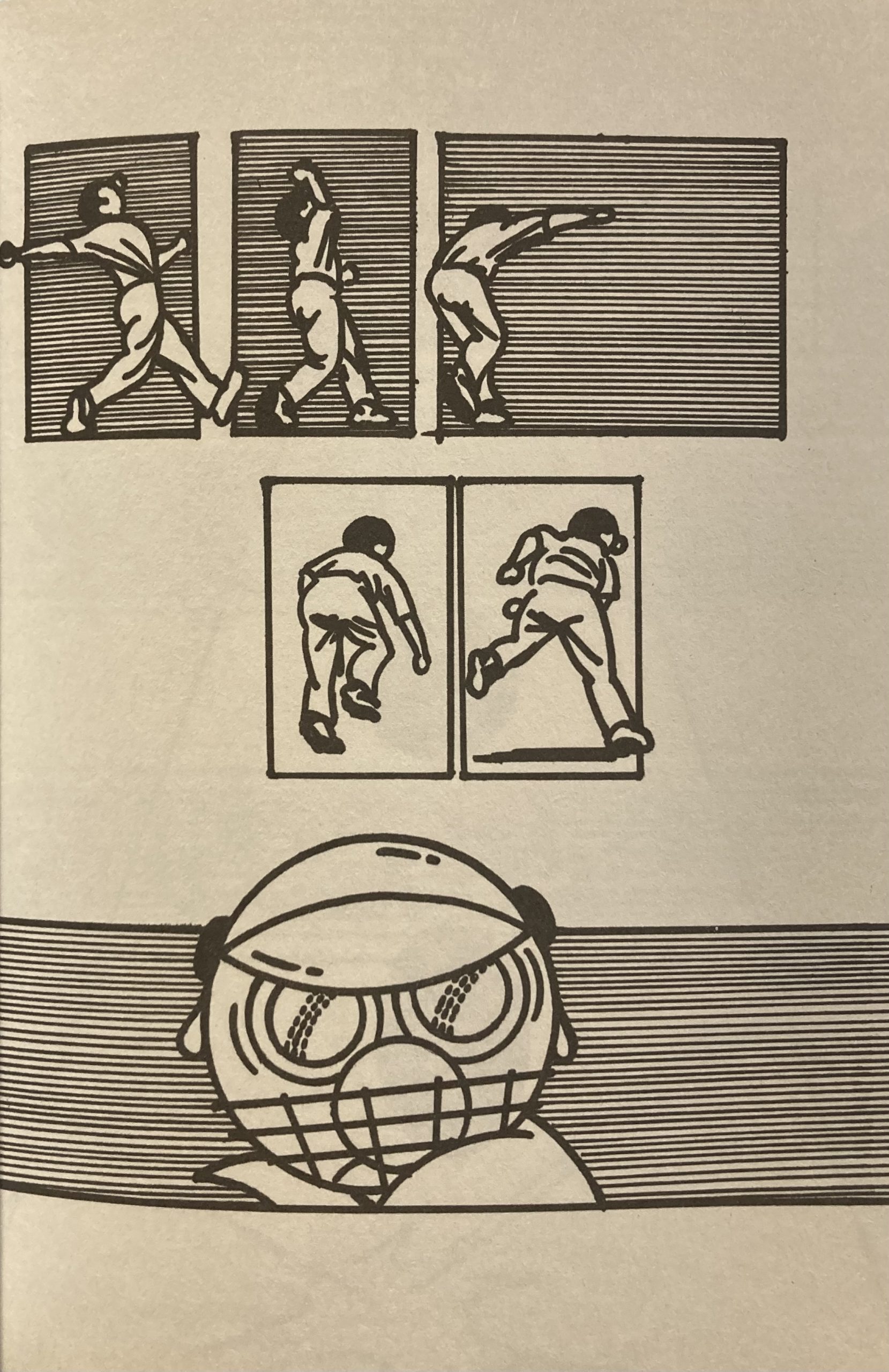
Chin Music is much more a comic about physicality than the actual rules of the game. In fact, I was too focused on the beads of sweat forming on brows and the swift swing of the bat to notice if the narrative detailed a single game or full season. Spectators in the stands provide the laughs to the reader as well as the tightening stranglehold on the collared players, gritting their collective teeth as the pressure mounts and the games come down to the wire. This comic is a masterclass in drawing anatomy in action sans violence. And it’s not just the players putting in the manual labor.
Full of straight line hatching and perfect circles — used for the balls, noses, eyes — Short certainly had his bag of compasses and rulers at the ready. There’s also a decision made in this regard to bypass digital clean-up. Pencil lines under the ink can often be seen and each speck of ink slightly astray is left in. It adds a push-and-pull realism to the endeavor, counteracting the bulbous heads and “cute” character design. If I was still conducting those long interviews, I might ask Richard Short why he shifted from an established comic strip where nothing much happens to a thick collection of vignettes where everything is happening constantly. No matter the answer, Short’s comics have always been best read sitting in an open garage or on a porch, letting the breeze aid in turning the pages. It’s no different with Chin Music, but this time, be ready to be at the edge of that seat.
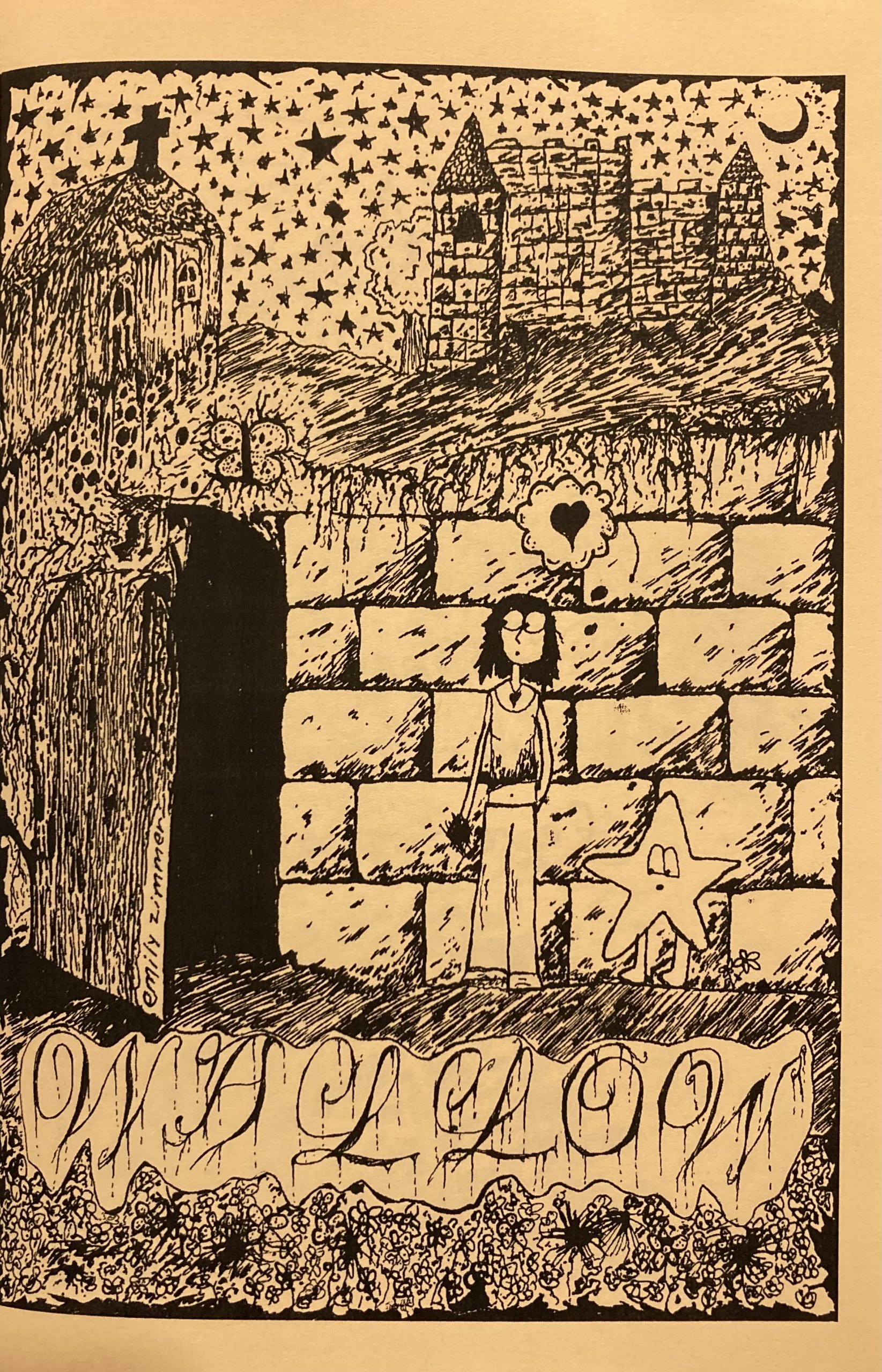
Wallow by Emily Zimmer
What I Said Last Time: “Emily Zimmer is sure channeling something substantial, but isn’t quite there yet in terms of narrative communication or harnessing the ideas traveling from brain to ink to page.”
I gasped when I turned to page one. There’s a convent with huge double doors, a path of dozens of cobblestones leading up them. Thin-lined clouds fill the sky. The walls of the building themselves are done in this effect where it looks like the artist is keeping the nib still but shaking the paper quickly back and forth underneath. It is raucous and concise. It’s the best thing Emily Zimmer has drawn thus far and the perfect way to introduce the next comic in her patchwork tapestry of scribbly gothic fantasy.
The next page introduces us to a girl who’s joined the monastery. A short star with eyes and legs follows her around, badgering her with conscience insight much like Jiminy Cricket. My feelings about this character changed each time I read Wallow, I think mostly due to the position in life I am in right now. I am the father of two young boys and I often find myself trying to make everything into a teachable moment, pulling myself out of the present in search of some wisdom to depart. Zimmer uses the star to lead the reader to believe — rightly! — that this is a dead end path. Like the main character in this comic, people need to learn lessons themselves and go through their own the-only-way-is-all-the-way shit.
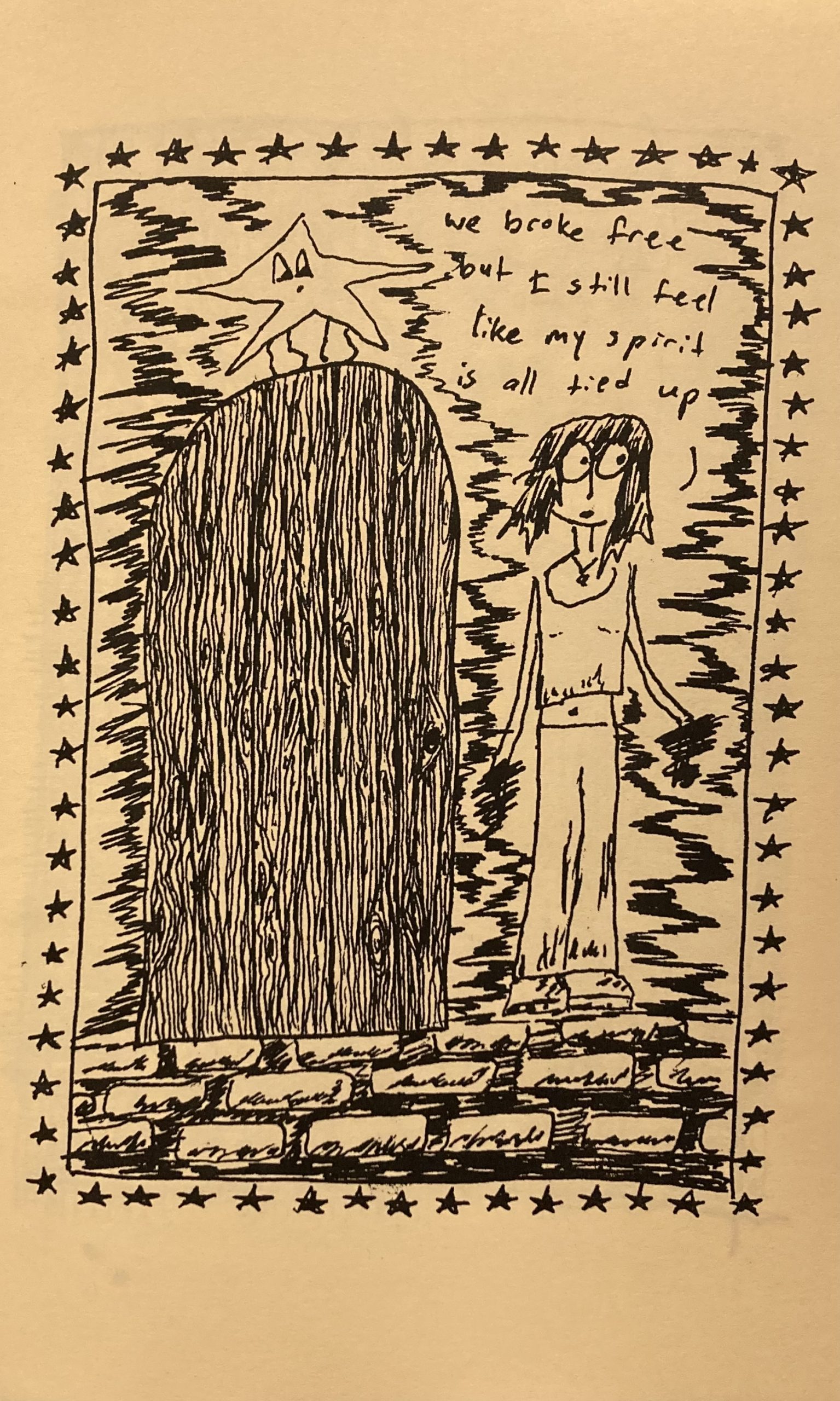
The girl leaves the nunnery, is brought back through magic, escapes again, and eventually meets a homunculus, which she stabs to death. This is all drawn with an explosive ink to paper expressionism that requires the reader to flee a numb detachment just like Zimmer’s character in the story. You are forced to bring yourself to the table with Wallow, which leads me to believe that the path I mentioned last time of “ideas traveling from brain to ink to page” is set and it’s underground in the dirt. Emily Zimmer makes comics for wood grain enthusiasts. Makes comics for earthworms and willow trees. Makes comics for people who are able to crawl their way out.
Let’s all be thankful for sequential art and before you leave, could you please pass me the green bean casserole. See you next month, I hope.
Questions, love letters, and submissions to this column can be directed to @rjcaseywrites on Instagram.
The post Arrivals and Departures — November 2026 appeared first on The Comics Journal.


 Hello, my name is Jack Sparrow. I'm a 50 year old self-employed Pirate from the Caribbean.
No comments:
Post a Comment