

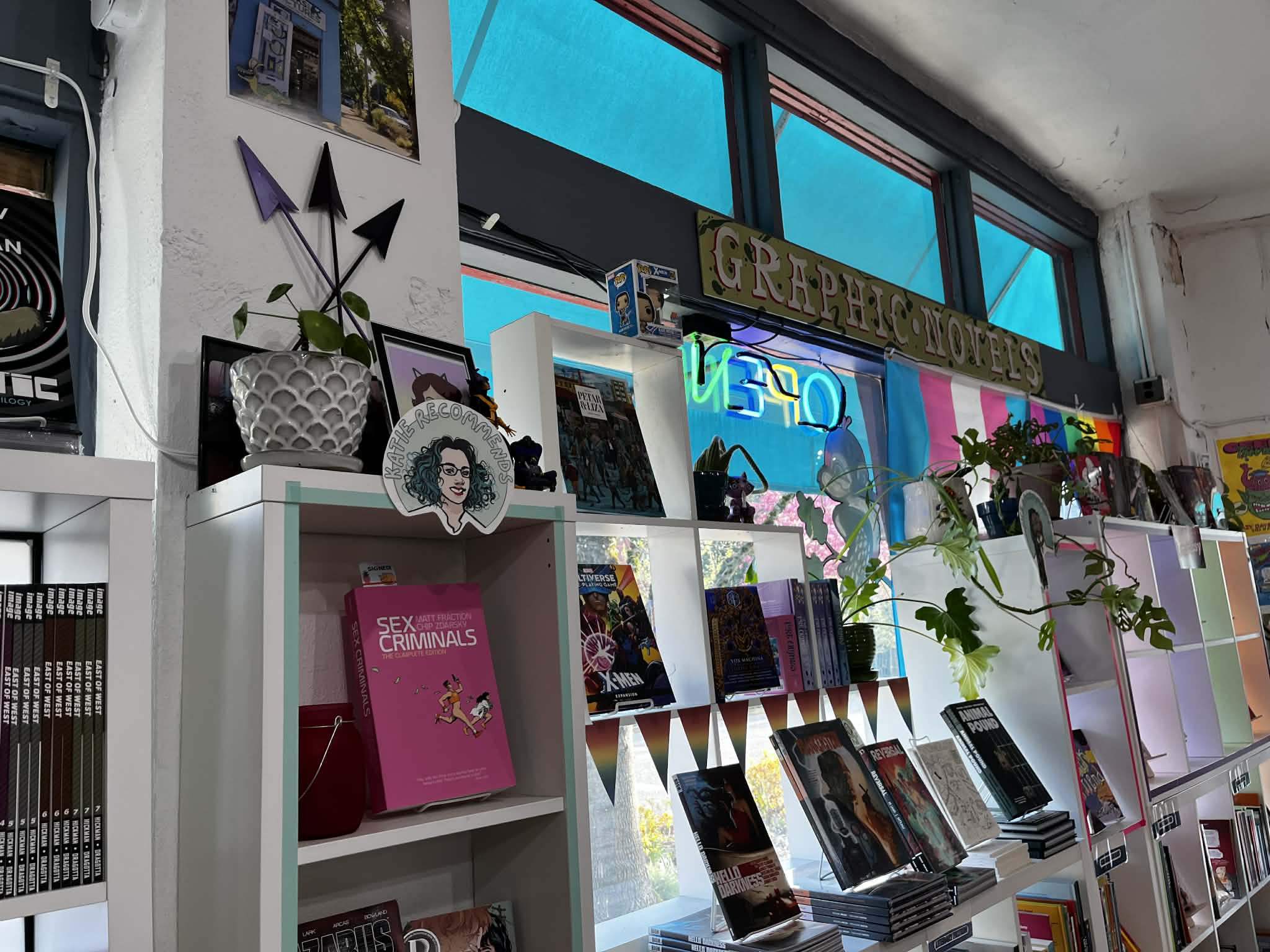
Portland, Oregon is a comics town, and it could be fairly said that every generation of Portlanders gets the comic shop it deserves. In the ‘80s, it was Excalibur Comics on SE Hawthorne that embodied the scrappy, grungy, longbox aesthetic of a generation of counterculture nerds just then realizing mass culture was theirs for the taking. In the go-go days of the early 90s comics boom, Mike Richardson of Dark Horse Comics made his suburban Things from Another World the model of glitzy comics expansion, growing out a franchise that eventually landed on LA’s Universal Citywalk.
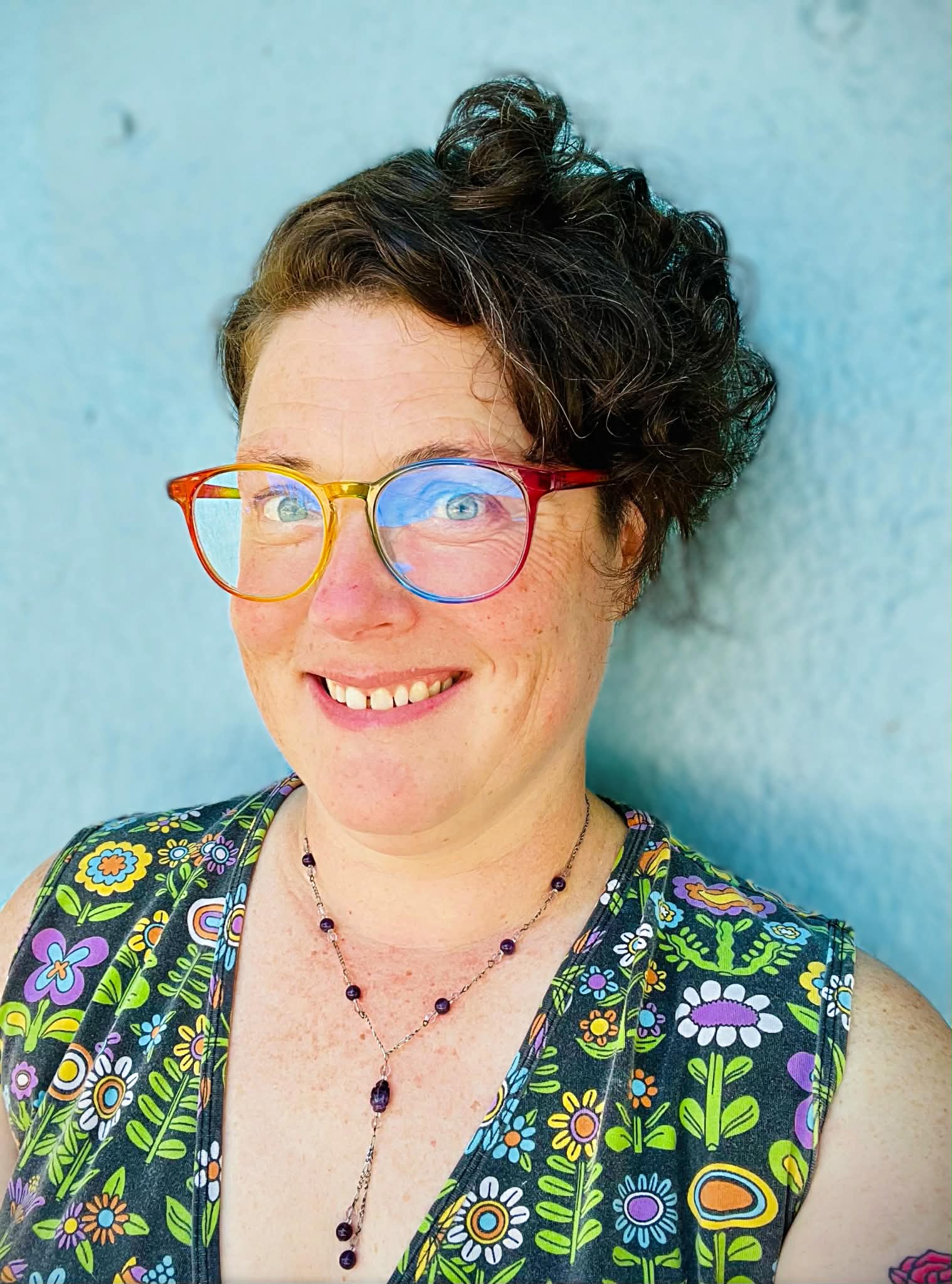
And, by 2016, when (in those halcyon days) the culture of diversity and inclusivity was at its height, and Portland was at its center, the comics shop par excellence was Books with Pictures on SE Division, founded with the very public mission to, as its website proclaims, “prioritize inclusivity and diverse representation.” It’s a mission that Katie Pryde, the shop’s happily-named founder, came by honestly. A teenage convert to the world of comics (having been, like many of her cohort, turned on by Sandman and the spate of ‘90s Vertigo books that followed it), Pryde had nevertheless kept an arm's length from the world of comics shops and comics readers for most of her early life — finding it, perhaps unsurprisingly, a place of gatekeeping exclusivity and casually ignorant misogyny.
So when Pryde opened her own shop, it was with the aim not only of promoting what she saw as underrepresented creators and their comics — queer, BIPOC, female, and more besides — but also capturing a market of similarly diverse customers who may, like her, have been keeping a distance from the spate of shops already populating the region. She picked a fortuitous time to do it, as both culture and media underwent a (lamentably brief) period of attention and tolerance for racial, sexual, and gender diversity.
And Pryde herself had an immediate knack for self-promotion, quickly becoming a fixture at local events, in comics press, and on podcasts like Jay and Miles X-Plain the X-Men. Within the first years of the shop’s opening, it had arguably become one of the most recognizable shops in a cultural comics capital, and a favorite of local creators from Matt Fraction and Kelly Sue DeConick to the artistic coterie at Helioscope Studios. By 2020, the shop had even become a quasi-franchise, with Pryde partnering with Andréa Gilroy to open a sister shop of the same name in the college town Eugene (despite the name and Pryde’s co-ownership, the Eugene location remains formally independent of the Portland Books with Pictures as a business).
So it was no surprise that, within hours of Pryde’s announcement on Nov. 18 that Books with Pictures was running a GoFundMe to climb out of substantial debts, the call had gone out throughout the Portland comics community and beyond. Within 36 hours of the campaign’s launch, Pryde had more than met her goal: the GoFundMe has raised $54,768 for a $42,500 goal as of this writing, with named donors including industry notables from Terry Dodson to DC Publisher Jim Lee.
What was more surprising was that a shop so warmly embraced by its customers, and so prominent in the media (at least by comic shop standards) needed to climb out of financial difficulties in the first place. Indeed, Pryde would be the first to draw attention to the long-term problems (both discrete and endemic to the industry) that led to the GoFundMe, and when I spoke to her shortly after the campaign met its fundraising goals on Nov. 21, she was candid about the strategies she’s mulling over to keep the shop afloat in the years ahead. Our conversation provided an insightful look into the realities of shop ownership even in one of the country’s premier comic book towns, and the ways that even the most high-profile local businesses are struggling to adapt to the comics industry today.
ZACH RABIROFF: Let’s start at the beginning. How did you get into comics retail?
KATIE PRYDE: The shortest version of the story is that I was working as a tech consultant. I was running a consultancy, and my business partner and I came to the conclusion that it was time to shut down, do something else. I did a personal accounting of what else I want to be doing with my time. I looked back at my favorite jobs I'd ever done, and my favorite job I'd ever done had been working at an independent bookstore — not a comic bookstore, but an independent bookstore.
Which store was that?
Oh, it's long gone, but it was called Bay Books in Monterey, California, which is not where I was living, but where I was going to high school. I was also at the same time reading a ton of comics and definitely a comics fan.
Then I moved to Portland, and probably, because of the nature of Portland, a lot of my friends had become comics people, and a lot of the friends I had made in Portland were comics people, although I didn’t deliberately seek out comic people. I was living in that world at the same time that I was looking for a new gig and when I looked at the scope of comics retail in Portland — I mean, Portland has a lot of great shops, but they didn't have the shop that I wanted there to be — I decided to make it happen.
Say more about that, because Portland obviously, as you mentioned, is a comics town, and when you opened up in 2016, there were quite a number of comic shops of long standing. What did you feel like you weren't seeing that you wanted to create?
I had this realization that when I went into my regular comic shop, I was putting a lot of energy into not being bothered by things like sexualization of women on all the posters and getting glared up by the clerk, and all of the very early 2000s, late-nineties, possibly eternal ways that women walking into comic shops were treated, and none of them were in the category of being treated badly. There was just an acceptance of having to overcome this, not feeling at home, not feeling welcome.
The sort of stereotypical Android’s Dungeon thing.
Just not feeling centered, feeling like I was doing a certain amount of battle just to be there. I really wanted a place that was a community hub. In addition to being a girl, I'm a queer woman. I'm a parent. I've got kids. My first two hires were extraordinary artists, great folks, but were both also black. And so there was this question about who else is getting left out of, well, everything.
Portland, frankly, is historically very white, a white city. We had a cartoonist of color, so how do we center them and how do we make that a core part of what we do? I wanted to become “that” shop. I continue to be so grateful for the opportunity to be that shop. It was my vision. It's what I wanted to do, but you don't get to be that without the community showing up.
When you opened up, how many employees did you have?
When I opened, I had two part-time staff. One was Nick Orr, who is now the manager and has been with us since we opened. And then the other employee when we opened was Alyssa Sallah, who is still in Portland. She is a spectacular artist. She published a book called, Weeaboo a few years ago with Oni and is continuing to do professional cartooning. She works up the road at the Japanese Garden now. She's terrific.
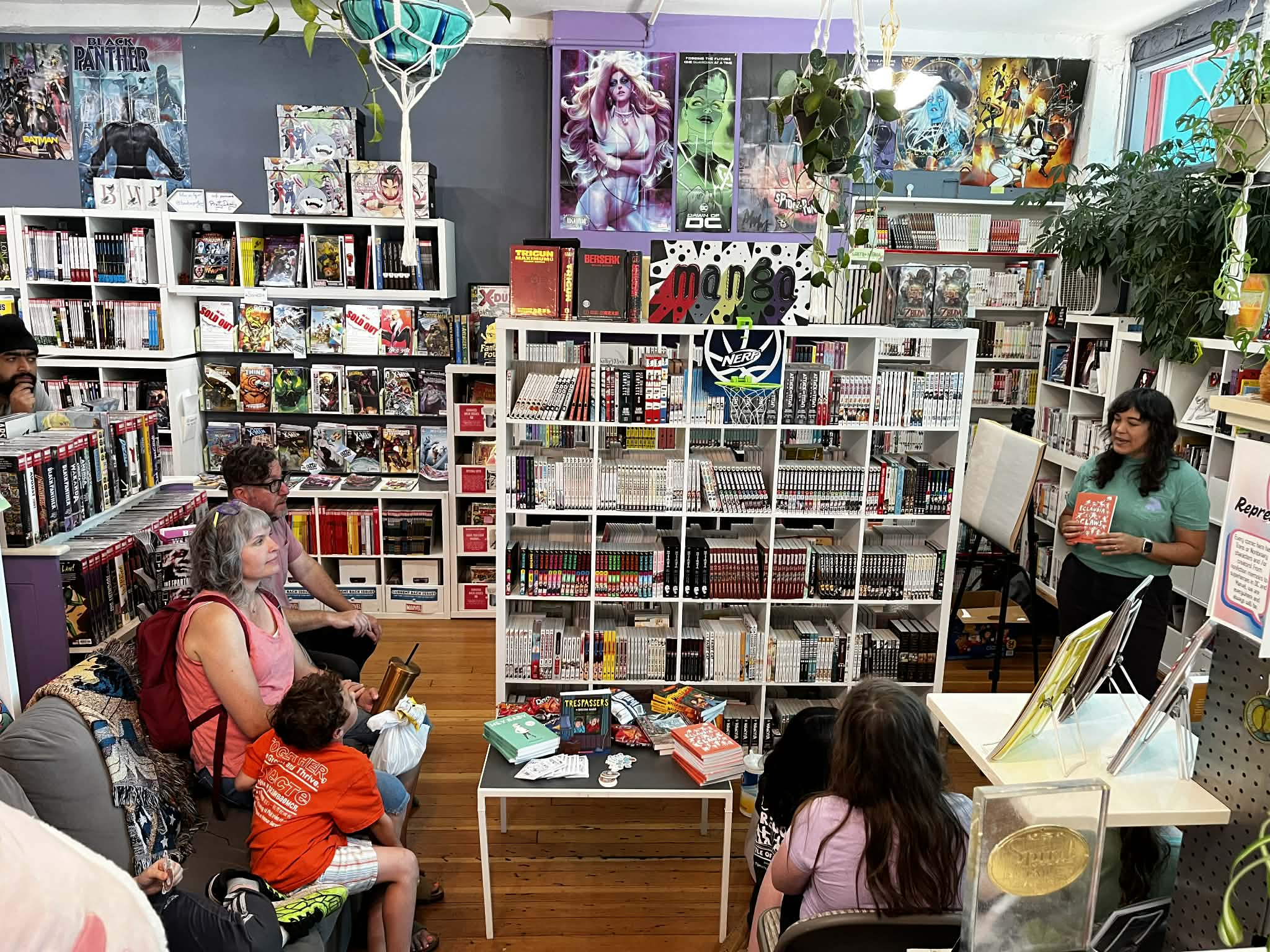
What were you doing to try to stake out the identity of your slogan, “Comics are for everyone”? What were you stocking, and how were you approaching the way you handled your business?
It's been a couple of things. One of the real gifts that we got was a woman who had just moved to town named Nikki Robinson. Nikki had just moved up to Portland and really wanted to have [an] art community up here, and had been shopping around the comic shops but hadn't found anyone that could host. I wasn't even open yet when Nikki approached me, but I had a “what's about to open” news story on public radio, so Nikki came and found me. They started meeting in the space before we had even had our full opening. We soft launched, and I found a church on Craigslist that was liquidating, so I bought all of their tables and chairs. That's what we set up with for this community group coming in to have their meetings in the comic shop that didn't exist yet.
We also had the podcast, Jay and Miles X-Plain the X-Men. Jay and Miles were both friends of mine, and at the time they were doing not just their historical mapping, superhero soap opera episodes — which is their bread and butter — but they were also reviewing the current X-Men comics that were coming out, doing those as video reviews. They started shooting those video reviews in the shop before the shop was open.
Was that a deliberate effort on your part? There seem to have been a number of prominent Portland comics figures that endorsed and mentioned the shop early on, and have continued to put it in the public eye.
Yeah, that was definitely intentional, both as a promotional effort and as really wanting to be from our DNA part of the art community, as well as being a commercial concern. We reached out to the people we wanted to bring in.
Helioscope is a studio in town where a lot of these folks work, so Jay and I took a bunch of invitations to the opening party along with two dozen cupcakes and some helium balloons to the studio. And that was how I met a lot of these people. I went around the studio, saying, “Hi, I love what you do. I've been a fan of yours for years, and also I'm opening a comic shop and you should come.” And they did. It was really deliberate in that way of wanting to make a space in that community for myself and my store.
But additionally, I was writing letters to Sex Criminals. I had sought out what at the time was a group for women in comics retail of Valkyries. That group was really formative to me. I was also part of Comics Pro's mentorship program, and met people like Carr D’Angelo and his wife Susan through that program. Once I decided what I wanted to be doing, my first impulse was to look for communities I can be of service to, and communities who will teach me. That's what I need to create. That was all the plan. That was very deliberate.
What were you learning talking to those people? Did anything surprise you?
My previous job had been in tech, so I was coming out of tech and moving into comics retail. I had worked in book retail 15 years earlier, and lots of things were just different and new. Ten years ago, you could set up pretty much with just a Diamond account and get up and running. It was that era. I bought software that no longer exists. I had set up with Moby as my point of sale management. Joe Ferrara down at Atlantis Fantasy World was so generous with showing me how he managed subscriptions, which as far as I can tell is unique on the planet. When I went down to Santa Cruz to meet with Joe, he opened up every file to me, showed me his accounting, his subscription management, his policy for how they greet customers. All of those were things I learned from Joe, Carr, and Susan. They were just exceptional at hosting events that were really centered in the LA community. I learned a lot about how to be welcoming and fundamental to a creator community.
In terms of inventory, I don't know if your ethos as a retailer reflected what you wanted to be stocking, and whether you felt like it ought to be or was different from other comic shops.
It definitely did. I had an informal but very real rule at the beginning that I still have and I still train my new employees on, which is that in terms of faced-out comics, comics that you see the front of, either in a bound book or on the single issue rack, I wanted there to be no more than half white dudes at any given time. And the degree to which that was hard in 2016 reinforced that it was important, but was also that I would walk around the store and think, we're doing it wrong. We're not meeting our goals because all I see are white dudes with guns on the front of comics. And I thought, what if we don't focus on that? Not that I don't want to have any of them, but what if it was just half of our inventory?
For a while it was just taking a chance on a new book that was made by someone who was not a white dude. That was sort of the general policy. Not that there was a carte blanche with everything, but I’d maybe be more likely to buy it, give it a second look, order five instead of two, just make a softer barrier to getting those books in. That was in 2016. Now it's so much easier. So that's been an interesting journey. I like to at least pretend that I have had something to do with the reshaping of the market over the last decade.
It feels great to make it not a hard problem. I really just buy comics for everyone. This is a place where whatever you look like, you should be able to come in and find at least a couple of books that are a mirror to you. Of course, we shouldn't only read books that are a mirror to us. We should read books that stretch us, that give us different perspectives that do all of those things. But we should all do that. You shouldn't only have to do that if you don't look like that white dude.
Have you found that you've been able to find a customer base that reflects that makeup?
Oh, absolutely. Overwhelmingly yes. I don't have full demographics. I do know that more than half of my subscribers are women, or at least more than half of the people who have put pronouns in my system have pronouns that are not “him.” I think that is the best I can do for demographics.
But I do know that in terms of the faces we see walking in the store, I think that they are regularly more racially diverse than Portland maybe is on average. I think that it varies by time of day, but there's a certain Sunday morning dad-and-daughter trip that I absolutely love. Dad takes the kids out to the comic store on a Sunday morning journey that we get to see pretty much every week. Yeah, it's hard in retail because I'm not sitting and making ticks on a spreadsheet when people walk in the door. But I do feel that we have a very diverse customer base. I don't think that my feeling that that was needed was accurate. I do think that we have seen that reflected in the demographics we serve.
One of the turning points for most shops tended to be the COVID shutdown year in 2020. So how did that play out for you?
I would rewind that a little bit because we were going to have a big milestone moment for the shop in 2019. The owner of a historical bookstore in a building up the street from us passed away. I went into conversations about buying the building and, as I like to say, I got an informal MBA in the amount of negotiations involved because it was not an amount of money I had personally to contribute.
Can you say how much it was going to be?
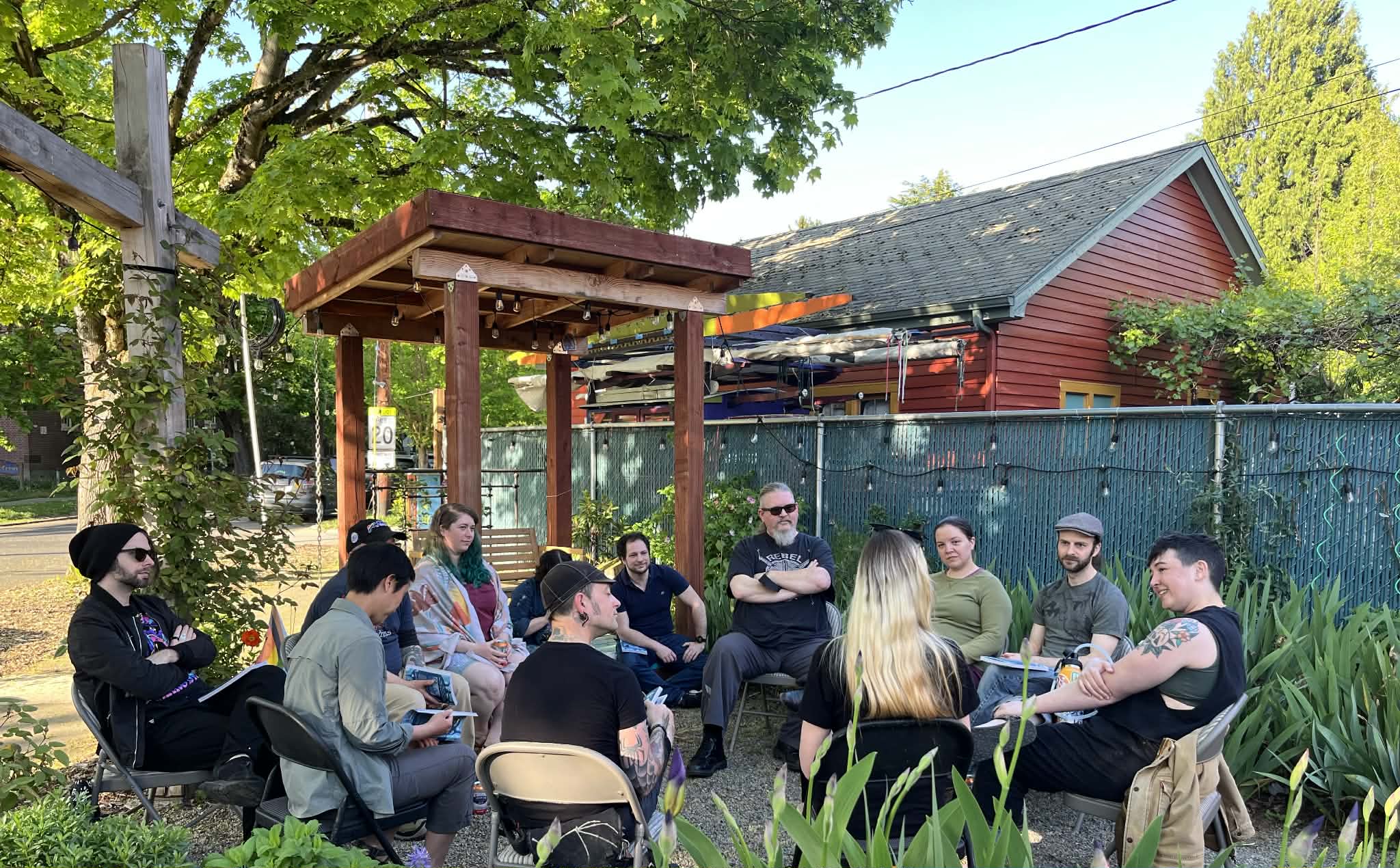
It was about a million and a half dollars to purchase the building, separate from the bookstore. I formed a corporation with 21 friends and people I knew either through the shop or through other eras of my life, and the 22 of us together went in on this building and purchased it. I live in the apartment upstairs. The comic shop runs on the ground floor. We have had the same tenant in the basement since we opened, and that is a record store called My Vinyl Underground. Over the next few years I developed the back parking lot as a food cart area on a business side. That's been least successful. I've just had challenge after challenge with making the food cart space profitable, but in theory there's space for four food carts to operate in the parking lot of the building. And then there's also a garden in the back that I maintain with a combination of native and ornamental plants. And we built a stage, so in the summertime that's where we do our author events, as well as in the back garden.
That probably lent a number of added degrees of complexity to the job that you were doing. Not only running a shop now, but you're also operating as a local landlord.
So, yes, all of those things. That was going to be hard, but it was also going to get me out of a pretty exploitative lease. That was our first space. I'm sure if you talk to anybody who's operating commercial retail, they'll tell you about the evils of a triple net lease. We were really struggling under unexpected charges from the landlord for our first three years. I started the conversation about this building to try and get out from under the expenses. I was having a really hard time earning enough to manage. We bought the building in 2019, it was an owner financed loan for the first year, which meant that I actually had to figure out the commercial mortgage in April of 2020. That was a really hard time to do anything at all.
You had just finished this purchase going into the COVID shutdowns. What did that mean in terms of debt that you were running in this period?
Actually, in 2019 we were struggling, but breaking even. And I put in the letter that we've never done much better than breaking even. And that's true. It's complicated, and some of it is on the personal side. In 2019, a relatively acrimonious divorce was finalized, and there's some financial stuff there that I won't talk about, but it was hard. And so I was also navigating that.
Were those finances separate from the businesses finances, or was it all sort of tied together?
I am a sole owner of an LLC, so I do not take a salary from the business. I take owner draws. And in theory, I only take an owner draw when there is a profit from business.
If you've only ever been breaking even, have you ever taken an owner draw?
Oh, I have to. I live on it now. That's the thing: breaking even when there was a second income in the mix is different than breaking even when it's my only source of income. So in some ways, my personal financial needs from the business have changed over the years. And the business has been meeting those needs, which means that the business has been doing better and better. What led us to where we are [now] were a series of months where we were under by just a little. “Just a little” is fine because you're always just a little behind and you have a certain amount of optimism that it'll be better next month. Then it didn’t get better. “Just a little” adds up.
When would you say that things started to get a little bit worse each month?
I think that the answer is shaped like our summer boom did not boom as much as it usually does. Usually January is not great, February is worse, March is even worse, April is better, May is great, June is great, July is great. And then we start to fall off again. That good weather boost was just not as good as it usually is.
Are you just talking about this year, 2025?
Yeah, just this year. My needs from the business have changed over time. So what it means when I say “breaking even” changes over time, right? It's different if somebody else is paying for groceries. And so buying the building, moving into the new space, building out the new space, making the bathroom accessible, replumbing the thing — those were all expenses, but we were carrying it. It was genuinely okay. And then, simultaneous to all of that, while I was in the process of buying the building, my dear friend Andrea Gilroy and I started talking about her opening a second location in Eugene. The quick and easy finances of that are that it is a sister store. It is a separate corporation from the Portland store, and she owns two thirds of it. She is the majority owner of it. I am an advising partner, and I own a third of that business. So that's the quick financial rundown on that.
How much does that shop and its business have to do with the financial situation you're in now?
Honestly, none. That shop is not making enough to pay me anything, but also not costing me any money. It is net-neutral to all of this, so that's fine. But that's in the narrative of what happened in 2019. I was buying this new building. I was remodeling this new building. I was helping Andrea get this new idea for a store up and running, and we had our opening events in the new building in late June of 2019. We planned the grand opening for the Eugene store for March 2020, and the lockdown happened on the 13th. We'd specifically delayed the grand opening of the Eugene store from the first week of March to the last week of March because we were waiting for the students to get back from spring break, but they did not come back from spring break that year. Eugene is a college town, and that was the spring break that didn't end that year. We immediately went into chaos mode. I was still recently enough divorced that I had not unpacked all of my things in the new apartment, and my kids were fourth and fifth graders who are suddenly home full time doing school on their laptops.
I locked the doors to the shop that has only been open in that location for less than a year. And at that point in time, we didn't have a functioning web store of any kind. So I made a big sign outside that was like “curbside comics pickup here,” and taped it to a tree, and spent a very late night coding a bunch of Google forms and spreadsheets for requesting books. And through the first eight months or so of lockdown, I spent the mornings helping the kids with their schoolwork, taking comic book orders on the online forms and over the phone, taking payment over the phone and by Shopify, [and] invoice sending. Then, from about two o'clock in the afternoon until as long as it took, I would drive around the city delivering comics to people's porches.
That was also where we started doing our personal shopping program because Diamond stopped shipping, so we didn't have any new product coming in. I put up a new form that was a personal shopping form where you tell me the sort of thing you like and I will pick out your budget worth of books from our back stock. That's our longtail inventory. It's not our best sellers, it's the stuff that's on the shelf that I'm not sure if it's ever going to sell, but I will sell to you here in this pandemic.
How did that play out for you financially? You were coming up with these strategies, but it must have been chaotic. I presume that you also were able to get some federal grants during that period.
It was wildly chaotic. The federal money came through and that was great. But even before it did, and even before we knew it would come in, my priority was to keep paying my staff who were all home at that point. I was trying to find tasks for them to do from home. I would send them the personal shopping orders and ask them, “Can you brainstorm books that you think this person should have?” I had one staff member make a list of schools and libraries that she thought I should contact, to ask if I can sell people books. My staff was all home, but I was prioritizing them, and I am really proud that I was able to not let anybody go. Everybody got their normal paycheck, every single pay period of lockdown, which wound up screwing me over in some federal funding ways, because I was coming up with these strategies specifically to keep my staff employed and fed.
What was your staff by then? Had it expanded past those original two people?
Alyssa had left us by that point. Nick had come up to full time, and I had Nicole Hawthorne, who is still with me. Seaerra Miller was my other staff member at that time. She has also gone on to be a fantastic professional cartoonist who does not need to work for me anymore. When I say I didn't lose any staff, actually, I didn't fire any staff, but Seaerra left to go and make comics full time in the middle of the pandemic. The staff was continuing to get paid whatever they were getting paid at the point that we went into lockdown.
Then there was the advent of Lunar and Penguin Random House somewhere in there. I got elected to the ComicsPRO Board. I think I might've been elected to the ComicsPRO Board in the virtual meeting year. It's all very fuzzy at this point.
So when you came out the other end, in what shape was the shop in?
One of the complicating parts of that story is that of course, if you look at any metric, comics as a field and book publishing, in the lockdown year, people had so much time and money to spend on sitting by themselves and reading. And so there was real demand in lockdown. It was stressful and it was strange. But as I got better at selling things online and connecting with people, there was money. And as we figured out how to reopen, people were there. People were really eager, frankly, to find a way to come back. I don't want to sound like it's always been suffering. I do want to say it's a refrain that we don't do this for the money. I've really not been doing this for the money.
As you said earlier, the best you've done is break even in any given month.
Yeah. There have definitely been periods of greater stability. And I do think that as we came out of the pandemic, there was a period there where it was like, we're okay. I remember I was having a long walk with my mom and she asked how I was doing, and I was like, “I don't know. I think I'm okay.”
We don't operate in the collector space, both because I think it's unsustainable and because I just don't have any enthusiasm for it personally. It's just not where I choose to put my energy. But in terms of adults being excited about reading books, we definitely saw a surge. That was a period of stability. Plus we had some government stimulus money, the COVID loan that was helping us: we could give Christmas bonuses, build some things that were broken. There was a really stable period in there.
And were you continuing to get the money you needed in terms of renting out the space that you had just purchased?
So that is the tricky thing. I think I mentioned that the food carts have been a persistent struggle, and that was scheduled for the beginning of 2020. Before anyone knew that the beginning of 2020 was going to be a dramatically more interesting time than anticipated, Portland was planning on putting in much more stringent requirements for food cart pods than it had had before. This is bureaucratic minutiae unless you're trying to operate one, right?
Sure.
My estimates for what it was going to cost to build out a food cart pod to code, and the reality of what the code was once I had finished that purchase, were very different from each other. We wound up spending about $50,000 more to get plumbing and power and sewer to the regulations that were new in that year. And then the desire to start a new business dried up and died. The tenants in that space have been really unstable since. There were two tenants who moved in, operated really sporadically and then basically stopped paying rent and closed without leaving or informing me. I spent a really unfortunate amount of time trying to optimistically support them — “Hi, it looks like you're having some trouble. What can we do to get this rent paid?”
By the time that we finally parted ways, one of them had not paid rent in about nine months, and one of them had not paid rent in about a year. I did not succeed in pursuing this legally because one set of them left the state and the other one lied to the courts. I lost energy to continue fighting because I was having medical stuff, as well. I want to mostly take responsibility. The shop’s finances are my responsibility and my problem. In this particular case, I did get screwed over by some pretty unethical people.
Now I have one really good food cart tenant for the building. To be self-sufficient as its own business entity, which is the ideal, I need to have two. And for the building to be making money and paying its investors as planned, I need to have four. I don't have four. I have one.
So, how was the building affecting us? On the one hand, the shop's rent obligation has been really stable and fair. My personal housing cost has been really stable and fair. We had to replace the roof at one point to stop water from coming in and pouring down on the book inventory because books and leaky roofs are not a good combination. That was extremely expensive, but it's been great since. Owning the building is a net win, but it's also, just in terms of stress, it's been really hard. And that food cart piece works on paper, but I haven't been able to make it work in reality.
That takes us up to the present day. Tell me about what's going on financially with the shop that prompted this GoFundMe effort now?
I am not a person who asks for help easily. And the past few years in my personal life have been challenging in part because I've had a stack of medical stuff with chronic pain and some injuries. My mental expectation of how much I'm showing up and my physical ability to show up have not been matching. So that's been a part of it. And one of the things that I have been not keeping as close an eye on as I should, are the things that tend to operate relatively routinely. Things like invoices to smaller publishers and distributors: your Macmillan, your Hachette. I mean, these are publishing giants, but in terms of my bills, they're smaller and maybe I miss a month paying them. And that's fine, because it's like I owe them a thousand dollars and I'll get them their thousand dollars next month, and literally no one's going to be bothered about it. Those numbers were getting bigger and I just didn't have an eye on it as closely as I should have.
How big are we talking here? What is the debt that you're in right now?
I do want to distinguish between personal debt that is credit card debt from periods where I was living on my credit cards and not paying myself and the shop's debt. The fundraising that I'm doing is entirely for the shop’s debt. I'm managing personal debt in other channels, but the $42,500 that I put up [on the GoFundMe] is specifically to pay the past due and current due balance on all of my publisher accounts.
So that's the entirety of that $42.5K debt.
It's actually a little lower than that. My friend asked me, “What would be the number that would make you not worried?” And that was the number, $42.5K. That would get me out of this particular muddle.
How long has it taken to accrue that debt? When did that start adding up?
I think I started being more than 30 days behind about five months ago. The summer just didn't peak the way it usually does. And since then, the last two months have been uncommonly slow and I don't have an explanation for why.
Do you know if it's been common to other shops in Portland or is it just you?
I haven't asked anybody. That's actually a really good question. I think it is an absolutely fair question to ask how much of this particular moment of financial panic is the market and how much is me? I do hear that a lot of my colleagues in other parts of the country or who have different specialties are having a better year than I am.
Can you say which specialties in particular seem to be having a better year?
People who focus on the collector market are having a better time than I am right now. People who focus on rare books of value rather than trades and reader copies of single issues like that.
I wouldn't say I've never shoveled out of a hole this deep before. But it was more a matter of — and I want to be really careful in how I say it — Diamond, who was basically a monopoly distributing comics, had lots of problems. I have complained about them my whole career in this industry. But one of the things that they reliably did was notice when a shop was in trouble, be actively aware of what their debt was and show up in a way that was compassionate and constructive. “Hey, you're falling behind. What do you need? How are we going to get you through this? Let's make a plan.”
I think one of the reasons that the people who’ve been doing this for decades and decades and decades — the old timers — were especially loyal to Diamond and reluctant to let it go is because for a lot of those folks, Diamond has pulled them out of a deep hole more than once. Forgiving debt, making payment plans, whatever. And in the current distribution landscape, the distributors are much quicker to lock an account and stop sending any product at all. They are much quicker to overdue. Overdue by a day is the same as overdue by a week, you are immediately overdue. Putting up the GoFundMe was the first time I have been offered a payment plan by the new distributors. So in general, my experience with the new distributors is that they are doing lots of things right, but they don't have a “nurturing the market” understanding that sometimes cashflow gets weird and here is what we're going to do about it besides just let people fail.
Since this debt started accruing, have you run into any difficulties either getting the money to your distributors or, on the other hand, paying your employees?
Payroll is first. Everything else has been late at some point or another. Feeding the kids is probably second and paying the mortgage comes after that. And then the distributors, frankly.
Except I presume that you still need new inventory in order to be able to work your way out of the hole.
Exactly. And that's the place where the lack of understanding and working out small business problems with small businesses is very frustrating. If I rely on you for my weekly comics and weekly comics are 30% of my revenue, and your response to me owing you money is that you stop sending me weekly comics, then that's 30% of my revenue that I'm not going to be able to bring to pay you with. And that's frustrating.
So has that been happening?
Yeah. But there have also been shipping hiccups that have nothing to do with me, and there's also been, I think, the sense of the world is on fire all the time, and I'm just a tiny part of it. It's very strong right now.
So if you were to look at these numbers and see the debt that you're at now and the difficulty in getting inventory and the money you're trying to raise through the GoFundMe, what actually is the plan to be able to work your way out of the debt?
Well, I'm out of it now. I don't know if you've looked at the GoFundMe, but it has done very well.
It says here you’re past your goal.
By a lot. It was completed in about 35 hours. Once I said out loud, "I’m in trouble,” so many people showed up across the industry. I mean, to my mortification, if you go to the list of donors, there are some amazing names on there and even more in the anonymous section that I can see, but you can't.
And so my strong hope is that what we've done now has filled in the hole. My health stuff is not resolved, but it's much better. My hope is to be able to be more tuned in, more proactive, more aware. And then there's also that Andrea and [the] Eugene [store] and I are working together as a Books With Pictures conglomerate. We have some new stuff cooking that we'll probably not be able to talk about until the new year, but we are actively looking at ways that shops have made themselves more sustainable. So if you look at something like Mission Comics in San Francisco, there is a Patreon that is part of how they continue to be open. Brian has his book clubs that are a fundamental part of how they pay to exist in the rent landscape of San Francisco. Andrea and I are working on programs that look like those things, to try to have a sustainable future. That means that when we look up and there's nobody coming in this week, it doesn't mean that our invoices don't get paid.
So one way to look at it is that you need to find ways to make the shop more full service and experiential. I guess that's the optimist's viewpoint on it. The pessimist’s viewpoint on it is, does this mean that there's not a way to make the shop earn money just by the bread and butter of getting people to come in and buy new inventory?
I believe both of those things, depending on the day. To be entirely honest about it, there are days when I think that this business doesn't work. The margins are very slim, even in the best case. The other thing that I really want to emphasize is that we don't know what's going on in anybody's bank account unless they tell us. So for me, there's no trust fund, there is no family that's going to bail me out. There is no super lucrative investments that pay my bills. There is no spouse who is making sure that the family is fed. None of those things exist for me. I know specific examples of other comic shops that exist and are sustainable for all of those reasons. I am glad for anything that keeps comic shops in business, but being able to say that this shop is sustainable and that shop is not, you just don't know [what the personal financial circumstances are].
Which is to say that just because a shop is in business doesn't necessarily mean that they're earning money on the shop floor month in and month out.
Or that they're not losing money month in and month out, and continuing to operate because they want to. I will definitely not name names, but I know shops that literally do not make money, ever.
Is there a sense that maybe you need to scale back? We haven't really gotten into how you're stocking the store right now, but is that going to change?
Honestly, when I look at the numbers, I think that there are some contractions that we've been in the process of making that need to continue to be made. Some of them, the market is deciding for us.
Like what?
I carry significantly fewer indie single issue, tiny press comics. They don't have distributors anymore, so I can't.
Is that to do specifically with the Diamond bankruptcy?
Yeah, there are comics that had distributors and that no longer have distributors. So I'm not paying for them. That's happening without me making the hard choice. This is not a place to spend my money.
That sort of comic, though, sounds pretty intrinsic to your mission statement as a comics retailer.
That was more true 10 years ago than now, in part because the kind of diversity and representation that we rely on has made its way into the major comics.
Which major comics are you talking about? Where are you seeing that diversity making its way into the major publishers? Are we just talking about Marvel or DC, or somebody else?
I'm talking about IDW, and I'm talking about Image. Image is its own flavor. I can be very snarky about the offerings of major publishers all day long, but I do think that there is objectively more content from women and non-white creators than there was 10 years ago.
That's probably true. I wonder if there's been a substantial backtracking on that in the past year.
I think that's fair. I see Marvel, in particular, making significantly more conservative publishing choices. I don't know why that is. I don't live in their heads. But I definitely look at a lot of their publishing slate and think that they have forgotten about a lot of the interesting creators they've been working with before the last two years or so. It's frustrating to me, and it is frustrating to my bottom line. On the Marvel side, this is not my best era of selling them. Funny enough, on the DC side, this is my best era of selling them, full stop. I am literally selling more DC comics than I ever have. I'm still bummed about the IDW self-published line crashing and burning, but I am excited about some of the new creator-owned things that Oni is putting out. It's always ups and downs.
How much of your sales come from those new monthly issues? And I say that especially in knowledge that cover prices have really gone up.
So right now — and these are ballpark numbers — for the year of 2025, about 65% of my business is books with spines or graphic novels and trade collections. About 25% of my business is single-issue comics, and that's new books. About 4% of my business is in manga. The remainder is stickers and t-shirts and tote bags and fidget spinners.
Has any of that shifted substantially during this year as you've seen sales not be what you expected them to be over the summer and since? Has there been any change in that percentage makeup?
That's a good question. So yeah, last year, 2024, it was more like 70% in trades and collections and more like 20% in single-issue comics. And it looks like manga was not being tagged correctly at that set of data because there's no tag. I honestly think that the [reason for the change] is the Absolute line [from DC Comics]. I think that Absolute is extraordinary. That said, my highest subscribed book right now is The Power Fantasy followed immediately by FML.
Are there any early thoughts you have in terms of what new strategies you're going to adopt to get things into the black on a regular basis? Because you talked about maybe doing some more experiential stuff, book clubs and things like that.
I think that some flavor of that is the way forward. I think that finding something that people are willing to pay for every single month so that we have reliable income that is not based on who walks in the door every day is the way to make sure that the shops stay open. I don't know what shape that's going to wind up taking, but I think that that's a key element for us.
Do you think it's going to be more widespread in the comics retail business, or is that particular to the sort of shop you run?
I think that both of those things might be true. I think that we're going to see more splits between folks who are making their business on new comics and comics readers, versus people who are making their money on older comics or comics collectors. I think that those kinds of businesses are going to continue to diverge more. We've already seen that. You look at how Chuck Rozanski talks about buying new comics right now, which I believe he stopped doing entirely. Chuck does really interesting things with his business, and, like, no shade, but we are no longer in the same business.
There are a lot of ways I can name the shops that look like my shop, besides my other shop. I think that me and Brian Hibbs [of Comix Experience] are definitely still in the same business, but I think that even my peers to the north, like I Like Comics in Vancouver, the majority of the money they make is on collectibles. I carry new comics, they sell new comics, they enjoy selling new comics, but that's not where they're making their money. And I know that.
So you really see these as just fundamentally diverging business models?
I do. Yeah.
I wonder if yours resembles potentially more of an independent bookshop than what we'd traditionally think of as a comic shop.
100%. I don't dispute that at all, actually. I love carrying new comics. They are a real percentage of my income, and honestly, they're what I read more of. That’s where a lot of my enthusiasm is. I wouldn't stop carrying them. But right now, the store that I am pacing around in is a pop-up shop that we are doing for the holidays in a space downtown. It's part of a city program. It's a whole other conversation, but our pop-up does not carry single issues.
What does the pop-up carry?
Trades. Manga.
So all things considered, do you feel optimistic about the situation that you are in or I guess in a larger sense, the situation that comics retailers or the comics business is in?
I do. I don't think comics are going anywhere. I think we're going to see rough spots and I think that different shops are going to be more or less able to weather them. But honestly, since before I owned a comic shop, I have collected t-shirts from comic shops. And I think that it would not surprise you as a reporter to know that this has now become a graveyard of t-shirts. The t-shirts I have are mostly for businesses that are no longer in business. I don't think I have bad taste in t-shirts. It's a hard business. Most shops don't make it to ten years. That's small business in the micro, that's business in general. It's hard. We've seen doom for the comics market at least every other year since I've been doing it. I don't think any of us are good enough analysts to be able to say what are larger factors in publishing and what are larger factors in the economy at large. I had a really regular customer pass away this year and I could see the effect of losing her, I could see it in my monthly revenues. I still see it.
So at this point in my career, I'm not in a place where I'm willing to make big prognostications. I think people do this because they love it. We're going to keep doing it. And to circle back to the beginning of the narrative, for me as a business owner, from the day that I decided I was going to open a comic shop, building community — both in seeing who I could lift up, and reaching out to people who were making it for advice and basic business lessons — that was a fundamental part of how I approached what I do. And so when I say out loud in front of other people, “Hey, I need help,” which I hate doing, every single one of those people showed up. And that, for any comic shop, that's the way through.
The post Books With Pictures’ Katie Pryde on her store and comics retail: ‘I don’t think comics are going anywhere’ appeared first on The Comics Journal.


 Hello, my name is Jack Sparrow. I'm a 50 year old self-employed Pirate from the Caribbean.
No comments:
Post a Comment