

Diamond’s disintegration is not the only crisis facing comics publishers these days. The latest distribution company ceasing to exist is the venerable library distributor Baker & Taylor.
If you’re not entangled in the library distribution market already, B&T may not have hit your radar at all. Who are they?
According to its website, Baker & Taylor "is the largest supplier of library content, software and services to public and academic libraries in the U.S. We also provide sales, manufacturing, warehousing and distribution support to small and mid-sized publishers through our Publisher Services business. ... Founded in 1828, Baker & Taylor has proudly served as a trusted partner for public and academic libraries for nearly two centuries, helping libraries improve community outcomes through literacy and learning.”
The company has been the biggest distributor of print books to public libraries around the country — and since many libraries use only a single distributor, B&T's closing leaves a lot of librarians without any way to order books. That’s a huge problem for publishers, who now might not have access to a major market, not to mention the many readers who rely on libraries for access to books.
“B&T shutting down is already having a huge impact on libraries of all types, across the country. I don't really know what distributors are left other than Ingram,” long-time librarian Shanna Hollich told me.
And B&T stood out among library distributors because of their strong support of comics and graphic novels.
“Baker & Taylor had done genuine, targeted outreach to some comic book stores in the early to mid 2000s, making it easier for them to keep up with the onslaught of popular graphic novel series from that time period, to stay competitive when a manga series took off, or when a kids graphic novel took off and that category exploded," Tucker Stone, Executive Director of Communications and Marketing at Fantagraphics, told me. "I can't speak to what it was like in every part of the country, but in the NYC area, they were reliable, stocked well, and were easy to deal with. They helped a certain kind of comic book store expand what they could carry, and they helped a certain kind of independent bookstore carry graphic novels beyond the predictable handful.
"When you didn't have something and B&T did, you could get it for a customer within just a few days. They had supporters amongst librarians, and their buyers were open to suggestions for collection development beyond the bigger corporate publishers. You could go see them in New Jersey and talk about your upcoming season, and they didn't stare at the clock, waiting for you to leave. They weren't perfect, but I rarely heard criticisms about them that felt informed or fair."
Since the 1990s, B&T’s ownership has bounced around through various private equity groups. In fact, the distributor has gone through three different owners in the past decade.
“The decades we've dealt with them, directly and indirectly, they were always amongst the worst payers, paying constantly late and having to be pursued endlessly for overdues," NBM Founder and Publisher Terry Nantier said. "They kept changing hands with new owners trying to turn them around and in the end clearly not succeeding.”
So librarians were anxious earlier this year when title shipments from the distributor became irregular. The industry breathed a sigh of relief in mid-September when book distributor ReaderLink announced a plan to acquire the company. At the time, Publishers Weekly commented that, “Publishers were not surprised that B&T has once again changed hands since many had been experiencing problems with the wholesaler for some time and B&T had been on credit hold with some publishers, particularly in recent months. PW has also received a number of complaints from librarians about B&T’s service.”
"I'm very sad for Baker and Taylor and the staff, especially those we've worked closely with for years. Unfortunately, I had difficulty using [B&T ordering tool] Title Source this year even prior to the shutdown, as many of the comics I needed to purchase were backordered (including pre-pub titles)," Brittany Netherton, the Head of Knowledge & Learning Services at Connecticut’s Darien Library said. "As a result, I've already been ordering most of this year's titles through Amazon and bookstores.”
ReaderLink, which seemed like it might save the day for library distribution in September, is the U.S.’s largest distributor to mass merchandise stores, like Target, Walmart, Toys ‘R Us, and other food and drug stores. Working with public libraries would be a significant change to their focus. But ReaderLink had a solid book distribution infrastructure, so maybe it would work? The acquisition plan did seem to come with an awareness of the difficulties the distributor was having. In an interview with Publisher's Weekly, ReaderLink CEO Dennis Abboud said, “the last several months have been a challenging period for Baker & Taylor. The company has faced headwinds, including the pressures of operating independently, emerging from the COVID-19 pandemic, and overcoming the debilitating impacts and financial losses resulting from cyberattacks in 2022.” (Three years ago, B&T dealt with a ransomware attack and was out of commission for two and a half weeks.)
But then, only a few weeks later, B&T and ReaderLink announced they’d called the deal off. Then, in early October, B&T CEO Aman Kochar told the industry that the company would shut down, at which point more than a third of their 1,500-plus employees were let go without severance and had their health care coverage immediately terminated.
Industry reverberations
I got on the phone with Britten Follett to talk about B&T, the library distribution market, and what these changes mean for the industry. A fifth-generation family member, Britten Follett is CEO at Follett Content, which is the largest provider of children’s and young adult print materials and solutions to PreK-12 libraries, classrooms, learning centers, and school districts in the United States. It's a major supplier to educational institutions worldwide, and now a provider to public libraries. She has led Follett’s PreK-12 business since September 2019 and is responsible for providing leadership, strategic direction, and business development.
She gave me a picture of the centrality of B&T’s place in library distribution. “Baker & Taylor was the largest provider of materials to public libraries and has been for many, many, many, many years. Our most recent survey data indicated that they still served as much as 50% of the market, and that leaves hundreds of millions of dollars in book orders hanging in the balance. There's no question this is a crisis for the public library market. There isn't a distributor today who is equipped to take on all of that volume and ensure that the books are cataloged, processed, and distributed in the way that Baker & Taylor provided services to public libraries. There are way more orders and not enough capacity within the existing businesses that serve the market. ”
Shauntee Burns-Simpson, President of the ALA Graphic Novels & Comics Round Table, also recognizes B&T’s place at the center of the library distribution market. She told me, “Baker & Taylor has been such an integral partner for libraries, especially in helping us build strong, diverse graphic novel collections that reflect the readers we serve. Their closure feels like the end of an era. For many of us in libraries, it raises real concerns about access and equity in the comics market. We’ll need to work even harder to ensure readers can still discover the power of comics.”
Tucker Stone agreed. “B&T had a smart, resourceful staff, all of whom are now out of a job. They had warehouses that served various regions; now those books will have less places to be shipped from, and less people to ship them," he said. "The private equity company that was involved will take the lion's share of whatever money is left into their universe of bullshit, which is not books, not art, not reading, not literature. It won't go to authors, it won't go to publishers. It's our blood, and it was stolen. Librarians who haven't already had to take the time to move all their sourcing over to the other competitors will now have to do that quickly, and there aren't going to be hours added in the day to make that convenient, or easy, and it will just be another way to make life harder for libraries.”
Fantagraphics isn’t the only publisher seeing the fallout from this change.
"Baker & Taylor is a significant institution with a long history of serving publishers, industry professionals, and readers. In my time working with them in a sales and marketing capacity, I've gotten to know the buyers at B&T and come to rely on them for their expertise and their partnership, both directly and with the libraries and other accounts that they've served," said Spencer Simpson, Oni Press’ Vice President of Marketing and Sales. "It's incredibly sad to hear the news of B&T's closure. In the immediate days to come, we expect a fair amount of disruption within the library market, both for the distributors who would be stepping in to facilitate those libraries who previously ordered exclusively through B&T and for the library systems who will need to make significant changes to their processes to accommodate these new relationships.”
Allison Pond, VP of Marketing at Mad Cave, is on the same page. “Baker & Taylor’s shutdown is seismic. For decades, they’ve been one of the two major wholesalers serving U.S. libraries, alongside Ingram," she said. "Their closure represents the loss of an enormous logistical and cultural connector between publishers and the library ecosystem. For publishers — especially in comics/graphic novels/manga — this isn’t just the loss of a buyer, it’s the loss of a trusted conduit that specialized in library collection development, metadata curation, and long-tail distribution."
And the shuttering of B&T adds to an already difficult year in the distribution space for comics and graphic novel publishers.
“Some books we published this year will probably be victims of this as budgets get messed up that would have picked up our and other pubs' books," NBM’s Terry Nantier told me. "The trick will be to try for those to get a second chance when the dust has settled. Libraries' budgets are oftentimes 'use it or lose it' by a certain deadline. If they didn't have the chance to use it during this crisis, that money may never come back ... hopefully exceptions will be made. We are taking some pretty large hits with accounts payable due from them being written off. Monies we will now never see! Add that to Diamond, and boy, what a garbage year.”
What’s happening now
Distributors Ingram and Bookazine are increasing their services to public libraries. But that all takes time, and involves those distributors adding, cataloging and processing services so that the libraries can get the books they receive on their shelves and into their systems.
Amie Wright, public historian, comics librarian, and nonprofit director, went into detail about the challenges of library cataloging for me. “This shutdown is going to impact libraries in big ways at a time in which libraries are already hurting with the funding cuts," she said. "What people may not know about libraries ordering from B&T is that libraries are not just ordering physical books — they are ordering items that are 'shelf ready' — meaning that the books arrive with custom cataloging and physical processing already completed. Beyond distribution concerns and how to buy the physical materials, most libraries do not have in-house cataloguing/processing support (and haven't for years), so the lag time for buying, purchasing, and ensuring new items are shelf-ready could be considerable in many libraries.”
“You can't train the 100+ processors that we have in our warehouse overnight,” Follett said, talking to me about Follett’s existing cataloging staff. “They're very trained, it’s a very specific skill and the systems that we have really allow for a lot for our team to know what a librarian's wanting with their processing. So it's difficult to ramp that up overnight.”
“B&T's departure reflects on cataloging issues,” librarian Francisca Goldsmith told me. “It's not clear whether distributor Libraria is up to snuff with making quality cataloging a purchasable element of book sales yet (they do offer it but the service needs independent and multi-type institution evaluation). Single and other small libraries, where there is no local cataloging expertise, are going to be in the lurch.”
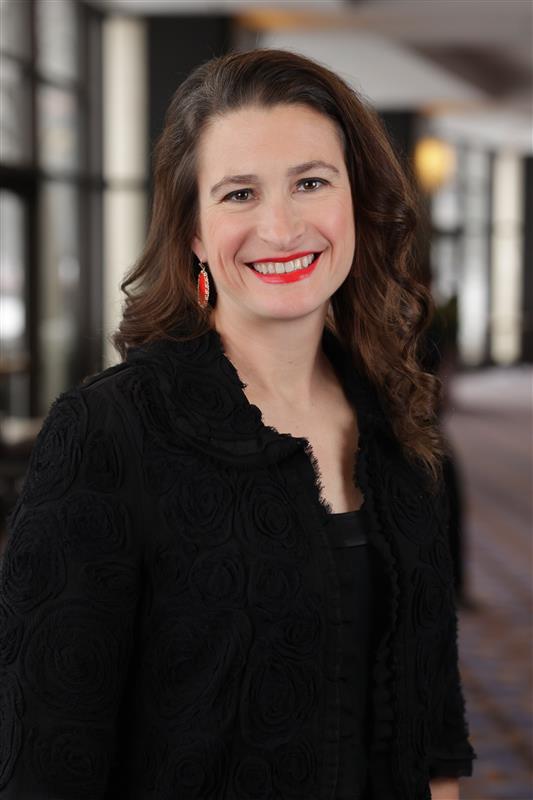
“I do think it is absolutely a real concern,” Follett said. “I don't necessarily think in-sourcing it is the right solution either (as in, go hire a bunch of processors at every public library in the country). I think it is far easier for a distributor like us or our peers to scale an operation like that than it is for an individual library to do it all themselves.”
“Books are going to take longer to get to libraries,” she added. “Librarians are going to have to wait for their books. That being said, they've been waiting for their books from Baker & Taylor for months prior to this. So I would say unfortunately the market has gotten used to much slower service, which you know is indicative of the financial position that Baker & Taylor was in, but hopefully not a long-term reset once all of us kind of get up and running and are able to better service the market. Specifically for the comics industry and graphic novels, it's the same problem. In this scenario, a book's a book, and it's just going to take longer for librarians to get their books.”
“We've been told it could be six to twelve months before we're set up for full processing through some of the other vendors, so I won't pretend it isn't a massive disruption," Netherton said.
It's a problem even for libraries who have other distribution options already in place.
“The Seattle Public Library uses Ingram for most print materials, including comics and graphic novels, minimizing the impact on our day-to-day operations,” said Kirk Blankenship, the Selection Librarian at the Seattle Public Library. “Having a variety of reliable suppliers is important for libraries and the book industry. Losing Baker & Taylor is concerning and we are monitoring the situation closely.”
How will distributors that are expanding their presence tackle what’s next? Library distributors Follett Content and Mackin — who have previously focused on the school libraries — are ramping up programs to get books to public libraries.
“Several months ago, prior to the ReaderLink acquisition announcement, prior to Baker & Taylor's shutdown announcement, Follett was doing research to determine whether we could easily fit into the public library space out-of-the-box," Follett said. "We've got a very large warehouse behind us. We've got the books that librarians are ordering, especially in the children's and YA market. We have a tool that librarians and PreK-12 schools love. So, could we just start selling books to the children's and YA departments of public libraries? And the answer was yes, but we were still in research mode and putting some test orders through, doing some pilots.
“Then, the Baker & Taylor announcements happened and I said, ‘Okay, we're not going to dip our toe in here. We need to dive in because we have books and librarians need books, and we can fulfill those books in five days.’ And in some cases, these customers had been waiting for months and months and months for their books," she continued. "A couple of weeks past the announcement, we've had a lot more conversations. I think where we fit really well right this second is in the small-to-medium public libraries that have a children's and YA department where they're doing their own selections. We have both the backlist titles and the popular frontlist titles — including graphic novels, manga, and books in native languages — available in our inventory today, we have the largest cataloging and processing team in the country, we have one facility, and we can get those books shipped in five days.
"We're not going to be able to make libraries’ ordering quite as seamless as it was with Baker & Taylor. That being said, if they're open to placing an order and getting a box of books processed, that's what we can do out-of-the-box today.”
“MackinPublic is excited to launch our dedicated service for public libraries,” Randal Heise, Co-Owner of Mackin, told me. “As the market and options for public libraries begin to shift, Mackin remains reliable and steady — MackinPublic is ready to serve, now and in the years to come. We bring the same exceptional customer service, value-added services, and access to millions of titles — including graphic novels, comics, and manga — to public libraries just as we have done for schools for decades.”
“At Follett Content, I am spending 95% of my day thinking about how we can accelerate our entry into the public library to be able to meet the needs here,” Follett said. “All of my peers, we're all talking at this point about how we can help, how we can work together to help service this market. If we have extra processing capacity, can I help? So how do you or your competitor get books out? I mean, in the end, well, we might be competitors in the space. We all are mission-driven and we want to get books in the hands of patrons. So if there's a way that we can help facilitate that, I think we're all having those conversations.”
How do comics fit into the picture?
“We are especially passionate about our sequential art offerings and have collaborated with many of the industries leading librarians advocates," Randal Heise at Mackin told me. "We believe the vibrant combination of art and story opens new doors for readers of all ages — engaging reluctant readers, sparking new interests, and giving libraries a dynamic collection that resonates deeply. With MackinPublic, publishers’ graphic novel offerings are more than an add-on; they are at the heart of how we help build the love of reading.”
Follett brought up some of the challenges the rapidly-expanding distributors are dealing with. “I think the challenge in both the public library and the school market for graphic novels and comics is just educating the buyer about the content," she said. "Whether we're talking about public libraries or school, kiddos love graphic novels. They love the format; they're eating it up. In public libraries, I think librarians in general are trying to figure out, ‘Okay, how much do I invest in this format?’ When they do, they're seeing really high circulation.
“So what we're trying to do at Follett Content is figure out the best way of providing reviews and information about the titles. I think a librarian might buy a couple titles in a series or line that are reviewed, but maybe not every book in the entire series has been reviewed. That becomes a challenge for librarians because they really trust those reviews before making a purchase. So we're trying to work with influencers in this space to figure out how we can provide — maybe not a professional review — but a peer review about the title because I might trust my peer as much as a professional review. I think it's also important to offer the ‘look inside,’ so to speak.”
Follett also mentioned problems on the horizon for librarians working to select graphic novels. “Baker and Taylor's tool, Title Source 360, was very widely used by librarians for collection development. I think ensuring that smaller presses and other folks who are trying to get the word out about their graphic novels understand that there's one less tool out there today for the collection development process so they can get the word out about their title and provide as much information as they possibly can, so the librarian can make an informed decision. I would say the difference between school librarians and public librarians is that school librarians very much use Titlewave, which is our e-commerce tool, for the reviews. Public librarians are still using physical magazines, they're circling books in Kirkus and Booklist and Library Journal, and they're using that as a large source for making a selection. I think there's probably room in the comics and graphic novels space for a publication that targets librarians just to inform them about a popular series and that sort of thing. I don't have a solution there, but it feels like there's space for that kind of an educational publication, whether that's a physical publication or a virtual publication, to spread the word about the titles.”
That discoverability has already been a challenge for Netherton. “The thing that will drastically change for me is discovery," she said. "Rather than receiving digital carts of books from Baker & Taylor that I then look through to find items to order, I'm relying more heavily on publisher newsletters, webinars, best-of lists, and publishers/creators that I follow on social media.”
More or fewer distributors?
Goldsmith expressed concern about libraries relying on Amazon. “Given what I have been gathering during time at the Association for Rural and Small Libraries conference in September, is that the small, isolated libraries are turning to Amazon, which of course offers no real library services and has its own marketing strategies that will make backfilling series, let alone representative independent comics publishers, distinctly difficult to find and purchase. And that will have deleterious effects on collection health. It seems like a good opportunity for [the digital app] ComicsPlus, but getting one-person libraries (both school and public) up to speed on this — even in those regions where a larger consortium or district will pony up to allow access — will be the nut to crack.”
With all these distributors moving to fill the gaps that B&T is leaving, many publishers are feeling optimistic about the possibilities — or at least that this change doesn’t have to be a complete disaster.
“We’re saddened to hear about the closure of this important business, and we hope that libraries will be able to transition smoothly to a new distributor,” Ben Applegate, Director of Publishing Services for Kodansha USA at Penguin Random House, said.
"We have seen a major shift already of increased orders from Ingram, Brodart and others. And, we feel that this shift is a great opportunity to get our titles in front of new readers,” Kurt Nelson, EVP of Sales at Mad Cave, told me.
But a number of librarians I spoke to were concerned about B&T’s closure giving them fewer distribution options.
“I think my biggest concern is the market consolidation,” Hollich told me. “When I started in libraries fifteen plus years ago, there were a handful of vendor distributors that a library could choose from. Now there is effectively one, with maybe one or two smaller potential alternatives in some areas. Market consolidation is bad for just about everybody. We're already seeing the remaining distributors being so inundated with orders that libraries aren't receiving materials until weeks after expected ship dates. Fewer options means higher prices for libraries. And it probably means higher prices for publishers, including comics publishers. And as always, it's the smaller and independent presses that will feel this the most. So you'll probably still find the latest James Patterson on your library shelf. But it's a shame that you're going to be a lot less likely to find the next great American graphic novel or indie comics creator there, especially as library budgets continue to decline.”
“Alameda Free Library didn't have all of its eggs in one basket, so we aren't struggling to get accounts set up at the same time as so many other libraries,” said Eva Volin, Supervising Children’s Librarian at Alameda Free Library. “But we are noticing delays in fulfillment as book distributors hustle to acquire enough copies of hot titles to satisfy demand. This means some smaller publications may get missed in the hubbub of ordering and reordering materials. When one is scrambling to meet patron demand, it's easy to skip over new books no one is clamoring for yet. It's very much a case of, ‘if you don't have time to fix it now, when will you have time to fix it later?’ Publishing doesn't slow down, especially this time of year. My fear is that, much like during COVID-19, when scheduled new releases shipped late or not at all, newly released comics will get lost. Books that will miss their promotional window may never have the chance to be discovered.”
“In terms of changes for the comics market, it will be interesting to see how/if large publishing houses such as Penguin Random House respond to this,” Amie Wright said. “PRH has assumed distribution of many major comics publishing houses/brands and filled a need before and especially after the demise of Diamond.”
“A certain kind of person who should know better will point to this as evidence of the ‘free market,’ or of how it wouldn't have happened if B&T hadn't done right by them personally years ago," Tucker Stone concluded. "The reality is that this is a bad thing. Things are now worse than they were before.”
The industry was relieved to hear that Lakeside Book Company has acquired B&T Publishing Services, the arm of Baker & Taylor that handled manufacturing, distribution, and warehousing. With 100+ independent publisher clients, BTPS had very little comics representation.
But B&T’s closing has left other companies in the lurch. Lectorum, the largest Spanish-language books distributor in the U.S., is closing — citing B&T as one of the reasons they can no longer go forward. This is a catastrophic loss for Spanish-language publishing in the United States.
What should publishers, librarians, and readers expect in the next few months as things unfold?
“We are truly all trying to solve this problem, and you know this isn't an esoteric market crisis in that none of us are going to be able to serve public libraries in the future. Their librarians buy books. We have books, we have processors,” Follett told me. “My competitor and peer companies have processors. I think we're going to be able to step up and meet the needs. It just isn't necessarily going to be overnight due to the volume. So I would just ask for some patience. Some things that Baker & Taylor did turnkey might not be turnkey right this second. It might take a little longer to get your processing specs set up. It might take a little longer to get to know a new tool. But at the same time, in the end, we're all trying to get books into these libraries.”
Baker & Taylor, meanwhile, ceased operations at the end of 2025.
The post ‘Books are going to take longer to get to libraries’: What Baker & Taylor’s demise means for comics appeared first on The Comics Journal.


 Hello, my name is Jack Sparrow. I'm a 50 year old self-employed Pirate from the Caribbean.
No comments:
Post a Comment