

“He who is without sin among you, let him throw a stone at her first.” –John 8:7
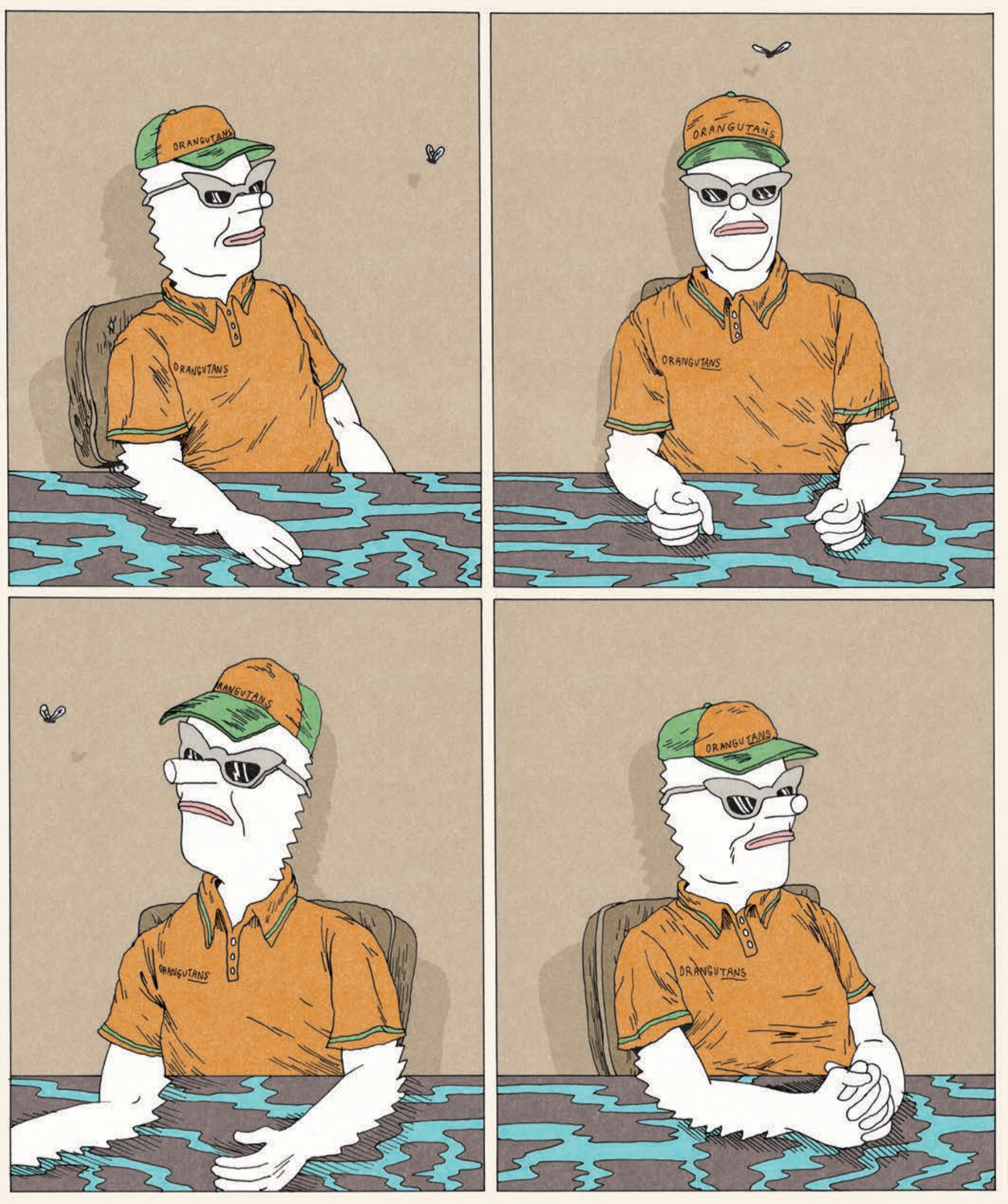
Pull a copy of Pageant off the shelf, and see the silhouettes of eight sunglass-wearing humanoids with sashes of indeterminate origin, staring into the distance. What are they looking at? Who are they searching for? Pageants call to mind the idea of vapid, gaudy displays of wealth. This, however, is not the case in Justin Gradin’s sophomore book. People are fighting for their SOULS, or trying to steal them, or barter for the soul of a dog. (All artwork is from Justin Gradin's Pageant except where otherwise noted.)
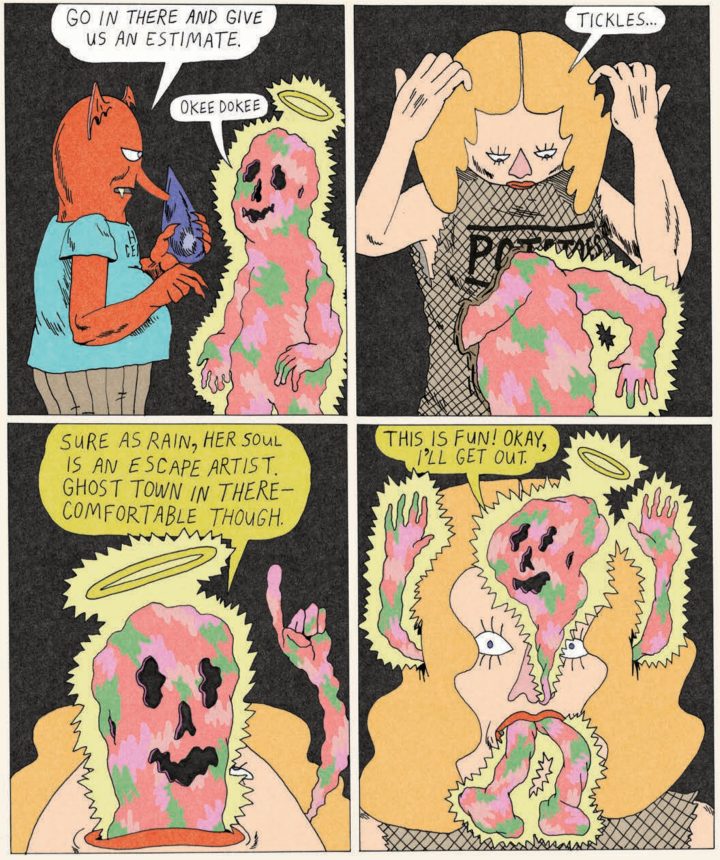
Ponce, a male humanoid with white waves down his backside, seeks love. He works in a laboratory and decides to break protocol by cloning a single blonde hair he finds in the carpet of his new apartment to make himself a partner. His co-workers don’t seem to notice him using the machine, which is fortunate for Ponce, because he continues making clones in his spare time, all of the same woman. Every time a clone pops out, she leaves him for a new lover, or for life on the street, or a man with goatees on his knees. Ponce’s colleagues are just happy he is renting an apartment and will stop sleeping in the lab.
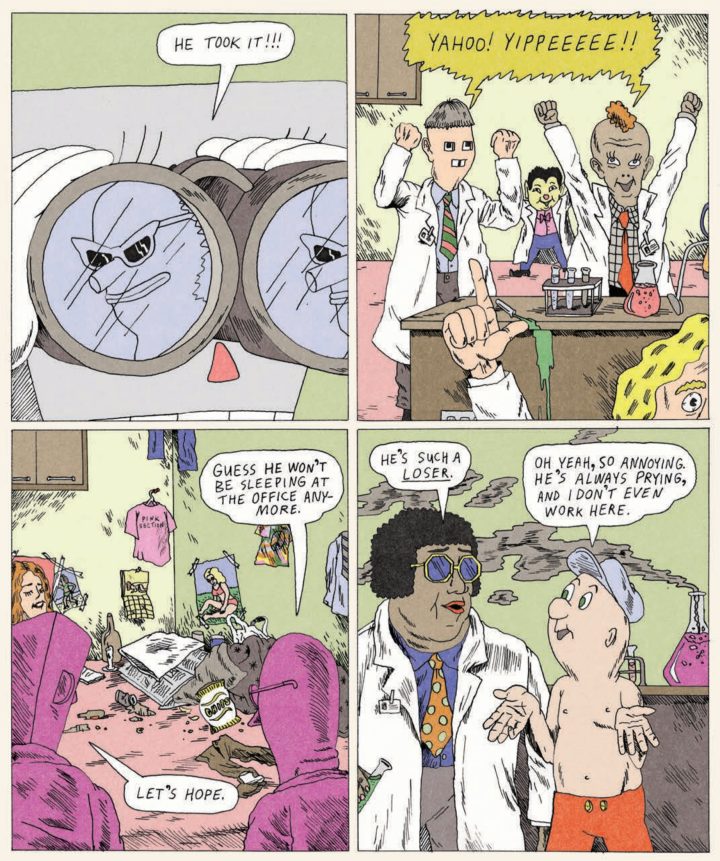
The woman whose hair Ponce found in the carpet, Mackie Squarebrix, is attempting insurance fraud with her husband, Mandrake the Soda Jerk, who is all head and legs and wears a dashing ice cream man’s hat. Despite their depravity, they’re an admirable couple because of their commitment, even when it comes to committing murder. Mandrake is determined to capture all the clones, as Mackie doesn’t want those “deep fakes” running around causing problems for them. Mandrake anticipates her needs and is a good listener.
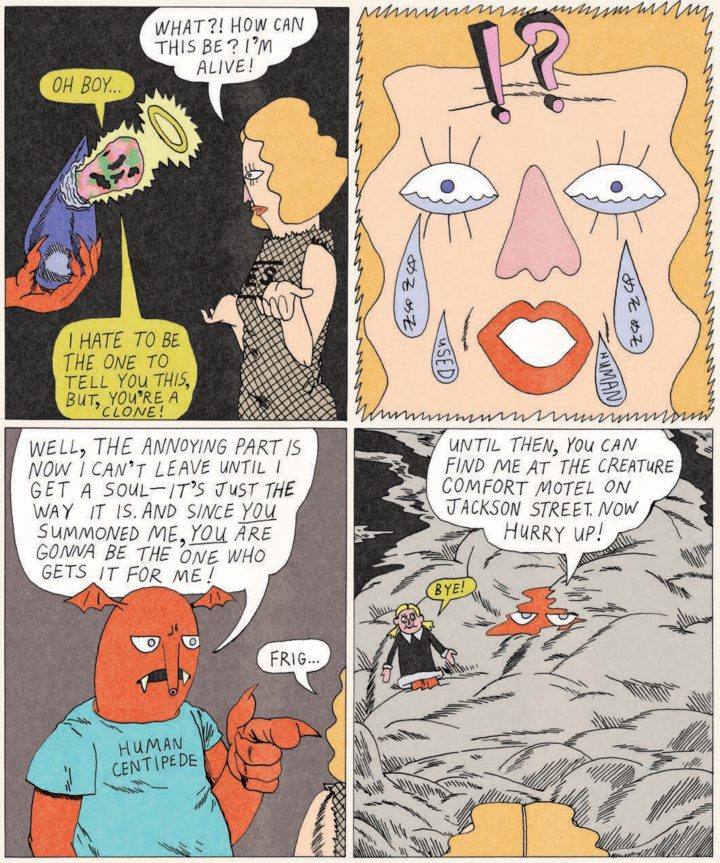
A demon gets involved when Ghost Meat (the first clone) summons him from Hell, but the demon is pissed when he realizes the clone doesn’t have a soul to offer. He takes a construction job while she hunts one down, as he can’t return to hell without a fresh soul.
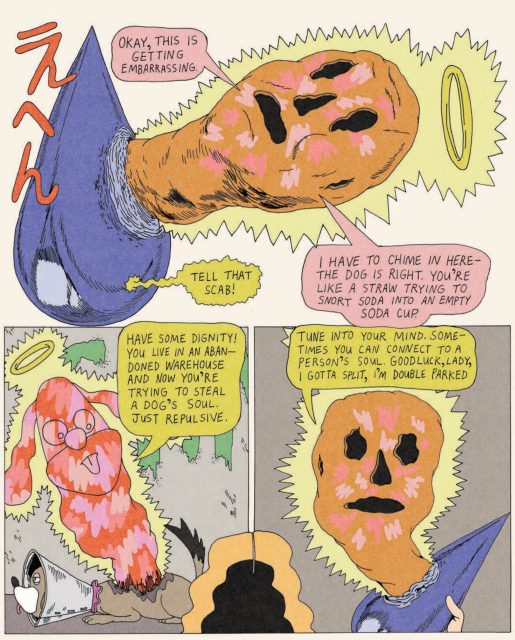
The perspective, close-ups and muted colours of the soul’s communion with Ghost Meat show Gradin’s humour and artistic talent. Ghost Meat is so determined to have her own soul that she tries to get a dog to trade his soul for a fish skeleton. “Have some dignity,” Jiro (the dog soul) admonishes. “You live in an abandoned warehouse and now you’re trying to steal a dog’s soul. Just repulsive.” The soul’s empty eyes and triangle nose remind me of vintage halloween decorations.
Initially, the look of Gradin’s cartooning style reminded me of Home Movies from the early days of Adult Swim. That isn’t exactly a compliment. The style felt dashed off when I started the book, characters with odd proportions, absurdity for the sake of being weird. However, Gradin won me over. I came to admire his jubilant linework. There is a real sense of fun to Pageant. Gradin makes a choice, like a demon inhabiting a toddler or Ponce’s feet clad in cuban heeled boots, and commits to it. I admire that. A big part of telling a successful story is believing in the logic of the world you’ve created and Gradin inhabits his world completely.
In the marketing for Pageant, Gradin is compared to names like Marc Bell, Gary Panter, and Mark Beyer. Gradin is clearly influenced by these underground titans, but I think the comparisons set up false expectations of the “weird” the reader will experience. Gradin is working in an underground visual style, but he’s using that mode to tell a more conventional, linear story with commercial appeal. The visual dream-logic of Marc Bell’s work in Hot Potatoe or Gary Panter’s collage nightmare fuel in Jimbo’s Inferno are levitating works, but they operate on a different plane than Pageant.
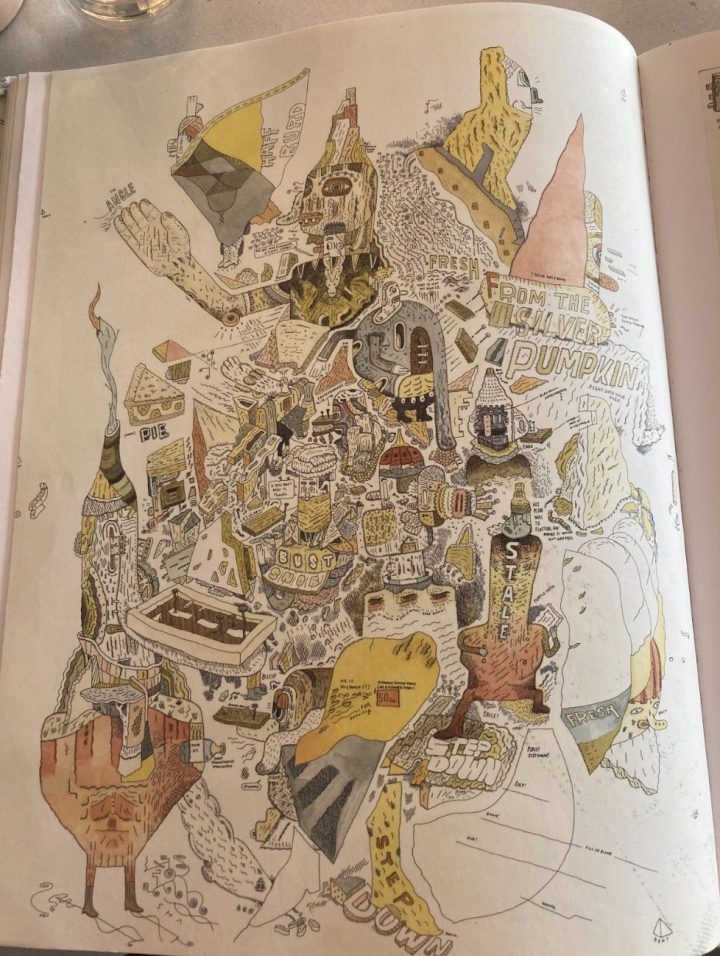
Bell is content to let his characters wander the board game he’s constructed and let us follow along in Hot Potatoe. There is a quiet, deep-time genius here to the multi-layered elements. There are so many avenues for the eye to wander. It’s a unique experience, and one I’ve come to expect when I pick up any book of Marc Bell’s. I could stare at “Fresh from the Silver Pumpkin” from Hot Potatoe for hours.
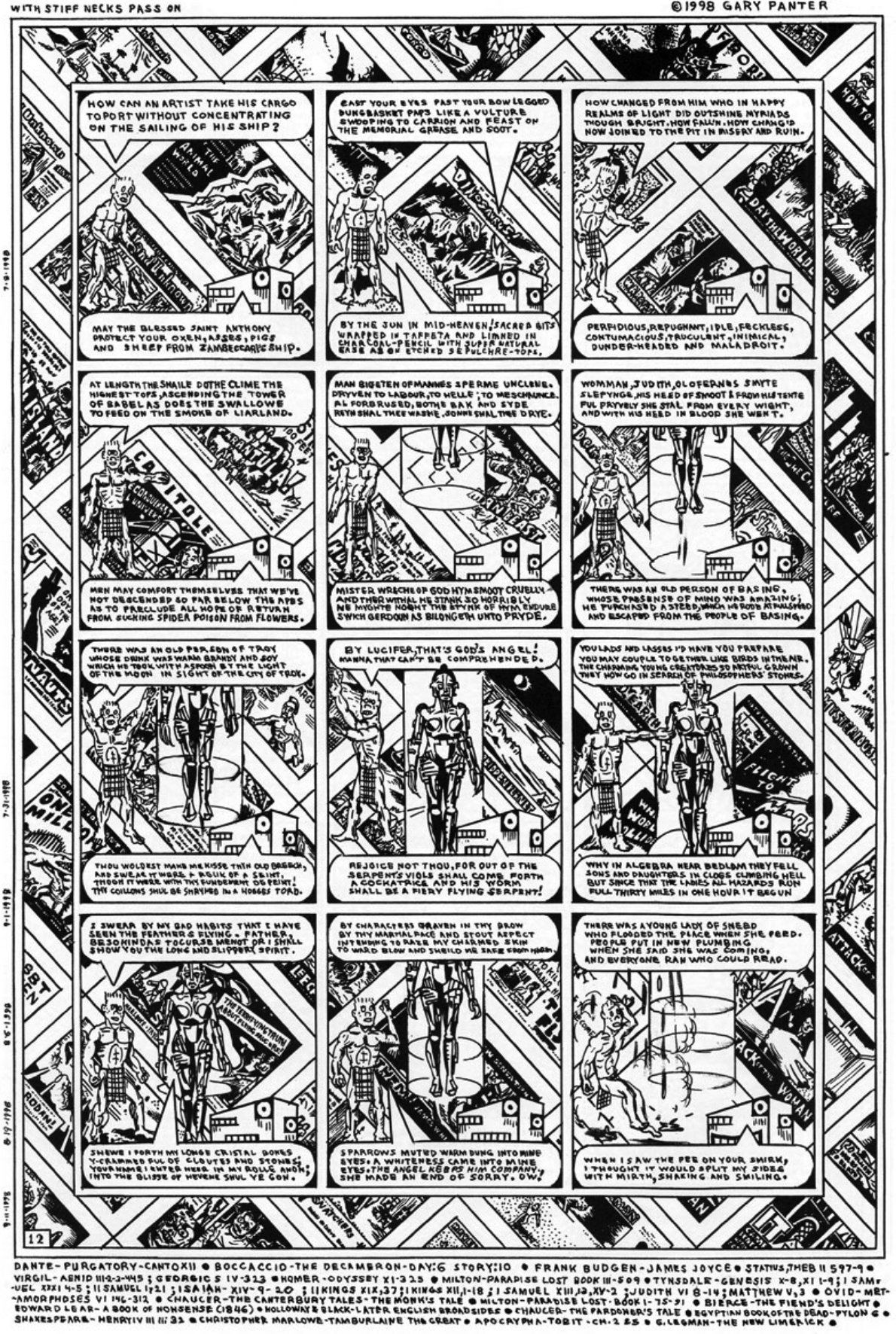
This page from Jimbo’s Inferno shows Panter’s deeply layered approach, it feels almost sadistic with the visual overload of what he’s asking me to experience. It’s challenging, and amazing, but not what I experience in Pageant.
Gradin is harnessing the weird elliptical nature of Bell and Panter and giving it a narrative spine. Gradin is more straightforward in his storytelling, and that isn’t what I would expect from a spiritual child of Bell and Panter. Gradin commits to his storytelling choices and sees them through.
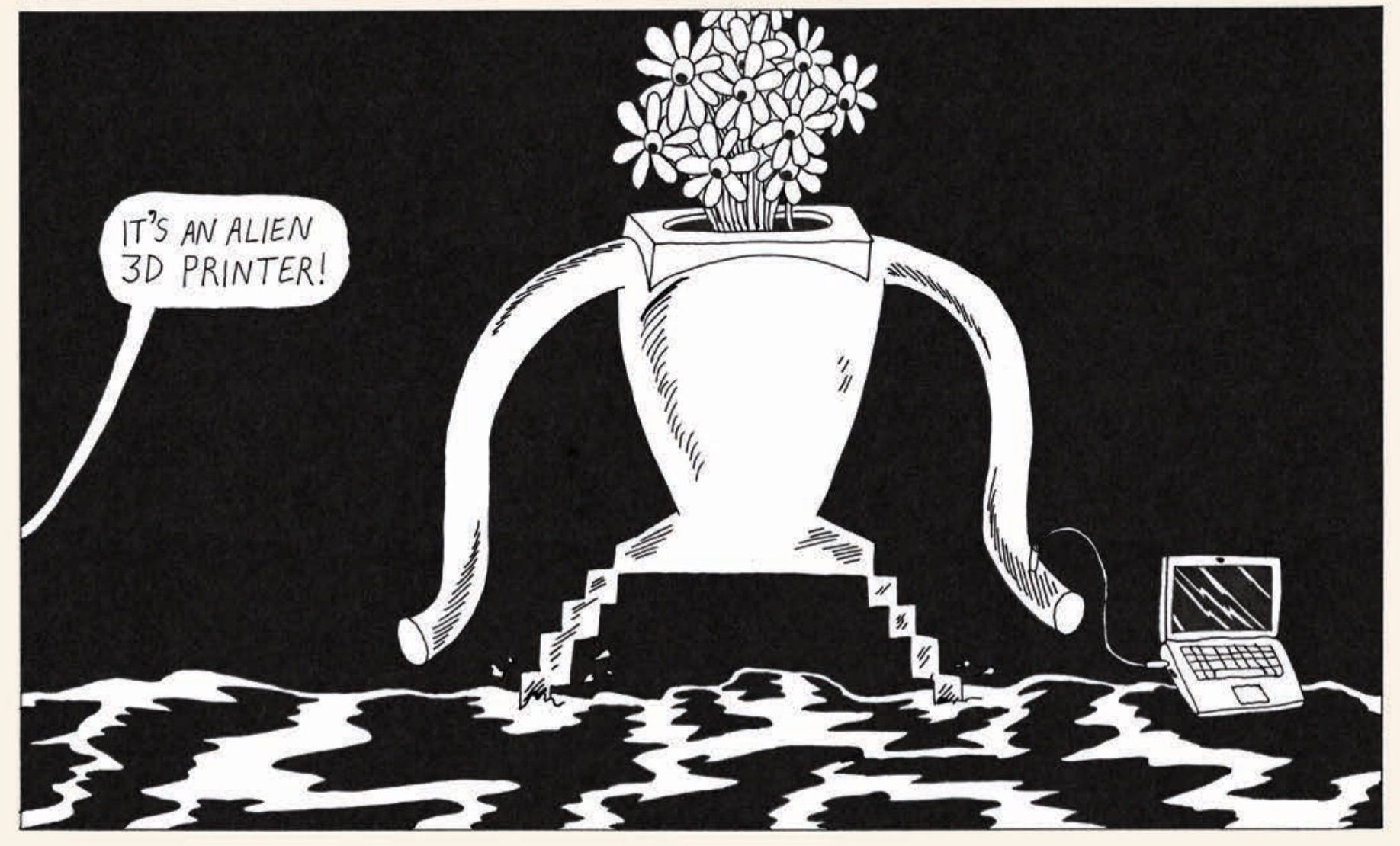
Gradin’s deeply weird and propulsive narrative comes through particularly in an alien-3D-printer sequence. Atilla the Hunny leads Ponce through black-and-white panels, splashing through dark water, a blank void around them. She promises something special, and there it is! An alien-3D-printer that grinds out a deer with the organs still forming, a gelatinous taxi generating a “holy fuck” from Ponce.
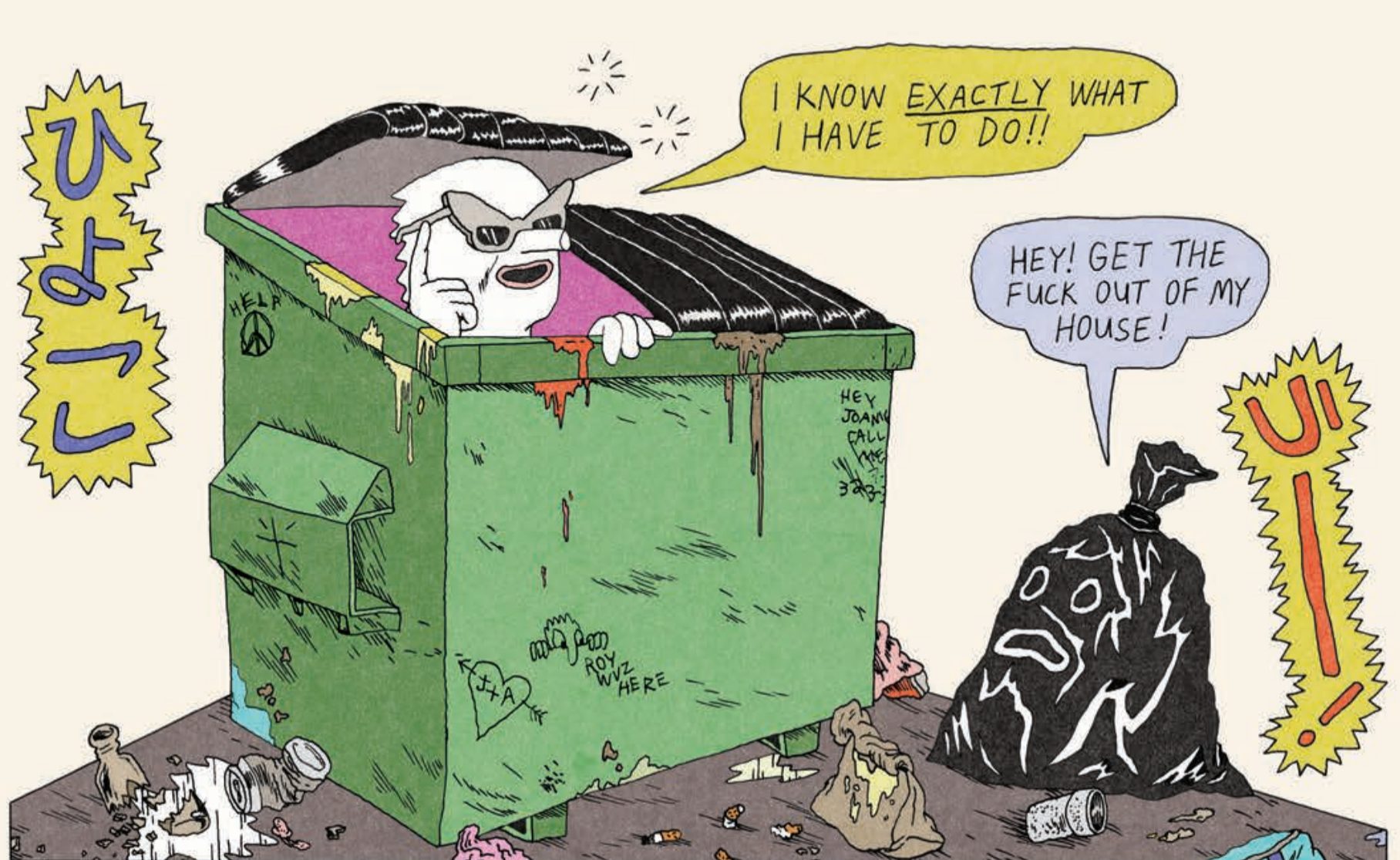
Gradin shows Ponce’s childlike naïveté through the stark contrast of this dreamworld with the literal dumpster Ponce is sleeping in. This printer can logically create whatever you desire, birth a taxi, give you a singer who knows how to touch your soul with dark, emotional ballads. Ponce requests the printer make him Roy Orbison. This Orbison starts singing “Guantanamera…” a Cuban song about solidarity with the poor, and a rallying cry for social and economic justice. This resonates with Ponce.
When Ponce wakes from this dream in a dumpster, he decides to clone himself and pimp his new selves. Ponce doesn’t aim for the greater good, and misses the point: getting everything you desire is worthless without a higher purpose.
Gradin doesn’t judge anyone in this book. Ponce has an unrelenting self-focused drive, naive to the shitshow he’s creating, and always failing to learn from his mistakes. Gradin shows us the ripple effects of his selfish behaviour, both on his desired girlfriends and then the clones of himself. What’s terrible is that Ponce is relatable, too relatable in this age of quick delivery and over-consumption. We’re being lulled into apathy and Gradin is holding us by the shirt-collar and looking over the edge of the cliff into a valley of inertia. It’s a sobering view.
There’s a throughline to Gradin's varied breadth of creative work, which includes sculpture, animation, music, graphic design, album covers, that expands on the style he employs in Pageant. I’m pretty sure I’ve seen his handbills around Vancouver. While researching Gradin's art, I learned he had designed most of White Lung’s album covers, discovering I'd had familiarity with his work for longer than I realized.
"In Your Home" from the album Deep Fantasy by White Lung, video directed by Justin Gradin (Domino Record Co., 2014)
On a personal note, I finished reading Pageant as I was flying across the country for my Grampa’s funeral. It was a cathartic read, surprisingly. I didn’t expect to be so propelled through the book, and the irreverent take on death made me chuckle and cut through the heaviness of my trip. There were many times I wanted to judge Ponce, but he kept at his mission to get money, find love, or just get laid. I had to admire how Gradin drew this world, and let the consequences play out without judgment. Pageant left me smiling, grimacing, and satisfied.
The post Pageant appeared first on The Comics Journal.


 Hello, my name is Jack Sparrow. I'm a 50 year old self-employed Pirate from the Caribbean.
No comments:
Post a Comment