

Katriona Chapman’s latest graphic novel focuses on Claudia, a chef who has made a name for herself at a restaurant she opened with her best friend Lisa and who is now competing for the Pro Chef of the Year. Claudia’s father was also an excellent chef, and his shadow looms large over her. However, while Claudia’s opportunity in this competition is central to the story, it’s not actually the focus of the work. Instead, Chapman focuses on not just Claudia, but also Lisa and Ben, a young man who works at the restaurant, delving into all of their families, as they all try to figure out who they want to be.
Claudia and Lisa’s restaurant, Alley, is doing well, and everybody seems to enjoy their jobs. They’re also quite good at them, as reviews have shown. However, underneath that surface, they are struggling, both at the restaurant and in their personal lives. Lisa met Claudia in culinary school, and she also wanted to be a chef, but she is not only the sous chef at Alley, but has taken on more and more managerial tasks, leaving her with no time or energy to develop new dishes. Outside of work, her husband, Tomas, has health issues, and works as a freelancer from home so he can take care of their child, Ren. Lisa feels as if she doesn’t contribute as much to their home life because of the demands of the restaurant, leading to guilt due to her absence.
Ben works as the bartender, and he’s an expert at developing new drinks, a skill he uses not only to enhance people’s dining experiences, but also to defuse tense situations with customers. When a customer is harassing one of the servers under the guise of trying to get a date with her, even though she clearly isn’t interested, Ben de-escalates the situation by asking the man three questions, then producing a drink he will enjoy. He also works in a community garden, and he has the opportunity to become the manager there, but his mother wants him to help her develop an online business. His parents also struggle to understand what he does and what he’s interested in.
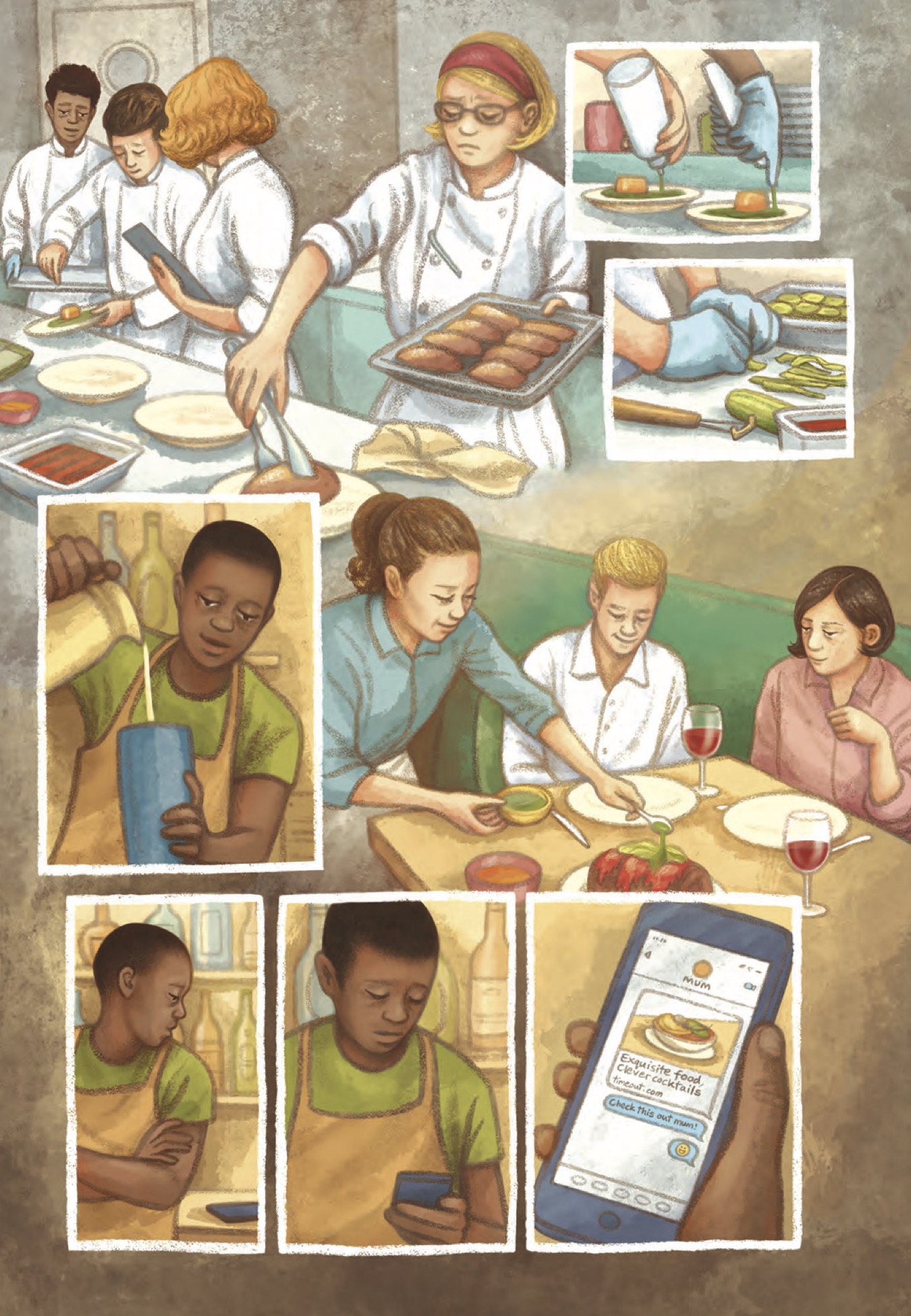
Lisa and Claudia each have a brother who hasn’t been as successful as they have, leading their parents to favor each daughter in the relationship, which leads to more guilt for both of them. In Lisa’s case, she’s trying to help her brother Jack by giving him a part-time job managing the accounts for the restaurant. Claudia feels sorry for her brother Marc, but also doesn’t really seem to comprehend why he’s not more proactive in his life. That said, she still doesn’t appreciate how their parents treat him, especially in contrast to her.
The one place the three primary characters find solace is at Alley in their relationships with each other. During a discussion about Ben’s parents and their lack of understanding, Lisa and Claudia both encourage Ben to do what he loves, regardless of what his parents want for him. Claudia even says, “We’re more of a family right here!” They behave like one, as well, supporting each other through various struggles, but also sometimes missing what’s happening right in front of them.
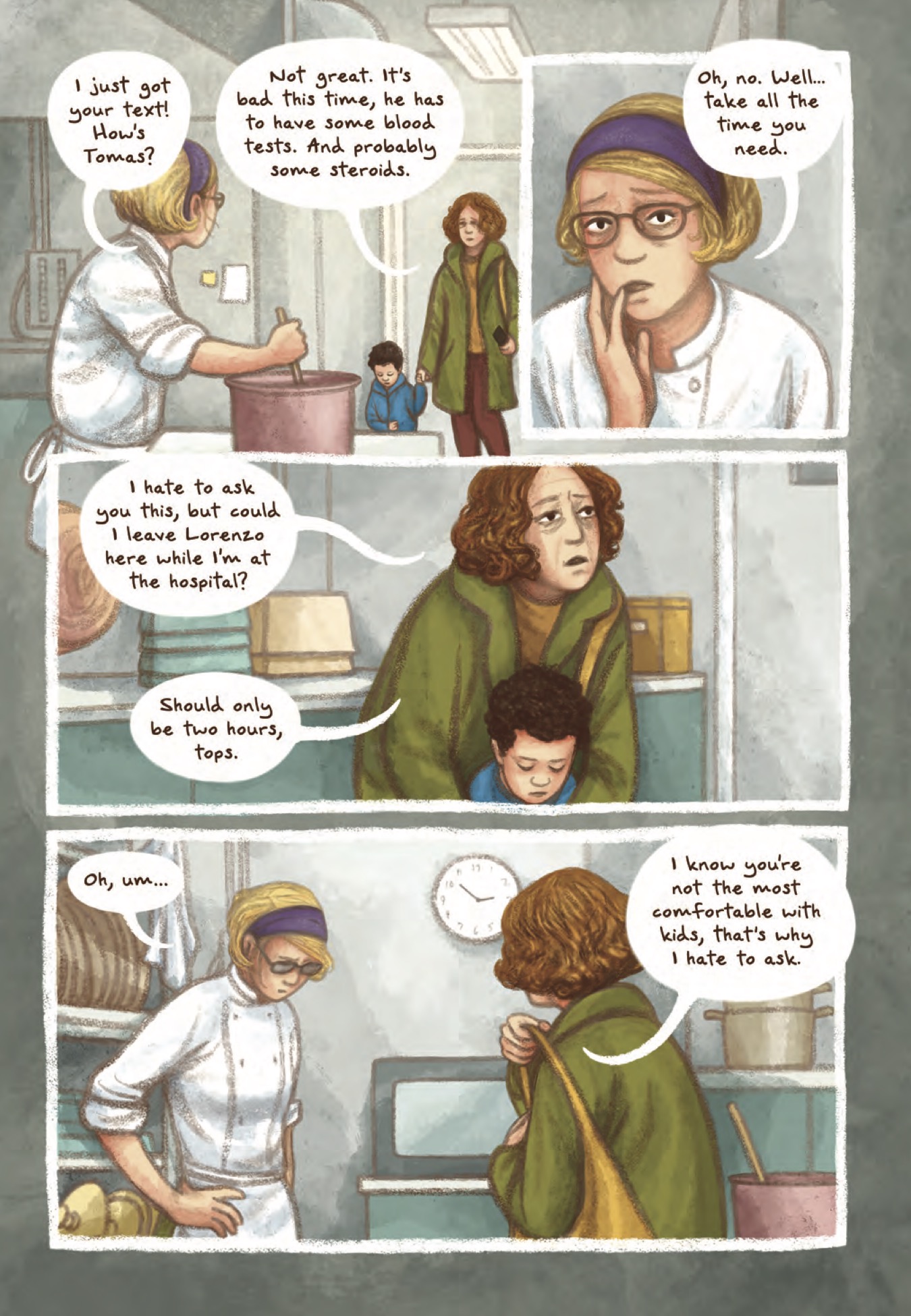 Lest that description sound too saccharine, Chapman is clear-eyed about the difficult working conditions in a restaurant, especially one that’s become more well-known. Claudia often comes to work looking tired, especially as the competition approaches, and she spends nights lying awake in bed coming up with ideas for recipes. They talk about physical ailments, such as burns and foot problems, that come with such a demanding profession. Outside concerns repeatedly intrude, such as when Lisa has to leave her son at the restaurant to go to the hospital with Tomas or when Ben’s family questions how much he’s getting paid for the work he contributes at Alley.
However, there are also positive moments both inside and outside of work for each of the characters. Ben obviously loves spending time in the community garden, so much so that he loses track of time and is late getting home on a school night. Lisa clearly loves Tomas and Ren and enjoys the time she does get to spend with them. She also still loves creating new dishes when Claudia gives her the opportunity to do so. For Claudia, however, those moments are more fleeting, such as when she steps outside for a five minute break and watches birds fly overhead, leading her to get a bird feeder. Images of birds flying or even resting on Claudia’s windowsill recur throughout the work, a symbol that makes more sense by the end of the novel.
There are two moments, though, where Claudia seems to find more joy. The first is when she goes to Billingsgate Market to buy seafood, a trip her father questions, as she could easily have the seafood shipped. She reminds him, though, that it’s at that market where she fell in love with the idea of being a chef, as she went there with her father when she was a child. Her father barely remembers such trips, and he doesn’t remember one of the fishmongers who wishes him well, though Claudia has clearly developed relationships with many people who work there. While there, she goes to the water to see a seal, a moment that brings her more joy than most sequences in the book.
Similarly, though the competition causes her an immense amount of stress, she clearly excels there, as other chefs watch her and comment on her abilities. More importantly, when Ben and Lisa taste what she plans to make at the competition, they’re both impressed. She’s relieved by their response, but she also takes great pride in it.
Chapman creates rich characters, and she mirrors that richness in her art, using lush colors throughout the work, giving the visuals a density that matches the characters' depth. Her approach is largely realistic, not quite to the detail of a painting, but reminiscent enough, while still retaining enough of a comics feel. The artwork provides the necessary heft to go along with a story where characters are clearly struggling to understand what they want their lives to be.
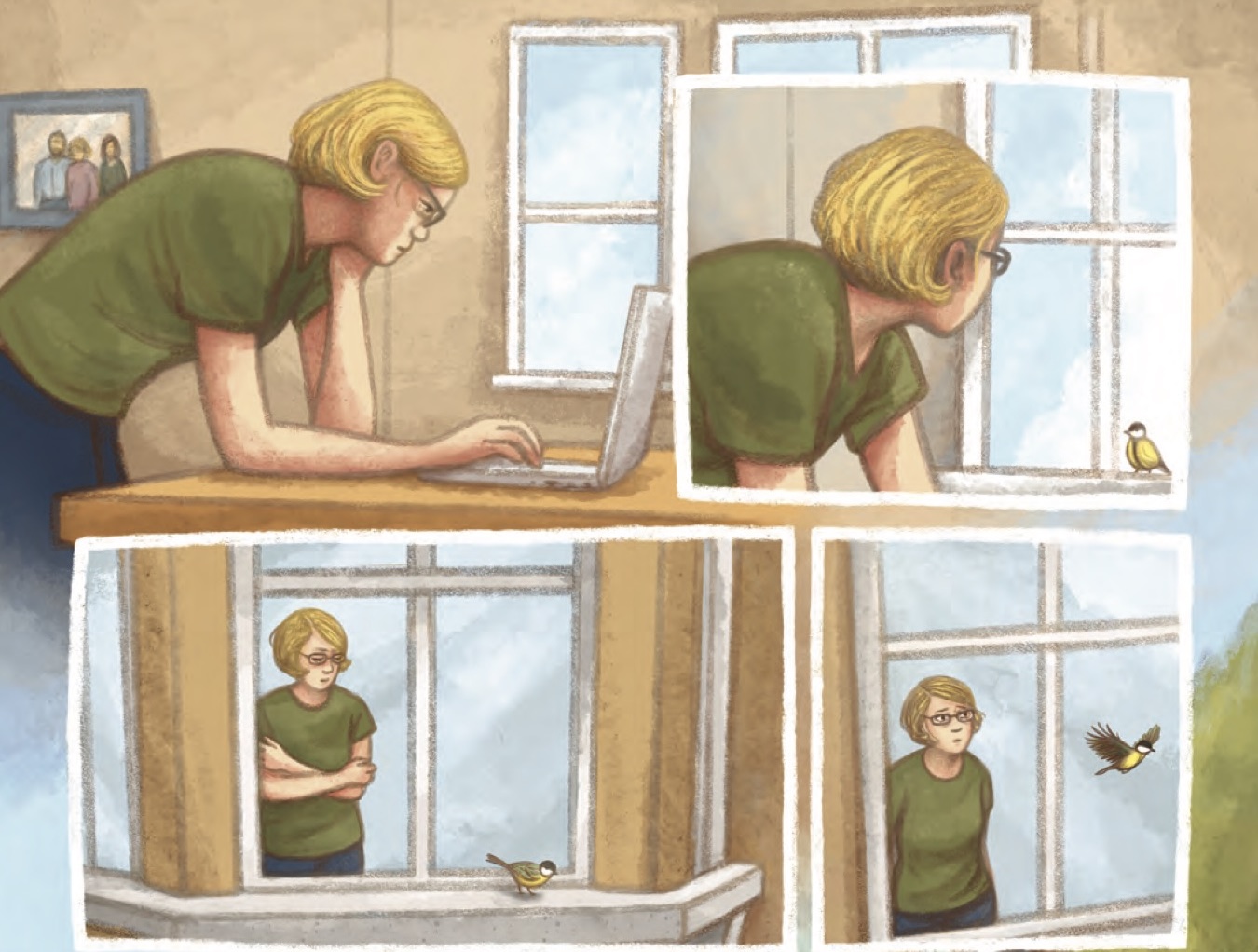
Chapman is particularly adept at dealing with light, whether that’s creating a particular mood in the restaurant, which differs from the kitchen to the dining room, or outdoors in the winter light of Christmastime, or in the dark as the characters go home after work. Chapman uses grays particularly well in moments of crisis, while the brighter yellows and browns of the restaurant signify a hope that the characters will endure their crises.
The Pass encourages readers to spend time with Claudia, Lisa, and Ben, understand their challenges and their dreams, and want them to succeed. Chapman doesn’t shy away from their difficulties, which gives the moments of brightness much more contrast. She doesn’t provide easy answers for her characters’ lives, leaving certain questions open-ended, but she makes living with them for a while worth the reader's time.
The post The Pass appeared first on The Comics Journal.


 Hello, my name is Jack Sparrow. I'm a 50 year old self-employed Pirate from the Caribbean.
No comments:
Post a Comment