

Wipe down your kitchen from floor to ceiling. See it sparkle. Then take a shit smack-dab into your sink. That’s kind of how it feels to write comics criticism right now, amidst a daily deluge of state-sponsored snuff films and a very literal, very local terror campaign in our streets. Welcome back to “Arrivals and Departures.” I have nothing else to say except do what you can to fight, build a community of neighbors, and read some of those Vicky BunBun comics. Here’s a hodgepodge of books that were recently acquired:
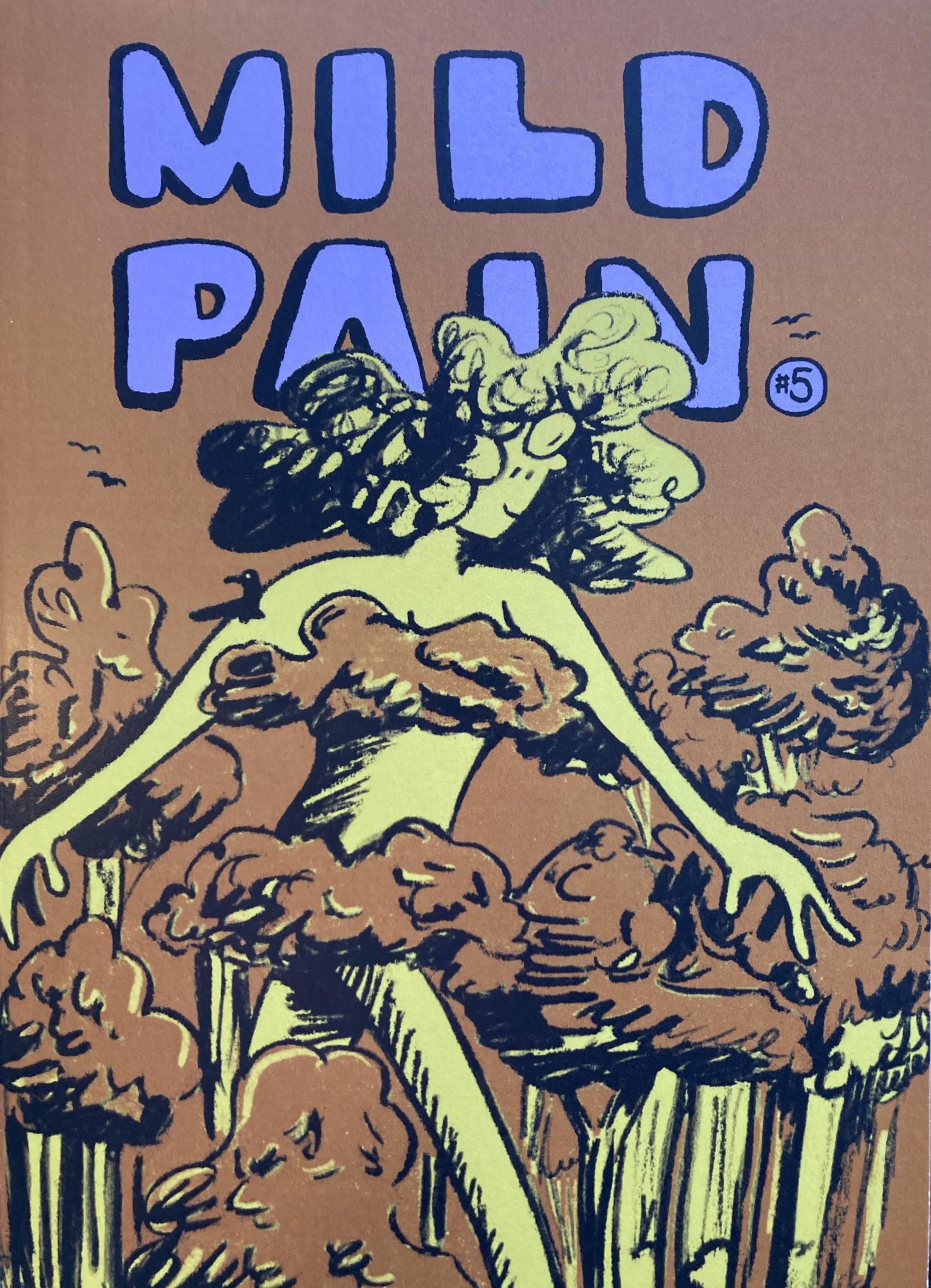
Mild Pain #5 by Abby Kacen
Where would we be if cartoonists hadn’t invented imposter syndrome? Would just being slightly better at small talk eliminate around 60% of all autobio comics? These are questions I often ponder when delving into this particular genre. Fortunately, and for all I know, they don’t apply to Abby Kacen, who is someone that appears to adhere to one of life’s golden rules: Act normal. (Disclaimer: Here at "Arrivals and Departures" we are always on the side of messy, paranoid, gossip-filled autobio. However, I also understand that this route is undoubtedly detrimental to the cartoonist.) Throughout this issue of Mild Pain, Kacen puts an emphasis on mental health and the text — “trauma,” “grief,” “intentions” — is very therapy-forward. It really is a different take (Bizarro World, perhaps) on autobio when the author has things at least relatively figured out before scrawling it on the page and has a partner and supportive friends to use as sounding boards, rather than the audience. As a reader, it’s like you’re in more particularly sensible hands, and the efficient character design and layouts aid in that matter, making the project feel stable and functional above all else. Take that how you will. In terms of the art, this is a pencil-on-white-paper sketchbook-style digest. Kacen draws charming eyes — big circle glasses with long vertical pupils. Other than maybe Sophie Margolin, Kacen also illustrates some of the best scribbly hair in the autobio game, a gravity-defying puff cloud on each page.
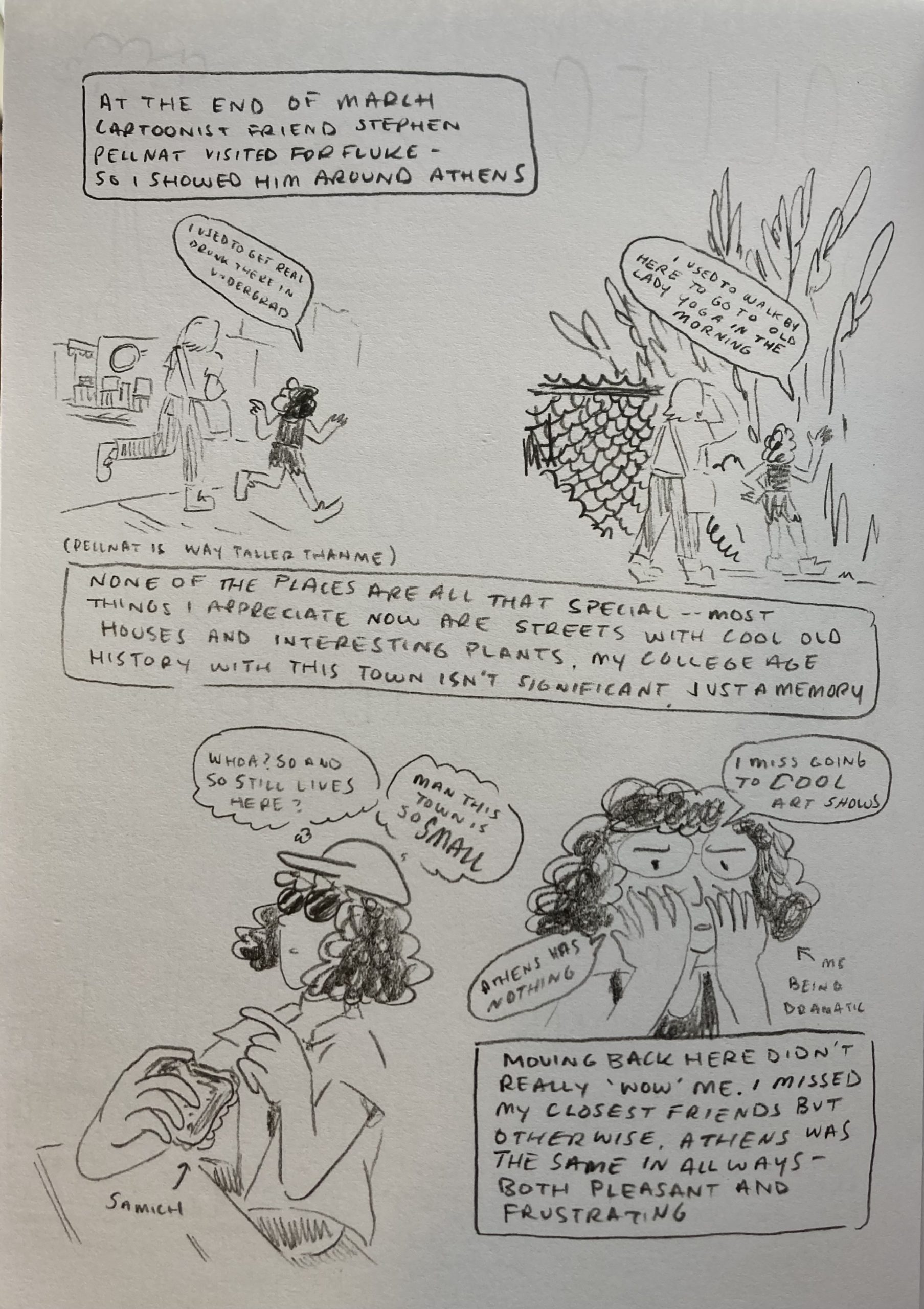
A former NBA Most Valuable Player once asked, “Do you want to be good or great?” The same could be said to this artist and the one big glaring flaw I noticed in Mild Pain. Throughout these 37 pages of comics, Kacen uses simple adjectives to describe something compelling rather than, you know, drawing it. The artist and her partner take a trip to Memphis early on in this issue and visit Stax Records. Issac Hayes’s office furniture is described as “baller.” I want to see those sofas! During that same trip, Kacen visits Graceland and describes it as “wild,” but only adorned a corner of one of her small pages to a stained-glass window there. At the end of the book, Kacen takes a friend on a tour of all her old early twenties haunts. The caption mentions that they walk around all day and look at “cool old houses and interesting plants,” yet not a single one is gifted to the readers’ eyes. You gotta give the people what they want. I know it’s trite, nevertheless there’s a reason “show, don’t tell,” is a tried and true recipe. Even more so when you’re working in a visual medium.
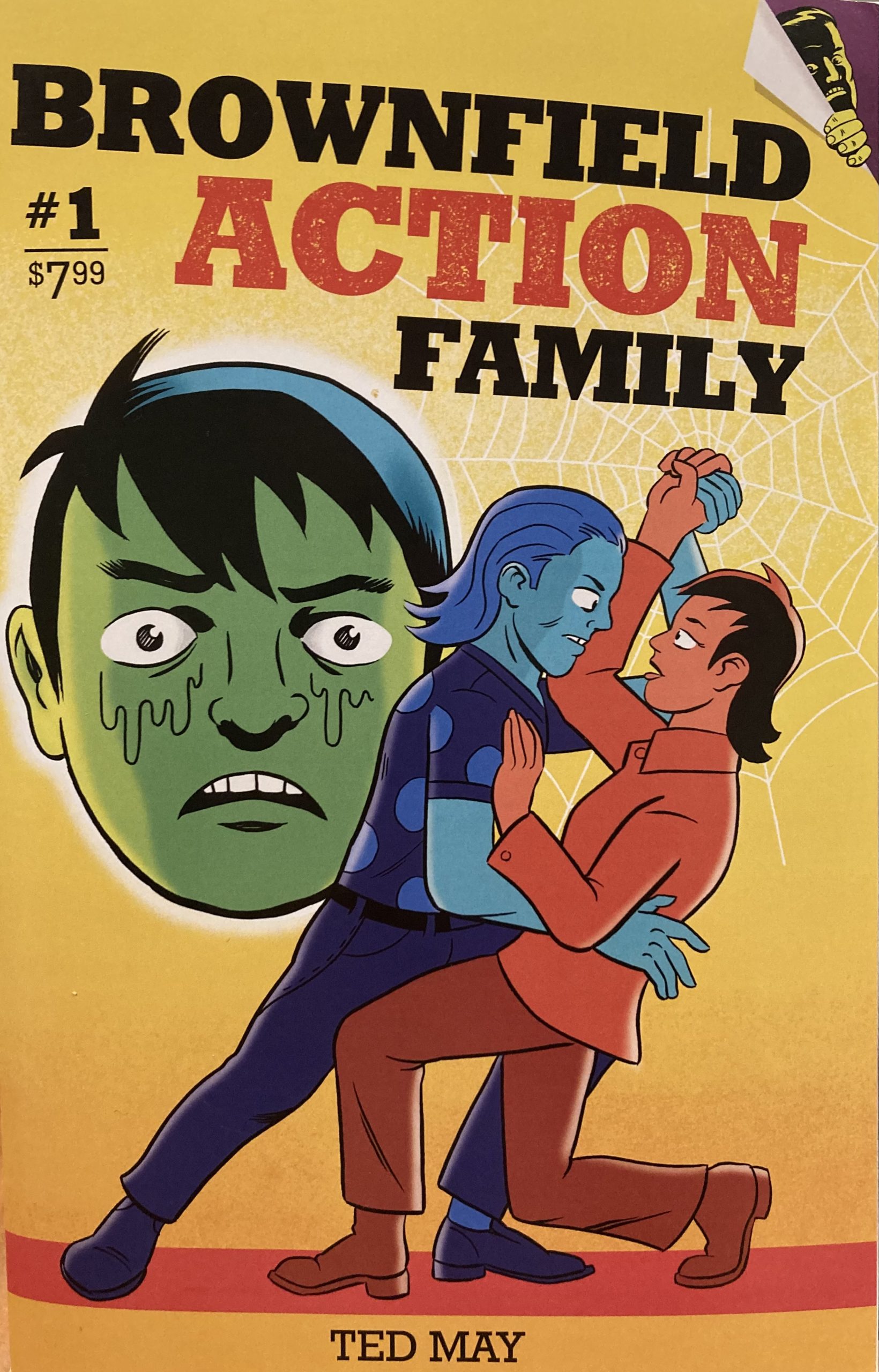
Brownfield Action Family #1 by Ted May
(horn intro)
Start spreadin’ the news
I’m reading Ted May
We don’t have to wait ’cause it’s
New work, new work
Speaking of giving the people what they want, the return of one of indie comics’ standard bearers of quality has got me singing parody songs under my breath at the local library. That’s all I can do to keep from whoopin’ and hollerin’. Brownfield Action Family! Ted May! Let me compose myself. I’ve been reading May comics (Injury, Men’s Feelings) for a long while and they hold that elusive sensibility of what Wallace Wood supposedly said about the comic strip Nancy: “Not reading it is harder than reading it.” The first issue of Action Family also holds this designation. Here is May, working in traditional comic book format and at 56 pages, weaving a web (or constructing a snare trap?) about city planning, salsa-dancing lawyers, shady inheritances, and entrepreneurial martial artists. Several characters we meet have nefarious associates and/or are drunk. Awkward and suspicious magical realism abounds. It’s Pynchon-esque (some names include Dennis Talcum and Richard Gemini). It’s The Chair Company channeled through early Ditko. Most importantly, it’s Ted May!
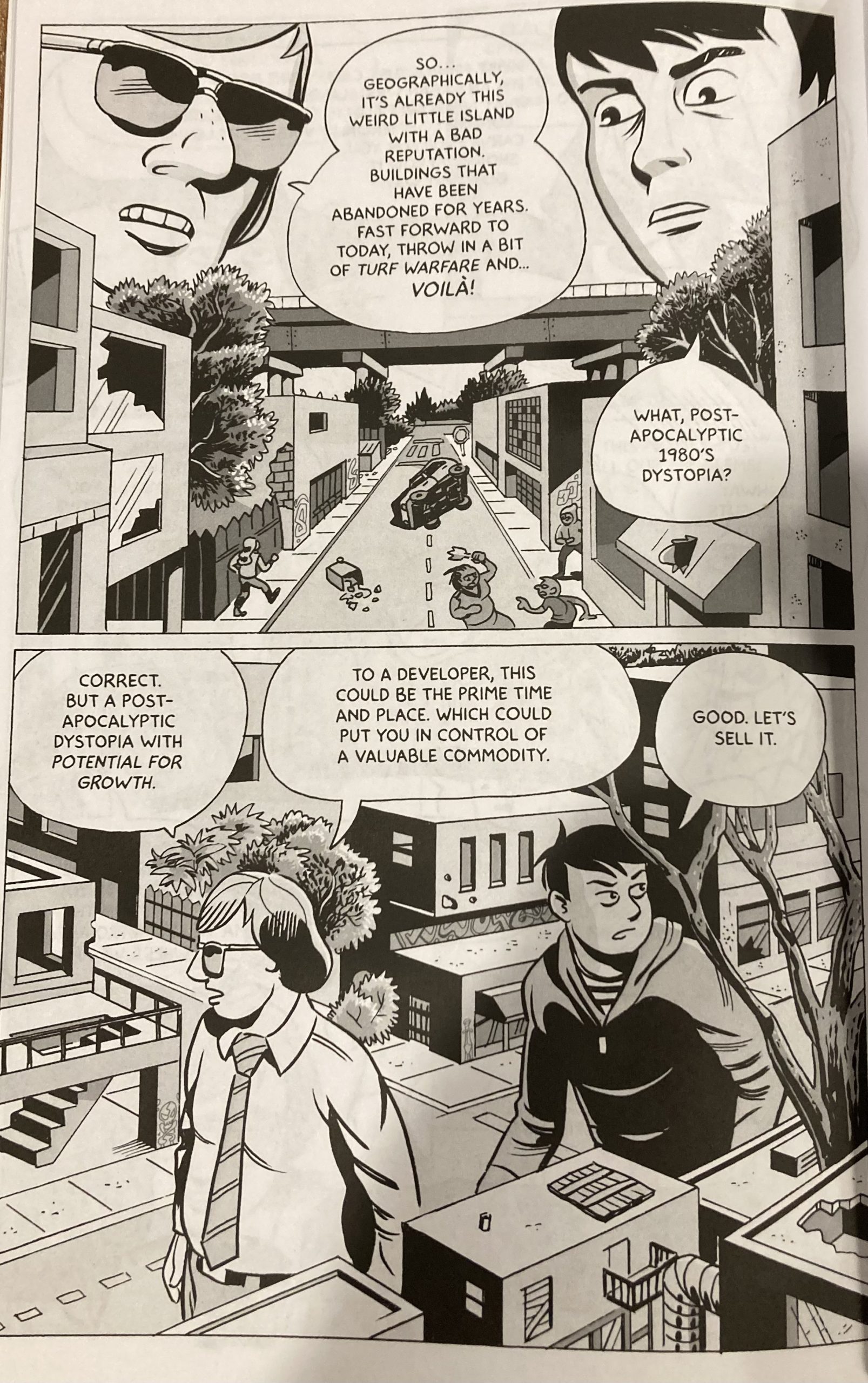
Johnny is a depressed mooch we meet as he's dry heaving over a toilet bowl. He’s completely abhorrent in a very realistic way and hence his relationship with Janet is hanging on by a thread. She’s an aspiring sci-fi writer who’s developing something more than a friendship with a locally published author that’s promising to help shop around her finished manuscript, titled “Mars is Flat.” Johnny gets a call from an attorney representing his father and explains that not only is his dad recently deceased (“in a competition”), but he has also been willed down a warehouse-sized compound that will be the lynchpin to gentrify the city. There’s also martial arts, featuring an action sequence with four straight panels amusingly centered on a wrist lock, and an enigmatic vigilante monitoring the situation. Through a series of asinine decision making, the issue ends with Johnny in a river, the current pulling him right toward his new estate. There’s a real care taken to every panel and word — from the jokes, the pacing, the banter, the perfectly strange lines (“glug this cup”) — that shows May must have thumbnailed and fine-tooth combed this thing until it reached this state. And that state is fantastic. I was thrilled to turn each page and when it was over, I was just as excited to read the next issue because with that sort of narrative scaffolding and cartooning expertise, we could reasonably be taken anywhere. A more astute person than I could write more about this: Alt comics has a big problem of not appreciating artists whose careera are lengthy and whose body of work are beyond exceptional (Examples: Gilbert Hernandez, David King, Steven Weissmann, M.K. Brown, the late Elijah Brubaker). We can be the change! Start spreading the news, there's a new comic by Ted May.
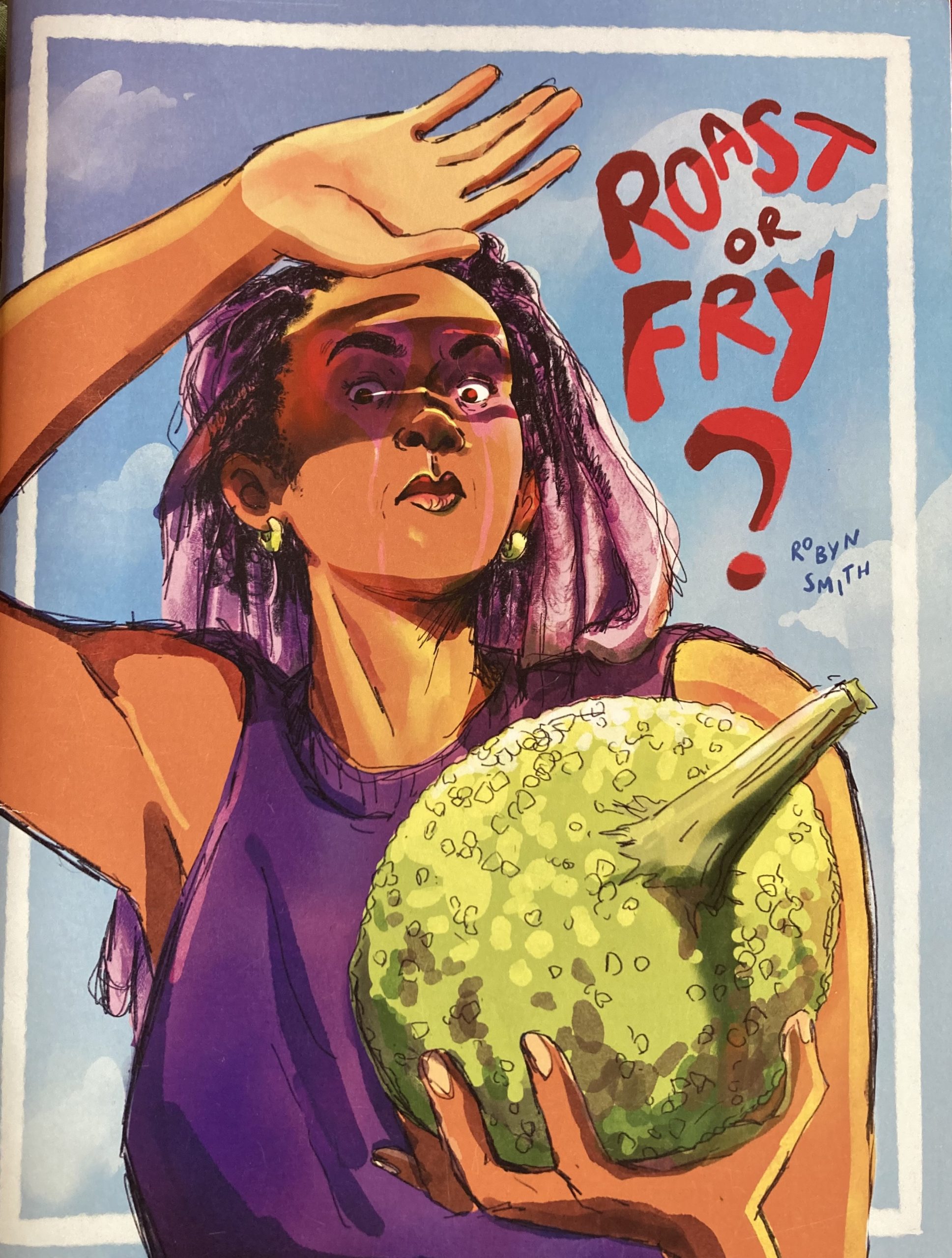
Roast or Fry? by Robyn Smith
You have no choice but to start with the cover. The composition adroitly features Trelawny’s hand up, covering her face from the sun which blares down on her throughout this short story. Or possibly protecting her from something falling. The shadow makes a mask, as a sliver of illumination pokes through revealing her eyes. She stares down at someone — or potentially the reader — with pink hearts now streaming down her cheeks. They were painted there last night to commemorate a “dead” “friend.” A big breadfruit is in the foreground, bright green to symbolize envy, or is it nauseousness? As I opened the book itself, I was struck by two things. The first being the color palette. It is consistent throughout, with pastel shades of purple, orange, and green. The other being the way it was drawn on a screen, which unpleasantly tickles my brain and sets off my aversion to digital comics. I understand and admit that that’s a “me” problem. It definitely helped me get over it when I noticed that Smith uses hand-lettering. And get over it I did because this comic rules.
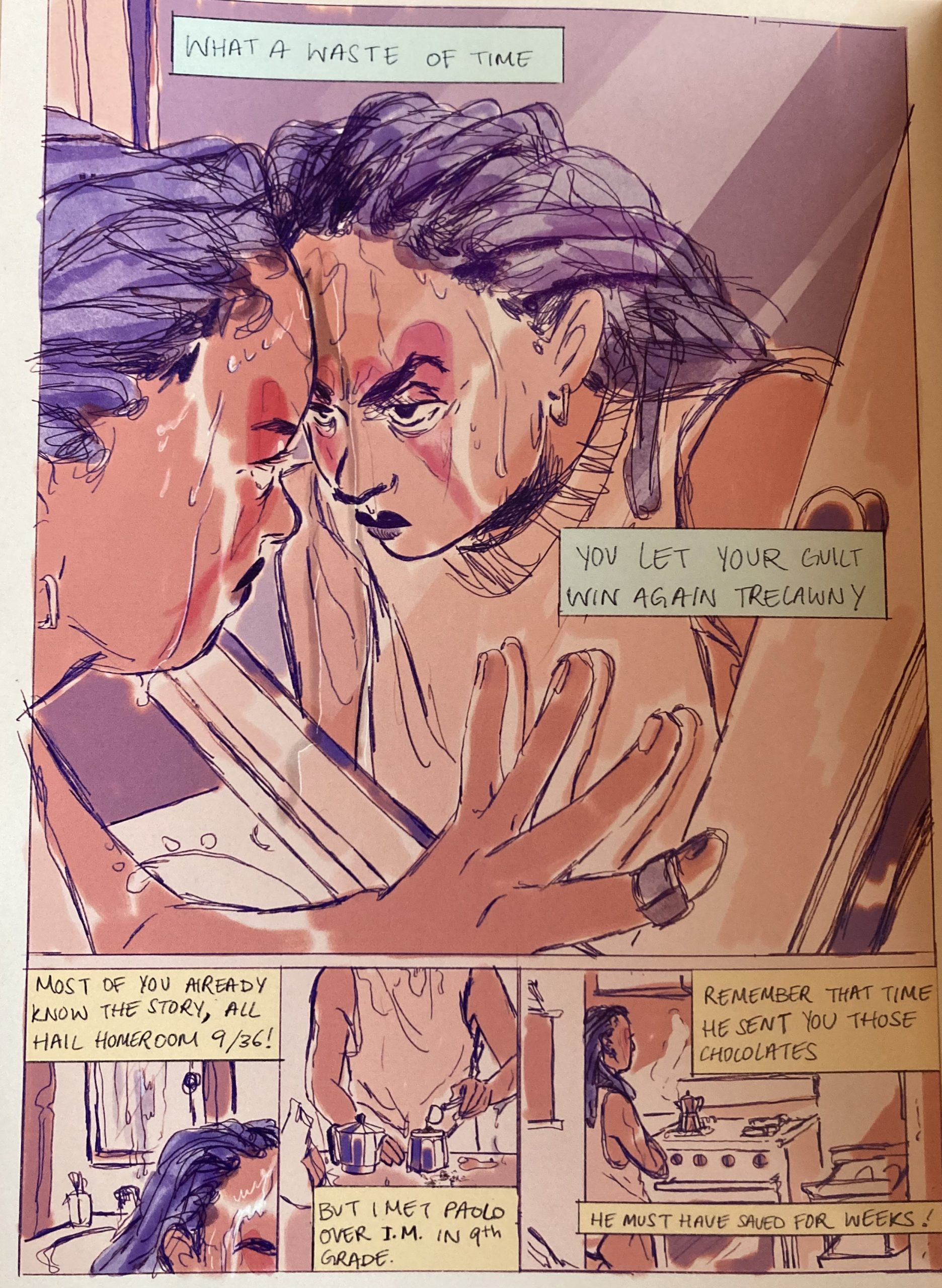
I have seen every single episode of Catfish and once considered myself something of a Lennay Kekua historian. With that being said, Roast or Fry? hits me right in that sweet spot. Trelawny met her close group of friends in home room. Somewhere along the way another person, a Brazilian named Paolo, comes into their lives, albeit electronically, and slides right into their crew. Aisla falls in love with Paolo and her well-to-do parents are soon sending money “to Brazil” to pay his family’s rent. Is it wrong to maliciously take advantage of rich people, even if they’re your friends? Things aren’t what they seem, obviously, and the only friend who’s potentially in the know has also recently started a gun collection. The oscillating fan breaks, food is on the stove, and Trelawny starts getting threatening texts. Everything is falling apart, a heatwave making the ideal backdrop for this psychological thriller. That’s a genre we don’t see an awful lot of in the zine/minicomic realm, especially done this well. (Side note: Parsifal Press is quietly building a formidable lineup of books.) When writing this column, I usually wait a little while between rereads of all the comics I review to let things digest. I didn’t have that choice here. I had to go back to the beginning immediately to gum-shoe it for myself and retrace Smith’s superb steps, making sense of how lies can be held up by flimsy walls until they all burn down.
Enjoy what’s left of soup season. See you next month, I hope.
Questions, love letters and submissions to this column can be directed to @rjcaseywrites on Instragram.
The post Arrivals and Departures — February 2026 appeared first on The Comics Journal.


 Hello, my name is Jack Sparrow. I'm a 50 year old self-employed Pirate from the Caribbean.
No comments:
Post a Comment