

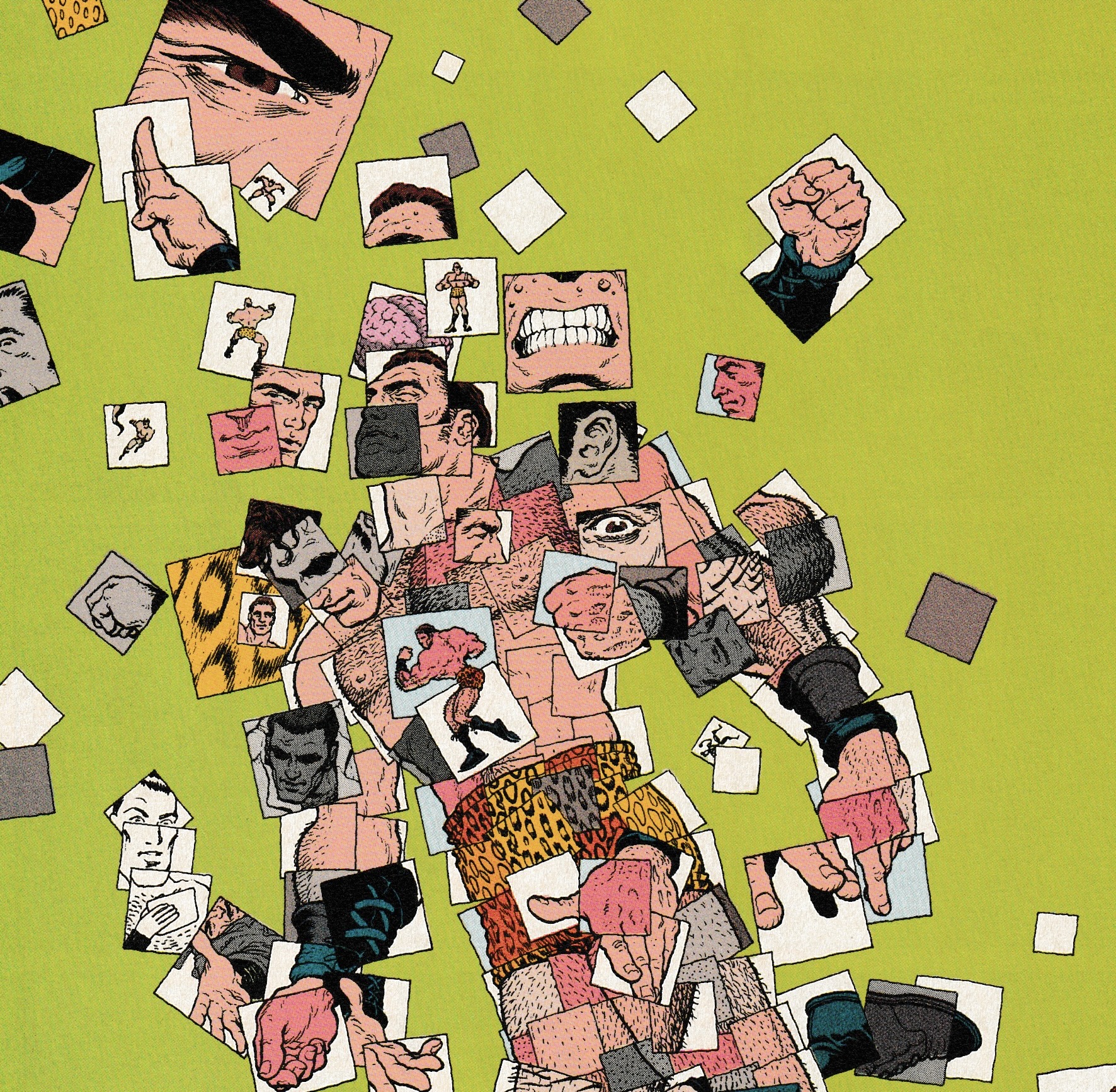
I stood in line outside Now or Never Comics in Downtown San Diego for almost two hours before meeting Frank Quitely, the pen name of artist Vincent Deighan. I’d read a good amount of his work, preparing for a possible interview that I was about to pitch him while he scribbled on some of my comics, and had quickly grown to appreciate the artist’s diversity of material. All-Star Superman might be the deserved fan favorite, but I fell in love with his own coloring in his 2000 AD work on Missionary Man and the Shimura Judge Dredd stories, the beauty of the Scottish hillsides in Batman: The Scottish Connection, and the complexity of The Multiversity: Pax Americana, to name only a few. As I waited, comics in backpack and reading more about the man on my phone, I was surprised by just how long this line was for a signing on a cold (for San Diego) night in November.
Now inside the store, I made my way up the stairs and pulled the comics out of their sleeves, ready for professional defacement. In my head, I went over the 15-second pitch for an interview, but lost my train of thought as I watched the young woman in front of me stand before the artist and show him her sketchbook. She was shy, her mother standing behind her as moral support, and quickly flipped through to a page she’d drawn of Superman. She pointed to the Quitely-inspired figure and didn’t say much, but there wasn’t all that much to be said. She’d waited for hours just to show him how much his art meant to her, how it inspired her to be an artist, and that she wanted him to know that. She asked him to sign the top corner of the sketch page, which he happily did, and then she held the sketchbook close to her body like a child would a teddy bear and walked off with a smile. I don’t think I fully realized until that moment that Frank Quitely was that kind of artist.
A couple weeks later, I sat across from Quitely on the campus of San Diego State University. As skateboarders ollied onto unsuspecting objects, students crisscrossed through the expansive campus, and college sports droned on the television screens behind us, we had a couple beers (generously provided by Quitely), discussed the fate the world, and talked about comics.
JAKE ZAWLACKI: So, what are you doing in San Diego?
FRANK QUITELY: I was invited over to teach with a professor from the University of Glasgow. We've done a bunch of teaching and talks together in the last ten years and in 2019 and 2021 we were in Vegas and San Diego, respectively, and both times we did talks at San Diego State University because they've got a really big comic studies program. Professor Laurence Grove, who's called Billy, is pretty well known in academic circles because he's a kind of world authority in emblem books from the 16th and 17th centuries.
Also, he's the top dog at the International Bande Dessinée Society. I think he's the president. So we were talking at a Modern Languages Association conference on both those occasions and on both occasions we were invited to come to the university because they've got a comic program, and they knew me through my comic work. We did two talks here in those two years. Elizabeth Pollard and Pamela Jackson from the history department and the library, respectively, who are the co-creators or co-founders of the comic studies program here, they've been organizing it for the last four years to get me and Billy to come over and actually teach a class for the semester. It's the history department that got us over.
The class is the history of comics using ten treasures from the SDSU archive. They have one of the biggest comic archives of any of the educational institutions in America and between Billy and Pam Jackson from the library they managed to come up with a whole bunch of treasures. We concentrated on one each week but we had lots of examples.
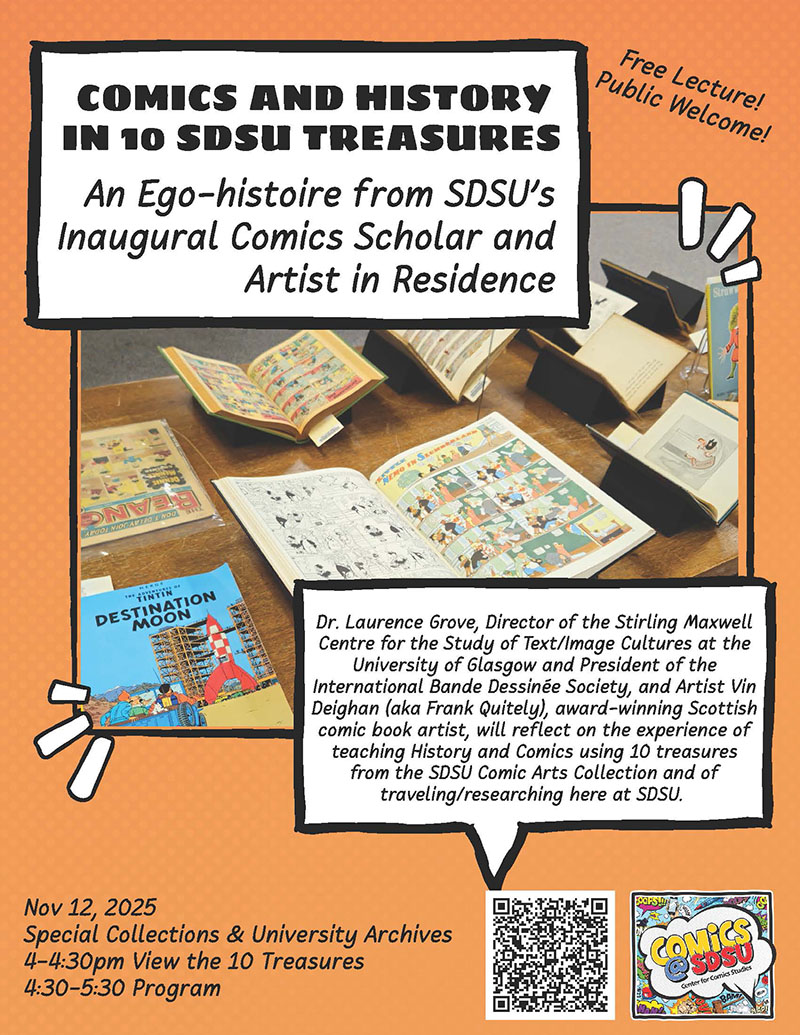
The course starts with the cave paintings in Lascaux in south of France and we've got the usual suspects. We've got the Bayeux Tapestry, we've got emblem books, we've got a bunch of things that happened after the printing press, like bawdy French prints, William Hogarth, and then once we get into the 20th century we've got what happened before Superman, what happened after Superman, what happened when EC Comics was on the rise and superheroes were on the decline, what happened when the rest of the publishers put William Gaines out of business, and what happened after the censorship in the ‘60s and then with drugs in the ‘70s and so on. It's very much a general history of comics course but like any art form, comics say something about the people and the place and the culture and the time they come from. It was broader than just the history of comics. It took in what was happening in its place and time.
We lucked out and we had an amazing class. It was just over 20 students. Three of them had read a few comics before and one of them knew me by name. We had a couple of freshmen, we had a 39-year-old, somebody in his mid-30s, the rest were all in their 20s, different years and stages, all of them doing different subjects: film studies, geology, you name it.
The way we lucked out was that from very early on the class actually started knitting together as a unit and every seminar became a conversation rather than a lecture with questions. Billy's been teaching for 40 years and he said a couple of classes were as good as that. Beth from the history department that sat in on various of our classes said, "This is amazing."
Typically when I talk about what I do or about comics in general, I'm talking to people who are familiar with the same kind of canon. We've got the same cultural touchstones. And I'm talking to a bunch of students from 18 to 39, from different backgrounds, studying different subjects, none of them particularly familiar with comics, none of them have read the comics I've read so you can't just make statements or share opinions the way you would with a comic savvy crowd and have everybody nodding their heads. You have people stop me going, "Wait a minute, does that mean anything?" And they go off at a tangent that you hadn't thought of.
It's been a learning curve for me as well. Any time I've been invited to talk at universities, art schools and comic conventions, which are the kind of the three main things, it tends to be a one-off talk and that's it. But I've been dealing with the same students for thirteen weeks now so you actually build up a kind of rapport and you know how the class works and you know how it worked with the class in terms of pushing the conversation forward or making them dig deeper into something. It's just been a really new experience which has kind of revitalized me.
In most comic conversations you're in, people know you as the Frank Quietly. What’s it like being relatively unknown in this space to be able to talk about comics without someone thinking of you as the very famous All-Star Superman artist, for instance? Does it liberate you to think about comics differently? Do you have a persona you have to uphold in other spaces?
No, I've never had a persona that I need to uphold because it doesn't work with my personality type. I know a bunch of people from going to cons for 35 years. I know there are a bunch of creators who have a kind of public face, and it's a total relief when they can drop that, to go to the bar at night and just sit and talk shop. I mean, it is tiring being on all day, but I can't imagine how much more tiring it would be if you were also acting. Also, the only time I'm ever being tranquil is if I'm doing a signing at a corner in a comic shop or doing a panel or something.
I don't get that amongst my own friends, most of whom don't read comics. I don't get it in my family or extended family. I mean I don't get it anywhere. It's like second nature to me not to be thinking of myself in terms of being “Frank Quitely” — obviously a made-up name. It's got to the stage where my wife and grown-up kids call me “Frank” sarcastically when they're mocking me. I've got no respect at home; I can't tell you. [Laughs]
While you were teaching the course did you run into specific items in the collection that really stood out to you? Maybe not in the syllabus, but something unusual that SDSU would have, or something that spoke to you individually?
There were pieces from the 18th- and 19th-century engravings in particular that were pulled out as examples of some of the various foundations that modern comics stand on. I was kind of blown away by the quality of the printing. It was like the lines were almost sitting on top of the paper.
I don't know if you remember before they started putting plastic into banknotes, but if you got a new banknote you could feel the ridges of the printing. It was like that in stark black and white. There was a bunch of hand-painted manuscripts and it was the same sort of thing. It's like in an age where we see most things either on a screen or as a printed reproduction.
Like when you see original artwork. It has a quality that's always lost in reproduction. And [these] were illuminated manuscripts so the artwork part of it was really in the big capital letters with all the color and added detail. But when you're looking at things that are from the 14th and 15th century and they've been preserved away from the effects of light and they still have a vibrancy it makes it quite difficult to believe they're that old. Things like that are special to me in a surprising way because I didn't expect to feel quite so blown away by the quality of the objects I was handling. On a previous visit we saw a bunch of Tijuana bibles, the first generation of each of them. Generally speaking the artwork is good and the printing is good.
Does it get worse and worse as it gets reprinted?
It doesn't just get worse and worse as it gets reprinted. It gets to where the plates are worn to the point that they need to get another artist to come in and redraw it. And it's generally an inferior artist. Also, there’s no publishing details. Any other publisher can get any other artist to come and take the staples out of it and copy it. And it becomes like a bootleg of something that’s already reduced greatly in quality.
After that's been printed many, many times, and those plates are ruined, the same thing happens. I've seen fourth-generation bootlegs of Tijuana bibles that are twenty years later than the first version, still with the same Hollywood star or cartoon character or whatever and the difference in the quality of the bootlegs is actually amusing more than anything else. The part of the archive which has all the underground 1960s stuff, Trina Robbins and Robert Crumb, they've got an amazing collection of that kind of stuff. They've got a lot of original artwork as well.
For the illuminated manuscripts and the Tijuana Bibles, you're able to see these things through time progression. I'm thinking of your own artwork where time is such an integral factor.
Certainly the window into the past is part of it. With the Tijuana Bibles, I didn't actually realize there was bootleg versions of them and then there was bootlegs of the bootlegs. It just says something about the way these things were made in the first place, the way they were received and then the way they're still demanded. You can see why they were so popular. And again, it's the sort of thing that wouldn't work now because everybody's got a phone in their pocket. So it's very much a product of its time.
Twice, Pam Jackson at the library laid out ten tables, each table having a really interesting selection of pieces from the archive that were to do with one of the ten lessons. There were thirteen or fourteen lessons in all, but the first one was about how to use the archive and the last couple were about the written paper that they’re working on now. The whole experience has been eye-opening for me in a number of areas. Partly due to my own understanding and talking to people that don't just immediately agree with you because they know exactly what you're talking about. Partly because we dealt with a lot of material that I wasn't that familiar with because Billy is very big on Franco-Belgian comics and Swiss and various other European comics and somewhat with older British publications like the Glasgow Looking Glass and Punch Magazine and things like that. He's less familiar with the American canon and he's fairly unfamiliar with manga.
So it was a very Eurocentric course. Billy and I have talked about the fact that if we're invited back to do it again, rather than just give the same course again to different students, which would be perfectly valid because it was good course — Billy designed the course. He presented it as an academic and I contributed as a maker. But we would do it again with more of an eye on how manga came here in the first place, at least from my point of view in the UK, with Manga Mania, which was a monthly magazine. It was a cheap newsprint anthology that had two dozen pages of Akira and two dozen pages of Appleseed and then Gunsmith Cats and so on. I was buying that, not following the storylines, just trying to get a handle on this art form that seemed quite unusual to me at first.
After the 1960s and '70s, we also talked about American comics in the '80s, you know, with Maus and Watchmen and The Dark Knight Returns, of course, and the awful legacy of the second two. Brilliant though they were, brilliant though they are, their legacy is less brilliant. But I think we only had passing commentary from me about Image Comics and we didn't dig particularly deep into the relatively recent self-published, digitally published, autobiographical, and just the way the landscape’s changed. We absolutely could do the same course again.
It's funny because I've always spoken about comics as a maker and as somebody who's been interested in lots of different art forms throughout my life and comics is the one that I work in and it's the one I've grown to love the most and know the most about but I still have a passion for fine art, for all forms of printmaking, for graphic design, for book illustration and when it started looking like Billy and I were going to get invited over, it was going to come together and we were going to teach a history class, I thought I was going to be a bit out of my depth or just not have very much to contribute, but it absolutely wasn't the case. When we were coming over at first, I thought it would be great if I was invited back by the art department instead of the history department because then I would very much be in my comfort zone.
After having co-taught the class for three months, I actually feel I could confidently teach a history class on my own. It would just involve me actually putting in the work to structure the thing. Over the course of the time I've been here, I've also been invited to Neil Kendricks’ drawing classes and comics-making classes, where of course I don't need to prepare anything or think of anything because that comes much, much more easily to me.
You mentioned earlier how the class has a lot of cultural context with comics providing insight into the era they’re being produced in. It's a strange time to be here in the U.S. and some would say it's pretty dark. Have you gained any insight into American culture that citizens might not be seeing it from as an outsider?
I think I've gained a little. There are parallels between what's happening in the U.S. and what's happening in the U.K. and it's pretty depressing and pretty worrying. The way things are going and the general feeling of apathy that most people have because it seems like the problems are too big to fix. It seems like big business runs government and government ...
Bends the knee.
Absolutely bends the knee and does nothing. Nothing at all good for ordinary people and they still have the audacity to talk as though, "This is quite a good idea," and, "Well, we all need to take the hit on this," and all that kind of thing and I think we’ve long passed that era where people felt a sense of duty towards a political party or towards government in general.
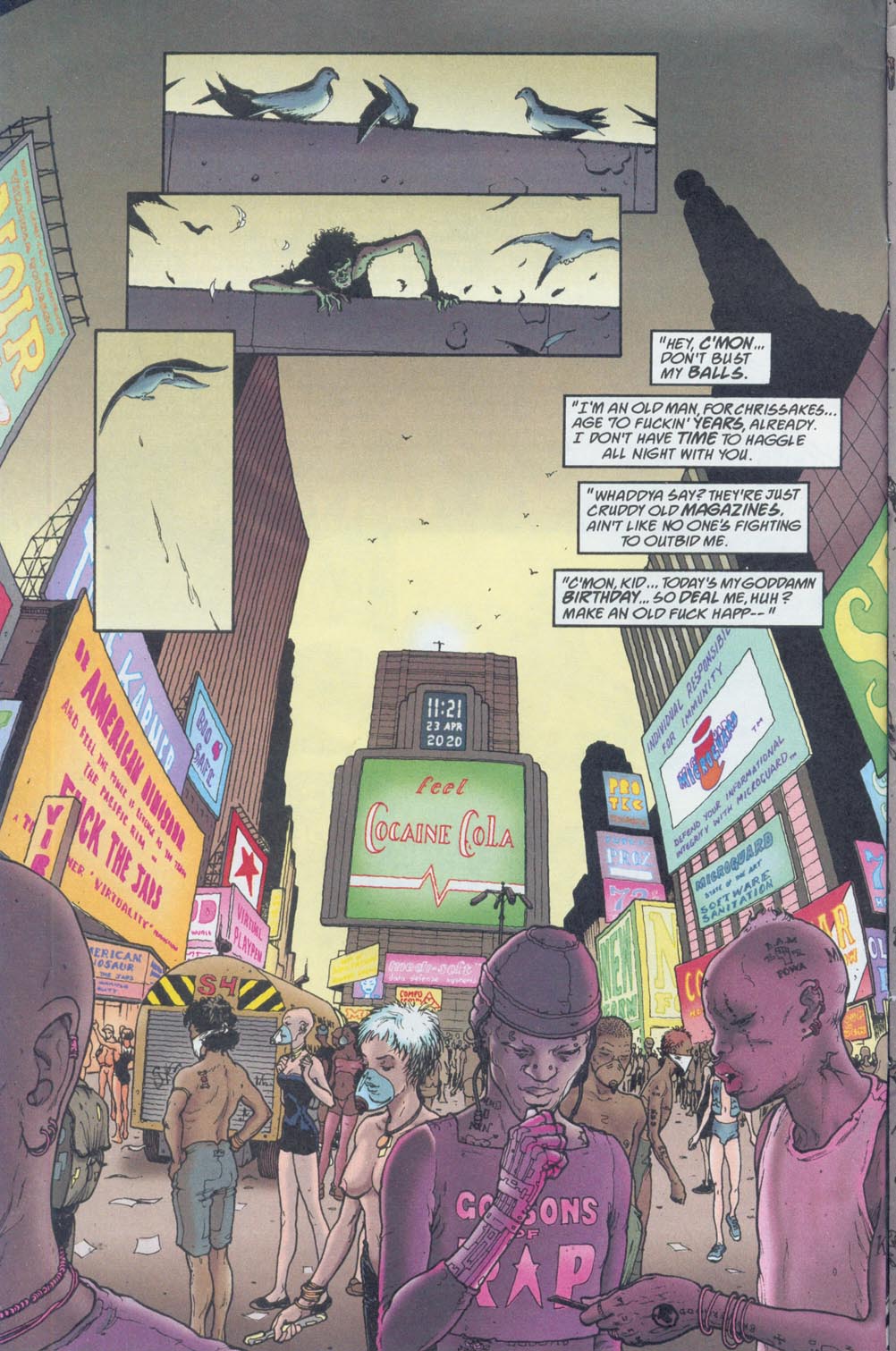
To follow up on this, you’ve illustrated the end of times in many ways. 2020 Visions, Strange Adventures, The Invisibles. Some would say we're at the end of times now. How would you judge our apocalyptic aesthetic?
I think the apocalyptic aesthetic is good. It's good. It's a spectrum and at one end of the spectrum you have what's happening in Ukraine, what's happening in Gaza, what's happening in Sudan and it's being streamed live and it's like an advert for arms dealers and it's the most bizarre thing. There's not a shred of what you had in the first and the second world wars where they were trying to put a gloss of, "We're doing the right thing" and "We're stamping out evil" and "You're fighting for king and country." I mean, this is a real estate deal. On the one hand you've got this literally hellish vision that's being presented as "here's what's happening in the news" with absolutely no judgement. I know news is meant to be impartial but it's bizarre. And then at the other end you've got this glossy rampant consumerism where you've got people saying stop buying plastics and stop buying supermarket food and stuff.
It's just a surface gloss on everything and then you can just spend your way to happiness. The housing bubble surely can't last. The incredible disparity in the division of wealth surely can't last. We hear people talking about the way empires typically fall is because the people with the most wealth keep amassing more and more to the point where everything else, there isn't actually enough to keep it going, to make it function properly. So eventually it becomes a broken model or an indefensible model for somebody else to come in and overtake.
Every era for millennia has had some guy walking about with a placard saying “The End is Nigh.” I'm sure there's something in us as societies, as groups, where things seem to get better for a while and then inevitably it's like a wave or something. And maybe there's also something in the individual's philosophies about realizing that our time is finite. That maybe there's something of that psychology in the kind of end-times thing. But, one of the things I've noticed before I come over here, people would talk about what's happening in the States — because it's in our news all the time — some people do kind of make light of it, particularly about Trump. There’s a way of looking at it where it's on the surface, where it is actually amusing. It's so much like satire. And it's not amusing at all, it's actually horrible. It's actually really, really horrible.
From being here, you’re maybe the fifth or sixth person that's asked me, "What do we look like to the rest of world?" I always make the point that the U.K. is going in the same general direction as the U.S. It's miserable. They're just chipping away at human rights. They're chipping away at any value that most of us could think of as being a shared value or a good value.
What they're doing to the planet, what they're doing to other people, what they're doing to the most vulnerable people ... everything about it, like the way they're running everything, the way they're trying to control everything, the way they completely doctor the news, everything about it is hellish. But any time I mention the fact that there are some people who find it slightly amusing, particularly the Trump thing, just because he's this caricature of an inept, unkind leader, they get quite defensive — "It’s not funny." I know it's not funny, I'm just telling you. There is that element to it. Every time anybody discusses it in the U.K., the situation here, it always comes back, "It's kind of the same here now, isn't it?" The other thing of course is, and this might speak to the fact that I'm friendly with a lot of people who have got some degree of education, some degree of community spirit, some degree of artistic or cultural interests — I haven't met anybody here who’s said, "I've got to say I do like Trump. I think he's doing quite well for us." It's the same in the U.K. I don't know anybody who supports anything that's happening. I don't know what the percentage was of people who voted for Trump. I believe it was a lot less than half.
Well, of those who voted, he won the majority.
Yeah, of those who voted. Sure. But then of course it's a question of, can you really trust that?
A question for you in this vein. Some people see Trump as a god-like figure. There's been arguments made that the Marvel Cinematic Universe has laid the foundation for these authoritarian figures to come in. We’ve seen this in Frank Miller's Dark Knight where fascism is explored but not really argued one way the other. You've worked on superheroes for your whole career. You see America. You've been here longer than you've visited anywhere else. Where does the superhero fit into this?
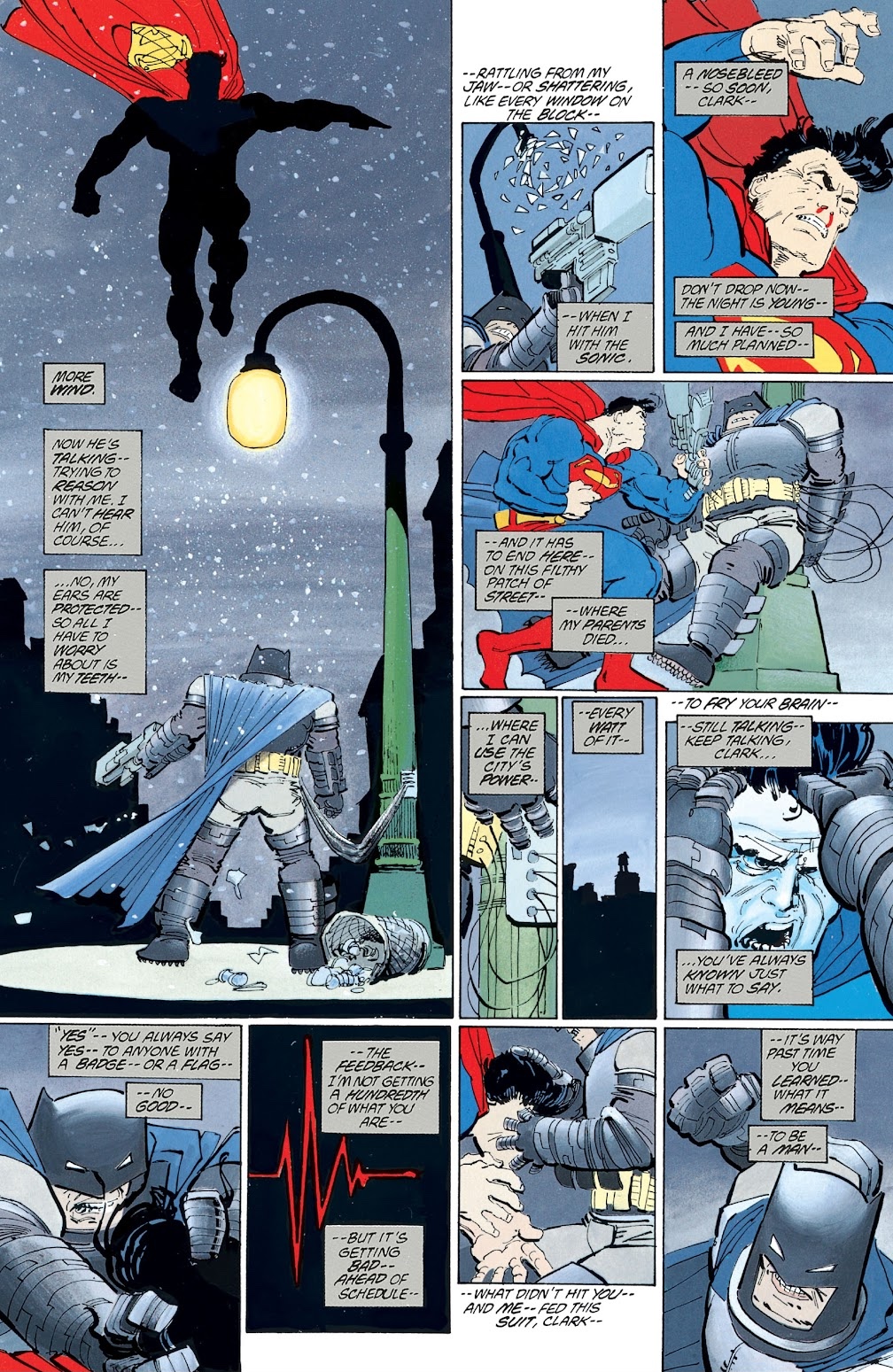
Well, on the one hand I suppose like in Frank Miller's Dark Knight you had that scene with Batman berating Clark for being a yes man to anyone with a badge or a flag. I think it's still worth exploring the idea of what it is to feel patriotic. Because I feel there are a lot of people who feel broadly patriotic in America. I think maybe you could use a superhero to actually explore what does patriotism look like now given the fact that more and more people are starting to get their news and current affairs from online outlets that are not vetted. What does it mean to be a patriot when you disagree with your president or your prime minister or your king or whatever? What does that look like?
And then of course, on the other hand, the superhero as a form of entertainment is very much like any other form of entertainment. It's bread and circuses, you know? Smoke and mirrors. You keep people distracted with good entertainment and you also keep people distracted with division, the divide and conquer thing. So while everybody's arguing over pronouns and immigration, they're not actually saying, "Well, wait a minute, you shouldn't be running the country like this, you shouldn't be changing those laws. You should be doing more about this." I totally understand why people feel really passionate about causes and movements close to their hearts or close to their moral compasses or whatever.
At some point, it's worth taking a step back and remembering that it's not actually people wanting to be accepted for the way they identify or people trying to find a better life in a different country that's actually the problem. It's the ruling classes and big, big business that's actually the problem for all of us. It's absolutely in their interest that we're all arguing about other things and that we're all distracted with endless streams of entertainment.
On the one hand it would be great if people who were better at writing stories than I am came up with the new scenarios for superheroes that actually satirize or criticize or whatever the problems that are facing our respective societies and the world in general.
There's also the fact that superheroes are pure entertainment. With the advances in technology and effects and whatnot, there is an argument to say that superhero films should actually get better and better. For all that entertainment is a distraction [is] the fact that most of us aren't doing enough to try and change the terrible situation we're in.
Good entertainment is always welcome. Good entertainment makes your life better like any type of good art makes your life better. It doesn't quite answer where the superhero stands in relation to that. It's all part of the conversation.
On a lighter note, you've given a TED talk about things comics can do that other mediums can’t. Who are some artists you feel are currently pushing the medium forward?
Tricky one. Somebody was asking the other day if I saw that [Absolute] Martian Manhunter thing where you have to hold the page up to the light because you can see through it. I haven't seen it yet but that's an interesting idea. Mark Waid and Chris Samnee are doing a great job in Batman and Robin. I've only read the first three or four so far and it's pitch perfect. I don't know. I don't get the impression their objective when they started out was to push the art form forward. I think they're both very, very good at what they do and they work very, very well together and they're telling a story that's working very well with the writing and the art.
Jorge Jimenez is doing a great job on Batman just now. He's one of that generation that's managing to feed his manga influence into the mainstream tradition of superhero art from the last couple of decades. And he's doing it really successfully. I always shy away from starting to name artists that I've been looking at recently because of course, I think later, "Oh my god, I should have mentioned so and so." I mean, Pepe Larraz and Gigi Cavenago. There's a whole bunch of guys doing really great stuff.
In terms of surface aesthetic, Chris Ware's still doing much the same thing he's been doing for quite a number of years now. He's actually so good at what he does that it's always richly rewarding to pick up anything that he's done. He has been very, very inventive with the medium on countless occasions, but it's actually the heart and the subtlety and the nuance of his stories. For the writing individuals, he's a lens or a filter that's absolutely unique. That's one of the big things for me that all of us have got influences and especially when we're younger and we feel we haven't really found our style yet.
I feel like, certainly when I was younger, I kinda wished that I could be as ostensibly simple and stylized as Mike Mignola or as loose and gutsy as Frank Miller or as controlled in a 3-D direction way as Dave Gibbons or as experimental as Bill Sienkiewicz. I was always looking at other people thinking I wish I could do this, and eventually your style just kinda comes out. Like your handwriting, you can try and copy somebody else's handwriting and it always reverts back to your own when you start going faster or concentrating on what you're writing rather than the way the writing looks. But in both writing and art, what comes out, if you're being honest, is yourself.
It's the thing where if you give the same script to ten different artists — presuming that you give it to ten different artists who actually know how to tell a story in a visual sequence — you're going to get ten very different results. One of the things that's going to be most striking is the fact that there's something about each of those people that comes through in their work, whether they want it to or not. To be honest, recently I probably haven't read enough new comics to give a decent overview on who's actually pushing the envelope, so to speak. I mean, David Mazzucchelli’s Asterios Polyp is a masterclass in everything you can do in a comic. From each person having their own font to the obnoxious architect talking over his artist partner, all the visual techniques in that book, you could teach a whole course just using that one book.
It's funny when you look back on Daredevil: Born Again or Batman: Year One and obviously he's working from Frank Miller's scripts and obviously he has an understanding of the way comics works and you can see the thought process and the way those books actually work and they're quite different. Only a few years apart, but there's obviously a whole lot that's come through there intuitively because he's a natural storyteller. Some of it is he was a comic fan and he had some understanding of the way comics worked even if he didn't study them. He went to art school but he studied comics from a lifetime of working in comics.
Then moving out of that superhero arena into City of Glass and various other things that he did since. He’s another person who uses the comic form to its maximum potential, absolutely. Which is a great contrast to the way so many of the autobiographical comics that I see online are working. Often, it's talking heads and full figures in a simple environment. It's actually just a vehicle to talk about themselves and to say something heartfelt about the way they feel about things, which is absolutely valid. It's one of the beauties of the comic medium that you actually don't need to be an academic or a maker with decades of experience or a very gifted writer or artist to actually be able to take the comic medium and tell a simple story about yourself or about something that you actually want to convey in terms that are easy enough for anybody to pick up and understand. I think it's good to have the space for that kind of breadth of expression. From the beginner saying something about themselves right up to the seasoned expert who has got all the tricks.
You just mentioned some influences on you, but today you're often cited as an influence by contemporary artists. What is a comic that you wish you could go back and redraw? And if you had to pinpoint a reason for your influence among creators today, what would it be?
Gosh, okay. An answer to the first question: It could be any of them because I can't look through any of them without noticing the things I wish I'd done differently.
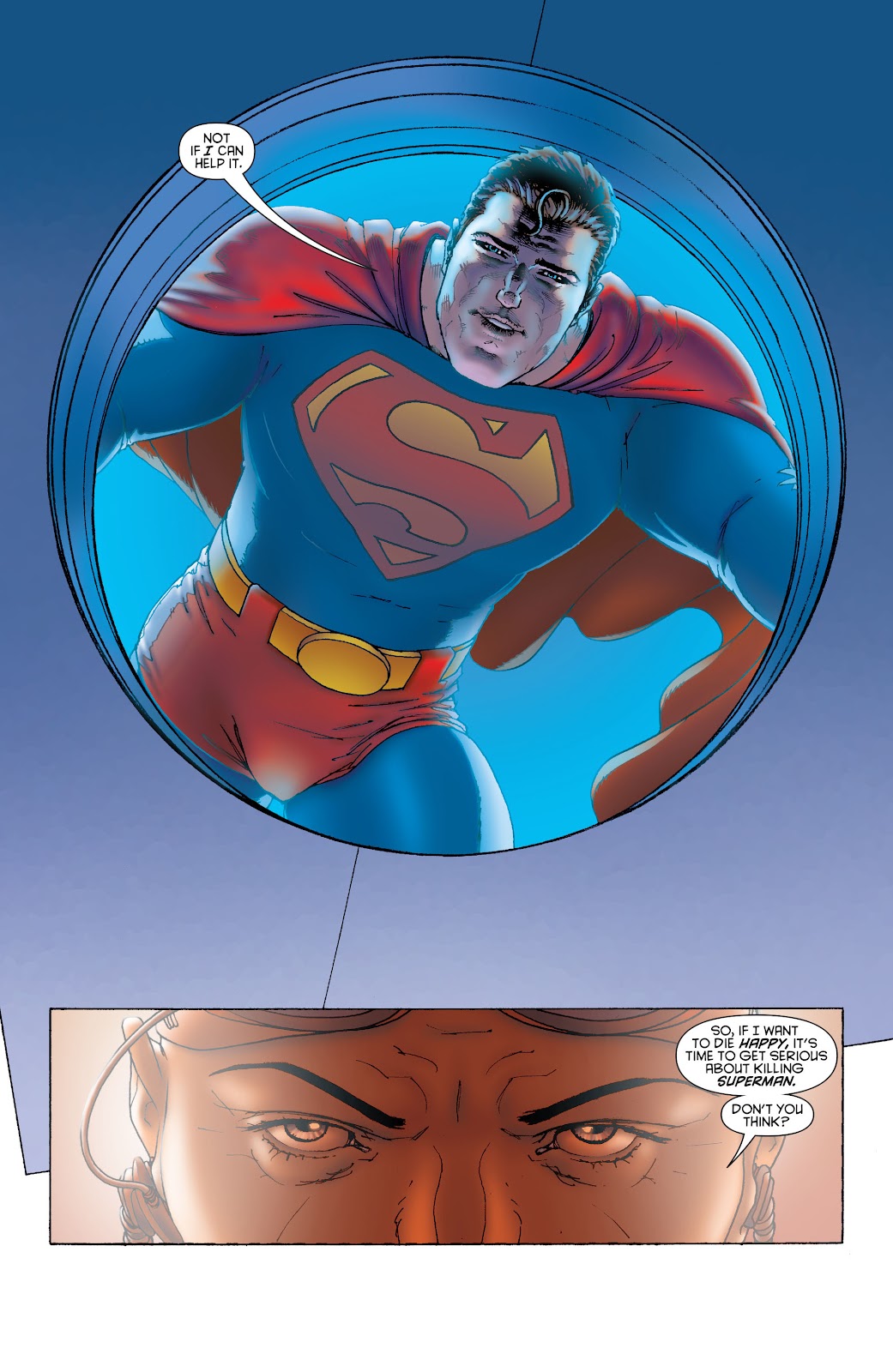
In a way, I kind of wish I'd done All-Star Superman differently. I'd [have] penciled it in blue line the same way, but instead of finishing it with sharp graphite technical pencil lines the way I did with We3, I kind of wish I had just inked it relatively simply — maybe it would have felt more like a retro book then. Maybe it wouldn't have worked quite as well but I always wish it was slightly bolder in line and simpler than it is. For all that I've had some really good coloring over the years. There's part of me that would like to go back and color everything myself.
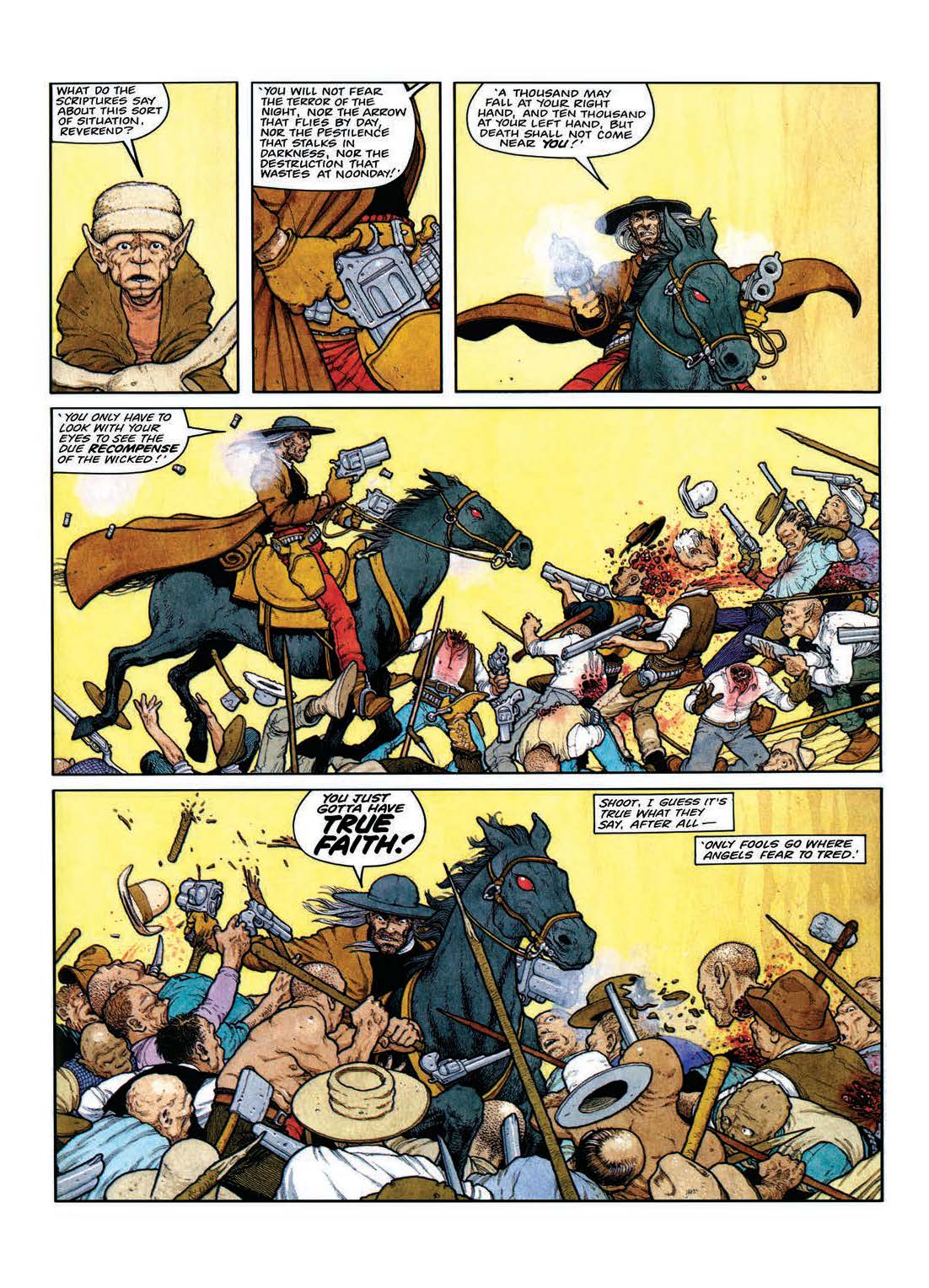
The coloring in Missionary Man and the Shimura stories are incredible. But the time involved, how long would that take?
Yeah, exactly. If I had stuck to my guns and said nobody's coloring my work and nobody's inking my work and all the rest of it, I would have done a quarter of the number of pages I've done. So I would have learned less about storytelling.
I was talking to Larry Ganem recently, he's DC’s VP in Talent Relations. I’ve known Larry for decades, really like him. We were chatting over dinner in the summer, he was saying, "What about that Lobo story you did for us all those years ago, have you still got those pages?"
This was a Lobo one-shot. I think it was 24 pages. Alan Grant wrote it and I penciled it all out in blue line. When I sent it off in a FedEx box, it was absolutely the best thing I'd ever done to that point in my life. Dan Raspler was the editor and he sent me eight, ten, twelve pages of notes for the first twelve pages of boards that he got and he said, "I'll leave it there because I don't want to swamp you," and it was basically that these are great drawings but start with an establishing shot for this fight. We don't need to see two full figures in medium shot for every punch that's thrown after that. Zoom in and the fist knocking a tooth out. Tilt the camera. He sent me all these pages of notes for things I should have done differently or should have thought about at the layout stage.
Larry was like, "Just print it the way it is anyway because you were younger, you didn't know what you were doing." But I actually feel to do that, it’d be more satisfying for me and would be more useful for other younger artists if I actually redrew the story the way I would do it now.
So you would publish both versions?
Oh yeah, and publish both side by side. Absolutely.
That would be fascinating.
Yeah, it's not quite in the cards yet, but it's on the back burner.
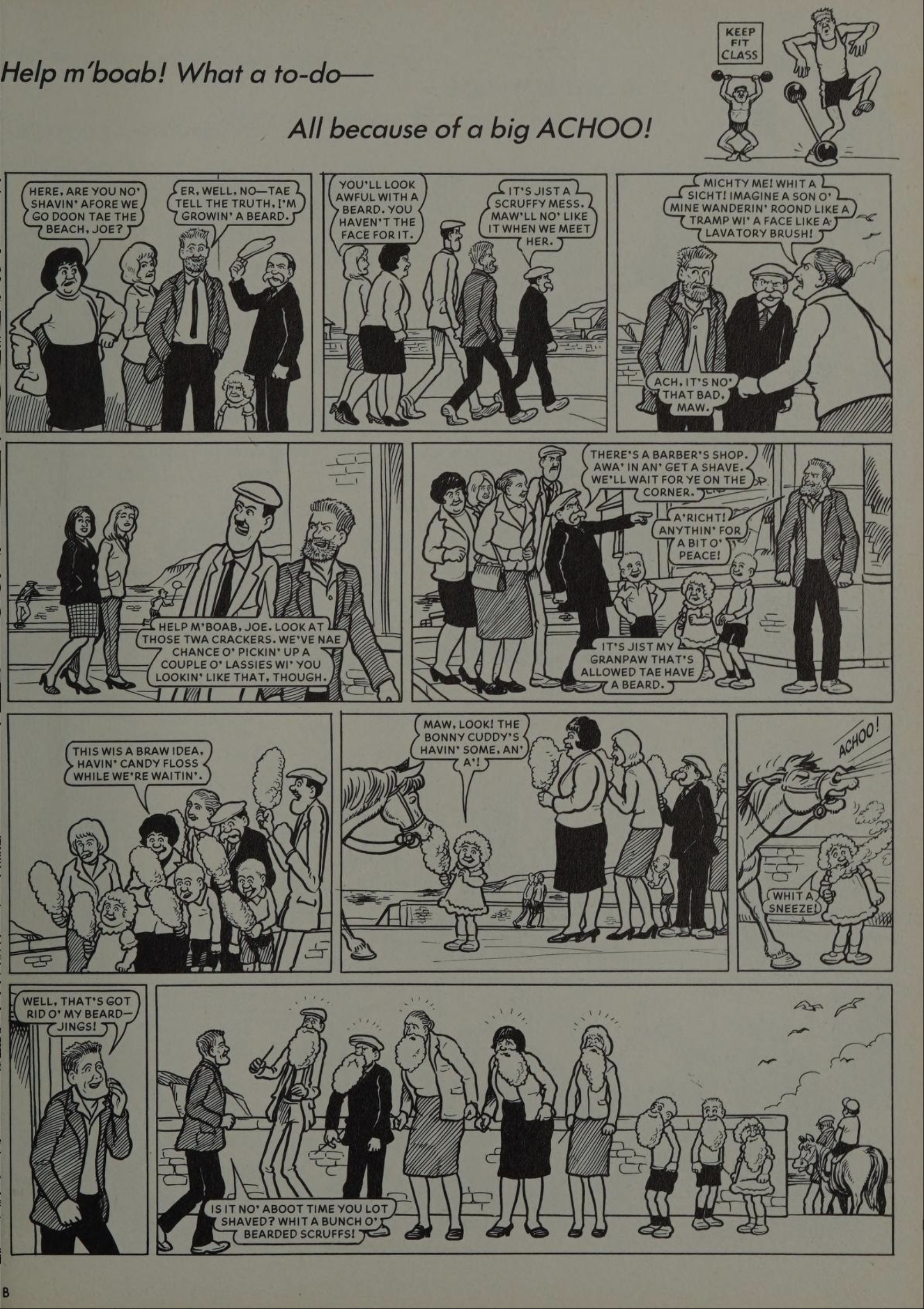
Now, my influence on other artists. Obviously my style, such as it is, is partly me, but I'm also influenced by a bunch of people from my childhood onwards. One of them was a Scottish artist called Dudley Watkins. He drew a newspaper strip, a Sunday funny, called The Broons. That was a huge influence on me when I was like four, five, six years old, right up to the present day. I still love his stuff. He's in the same mold. He's in the same mold as Winsor McCay. Simpler and always just setting it as a Scottish family in their home. So there's no upside down hotels or elephants floating about or like that, but much the same kind of line.
There's a bunch of British artists, European book illustrators and whatnot. There's a number of fine artists and graphic designers, illustrators, great American illustrators. Moebius and Katsuhiro Otomo. I've already mentioned Mike Mignola, Bill Sienkiewicz, Dave Gibbons. There’s Mike McMahon, Will Eisner, Alex Toth. There’s just so many. ... I loved John Buscema in my teenage years and I still love him, he's an absolute genius — but I mean I think probably Dudley Watkins, Moebius, and Katsuhiro Otomo and obviously mixed up with all these other influences. But it comes through me. That's my strong points and my limitations.
Oh, Geof Darrow, of course. Hard Boiled was a huge influence on me when I first saw it. It comes from a similar place to Winsor McCay and Tintin, for instance. There's that clear line, the European thing. I think most of us look at people whose work we admire that's something like what we do, or maybe better than what we can do, but I'm looking at Moebius and Geof Darrow when I'm twenty years old and thinking, "Oh my God, these guys are amazing. That's the direction I want to go in." I'm also looking at John Buscema when he's inking himself, and Alex Toth using that really thick, dead line and thinking, "I love that but don't actually know if I can do that."
I think every artist that influenced me was a child and a teenager and a young professional artist at various stages in their life and they were in awe of other artists who had gone before them. We're all links in a chain. I think it's kind of as simple as that. A lot of it's personal taste. Grant Morrison has always said that I'm his favorite artist. He always says I'm the best artist who's working in comics. Which is absurd. There isn't a best artist working in comics. There's a best 100-meter sprinter. It's by like a nine hundredths of a second on one occasion. That's the way they work it out. You can't do that with comics, can't do it with songwriting, you can't do it with musical performances. There isn't a best lead singer. It just doesn't work that way. I'm not even the best artist that Grant’s worked with, never mind the best artist.
A lot of it's to do with personal taste. There's something about my style that really appeals to Grant's personal taste. It's the same like most of us have got. Most of us have got favorite bands or favorite films and they're not the best bands or the best films but they're favorites to us because they're our favorites. I don't know. You could really dig into this but I think at the root of it, it is actually just what appeals to you and you are drawn to things that are different from what you are and you're also drawn to things that are what you're aiming for. I think it's a combination of that.
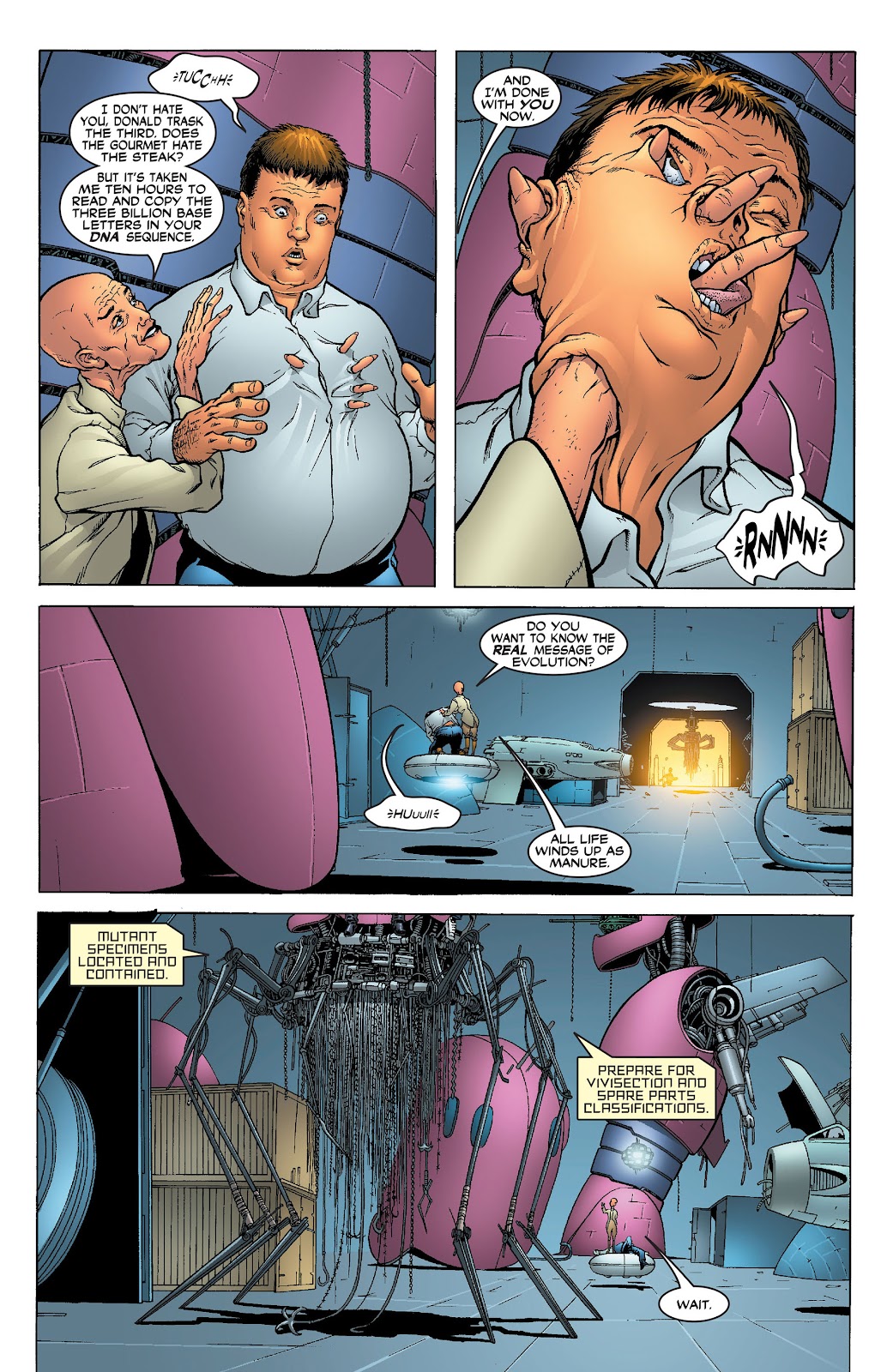
Your influence has extended beyond just comics: Jupiter’s Legacy on Netflix, the recent Superman film, and Deadpool and Wolverine. What do you think is lost and gained, especially considering the certain things you can only do in comics, when they move to film?
Okay. Deadpool and Wolverine. I was invited to the premiere in New York and my wife and I went and [it's] absolutely the loudest movie I've ever seen in cinema. [Laughs] I couldn't believe it. My wife slept through most of it, or she just kept falling asleep. There’s a five-hour time difference. We arrived mid-afternoon, which was like nighttime for us. So. it was like two o'clock in the morning, the time the film was on, but we got to the end of it and was a standing ovation.
Of course it’s all the cast and crew that were there, everybody was whistling all the way through, you know. My wife asked me, "Why did they even make films like that? Who is that for?" "Everybody else, hun." Obviously there's bits and pieces of Cassandra Nova that came from what Grant and I did in the comic. I thought it worked really well as that kind of movie. I thoroughly enjoyed it. I don't watch loads of superhero movies, but I thoroughly enjoyed that.
The Jupiter's Legacy thing I think was just a huge missed opportunity. There was no point in trying to do what The Boys had done because that was absolutely its own thing and you can't kind of outdo something like that in the same way you can't really do political satire anymore. I did the two books, they came out first but they were the middle of the story. Obviously there was Jupiter's Circle before that and there was Jupiter's Requiem after it. So there was something like thirty issues or something like that.
I think you could have done a kind of cross-generational thing that ended up in a near future and you could have regularly killed off main characters and obviously there's a lot of political and family machinations. It could have borrowed a little from Game of Thrones and it could have been an ongoing thing that changed from the 1930s right through to the near future with a wee bit of inter-dimensional thing and our history of comics. It could have said something about the 1930s when Superman started. It could have had a Mad Men section like in the '50s and '60s, and get into the Beat generation. It could have worked really, really well. And the way it starts is there's a king and there's an evil uncle and there's the king's son and the evil uncle convinces the king's son to kill his father. The young guy can be king but he doesn't know what he's doing. It's always going with the uncle that takes over. I think that's the starting point of a pretty good and pretty familiar story. It's like Lion King.
Like Hamlet.
It's an archetypal story that also is spread over a lot of generations and it takes in aliens and future stuff. There was a lot of scope for doing something interesting with that that wasn't a standard superhero thing. But they didn't want to kill off the Utopian, the Josh Duhamel character, at the start and Mark Millar to his credit was like, "Guys this is the way the story kicks off, this is how the story starts, he can't still be alive." It's the main conflict and doing that at the end of season one, that's not gonna work.
Mufasa can’t live through Lion King.
No, no, of course not. They were like, "You go away and write some new stuff. The TV guys know what they're doing," and it was just absolutely such a missed opportunity. Grant Morrison had the same experience on Happy. Happy at its heart has an actual storyline that pays off. It works for a reason and Christopher Meloni, he really got the character and he's really good at ad-libbing which was brilliant and Grant was super happy with him but everybody else, particularly the writers room, they're like, "Hey, we can just totally wing this. This is how you get the energy into it."
Grant said, "No, wait a minute. You can do whatever you like on the branches of the tree, but the trunk has to be like this." They didn't take his concerns on board. Then the suits from upstairs come down and go, "Wait a minute, where's this going? Where did this come from? This isn't what we bought." I think there's a thing that happens when people take comics and it seems to be, with my limited knowledge of film and television, that when people start taking comic books to make them into something else, there's a disconnect between "here's this floppy source material over here" and "we're gonna make something big and brilliant out of it." Actually, look at what makes that work first and then make that big and brilliant rather than be flat drawings on a page.
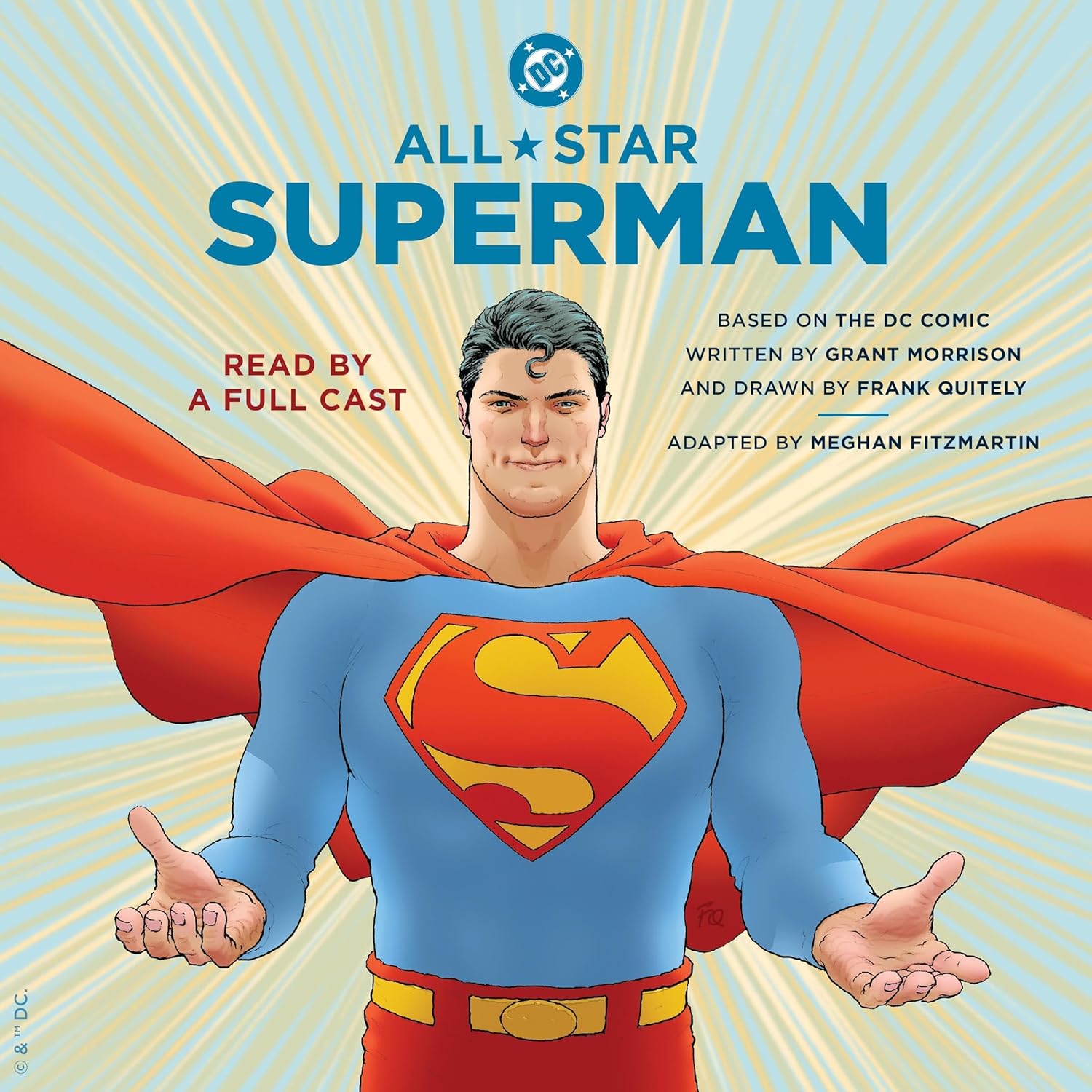
How do you feel about All-Star Superman being converted to an audiobook?
You know, I actually haven't heard it yet. I've got a friend who got in touch and said that he listened to it it was really interesting and it's like a full cast audiobook and there's also narration. To help give context he said it's kind of an updated version of an old-fashioned radio series and he said after a short while he really got it.
What do you think is lost in that process besides your work?
Yeah, well, obviously my work's lost in that process, but what's put in place is the listener's imagination. For most of my career I've listened to the radio and the last couple of decades I've also listened to lot of podcasts, interviews, and conversations and people talking about how they make their movies or how they write their books or whatever.
But when you're listening to fiction in particular and it's just audio, it just all comes alive in your head. I mean, most of us do it all the time when you meet your friend: "Let me tell you about this. You're not going to believe what happened last night. Right after you left, it all kicked off," and you just picture it all.
I think that's one of the strengths of audiobooks and of prose writing, each of it is free to interpret it either as we wish or as we can’t. Not having listened to it, I don't know if maybe there would be references to Superman lore of the past that's lost in an audiobook, I'm not sure. When I was working in Flex Mentallo, I look back on it now and I can see why Grant asked me to draw certain things as references to other comics from his past that I hadn't read. I don't know how well things like that would come across in an audiobook, little Easter eggs or these little tiny things dropped in.
What do you consider your masterpiece?
I don't know. The Lobo story I mentioned earlier on was before I had thought storytelling is any more than trying to make it clear and easy to follow and interesting looking, but I didn't really have a full enough understanding of what story telling was about. So nothing before then.
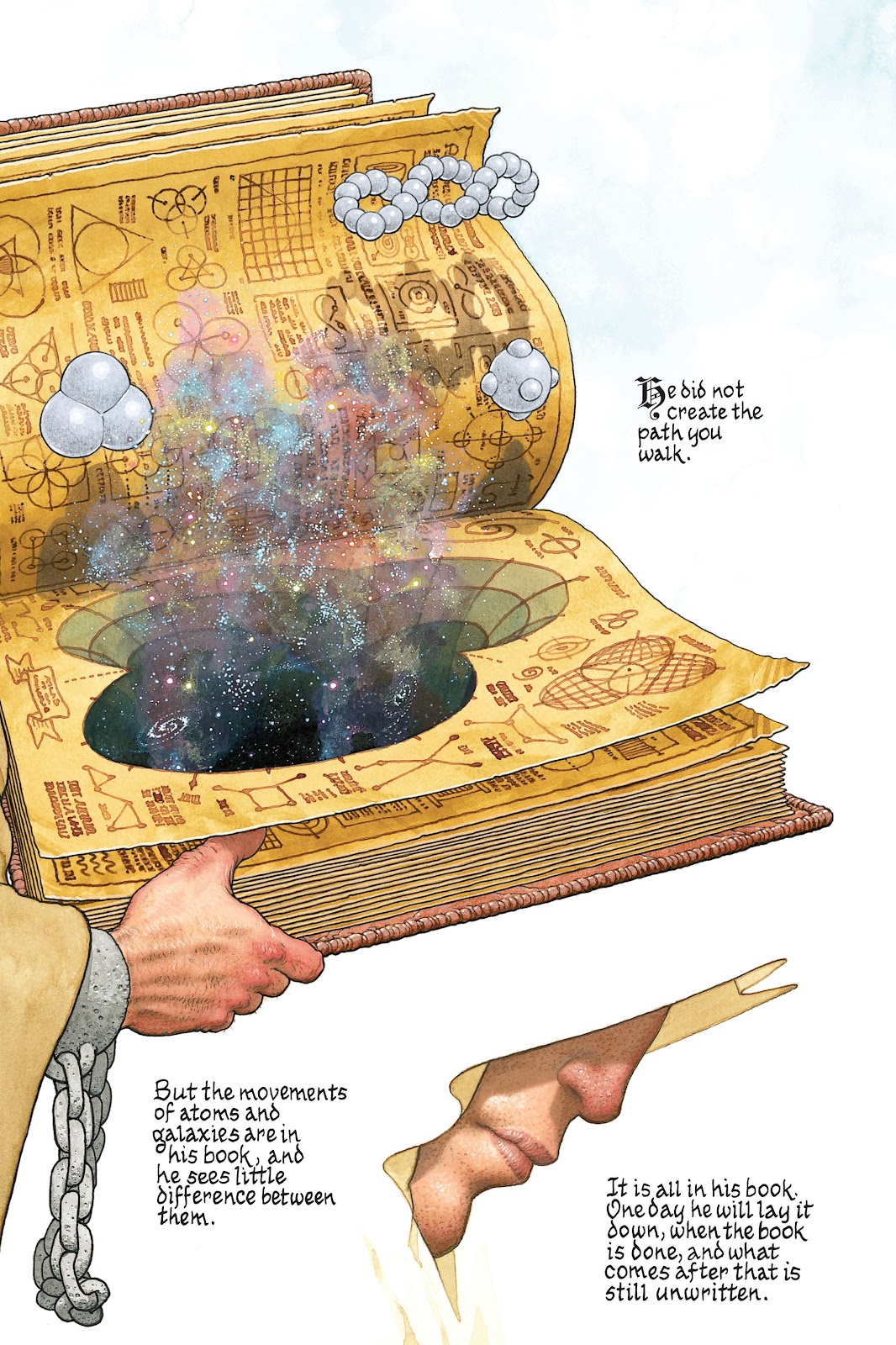
What year was that roughly?
That was the project before Batman: The Scottish Connection. It would be mid '90s. The one thing before it that I still have a great fondness for is Flex Mentallo because it's got a kind of naive charm for me because I was fairly unsophisticated and trying really hard. I'm far enough away from it now not to be as embarrassed about it as I used to be.
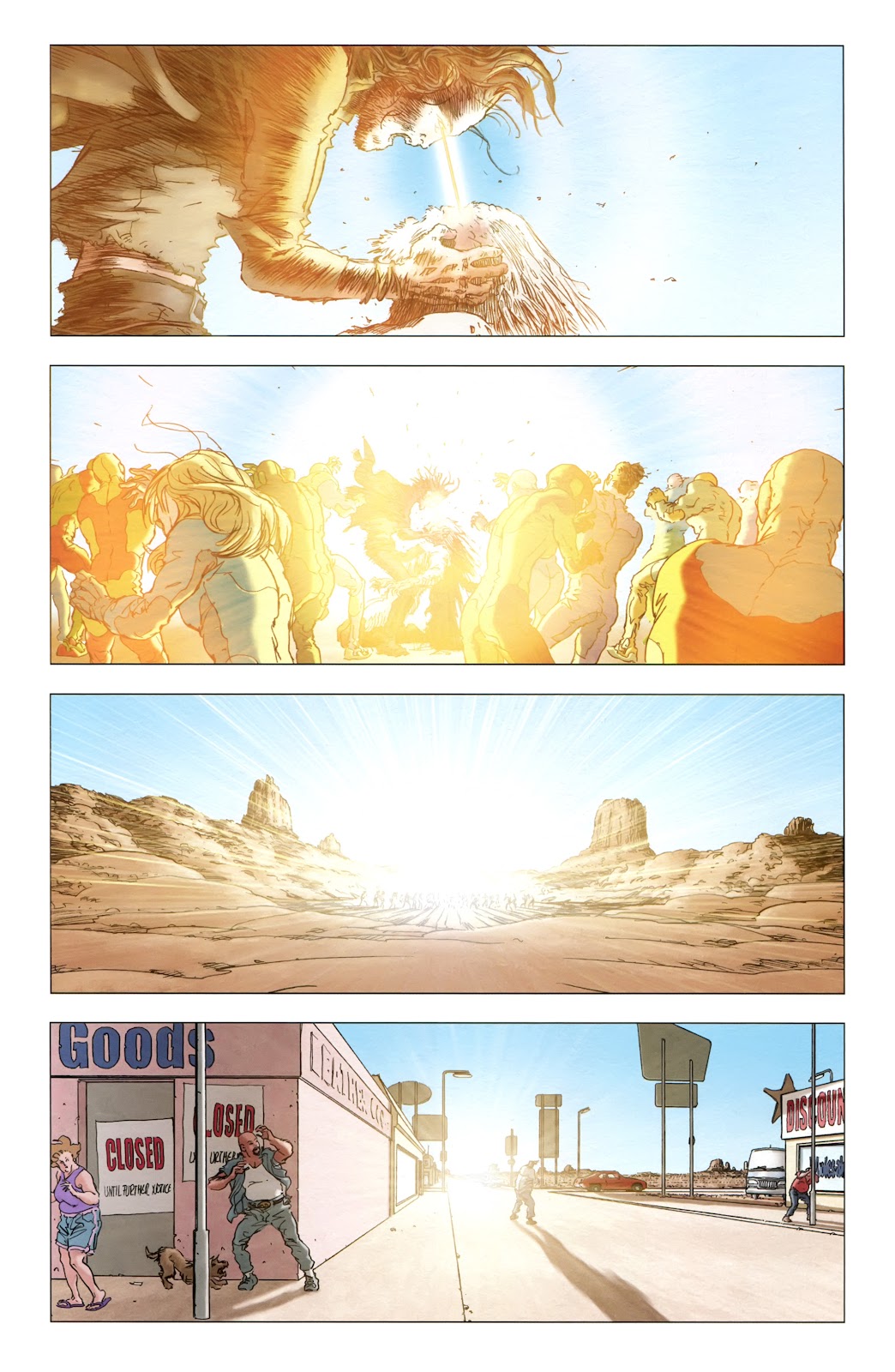
I think the short story I did for Neil Gaiman's The Sandman: Endless Nights was nice. That's very satisfying for me because I did everything but the writing and the lettering. I did all the art, color, and whatnot. I hadn't painted on paper for years, more than a decade. Even though it's a little overworked here and there, it's still very satisfying because it's all mine and I wanted to go in that direction. Eventually with The Ambassadors the year before last, I did the coloring and that with my eldest son, but it was still me calling the shots. We3 has got a special place in my heart because Grant and I really tried to find new or different ways of doing storytelling and I think for the most part it sort of holds together well in terms of being a deliberately experimental piece. Pax Americana is one of the favorite books I’ve done.
All-Star Superman in a way is the book I'm most glad that I did because it's the book that's connected with most people. I've had loads of people at cons tell me how much they love me, and how it was the first book they got their wife to read or whatever. But All-Star Superman's connected with people in a way that none of the other pieces of work that I've done have and I really didn't want to draw it.
I've heard you talk about that.
We'd just done We3 and it got optioned by New Line Cinema and still nothing's happened with it twenty years later but I said to Grant, "Creator-owned from now on," and he was like, "Yeah, yeah, I want you to do Superman for me." I’m like, "Anybody else can do Superman for you," but I'm really glad I did because from seeing the first script and then every script after that being brilliant and then twenty years of people either just imposing about how much they loved it and how much it summed up Superman and how much it summed up what it is to be human. The number of people that their eyes are filled up when they talk about the parts of it. It’s such a privilege to have been involved in something like that. Obviously, I didn't know that was going to be the case when I was drawing it.
So, surface finish would be Sandman. General experimentation and creating your own characters. I actually loved creating all the characters for Jupiter's Legacy as well and the couple of occasions where Uncle Walter/Brainwave, his powers in particular, where they were somewhat experimental with the way we depicted that. All-Star Superman is definitely the one that just resonates with me. Pax, I mean, I can look back at Pax now but at the time it was very difficult to work on.
Let’s talk about Pax Americana a little bit. Very few teams would deliberately take on Alan Moore and Dave Gibbons and say, "Okay, we're going to update this. We're going to make this relevant for the story and we're going to try their old tricks and make new ones." What was that like?
Grant talked to me about it before we started. He’s got a pretty sharp sense and often adopts a tone, a variety of different tones when he's talking about things and I usually know when he's being mischievous, you know. There was definitely an element of, "I could do Watchmen in forty pages."
He had an idea for doing something with the Charlton characters, the ones the Watchmen characters came out of, and using an eight-panel grid instead of a nine, and tying that to musical rhythms, and playing with time over the whole story, and this kind of cyclical structure of the story and it all sounded very good. Watchmen is still one of my favorite comics.
Dave Gibbons amongst many many others is still one of my favorite artists. Perhaps mostly on Watchmen and there's something about Watchmen, maybe the pressure he was under from Alan’s scripts — but the fact that there's something about the way the whole book works that's very, very satisfying for anybody that likes reading a comic where the story and the art work together but they're doing their own thing. The whole is greater than the sum of its parts.
I don't know if I misread Grant's humor but I got the impression that Grant was kind of like, "I'll show you how to do it." Whereas for me it was much more of a, "Dave Gibbons did that." He did it perfectly. For the type of book it was, he actually did it perfectly. And for me it was much more of an homage rather than a, "We’ll show those old guys."
It was really frustrating to work on because for the first and only time that Grant and I worked together, he was busy doing other things. So, he was giving me two and three pages at a time.
Hard to work with.
It was really hard to work with and there was one or two occasions where he'd be like, "Oh no, you can't do that because," I’m like, "I don't know that."
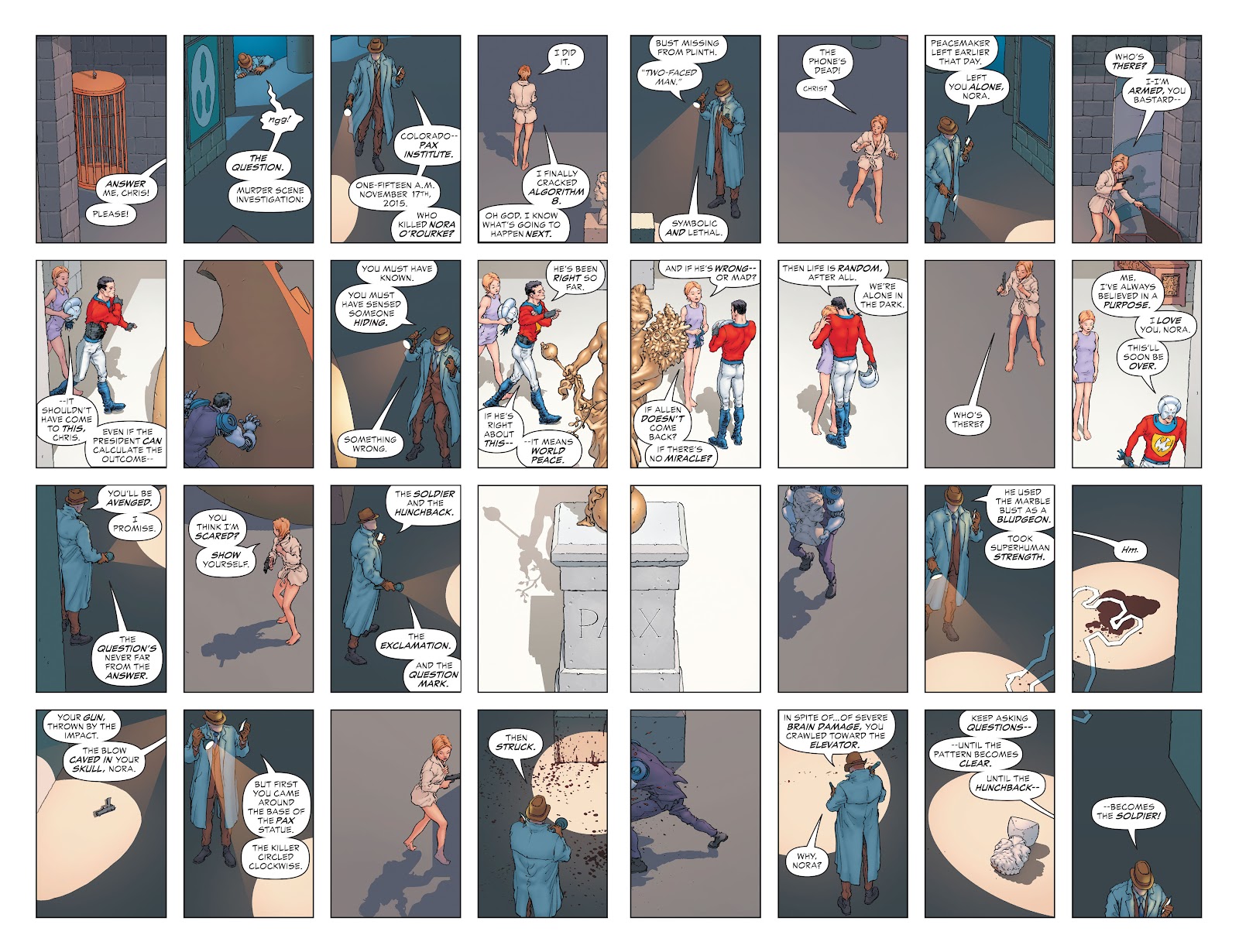
I can certainly see the Gibbons influence but there's some innovation happening too. That two-page spread with The Question is unlike anything I've seen. How did you map it out? I know you're a lover of thumbnails, but how do you map these kinds of sequences?
Basically the way it worked was Grant had an idea that on a double-page spread you could read from left to right, right the way across the spread as you usually do with a double page spread and then zip back.
Keep doing that down across the tiers but Grant thumbnails his own books when he's writing them. Very simple thumbnails, often just with an oval for the head with an initial letter in it so it knows what character it is. He had this idea that the Peacemaker's apartment could be three different times and he had the idea that he could have one space divided up into all the boxes and Peacemaker could be walking about through it with Nora and then Nora would be walking about her own in the evening when the killer was there and then The Question would be walking about with his dictaphone. And in his mind he thought the way that would work would be through lots of criss-crossing staircases like an old-fashioned department store.
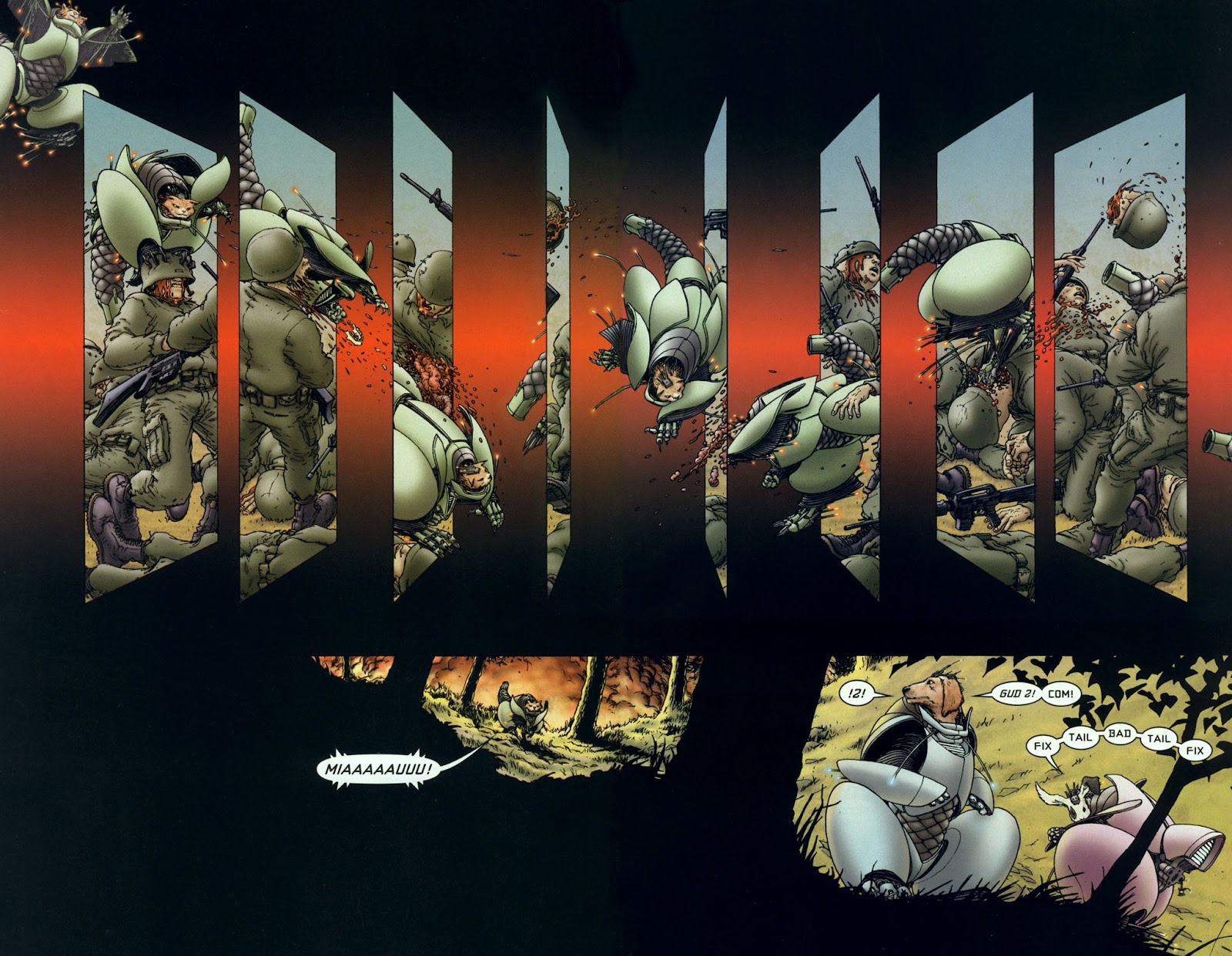
And we sat together for ages. Like we did when we did the cat thing through the panels in We3. He kept saying, "No, it's got to be more different than that. I can see it, I just can't tell you." And eventually it started taking shape. We did this for ages and it just wasn't working. I also didn't have a clear idea of what the three stories were and I was like, "Listen, just tell me, even with your draft dialogue, just tell me what it is you want in each panel." I just made a note of everything.
Then my first thought was, "Let's just make a big flat stage." Make the floor in perspective into a big stage. We'll have the walls at either side. There's a curved balcony at the top and that's the stage set. Then you put the panel, the characters where they need to be. Then there was one or two objects, like the head of Janus that had to be the murder object.
There were a few things that needed to be placed strategically so they would work in the whole. The statue of Fortuna with the cornucopia had to cross over all the frames. Then a couple of big 3D art objects to go in behind the gutters, just to help sell the idea. I suppose I could have done a tiled floor in perspective, but it was complicated enough. Just laying it out in a flat stage and all of a sudden it just came together.
A lot of pages are like that. There's a lot of eight panels, which are a lot on its own, but thinking of the one when the man is talking to Captain Atom and time moves through. Then you have the other one where you have a layer of panels and then smaller ones and then smaller. Were there similar discussions with Grant over all these little details?
No, for the most part, most of it was full script. That double-page spread [in We3] wasn't that much like a, "We need to get together and talk about this," as was the cat jumping through the panels and the dog jumping through the truck and stuff like that in We3. There's been a few occasions where it's just been like, "We need to get together and talk about this," which means, "We need to get together and you need to draw and you need to keep drawing."
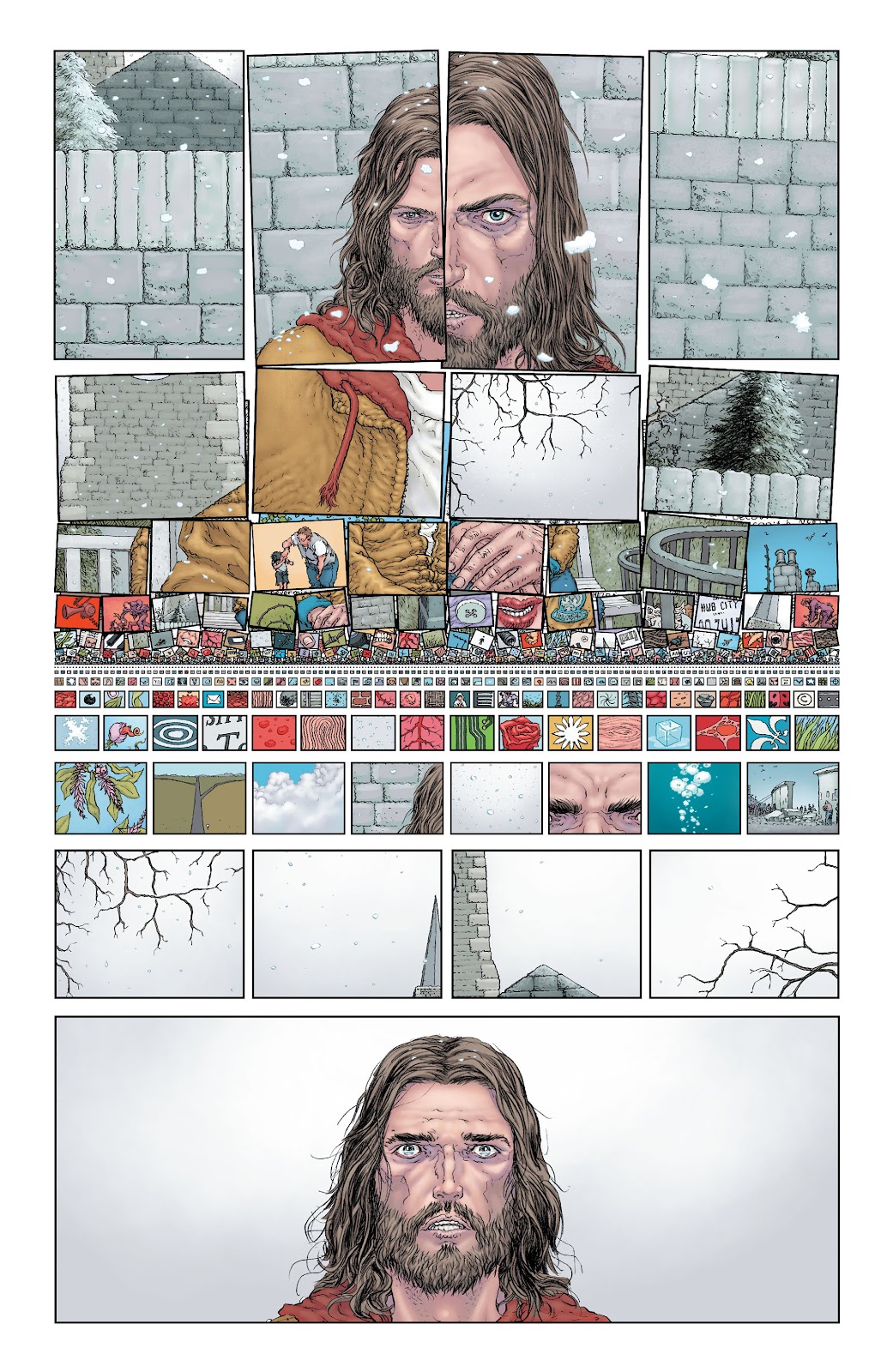
These pages that need a lot of attention seem to be the ones playing with linearity and narrative. A lot of your work explores time, breaks it down, and you often talk about comics’ unique ability to challenge time the way a film can’t. Slow motion is one thing, but you can't just sit forever. You can't look at this movie, at this scene for an hour like you can in comics. Do you think you can ever escape linearity in comics?
Probably not. I don't know. I'm saying that without really ... It's a big subject to take on. No, I don't think you can get away from linearity because there's an element of linearity to the way we experience life.
Your childhood memories are behind you somewhere and your death is in front of you somewhere so there’s a line there and you're on some point on the line. You’re hoping it's before the middle but you're somewhere on that line and you know you can meditate and be in the moment and convince yourself that there isn't any time other than the now and to some extent that's true but it's not true enough to get away from the fact that there is linearity in the way we experience our lives. There's certainly linearity in the structure of most stories that are either memorable or effective. You can do a Pax Americana and tell it backwards. Can do a Pulp Fiction and chop it up. But it's still there. You can play with it as much as you want.
And people will read Pax Americana and they'll watch Pulp Fiction and they'll sit with their friends and they'll work it out and they'll make it into a line that runs chronologically or whatever it is. That's one of the ways we make sense of things.
I want to ask you about The Ambassadors. It doesn’t change time in the same way as some of the comics we were just talking about, but there seems to be a throughline between that, Pax, Jupiter’s Legacy, etc. in their ultraviolence, hyper-detailing, and tone. How do you see your art changing? What interests you at the moment?
I’d add We3 to that list. We3 and Pax were very deliberately experimental with the visual storytelling, and Jupiter’s Legacy and The Ambassadors were deliberately more conventional with the visual storytelling, but the thing that links the four of them is moments of very clearly detailed violence.
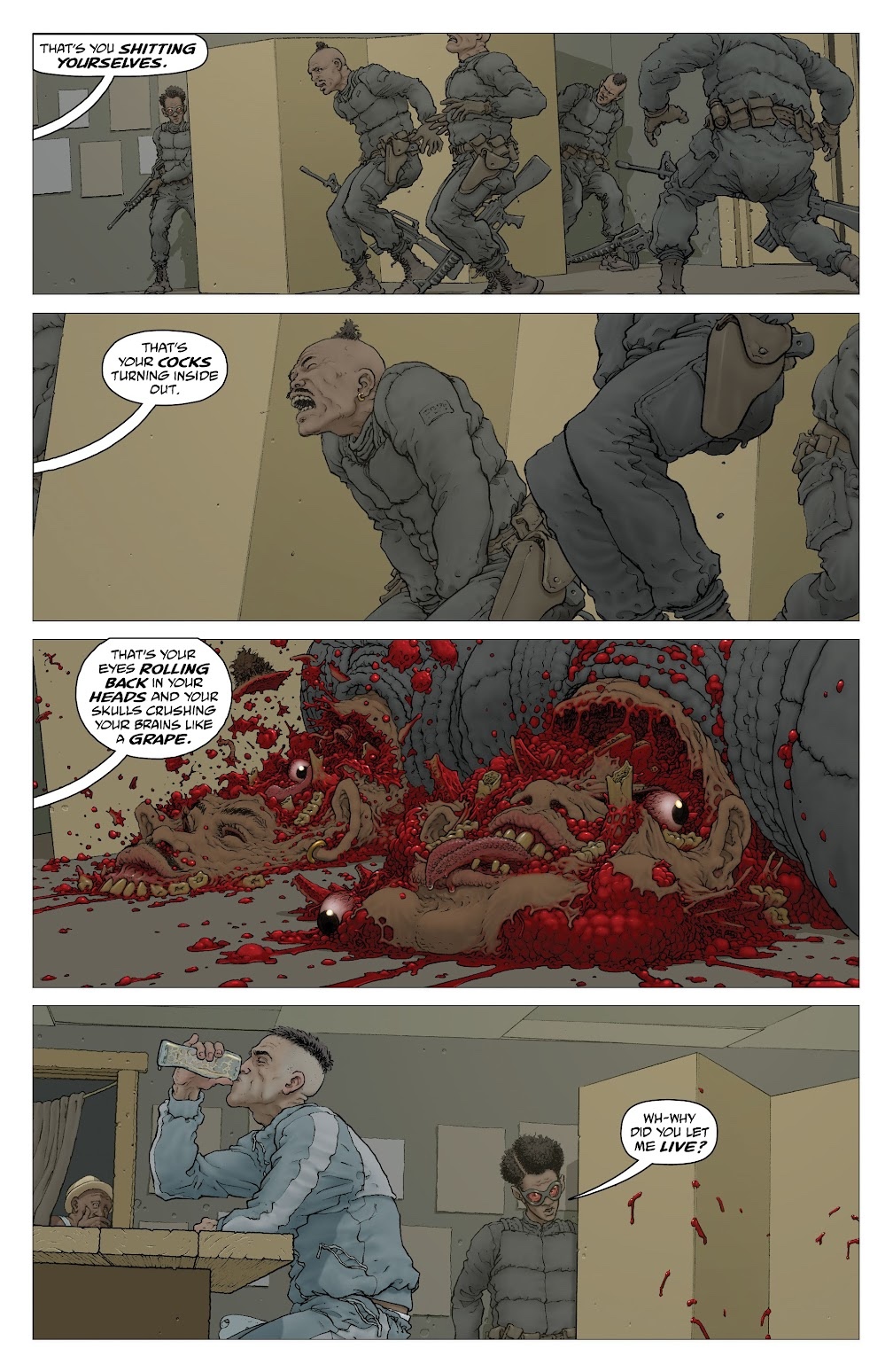
If you don’t like the occasional violent visual in a comic you can flick right past it, and if you do like it you linger on it as long as you like. We’ve touched on this already, this thing about controlling the pace when you’re reading a comic, or book, which you can’t do in a movie theatre. I love that. A head exploding in a movie can be wonderful, but in a comic it can be wonderful in a different way. Hyper detailed, crystal clear, wet and glistening, and perfectly still! Comics can do that in such a unique way. You can read it as movement, of course, but you can also read it as a millisecond of time, frozen perfectly forever.
I’m trying to loosen up a bit with my drawing, recently. I’ve done some covers that have a little more energy and looseness in the line work, and the interiors I’m working on just now (a short story written by Grant Morrison) I’m going for something a little more cartoony. And I’ll color that myself, like I did with Ambassadors, but even with the coloring, I’m planning to try to loosen up there too. Going forward, I’ll approach each project with whatever I think it needs, and I’ll color it myself.
In recent interviews you’ve mentioned that you’ve been writing some stories. You wrote stories early in your career, but haven’t for some time. What initiated the switch?
I’ve written a number of mostly short stories over the last decade or so, and I’m always thinking that the time will come when I get round to drawing them all as comic strips. So far I’ve had one made into a short animation, one is being pitched for a future animation, and a few are thumbnailed, waiting for me to start drawing, hopefully in 2026.
I want to draw all of them myself, so I’ve no plans for commissioning other artists to work on them. I was recently approached by an artist friend to write and draw a story for him, to expand on one of his own creator-owned universes, so I’ve written a couple of things for that, and they’re now thumbnailed and ready to go, as soon as I get my decks cleared.
I started out writing my own stories, and it’s always been my plan to get back to writing again. I’ve loved getting the chance to work on well known properties for the Big Two, but I’m aiming to concentrate on creator-owned projects from here on in.
Any parting thoughts? On comics? On life?
In my lifetime, since the end of the Silver Age, beginning of the Dark Age, I’ve seen technical pens replacing nibs and brushes, Photoshop replacing traditional coloring, Clip Studio and Procreate replacing traditional drawing, and now AI ... AI is a big subject, and the problems of ownership is a separate conversation, but AI is just another tool like all the tools listed above, and like any tool, it’s the vision and skill of the artist that determines whether the work made with that tool is worthwhile.
I’m watching with interest how comics are changing around me. There’s a lot of work being produced that impresses me, and a lot that leaves me cold, but even with the good stuff I’m finding it harder to tell how it’s being produced, and that makes me feel disconnected with the hand and mind of the artist who made it.
I’ve gone back to basics. Not to uphold tradition, and not to reject progress, but for the honesty and immediacy of getting my vision from my head to the paper without any digital intervention.
The post An interview with Frank Quitely: ‘In both writing and art, what comes out, if you’re being honest, is yourself’ appeared first on The Comics Journal.


 Hello, my name is Jack Sparrow. I'm a 50 year old self-employed Pirate from the Caribbean.
No comments:
Post a Comment