


Hanna and The Hells vs. The Beatles (Floating World Comics) by Sam Ashurst and Tony M. Clarke, 36 pages
A midnight movie in comics form, this irreverent, humorous and heartfelt comic book references so many comics, cinema and music icons that a supplemental chart might be helpful. It’s a collaboration of Portland-based screenwriter Sam Ashurst and London-based illustrator Tony Clarke that delivers an un-American look at the lower depths of the music world.
Set in what appears to be the height of the original UK punk scene (c. 1978-80), the story introduces us to female punk band Hanna and The Hells as they entertain in a dive bar in London. Their audience is small but noisy and the band feels jaded towards their public and their future. Guitarist Razor drools over a vintage Gretsch guitar in a music-shop window. It’s beyond her budget (most things would seem to be) and she’s chased off by the store’s skeevy clerk, who resembles Marty Feldman by way of Keith Richards.
Despite their grim future, the four women pool their gig money so that Razor can get her “guitair” and be happier. Alas, it’s been sold to John Lennon, who’s visiting London. This sends Razor, Hanna, Fetish and a fourth un-named member on a gruesome heist that is sacrilege to any aging Beatlemaniac but delightful in its Herschel Gordon Lewis-style comedic gore. It offers a glimpse into how younger Britons might view The Beatles; jaded and bitter at these old-school super-stars. The book’s key sequence, in which our heroines infiltrate McCartney’s low-security digs and confront the two (a prelude to their assuring the “Paul is dead” rumors are a reality) to acquire the guitar. This vivid passage achieves the effect John Waters got so often in his lurid, over-the-top satires of movie cliches.
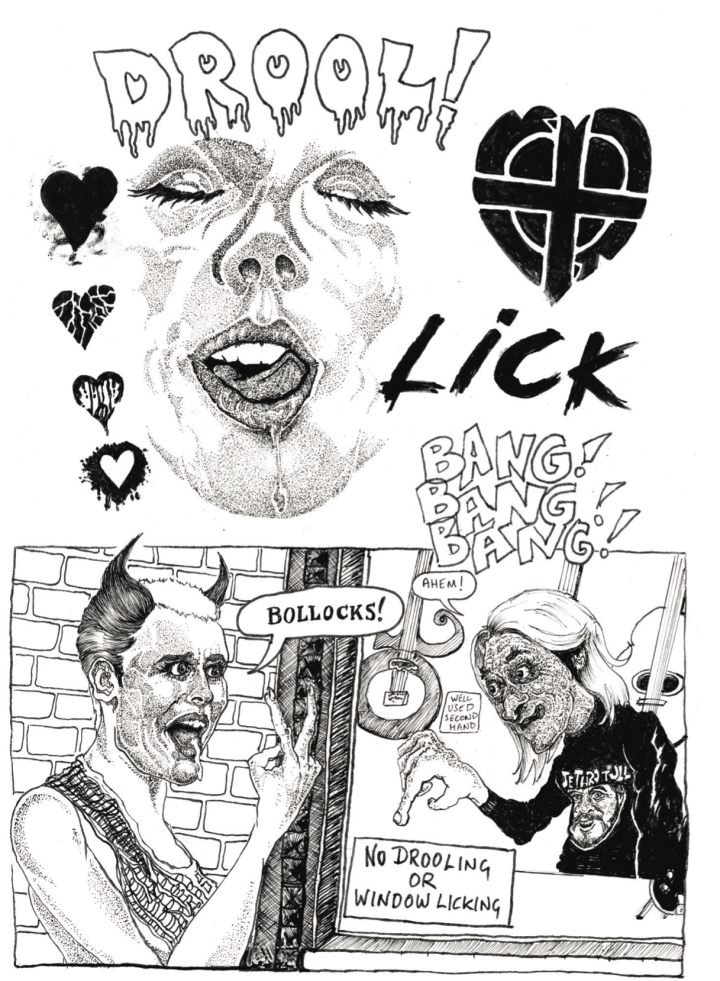
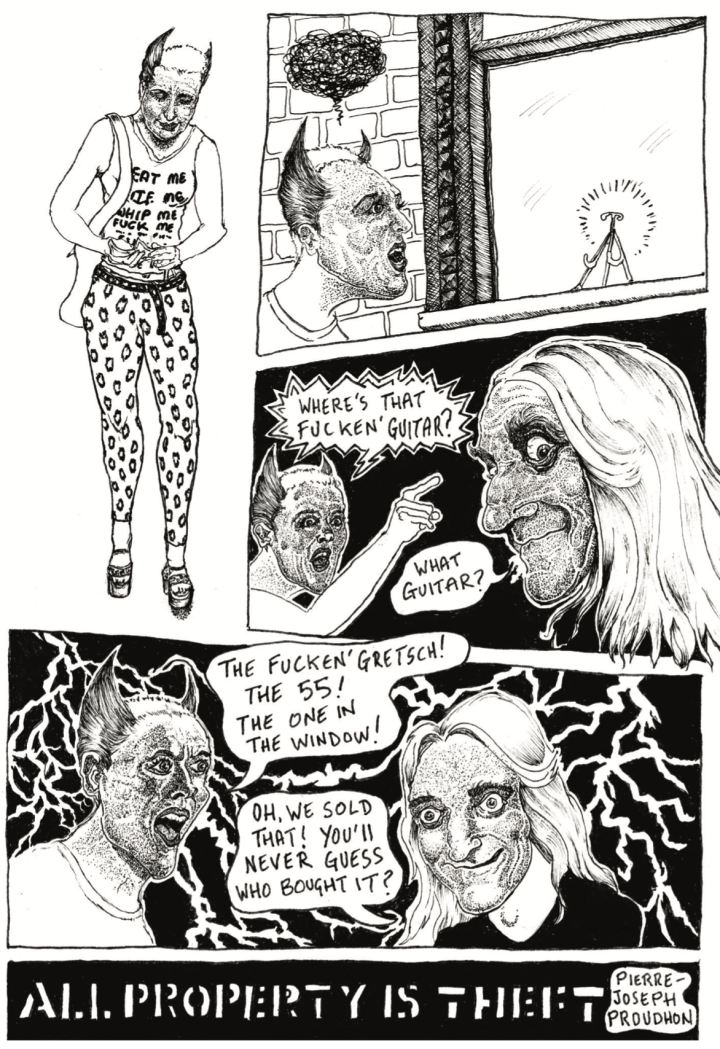
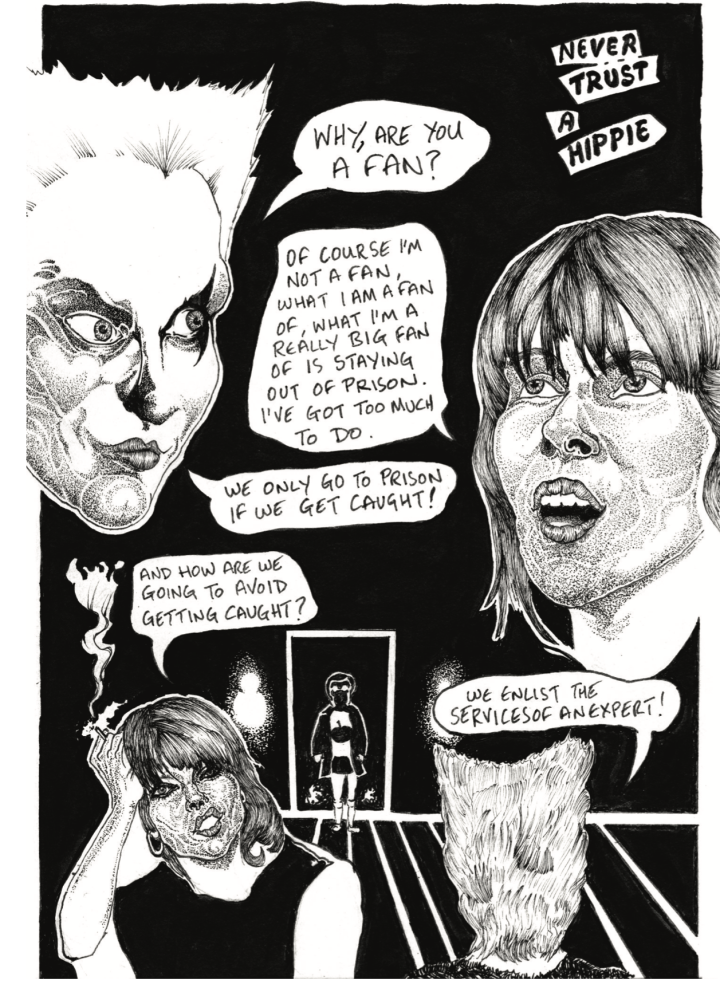
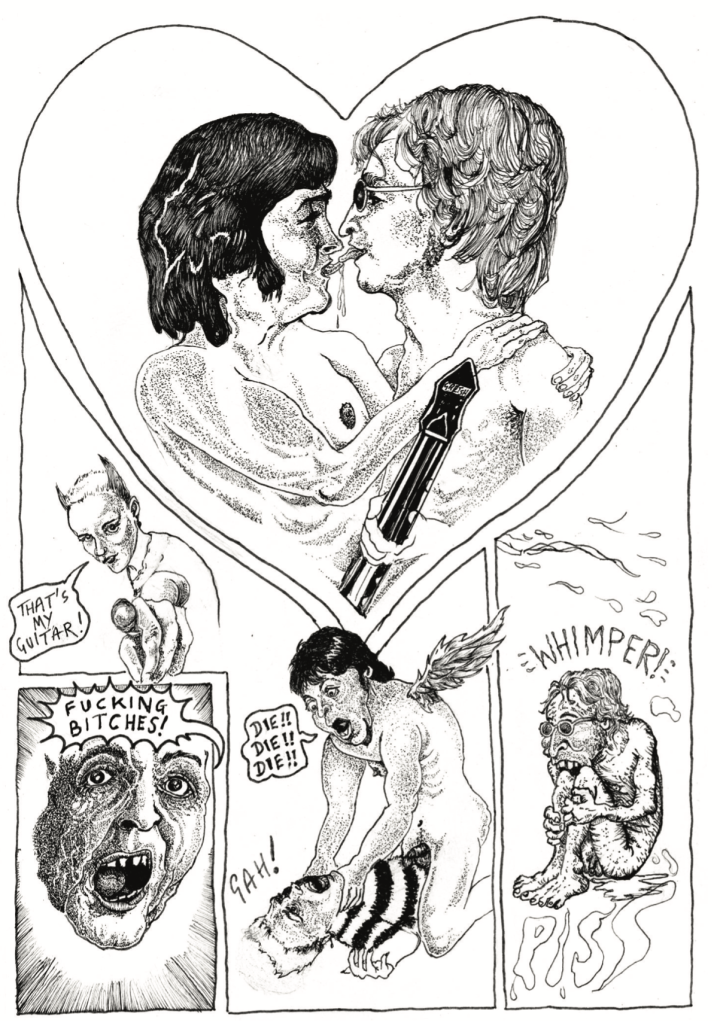
The punk spirit is alive and well in this vivid one-shot. Ashurst’s writing is a heady stew of musical references, puns, sitcom plot tropes and allusions to pop culture. Punk-rock maxims appear on many pages as ironic clip-art. Clarke’s pointillistic caricatures have a rough-hewn edge fitting for the theme. His work demonstrates an elegance and patience that produces distorted, lively results.
On some pages, faint evidence of pencil sketches and white-out corrections are visible. This was not created on a computer tablet. Floating World’s presentation preserves the zine-DIY feel of the artwork: ideal for its overall vibe.
A loopy, vicious farce, it’s done with an odd mix of tongue-in-cheek and sincerity, and is thus 100,000 times more interesting than whatever mainstream floppy comic book you might encounter at your neighborhood store. It sent me on a flashback to the mid-1980s, when independent black-and-white comics began to emerge from the underground and enlivened a miserable stretch of an unrewarding decade. It’s good to see this scrappy spirit still alive and well in our digital doldrums.
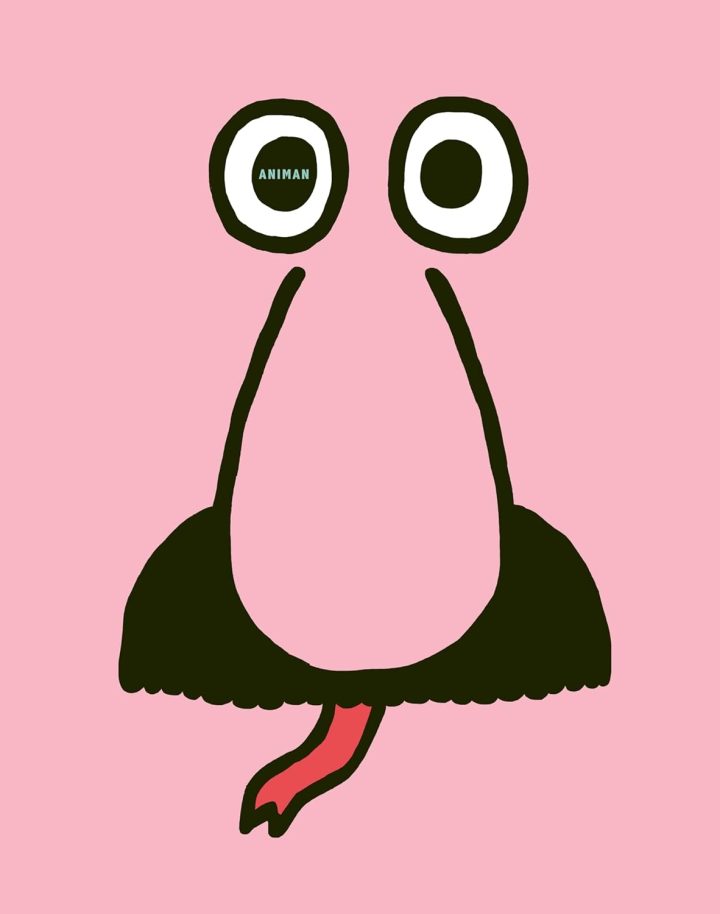
Animan (Drawn & Quarterly, 2026) by
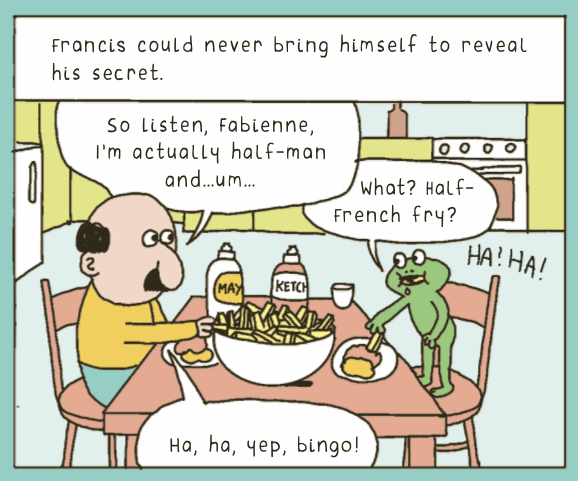
This Angouleme Grand Prix-winning graphic novella might seem, at first, to have zero connection to the earthy misadventures of Hanna and The Hells. Anouk Ricard’s artwork, with its simple shapes, clear lines and bright colors are at the opposite end of the comics spectrum. Yet these two works share a vibe of formal playfulness and droll humor.
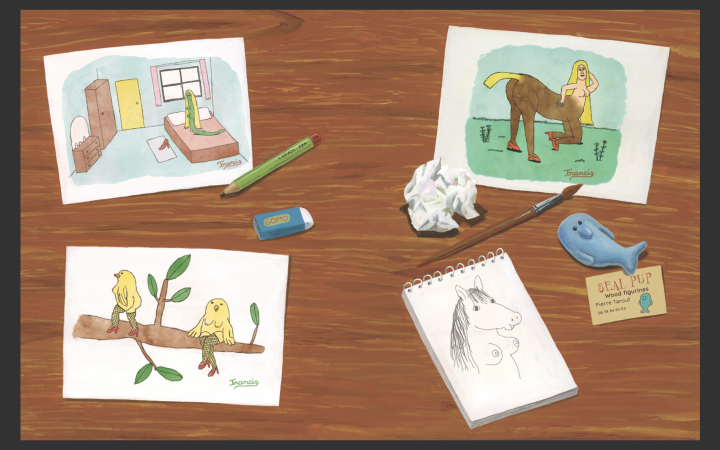
Animan is a welcome inversion of the super-hero genre. Mild-mannered Francis Rolu, animal behavioralist, lives with a frog named Fabienne and leads a pleasant low-key life. Like Clark Kent or Peter Parker, Francis lives with a fantastic secret. He can shift into the shape of any other living being. He chooses not to let Fabienne in on his marvelous ability. Why he holds back isn’t mentioned; it just is. That’s the philosophy of writer-artist Ricard: things happen. Some get resolution; most fizzle out.
Rolu does watercolor paintings as a hobby. Aside from the occasional change to the form of a fly, seagull or dog, the balding, pudgy guy leads a quiet existence. He solves crimes when he comes across them but is just as content to get smashed on red wine with Fabienne and watch TV.
His origin story, as ludicrous as any serious super-hero’s, is told with dry absurd humor in a chain of events I don’t wish to spoil. He has a fitting foe in Objecto, a grade-school friend who can morph into any inanimate object. Their discovery of each other’s secrets gives them a bond that is broken when Guy Gulche (O’s real-life persona) misinterprets the origin of a personal tragedy and blames Francis for his misfortunes. This is, again, boilerplate super-hero backstory, but it gets a probable presentation and works well as a late revelation in this episodic suite of stories.
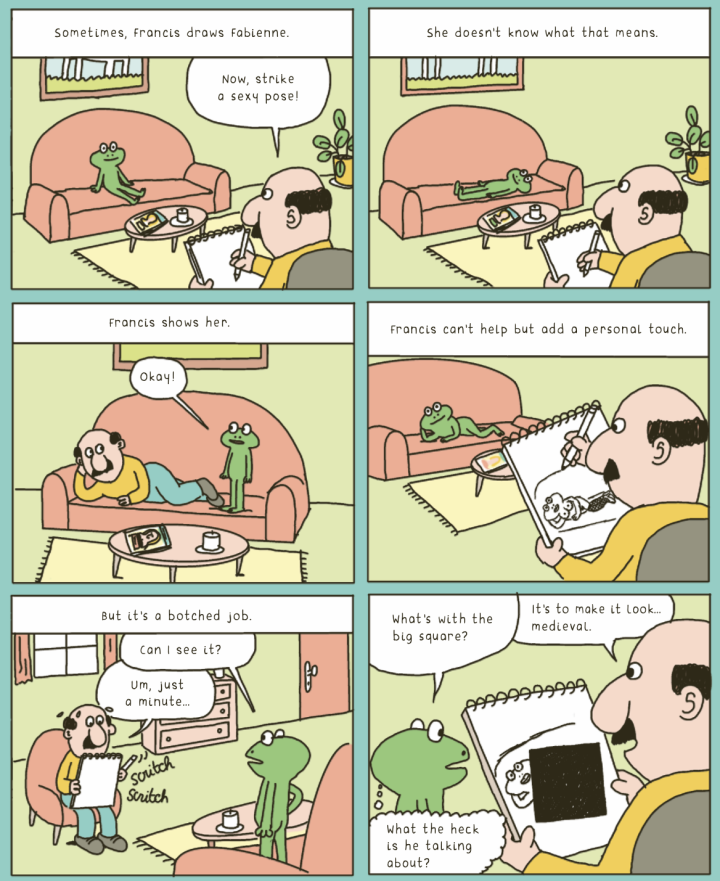
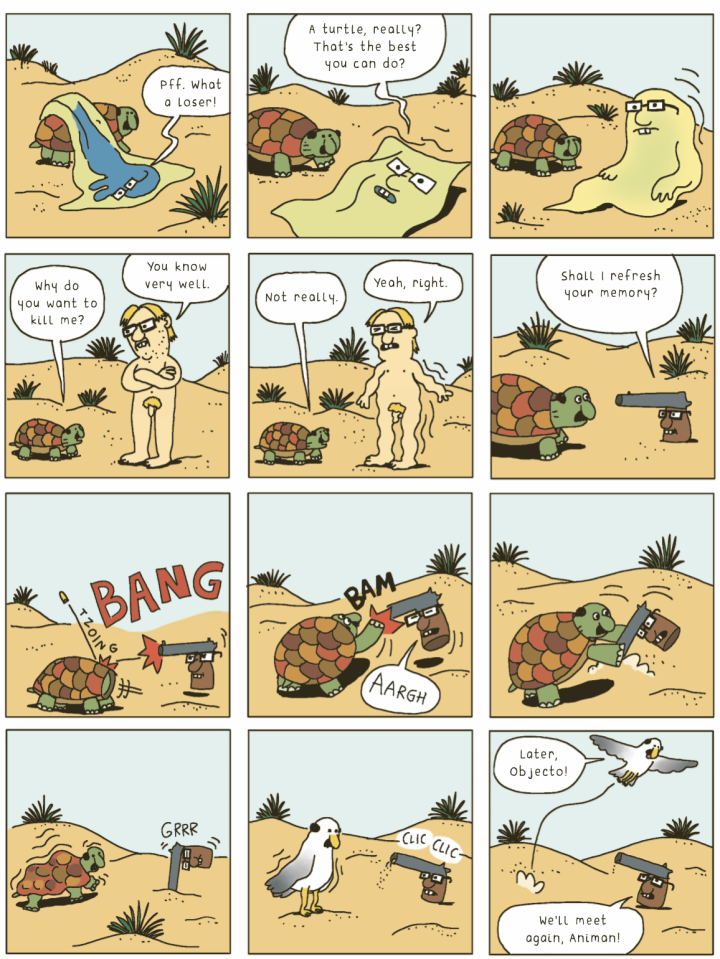
Translator Montana Kane maintains the gentle, matter-of-fact tone of the French original–a key ingredient in this book’s charm. Animan’s detective work is playful but never ridiculous. In a fine sequence, Francis uncovers a poisoning plot when he suspects that the owner of a dog with emotional issues isn’t on the up-and-up. He converts to canine form, has a talk with the dog and develops a suspicion of wrong-doing.
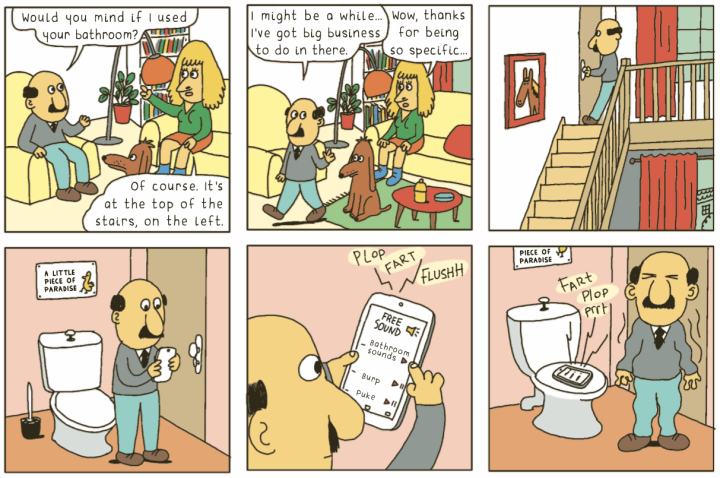
Francis invents a reason to visit the dog at his home and sleuths his way to the truth. His approach is pragmatic: he uses whatever form works best from situation to situation. While at the suspect’s house, he excuses himself to the bathroom and plays sound-effects of dropping a deuce, etc., over his cell phone. This buys him time to go through the contents of the medicine cabinet; the real truth lies elsewhere, as he finds to his chagrin. It’s a logical/amusing device that sends up the average police procedural with a Buster Keaton stone-face.
Low-key, placid first stories give way to a climactic, emotional showdown of the two old friends. In this tranquil setting, the narrative carries more weight than a mere genre spoof. Guy’s confession of the horrors that happened to him in his youth–delivered in grim, casual detail–might be the dramatic highlight of a serious story.
Ricard’s rounded, cuddly comic art belies this dark matter and Guy’s sad tale carries a surprising weight. This moment belies the quirky, easy-going episodes at the book’s start. The tension between content and presentation here is fascinating.
The look of this book screams “kid’s comics,” but this is no Dogman; some of its humor is so dry it might whoosh past younger readers. For hip kids, Animan might be enjoyable; it has that moment of bathroom humor but most of its ripostes and deadpan moments may introduce them to a different style of comedy. The charm of this work knows no age limits. I’m not sure it’s true Grand Prix material, but it’s likable and shows a keen sense of what makes comics–and humor–work.
The post Freaks Inheriting the Earth: Hanna and The Hells vs. The Beatles + Animan appeared first on The Comics Journal.


 Hello, my name is Jack Sparrow. I'm a 50 year old self-employed Pirate from the Caribbean.
No comments:
Post a Comment