


Midway through the 1990s, the sausage festiest decade of American comics, Viz Media miraculously published three volumes’ worth of shojo (girls’) and josei (women’s) manga, collected in Shojo Stories, A, A', and Love Song. These books, the Holy Trilogy of old shojo, affected my college-age self too deeply for me to judge them objectively. It’s as useless to ask me for a cool-headed analysis of A, A', as it is to ask any male Gen X nerd for a cool-headed analysis of the silent issue of G.I. Joe. Subjectively, of course, they are the three greatest comics ever made.
These manga were a passion project of Rachel Thorn, then a freelance translator. Thorn recalls suggesting to vice president and editor-in-chief Satoru Fuji, around 1990, that Viz skip the comic book direct market and sell trade paperbacks directly to bookstores. “Satoru laughed out loud,” she says. “He said, ‘Those stores would never carry our stuff. Do you have any idea how hard it is to get a foot in the door in those places?’”
But Fuji was open to publishing shojo manga. Viz had already looked into acquiring Akemi Yoshida’s street drama/queer romance Banana Fish, but it was tied up in licensing issues over a possible Hollywood movie. (Long after the passing of River Phoenix, whom Yoshida insisted play antihero Ash Lynx, we’re still waiting on that movie, but Viz published Banana Fish in the late 1990s and 2000s.)
It probably helped that Thorn wasn’t pitching to a boys’ club. Manga fandom in the U.S. was diverse from early on, and Viz had a lot of female staff. The shojo titles would be translated by Thorn, overseen by magazine editor Trish Ledoux and manga editor Annette Roman. Viz’s bestselling creator was Rumiko Takahashi, the queen of shonen (boys’) manga, whose Ranma ½ had become the publisher’s first breakout hit. Publishing work by and for women wasn’t as outrageous an idea as it might have been at Marvel or DC, or even at an American indie publisher.
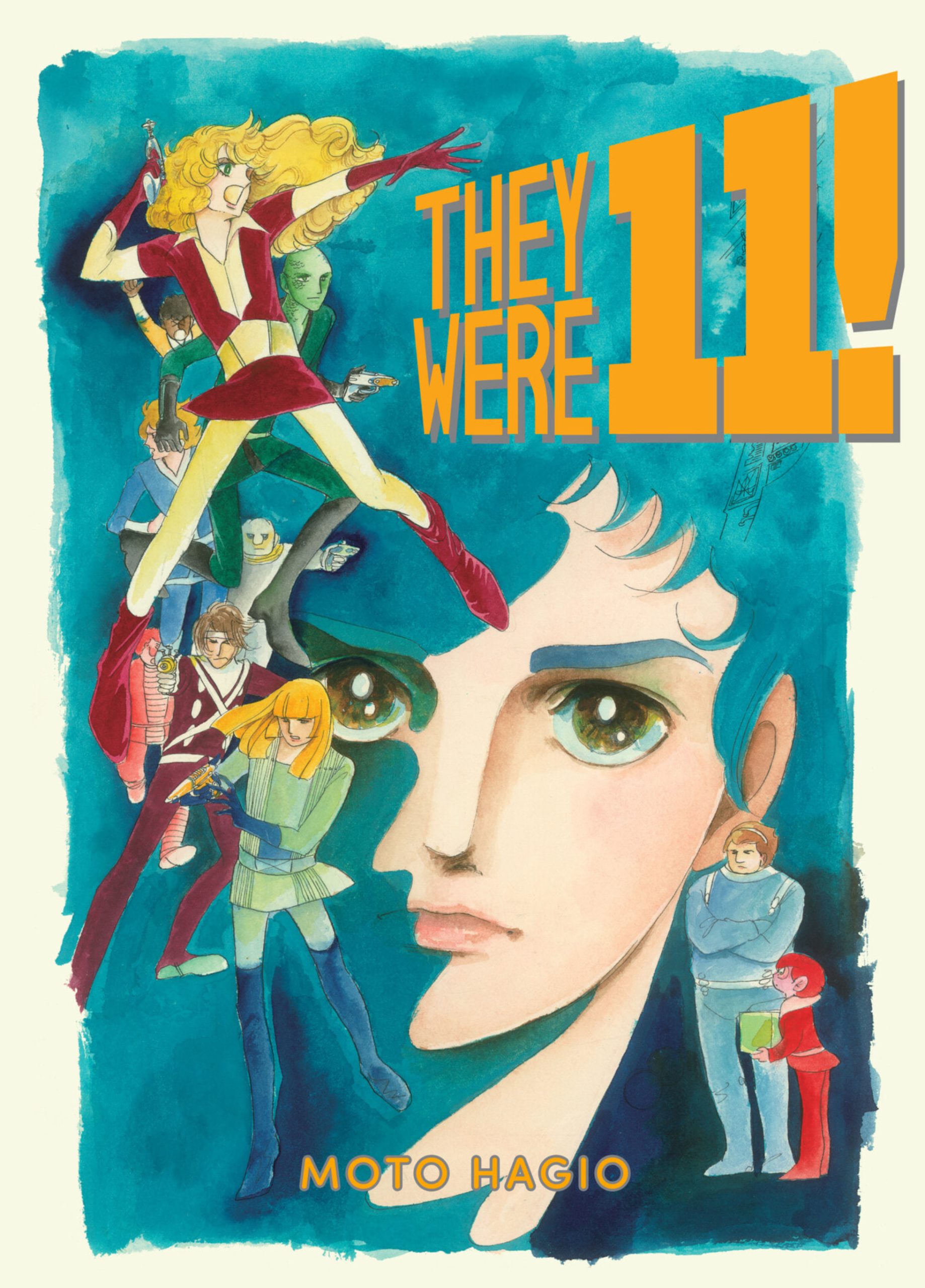
Viz’s pool of shojo manga came from its parent company, Shogakukan. Thorn was told to look for shojo manga that might have crossover appeal with the stereotypical American comic book audience of nerdy guys. That made Moto Hagio’s 1975 sci-fi action story They Were Eleven an obvious pick. “Never mind that two of the characters are sexless and capable of becoming either male or female,” notes Thorn, “and that the human protagonist falls for one of those nonbinary characters.” (Or, as the back cover copy of the first printing put it: HARD CORE SCIENCE FICTION WITH A ROMANTIC TWIST!) It was also short. Viz serialized They Were Eleven as a four-issue comic book miniseries in 1995.
For Viz’s second foray into the femme, Thorn settled on Keiko Nishi, a young but sophisticated artist whose work appeared in the josei manga magazine Petit Flower. “Her stories had a bit of an edge,” says Thorn, “and didn't have obviously happy endings.” Viz published two of Nishi’s short stories as a one-shot comic timed to hit shelves for Valentine’s Day. (Thorn: “Yes, I rolled my eyes, too.”)
These comics weren’t bestsellers, but they did well enough to serve as proof of concept. Viz began to include shojo manga among the short comics in its magazines Animerica and Manga Vizion. Thorn penned a column on shojo manga, “Girls’ Stuff,” for Animerica.
Then, somehow, in 1996, came plans for a trade paperback collecting They Were Eleven, the two Nishi stories, and Shio Saito’s “The Changeling,” another sci-fi shojo manga. Multi-artist anthologies were and are common in the U.S. comics world, but not in the manga industry. Thorn liked the idea of having a book that could introduce American readers to shojo manga, but was skeptical that the publisher and artists would agree. As she recalls it: “I asked Satoru, ‘Did Shogakukan okay this?’ and he replied, ‘We haven't told them. Once the book's out there on the shelves, what can they do?’”
Pre-Sailor Moon, pre-Naruto, pre-billion-dollar-sales, the American manga industry truly was a different country.
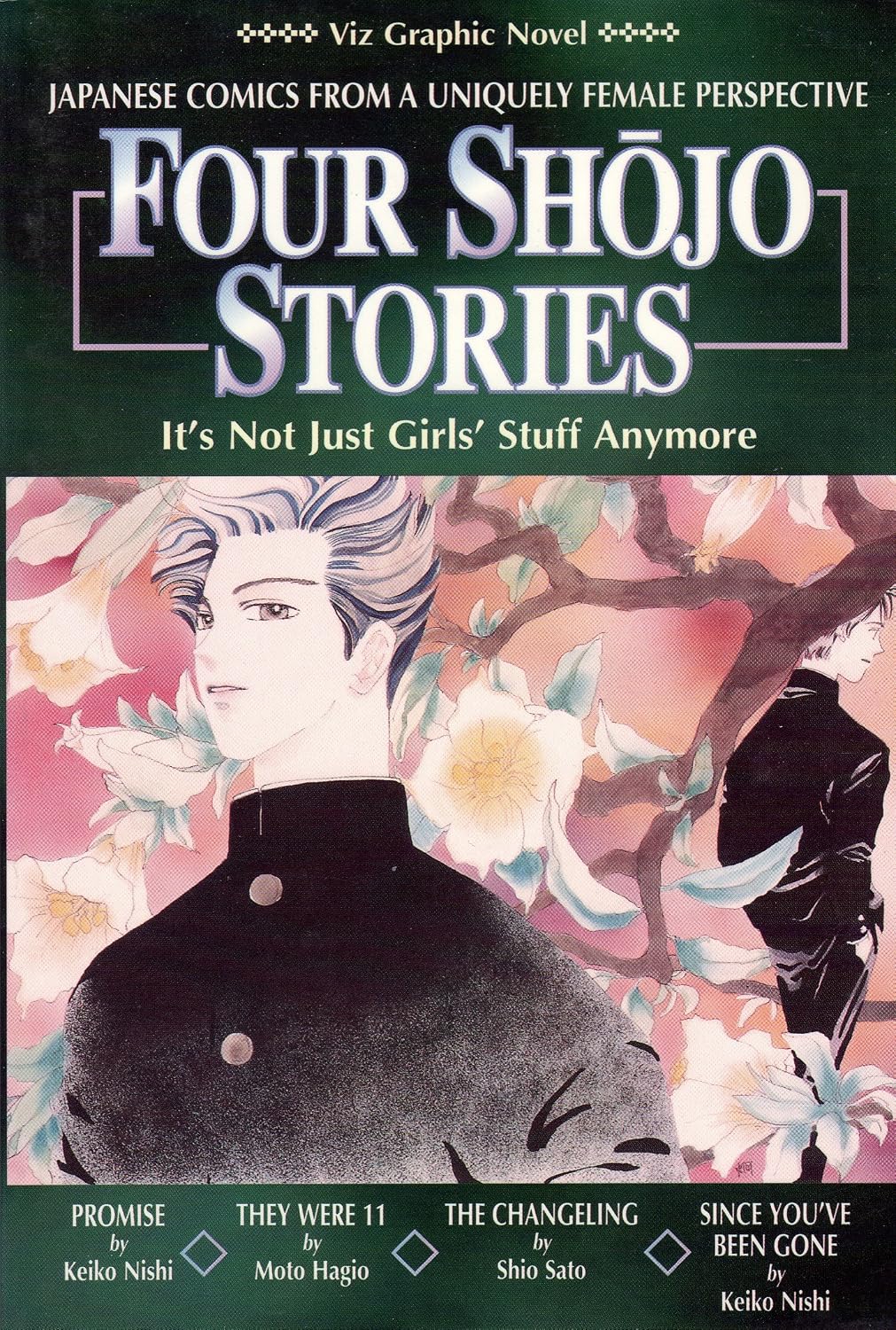
What Shogakukan could do, it turned out, was have Four Shojo Stories yanked from bookstores. “Legendary shojo manga editor Junya Yamamoto was particularly livid,” says Thorn. “He was the editor of all three artists.” Copies of the forbidden book languished in the Viz warehouse until its liquidation in the 2010s.
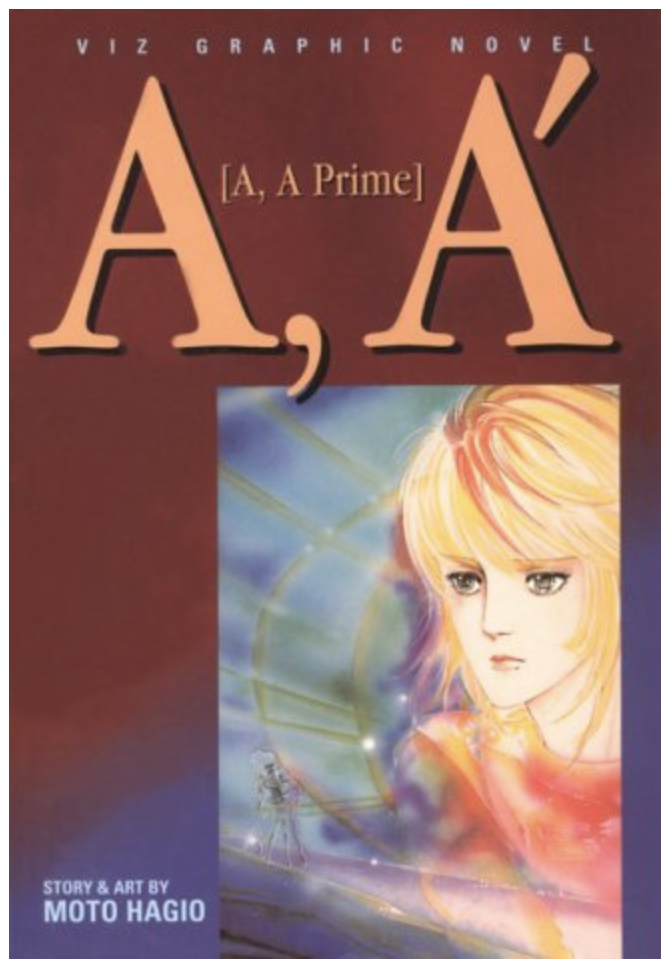
After that, Viz was more careful about asking permission before publishing. Its next shojo trade paperback, A, A', was a collection of connected Moto Hagio stories. This was followed by an all-Nishi collection, Love Song.
Four Shojo Stories: It’s Not Just Girls’ Stuff Anymore is a delightfully strange patchwork of offerings ranging from the 1970s to the 1990s; anyone reading it to get an idea of what shojo manga is like will come away pleasantly baffled. The anthology is bookended with stories by Keiko Nishi: “Promise,” a ghost story with a twist, and “Since You’ve Been Gone,” about a philandering husband. The bulk of the page count is taken up by Hagio’s They Were Eleven. Shio Sato’s elegant “The Changeling” rounds out the collection.
Nishi is a remarkable talent, and though her stories are technically josei manga, they provide a seductive introduction to the visual language of shojo manga: delicate linework assembled into powerful compositions. She went on to a long and successful career, though, perhaps ironically, it was many years before she drew any actual shojo manga. Sato passed away at the relatively young age of 59, never famous but greatly respected by science fiction fans. She’s the stiffest artist in the anthology, though her work has plenty of beauty, and her story of a space scout sent to check on a “seed” civilization on a distant planet is surefooted and imaginative.
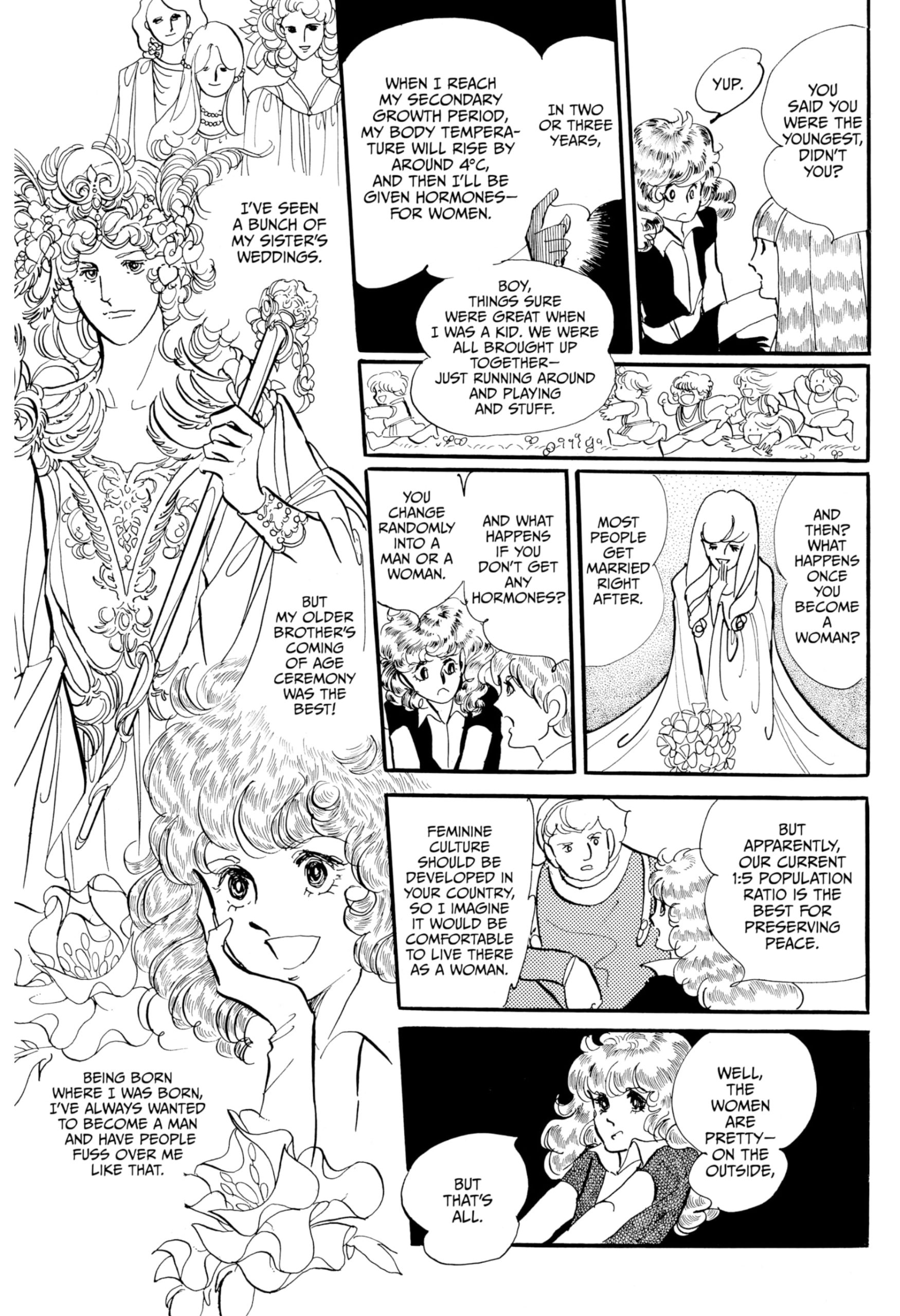
They Were Eleven is the least shojo-ish manga in the book, drawn in crisp, Tezuka-like art that wouldn’t be out of place in an old shonen manga. The title and concept riff on an old Japanese ghost story in which a ten-person group finds that it has an unexplained eleventh member. In this sci-fi version of the story, ten space cadets are cast adrift on a damaged ship as their final test, only to realize there are eleven of them. But the part everyone remembers is Frol, the beautiful, hot-tempered cadet from a planet of hermaphrodites. Frol’s manhood is on the line: by passing the cadet exam, they win the right to become male. Tada, the protagonist, falls for Frol and starts to hope his crewmate will choose to become female instead… There’s a lot going on beneath the surface of this gung-ho space adventure.
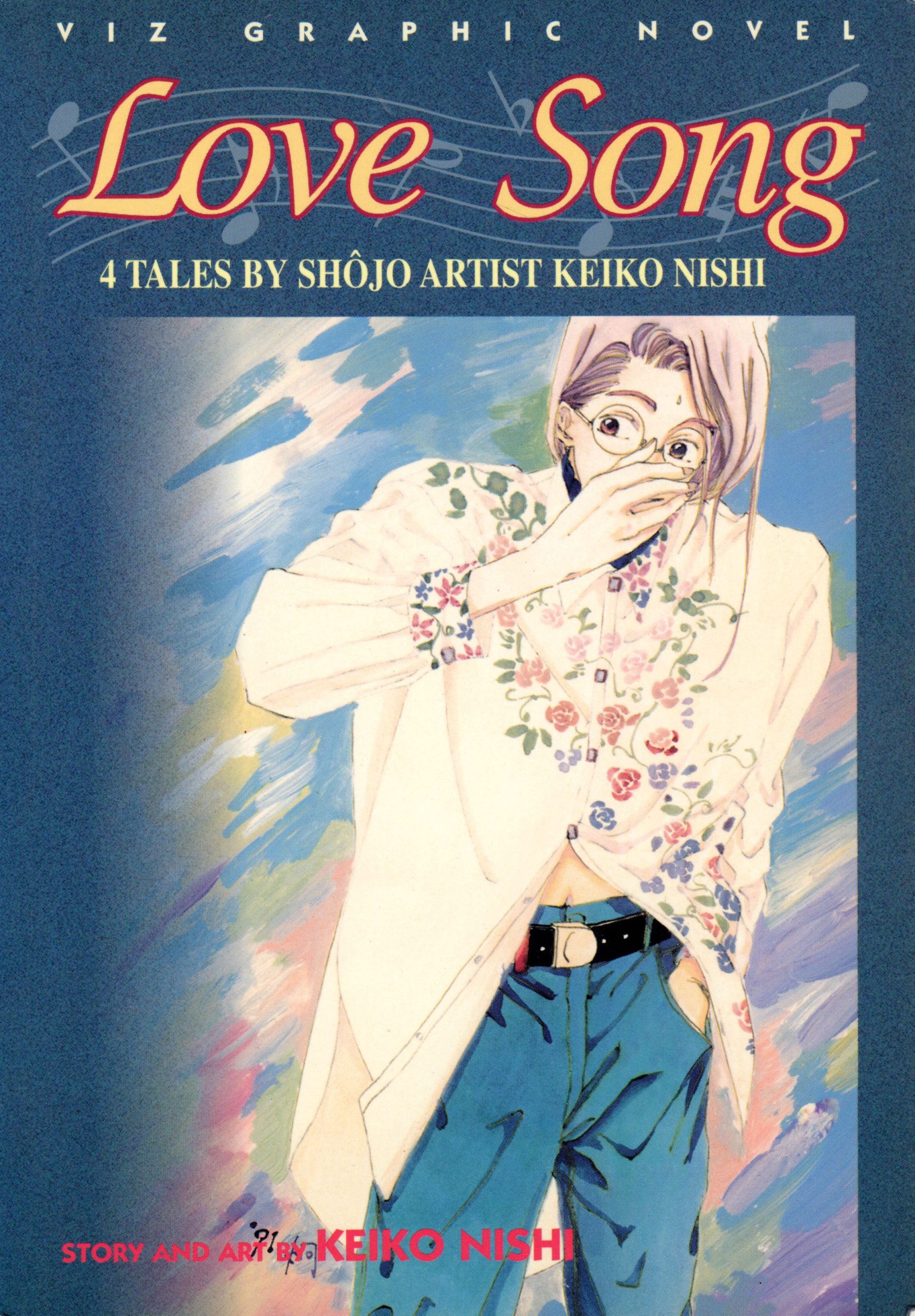
Love Song, the all-Nishi anthology, opens with the standout title story, about an icy beauty who abuses her boyfriend while mourning her lost love with another girl. “It’s not love. It’s not even hatred,” she reflects (in Thorn’s translation and Roman’s edit). “It simply burns to the touch.” Nishi’s art here is some of her lushest, adrift in images of flowers and snow.
After the raw, dysfunctional emotion of “Love Song,” “Jewels of the Seaside,” a darkly comic gothic horror story about three sisters fighting over a man, provides a salty palate cleanser. The longest story in the book, “The Signal Goes Blink, Blink,” is a supernatural drama about a wimpy schoolboy who develops healing powers and the fast-talking scammer who becomes his manager. If the plot is conventional, Nishi has fun with it, adding an action plot and a ridiculous magician rival. In the understated final story, “The Skin of Her Heart,” a factory worker on a space colony dreams of traveling to Earth.
Love Song is a rounded introduction not only to Nishi’s work, but to shojo/josei manga in general. You’ve got dark romance, Gothic horror, paranormal fantasy, and science fiction, all in one volume. Are you not entertained? It baffles me that, 30 years later, no American publisher has licensed anything else from Nishi.
Moto Hagio, fortunately, has gotten her flowers. Thanks largely to Thorn’s cheerleading, she’s become the best-known of the Year 24 Group of pioneering shojo manga artists. A, A', a trilogy of Hagio stories that ran in two shojo magazines in the early 1980s, expands on some of the concepts in They Were Eleven. Once again, the setting is outer space in the future. Again, sex, gender, and memory are fluid, and repressed traumas lie under the surface of pulp adventure. The stories of A, A' are linked by the Unicorns, “a genetic mutation developed for space travel in the early 21st century,” identifiable by their emotionless affect and stripe of red hair.
In the title story, a Unicorn named Adelade Lee is killed in an accident and replaced by her clone, who must interact with friends and loved ones she doesn’t remember. In its day, this manga was well-known enough for Rumiko Takahashi to parody it in a chapter of Urusei Yatsura by having a clone of protagonist Ataru run around with an accent mark over his head. Get it?
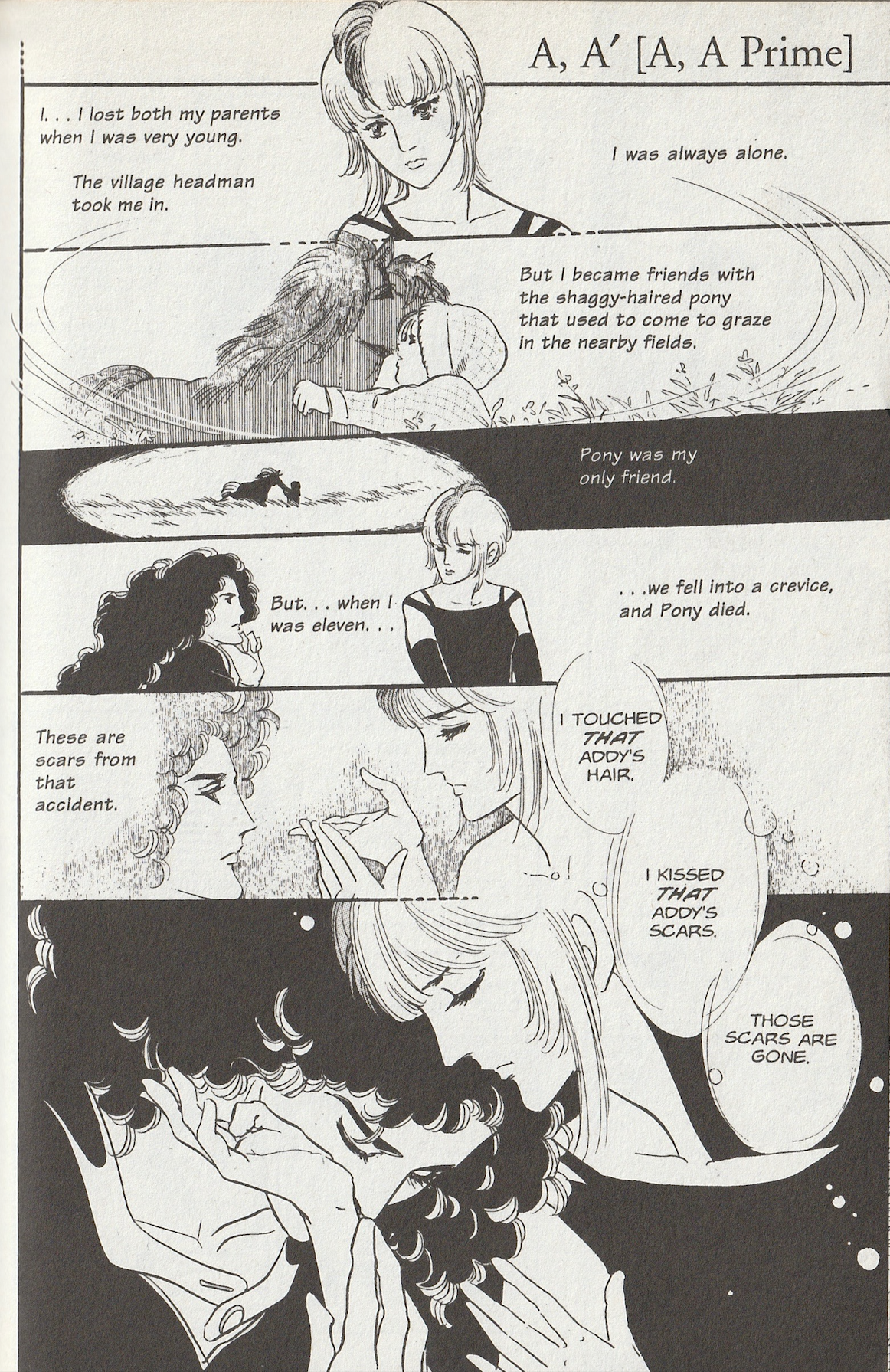
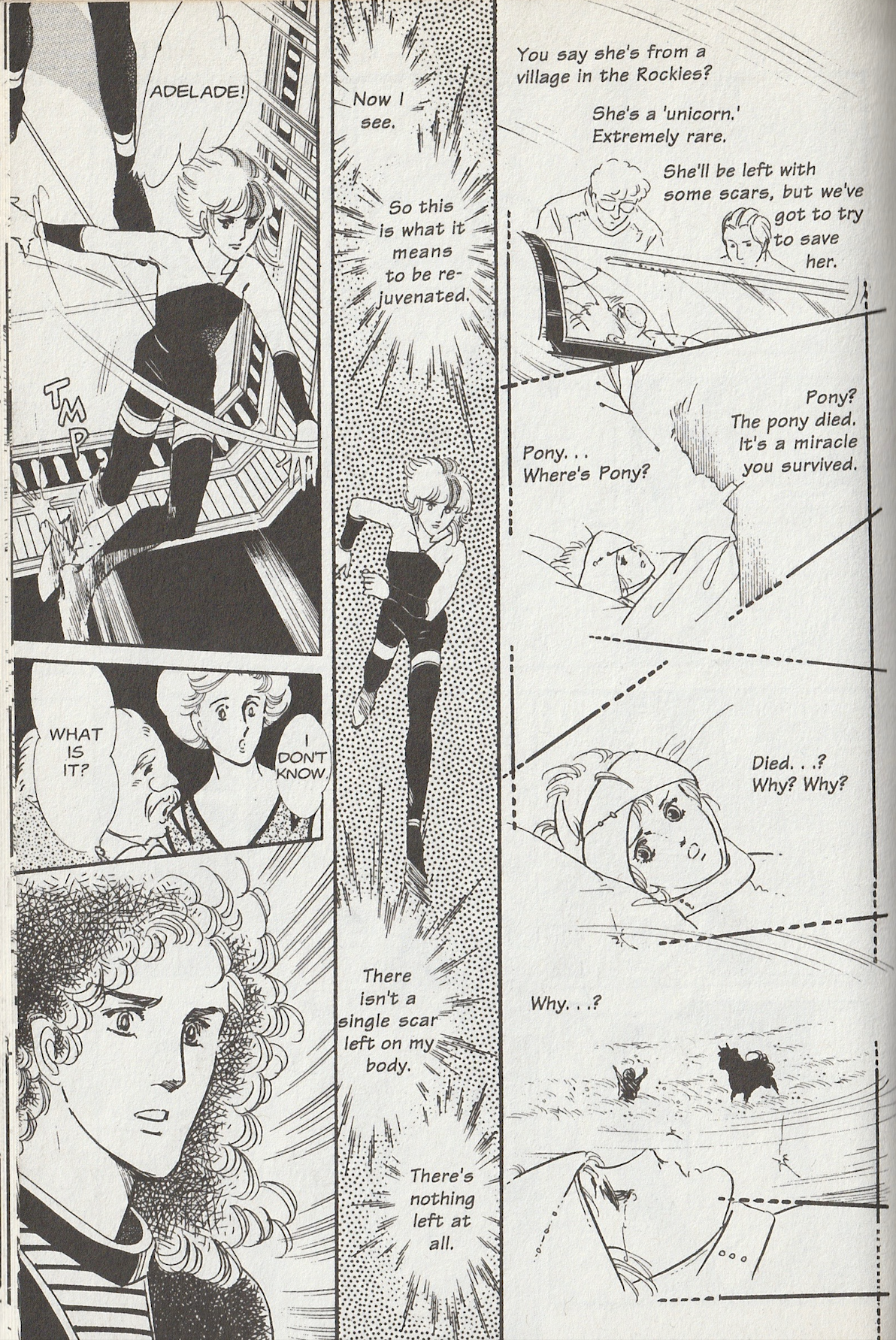
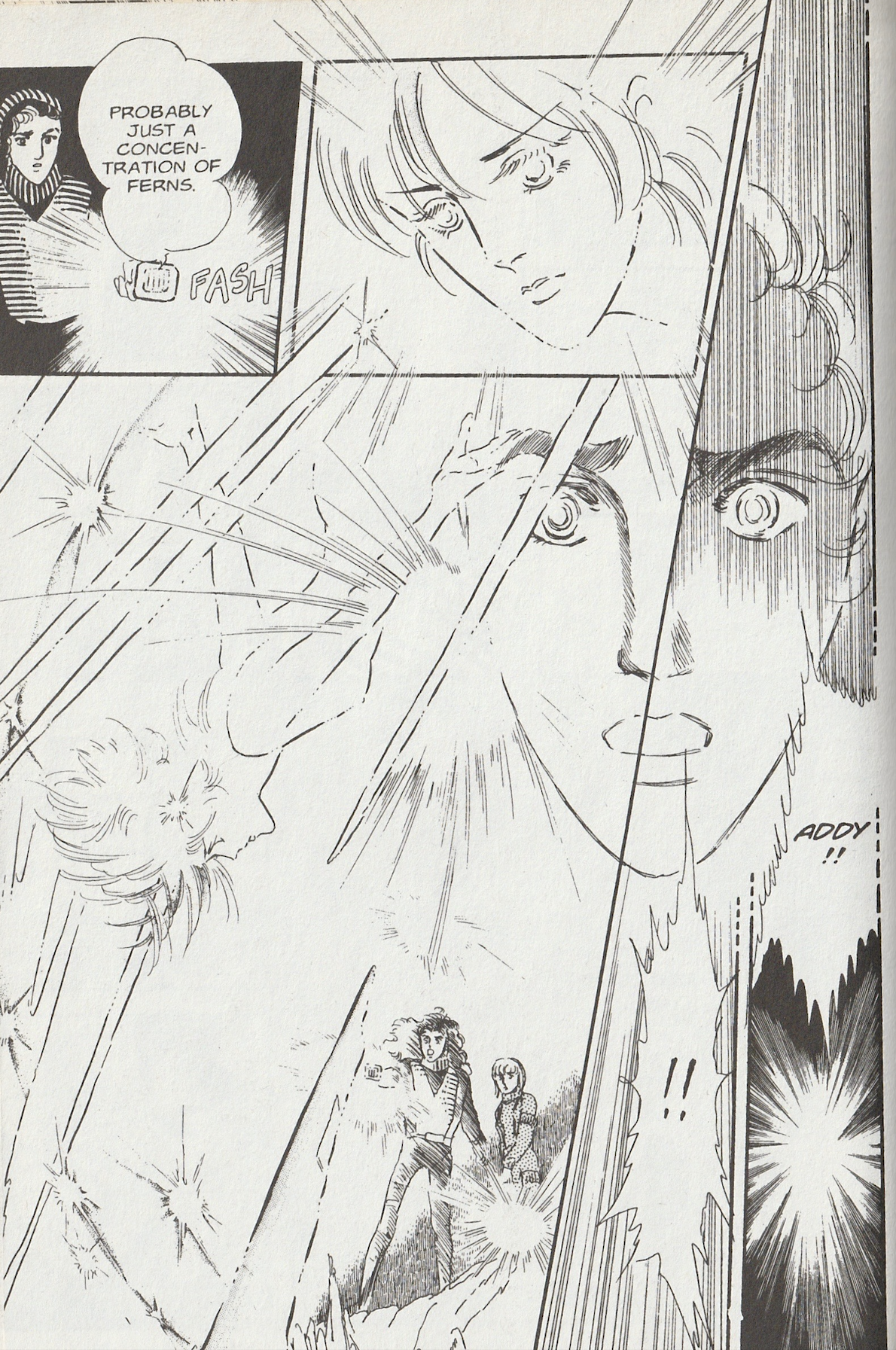
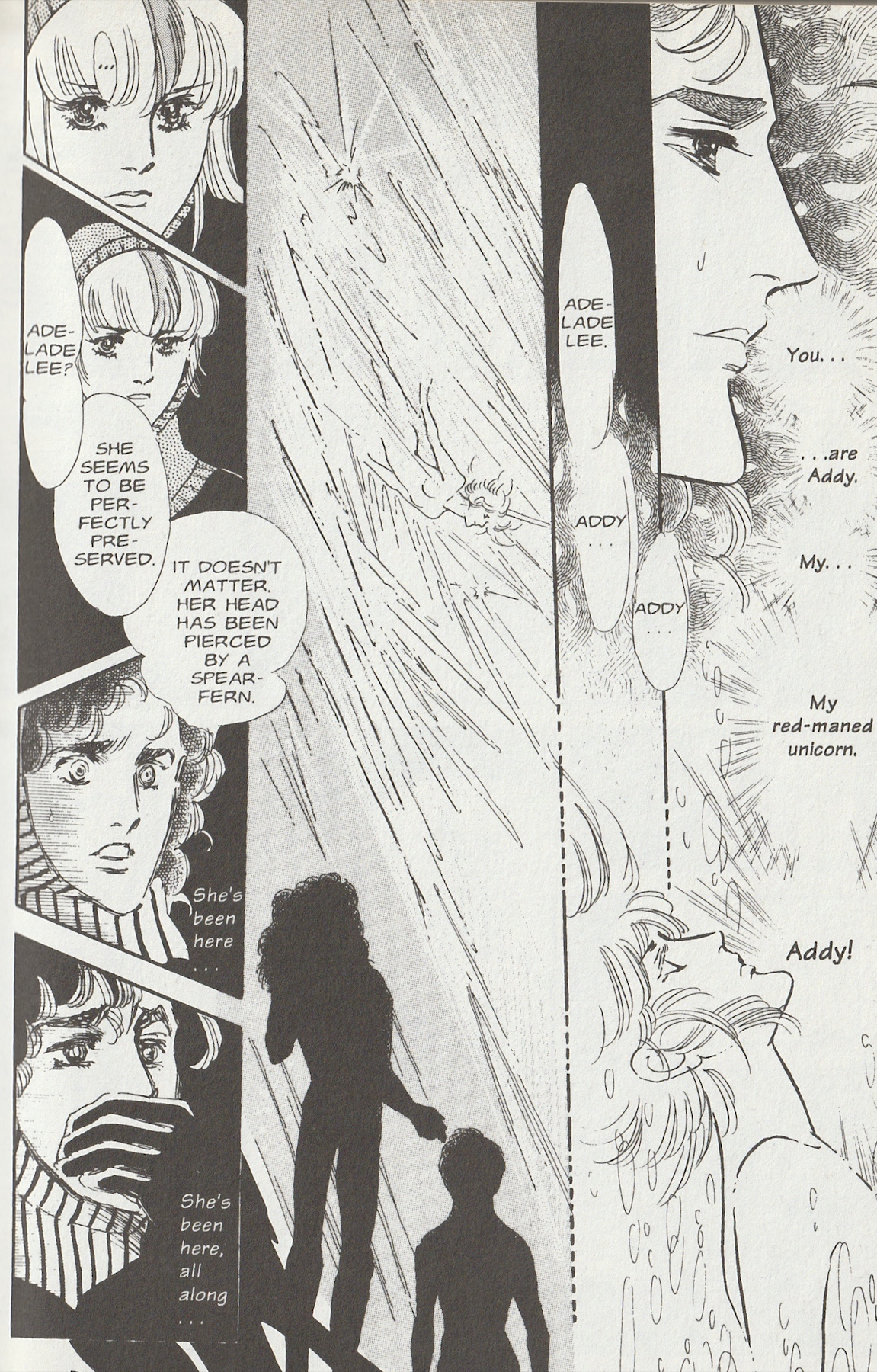
The next story, “4/4,” introduces Mori, a young telekinetic with a “kaleidoscope eye,” who falls for a nonverbal Unicorn girl named Trill. Mori is told that Unicorns have no emotions, but he comes to suspect that this is a lie, as is the insistence of Trill’s eugenics-obsessed guardian that he has Trill’s best interests at heart. As lyrical as the story is, with its imagery of birds and flight, it’s really just the setup for Mori to meet his true OTP, Tacto, in the gender-bending final story.
In “X+Y,” a college-age Mori crashes his hang glider into Tacto, a brilliant young Unicorn from a team of student engineers. They’re on Mars to present terraforming plans, but the physics of space kites have nothing on the chemistry between Mori and Tacto, who has a gold-digging girlfriend and refers to himself in the third person but still possesses that special sauce that makes Mori telekinetically pull his towel off in the showers and then blush.
This is the greatest comic that was ever drawn. All other cartoonists should feel bad for not thinking of material this good.
But there’s more! Tacto turns out to have a complex backstory and the capacity to change into a woman–yes, much like Frol in They Were Eleven. Like They Were Eleven, “X+Y” ends before the possible sci-fi sex change takes place, as if Hagio can’t decide whether she likes her leads better as a mixed-sex couple or two pretty boys. Better to leave them on the cusp of possibility, perhaps, and let fanfiction do the rest. At any rate, the most glaring flaw in A, A' is how abruptly it ends, considering how much Hagio has going on.
“In light of all that happened afterwards,” says Thorn, looking back, “publishing three trade paperbacks, one of which was pulled from the shelves almost immediately, may not seem like a big deal, but it sure was to me, and I like to think it was a big deal to the readers who had become interested in manga for and by women.”
It was a big deal for me. I read A, A' in college, as I was discovering the possibilities of comics and falling in love with the medium that will break your heart. A month after graduation, I moved across the country and started work at Viz.
By then, new publisher Tokyopop had cracked the bookstore market with the help of a wildly successful shojo manga license, Sailor Moon. Japanese publishers woke up to the fact that the English-reading market was huge and hungry for comics. More American publishers jumped into the fray. By the 2000s, manga was no longer a lazy side stream of the American comics industry, but an onrushing tsunami. Female readers were at the crest of the wave. Many went on to become artists themselves.
For readers a little bit younger than me, those Sailor Moon manga might be the greatest comics ever made. Or Banana Fish or Mars or Peach Girl or Basara or Cardcaptor Sakura or Swan. Once the floodgates opened, there was a lot of girls’ stuff to fall in love with. But for me there are Mori and Tacto on their glider, frozen against a backdrop of stars, in that moment before the rush of the wonderful and new.
Thanks to Rachel Thorn for the interview and assistance with this piece.
The post R&R: When It Changed: Four Shojo Stories, A, A’, and Love Song appeared first on The Comics Journal.


 Hello, my name is Jack Sparrow. I'm a 50 year old self-employed Pirate from the Caribbean.
No comments:
Post a Comment