

Rotem Anna Diamant came to my attention with her minicomic Cute Nose. Art examples posted online were strikingly unlike anything that might come immediately to mind. Perhaps the panels resembled animation cels of foregrounded figures going about their motions, but printed small and absent painted backgrounds, the sort of stories they’d be telling were left a mystery. The drawings were indeed cute, but not in a pejorative sense, nothing you could point at accusingly as being in thrall to the trends of an era. Perhaps this was owed to the implicit sense of criticism of aesthetics considered palatable, safe enough to be given to women or children. “Cute,” even as a term of praise, can be belittling, and the nose is a particularly fraught feature, owing to its ethnic associations; for one to be cute — small and round, historically — is the purview of a few rare varietals of whiteness.
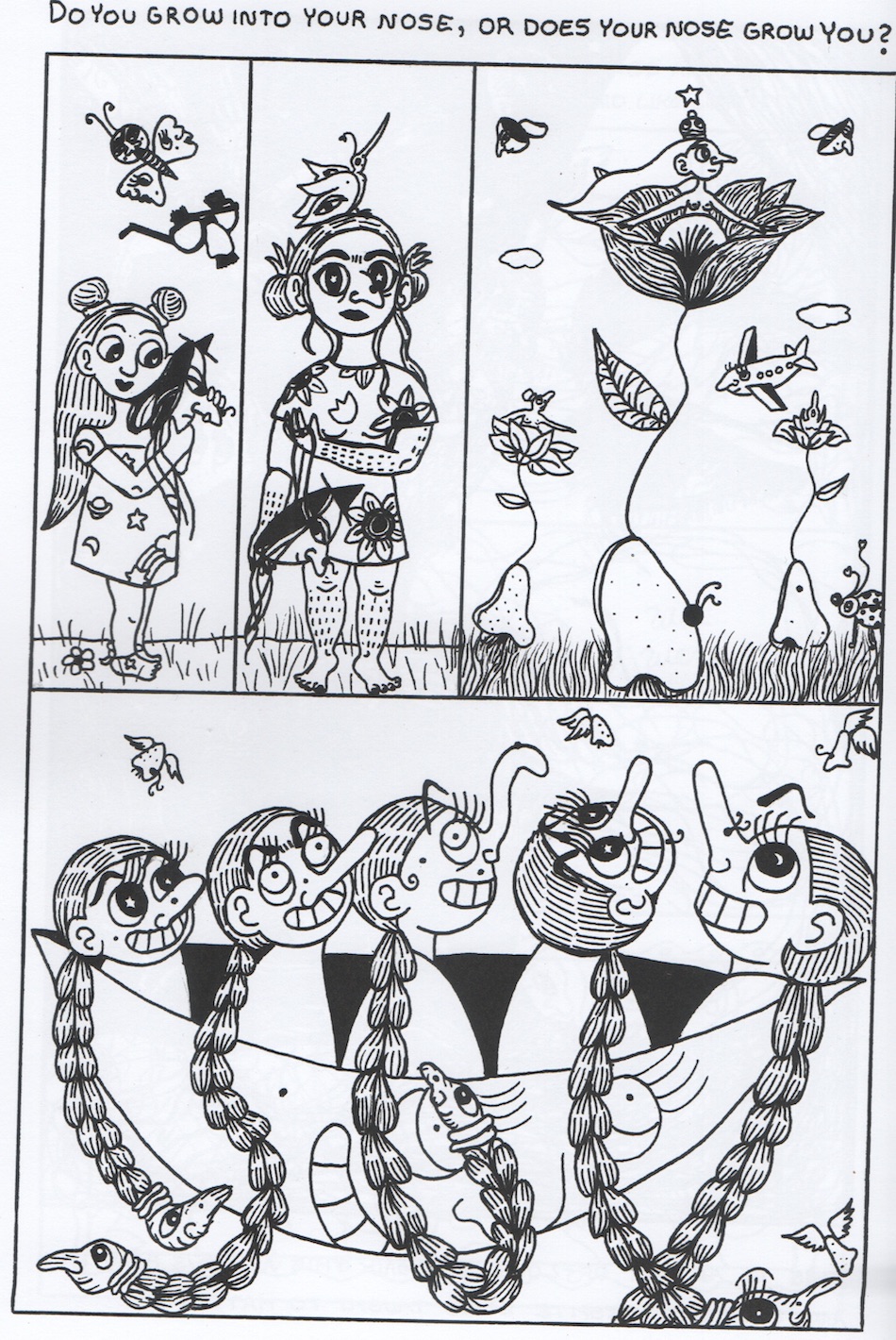
In Dancing With The Sheyd, Diamant depicts herself and her kin with a long and witch-like schnozz. Not the bulbous big nose for comedy’s sake seen in Mark Newgarden cartoons, but a self-image that identifies with ethnic caricature for its disagreeability. Body hair comes up as a subject of insecurity too, and Diamant’s rendering can resemble the tendrils of excess hair scooped up from atop the shower drain. Diamant doubles down on the strange and indigestible as an assertion of otherness. Distanced from Canadian society by Jewishness and queerness, and estranged from family members’ ideas of Jewishness due to her anti-Zionism, the book asserts her own sense of identity most strongly through the peculiarities of drawing.
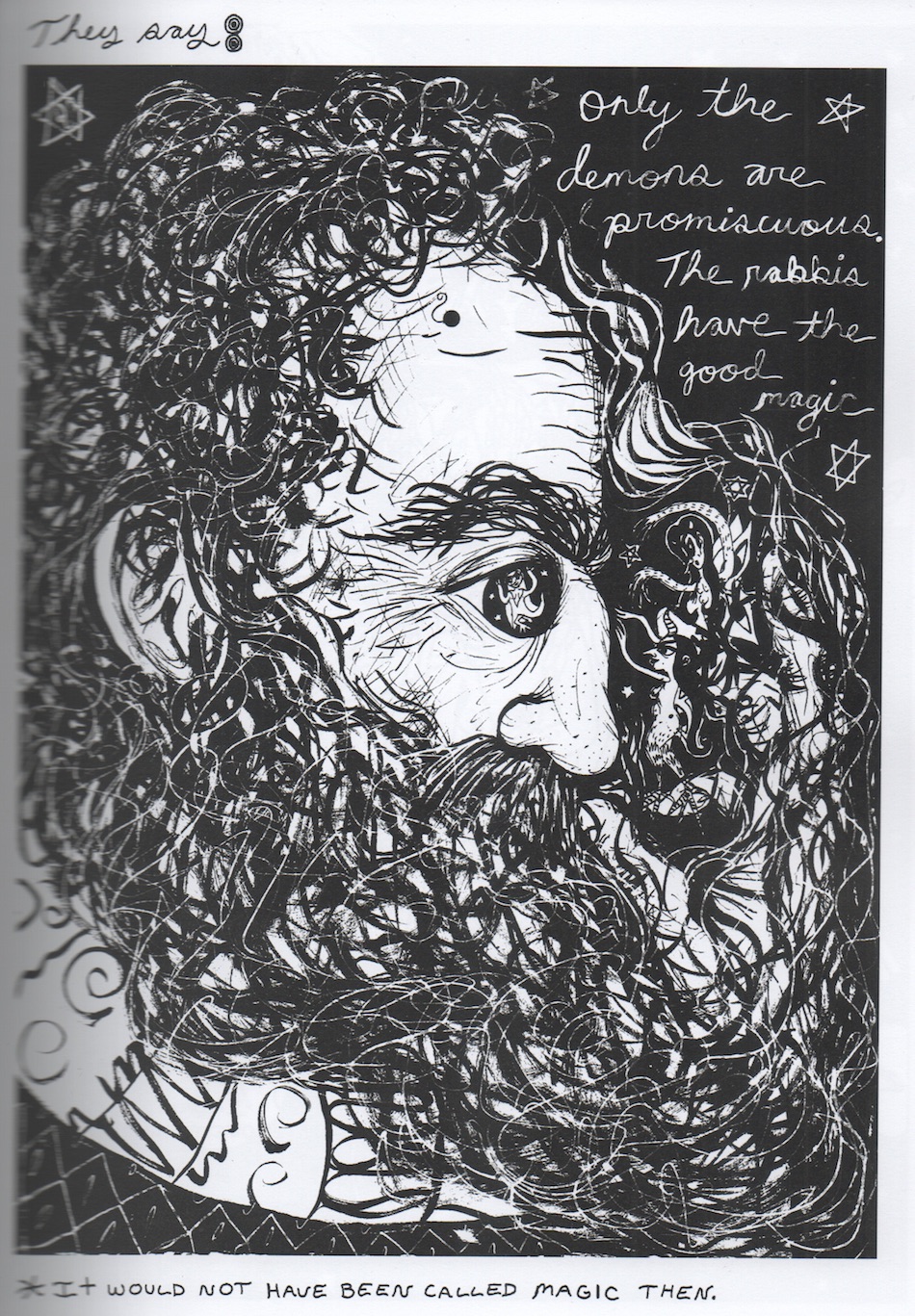
The Sheyd of the title is the singular form of Shedim, and I will direct you to Wikipedia to see the term defined and explicated. Diamant takes the view of these Shedim as daughters of Lilith, and outside of the book’s title, always refers to them as Lilot. Lilith is Adam’s apocryphal first wife, introduced as an explanation for why the fellas always have something to complain about. To speak with one’s demons, or dance with them, is an internal phenomenon, and the book is built around that, rather than externalized conflicts with Diamant’s family or the culture at large. The writing has a journal-like quality: These are the thoughts Diamant struggles with and circles around. Conclusions are not presented as a climax, as they would in a memoir’s narrative, but are more like underlying principles, articulated as they express themselves through a number of angles. Imagine a series of weekly conversations with a friend, where they show you their sketchbook, more than a documentary edited out of home movies and narrated by voiceover.
Flipping through the book finds plenty of drawings to admire, as Diamant here leans towards single-panel pages, giving equal weight to moments large and small. This hinders the book as a reading experience, as pace often feels like an afterthought. Diamant’s delight in drawing for its own often presents her figures as a type of filigree, decoration around her ideas, but the disinterest in how individual panel compositions pull a reader through a page mirrors the sense that there is little in the sense of overarching narrative to compel a reader onward. Nor is there a sense of an argument being developed over the course of the book, the unnumbered chapters seem as if they could be rearranged in any number of ways. Beginning in the place of self-acceptance where so many memoirs and self-help books end, its value is in presenting its thoughts and ideas unapologetically. There is a small Richard Sala homage on one page, although little in the book suggests an artistic kinship beyond both being cartoonists.
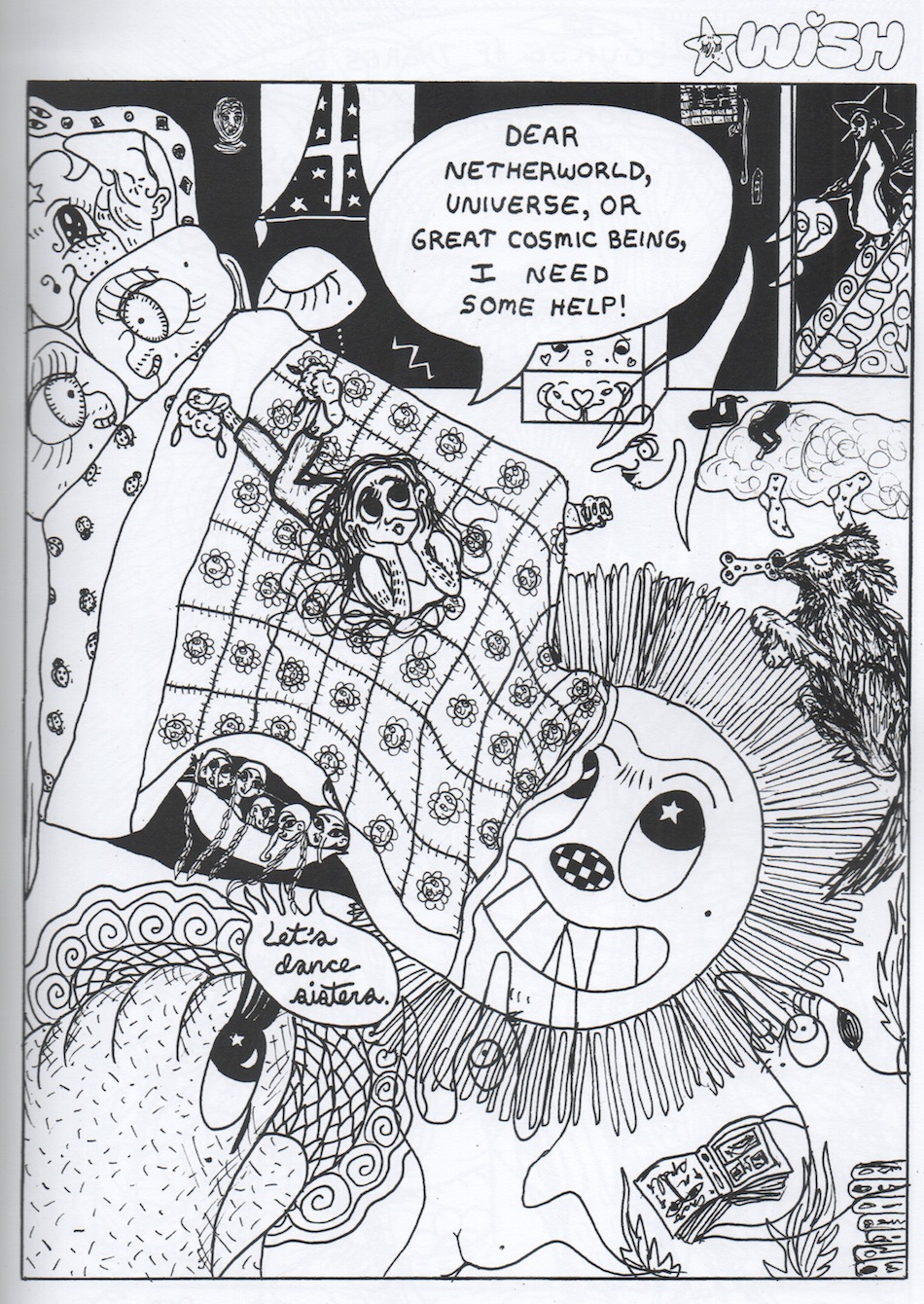
This exploration of another’s style fits in with drawings of 1990s cartoon characters, as one chapter in the book is the nostalgic recollection of watching VHS tapes, tempered by feelings of loneliness. It is easy to see Diamant’s drawing style as a descendant of the collective works of Klasky-Csupo, and this section acknowledges that influence in a very direct way. It is another way of communing with ancestors, something of a running theme. Cartooning is a hybrid form of writing and drawing, and what the book lacks in narrative or argumentative structure, it makes up for in visual elaboration. One gets a sense of Diamant as a person through such visual citations. Later, when she acknowledges how she came to realize the Zionist narrative she had been raised with was a fairytale, she cites Leila Abdelrazaq’s Baddawi and Marguerite Dabaie’s The Hookah Girl And Other Stories, and we again get a sense of the author as a person through comics.
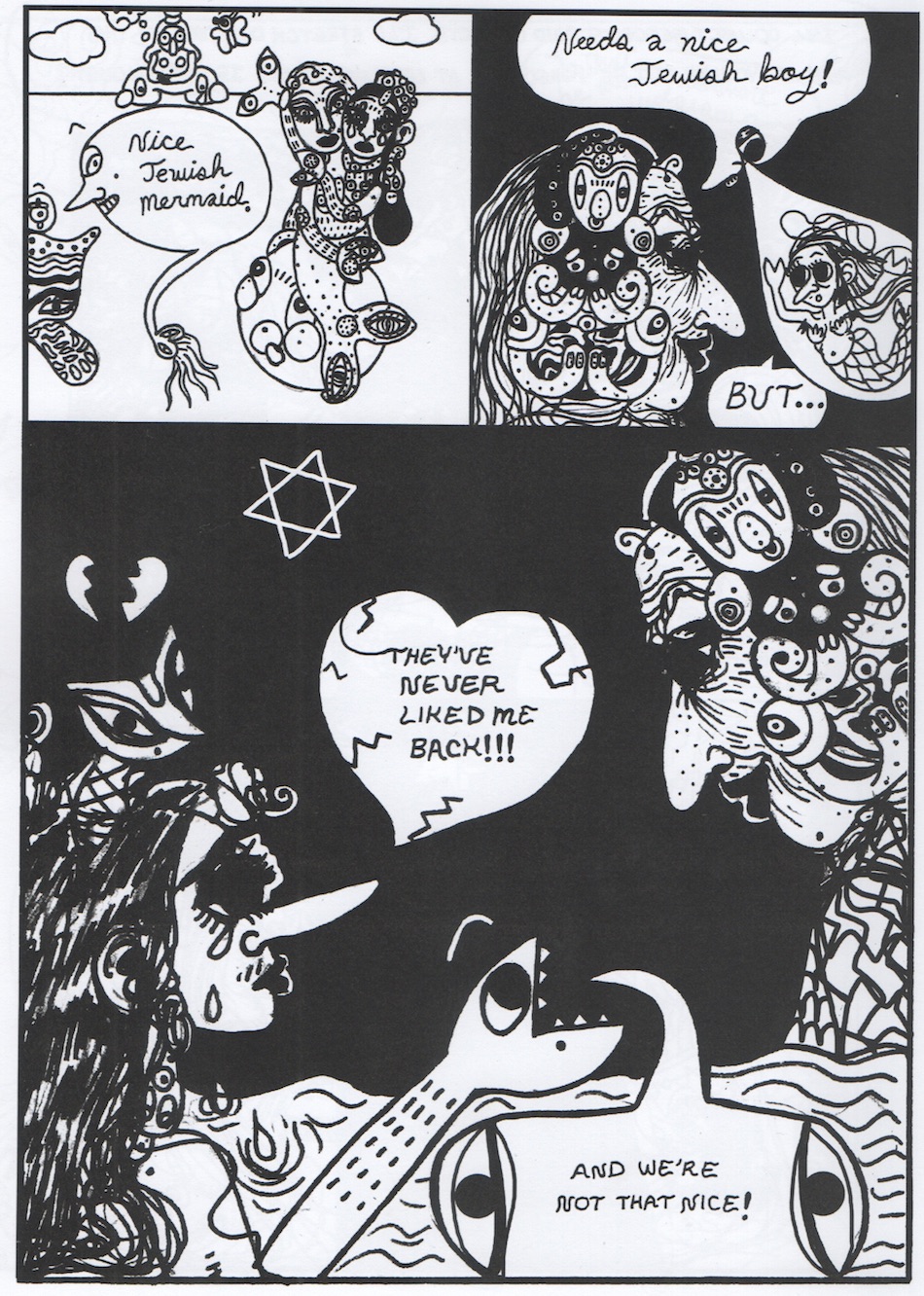
She expresses gratitude for these comics, but as if made wary of potential rejection by the words of her grandparents, does not identify them as kin. This is a book that is explicitly Jewish: Footnotes define bits of yiddish vocabulary or attribute ideas to the Talmud. Stars of David are a recurring visual element. It seems safe to assume the readers who will resonate the most with the book are those who share one or more facets of their identity in common with the author, those for whom questions of, “Is there synagogue for mermaids?” don’t provoke secondhand embarrassment. The mermaid bit is the sort of thing that is always going to be an issue for me, the same way that politics are always going to be an issue between Diamant and her older relatives. But I’ll give her the last word, because the last word deserves to be one of her images:
The post Dancing With The Sheyd appeared first on The Comics Journal.


 Hello, my name is Jack Sparrow. I'm a 50 year old self-employed Pirate from the Caribbean.
No comments:
Post a Comment