

Emil Wilson’s based his debut graphic novel on an event that happened in his life when he was younger, though, as he explains in the Author’s Note at the end, he’s shifted his experiences to his sister and taken liberties with the story. Still, he’s built on that time when he was a teenager to craft a moving story of self-discovery, while illustrating the fear around AIDS in the 1980s, especially in smaller towns far from urban places like New York City.
Wilson tells the story of Lou, a girl about to graduate from high school, who lives in a small town in Oregon with her parents — her brother Emil has already left for college. Her father, Don, invites Jim, a man from work, to live with them for a while, as he’s sick and has nowhere else to go. Her mother, Annemarie, isn’t happy with this arrangement, and she makes her unhappiness clear through her mannerisms and passive-aggressive comments. Lou understands fairly quickly that Jim doesn’t have cancer, as her parents say he does, but that he’s dying of AIDS, which Lou has already heard about, even in Oregon in 1985.
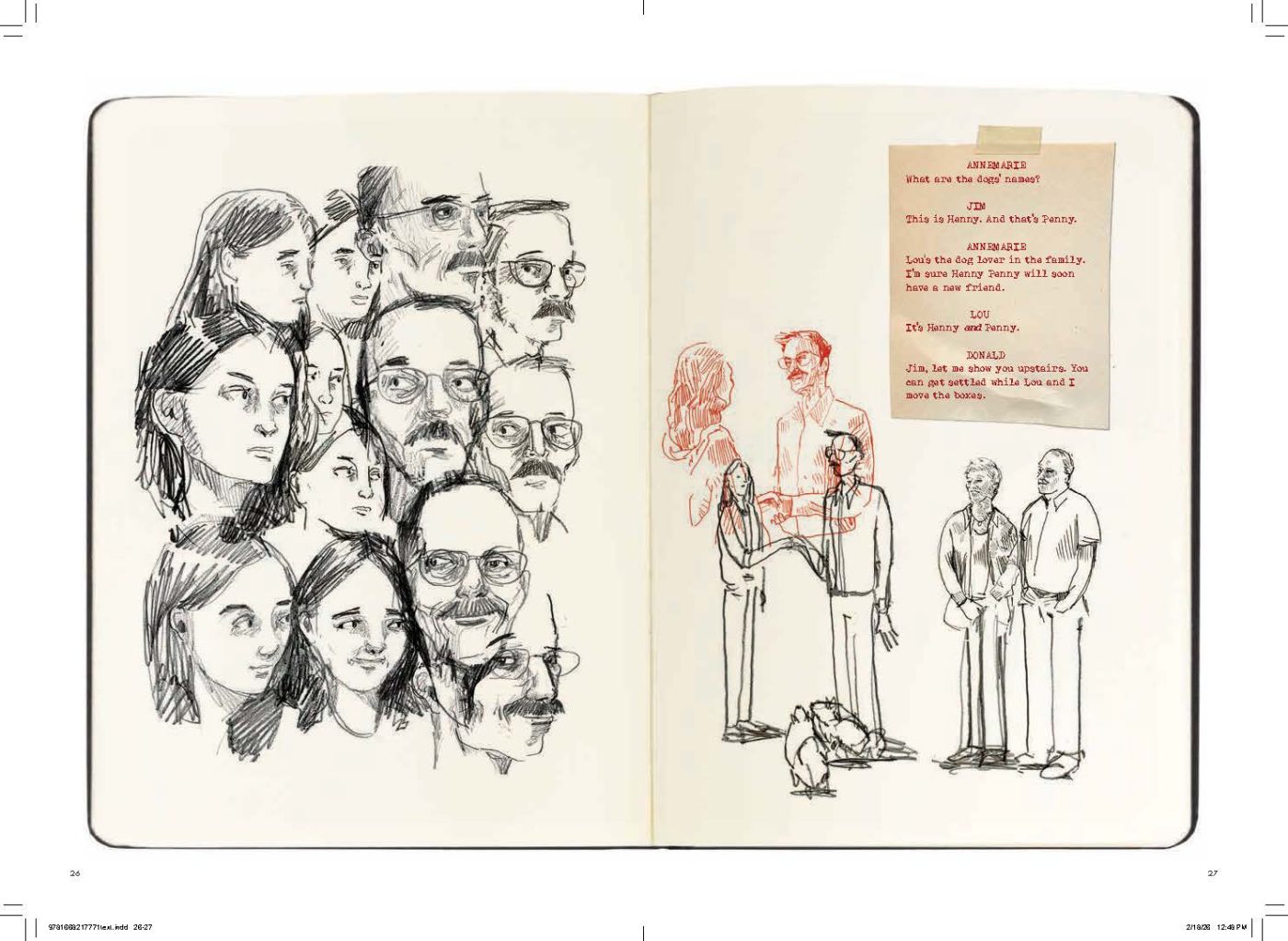
Lou tells the story in the form of a sketchbook, a brilliant formal move by Wilson, as Lou explains that she has built her recounting of the tale on her memory, which is sketchy. She comments, “For me, memory has always looked like a sketchbook. Some things are drawn roughly, mashed together, not quite complete, whereas other memories are razor-sharp and full of detail.” Wilson fully commits to this idea, as the format of the book aligns with this description. There are places where Lou has sketched the same character numerous times, as an artist would, trying to get a feature or expression down, but also simply practicing drawing the person, as we often replay people and scenes in our minds. Lou develops some sketches more fully than others, often with different coloring, as if some memories are more vivid than others.
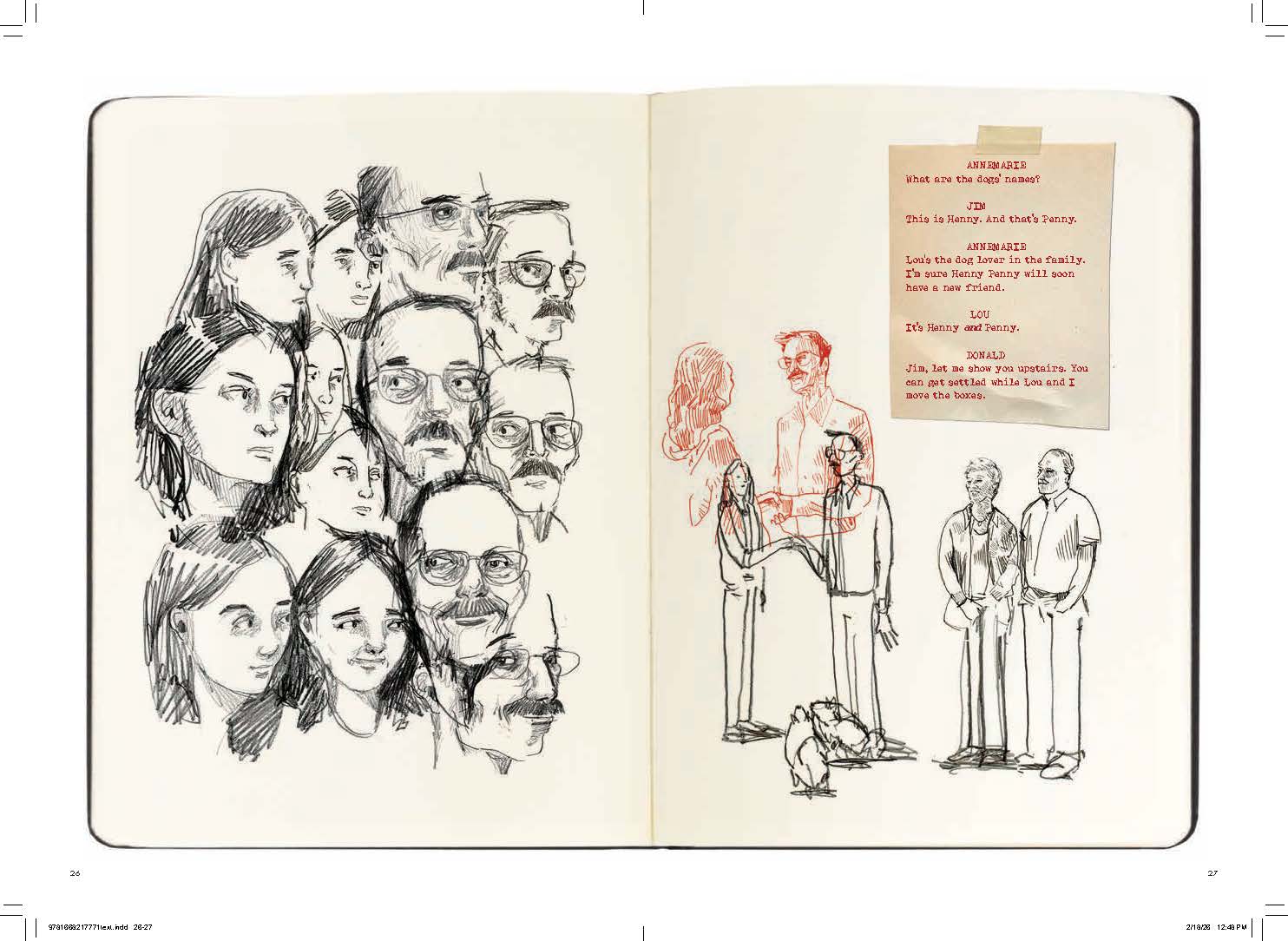
Also, the narration looks like it was typed, completely separate from the sketches. Lou’s description of events, which, by definition, include reflection, feel separate from the memories she’s sketched out. The dialogue is even more removed, as it appears to be typed on small sheets of paper, which Lou then "tapes" into the sketchbook, giving it the feel of something she’s added later, which reminds readers that Lou is creating dialogue from memory. That’s especially true when she relates parts of the story where she wasn't present. Wilson uses such metafictional strategies to remind readers of the artifice of stories, that somebody is always crafting the story they’re telling, as opposed to an objective presentation that doesn’t exist.
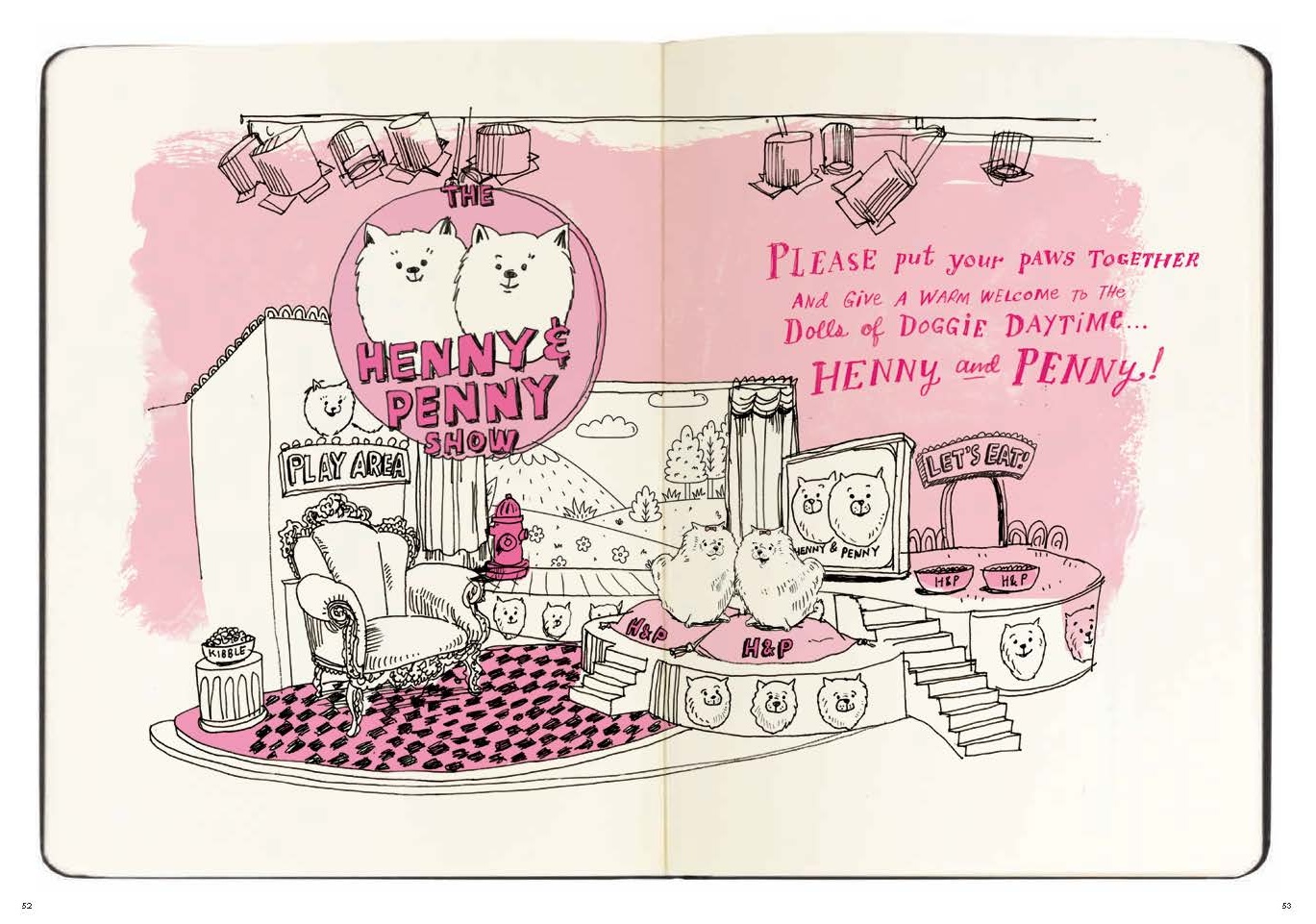
Wilson plays with form even further by including sections of fantasy and other styles of drawing and writing. Jim has two dogs, Henny and Penny, and Lou imagines talking to the dogs, often through a supposed talk show. Lou uses this construction to provide her with somebody to talk to about Jim, given that the dogs would know him well and she has nobody she can speak to honestly about what’s going on. Lou also includes an instruction manual for her father, as well as more traditionally drawn storyline about how Don and Annemarie met.
While Wilson provides this background material, the primary focus is on Lou and her development. She’s trying to understand herself and who she wants to be, and Jim entering her life at this pivotal time helps push her in directions she might not have expected. Force to abandon athletics, she works in the theater program building sets for The Glass Menagerie, a play built around memory that also involves a Jim. Lou has a brief relationship of sorts with a boy she meets there, though it’s clear she doesn’t really fit with him or most of the students in her school.
She spends as much time as she can talking to Jim, helping him as his health deteriorates. At one point, he asks Lou if she can come in during the night and help him turn over in the bed, as he becomes too weak to do so himself, and uses a pair of walkie-talkies so they can communicate. “Years from now, I’d recognize these nightly calls as a coming-of-age," the narration declares.
The family patriarch, Don, is remarkably open-minded, given his age and the time period. At a time when even hospitals were fearful of interacting with (and even touching) people with AIDS, Don doesn’t hesitate to welcome Jim into their house. Annemarie even questions his sexuality at one point. Wilson provides a backstory for Don showing how he was able to move past the stereotypes and fear of the time.
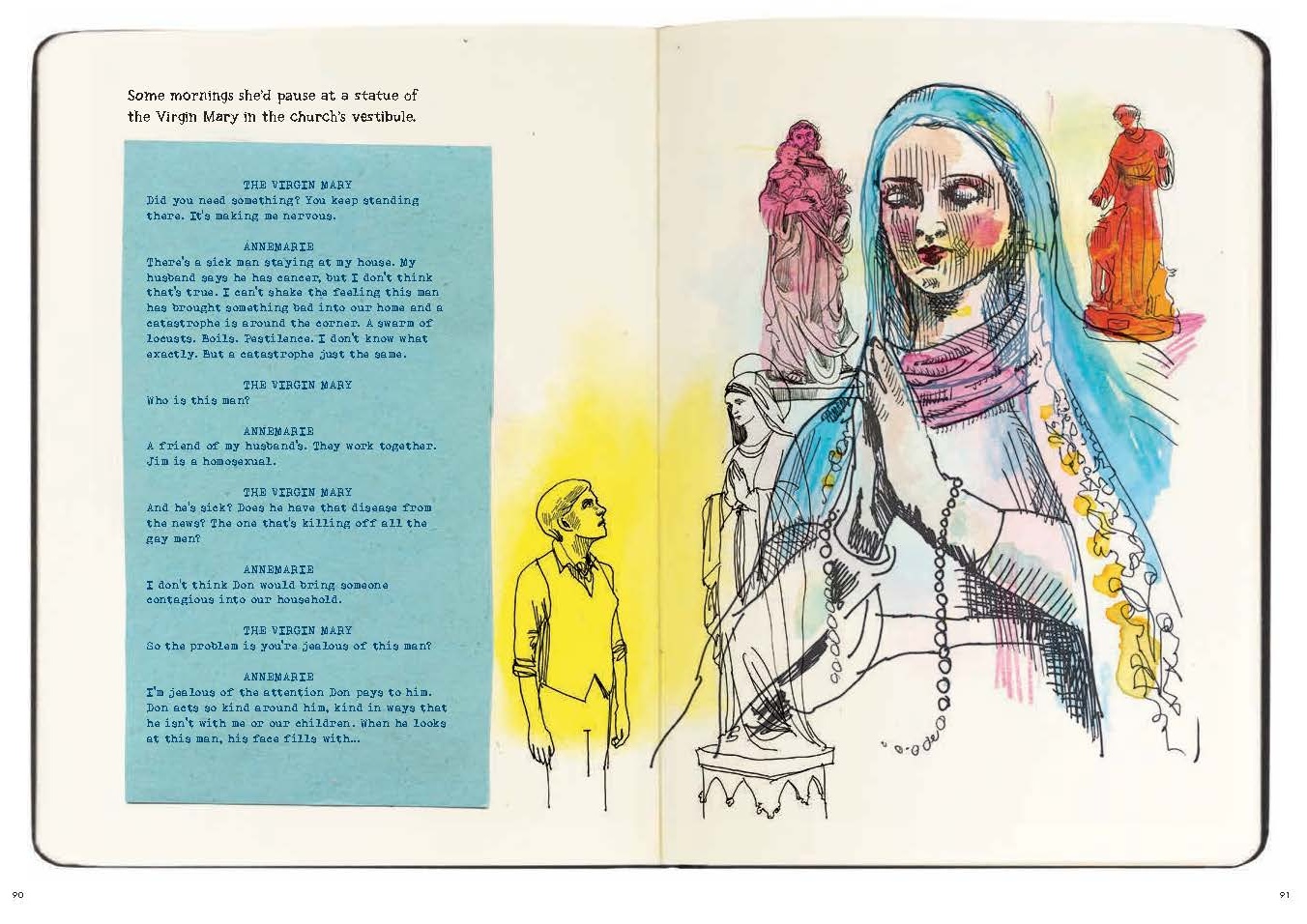
Annemarie, however, embodies that fear. After brushing up against Jim one day, she immediately takes a shower. When everybody has left for school or work, she uses bleach to scrub down the kitchen, even breaking and throwing away a mug from that morning’s breakfast. Annemarie works for the Catholic church, and Wilson has her talk to the Virgin Mary at times. Wilson’s version of Mary is remarkably open and welcoming, given the Catholic church’s stance on AIDS and LGBTQ+ people, especially in the 1980s. Those conversations, though, have little effect on how Annemarie treats Jim.
Through the contrast between the two parents, Wilson shows not only the fear and hate that the LGBTQ+ community faced in the 1980s, but also that there were pockets of people who were able to provide love and compassion. Lou is the best example of that, of course, as she sees Jim as a friend, somebody whom she can help and who helps her. At one point, in fact, Wilson pauses the story. “Stop for a moment and consider this girl, sitting in that hospital room," she writes. "This girl is brave and kind and lonely and bright, but she often feels uncomfortable and awkward as she moves through the world. She’s scared that people will always think that she’s weird. And this man — gay and foul-mouthed — is the first person to talk to her like she’s an adult."
At one point, Jim gives Lou a birthday present, a book about birds, and she learns that his favorite bird is the nightingale, because it is an ordinary looking bird, but is able to sing hundreds of different songs. Jim says that he thinks he might be a nightingale, “unremarkable, but full of surprises,” wording that could also describe Lou. Here, Wilson has created two characters who live up to that description, especially Lou, who does something unremarkable and receives a desperately needed change in her life in return. Wilson has created a story about compassion and love and living in the midst of suffering and hate. That’s a story that people need to hear right now.
The post The Nightingales appeared first on The Comics Journal.


 Hello, my name is Jack Sparrow. I'm a 50 year old self-employed Pirate from the Caribbean.
No comments:
Post a Comment