

I went to a theme park in Iowa recently that had three rollercoasters. After riding all of them and completely junking up my whole equilibrium, I had the bleak realization that a thing that once brought me great joy now mostly makes me feel terrible. At any rate, here are some comic reviews. Maybe they’ll bring us all out of the sun-and-speed induced queasiness.
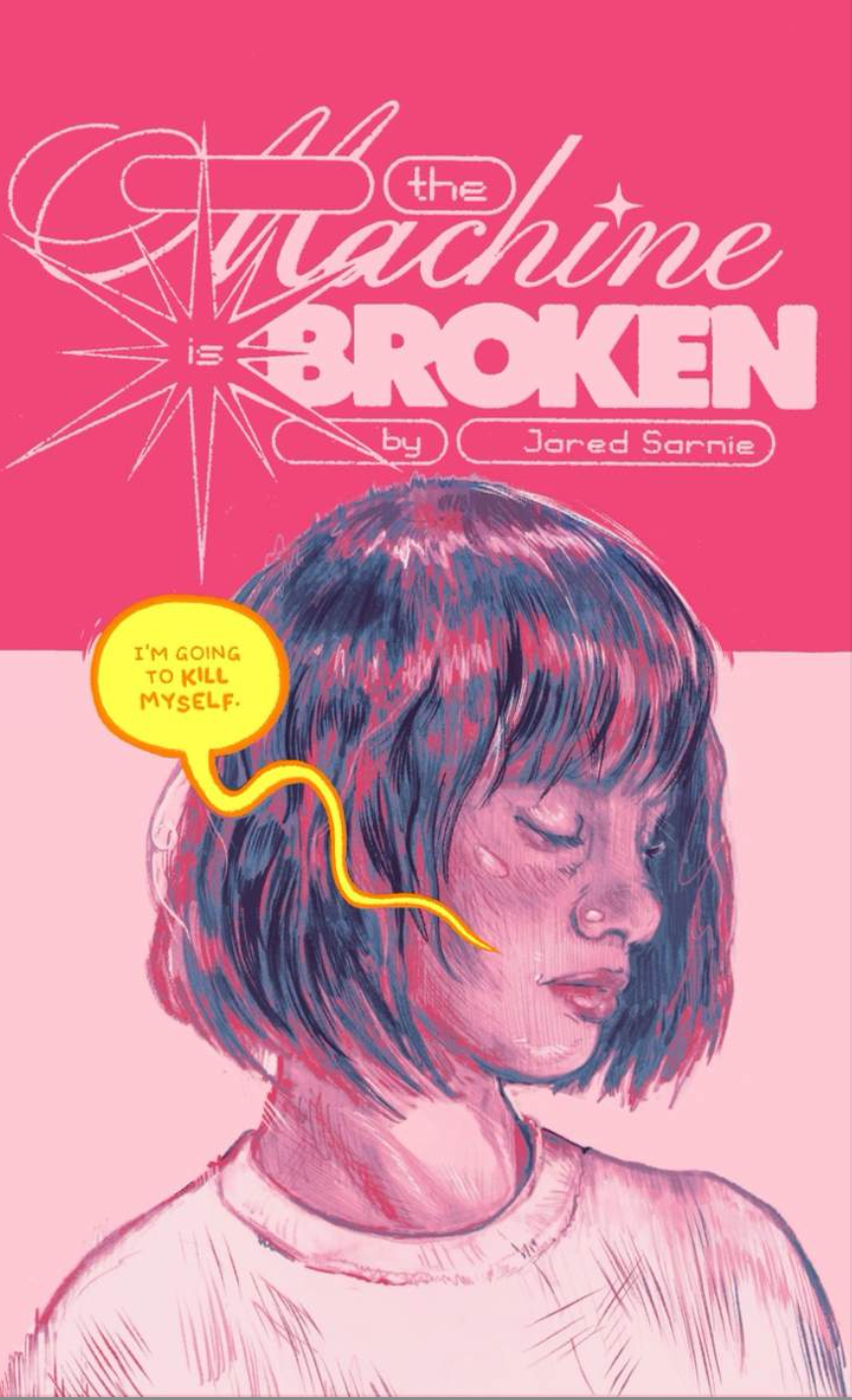
The Machine is Broken by Jared Sarnie
Hello to Jared Sarnie, a debut artist here and one who very obviously revels in the potential of a reader tugging on their collar and going, “I’m not so sure such a serious topic should be taken so lightly.” That topic being suicide. Or rather, suicide pods in Switzerland. Lux Liebowitz wants to permanently end things, so she flies to Zurich with her mother and Bonnie, her wisecracking sister. After Bonnie pesters her sister for her leftover frequent flier miles, Lux enters the “exit shell,” the gas begins to seep out, and then … the thinkable happens. It malfunctions and will take a few weeks to fix. So the family does what is only natural for every American abroad and goes to McDonald’s. Tee-hee. Lux orders an ice cream and, just like in the meme, that machine is broken as well. All of this, and the entirety of the book, is drawn and digitally constructed in various ways that makes nearly every spread a clash of styles and artificial mixed media. There’s pages overlaid with screenshots of texts, panels overlaid on top of brochures, and big-eyed cartoony characters overlaid on photoshopped reference photos. One page, which appears to be drawn in ball-point pen, resembles Emil Ferris, yet The Machine is Broken’s most prominent spiritual influence may be David Mack.
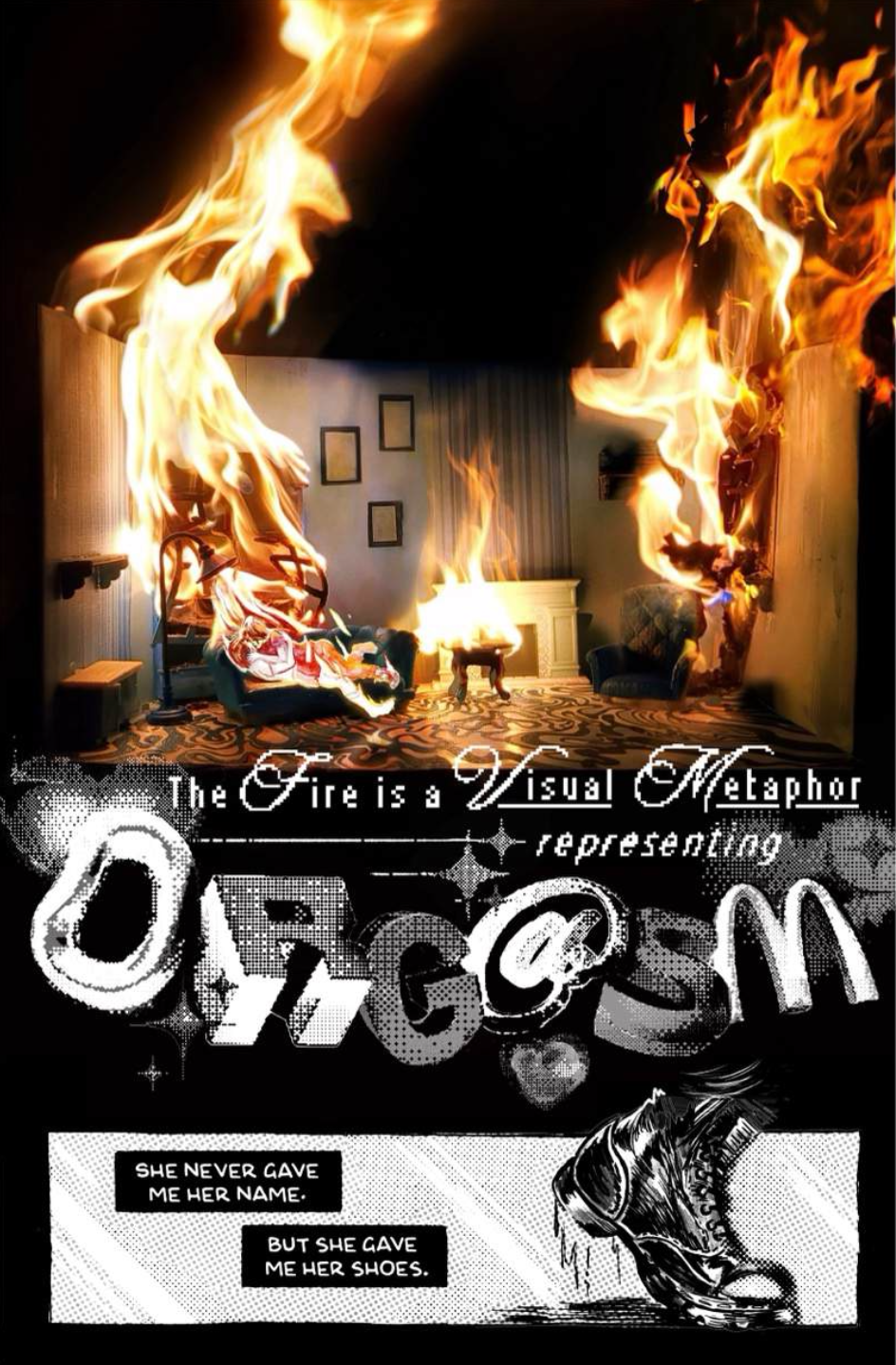
Lux needs a place to stay now that her original plans have been thwarted and finds a nearby hotel. Ironically, this hotel is hosting a Longevity Conference full of biohacking hucksters and people in medical dire straits looking for any sort of answer. In a page colored in red, white, and blue, Lux meets a wheelchair-bound cancer patient who’s not fond of Americans but still directs her to a mystery elevator. When the metal doors slide open there is an enigmatic, smooth-talking alt-girl who has sex with Lux. I’m not sure if the reader is supposed to assume that this is an imaginary figure, constructed from Lux’s pharmaceutically addled mind or a real life manic pixie SuicideGirl. Whatever the case, it didn’t make much sense to me. Lux finally reconnects with her family and her sister Bonnie convinces her to stay alive and return home. It’s a pretty tidy wrap-up for a story that goes out of its way to show us how messy the characters are. Broken is very graphic design forward, very screenplay-y, very Adbusters. In Sarnie’s favor, he is coming out the gate swinging for the fences and perhaps, in the future, he can harness those powers for good. Or, at the very least, a good book.
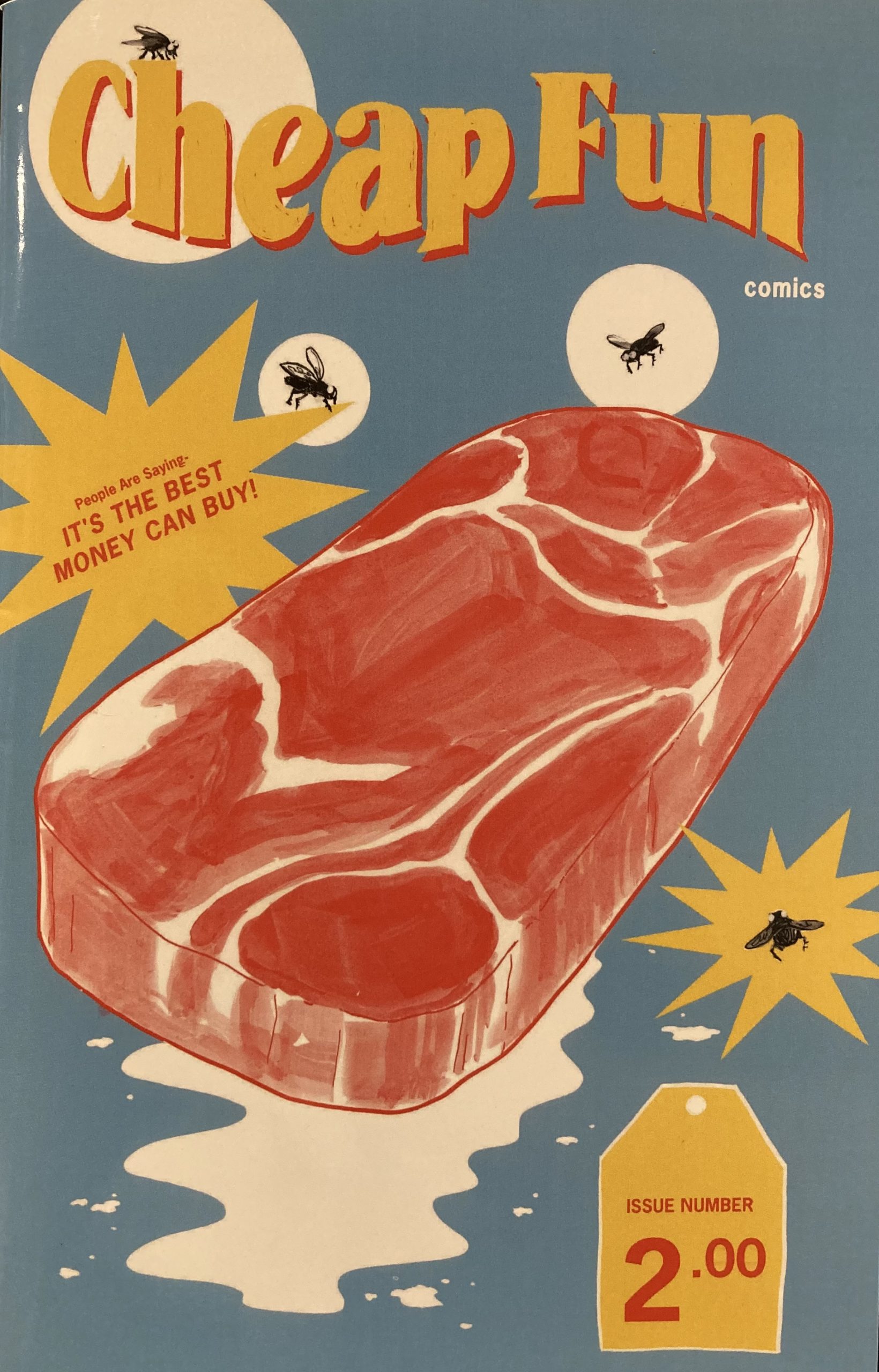
Cheap Fun #2 by Liam Cassidy
First thought, best thought: In a world of matte, it’s nice to see an artist lean into a high-gloss cover. It really makes that meat shine! And there are a few other shining moments in this one-man anthology too. If you can get past the political shorties and go nowhere near the one-note final story about a robot stand-up comedian, that’s where you’ll find them.
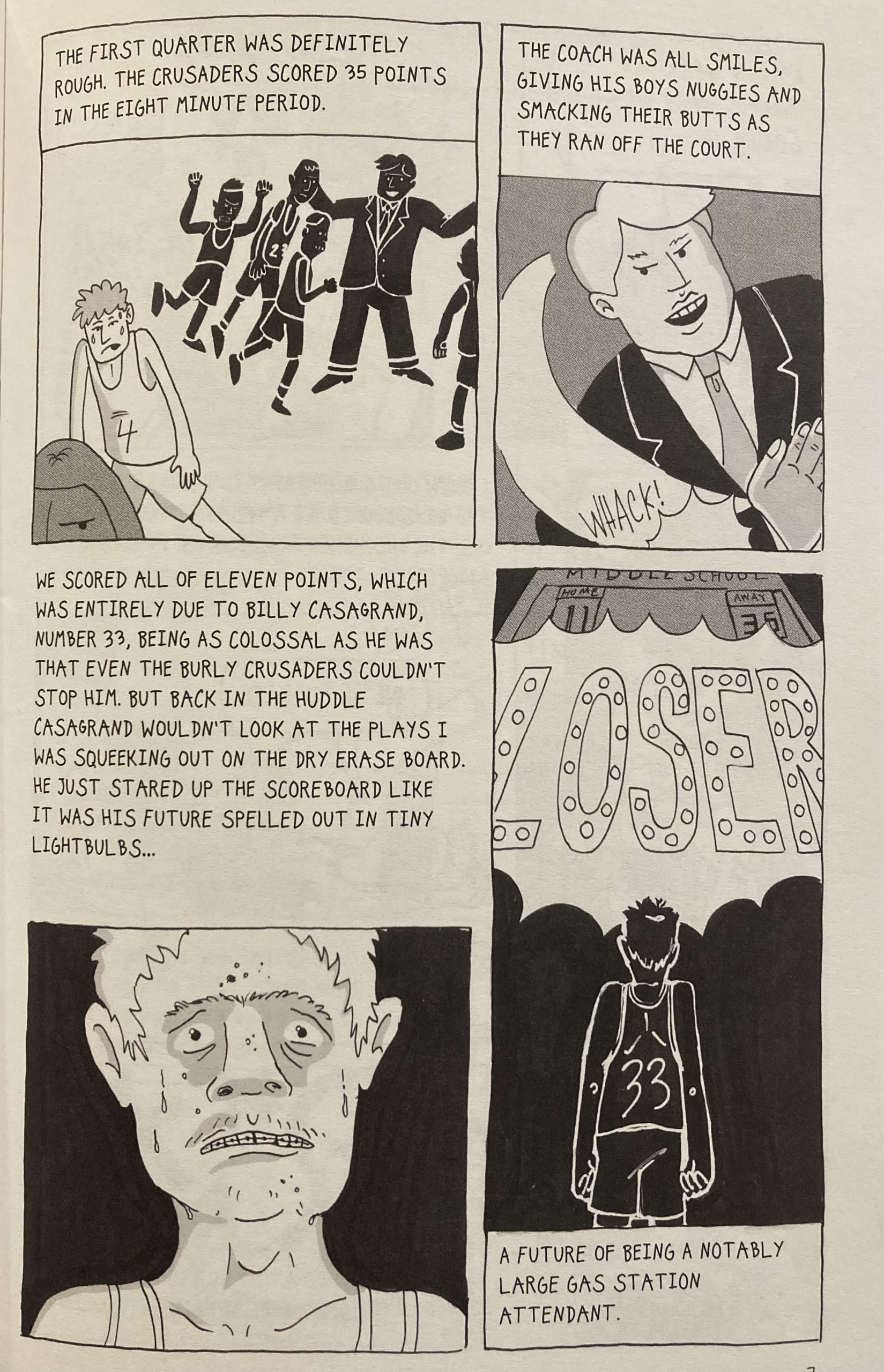
“A Good Man is Hard to Find” seems to take place in the Flannery O'Connor Extended Universe and is punctuated by some excellent ink wash. A hapless door-to-door beef salesman almost pulls one over on an elderly lady until her grown and ornery son comes home and throws him out on his face. The packaged steaks get torn up by coyotes as the salesman drives away in a huff and a mouthful of gut rot liquor. Cassidy is going with a slow-burn approach with this one, assuming he will be continuing it in further issues of Cheap Fun. (Although I wish he would have used that narrative technique and stayed with those coyotes a little more than three panels. He’s good at drawing animals.) The best story — by far! — has a mouthful of a title: “The End of My Career as Coach of The Saint Barnabas Boys Basketball Team.” For Coach Rick, taking over for his retired mentor and feeling the stress of the onset of a potentially bawdy scandal, “the lights were brighter than expected.” Losing control and respect of his team of middle schoolers as rapidly as they’re losing games, Rick and Saint Barnabas are pitted against a rival at the top of the league and coached by a man who resembles the current president. Coach puts the weight of the world on Billy Casagrand, who accepts the responsibility and his fate in a John Henry manner. Drawn in a thin line and exaggerated characteristics that play up the anguish, the gawky center begins playing possessed but with everyone’s knowledge (including his own) that it’s all for naught, Casagrand transforms into a golem with tiny strains of mustache hair. It’s one of the better written comics I’ve come across this year.
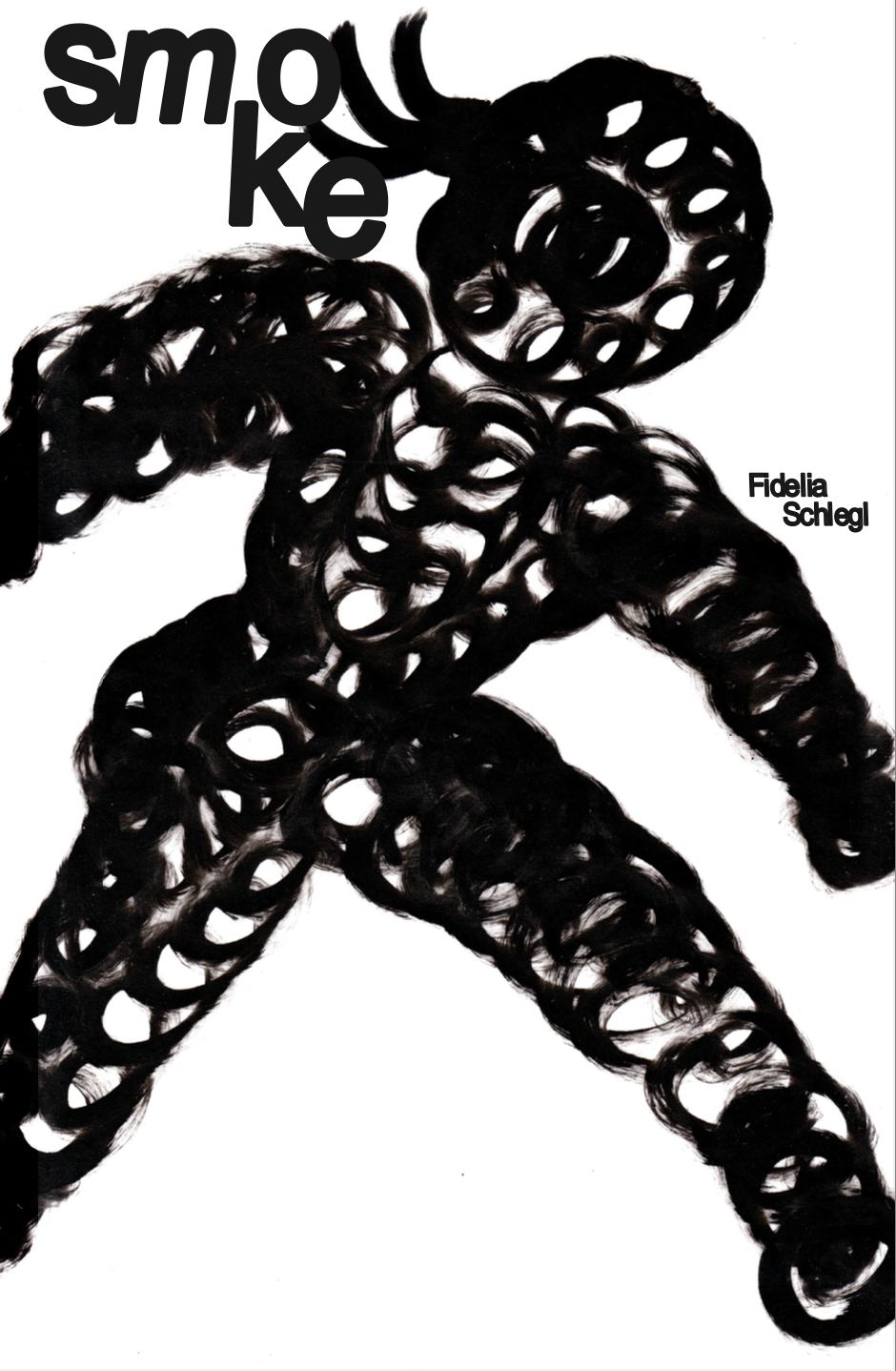
Smoke by Fidelia Schlegl
This is a gorgeous book. Fidelia Schlegl fills two panels per page with broad, black strokes that often resemble screen mesh or become mesmerizing concentric abstractions. The felt-tipped pen occasionally feels like it’s on its last legs, which adds to Smoke’s immediacy and delicacy. What’s the story, you might ask? The process of markmaking and constructing the work itself can be seen as a narrative, but this is a book made more of conceptual themes. Schlegl focuses on being aware of oneself — scrolling in bed, sharing human touch with a companion, living in a big city, simply being an entity in the universe.
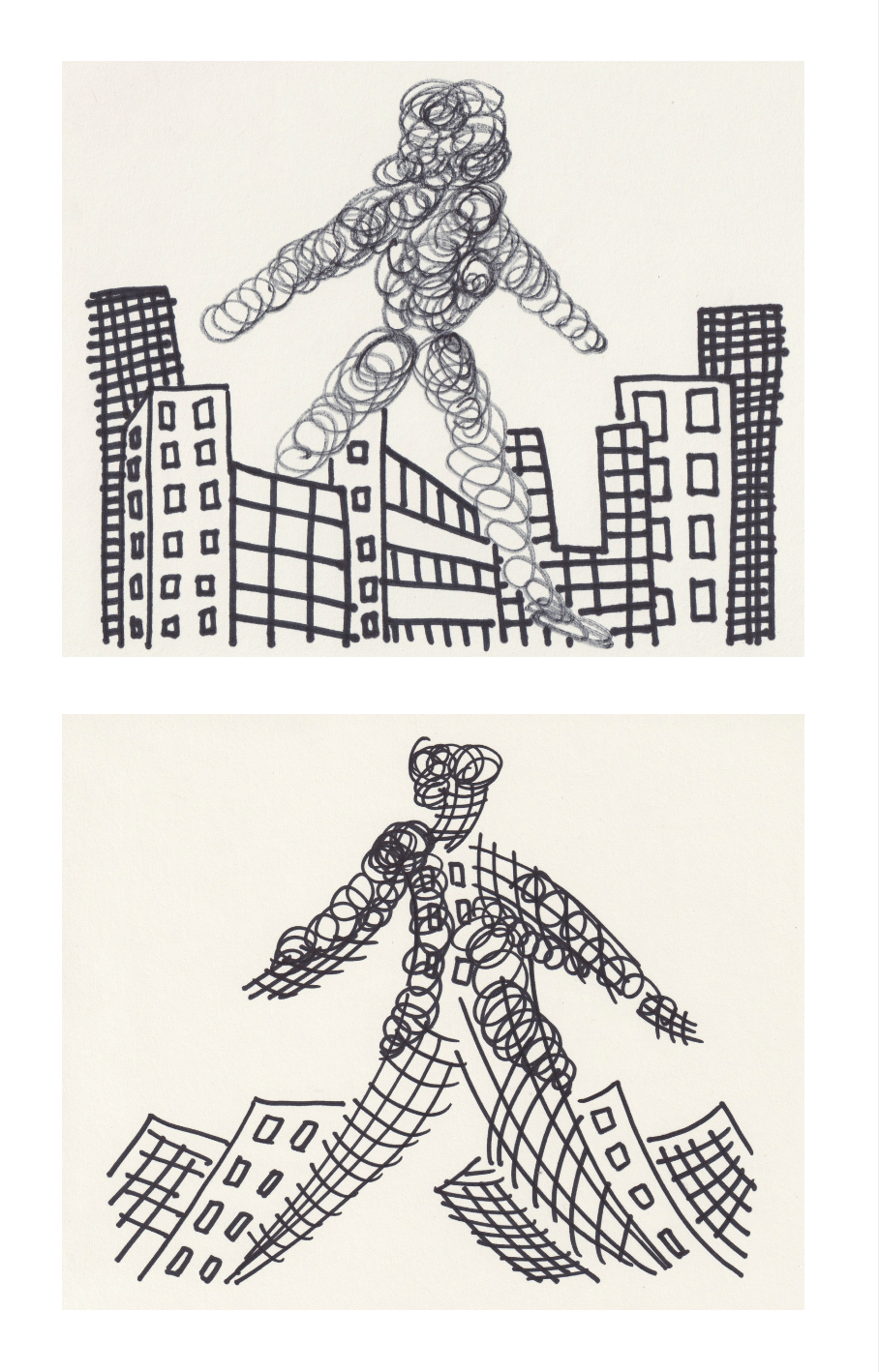
As self-consciousness is explored from the viewpoint of a microscope to a telescope, we are first given a single character on her phone. She rolls from side to side until in a fetal position, and then evaporates into the atmosphere. That person returns later to walk the city in which she resides, making up my favorite pages of the book. Schlegl draws buildings in a similar way as Crockett Johnson guides Harold to draw them with his crayon. The thick, overlapping lines that make up the smoke eventually take over and the remaining panels succumb to the cacophony of etchings. There is both an inconsequentiality to these hand-made flourishes (smoke floating away into the ether) and one of dire importance (the world full of smoke caused by wild fires and climate change). I, for one, welcome these types of experimental comics that emphasize heart over cold geometric sterility. It’s always a great pleasure to read work from artists like Owwi Lee and Gizem Vural and now I would add a new member to that illustrious list. In Smoke, Fidelia Schlegl brings the amazement — something we could all use in our lives to soften the blow of reality.
Keep your arms and legs inside the ride vehicle! See you next month, I hope.
Questions, love letters, and submissions to this column can be directed to @rjcaseywrites on Instagram.
The post Arrivals and Departures — August 2026 appeared first on The Comics Journal.


 Hello, my name is Jack Sparrow. I'm a 50 year old self-employed Pirate from the Caribbean.
No comments:
Post a Comment