

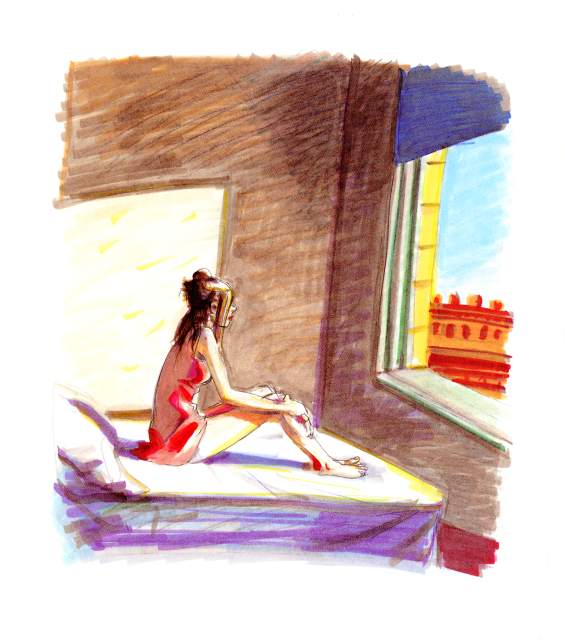
I’d like to start with a trite question: Are we becoming a more superficial society? When I look at art, I feel it’s becoming emptier: aesthetic without concept, optimized for consumption on a 6” screen for a hit of dopamine instead of provoking thought. Alongside the rise of Ozempic and low-rise jeans, my body dysmorphia has reached peaks akin to what it was like when I was 16 years old. It also doesn’t help that I’m getting married this year. I’m approaching my mid-30’s, and it's a time of profound life changes involving career and family. Maybe I’m becoming obsessed with the way I look to avoid making big decisions, or maybe it’s resulting from my increasing fixation with youth; becoming stronger each and every day as I watch the younger generation try on the “vintage” and “retro” clothing and music I grew up with.
In Louis Theroux’s 2026 documentary, Inside the Manosphere, which I recently watched while riding a Peloton at an airport hotel gym, Justin Waller, a self-proclaimed “alpha male” and business associate of Andrew Tate, argues that, “...women are born with their value. It’s their beauty, their youth. A 20-something woman can hop on luxury cars and yachts for free. Men cannot.” If we accept this inane premise as true, it’s all the more terrifying to have an aging, female body: what are we left with when we are stripped away of our youth and beauty? With dark satire, Kyoko Okazaki’s 1995 manga series Helter Skelter and Coralie Fargeat’s 2024 film The Substance portray the horrors of narcissism, capitalism, and gender expectations associated with having a female body, while providing no easy answers to the aforementioned question.
Kyoko Okazaki is a manga artist, active during the 80s and 90s, until her career was tragically cut short after becoming paralyzed as the result of being stuck by a drunk driver in 1996. She remains in physical rehabilitation to this day. Influenced by New Wave manga, Okazaki’s comics are characterized by a willingness to portray transgressive topics such as incest, sex work, and death through a playfully delicate visual style. Her slice-of-life stories depict young women navigating the rapidly changing cultural and economic landscape of late 20th century Japan. Okazaki’s 1989 series, Pink, follows the life of Yumiko, who works as both an office secretary and call girl to make ends meet in an increasingly expensive Tokyo. Helter Skelter, serialized in josei magazine, Feel Young from 1995-1996, shows the mental unraveling of Liliko, an aging supermodel who regularly undergoes a mysterious medical procedure to keep herself looking young. Her reliance on this surgery contributes to her descent into drug use, crime, and abusive behavior; a huge price she's willing to pay for maintaining a youthful look.
If this premise sounds familiar, it may be because Coralie Fargeat’s 2024 film, The Substance, tells a similar story: after middle-aged actress Elizabeth Sparkle gets fired from her job as an aerobics TV show host, she starts to inject herself with a black market drug to make herself look younger. It transforms her into Sue; a younger, “better” version of herself. However, each dose starts to come at a greater and greater cost to Elizabeth. Both Helter Skelter and The Substance show society’s poisonous gold standard of youth and beauty; illustrating women who equate their net worths to their looks, and the perverse financial, mental, and physical lengths they will go through to maintain their bottom line. Okazaki and Fargeat deploy satire and the visual language of mass media's upholding of misogynistic beauty standards in such a way as to make their audiences feel both uncomfortably introspective and duplicitous. They suggest that the only way for us to escape our self-imprisonment is by exiting society; a defiant path to self-acceptance and peace.
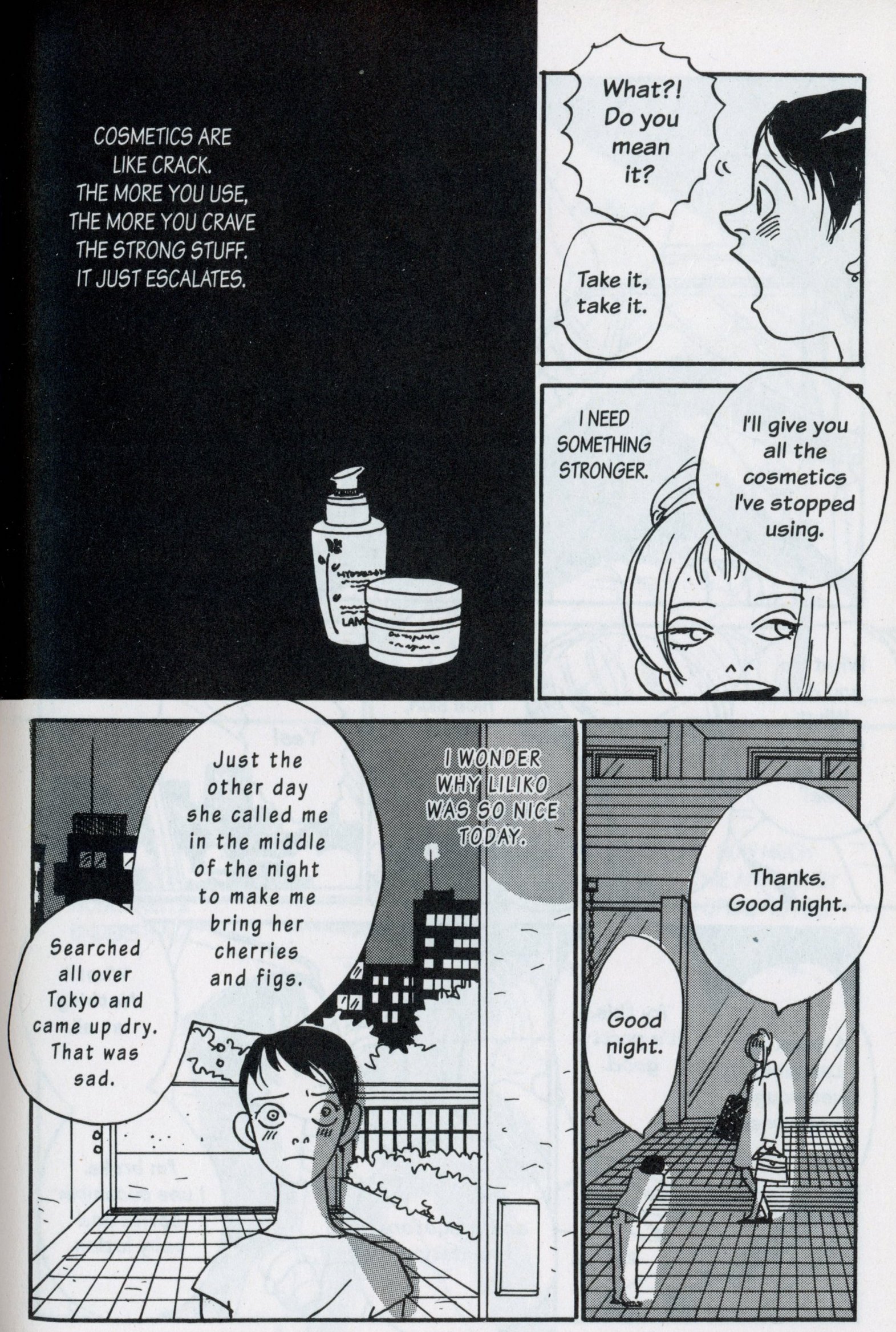
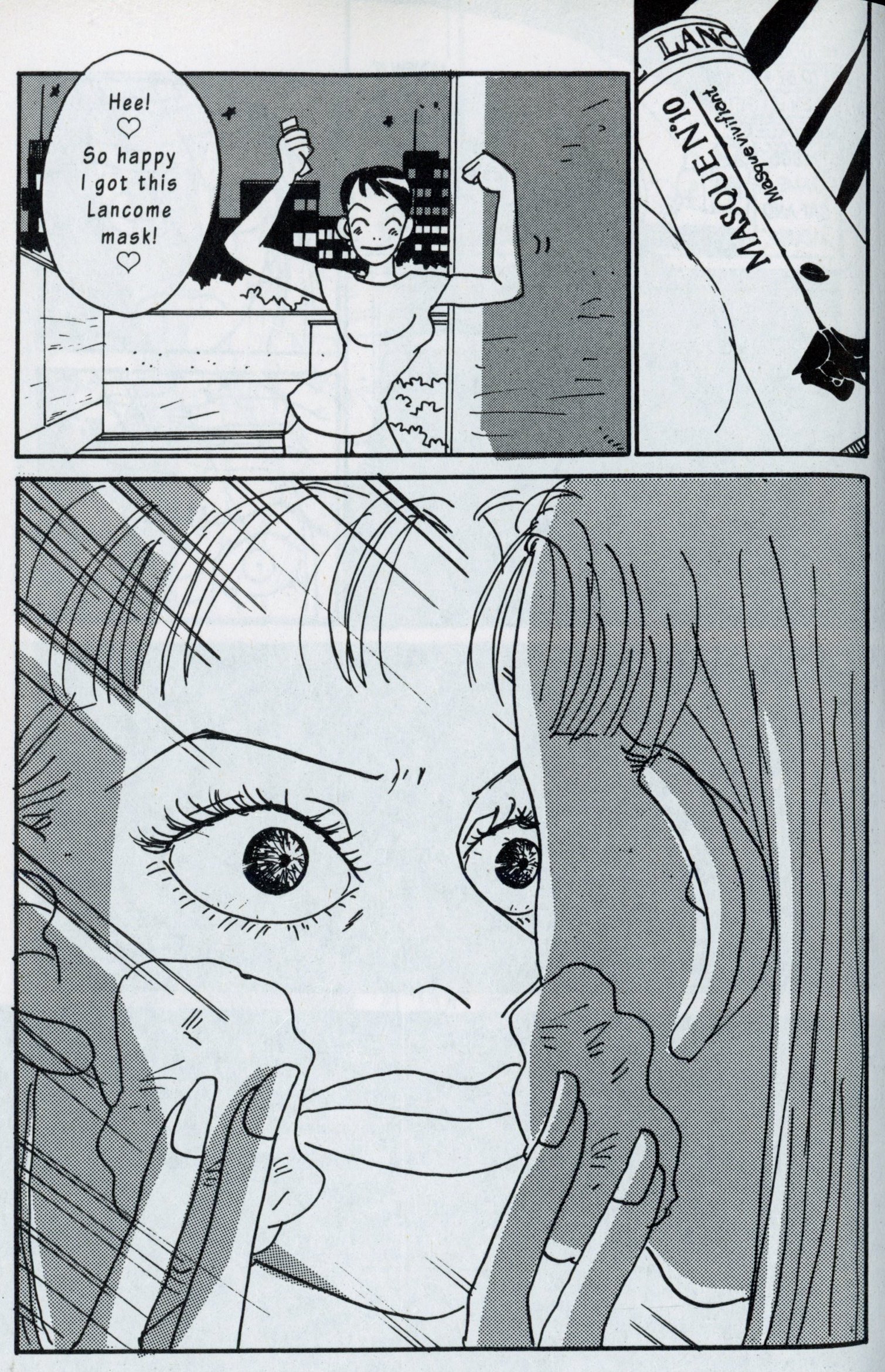
Capitalism pressures the protagonists of Helter Skelter and The Substance to preserve their appearances. We witness Liliko and Elizabeth experience job precarity due to their age: Liliko starts to lose gigs to the newly-arrived teenage model, Kozue, and Elizabeth gets fired from her TV show (by a producer named “Harvey”) after her 50th birthday. Beauty products and surgical procedures are presented as the healing salve for their career bumps: in Helter Skelter, when Liliko gives her assistant, Hada, a Lancôme, mask, we are presented with the model’s thoughts on a stark, flat black panel, “Cosmetics are like crack. The more you use, the more you crave the strong stuff. It just escalates.” While Hada is overjoyed with the gifted product, Liliko spirals into existential panic as she discovers sore-like bruises on her face; a side effect of too long a lapse betweeen secret beauty procedures.
Elizabeth also encounters the futility of beauty products as she gets ready for her date with Fred, a former high school classmate, in one of my favorite scenes from the film. She attempts to leave her apartment four times; each resulting in a false exit and return to her bathroom mirror as she confronts images that shake her confidence: an unavoidable view of a massive billboard of Sue in a barely-there unitard outside her apartment window, an unflattering warped-mirror reflection of herself on her front doorknob. In her final attempt at applying makeup, she violently wipes off her lipstick, leaving a huge red smear on her face à la Joaquin Phoenix in Joker. Elizabeth fiercely scratches away at her face and hair; angry at the mirror's reflection, upset that these products don’t do what she wants them to do: she wants them to transform her back into the young Sue.
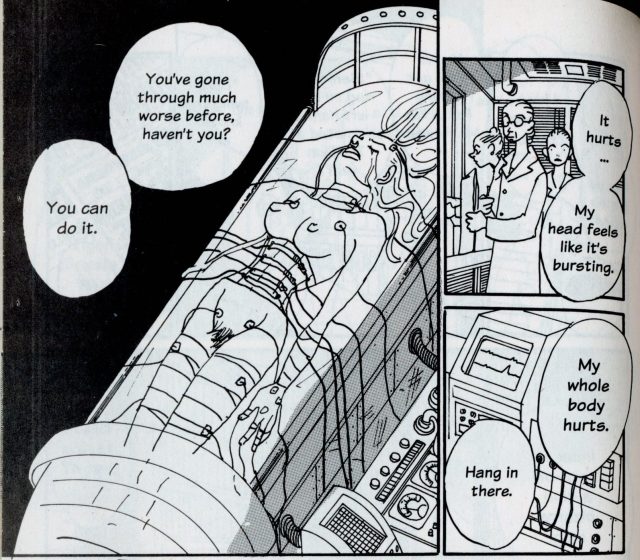
It’s perversely comical to see the quantity of psychological and physical damage these women inflict upon themselves through these medical procedures: I think about how in these days, once arriving at a certain age, it is almost expected one will get a neurotoxic protein injected into the face every few months (I certainly have been toying around with this idea in preparation of my wedding), or yield to a surgical skin-stretching and muscle-tightening of the face. Public validation is as addictive, and when we’re hooked, we’ll go through nearly anything to get a fix.
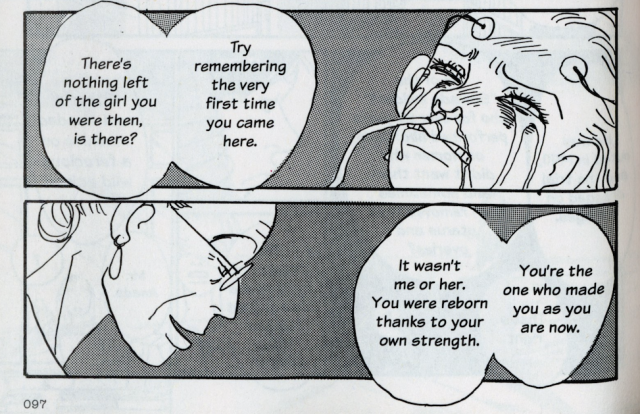
The cost of achieving physical perfection is not only financially extravagant, it is also disgustingly painful. Liliko must go to the clinic repeatedly for maintenance, or else her body will start to peel, shed, and deteriorate. Each time we see her go through the process, she folds into distress; crying and writhing in pain. Liliko’s clinic is investigated by an unnamed male detective, led there by a string of suicides related to the medical practice. The victims are female patients who, unable to continually afford their expensive treatments, kill themselves. In Okazaki’s Tokyo, capitalism is such an unrelenting force that when women are priced out of looking young, they’d rather die than look old.
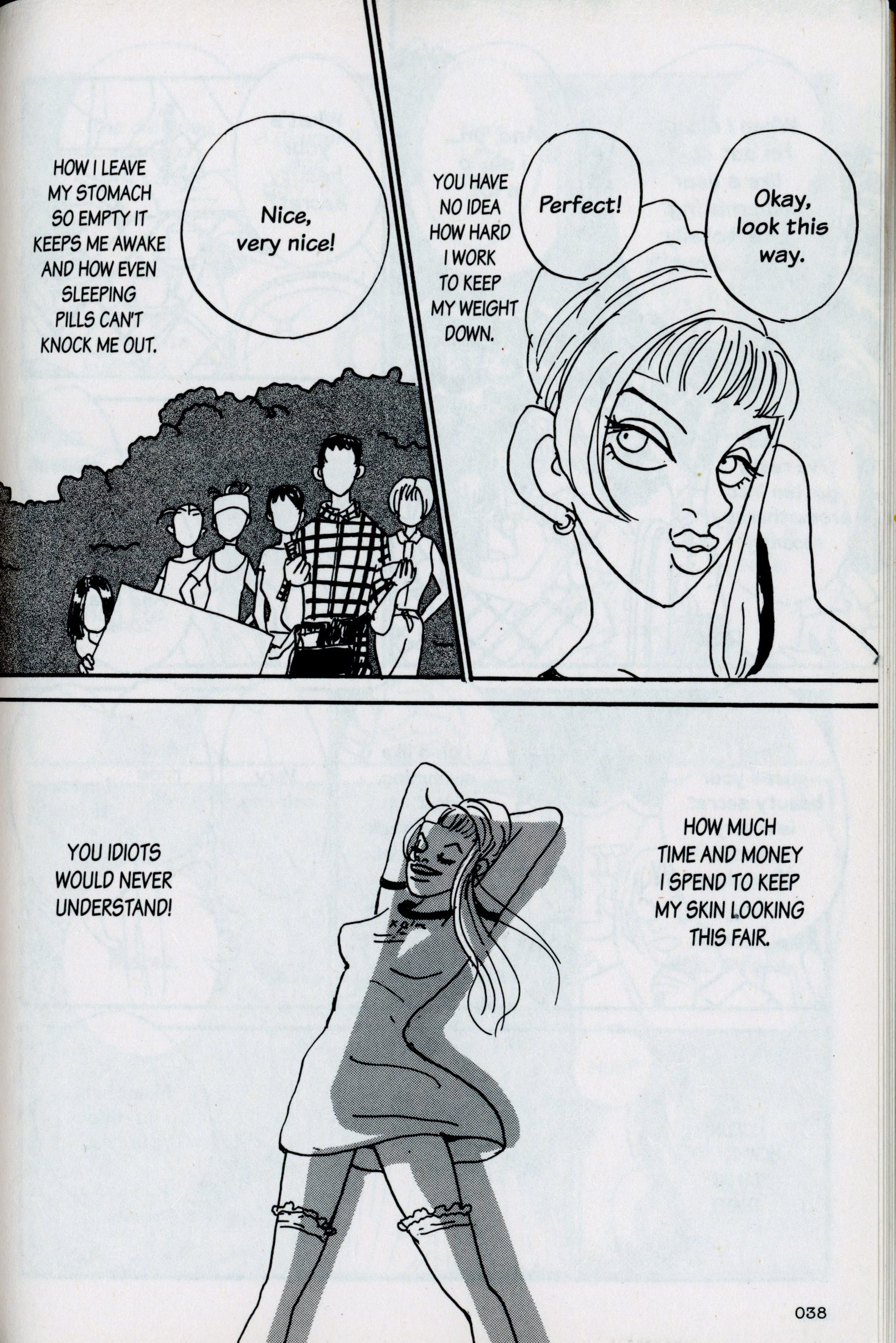
Both Okazaki and Fargeat lean into satire and are not afraid to make their audiences complicit through staging. Okazaki borrows the visual language of fashion magazines by frequently portraying Liliko in the middle of photoshoots; her front-stage appearance juxtaposed with her back-stage thoughts, at odds with the image-driven economy she participates in. This dissonance between what we see and read illustrates the medium-specificity of comics: we are a simultaneous critic and participant of Liliko’s media environment, in which female bodies are scrutinized and objectified.
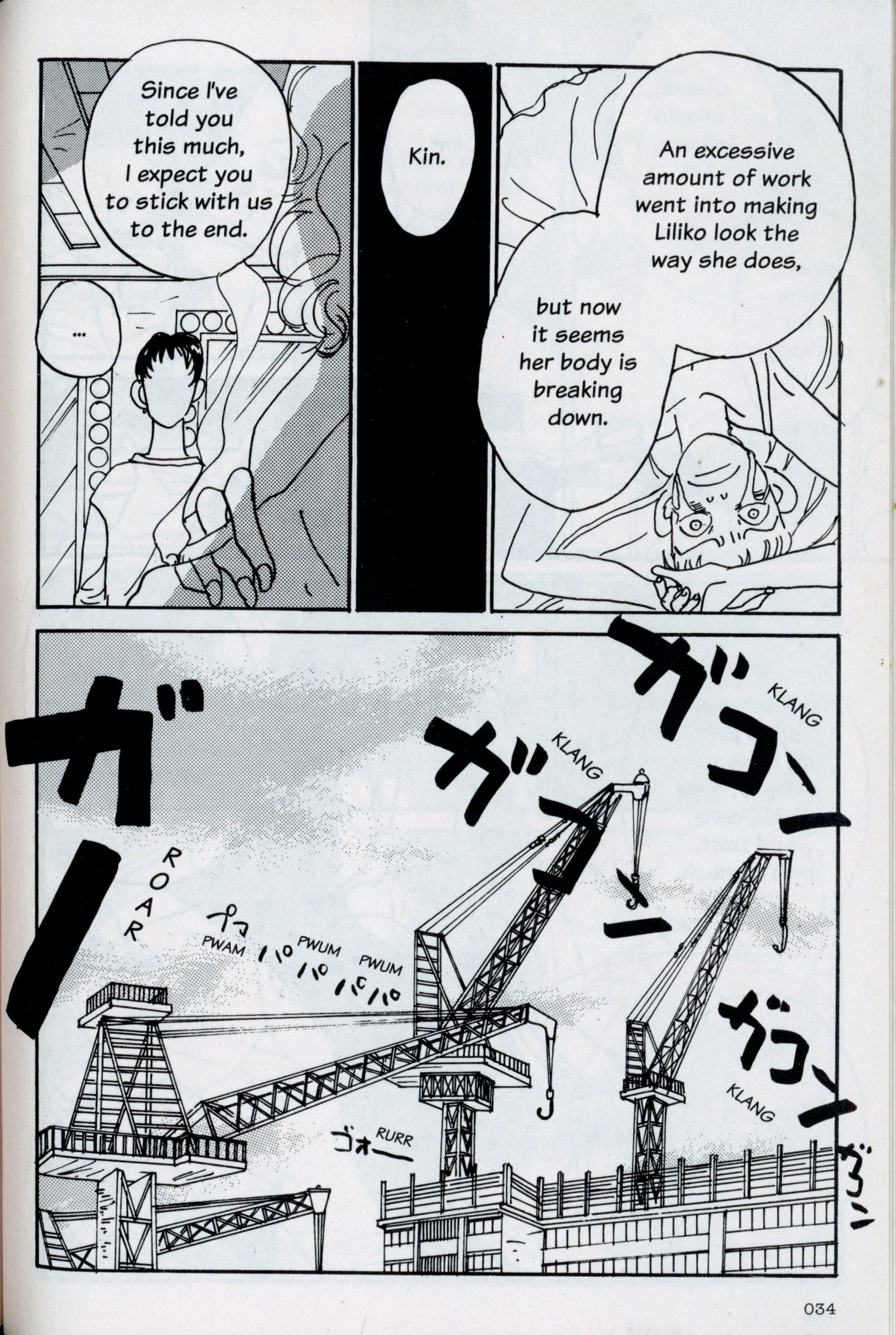
Okazaki's use of visual repetition, contrasting colorful, breezy commercial-style illustrations with panels of anonymous high school girls admiring modeling photos, or, most compellingly, sudden portrayals of industry, construction cranes and factories. The cycle of these images' sequencing makes me think about how women sacrifice their bodies for capital: how capitalism produces goods for the female body, and how it uses the female body to sell the same goods.
Similarly, Fargeat references the language of mass media by adopting the male gaze and exaggerating it to the nth degree when we first see Sue perform the updated Elizabeth Sparkle aerobic routine. The outfits are smaller, and the routine has been transformed into a skimpy, gyrating circus: the camera focuses on Sue’s derriere for a good 2 minutes. But nothing here is unusual; in fact, this is all boilerplate. Despite the hyperbole, the visual staging of Liliko’s photo shoots and Sue’s dance routine is familiar. This appropriation throws us off-kilter and makes us examine if we and the world around us hold Justin Waller’s premise to be true.
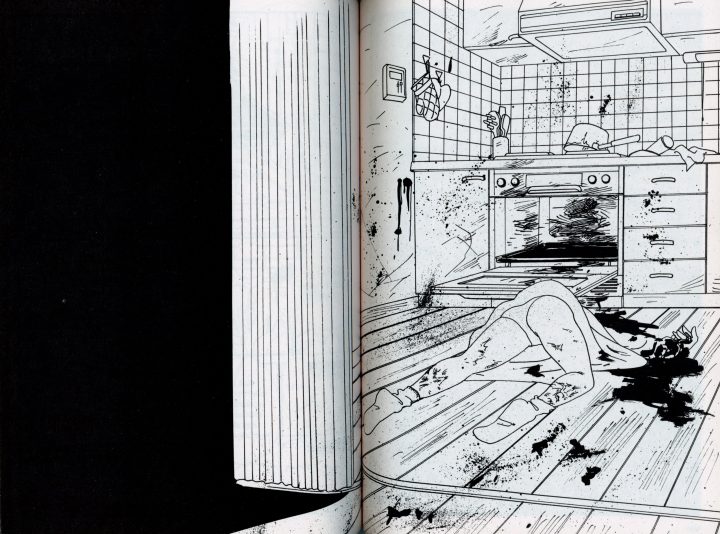
Liliko and Elizabeth represent women who have internalized society’s impossible beauty standards and who will go to extreme lengths for external validation, and the real horror is in how their stories function as a mirror reflection to society and ourselves. At the end of their journeys, they experience freedom from the suffering of wanting by defiantly exiting from the public eye. In Helter Skelter, Liliko’s intensive medical procedures are revealed to the public, resulting in an ironic twist of reinvigorated interest in her career and image (Negative attention is better than no attention at all). In the middle of this media cycle, she abandons a press conference, leaving only a pile of blood and an eyeball behind. Later, it is revealed that Liliko has left the country and has relocated to Mexico. Without access to the clinic, her body is now deteriorating, yet she revels in her new-found anonymity and bodily autonomy.
Like Liliko, Elizabeth exits society, but goes a step further by dying. In the final moments of “The Substance”, as a result of mis-dosage, Elizabeth transforms into a seeping, gruesome creature. Only after this transformation does she finally accept her appearance, we see her contentedly look in the mirror. In a scene reminiscent of The Elephant Man, she appears on a stage alongside topless showgirl dancers. The audience starts to heckle her, yelling and screaming, until she spontaneously combusts into a gory mess, the explosion producing a never-ending shower of bloody rain onto the spectators. In a 2024 interview with Vogue, Fargeat says, “The audience [in the film], which stands in for all of us as a society, screams and hates her for this, and I wanted to portray how violent that reaction can be. That the only real moment of relief that she has is when she doesn’t have a body anymore, I think, says it all.”
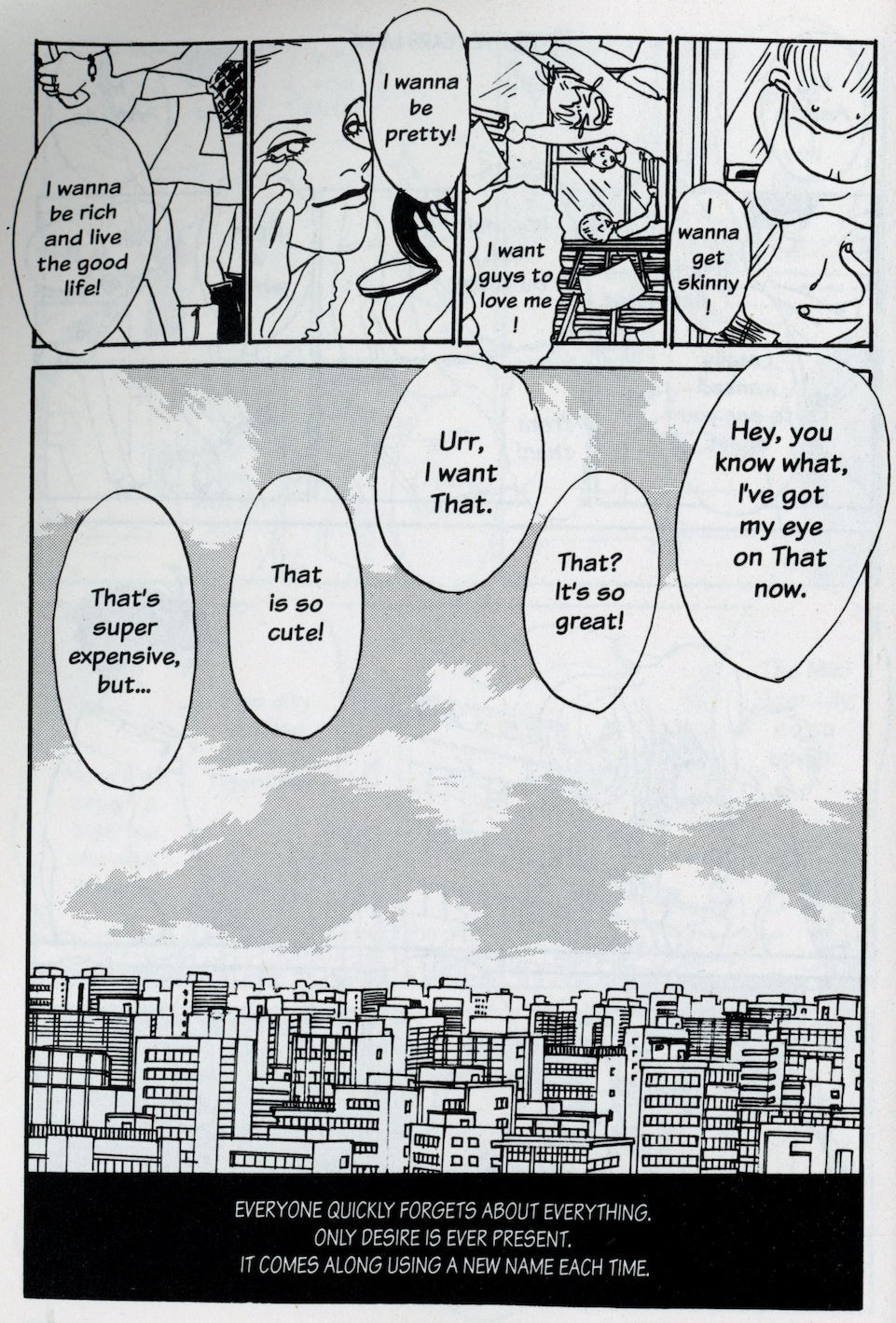
Helter Skelter and The Substance present cautionary tales of internalizing societal gender expectations, and no easy solutions to escape them. Despite the blood, guts, and gore of both stories, I find the subtler scenes the most impactful and reflective of the current times in which we live. In the final pages of Helter Skelter, in the pursuit of perfection and beauty, those anonymous high school girls from mid-90s Japan express their desires: “...Prada’s the only good designer now”, “I want an Air Max!” Okazaki ends this scene with the following statement: “Everyone quickly forgets about everything. Only desire is ever present. It comes along using a new name each time”, which makes me go back to the original question I posed at the beginning of this piece: Are we becoming a more superficial society? And in response to that question in 2026, I wonder if we have just always been this way.

The post Helter Skelter, The Substance, and the Horror of Having a Female Body appeared first on The Comics Journal.


 Hello, my name is Jack Sparrow. I'm a 50 year old self-employed Pirate from the Caribbean.
No comments:
Post a Comment