


In the ‘80s, ‘90s, and into the early 2000s, Jeff Nicholson was a pioneer of the independent comics scene, with books like Ultra Klutz, Father and Son, and Lost Laughter. He did this while navigating the constantly shifting waters of the industry, occasionally having to take a day job. Something he memorably reflected in Through the Habitrails, his surreal, horror-tinged graphic novel (initially serialized in the seminal horror anthology Taboo) about the struggles of a creative person forced to a life of day to day drudgery. In 2004, after self-publishing 11 issues of his historical fantasy series Colonia, Nicholson called it quits, fully intending to walk away from the industry forever. But in 2020, Nicholson, retired from a career far from comics, began dropping new issues of Ultra Klutz on ComiXology. Despite some initial reservations, he followed that up in October of this year with the surprise release of a new chapter of Colonia, literally picking up where he left off over two decades ago.
I caught up with Nicholson over Zoom to talk about his time away from comics, the challenges of returning after so many years, and what it’s like directly collaborating with a younger version of himself.
- Jason Bergman
JASON BERGMAN: I figured I would start with the big question. It’s been two decades!
JEFF NICHOLSON: Yeah.
Where did you go?
[Laughs] Well, I quit doing comics in 2005, which was...actually, the last issue of Colonia that I released was in 2004, but then there was to be another collection from AIT in 2005. So I was still motivated and continuing to script and thumbnail into 2005 and then abruptly stopped. Because us creators who are addicted to making comics can't just stop cold turkey, I switched to web animation. I couldn't not be doing something, but distributed comics became so heartbreaking for lack of a better word. You know, you pour your all into something and it just doesn't go where you hope. You can keep hanging on and struggling to make it work, or you can finally say, “I have to stop.” And neither one of those is easy. So I stopped. I switched to web animation for about 10 years, just to be doing something creative, but not worrying about printers and distributors and all that.
In that time you did a handful of Ultra Klutz animations, you did Father and Son animations, but I assume you had a day job at that point.
Right. Yes, I started working for a big utility out here in Northern Central California doing GIS, which is geographic information systems, which was pretty cool work. We were playing around with Google Maps type stuff before Google Maps had come out. Way back in the mid ‘90s I started working for them. I quit a couple of times. I was trying to do the comics but ended up always coming back. And finally just realized I have to stick with this because you get tired of living like a college student, which is what the life of a comic book artist is. And so I was doing both. I quit and did a number of the early issues of Colonia full-time, and then the sales started to slip again. So I went back to work and did it in parallel. But that really can wear you out. Doing a full time job and commuting - I was in the San Francisco Bay Area, riding the train to work - and then doing a third of a page an evening. I really gave it my all. I thought, before I quit I have to say I did give it my best. So the last three issues were bimonthly. I built up a whole bunch of work, and then my final summer of 2004 had three issues come out, and it didn't help. Things just continued to decline. That was when I threw in the towel, and thought I was never going to do comics again.
So then 10 years later, I did some new pages for a new epilogue for Through the Habitrails, the Dover edition that came out. That was the third edition of Habitrails. And that was kind of hard, to go back to the comics, just to do those few pages. But I enjoyed it, so then I did some more new pages for the Father and Son omnibus, about 10 new pages for that. It became a little easier. And then when COVID came along, I lost my brother, and COVID and everything was such bummer town that I decided to start doing Ultra Klutz just to do something lighthearted and silly and from my youth. I ended up doing eight new issues of Ultra Klutz in 2021, ‘22, and ‘23. And I say all that because there's no way I could have started doing Colonia again unless I had done all that other more recent stuff, because that kind of built me up. Got my chops back, to a degree. I still don't see myself as able to do what I did in my prime on Colonia in the past. I’m doing enough to commit it to paper again.
I'm kind of curious because those things you mentioned…you have all these different styles. And of them all, Habitrails is very stylized. It seems like a surprising one for you to return to after all that time away from drawing comics. I would think Ultra Klutz would be the easiest.
Yeah, Ultra Klutz definitely was the easiest, but Colonia is the hardest.
Is that because of all the historical reference you use?
All the reference and it's got the most I guess literal anatomy. And it's more traditional layouts. You can get away more with something kind of goofy like Ultra Klutz or surreal like Habitrails. You can let the darks dominate or stretch things and not worry about it. Kind of like an animation will have a bible of characters, they really are supposed to stay the same. Whereas Through the Habitrails could kind of be like Ren & Stimpy and it just looked wildly different in different scenarios. Colonia isn’t that elastic, which makes it harder. It's more disciplined. So that’s been the hardest one to return to.
When you came back to Habitrails, was that reflective of your time working a normal job? Because that's where it came from the first time around, right?
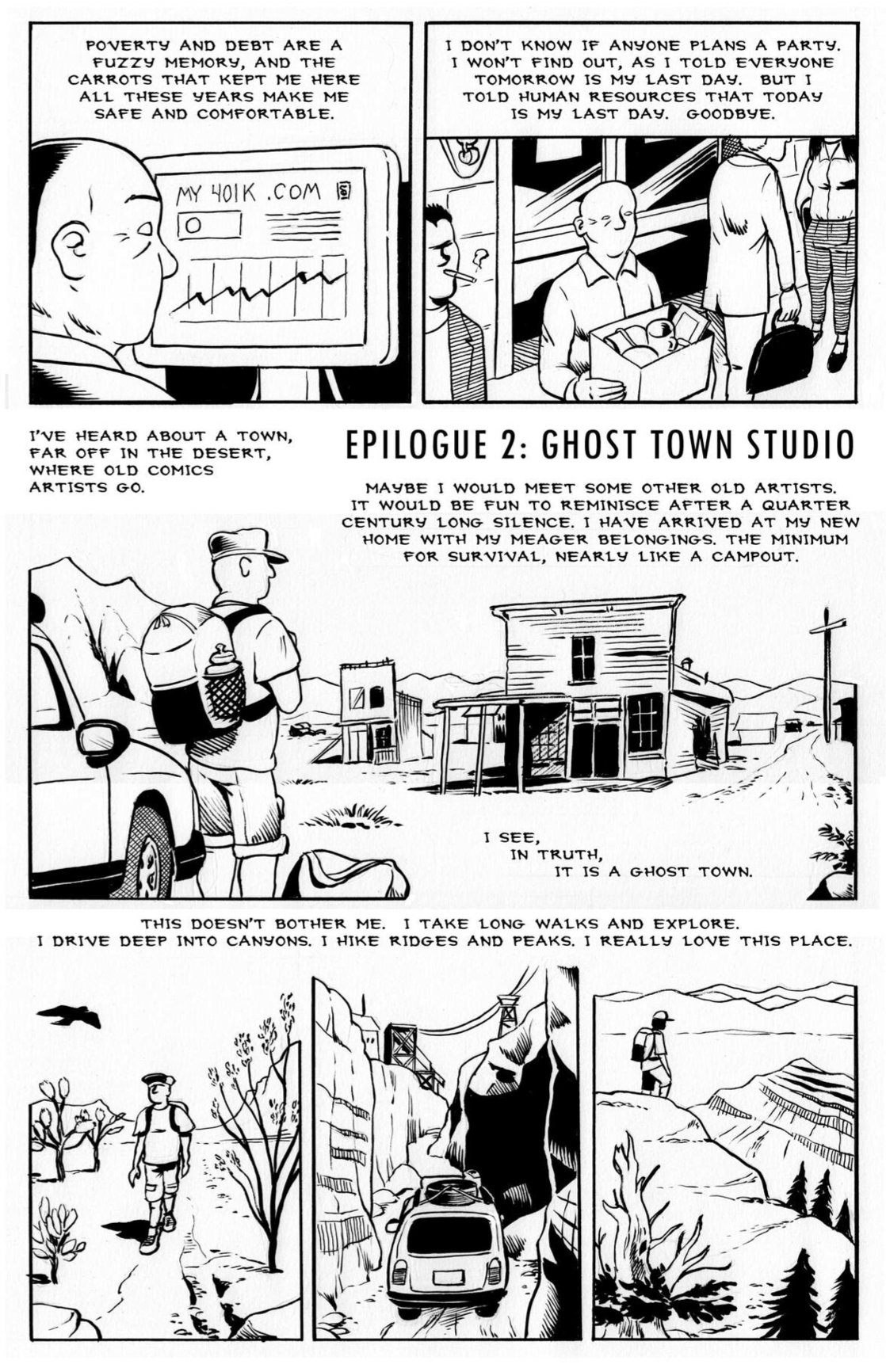
Well, yeah, it originally came from working at a newspaper, doing illustration for a free weekly newspaper. And it was, yeah, very much like in Habitrails where it was doing creative things for someone else for money. Which you would think is cool, but it actually, at least when you're a young person [laughs], you feel like it's just robbing you…every day you’re drawing for someone else you could be drawing a page of comics. At least that's how I saw it back at the time. But then the utility job was so separated from it that I didn't even tell my coworkers that I was a cartoonist or that I made comics. I just wanted to have a completely separate life, and I liked it that way. No one's ever like, "Oh, did you draw a page today?" or, “What are you going to do next?” I would just talk about hiking, talk about whatever and it's like I’ve got this secret life back at home that we don't need to talk about.
How long did you work at that job?
Twenty years? Yeah, about twenty years.
And then you fully retired?
Yeah. Retired at 55 which was the earliest you could go with the percentage of a pension. Which is a rarity these days. They don't even give pensions anymore. At some point, they started giving the new hires just 401k models. So I got an old school pension out of it.
So you do those new pages for Through the Habitrails, for the new edition, but then what brought you back to Ultra Klutz? Was it the silliness versus the overwhelming sadness of COVID?
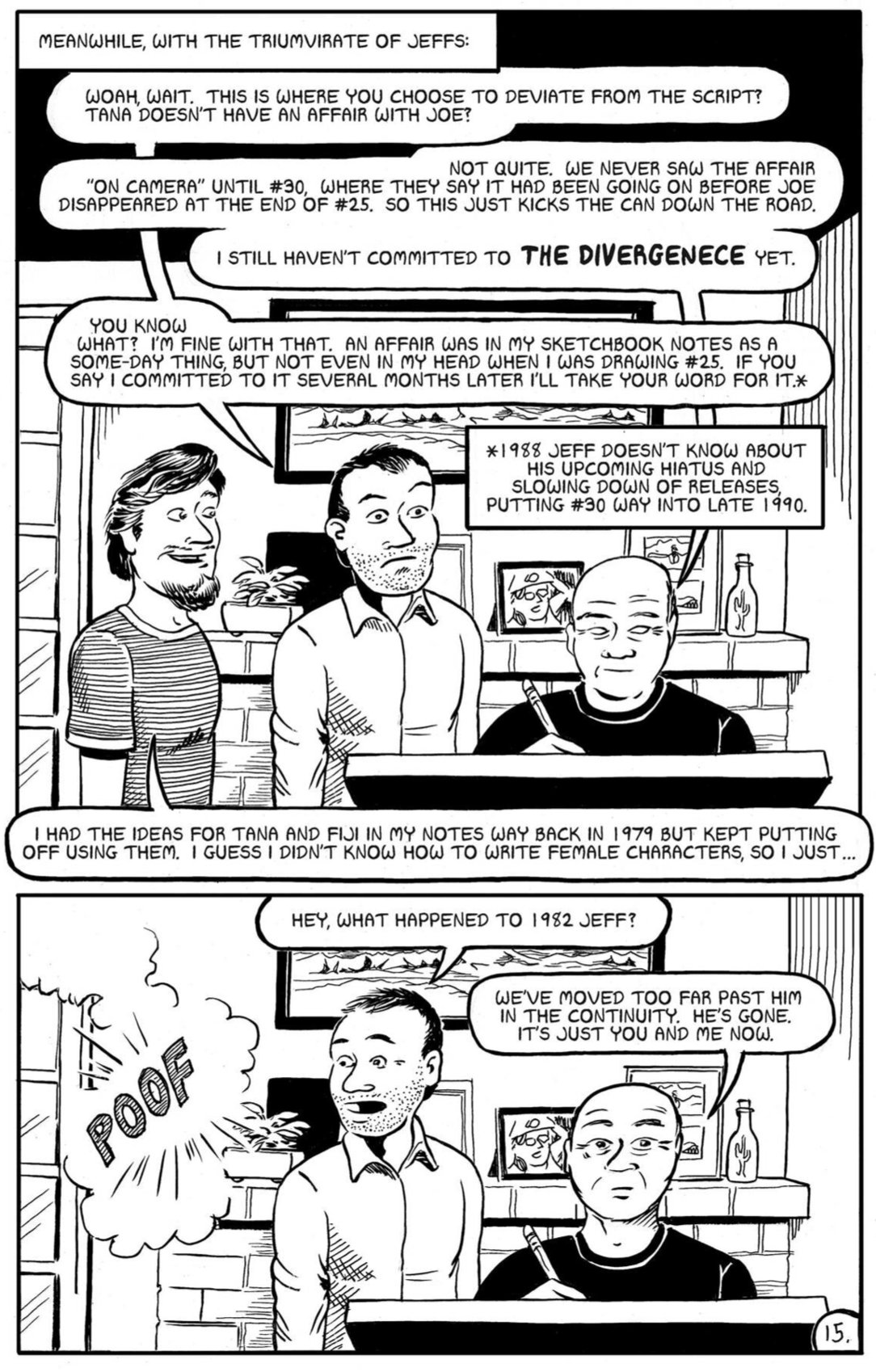
Yeah. I mean, it's hard to even remember because it’s something I thought I would never do again. Unlike a lot of some of the things that I've done, I actually finished the story. I had a sequel called Lost Laughter, and it actually has an ending. So it’s not like it was incomplete. I guess the idea of how to do it was instead of continuing it, I did it kind of like the show Lost. Where you've got this story and then at some point you want to say, "Oh, but this is actually how it started." It’s like, we all know about the plane crash and then in season two or three we get to see Benjamin Linus and all of his cohorts at their camp, watching the plane fall and they start masterminding what to do. I guess you could call that retconning. But that's what I did with the new Ultra Klutz series. I went back to the beginning and I showed all the things that were happening from different angles or were not seen on camera, so to speak. That made it fun for me to revisit it without having to go and add more narrative to the end. I just went in and fleshed out the middle throughout. And I would even make these elaborate time charts and all the new material goes from issue one to issue 31, all interwoven.
Right, but then you also went super meta with it, right? You have the Triumvirate of Jeffs.
Oh, yeah [laughs]. Yeah, I used to always insert myself in those old comics. Pretty much because of Robert Crumb, the way in his earliest comics he always had himself in there. That was part of the fun. I could have the young Jeff, the middle Jeff, and the old Jeff. And it was kind of like the middle Jeff was the biggest asshole [laughs] because he's the most full of himself. The young, naive Jeff, the old mellowed out Jeff, and then the middle one was kind of the testy one.
Were you arguing with yourself through the work while you're doing this?
Yeah, because it's kind of like being a George Lucas, you're risking pissing people off by playing with your old stuff and contradicting what your younger self thought or was trying to say. So there was that kind of meta going on.
Well, so you did Ultra Klutz and then I saw you commented on a YouTube retrospective of Colonia. And in that comment, you said you were thinking of coming back to it, but you weren't sure you still had the chops to do it. What changed your mind?
I guess like with Ultra Klutz, I just started drawing it, and it seemed good enough that it would be presentable. And then I feel like I've gotten better after the first couple of pages and it's pretty much come back. I mean, my eyesight and eye-hand coordination aren't what they were, so there's some limitations there. It's hard to find good Windsor & Newton brushes. I still have a small collection of old ones but they wear out eventually and it's hard to find a really good number two, series seven brush that has the same snap that they did 30 years ago.
You're still working on physical paper with a brush?
Yeah. Bristol board, 11x17. Blue pencils, then graphite, then ink and brush. And the only difference is I used to use Rapidiograph for the hatching where you don't want thick and thin, and now I'm using the Micron pens. Which are real nice. So no more changing ink in the Rapidiograph pens.
Have you ever considered a Wacom tablet or an iPad? Have you played around with that?
I have, yeah. When I did the animation, I did a lot of that. And it just isn’t comfortable for me. It doesn't really work. So yeah, doing the brushing is still working. The only caveat is that I don’t have to worry about it being so perfect that you can send it off to the printer to shoot negatives. Because back in those days, if you made any little mistakes you’d have to get out the opaque white and make it pretty. I just clean them up after I scan them. And the other big advantage is, say I'm doing three tiers on a page and the middle tier, I just greatly pushed everything too much to the left or the right. And the composition [is off]. In the old days, you'd have to erase all that blue pencil, jump it over a little bit and redo it all. Now I like, redefine where the lines are on the edges, drop where it was, and then shift it over half an inch when I'm done. If you ever sold that page of original art, it would have a weird story. But if you don't even worry about that, you don't waste a bunch of time redrawing. So that’s the really nice part of the mix of traditional and Photoshop.
How close is the new issue, The Way Home, to the original thumbnails for Colonia #12?
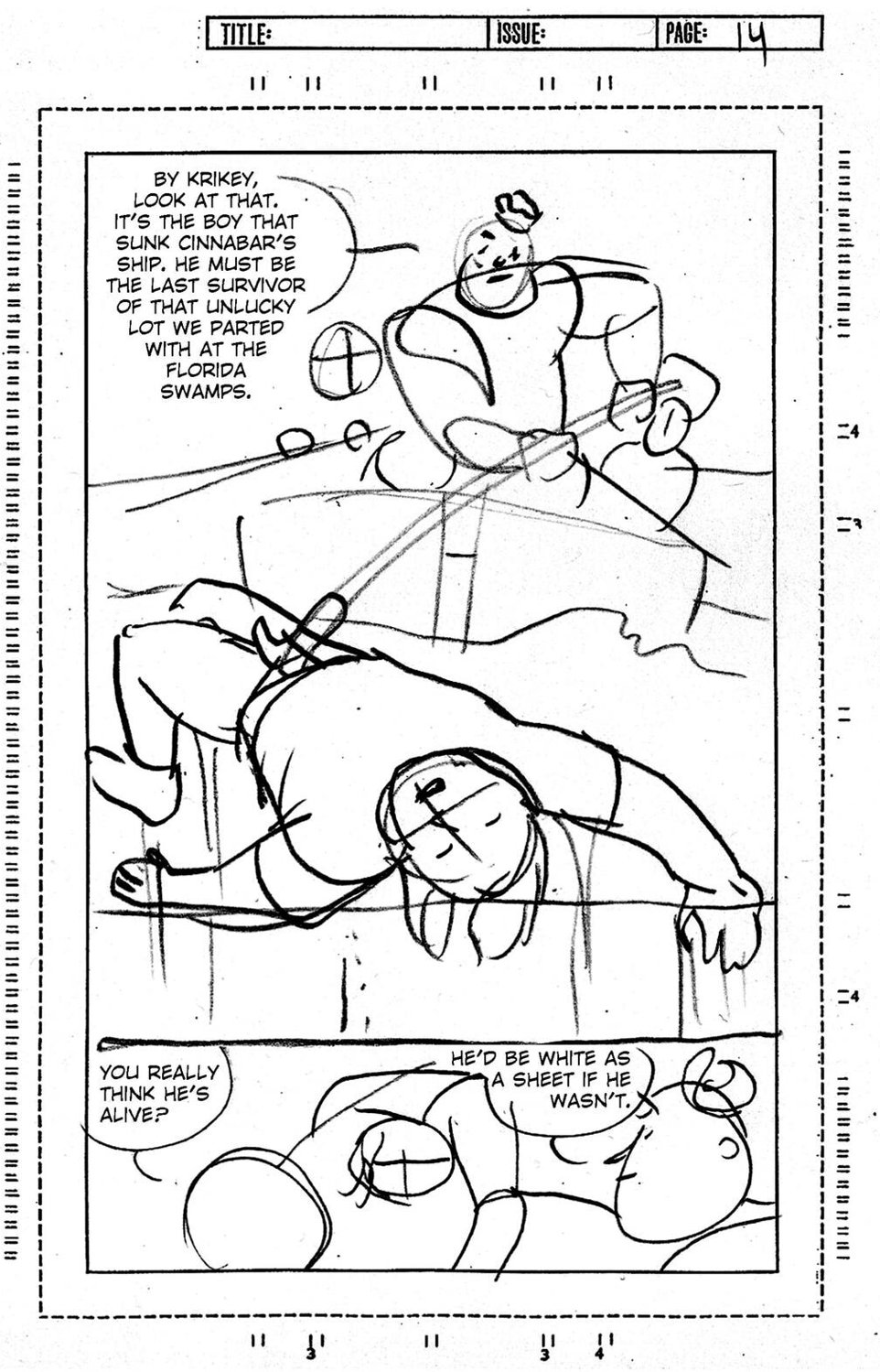
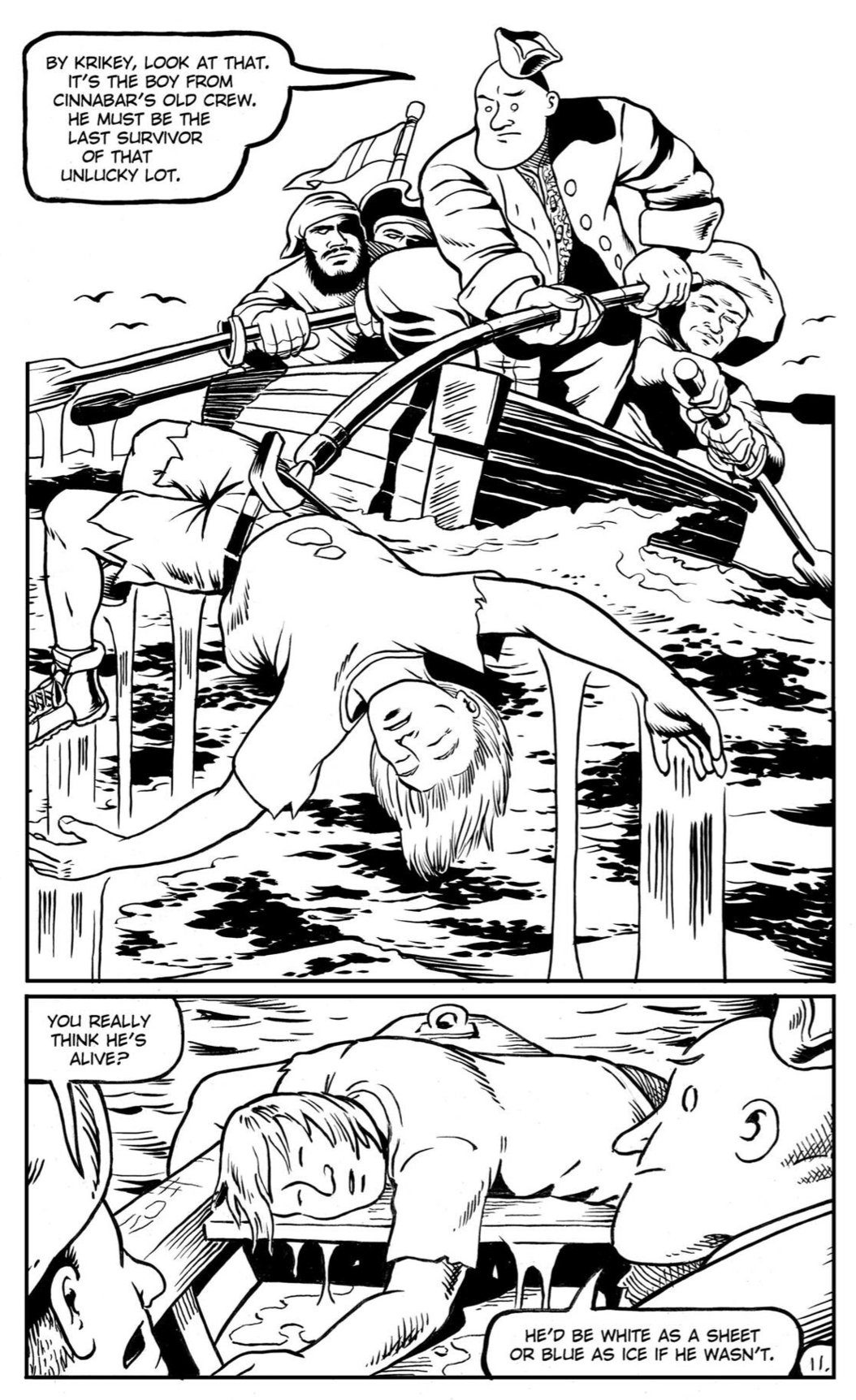
Oh, pretty darn close. I shortened it a little bit. I think what was about sixteen pages got whittled down to about twelve. I thought it was just a little bit too slow or too cinematic and I wanted it to just have a little more punch, get people right back in. But yeah, the first installment that I've already released is 95% from the stuff that I wrote and thumbnailed back in 2005. And the second installment that I'm working on now is about 50%, and then the third installment is going to be about 5%. So I’m doing a lot more writing and having a lot of fun with it. One of the obstacles when I thought I would never work on it again, when I made the statement, “I don’t know if I have the chops” was, I hadn’t done any writing with it. So I started doing daydreaming style writing, which is how I did all the original series. Which was not a ton of typing or writing, but just thinking about it. Which is risky because you can lose it, but that's how I wrote most of the original series. It’s like you’re out hiking, and you're thinking of a scene, and you’re thinking of a part of an arc and you're just saying, if this is good enough, I'll remember it. And you keep letting it float around for a few weeks and then at some point you finally write it down. It makes it more fun. It makes it feel like the muse has got you instead of it's time to sit at the typewriter or the terminal. So I've been doing it like that again and it's been working.
But for The Way Home, is it weird to collaborate with yourself from 20 years ago?
Yeah! [Laughs]
Right? [Laughs] Because how much was done then? You had complete pencils, right?
Yeah, the way I do my thumbnails, one 8 1/2 x 11 sheet of paper has these photocopy grids - ticks, the thirds of a page, and you know, it's all ticked out, but with just blank in the middle. And I do two pages on one piece of paper, all in pencil, very gesture drawing and loose, just to break it out. Like, is this a full page splash, is this half, is this a nine grid, whatever. So I still had all those. And yeah, I was finishing something from 20 years ago. I was trying to be subservient to these old thumbnails until I got to the newer stuff, pretty much. And the weirdest thing is like all the newest pages that I've done that were based on the original script, some of them almost look political. And I'm like, oh my god, this is because of how fucked up we are now with this whole polarized country. This could be interpreted as being some kind of statement about today. But it was written 20 years ago, which is probably just my own mind being infected by the world of today [laughs].
Well, that does bring up a point. You know, 20 years have gone by. And views on colonization have come a long way. Do you plan to address that in any capacity?
Without giving any spoilers to people who haven't read the original series there is an explanation for why there are no Native Americans. And that gets told mostly in the original series. And then in the new one you really see how and why that happened. And it has nothing to do with colonization, it's more to do with magic and weird stuff. It was never intended that I'm not going to show the cruel side of humanity, it was just meant to be a fantasy story that wasn't burdened with cruelness. But yeah, it definitely would be seen through a different filter now.
Do you remember what sparked Colonia to begin with? Why did you decide to do a historical fantasy series?
I started developing it in ‘97. I thought about it a lot before I even started writing it, because the first one came out in late '98, I believe. Jeff Smith's Bone was really big. And there were a lot of comics aimed at younger readers. I think that's even when the Eisners started having the category Best Series for Younger Readers. And so there was, I can't remember them all now, but there was like Akiko, Castle Waiting, Bone. It just seemed like there were a lot of comics that were a backlash to the grim and gritty period of the ‘80s.
I wanted to do that. It looked fun. And I had kind of done all the grim and gritty stuff, including Lost Laughter, which was almost like a Habitrails meets Ultra Klutz. And nobody cared about that series. I wanted to try that. Also it was an opportunity to try to do something that I hadn't thought about for years, which was the case with Ultra Klutz and Father and Son. Things from my youth and teenage years, and childhood even in some cases, and were not just like something that I had not thought of before, you know, so Colonia was able to be that. I had no predecessor ideas or characters at all. It was all new. I've always been fascinated with the age of exploration, whereas most fantasy seems to be in this quasi-medieval Lord of the Rings, or like Game of Thrones, it's all like Europe, it's like a fantasy Europe. It’s never a fantasy New World. So I thought that was enough of a spin to make it not just yet another Hobbit comic.
You made some pretty big changes. I mean, avoiding spoilers, but you know, Spain is the dominant empire in this timeline. You bring in Kelpies, which are Scottish mythology I think?
Yeah, and Haug-Boy and all these different things I would read about. Things from the British Isles. And yeah, it's kind of the idea that if there were no indigenous people and they were only fantastic animals or non-human entities that it just kind of slowed down the development. It's like, imagine if the colonists came, and their ships were actually sunk by sea monsters and all those kinds of things. Then they probably wouldn't have given up, but things would have slowed down. So by the year 1999, things technologically look like around the middle 1700s, but geopolitically it's about like the middle 1600s. And that's the world that Jack falls into, but it's actually 1999. And mild spoiler, I get to have it turn into the year 2000 in the second chapter of Way Home. Enough time has passed from his arrival in that world. And let's say it's the summer of '99, it’s going to be New Year’s Eve for the year 2000. He says, “I guess they don't have to worry about Y2K anymore.” [Laughs] I want to give him a few reasons to be happy in this place.
Colonia came about at the tail end of what I guess would be the self-publishing boom. And you were right in the middle of that. You mentioned that you made a serious commitment a couple of times to stick to a schedule, and you went bimonthly. But what happened for you when you were trying to self-publish this thing?
It was very exciting in the beginning, because I had self-published since 1981. And [there were] ups and downs and the black and white boom and bust. There had been different self-publishing booms, and then there was kind of like the gang of Dave Sim’s pals era of self-publishing.
And you were part of that as well, right?
I guess I was adjacent, but I never went and shared tables with those guys and stuff.
Sure, but that was Habitrails. I remember that time.
Yes, Sim published the first preview of Habitrails, and he either sent it to Bissette or he sent it to Alan Moore and Alan Moore sent it to Bissette. I don't remember any more of it.1 Yeah, so for sure, he’s always been a great supporter. I've talked to him on the phone a few times and I really respect the guy. But Ultra Klutz tapered off and it never lost money because I had saved a lot of the boom time money. That just offset the dwindling sales. And then when it finally got to a breakeven at about a thousand copies is when I stopped. Then Lost Laughter sold even less, but it did that on a Xeric grant, so that was kind of funded with Turtle money.2 I've been published by others like Kitchen Sink, so I got a page rate, you know, that kept me going. But then Colonia I was ready to go back to self-publishing and it actually did well. I think the first issue sold about 3,000 which was great. I mean, good enough.
In this day and age, those are good numbers.
It sold well, it got good reviews. Good press, got a few Eisner nominations. And so I left the day job again to try to get it going bi-monthly or with a fairly regular schedule. It did well enough that I did a second printing of the first issue, which is the only time I've ever done a reprint of a floppy comic. I’ve done collections of course, but I did like a 1,000 copy second printing of the first issue when the fifth issue was released. And then all the sales just kind of fell again. It's just been the pattern my whole career. Something can stir up some excitement, but then there's always just the next new thing. Only so much room on the shelves with the retailer. And I’ve always thought, if something doesn’t take off - you know, like Jeff Smith's Bone was a sleeper at first. But if something doesn't take off by say, the eighth issue, it’s just not going to. You can probably find an exception to that. But so I thought, oh, it's up to five, but sales are slipping. I'll keep going up to the eighth issue. And I'm just like this is the last one I'll ever do, so I'm gonna do three of those bimonthly issues of a mini-arc of issues 9, 10, and 11. And I threw a bunch of money into it. Because I had money from my day job at that point. And I did like a full page ad in Comics Buyer’s Guide, a full page ad in the Diamond Distributor catalog. I think I did a full page in The Comics Journal.3 And back then that was probably between those three, like $3000 worth of advertising budget, which was unheard of, but I thought this is it, I’m going down with the ship. And the sales just whittled down to a thousand again. So the final issue number 11 sold, I think it sold 1,100, which is the break even.
The way I look at it, there's three reasons you can keep going. I mean, you can always draw because you love it, but if you’re deciding to publish and you're wanting to be seen, you either do it for the money, you do it for the notoriety, or you do it for the fan interaction. And if you have all three, you're golden, right? But if you don’t have enough money, if you're breaking even and you just do it in tandem with the day job, if you get the notoriety, that can keep you going. Get Eisner nominations, get interviewed at The Comics Journal, get all that cool stuff, that can be inspiring. Or, if your fans are writing a lot of letters and like, “Oh, what is, whoa, what is going on here? What are you doing with this? What's going to happen?” And all three of those things went away. People just stopped writing. I stopped getting press from like the seventh to the eleventh issue. All three of those things went away. That's the heartbreaking part. It’s just like, how can I muster up to draw something that’s supposed to look like I love it, when I’m not getting any of those things in return. So it's not just, “Oh, I want money.” I want some kind of return on all the love. What’s different now is I don't expect to get any or all of those three things. But now it’s all about legacy. Now it’s like, “Well, there’s only so much time left, I’m just going to draw this for me.” Hopefully people will enjoy it, but when I did all those eight issues of Ultra Klutz, now I look and it’s like, "Oh, now I've done this many comics instead of this many." When I first retired from comics I think I had done 1400 pages of comics. Now it's over 1500. Maybe it will be 1600 when the new Colonia is done. And even if nobody buys it, now I have that and that's never going to go away. So that's the new motivator for the senior citizen comic artist [laughs].
So you're dropping issues on Amazon now.
It's so easy. It's like a YouTube video. You just make it. Once you learn all the formatting, you got it on there in a day.
What's the turnaround time from your screen to download?
It's a day or two. It used to be a lot longer because it used to be ComiXology, and then Amazon bought out ComiXology and you had to reformat everything. And there must have been a backlog. But man, it was taking several weeks for them to approve and publish something that you put into the hopper. But I think [now] it's all just robotic and within a day it's done.
Do you have any set schedule for the remainder of Colonia?
No, just what feels right. The first installment, it's a little shorter than a full-length comic. It’s 16 pages instead of 24, because I just thought where the story stops it's a good chunk. When that Colonia video on Strange Brain Parts came out was when I started, and it took two months to do the first release. So the first one dropped early October, the next one will probably drop early December.4 So maybe it’s looking like bimonthly for these semi-short issues. I don’t worry about doing a color cover, or any soliciting. I didn't even announce it until the first one was out, so when I first sent out some news on it, I could just say, “And here's the link!” Instead of, “Trust me, I will do this.” [Laughs] I wouldn't expect people to believe it.
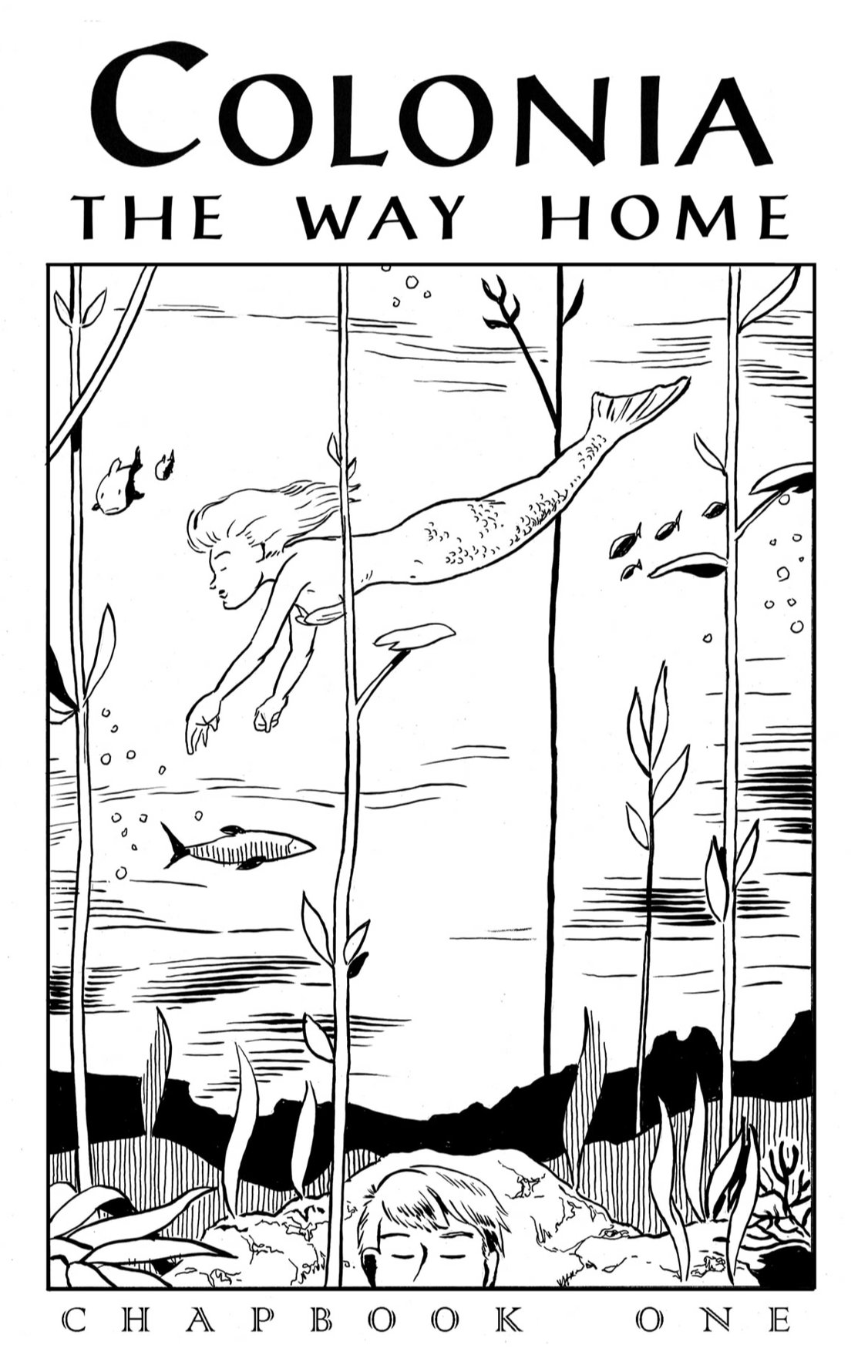
What's the response been like?
In this day and age, you get a lot of likes and a few sales. But that’s okay. You get a lot of encouragement, but you can tell there's more encouragement than actual paying customers. I think that's the nature of, unfortunately, digital comics. It's really hard to get someone, even though it’s only three bucks, it's less than an overpriced cup of coffee. If someone isn't a digital comics hound it's hard to get someone to go make a move and buy something in a different format. But on the bright side it doesn't go away. They will sit there, and the few sales will trickle in. It's not like having stock in your closet that you're hoping to sell and then you'll sell out and then you'll need another print run. It's just going to forever be there as an offering.
Are you thinking of doing a print on demand run at some point?
Eventually, yeah, when it's done. And I don't know how many pages that will be. I also do print on demand on IndyPlanet. That's also easy enough to collect it all up, whether it’s 60 or 100 pages or whatever it is and do that, but maybe some publisher will be interested in it. I would be open to that, but I have no idea.
How plotted out is the rest of Colonia? Do you know how many pages, or how many issues you’ll do?
No, I don't know how many pages or how many issues, but I do know the ending, which was always kind of vague to me, even back in the day. Now I know the ending, and it's not the same ending that I was gonna do. So I know what I'm moving towards, and I know the chunks to get there. It might not even be as long as I thought. It might not be as long as the first two books. The AIT collections were, one was five and one was six issues. So they might be about that long or it might be less. I doubt it would be more. Just as long as it remains fun.
Do you have other comics stories you want to tell? So far you’ve been retracing a lot of things from the past. In the case of Colonia, literally tracing. Now that you're back doing comics again, are there new ideas coming up?
No, the only thing I have done other than the ones we mentioned, the epilogue stuff and revisiting older stuff was doing a little series called Here’s What I Remember. And it's not comics per se, I look at it as a wonky children's book for old people [laughs]. It's words and pictures, but it’s not comics. It's like a children's book. And I've made videos of them. With this like twinkily, warped music in the background. Kind of like, don't know, like Deep Thoughts with Jack Handy, but they're all actual memories from childhood. It was a way to do something autobiographical from childhood that isn't too much information. Just little anecdotes from childhood.
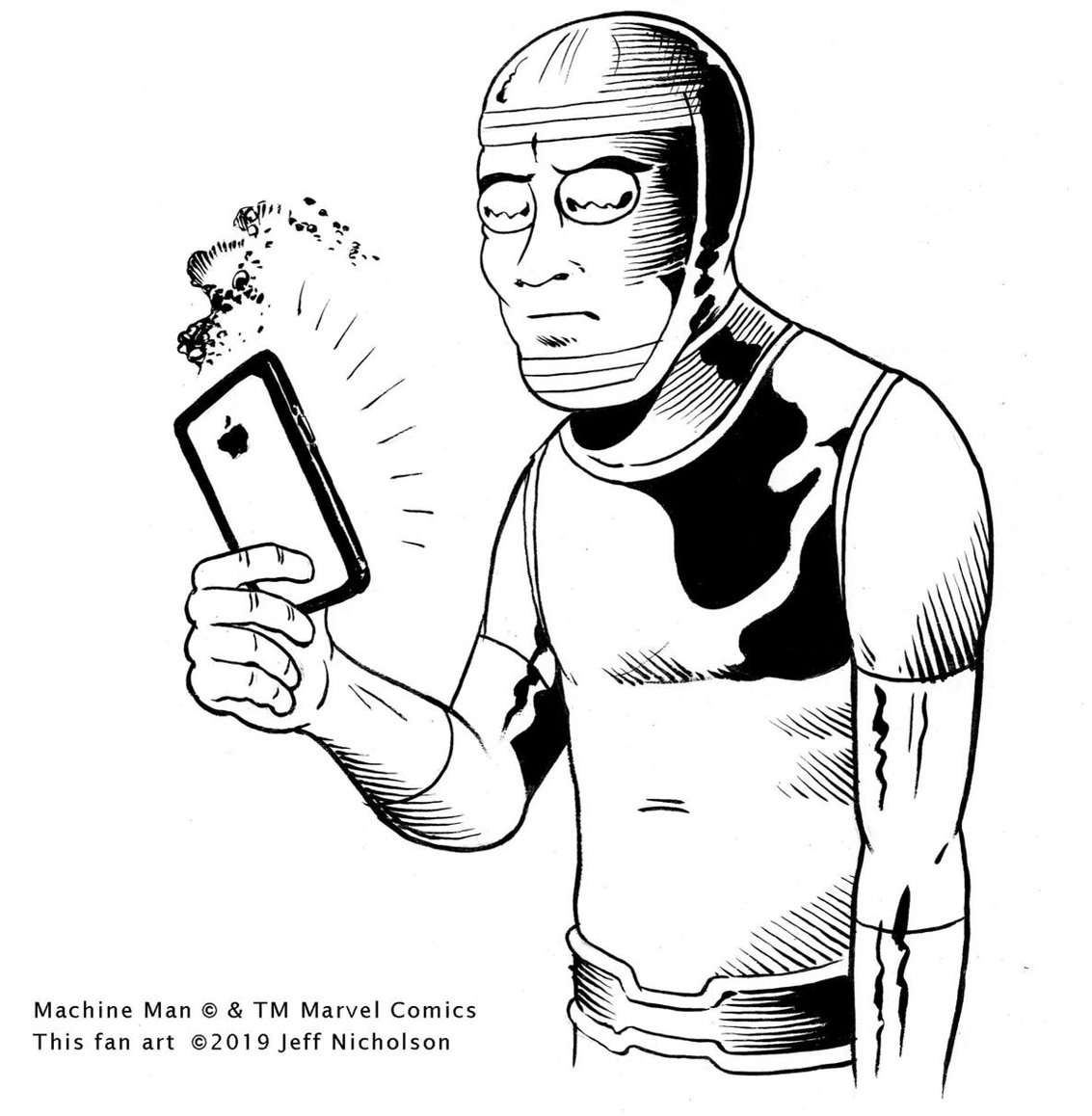
Well, I noticed you did put in one of the issues of Ultra Klutz, you pitched Marvel on a Machine Man series.
Yeah [laughs].
So you’re clearly thinking about other stuff!
I definitely would have done that if they had nibbled on it. I can't think of anything else though. I did an issue for The Dreaming, and that kind of turned me off from wanting to do things for DC. But I had never done anything for Marvel, so I probably would have given that a try. And I also did a little bit for Paradox Press, technically DC.
But that urge to do other comics? You don’t have that anymore?
I don’t see myself doing anything after Colonia is done. But you never know.
The post “Now it’s all about legacy” – Reconnecting with Jeff Nicholson after his two decades away from comics appeared first on The Comics Journal.


 Hello, my name is Jack Sparrow. I'm a 50 year old self-employed Pirate from the Caribbean.
No comments:
Post a Comment