

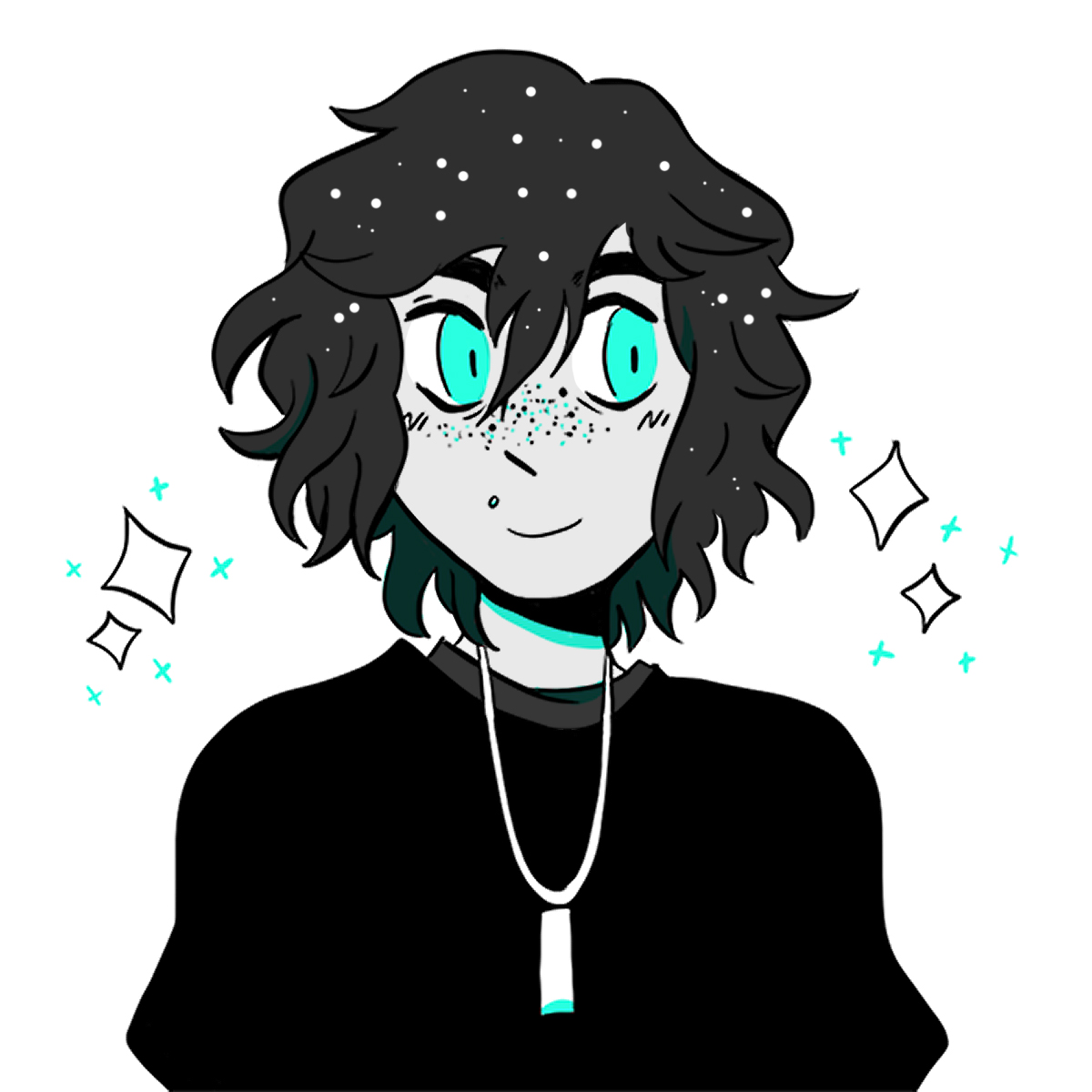
TCJ first talked to Iasmin Omar Ata in 2017, after the publication of their first graphic novel Mi(s)hadra, a book inspired by their own experiences dealing with epilepsy during their college years.
Almost a decade later, we check back in with Ata, who has in the interim published two new graphic novel novels — Nayra and the Djinn and Wallflower — drawn short comics for The Nib, created a video game, embarked on sound design, and discovered all things Sonic the Hedgehog.
Ata’s gorgeously illustrated, fascinatingly colored graphic novels swirl around the subjects of belonging, health — both physical and mental — and interior awareness vs. external perception of the world. You’ve got some thoughtful, complicated reads ahead of you (starting with this interview).
GINA GAGLIANO: Okay, so you've been publishing comics for about a decade now. Can you talk about what's changed since you published your first book?
IASMIN OMAR ATA: So, that is really wild to think about. I didn't realize it was a decade until I started thinking about it, and I was like, what?
Ten years, it's so long!
It does not feel real at all. I guess the pandemic sort of distorts your sense of time, right? About how much time has passed, but sometimes I still feel like, even though this is my third book coming out now, it still feels like I'm at my kitchen table in my tiny apartment in Brooklyn, drawing. Sometimes it still feels that way, which is a good thing in some sense.
What's changed since then? I brought up the pandemic, and that's a huge thing: that has changed a lot of things. I would say, in more recent times, it definitely is easier for people to get their stories out there. It's very easy to just make your thing and pop it online and get a lot more visibility than when I was making Mis(h)adra and posting it online and such. It was pretty difficult to get eyes on work — social media is not the same as it is now. So that's really cool. I'm always really for people getting their work out there and getting to be seen and share their stories, so that part is very positive. The downside to that is that making comics, particularly online in 2026 — because a lot of it is very online — is that we sort of have entered this algorithmic culture where things sort of have gotten flattened out, where things are made to be picked up by social media algorithms. So people tend to just gravitate towards making what's going to be seen, and that's tough.
I want people to be seen, but at the same time, I feel sad sometimes when you can tell that something has been flattened out just for the algorithm.That affects how publishers see your work, that affects how you get seen, how you get picked up for books, and how it leads into publishing, right? So that's something that I feel not-so-good about. But ultimately, I just want people to be able to tell their stories, and to get them to an audience, and get them out there. So I think that hopefully people can feel free at some point to tell their story without having to worry about the algorithm.
Oh, I think we all want that — people being able to share their voice and their stories in the way that they want.
Yeah, definitely. I'm grateful to be with a publisher who is very much about that for me right now, being able to tell stories with and about Muslim characters, and we know with my new graphic novel Wallflower, there's some pretty heavy themes in this book that come from a personal place. So those are things that I'm grateful to be able to do with my publisher, and I really hope that for everybody, they can have something like that with publishing.
You mentioned Wallflower. Can you talk a little about what the book's about, and what inspired you to create it?
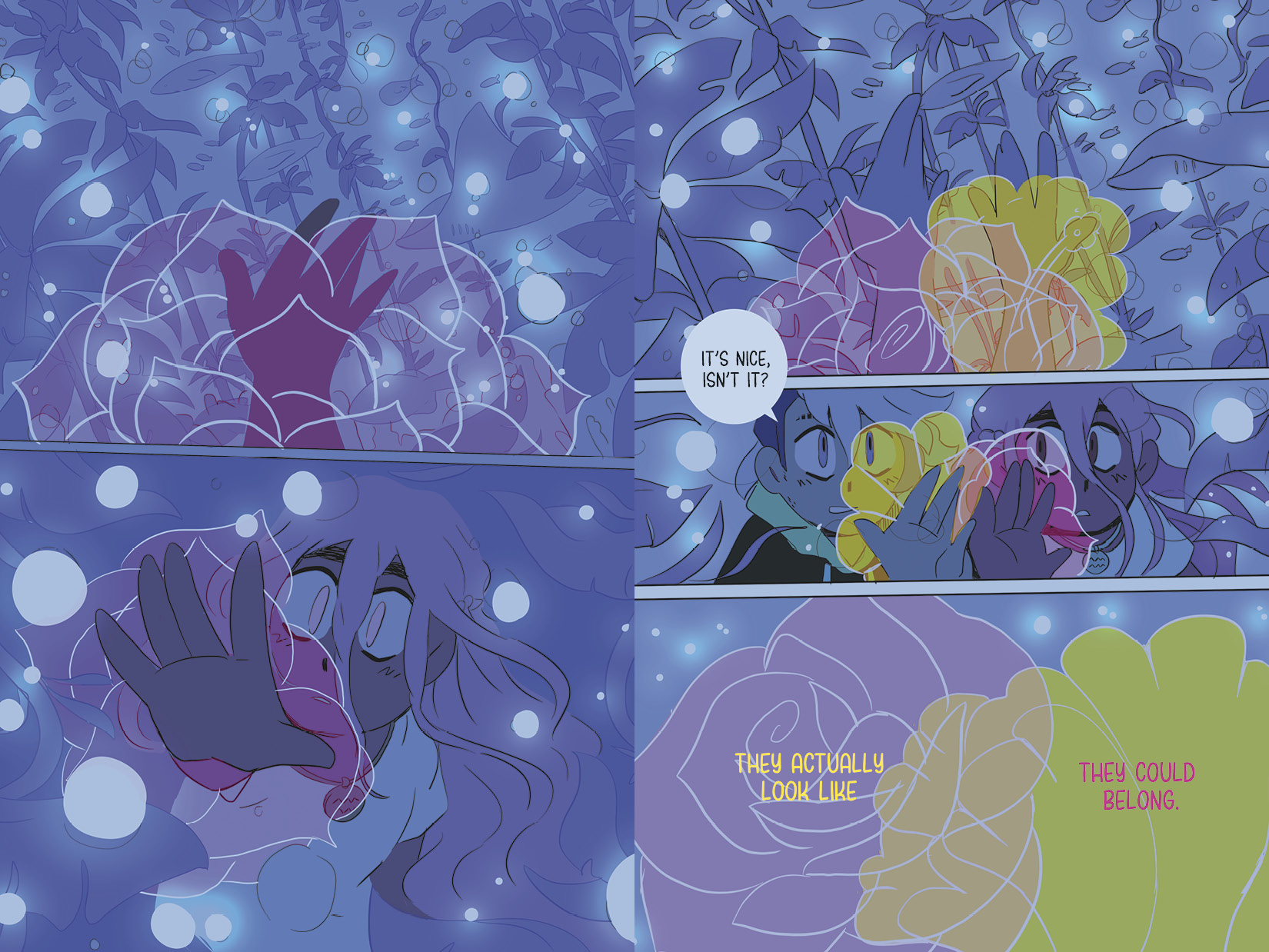
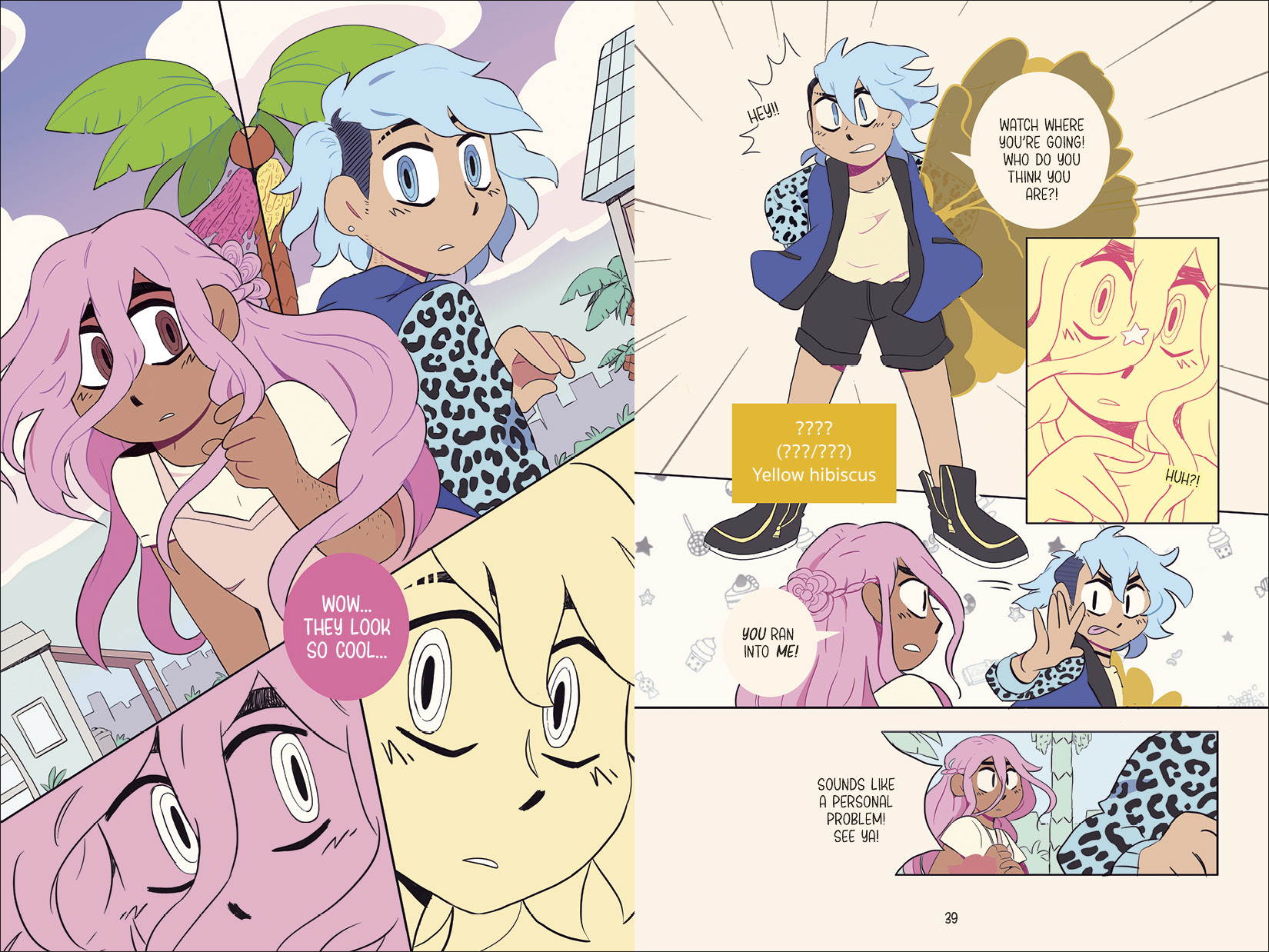
The book is about a girl named Marlena who has the ability to have these visions of flowers and plants growing on other people. She's struggled with it all of her life, she's told people about it and people do not believe her. So she's sort of shut down mentally and emotionally and hasn't connected with people because she feels like it's pointless. However, one day, she meets a transfer student named Ash, who also can see the flowers. However, Ash has absolutely no interest in opening up to her or telling her why they can see them. So it's sort of this back-and-forth between them trying to open up, getting too close, and eventually them coming together about why they're seeing these things.
For me, it comes from a very personal space, in the sense of not being believed about certain things that are going on in your brain, and trying to tell people about certain things that are really important, and that are affecting you, and not being heard. As you get further into the book, I won't spoil things, but there are times where you see Marlena's parents, family, and school staff being told or being shown these things and not believing what Marlena or Ash is saying. That comes from a very personal place of having this thing that needs to be recognized by people around you, and you are desperate for help, and nobody is helping. Either because they don't want to, or sometimes people just don't understand. Sometimes it's not malicious, but ... that's kind of how it is. It comes from a place of trauma and neurodivergence, right? There are things going on in your brain that you just desperately want to tell people about and want to be seen and want to be understood, and there are difficulties that come with that. It has gotten better in recent years, right? There's improvement in that area, but it still has a ways to go.
It seems like that could be a metaphor about chronic illness, about racism, about neurodivergence, possibly all of those things.
Part of my experience with my first graphic novel Mis(h)adra was people coming up to me at panels and shows, and telling me, "Hey, I don't have seizures, I have migraines," or "I have some other chronic condition, and I can still relate to this, even though it's not the exact same thing." And I think that's what can make comics really powerful, especially when you're using visual language. My hope is that if somebody is experiencing something that isn't really the same, or even really in the same category as what the characters are going through, that they can still take something away from this book.
I wanted to talk about catastrophe a little, because that's a central element of this book, and something I feel like is very applicable to our time today. Everything feels like catastrophes lately, and I'm curious about why you wanted to include that in the story.
Yes, like you said, this is definitely something that is going on all the time, daily, right? At this point it comes back to something that I've always been sort of fascinated with. It's something that I've experienced in my own life, and something that I like to write about, which is the catastrophe of the self.
Right, when some kind of catastrophe, something big, happens in your life or happens around you, and you can experience a catastrophe of the self, where you feel like there's some sort of destruction or confusion of yourself, and you have to put yourself back together. Those events happen to everybody and happen around people constantly, always. Everyone experiences it at least once in their life, whether they realize it or not. I really am interested in exploring this catastrophe of the self, and exploring what it means to recover or to renew from that catastrophe, whatever it may be.
Another central element of this book is parents being complicated, and that definitely plays out for your main character, Marlena. Can you talk about writing that child-parent relationship?
I haven't really gone into detail, but I also have not really kept it a secret that I had a very difficult and complicated upbringing. A lot of that has to do with family. In a sense, writing this book was sort of me unpacking and compartmentalizing that time and those feelings and those things that happened, and exploring the fact that sometimes these things that happen that are hurtful You know how people are ... how somebody's crying out for help, or needs something, and is trying to make that known, but people are not listening or helping. As I mentioned before, sometimes people don't want to, but sometimes they just don't understand, right? Or they can't understand for their own personal reason.
I tend to gravitate to writing family dynamics that aren't necessarily positive, and I think that there's a very easy reason to tease out from that. But at the same time, for this book, I wanted to explore a bit more nuanced take on family, and explore a bit more nuanced take on these dynamics, and why they emerge. Sometimes it's just not malicious, but people just can't understand each other for various reasons, so I definitely wanted to explore that in the book. I also wanted to show that somehow, healing can be possible.
I also want to ask about this book about plants, which are the whole other end of the spectrum of conversation from kids and parents' complicated relationships. But they're obviously a central element to the story. You draw so, so many cool, interesting, and different plants. Can you talk about why you were like, ‘Okay, plants, a thing that I want to learn about and make a lot of art about?’
It is funny because before I started the book, plants were a little bit out of my comfort zone as far as specifics of flowers and foliage. It was very interesting to explore that and get to know that as a visual language. For plants in particular, when it comes to the self and your mind and your brain, plants are very much, like, they grow based on their environment, right? And based on what gets fed to them, what gets brought to them by their environment, you know if somebody's taking care of them, whatever they're receiving comes from that care. So I find that is a very interesting metaphor, and a very interesting space to explore how our minds work the same way, or a very similar way.
Do you have a number of plants in your house?
I actually don't, which might surprise people. I do have synthetic plants, just because I would have a hard time remembering to take care of them, and I travel, so I definitely don't want to do that to a plant and other living beings if I can't take care of them, right? So I do not have a lot of plants in my house.
After doing this whole story full of flowers, do you have a favorite flower? Either one that you like in nature, or one that you like to draw?
It's really tough, right? As I was writing this book, I got to know a lot of flowers, and I really like a lot of them, but I would say that my favorite would have to be plumeria. It has been for a long time, and even though I got to be sort of in conversation with different plants because of the book, I still have to go back to the plumeria. It has always been my favorite, and it always will be.
Why?
It depends on who you ask, right? Because flower language varies, but in general, plumeria tend to represent hope. Hope and positivity for people, and that's something that, no matter what happens for me, through any sort of catastrophe in my life, I try to uphold hope and positivity for myself, for people, and for a better future.

I want to go back to your first book, Mis(h)adra, which you've mentioned a few times. Can you talk about what inspired you to create that? I hear that it's based on your own experiences with epilepsy.
Yes, it is. So it is a sort of slice of life, with the main character, Isaac, who is in college and struggling to manage his epilepsy in school and work and his relationships. And that is very much drawing inspiration from the difficulties that I had with epilepsy in all areas of my life. It's a story about Isaac dealing with these things in his daily life, finding a new relationship in his friend Joe, and they navigate these things together, and where he finally ends up, mentally and emotionally, with his condition. That is based on the things that I was going through around that time with my condition of epilepsy, and the things that I was dealing with and struggling through.
What was the thing that made you decide, "I want to share this with everyone, I want to write and draw a whole graphic novel about this?"
I just needed to get it out at a certain point. I was having a lot of difficulty and confusion with the whole thing, and I felt like I needed to draw it. That was the only way that I could really get it out of my own brain and really see it somewhere in a way that would help me understand what's going on in my own brain, in my own space. It actually started as a webcomic that I started posting at the end of 2013, which is a million years ago now. I started posting it online because I had made it as my final project for school, my senior project, which is funny because I almost failed out of my senior year because of epilepsy.
But I had a very understanding professor who allowed me to make the first twenty to forty pages of Mis(h)adra. And then I just felt like I had so much more to say. I just wanted to keep making this story, so I did. And so I posted it online for about two years. Then, eventually, I got in touch with an agent, and she helped me find a publisher who put it all together into one book. I'm really glad that helped reach people, because it was something that I just felt like I just needed to get out there. It didn't matter if I had permission from somebody or not, I just needed to have that release.
The book is also about college not having a great support system for students having trouble, which it sounds like you were dealing with as well.
I almost failed out of school because I was having seizures, or I was having issues surrounding the seizures. I had things I had to do with my health, I had doctor's appointments, I had side effects from my medication, so it was very difficult for me to make it through school. And it just felt like there was no help to be found. There was not really a good support system at the time, in my opinion. It was very difficult. I felt like there was really nowhere for me to go to ask for help, or for people to really understand. I did have a couple professors who I'll always be grateful to, who were understanding, and who would give me more time, or at least a little bit of grace. So, things have changed since then, but at the time, I was having a lot of difficulty in finding the support.
I'm so sorry you had to deal with that.
I'm far from the only one, and I hope things are getting better. But I think we have a long way to go in terms of supporting chronically ill and disabled students, and I just hope that we can get to a point where everybody feels supported in their place of education.
Since you wrote this book, the category of graphic medicine has really taken off. There's a whole international graphic medicine organization, there's an annual conference dedicated to graphic medicine, comics, and health. I'd love to hear about how you think your graphic novels intersect with graphic medicine, and what you think of this movement.
I mean, I think it's fantastic, honestly.
I think that it's so great that the genre has taken off so much over recent years, because it is really important. One of the things that I've always really liked about comics even dating back to Mis(h)adra, but continuing on since then, is how accessible comics can be. And how easy it is to just make a comic, and not have to worry about a lot of things. People can make a comic in whatever way they want. They can make a zine in whatever way they want. When it comes to accessibility, there are a lot of tools now that are very helpful. Essentially, if you can manipulate some kind of tool, or have somebody help you manipulate some kind of tool, you can make a comic. And I think that's a really great thing.
There are so many voices that need to be heard in this area, and it makes me really happy to see that it's evolving and growing and gaining speed, and that it can be something that more people can see, that more people can be inspired by to write their own stories of graphic medicine. I think that the visual aspect of it helps a lot, especially for me. That was something that really I really gravitated towards with comics, in terms of helping me through conditions, because the visual aspect really helped me tell parts of it that I couldn't really explain in words. Part of that was because of side effects of my medication; I just had a difficult time explaining things in words. That was really helpful for me, and I can see it being helpful for other people who are in a similar position as well. I think that movement is fantastic.
I want to talk about Narya and the Djinn also, because I thought it was so great. So: big theme, toxic friendship. So why did you want to write about that subject?
It is a bit different from the things that I had written before, so it was interesting to get into the zone where I wrote it. This led to me exploring more things in relationships with Wallflower. But toxic friendship between the characters in different ways, it's a matter of miscommunication. In this relationship, neither character is necessarily trying to hurt the other, neither one is trying to be toxic or malicious. It's just a miscommunication of needs, and not being able to see eye to eye in some way. So the book, in a sense, is about overcoming that and about healing.
You may see there's a theme of healing in my work across the board, but toxic friendship was just getting to understand that dynamic and getting to understand that nuanced area of how sometimes people are just really not trying to hurt people in these toxic elements, these toxic relationships. It just unfortunately happens sometimes. I can't really say that there was one particular relationship that drew me to that, but there were experiences in my life that I really sat with and thought about that led to me writing that in this book.
One of the other elements of this book is magic. There's a djinn and a lot of magical spaces, which are all gorgeous. Can you talk about how you think about drawing magical characters and magical things happening versus drawing reality? Because you have these books that are very rooted in reality and the real world, and then magical elements intersect with them.
I guess I would say I like different spaces, non-real or non-reality spaces.
Mis(h)adra and some of my work now is mostly slice of life, but with these surreal elements and with these different alternative spaces in them. But I also do write fantasy and adventure and sci-fi, so it was fun to be able to bring that into this story in a way that I think a lot of readers had not seen from me before. So in a sense, the way that I thought about it is really just fun. It was definitely fun to be able to draw and explore those spaces in a way that was a bit lighthearted and not as emotionally intense for me. That was a part of it that I did enjoy.
When you're drawing all this magic, you're incorporating a number of folklore-based elements, like the djinn. Can you talk about including those and what inspires you there?
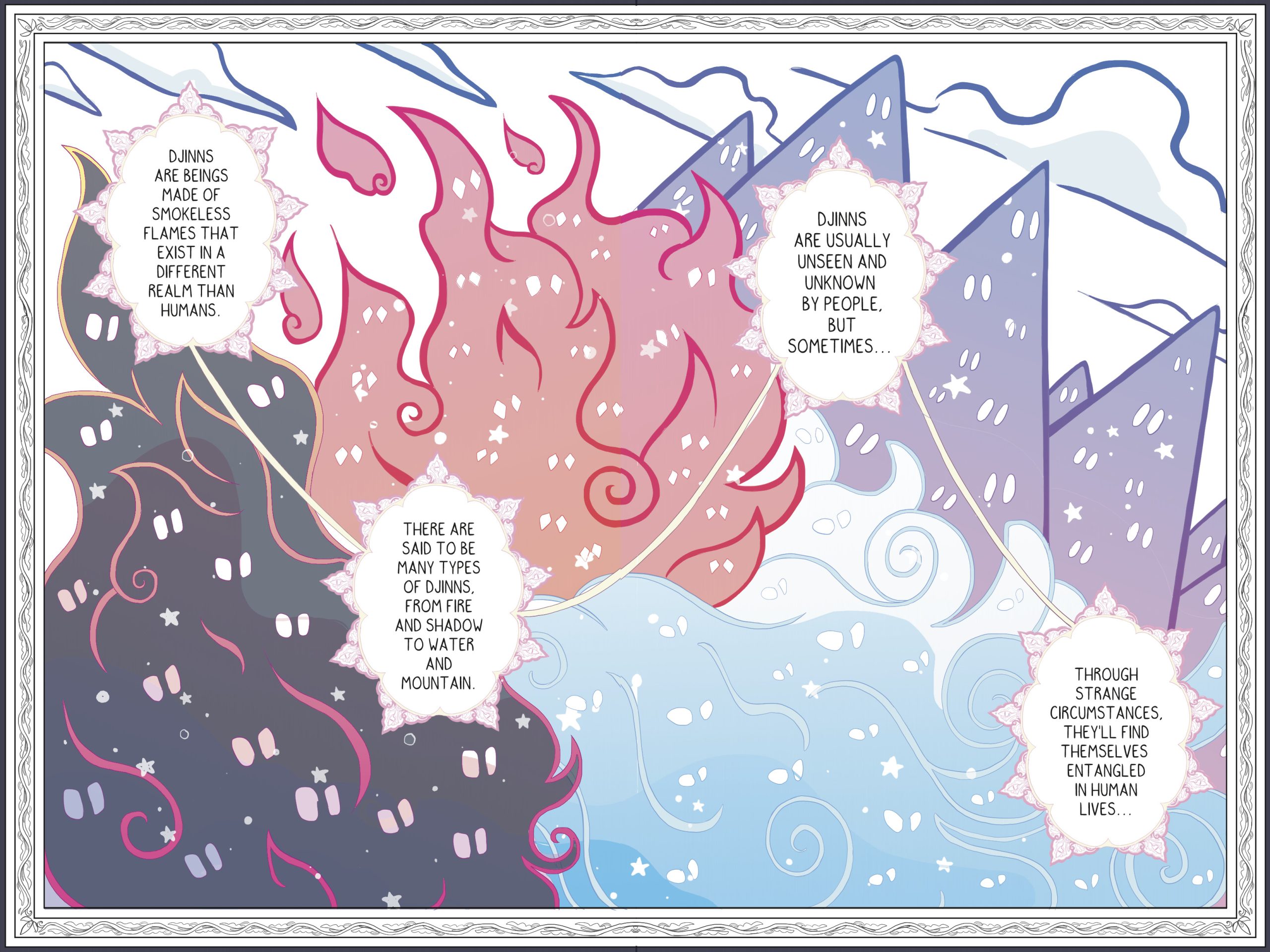
So, the story is about djinn. I definitely went into some parts of folklore, and parts of djinn that were either obscure or that a lot of people didn't know, or facts and theories that generally are just a bit out there. Part of what was inspiring for me was researching and learning these other things about djinns that aren't really well known, and exploring parts of it.
You know that you have djinns that are non-gendered, right? That upset some people when it came out, but who cares? So, those parts I thought were really fun, and I really enjoyed getting to know these non-human characters, and going into a lot of this pre-existing folklore, and seeing these stories that were already written, or parts of stories that were already written, and getting to be in conversation with those.
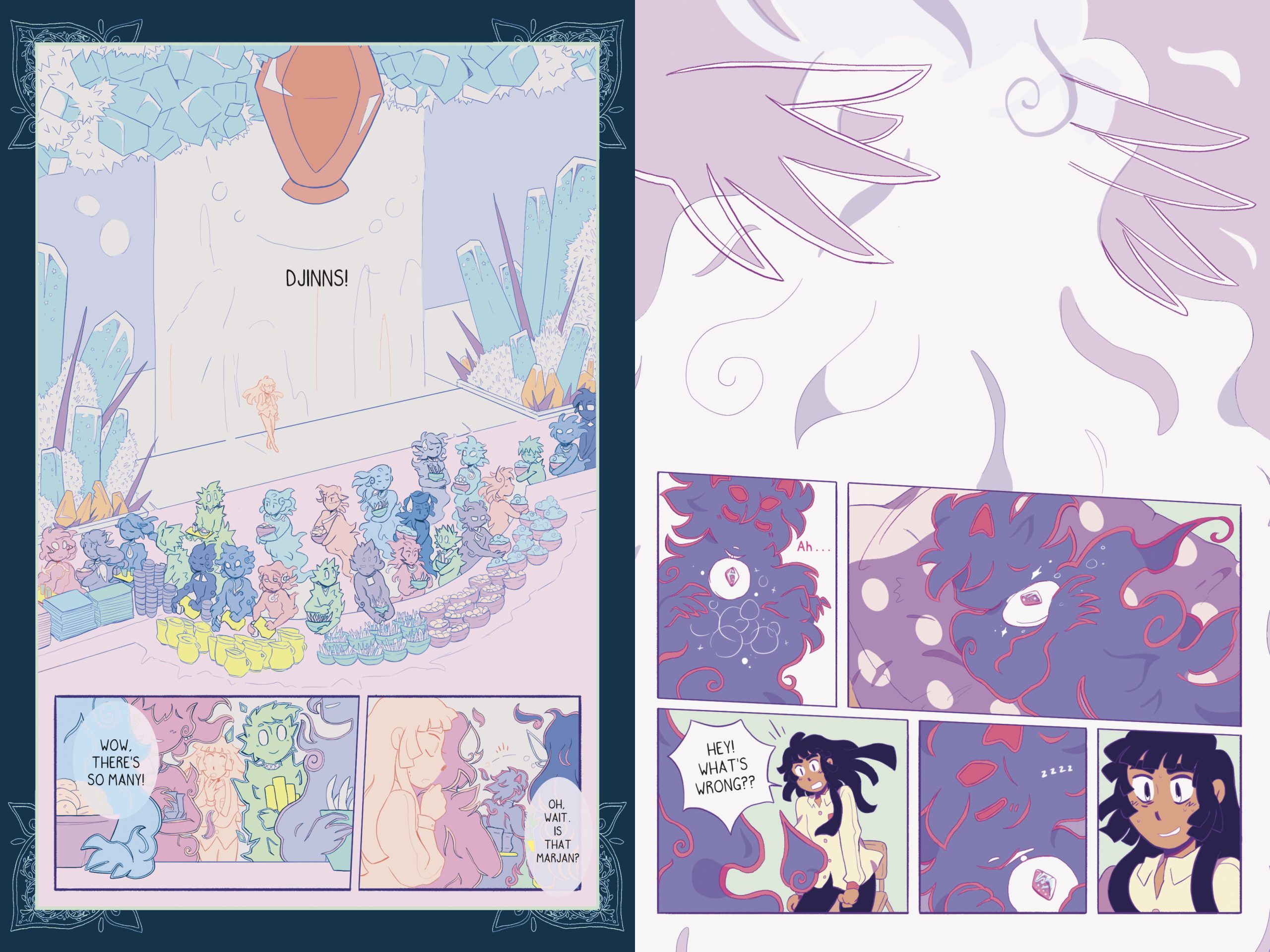
I also love how you're writing multiple Muslim characters in this book. Can you talk about that element of the story?
I'm Muslim, I like to write Muslim characters, and I like to write characters that are Muslims who are practicing in different ways, or who are from different backgrounds. So, I just really enjoyed writing multiple Muslim characters. A lot of times when you're writing a story that is on a larger platform, you can have [only] one Muslim character or you can have, like, two. There's some kind of limit on what you can do. My publisher was very encouraging, and just let me write these Muslim characters without needing to limit myself to a certain number, or limit myself to how I depict different practices or different levels of Islam.
There are a lot of stories with BIPOC characters where they're in a sea of straight, white, Christian people. I love how you're bringing in the different Muslim practices.
I was happy to be able to just depict that and depict these characters how I wanted to without having to limit them in one particular way because somebody else said so.
Can you talk a little about your character design? I feel like so many of your characters have extremely cool hair.
I like drawing hair. I like dyeing my hair. I wish I could give you a really cool and in-depth answer, but really, I just like drawing hair, I think it's fun, I think it's very kinetic. It gives a lot of motion to characters, no matter what kind of character or what kind of hair they have, whatever they do have, you can find some way to make it kinetic and dynamic to them.
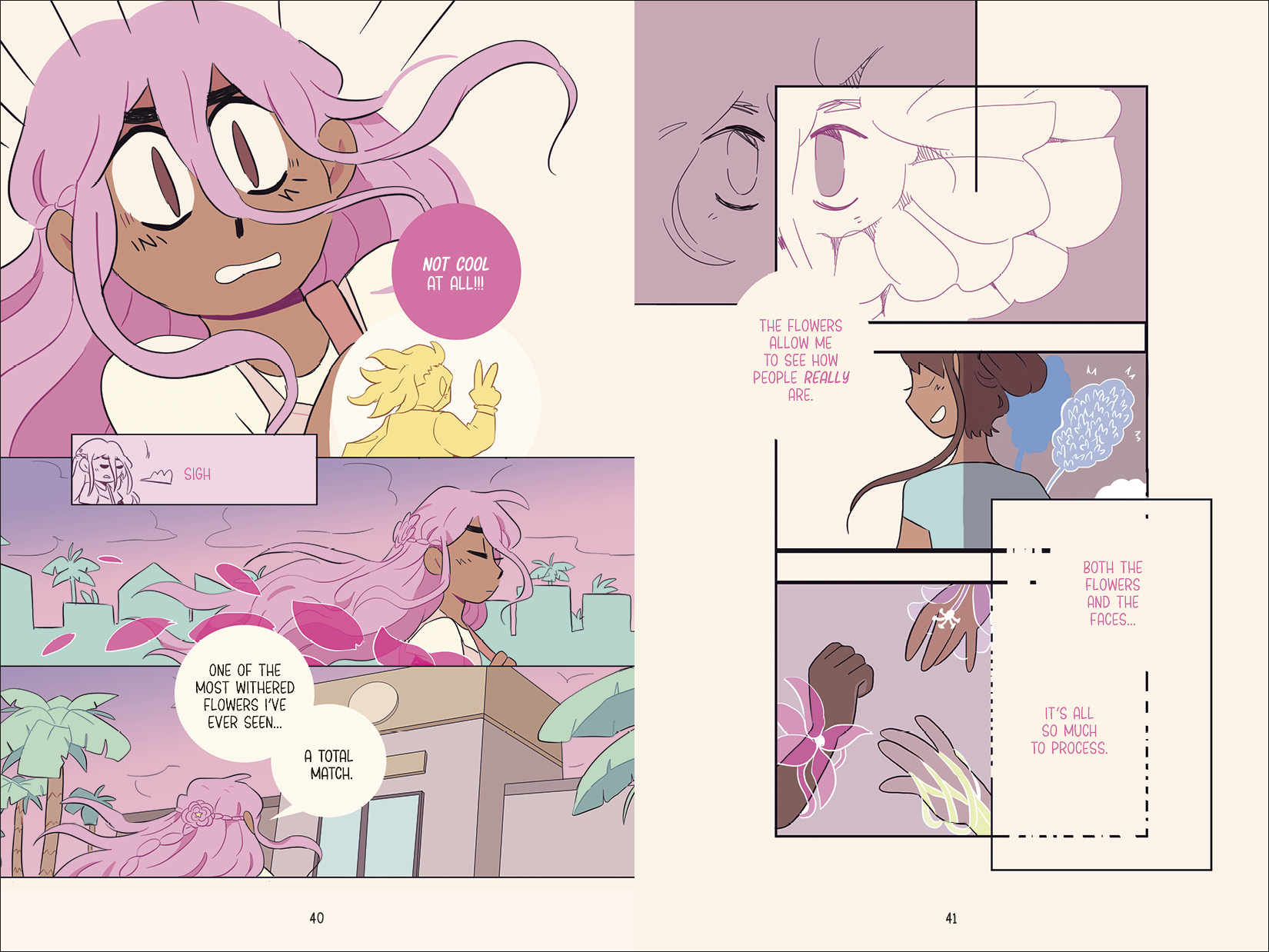
I feel like you have lots of swoopy and flowing sorts of hair things going on.
It's fun, and it is interesting to see how each character varies with their hair, and how you can make that work for them, and have it affect their action and their emotions.
Not fitting in is a theme that you frequently write about in your books. Can you talk about what draws you to that subject?
Because of my experiences and because of my intersection of identity, there have been a lot of times where I feel like I don't fit in, or I'm the only one of a particular part of my identity in the room. That was actually part of what inspired me to make Mis(h)adra at school, because I just felt like I was supposed to fit into this particular way of drawing and writing that didn't really reflect me and my identity and my experiences.
So I definitely tend to gravitate towards characters who are also dealing with that in their lives for various reasons. It may not have to be the same reason why it was happening in my life, but I definitely have characters who are in that position, because I've been in that position many times where you're in a room, and because of your identity, because of who you are, you just feel like, ‘I just don't belong here, and I wish that I could.’
I want to also talk about your coloring. Can you talk about how you think about color?
I am gonna be so real with you. I went to art school. I never took a color theory class. I am not formally trained in colors and values and color theory. It's very much vibes-based. It really just comes from the heart of what I feel the colors should be. When I was in school, I didn't take any of those classes, but I used to be terrified of colors. I used to not use any colors in anything at all, basically only doing black and white because I was scared of them.
Then, when I was in school, I took a silk-screening class. And I was horrible at self-screening. I was so bad. After multiple semesters, I still could barely make something that wasn't a mess, or that was aligned correctly. I was so awful at it. But that experience, using all those different inks and looking at all those different colors, particularly Rocket Red, which is just this extremely bright shade of red-pink, I took that away from those classes. That completely changed my brain. I don't know what it was about it, maybe just being really bad at something is what changed my brain, but I was finding something new from that.
So after that, I just was really, really into color. I don't have any necessarily formal training in what makes a page have good color, or an illustration have good color, I just know that it just comes from the heart and how I feel, so that's part of why I enjoy using non-literal color. Sometimes when people ask me about how I color this and more technical questions about coloring, a lot of times I just say, just say, "Color it how you think it should look, as opposed to what would be real." And that's when things can start to come from your heart. So not always the best advice, but it's the advice that I give. Hopefully it does help with somebody who is looking to expand upon their color work.
Looking at your work, I can see lots of visual influence from manga and animation. Can you talk about your inspirations, potentially including Sonic the Hedgehog, who I see you've also been drawing recently?
Yeah, so, Sonic is a relatively new influence for me. I'm working on the series now, I'm working on the comics. It is really fun, and I really enjoy it. I didn't really get into Sonic until I was like, thirty, which is not usual for people. But one of the things that really drew me to Sonic was how happy people would be when they would see Sonic art. When someone draws a good, cute Sonic drawing, people, even if they're not into Sonic, say, "Oh, I know that guy!" And you can appreciate that it’s a fun, colorful drawing and it makes people happy. I saw how I was feeling that way as I got more into the series, and I saw how people were feeling when they would see me draw very colorful and happy Sonic art. That was something that was really inspiring for me, and continues to inspire me to this day in terms of how bright and fun and happy I try to make a lot of illustrations that I do.
I grew up reading a lot of manga, so that definitely is something that was just implanted into my brain very quickly. I also read a lot of Osama Tezuka's work. I truly love that man's work so much. He's my biggest inspiration. That definitely affects my art quite a bit.
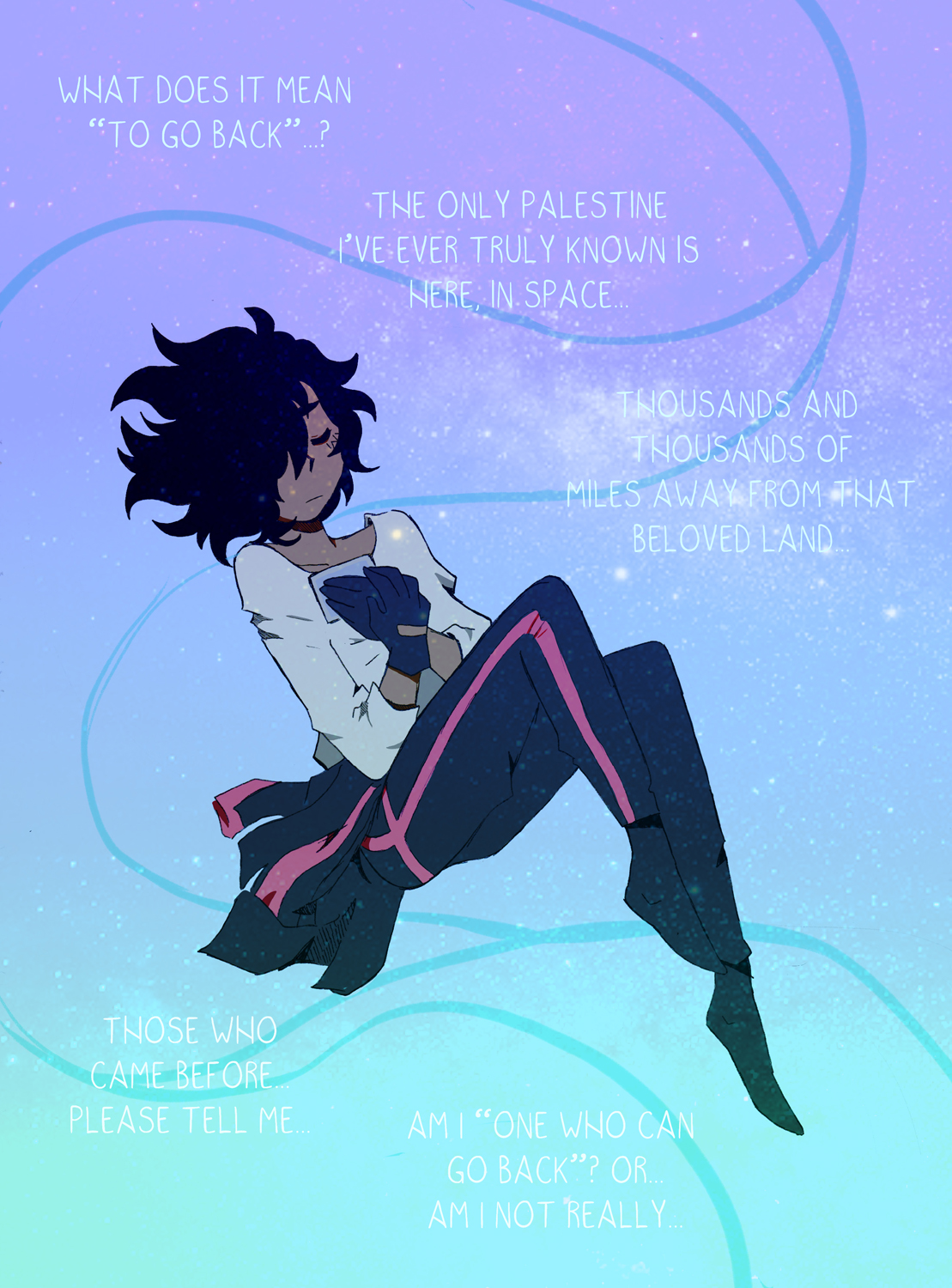
You are a Palestinian who is living in diaspora in the United States. I'd love for you to talk about how your identity plays a part in your creative work.
It does contribute to what we've been speaking about, about not seeming to fit in. When you're in diaspora, in a different country or a different culture, it definitely gives you that feeling. I am lucky and fortunate and grateful to have found other artists and other creatives who are also Palestinians in diaspora who also felt similarly, so it is really nice to be able to have that and be able to discuss those things, or at least be able to commiserate and talk about these things with other people. That is really helpful.
But the feeling of being displaced is a different type of not fitting in. That is something, whether it's completely literal or not in my work, this has come up a few times in the work that I've done, for different outlets that aren't comics publishing. I've done work about that very literally, but also thematically. The idea of displacement comes up a lot. That displacement is where I'm coming from in multiple ways, but also the literal feeling of displacement is very present in my work as well.
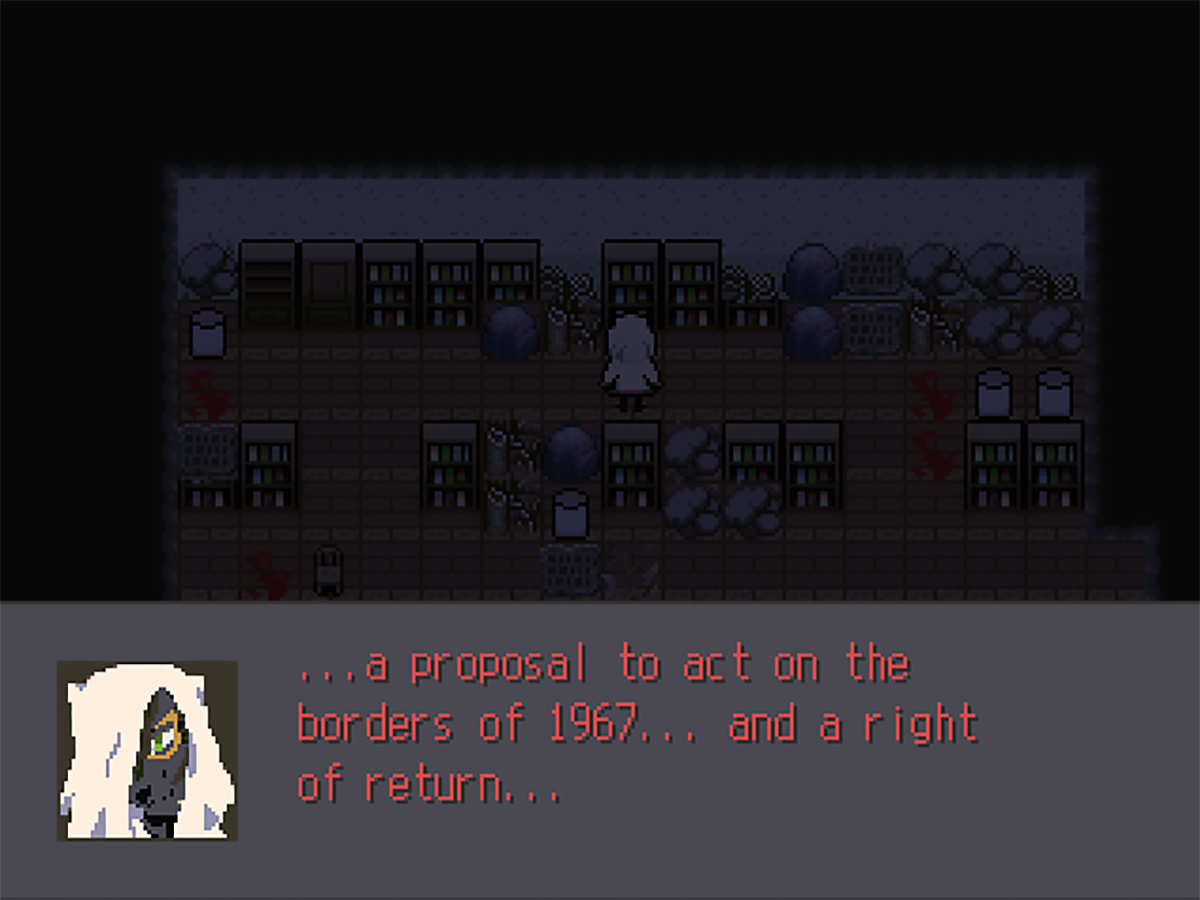
Yeah, I read your comic in The Nib, about your experience, but you've also done some work about it in games.
Yes. So, it is funny that you bring up The Nib, because that is one of the first that I have done about this particular literal subject, and that also is the feeling of not fitting in — literal and figurative displacement. The comic is about anti-Palestinian propaganda in popular media. So people would talk about these things that they love to watch, particularly movies and TV shows and such, and talk about how great they are, and I would be sitting there, thinking, "But this has propaganda that is against me and my people." There was always that feeling for me, but people brush it off, like, "Oh, you know, whatever." So there was that feeling of displacement, culturally.
But I do also write sci-fi and fantasy, and I have created a game and written a companion comic for it called Being, and that is about a Palestinian space colony 100 years in the future. They’re in space, Earth has been abandoned, and the colony sends a cadet back down to Earth to a part of Palestine to recover artifacts, and explore and bring anything back that they can. So I have both literal and sci-fi work about being Palestinian, about that displacement.
Let’s talk a little about your audiences. Your first graphic novel, Mis(h)adra, was for adults, and the most recent two books have been for kids. How has that change been?
I consider myself more of an all-ages writer. There are considerations to take into account when you're writing for middle grade and YA, but for the most part, it doesn't necessarily change for me. It just is like, yeah, there are certain things that you might want to tone down or whatever, right? But in particular, going into writing for all ages, the core mindset doesn't necessarily change. The things that I hope people can take away, which often are about healing or belonging — those types of themes — I try to convey no matter who is reading.
My mentality necessarily doesn't change as far as writing the story, but if you're writing for a particular age demographic, just make sure you don't depict this or that, and it's fine. I definitely take those into consideration and make sure with my publisher that those things are all appropriate for whatever demographic is reading. But in terms of writing the story and writing the themes, it's my hope for whoever reads my books, my work, whatever it may be, that they take away whatever they need from that work that I create. That is what's important to me, and I think that is possible across all ages.
We have been talking all about comics, because this is The Comics Journal, but you also do game design, you do some animation, you do sound design. Can you talk about how you think about your creative practice kind of encompassing all these different forms?
Having a lot of disciplines like that, makes introductions for panels and such very complicated.
I just always gravitated towards multiple mediums, and I can never just pick one. There's always something in games I'm interested in, something in animation I'm interested in. For me, I just want to explore all those things, and explore all those mediums, and explore how you can depict stories through them.
I also just really like sound. That's part of what made me a sound designer. I would be making my games, and because I was doing it by myself, I had to do the sound effects. And so I am interested in sounds that make the brain feel good, because sometimes you play games, and you're just like, "Oh, that sound is so bad. Why does it hurt so bad?" And I'm very, in particular, brain-sensitive to sound. That is actually one of my epilepsy triggers: very grating, harsh, or incongruent sounds. So, as a sound designer, that also plays into it. I just want to have sounds that generally are soothing or okay for brain. Everybody's different, but I do my best.
I guess all these things tie into each other, and they all tie together. I am always fascinated by how different people use different mediums. There are so many different ways to craft and to convey a story, so I just kind of can't help myself wanting to do everything. So that’s why.
What is your next project?
There is a bunch of Sonic the Hedgehog coming up, so if you enjoy Sonic, then I got some stuff in store for you.
I am currently also working on my fourth graphic novel. It feels surreal to even say that. I don't know if the acquisition has been announced yet, but I am working on it, and it is with Viking at Penguin Random House, who I am very excited to work with again. They've been very good to me, and I'm very grateful. I’ve got a couple of personal projects in the works as well, and I'm making a sequel to the Palestinian sci-fi game/comic, in collaboration with the nonprofit organization Palestinian Voices in Games. So that's pretty cool, too. So as you can see, it's scattered across mediums, as you say, and I just really hope that everybody enjoys them.
Anything else you want to talk about?
I just really hope that people who read Wallflower can get something from it that helps them in their daily lives, whatever it may be, whatever they may need. Or just generally enjoy it, but I really hope that people can take away positive and healing things from my work, and Wallflower's no exception.
The post An interview with Iasmin Omar Ata: ‘I just always gravitated towards multiple mediums’ appeared first on The Comics Journal.


 Hello, my name is Jack Sparrow. I'm a 50 year old self-employed Pirate from the Caribbean.
No comments:
Post a Comment