

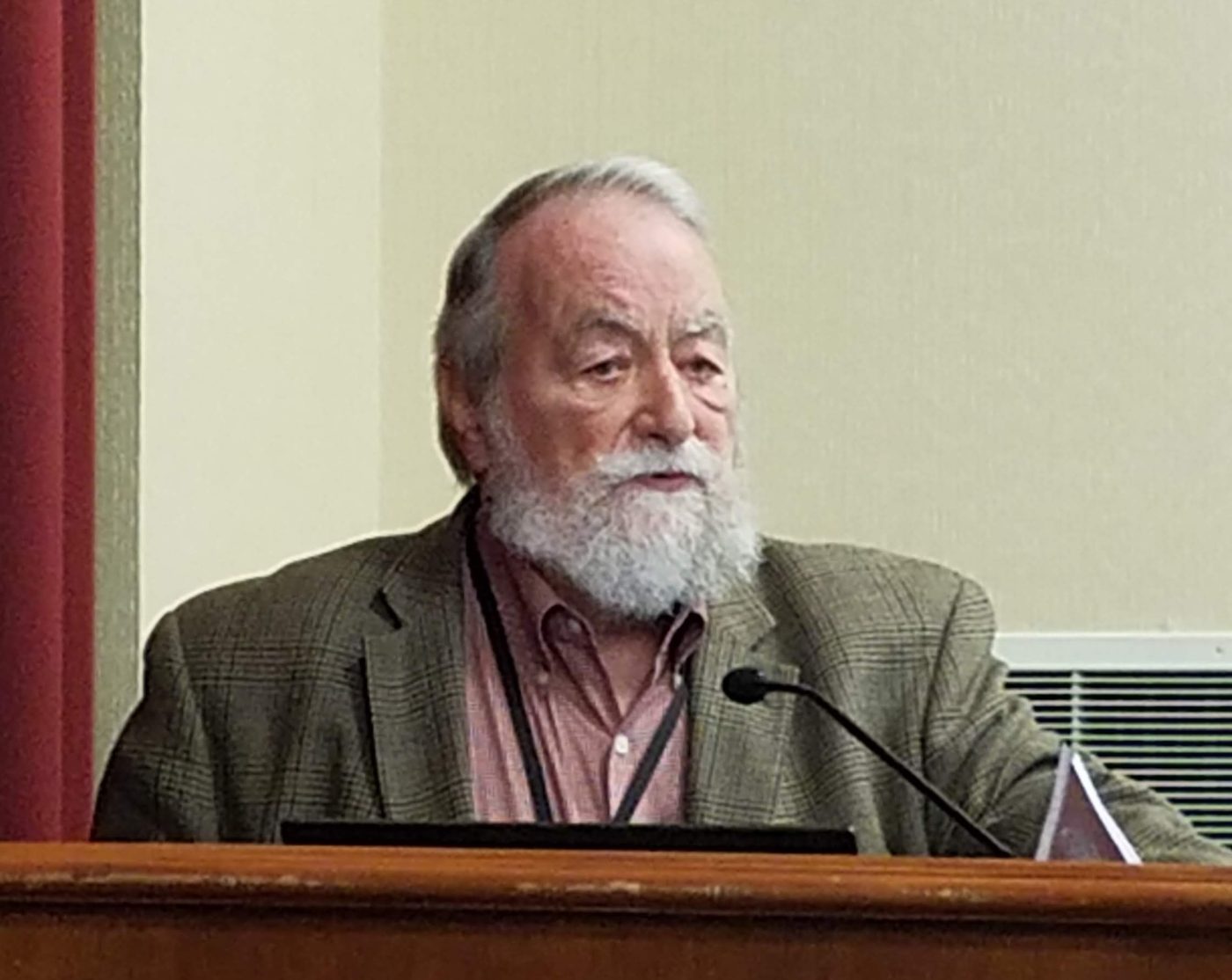
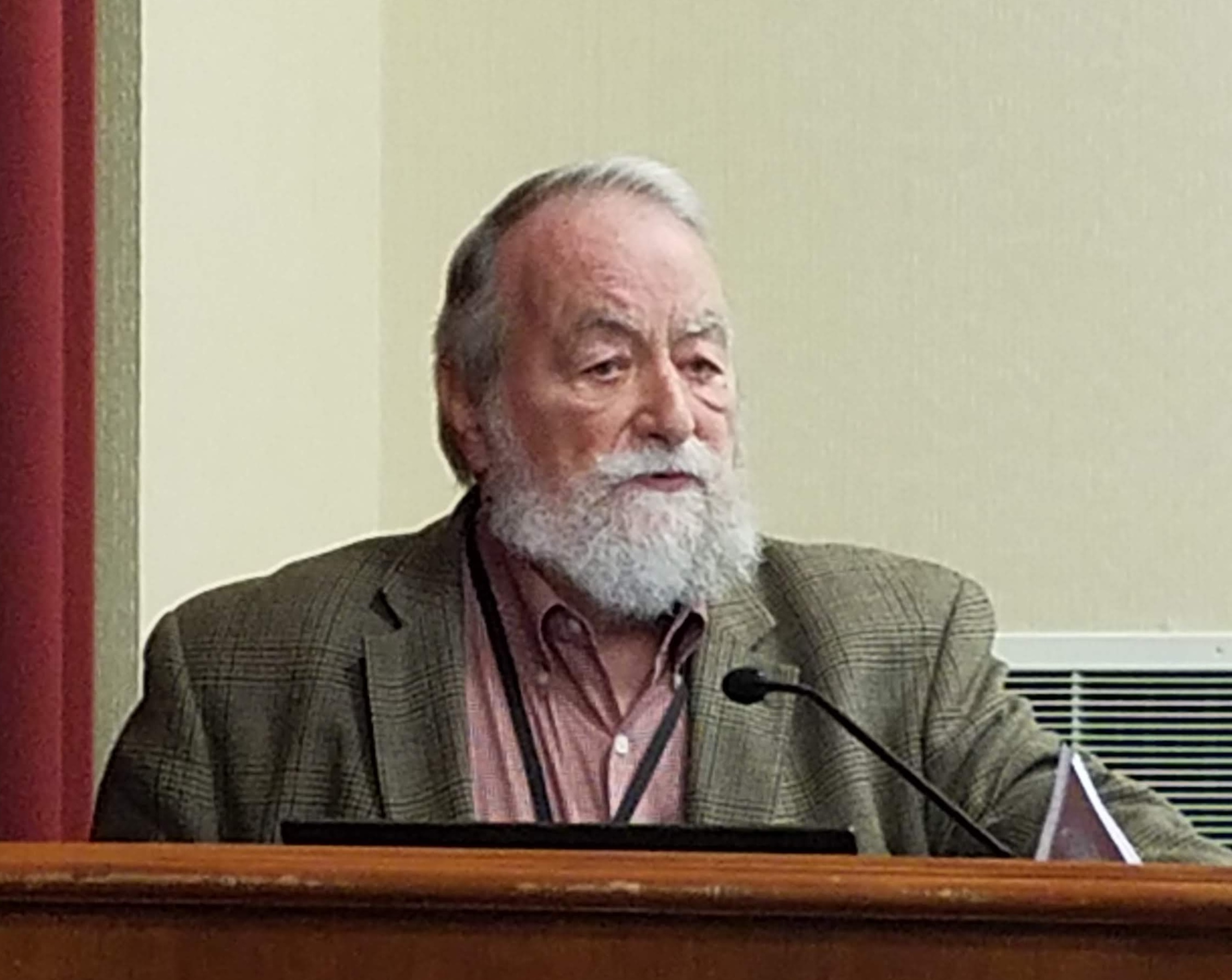
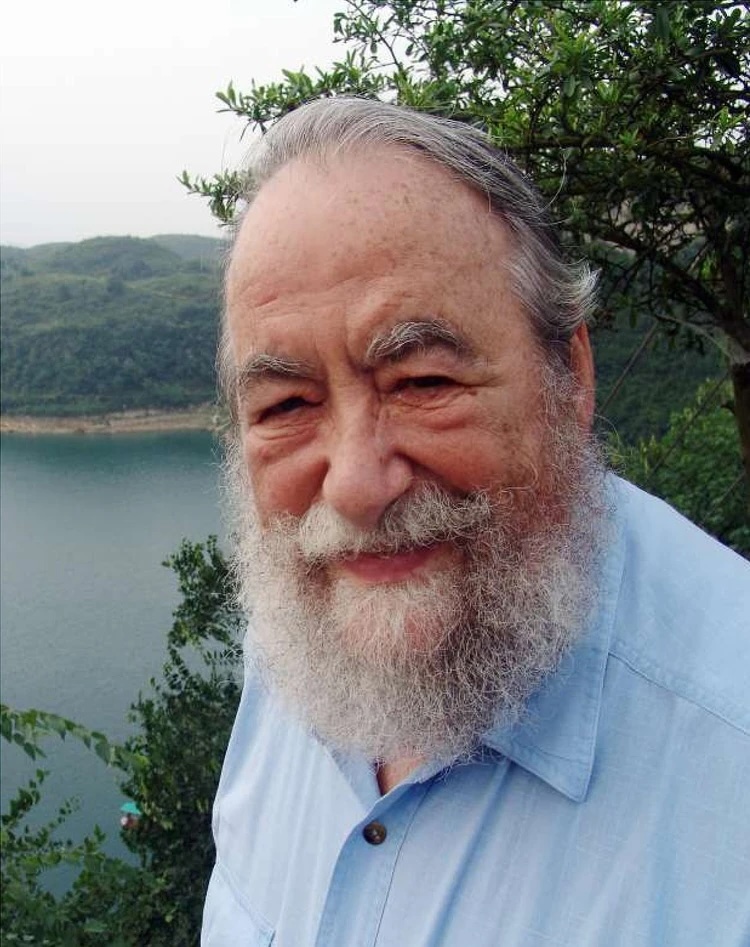
John A. Lent, pioneering comics scholar, died on Saturday, May 16, as a result of injuries sustained in a fall at his home. He was 89 years old.
For a generation of scholars and researchers engaged in comics studies, John Lent was a powerful, almost mythic figure. Indeed, the International Comics Arts Forum named its prize for best graduate student paper after him. The short line biography of John is, frankly, astonishing: he taught at the college and university level in the United States, Canada, Malaysia, the Philippines, and China from 1961 to 2011, but spent most of his career at Temple University in Philadelphia. He authored or edited an astounding 91 books about comics, animation, political cartoons, cinema, and other forms of mass communication. Perhaps most impressively, he edited and published the International Journal of Comic Art for twenty-seven years.
John’s accomplishment with IJOCA may be difficult for non-scholars to comprehend because it is challenging even for professional scholars to fully grasp it. In the late 1990s, following the shuttering of the original version of the scholarly journal Inks, John recognized that there were no extant venues for English-language comics scholarship and so he simply bootstrapped a new one into existence. Most scholarly journals, like the current version of Inks, are affiliated with a scholarly organization (the Comics Studies Society), with a university press, or with a commercial academic publisher that sells them (at often exorbitant prices) to university libraries. They are almost always underwritten by an external organisation. Not so with IJOCA, which was published by John, with the assistance of a few highly dedicated editorial assistants, out of his house for almost three decades with no external funds.
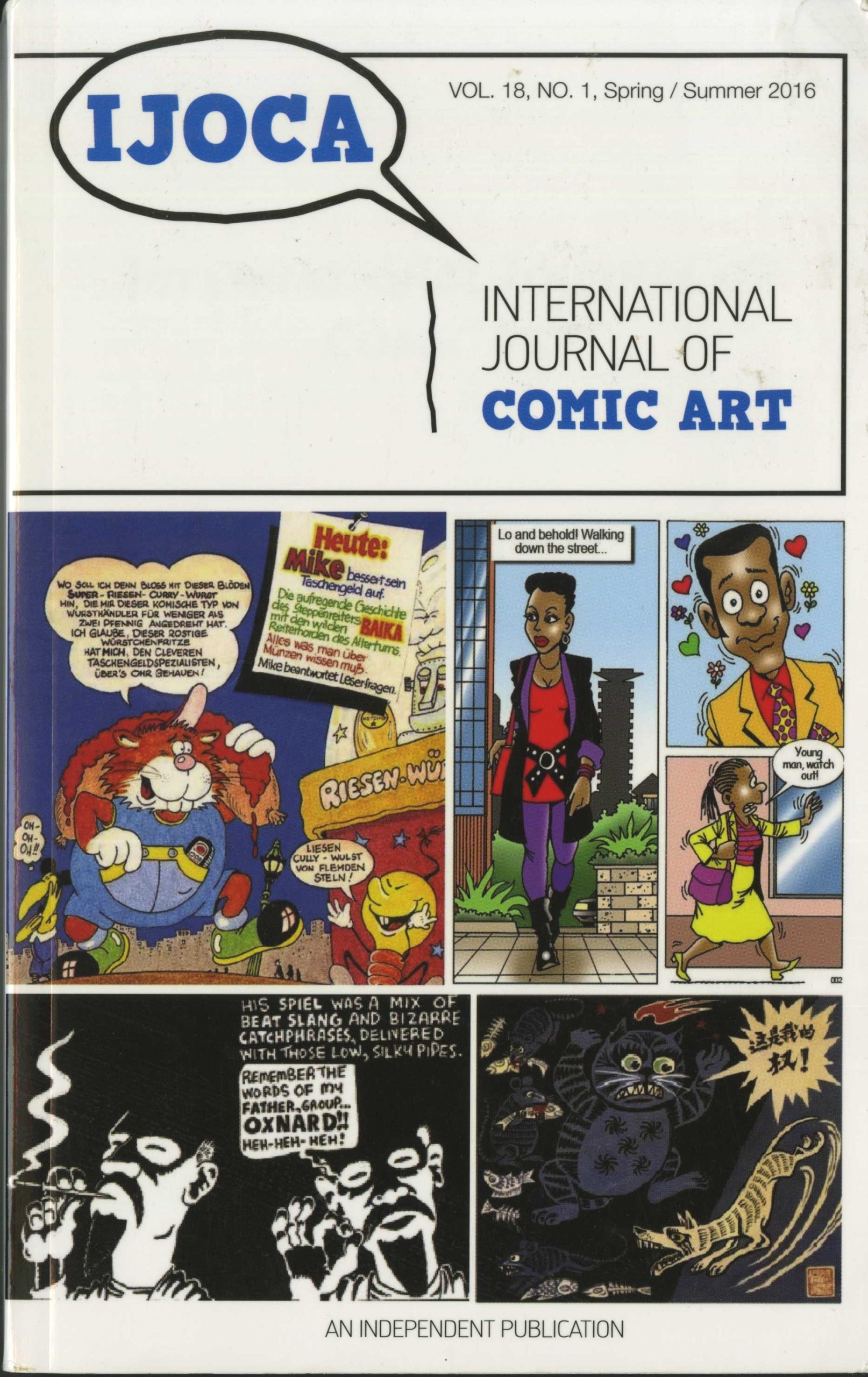
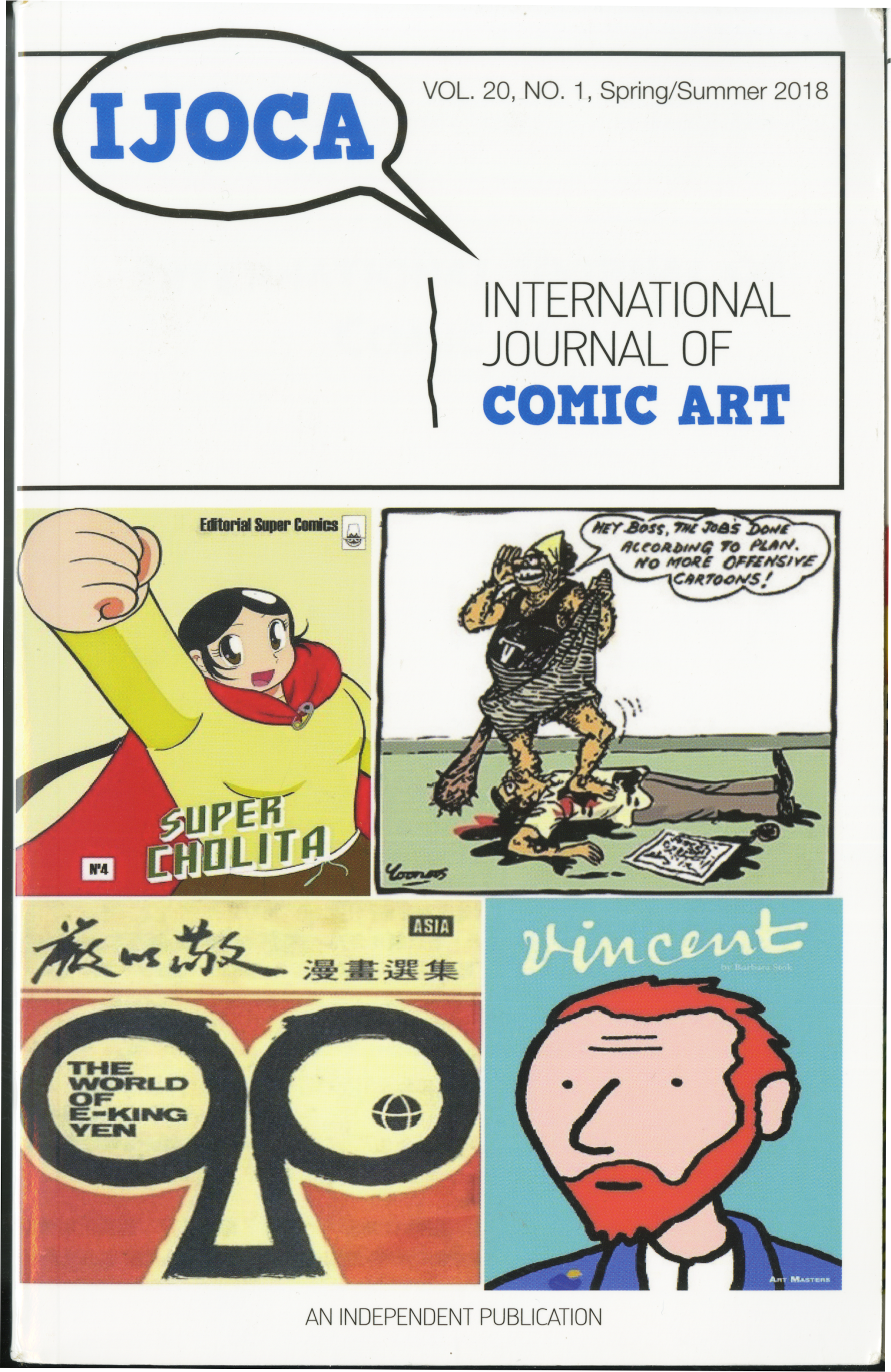 IJOCA was a highly curious beast in the field of academe. While traditional scholarly journals measure their prestige through their rejection rates (the harder it is to get accepted into the club, the more valuable the acceptance) John simply balked at that idea. IJOCA had a simple credo: If John liked the work, he would publish the work. In recent years, it seemed, John liked a lot of work. Published twice per year, IJOCA had grown, by the time of his passing, to issues that totalled more than 600 pages, with dozens and dozens of articles on virtually every conceivable topic touching on comics. The I for International leading the journal’s title was meant in all earnestness, with special sections on topics like “Manga in Canada” and articles about the history of comics in Senegal. A look at the tables of contents on the journal’s website suggests that IJOCA published more than 1,500 articles, and likely more than 1,000 individual scholars under his editorship. It is highly unlikely that any other academic discipline had a single editor who gave a start to so many scholarly careers.
John secured this wealth of material because he was a ubiquitous presence at comics studies conferences. Wherever and whenever a conference occurred there was a good chance that you would find John there, even in (or perhaps especially in) his retirement. John was the senior scholar at the back of the room who would approach a young scholar at the end of their talk to compliment them on it and ask to publish it. In the hours immediately following his passing I heard the same story from dozens of leading academics in the field: John was the first person ever to approach them about their work and the first to publish it. I myself published a portion of my master’s thesis in the very first issue of IJOCA because John asked for the piece at a conference. Those earliest issues of IJOCA were a veritable who’s who of the figures working in the barely formed field of comics studies in the 1990s. As junior scholars and grad students, we were struggling to find appropriate venues for publishing our work at a time when many traditional disciplinary journals were close-minded to the notion of serious writing about comics. John did not merely open doors to us, he kicked them down.
While John published one of my earliest pieces in IJOCA he also went a step further, adding me to the masthead of the journal as “Canadian editor.” John didn’t ask a lot of his editorial board, which grew to dozens of scholars over the years, since the journal did not utilize the standard double-blind peer review system most journals do. As a junior scholar (I began my career at the University of Calgary in 2000, just several months after IJOCA was founded) I sparred with John about this. Traditional peer review, I argued, was essential to the career paths of comics scholars as it was the coin of the realm for hiring, tenure, and promotion. IJOCA, I argued, needed to adopt the standard system so that it would be more valuable for junior people. John would listen to me make this argument with a kindly look on his face, never arguing back. When I had exhausted my energy he would always give me the same advice: “You should do that.”
 To that extent, John was a genuine maverick. A colleague this week referred to him as “punk rock,” which seemed strange for someone who was in his 40s at the heyday of punk, but it is not altogether inapt. John simply did things his own way. When you spoke to him about things as mundane as working in a university communication studies program you could tell that he was an outdoor cat in an indoor world. He had the usual academic stories about butting heads with colleagues and administrators in the highly territorial world of university politics, but he also had something else entirely: the attitude of being above it all. Can’t publish comics studies? Found a journal and publish anything you want. Don’t have institutional support for the journal? Publish it out of your house. John had the DIY ethos that defined punk, even if he himself wouldn’t have defined it in those terms.
The terms that John did use was “critical communications studies.” Two books that John edited speak directly to this interest, Different Road Taken: Profiles in Critical Communication and Key Thinkers in Critical Communication Scholarship. The latter of these volumes addresses itself to a dozen case studies of major thinkers, including Noam Chomsky, Robert McChesney, Vincent Mosco, Graham Murdock and John himself. Each of these figures shared differing political agendas but each was broadly aligned as anti-imperialism, anti-capitalism, and anti-racism. Certainly, John’s work demonstrated all of these traits, as he was tremendously interested in the political and cultural potential of mass media systems (particularly journalism) in a wide array of countries. Consider the titles of some of his many published books: Malaysian Studies, Transnationalism in East and Southeast Asian Comics Art, Newspapers in Asia, Commonwealth Caribbean Mass Communications, Comics Art in Korea, the First One Hundred Years of Philippine Komiks and Cartoons, and so on. John’s expertise literally stretched across continents (I’m told that even he himself did not have a full accounting of everything he had published during his career and compiling that information was one of the many tasks that he was working on when he passed). He travelled extensively to interview cartoonists and other media practitioners so he could learn their stories and share them with the world. Just to write his doctoral dissertation he travelled to 13 different countries and spoke to more than five dozen media practitioners. His eyes were always focussed on breaking down international barriers and bringing people together.
John’s scholarly and civic values were shaped by his upbringing and training. Born in East Millsboro, Pennsylvania, at the height of the Depression in 1936, he aspired to attend college but his family lacked the means. At 17 he got a job selling beer at Cleveland Indians games. For awhile it seemed that this would be it, but his life was changed when he won a competitive scholarship from a company called Anchor Hocking Glass, which offered him $400 per year for school and a guaranteed summer job. He used that opportunity to attend Ohio University, where he was sports editor of the student newspaper. Although he had no interest in graduate school, when he was given 1A status by the draft board in 1958 he stayed at Ohio to continue his education and avoid the army. In 1960 he took a job at West Virginia University Institute of Technology teaching three courses, doing PR work and supervising a boy’s dorm. Coal miners in the area were still paid in company scrip, and John credits his two years in West Virginia with opening his eyes to structural injustice.
After two years, John decided to pursue his doctorate at Syracuse University, a powerhouse in the then nascent field of Communication Studies largely funded by publishing magnate Sam Newhouse. Having completed his course work for the degree, John ran into trouble when he published a book critical of Newhouse’s relationship with trade unions at the same time that the university was naming its entire Communication School after him. When the university blocked the publication of the book, Newhouse, Newspapers, Nuisances, John published it with a vanity press in New York, earning him libel threats and a one way ticket out of his graduate program.
In 1964, John accepted a Fulbright Fellowship and travelled to De La Salle College in Manila, an experience that would start him down the road of studying Asian media that would result in dozens of books. During this time he forged relationships with scholars in Japan, Korea, and Malaysia that lasted his lifetime.
After returning to the United States, John worked as an Assistant Professor of Journalism at the University of Wisconsin (Eau Claire) in 1966 for a year before moving to a similar position at Marshall University in West Virginia for two years. In 1969 he accepted an ill-fated position at the University of Wyoming that made him realize he should return to his doctoral studies in order to secure the protections of the American tenure system. This was during the period of explosive growth in Communication Studies programs at land grant universities, and John received his PhD from the University of Iowa in 1972, writing on Caribbean communication and media systems. That same year he travelled to Malaysia, after the imposition of martial law, and began researching and writing on the topic of press freedom in Asia. His paper at the 1974 conference of the International Association of Mass Communication Research, “Four Conundrums” deepened and reprioritized traditional thinking about cultural imperialism in the news media. His ideas were widely circulated and adopted by the Non-Aligned Movement. In 1974 he accepted a tenure track position at Temple University where he remained, with occasional visiting appointments elsewhere, until his retirement in 2011 at the age of seventy-five.
I have dozens of memories of spending time with John at conferences and events over the past thirty years, but the single one that most comes to mind that helps explain who he was took place at a workshop at the University of Iowa where we were both guests, alongside some notable cartoonists like the Hernandez Brothers and Joe Sacco. It was the summer of the height of Occupy Wall Street, and the university students had set up an occupation in town. Joe Sacco, being Joe, sensed a potential story and left the conference to do some interviews, which led to a lunchtime conversation about Occupy and past campus politics, including the massacre at Kent State. John had been a faculty member at the University of Wyoming at that time, and he shared a story of being a mentor to the small number of students who gathered that night to protest and mourn the loss of student life in Ohio by lowering the campus flag in Laramie to half mast.
John had arrived in Wyoming in the fall of 1969 and had immediately become embroiled in campus politics. He was one of the publishers of the school’s underground paper, Free Lunch: Where the Effete Meet to Eat, which was censored by every printer in Wyoming, and so had to be printed in Colorado and shipped to campus in student cars. He was also one of only four faculty to support the Black 14. At the time, the University of Wyoming football team was undefeated. The fourteen black players on the team requested to wear a black arm band during their game with Brigham Young University in order to protest the Mormon church’s refusal to allow blacks to rise within the church hierarchy. Wyoming’s football coach immediately suspended all fourteen players, telling them that they could go on “colored relief”. During the ensuing protest, John and the other three faculty members had moving trucks arrive at their homes paid for by the football boosters club with orders to move them to the Nebraska state line.
When the events at Kent State occurred, John supported the solidarity protest on his campus. With the president of the university away at the time, the student union president phoned Wyoming Governor Stanley Holloway urging him to take action. Holloway called out the National Guard. During the night, the peaceful protesters at the flagpole were attacked by people who sprayed bleach on them from cars without license plates and, at 6 a.m. the next morning, the National Guard arrived to break up the protest. John announced that he was leaving the university immediately, but when he was informed that all of the students in his class would be given Fs as a result of his resignation he stayed through his exams and left later that same day
I have struggled here to capture the vastness of John’s contribution not only to comics studies but also to social justice writ large because of its sheer immensity. He began working in the field of comics studies in the 1960s and '70s at a time when precious few others were doing so (David Kunzle, Tom Inge, and Don Ault, all also recently passed, being notable exceptions in different disciplines and approaches). The scope of his own publications would probably mark him as one of the most significant scholars to have ever worked in the field. The scope of his own efforts to publish the work of others absolutely cement him as the single, most significant scholar in history of comic studies in the United States. His passionate commitment to decolonization and anti-racism in both the academic and social life of the university was generations ahead of its time.
Charles Hatfield, founding president of the Comics Studies Society summed up the thoughts of many of us when he wrote: “John's cosmopolitan outlook and fierce independence, founded on love and principle, have always inspired me. His good opinion meant the world, and his unquenched curiosity and desire to connect remain, for me, awesome reminders of what is possible.”
Let me conclude with John’s own words, from an interview with him published in Key Thinkers in Critical Communications Scholarship (2015):
“I’m proud to have stayed independent, as much as anyone can. And I’m proud of having met so many people. I’m proud to have had great graduate students and much earlier on, undergraduate students, who went on to make me proud. These are accomplishments I’m proud of. Well, so many other things too, such as innovating, seeing gaps and filling those gaps. Always thinking. Always thinking about what needs to be done, how one can do it. I have no regrets about my life and career. I’ve done most of the things I wanted to do. Perhaps the only thing I would have done differently would’ve been to continue my activism — to have been in the streets for a longer period of time.”
The post Remembering comics scholar John A. Lent, 1936-2026 appeared first on The Comics Journal.


 Hello, my name is Jack Sparrow. I'm a 50 year old self-employed Pirate from the Caribbean.
No comments:
Post a Comment