

Mohammad Saba'aneh was on a book tour for his previous comic, Power Born of Dreams, when Israel invaded Gaza, a moment that became the opening scene for his latest graphic memoir. In this work he focuses more broadly, expanding the idea of prison that he wrote about previously to the land as a whole, seeing Palestine as just one more example of a prison. He moves back and forth between the story of his brother Thamer, who is literally incarcerated, and the stories of those in Gaza and the West Bank, stories that mirror what life is like in prison. The imagery of mirrors and seeing (or not seeing) carry throughout the work to show a broader view of imprisonment in both the West Bank and Gaza, especially how nobody wants to see Palestinians as human.
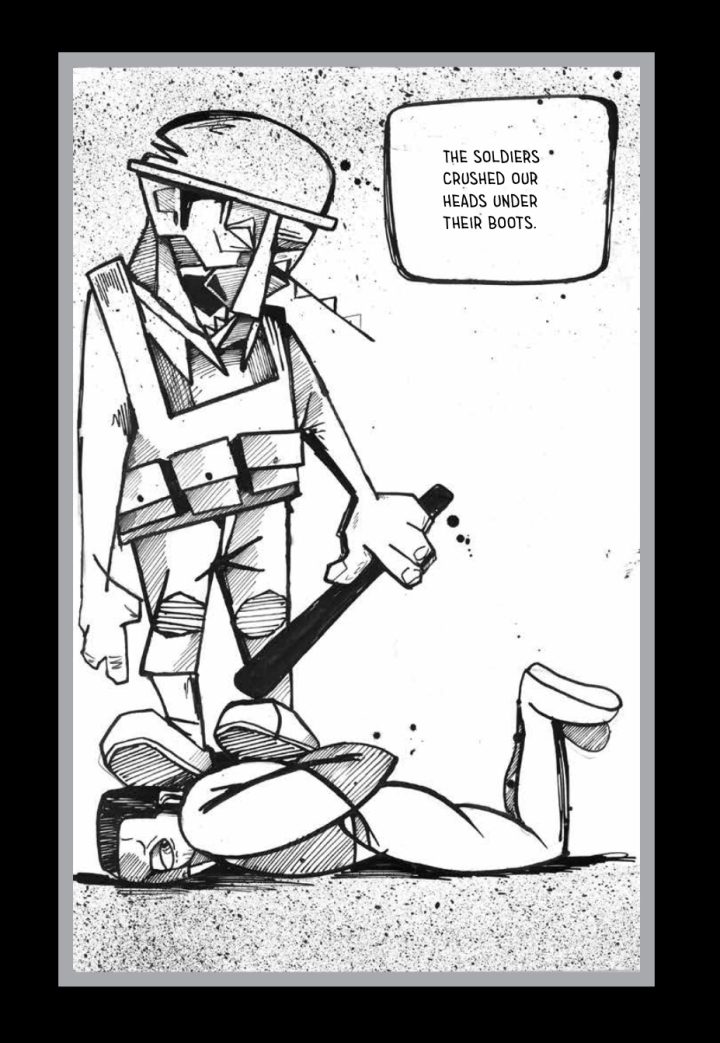
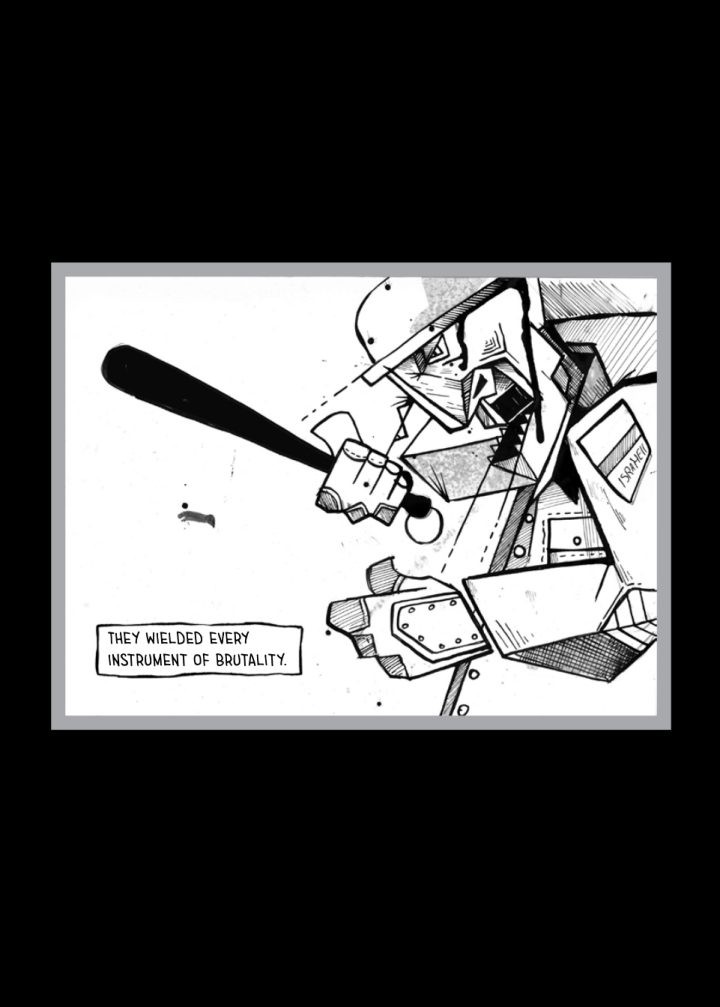
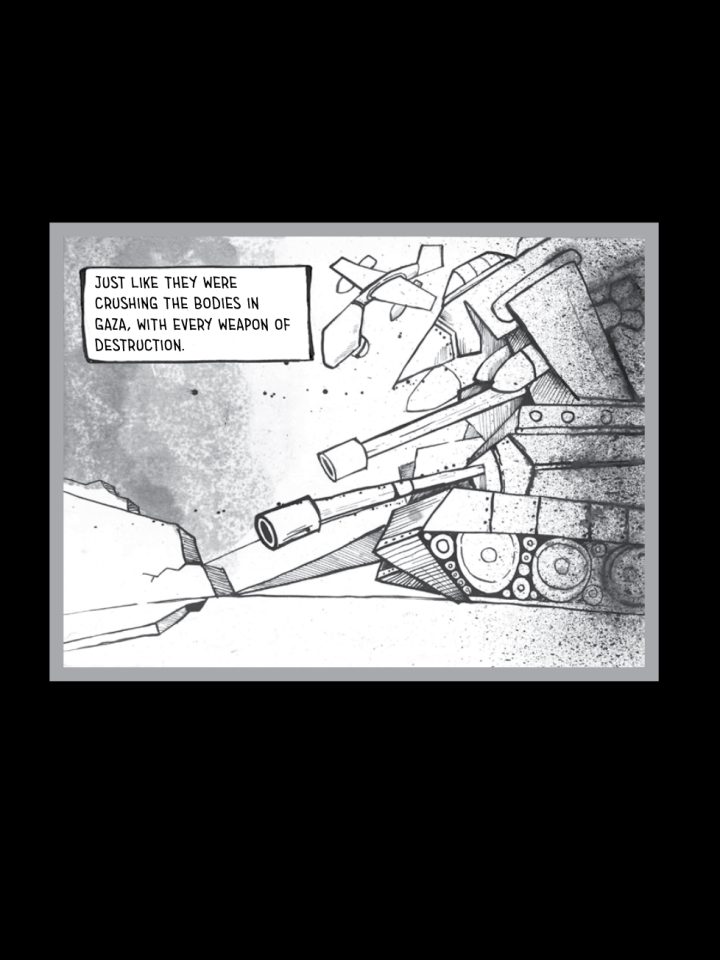
Not only do the stories mirror one another, but Saba'aneh uses the artwork to show the reader the differences and similarities in the stories. Saba'aneh, a political cartoonist in Palestine, uses linocut for his graphic works, which gives his work a heavier feel. He moves from telling his opening story, representing his freedom, with more white than black, and without borders. When he shifts to his brother, he relies much more heavily on a dark black backgrounds, creating solid borders often with much smaller panels, more Jean Charlot than Pablo Picasso. The artwork veers towards Cubism when he portrays the prison, especially when drawing the soldiers imprisoning and abusing his brother and the other Palestinian prisoners. That approach contrasts with the more life-like portrayals of the prisoners and those in Gaza and the West Bank. Though the borders still contain them, they have more humanity to them.
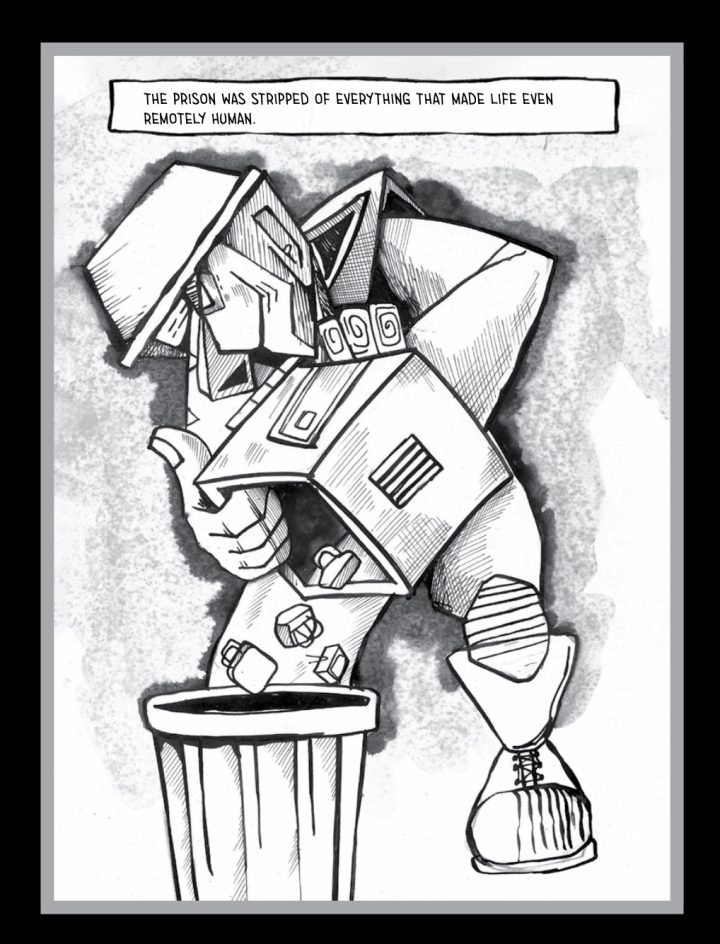
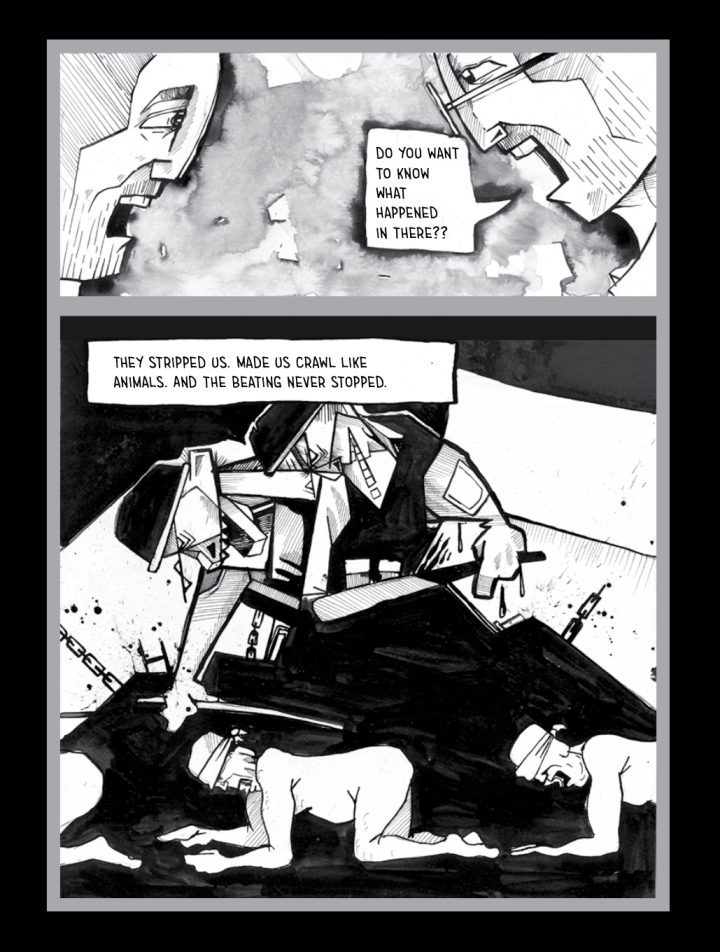
This mirroring continues in Saba'aneh’s the portrayal of the guards in the prison and the weapons the Israelis use to oppress and imprison those in Gaza more broadly. In one series of panels, the guards look more machine-like, including what appears to be rivets on their hands. Saba'aneh compares the guards to the tanks and airplanes destroying Gaza, as he writes, “They [the soldiers in the prison] wielded every instrument of brutality. Just like they were crushing the bodies in Gaza, with every weapon of destruction.” The tank's rivets and metal panels look like the soldiers in the prison, reinforcing the connection between the two. While his brother is literally in prison, those who live in Gaza are effectively in prison, given that they have no freedom to leave.
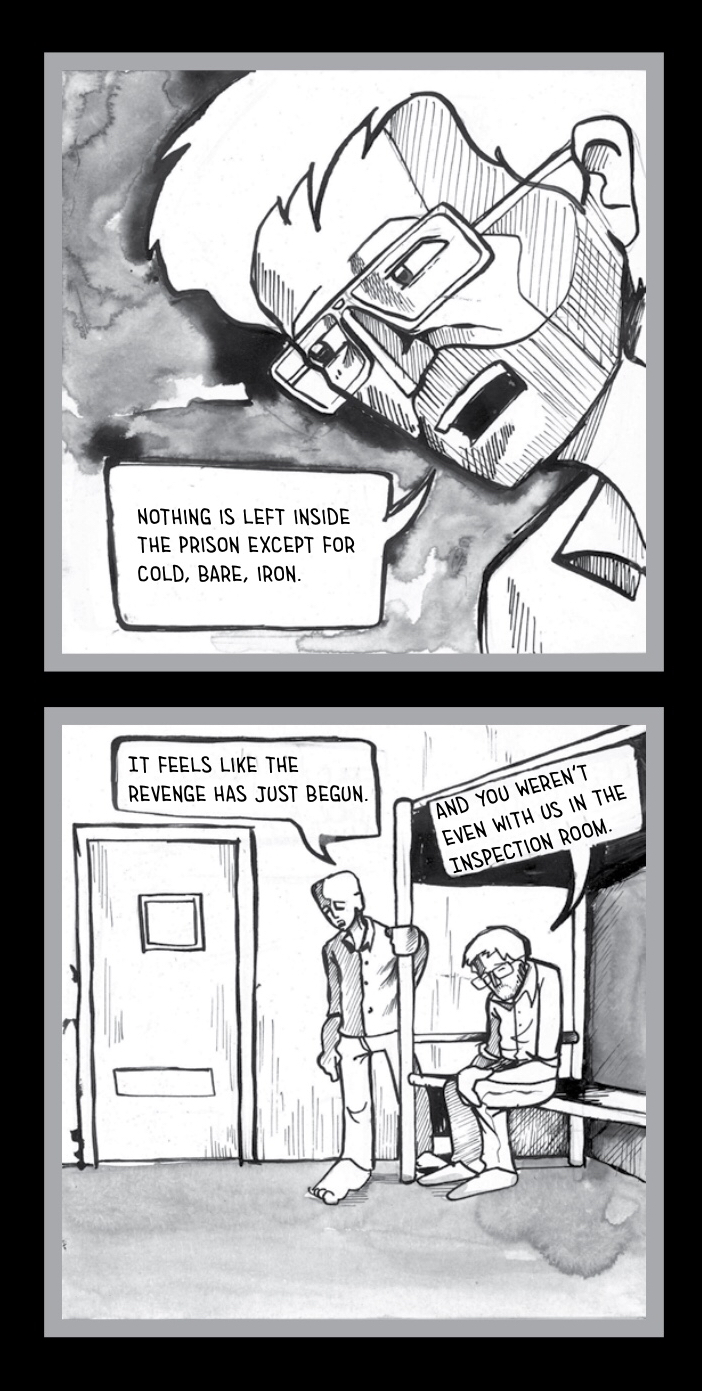
One of the stories of those in Gaza he tells about is a woman named Safa. When she and her four brothers have to flee their home, she says, “No clothes. No pillows. No mattresses. How are we supposed to live like this?” Saba'aneh again uses that mirror imagery, this time through the dialogue to show the imprisonment of Gazans whom Israel portrays as free. Four pages later, Thamer tells his fellow prisoners, “No clothes. No pillows. No mattresses. How are we supposed to live like this?” One of the other prisoners responds, “They want to turn our lives into hell.” By implication, the Israelis are also turning the Gazans’ life into a hell, even outside of the prison. Nobody outside Gaza sees the reality of their lives, as the world has turned a blind eye, much as Israel doesn’t allow anybody to see inside the prisons.
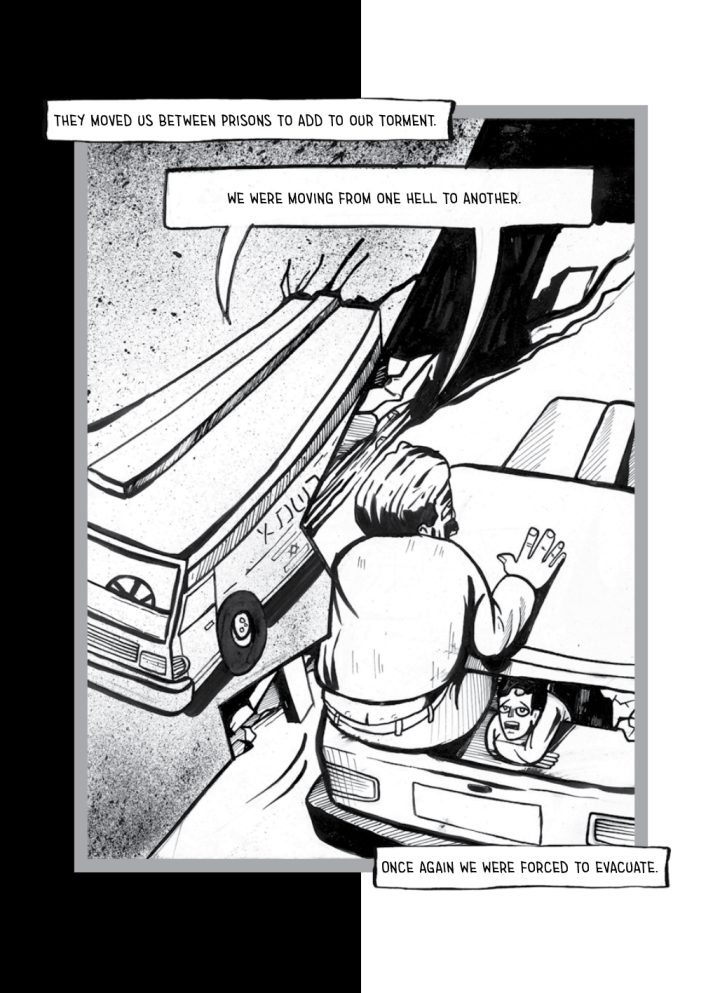
Near the end of the work, Saba'aneh relates how his brother and other prisoners move from one prison to another, while the Gazans are also having to evacuate. Saba'aneh splits a single panel, with a bus of prisoners on the left headed in one direction, while a car of Gazans drives in the other. Rather than an echo, here Saba'aneh has both groups simultaneously say, “We were moving from one hell to another.” He wants to be clear that, in the same way that the Israeli soldiers tormented the prisoners by moving them around, the Israeli military continually forced the Gazans to evacuate, leading to their suffering, as well. There is no safe place, as all of Gaza and, increasingly, the West Bank are also hells, though the world refuses to see that reality.
One of the main throughlines of the memoir is how people can survive such situations. For much of the world, the way they survive is by choosing not to see these realities. Ironically, the Israeli army tries to force Thamer not to see, as they shatter his glasses when they take him to prison. He begins to believe that it might be better not to see. However, it’s clear that Saba'aneh doesn’t want his readers to take that approach. Instead, in the preface, he lays out his ideas about the work, discussing settler colonialism and the idea of displacement and eradication of Indigenous people, and he calls on people to “witness the stories of those who survive this oppression.” He wants to move beyond that idea of oppression, though, ending his preface by saying, “This is not just a story of prisons. It is a story of power, resistance, and the relentless fight for freedom.” That said, there are few moments of light in this work. Though people do survive and resist, they struggle to do so, often even wanting to die, especially in prison. Saba'aneh wants his readers to see the full effect of Israeli oppression of Palestinians, both inside and outside of prison.
However, Saba'aneh uses the image of trees to show that some are able to survive and resist. Early in the work, he uses the image of a tree to show how the Israelis take everything from the prisoners. The tree looks like a person with a blindfold around his eyes, but the trunk of the tree/person is bare, as it has had all of its limbs lopped off. Later in the work, though, Youssef, a prisoner with Thamer, returns to his garden and talks about his peach tree that lived through his imprisonment, even after a year and a half without care. Saba'aneh pairs that description with images of Thamer and Youssef both planting and nurturing plants, setting up the trees of the next generation. Saba'aneh writes about the paradox of which trees and which people survive, ending by writing, “All the paradoxes of autumn. All the bitter winds of winter—spring gathers them in its gentle bloom. And for us, with spring, there is always another season.” It’s in those ideas where Saba'aneh finds hope and resistance.
Visually and thematically, Saba'aneh’s work is dark and heavy, bearing witness to the intense suffering. He wants his readers to see the full effects of the Israeli attacks and imprisonment, so they will cease to look away, and they will deal with both situations. However, he also believes in the power of hope, and he wants to testify to that idea, as well. He doesn’t want to merely portray suffering, but how some people did survive, often the people nobody would expect to survive. While he mourns those who have died, and he fears for the future of both Gaza and the West Bank, he still hopes for and believes in survival and resistance, despite the odds.
The post Review of Welcome to Hell: From the West Bank to Gaza appeared first on The Comics Journal.


 Hello, my name is Jack Sparrow. I'm a 50 year old self-employed Pirate from the Caribbean.
No comments:
Post a Comment