

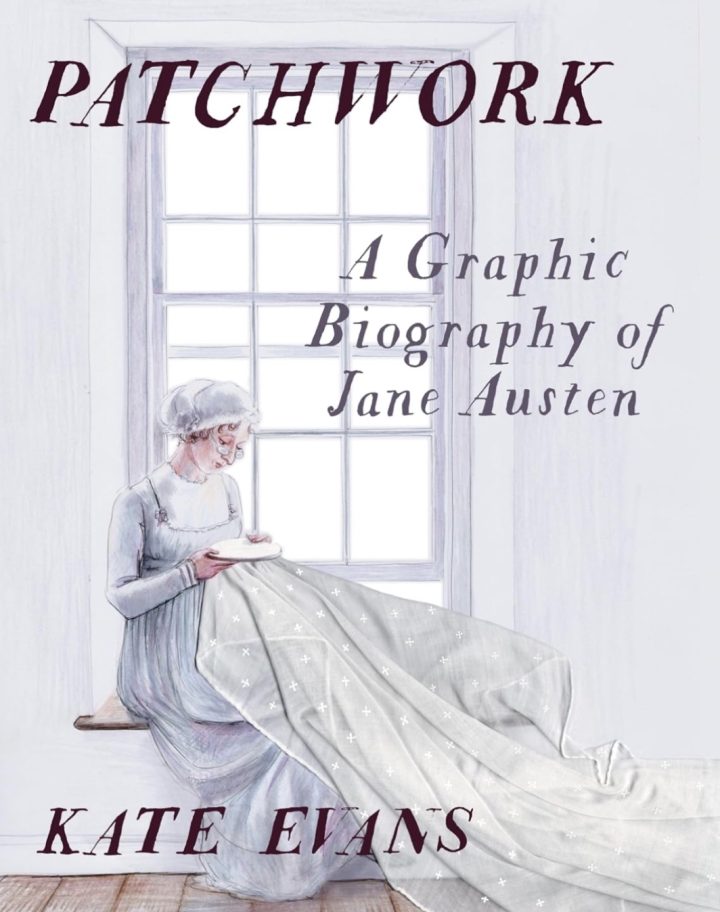
 2025 marked the 250th anniversary of the birth of novelist Jane Austen. To capitalize, numerous books covering all facets of Austen’s life are being released. From stories the author herself described as “pictures of domestic life in country villages” have emerged books that have never been out of print and served as the inspirations for a few comics and countless films, including Bridget Jones’ Diary, Clueless and Fire Island.
By way of confession, I am not a Jane Austen fanatic. I am not one of those people for whom the current owner of Austen’s childhood home is raising aggressive bulls to keep away1 Evans wrote in her notes: “If you visit Steventon no Adams, all that remains is part of the old water pump in a field. The farmer keeps bulls there to stop Austen maniacs from trampling all over it.”/efn_note]. Before starting Kate Evans’ Patchwork: A Graphic Biography of Jane Austen and The Novel Life of Jane Austen by Janine Barchas and Isabel Greenberg I made a mental checklist of things I knew about Austen: She was a novelist, she was British, she died relatively young, and her work has had enduring popularity for centuries. Was that really it? Apparently so. Therefore I went into the two books with something of a clean slate.
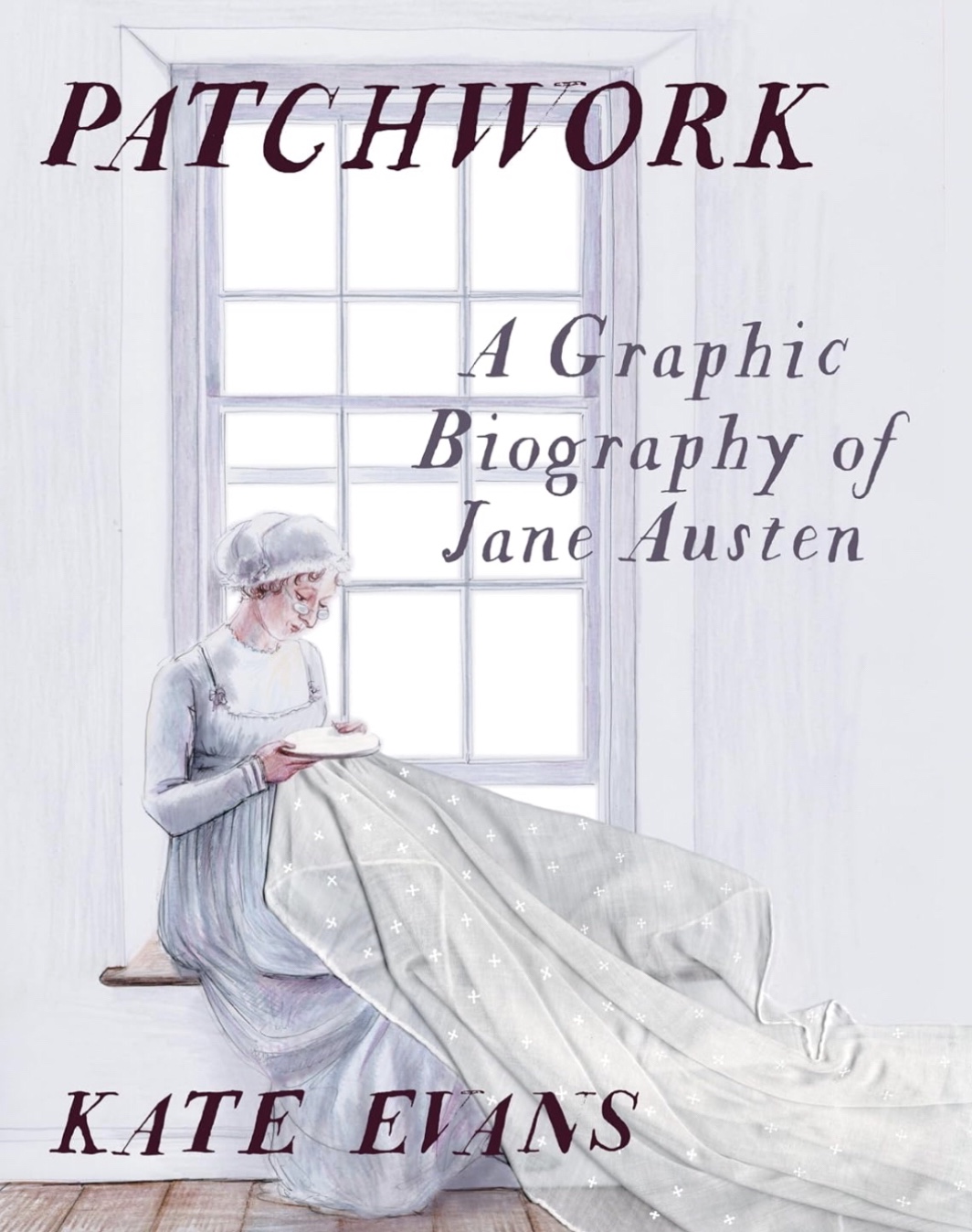
The title Patchwork has a dual meaning. It refers not only to the garment sewn by Austen and her family, but also the disparate threads Evans stitches together to recreate her life. This is more of a task than it may seem. My ignorance of the details of Austen’s life was not entirely my own doing. After her death, sister Cassandra destroyed most of her letters, over fears of their embarrassing content. Propriety trumped posterity. Evans, Barchas, and Greenberg all use the surviving letters, letters from family, early biographies, scholarly works, and even supposed autobiographical details from Austen’s fiction to tell her story.
The politics of the Austen's culture are vastly different from Evans’s previous subject, Rosa Luxemburg. Unlike Red Rosa’s revolutionary Marxism, Austen was, on the surface, an apolitical figure. Austen’s nephew wrote that although politics did not occupy much of her time, “she probably shared the feeling of moderate Toryism” embraced by the rest of her family. That is not to say, however, that her life and work were unshaped by politics.
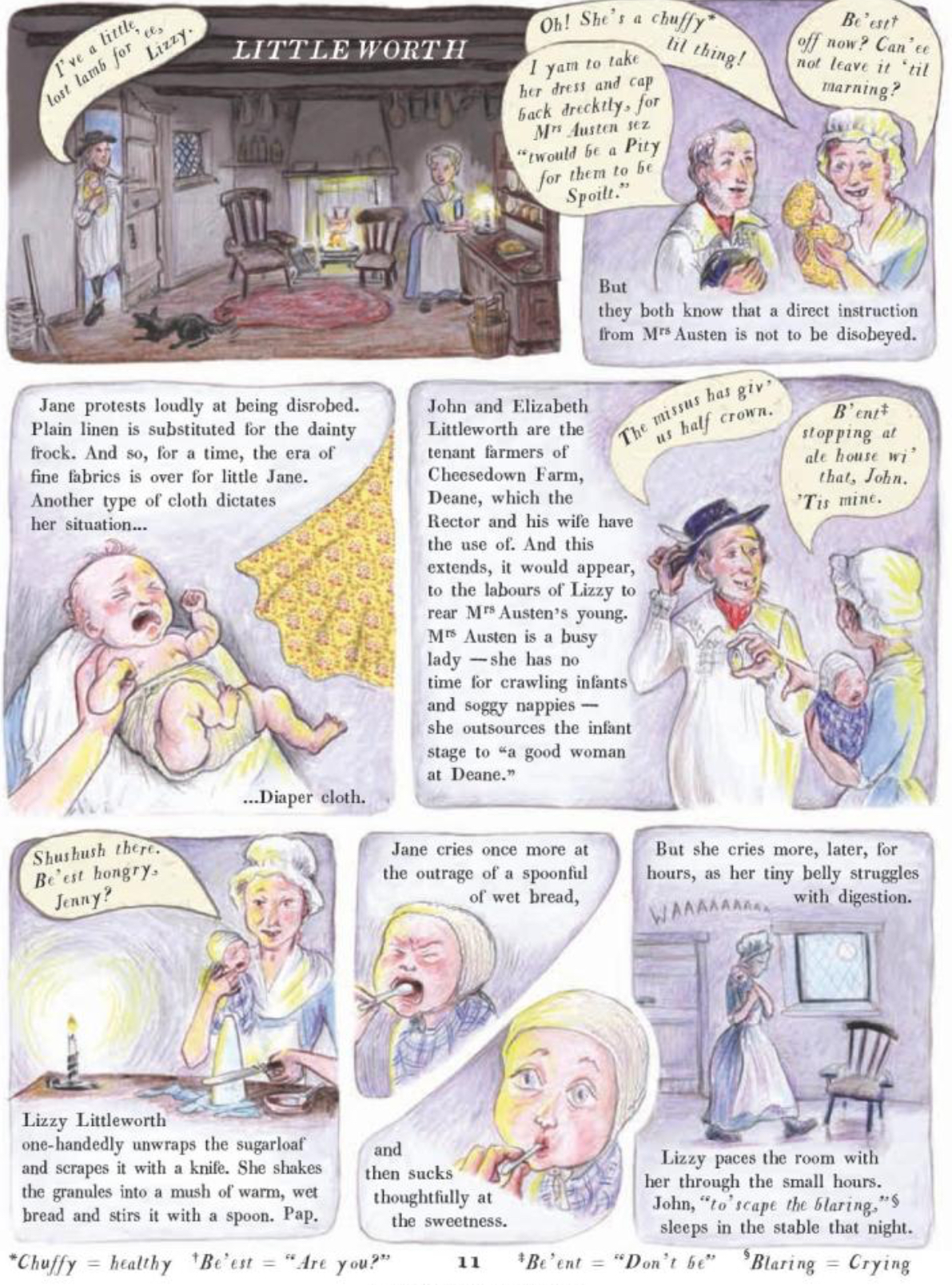
Evans shows that Austen learned the lessons of the class system from a young age. As a newborn, she was sent to be raised by tenant farmers on the Austen’s property. Raising infants was simply something a proper lady didn’t do. When her mother deigned to reclaim the child, contact with the farmers ceased. All of this found its way into Austen’s fiction. As critic Raymond Williams wrote, Austen’s work is “concerned with the transmission of wealth…She is concerned with the conduct of people who...are repeatedly trying to make themselves into a class.”
Although the Austens were of the upper middle class, due to patriarch George’s position in the clergy, Evans shows them constantly fretting over money. Potential inheritances from wealthier relatives are often a discussion topic, and the financial prospects of suitors for the Austen daughters are of great importance. It’s been speculated that Austen never married because she felt unable to marry potential husbands of sufficient wealth whom she did not love. The Austens were a family constantly in want of a single man in possession of a good fortune. Most importantly, he had to be one Jane would find agreeable.
Austen’s work was shaped by empire as well as class. Edward Said wrote in his Culture and Imperialism that Austen’s Mansfield Park was unthinkable without Britain's overseas territories. Said wrote “the right to colonial possessions helps directly to establish social order and moral priorities at home…no matter how isolated and insulated the English place (e.g., Mansfield Park) it requires overseas sustenance. Sir Thomas’s property in the Caribbean would have had to be a sugar plantation maintained by slave labor.” Although Evans does not cite Said in her bibliography, her analysis of Mansfield Park is in the same vein.
Evans devotes a lengthy section to the textile trade within the British empire. The focus on Irish peasants, Black slaves, British child laborers, and poor Indians may seem like an unnecessary digression, but it situates the Austens within their historical context and puts their own money worries into stark relief. It is also a corrective to Austen’s works, which as Williams noted, posited a world where “where only one class is seen,” meaning in effect, no classes are seen.
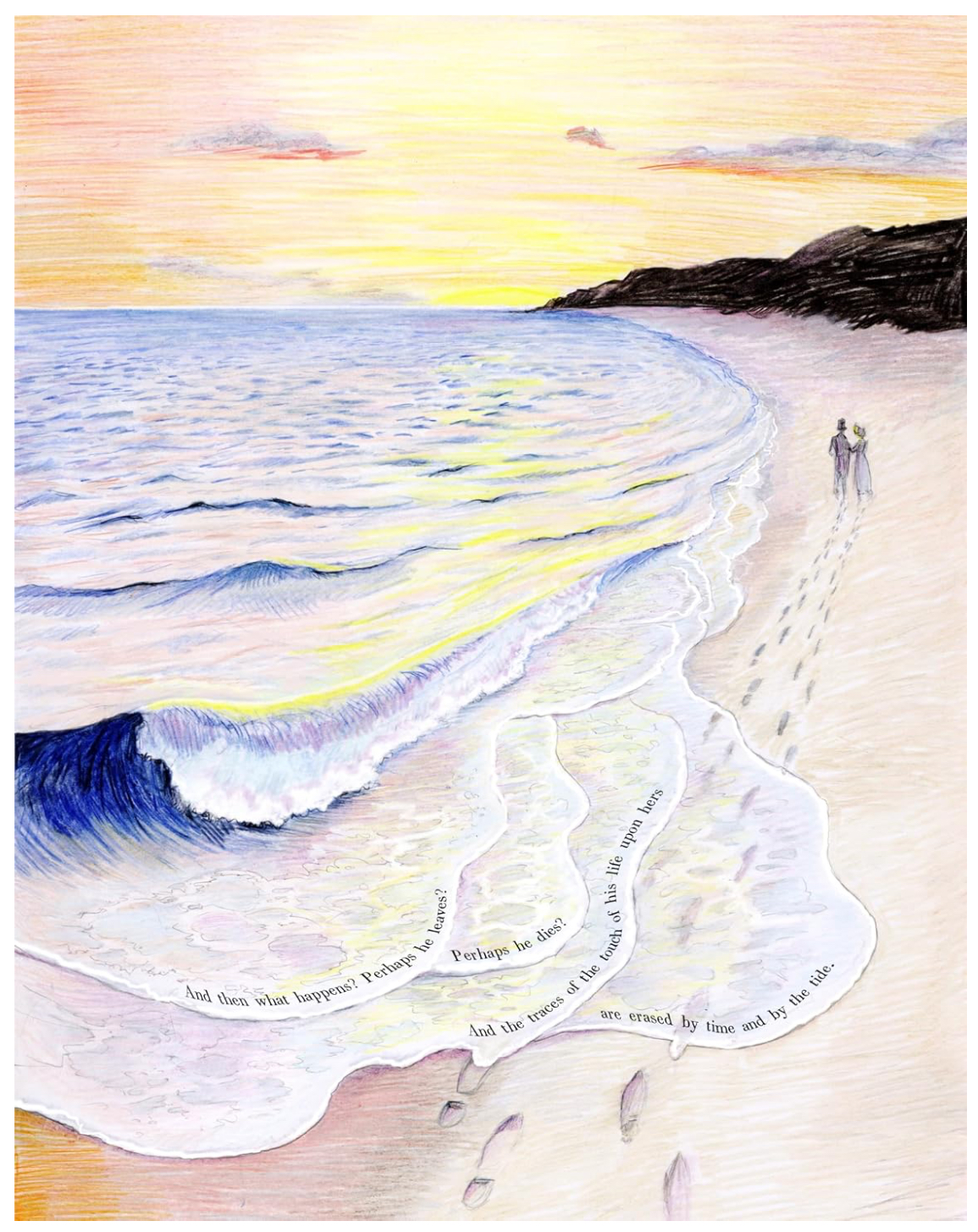
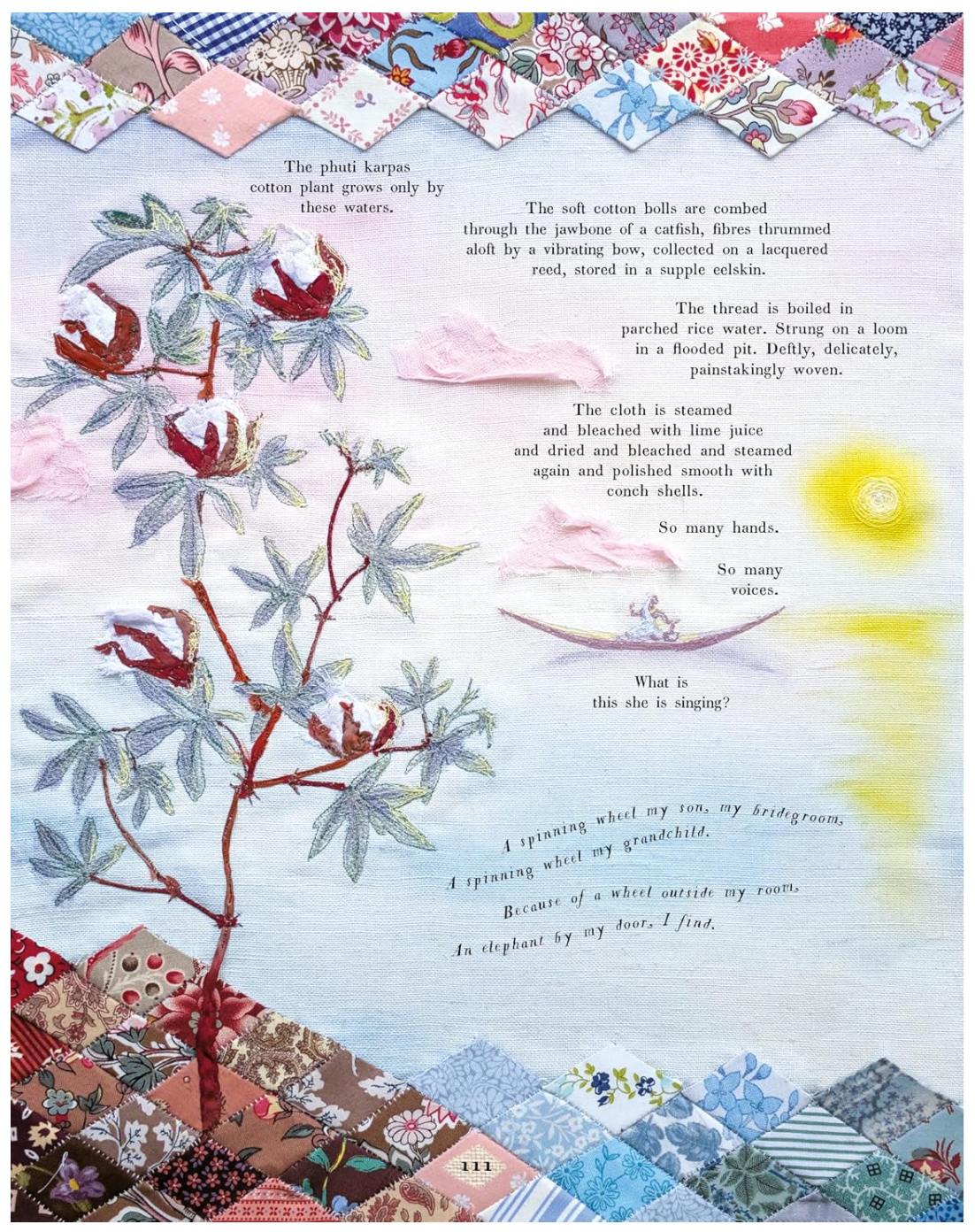
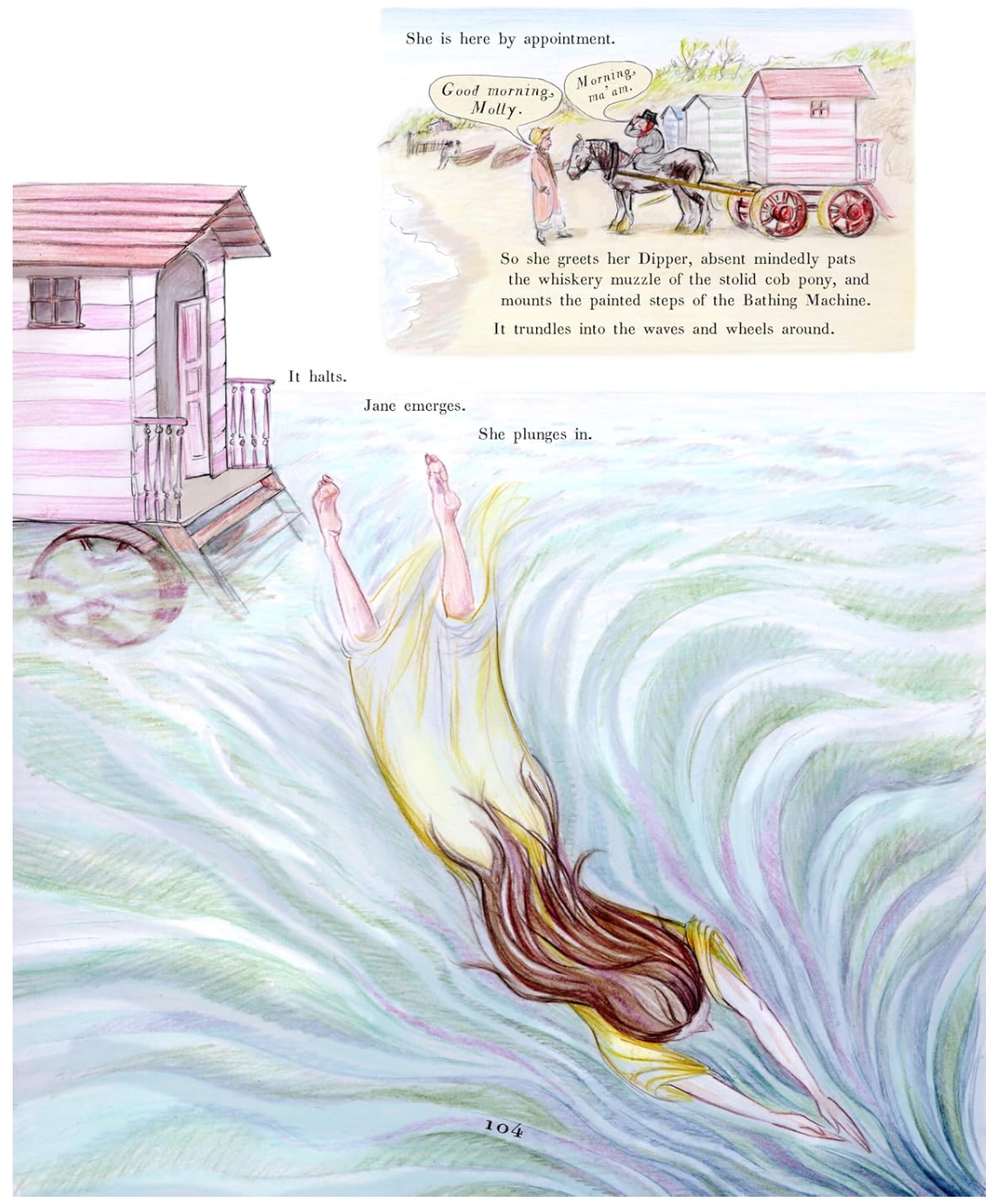
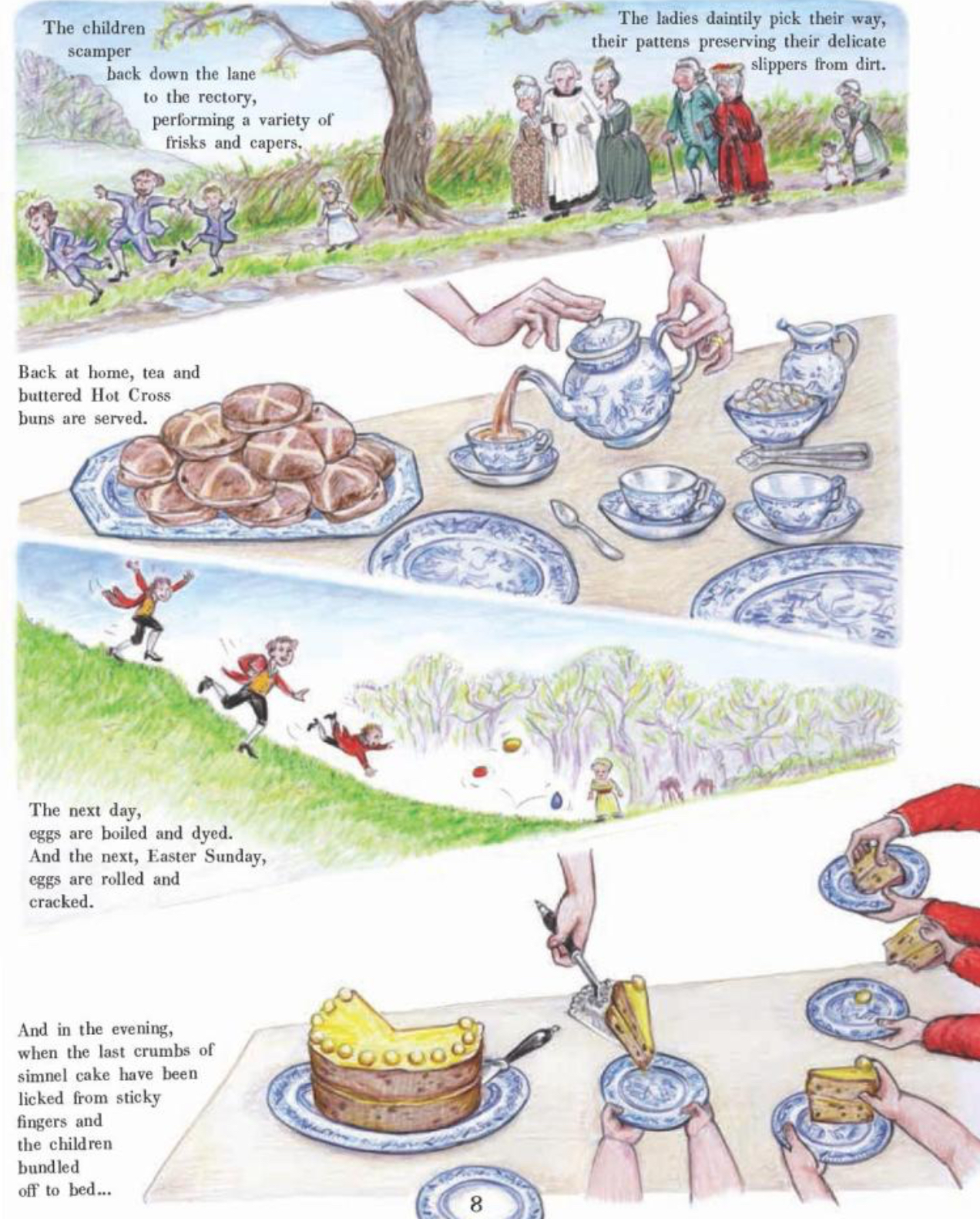
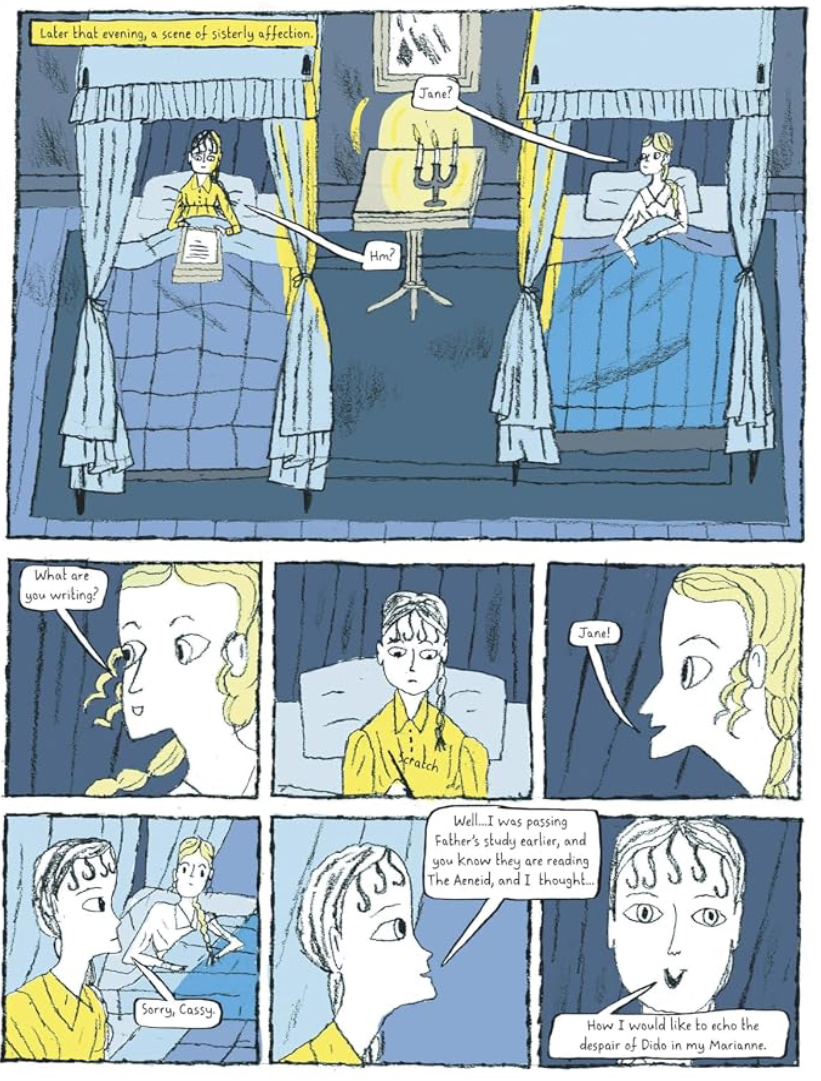
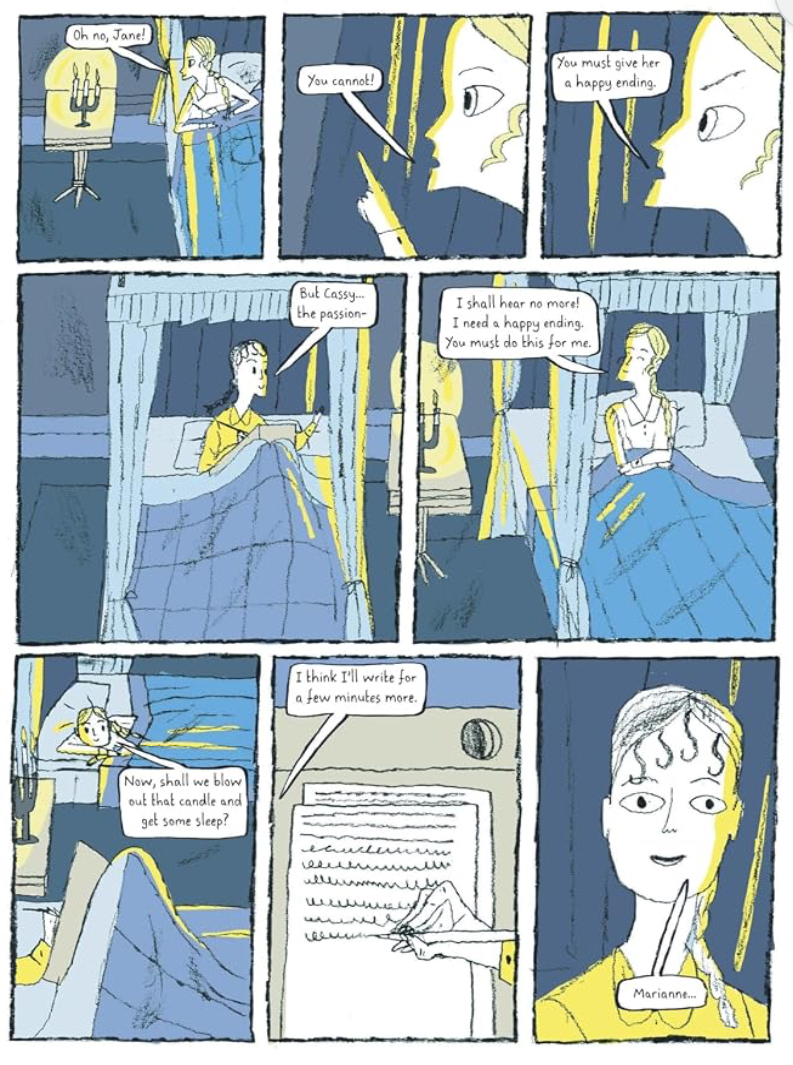
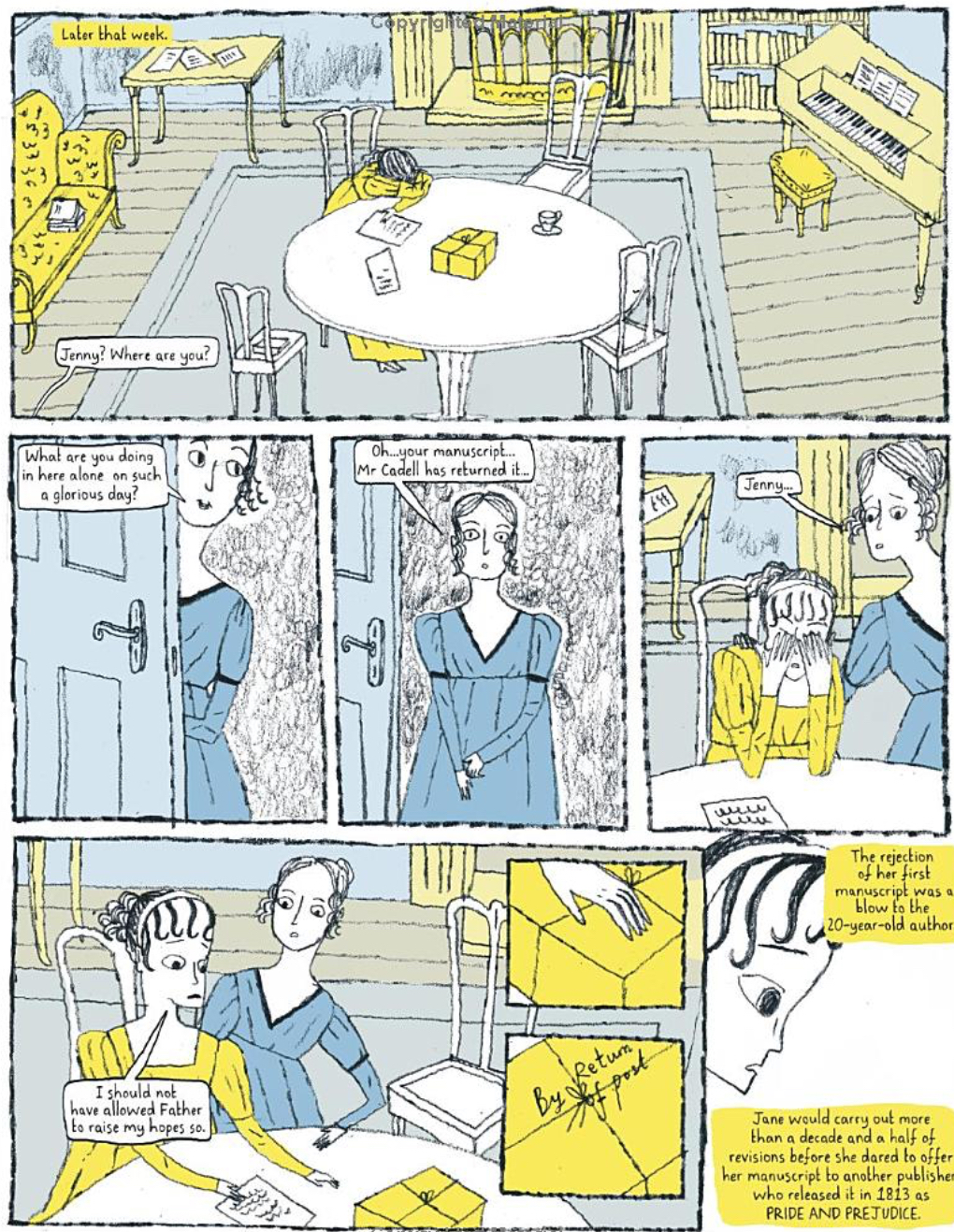
The wider focus of Evans contrasts with the more narrow, intimate storytelling of Barchas and Greenberg. Rather than retell the author’s entire life, it focuses on a few key turning points. A professor at the University of Texas-Austin, Barchas is an acknowledged Austen expert, having written several (non-comic) books on the subject. She relies far less heavily on narration than Evans, which means the story has a quicker pace. To this layman, though, Barchas presumes too much familiarity with Austen’s life and work through this lack of narration. I was glad to have read Patchwork first so I had some background in the facts of Austen’s life.
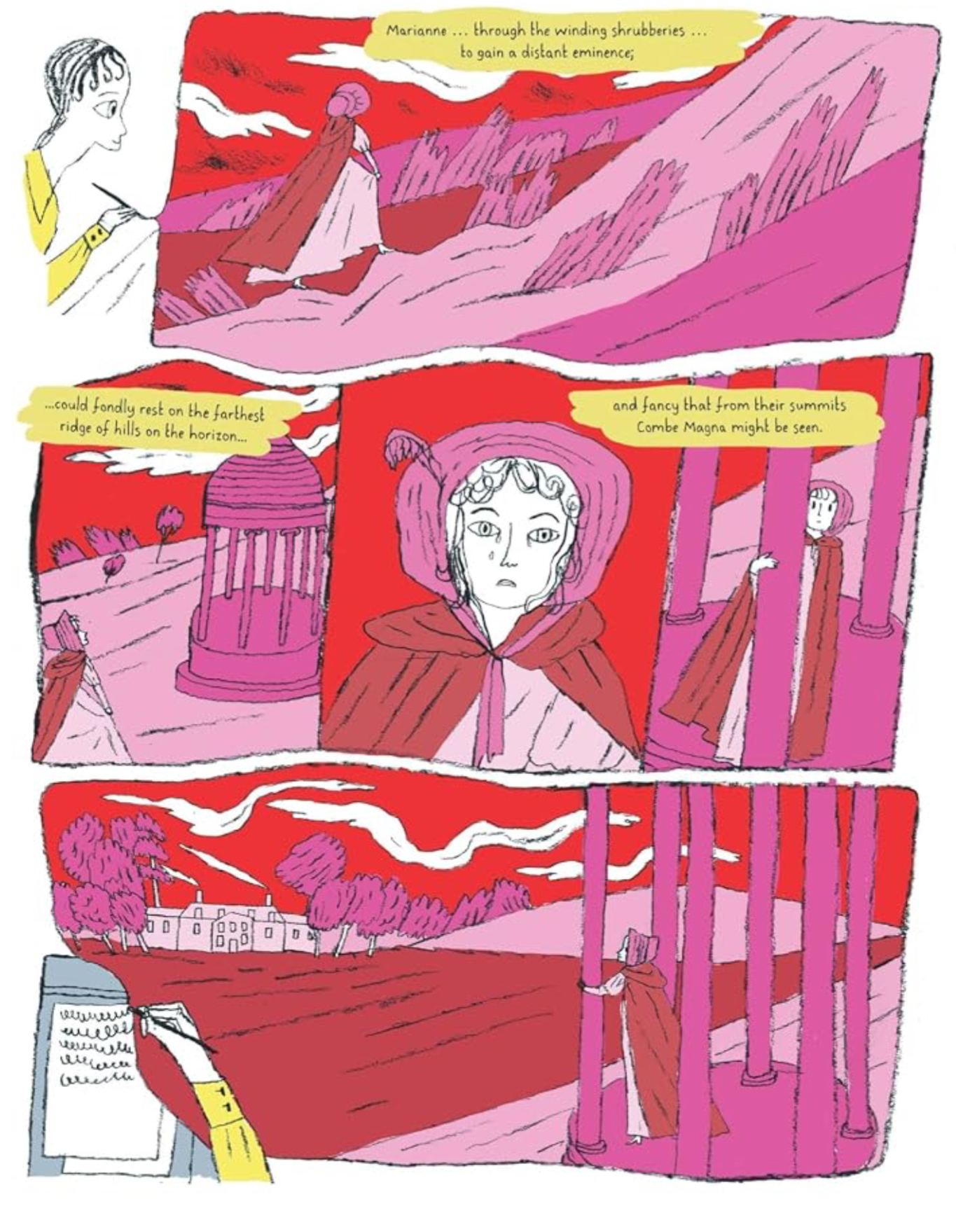
Greenberg’s flat colors in Novel Life are more restricted compared with the spectrum of watercolors of Patchwork. This is a sensible choice given the more grounded approach taken by that book. The exception comes during Austen’s fantasy sequences, which become a fantastical red, pink, and orange. At times the colors appear fiery. It's a refreshing change from using the cliched fluffy cloud borders to indicate a character’s imagination. These colors contrast strongly with the more staid blues and yellows for Jane’s comparatively humdrum normal life.
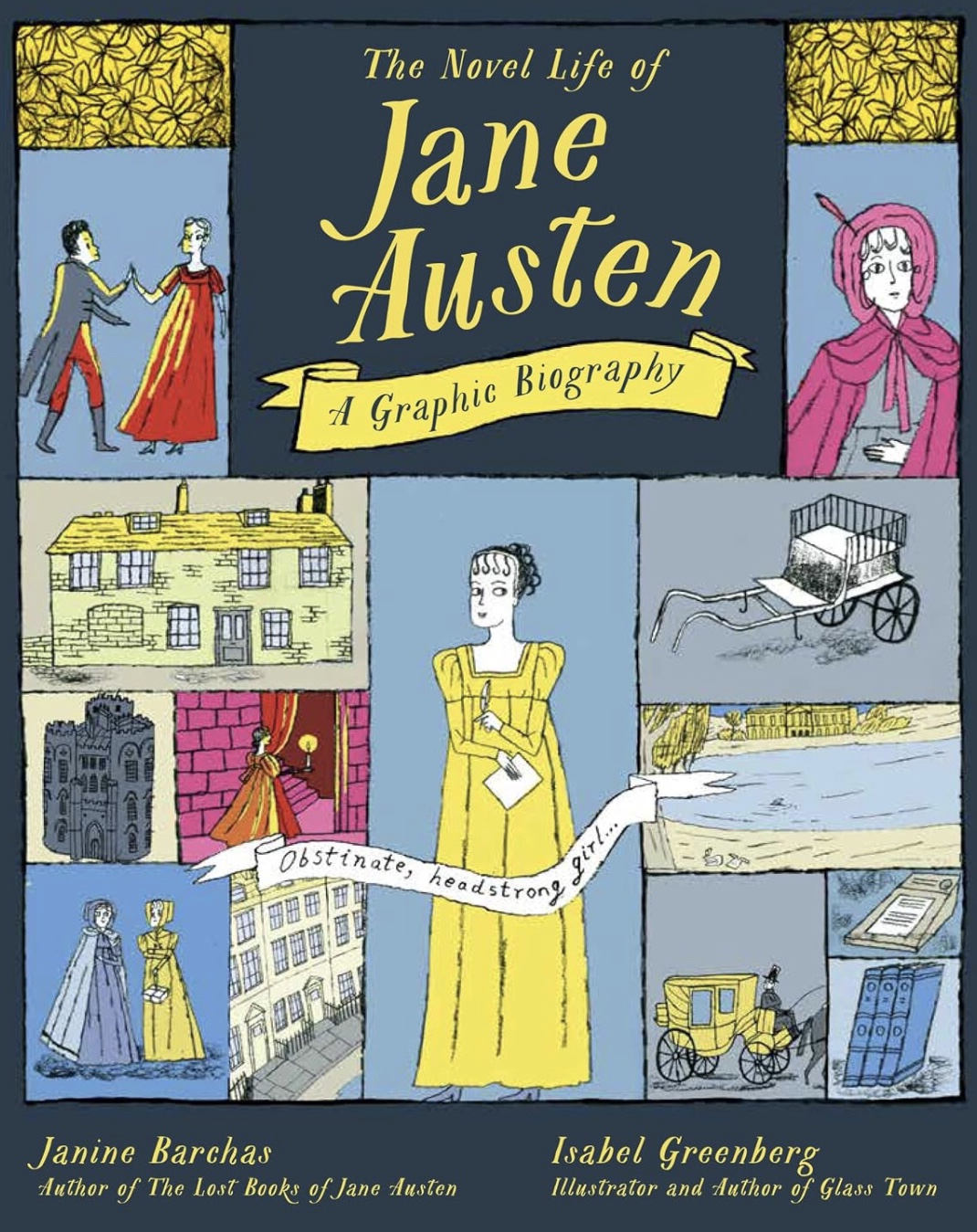 Jane Austen had a rapier wit, and it is speculated some reasons her letters were destroyed were the unflattering comments she made about the Austen clan. All the creators tap into some of that spirit. Evans has a felicity for one liners like, “If the clothes maketh the man, the women maketh the clothes.” In Novel Life, Jane says on a trip to Bath that the city’s attractions are not just for the physically infirm but also for “the love sick. In Bath the humiliations of the marriage market await all women under 30.”
In some cases, real-life events provide a biting humor all their own. Austen’s “outlandish cousin” Eliza really did describe her widowhood as “liberty” after her first husband was guillotined during the French revolution. One Evans sequence shows the Austen women reading a letter promising a horse and carriage from Jane’s well-off brother Edward. Thought balloons show the steed and burden gradually transform into a mule and cart as his stinginess is revealed. The donkey cart is mined for humor in Novel Life as well, although a note points out a practical reason for the gift: Donkeys were not taxed; horses were. If Edward had given his family horses, it would have been an additional expense.
Both artists handle Jane’s death of an unknown ailment at 41 well. In Novel Life, she asserts on her deathbed she was “never alone” as we see her surrounded by visions of her characters. Evans shows Cassandra Austen weeping at her sister's deathbed accompanied by excerpts from, and a dramatization of, Jane Austen’s poem “Venta.” These endings are all the more impactful when readers remember the author’s lack of fame throughout her life. She never knew how many people her work would touch.
Patchwork and Novel Life are both definitely of interest to novice Janeites and dedicated Austenites alike, although Patchwork was my favorite of the two. Patchwork explores the history of the British Empire, the textile industry, and even the rise of the novel as an artistic form. The last of these is perhaps of most interest to comics fans. Novels were at one point as denigrated as comics were to be in the 1950s. Critics of novels wrote “The depravity is universal. One’s sight is everywhere offended by these foolish and dangerous books.” In Novel Life a haberdasher tells Austen “Novels are all so full of nonsense and stuff.” Did a descendant of one of these critics grew up to be Fredric Wertham?
Any fan of Western novels owes Jane Austen a great debt. It was partly due to the success of Austen and her contemporaries that novels became an accepted artistic medium. Without them, the views of the above philistines might yet hold sway.
It might seem counterintuitive for an acknowledged Austen novice to prefer the more thorough Patchwork to the comparatively light Novel Life. In my estimation, it is that very thoroughness that makes it more appealing for readers whose primary interests may lie elsewhere.
Each title concludes in a way that emphasizes Austen’s legacy. Novel Life shows Austen fans visiting her house and browsing assorted knicknacks. Patchwork finishes with the story of a caretaker at Austen’s final resting place. He asked a man visiting her grave if there “was anything particular about that lady?” Regardless of prior familiarity with Austen, anyone who reads these books will be easily able to answer the question.
The post Her Wit Flowed Long: Two Recent Jane Austen Graphic Biographies appeared first on The Comics Journal.


 Hello, my name is Jack Sparrow. I'm a 50 year old self-employed Pirate from the Caribbean.
No comments:
Post a Comment