

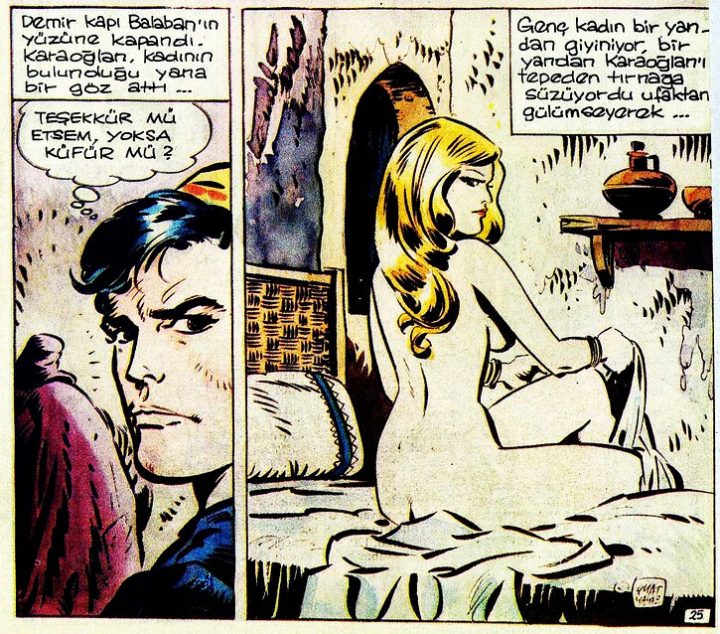
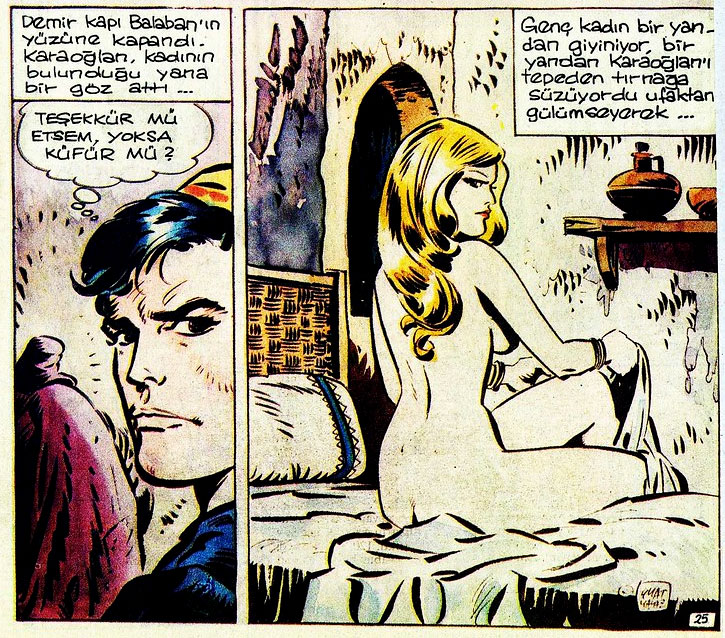
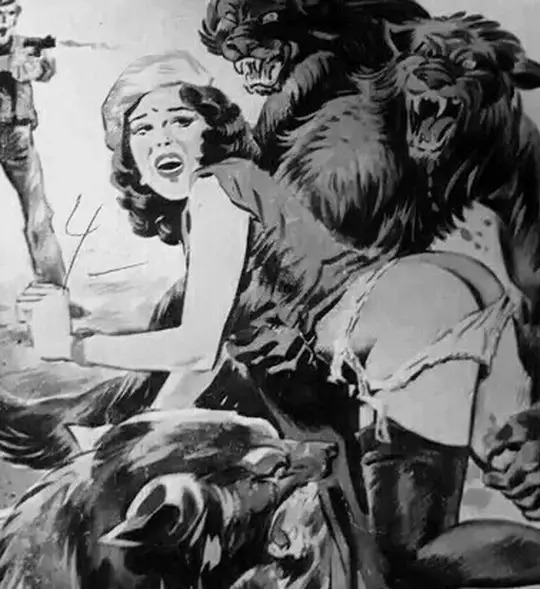
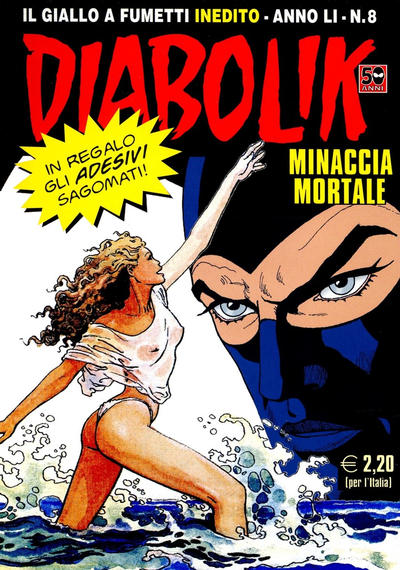
For example, Suat Yalaz. the Turkish comics artist rose to fame by successfully establishing an adventurous series named Karaoğlan featuring a scout in the services of conqueror Genghis Khan. Those tales made it across the borders of his home country, a rather rare thing to happen in Turkish comics. With cinematic adaptations and more prominence its creator went to live and work in France. Starting in the 1970s, he began to use several pen names – the most famous among them probably being Gi-Toro. During the 1980s Gi-Toro contributed to publications like African Love, later getting re-released as Sex Negros and Eros Negro. Those were Fumetti Neri, pornographic comics aimed at adults, often heading in a sadistic direction by adding disturbing depictions of violence, including bestiality and necrophilia. (You can find a bit more on Fumetti Neri, especially on one of its household names, Diabolik, here.)
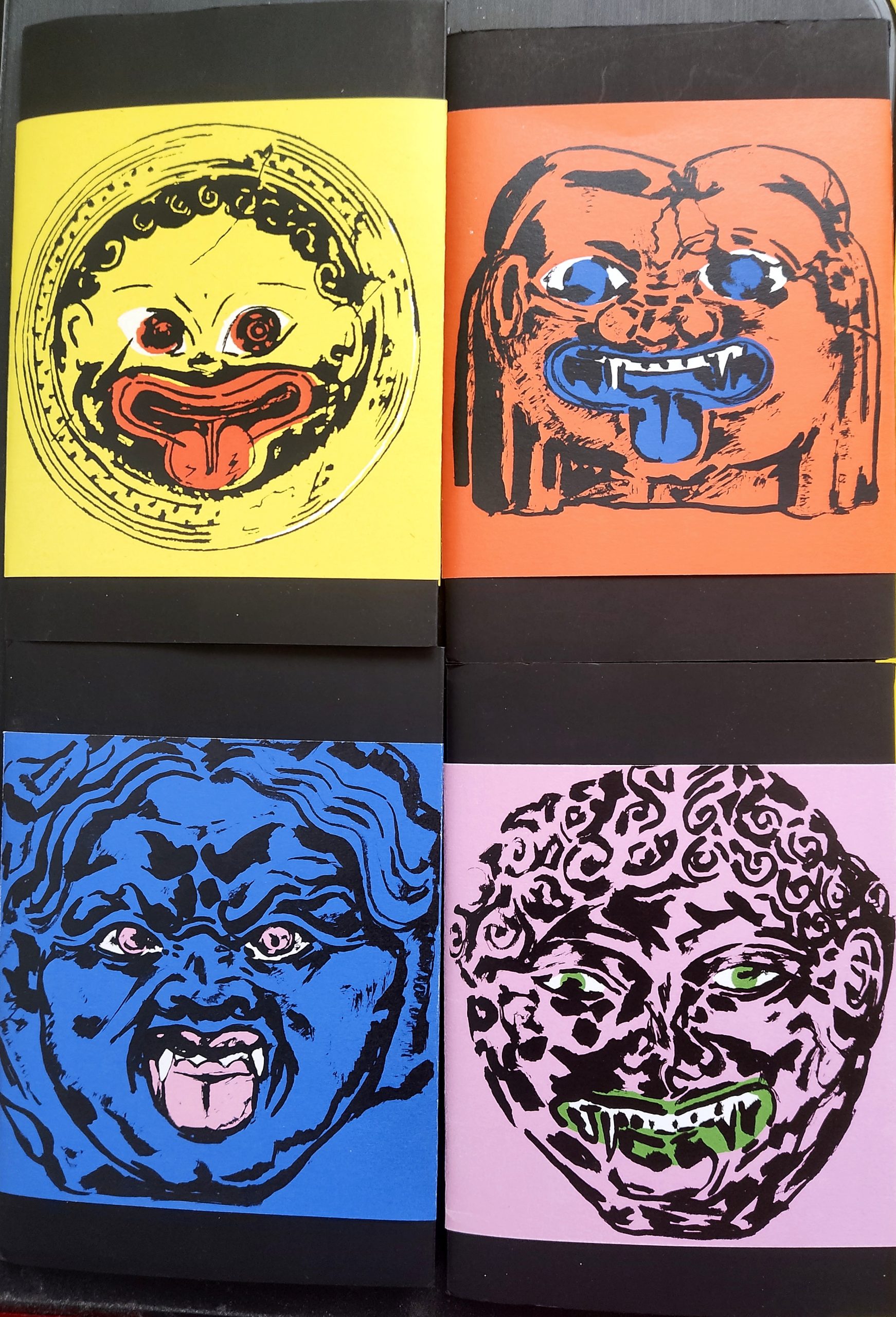
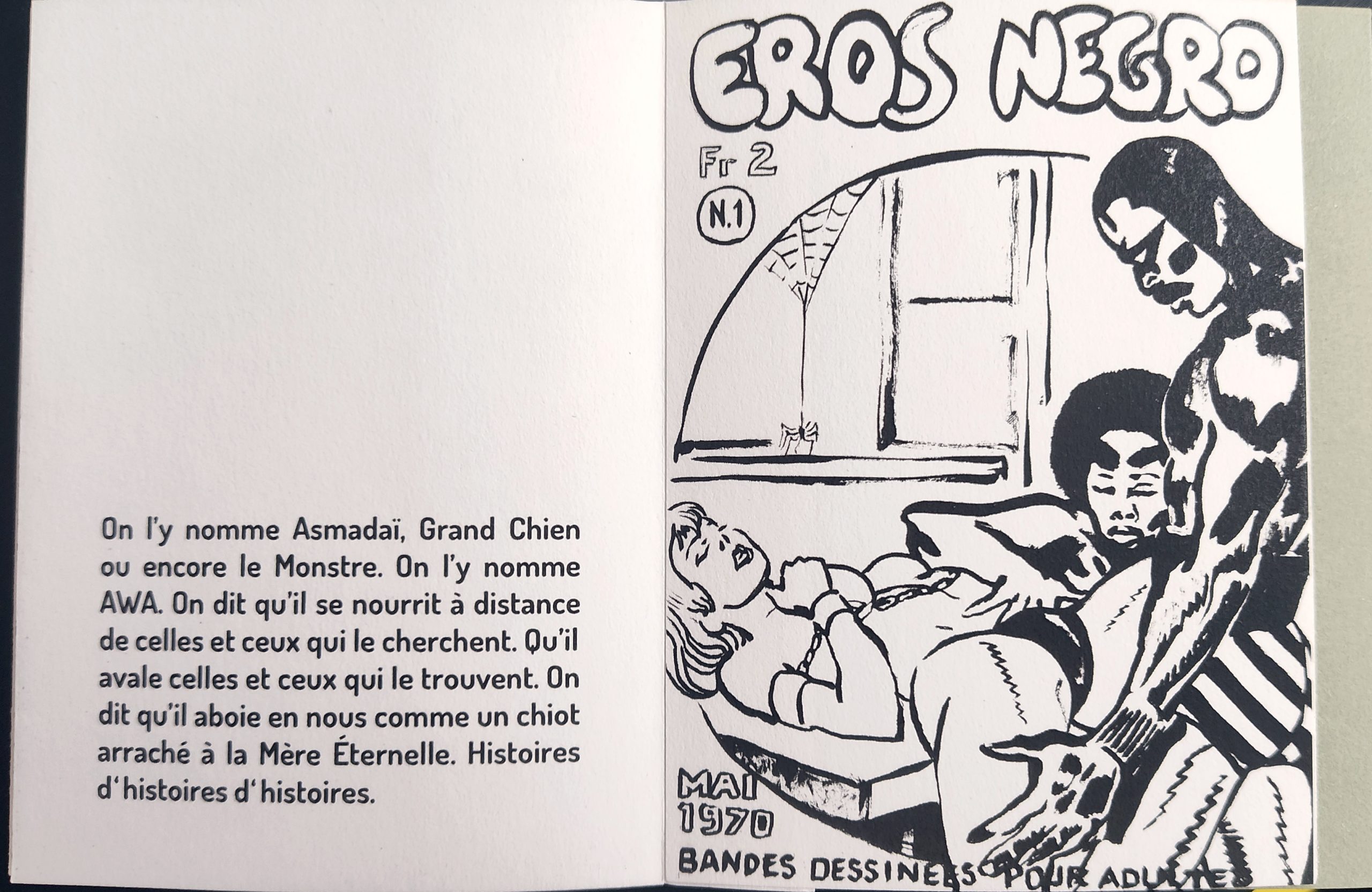
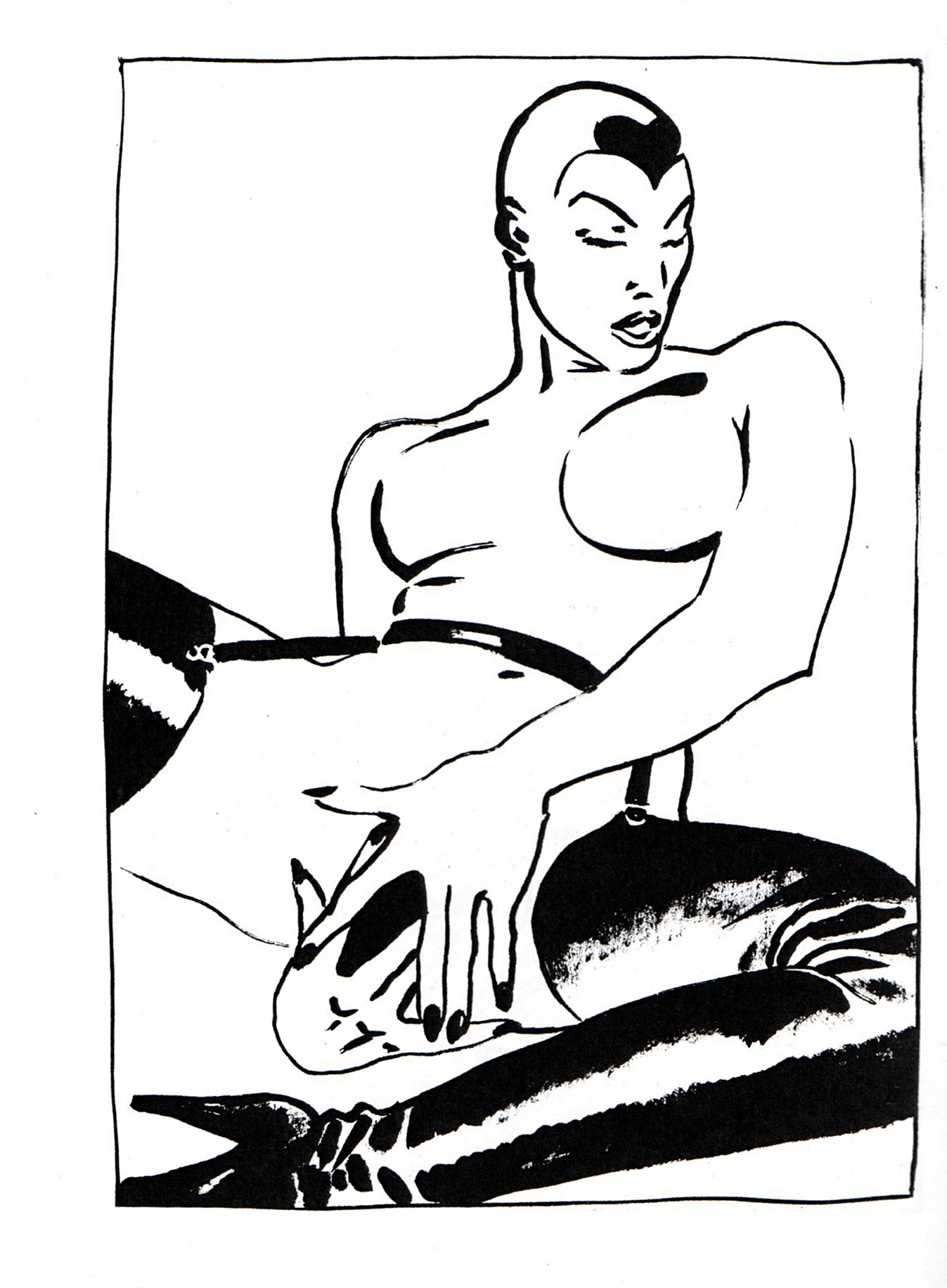
Further, Eros Negro became the title of a bunch of releases by Démoniak, published by the French house for experimental bande dessinée, Édition Adverse. The four part mini series subtitled jouer avec le feu – which not only translates, but also rhymes – as “Black desire (playing with fire)”, is a power and revenge fantasy about an amateur kidnapper getting forced into having sex with his victim by two arriving gangsters, accompanied by another woman held hostage by them. What's unfolding is the watching and later taking part in the molestation of both women, following the plot of an absurdist porno flick that runs on a TV set in the group's hideout. Those men are depicted predominantly as thugs of color, and the women as white. At the end, almost everyone will be killed, with the amateur kidnapper and his victim as the sole survivors keeping on their internalized sex play of master and servant. The Black Desire leaves us with a person of color visualizing the white men's deep fear of the slave's revenge by using images deeply rooted in western culture, once exclusively reserved for those being part of it.
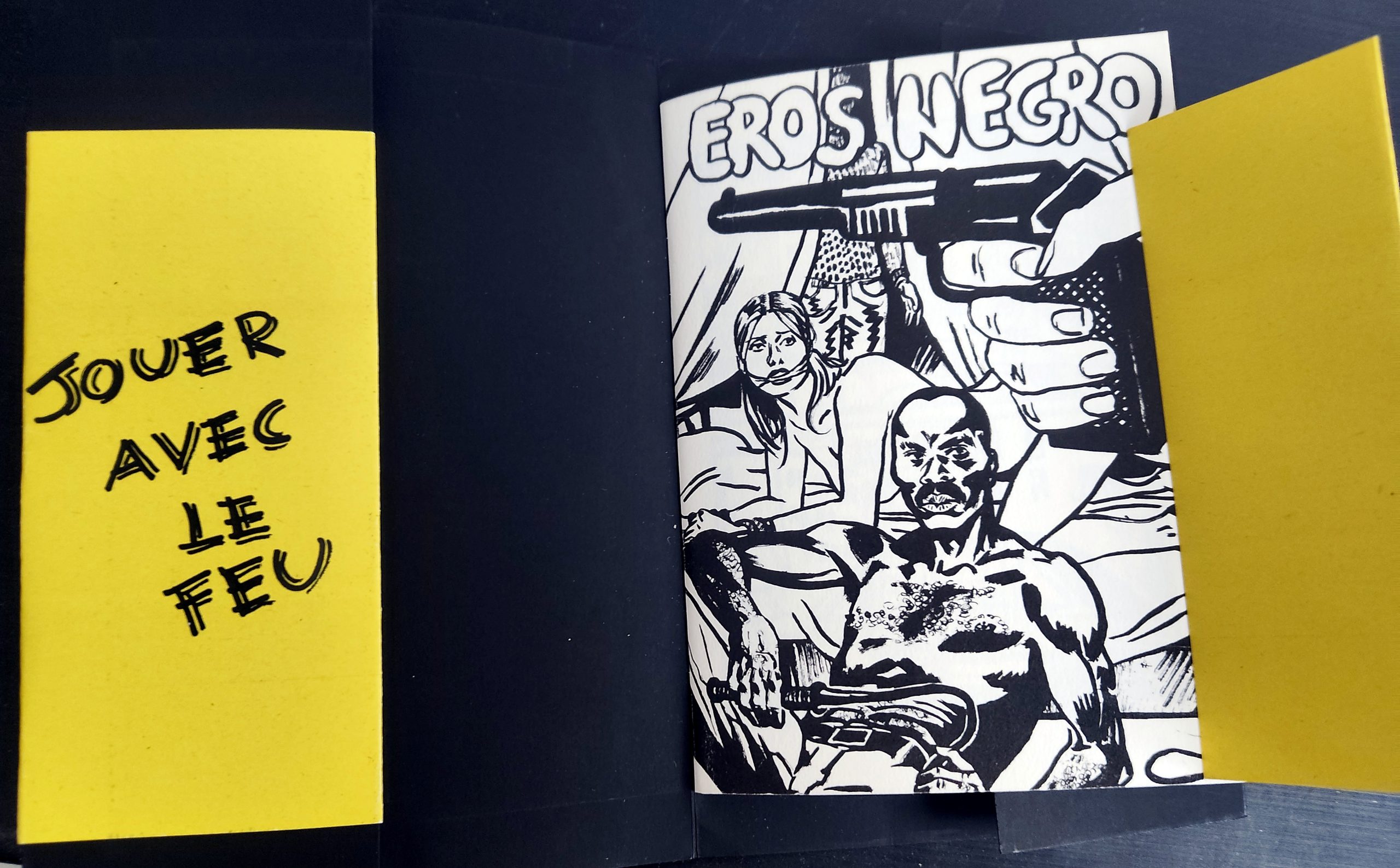
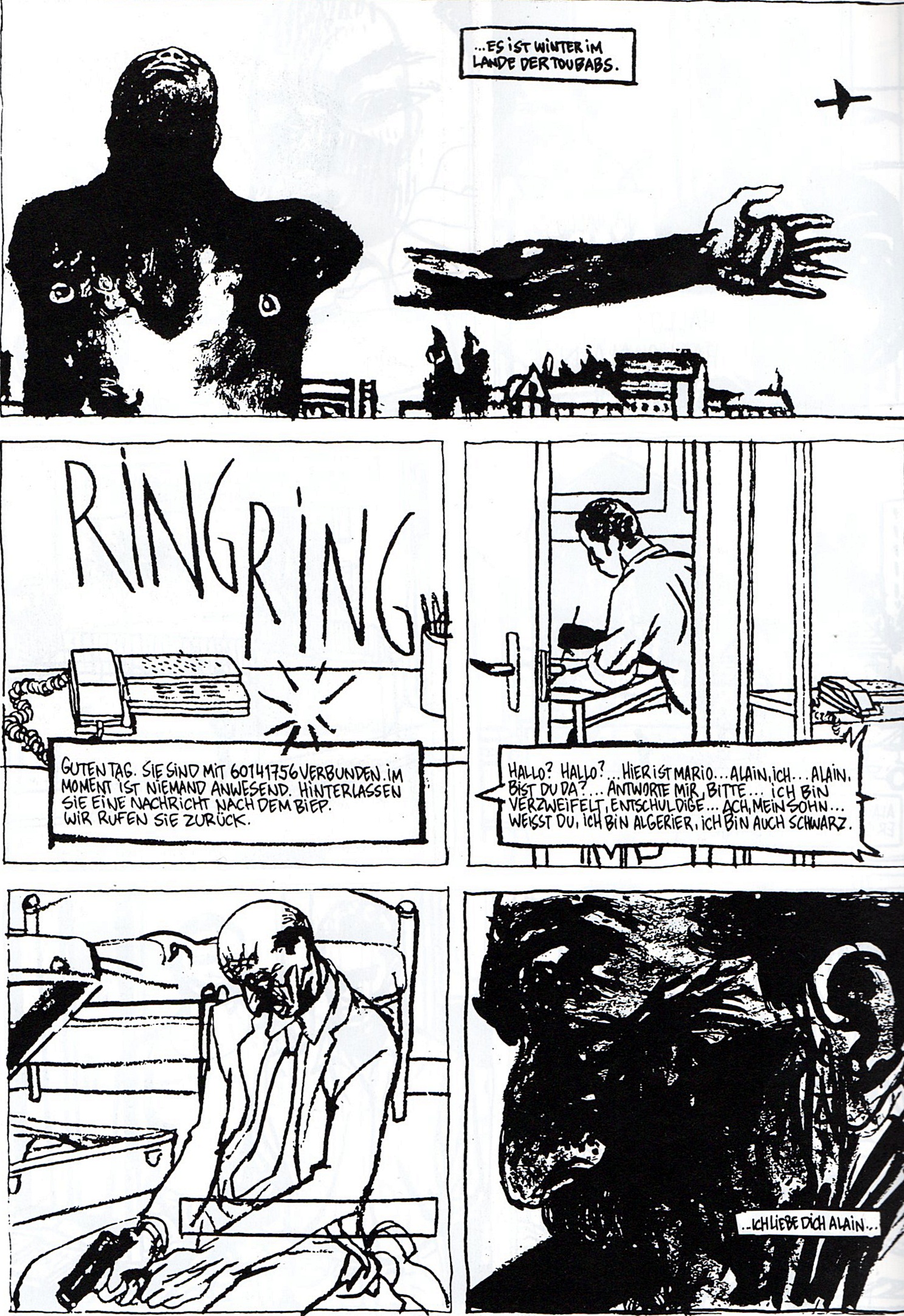
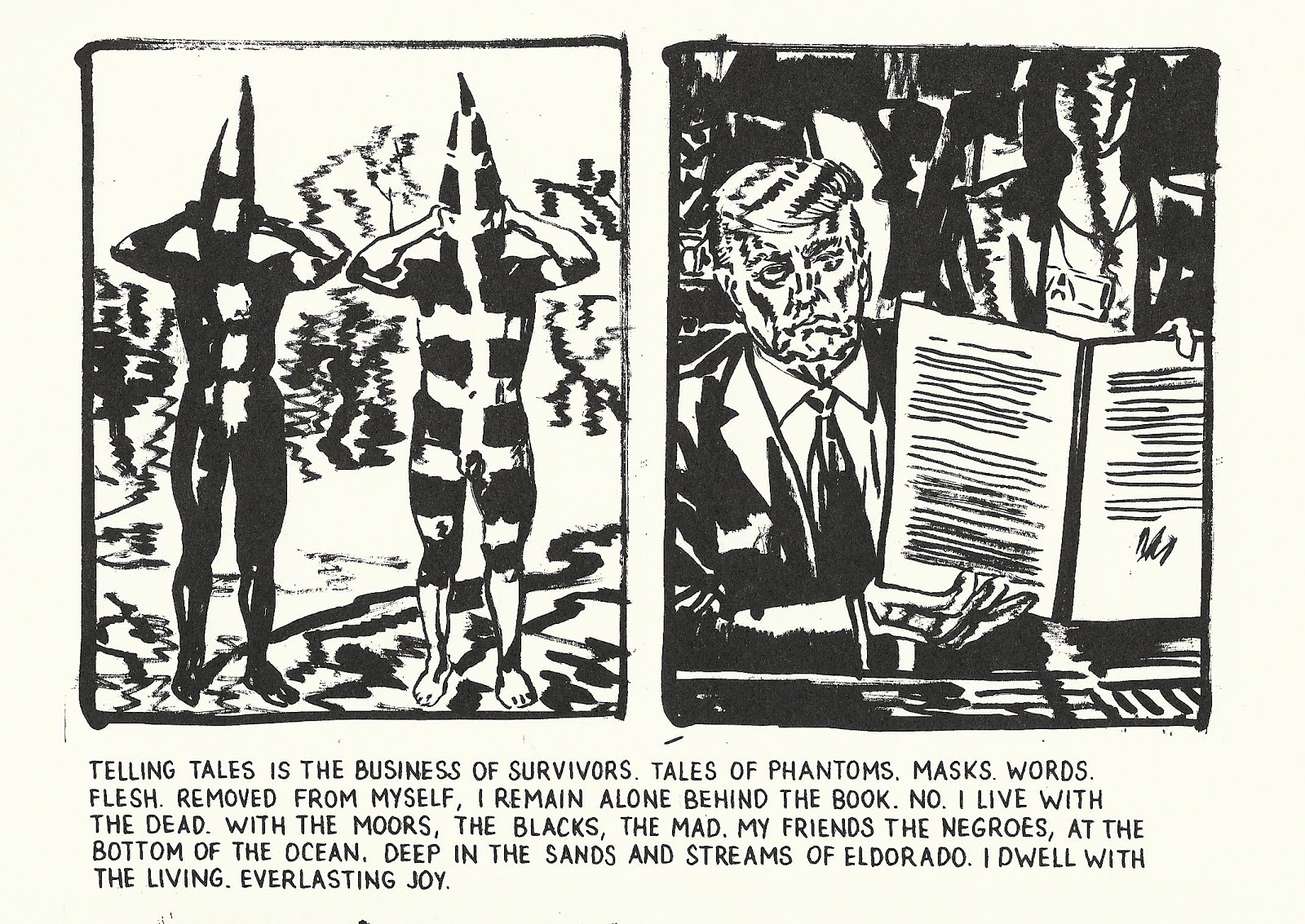
It requires little effort to recognize the stylistic mannerisms like fat brushstrokes exercising a roughly, art brut-like staging, combined with often sparse, almost eradicated backgrounds, brought into full effect earlier and most prominently by Yvan Alagbé in Yellow Negroes – a fictionalized telling of living as an expat among white people while not sharing their skin color, thus their power. Moreover, one of the villains in Eros Negro sports facial features and outfits chosen close to those sported by the Frémok co-founder himself. Though the acts of both violence and humiliation committed appear as distanced, and almost clinically cold in Yellow Negroes, the brutality performed AND acted out in the chap book-like mini comics is more of an erupting nature, leaving less room for the detailed shading and hatching bestowed for Alagbé's long form comic.
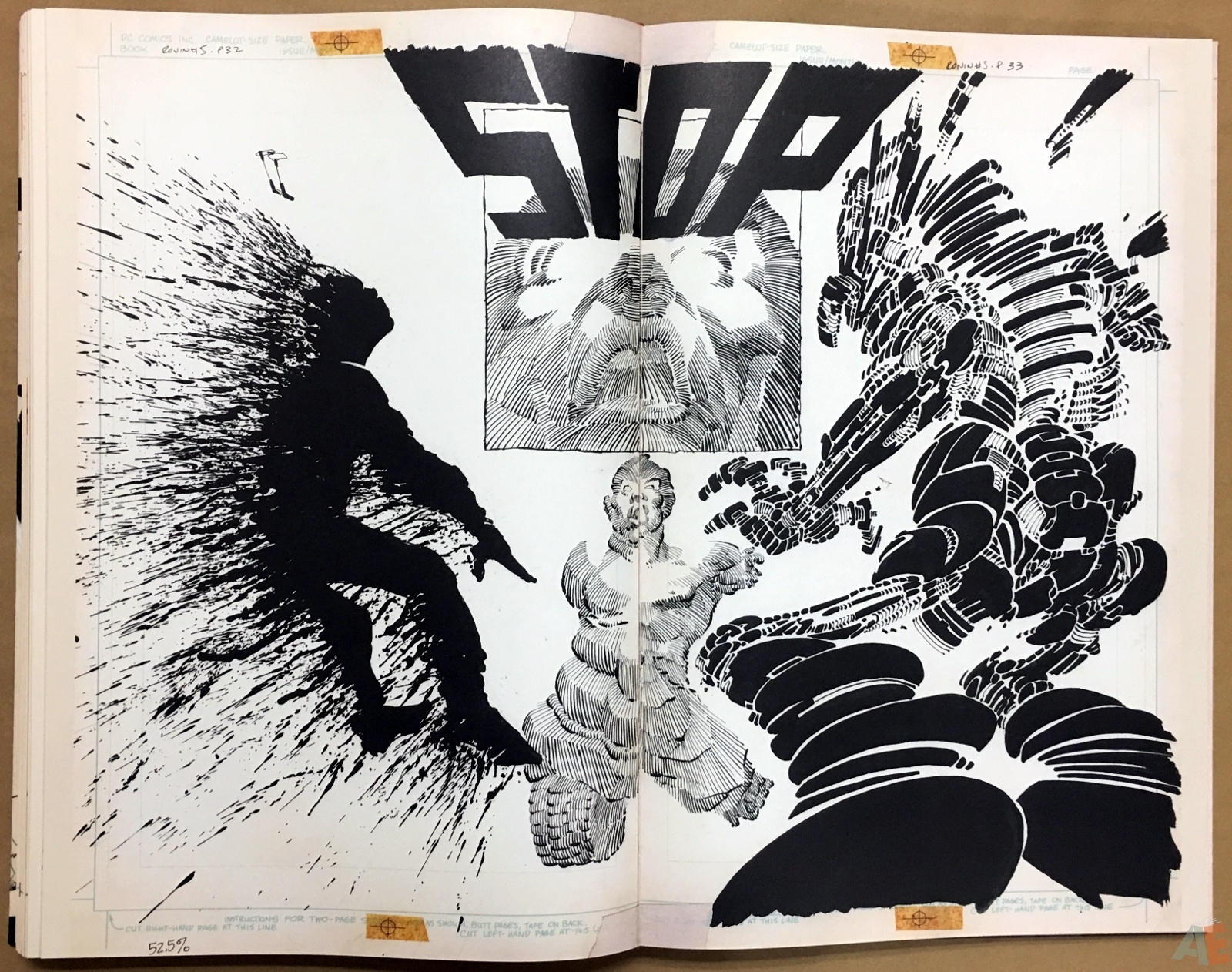
The brushstroke connection got further exposed, when Frémok publisher and artist Yvan Alagbé joined Austin English for the New York Comics Symposium in September 2025, where he got interviewed about his influences. Alagbé stated to be attracted to black and white aficionados like Frank Miller and José Muñoz, both not shy of depicting harsh acts of violence either.
While around 125 years ago White Man's Burden, to many a poem praising colonialism, got written by the same author, Rudyard Kipling, who by creating The Jungle Book in 1894, admittedly wasn't the first one coming up with the concept of a boy raised by animals in the jungle, but one of the most successful in doing so. Later, Kipling's feral boy, Mowgli, gained further recognition, when Disney released its animated adaption of Kipling's novel in 1967. In 2011 Olivier Schrauwen took a closer look at the hierarchic structure in Mowgli's Mirror, what might even have been a double entendre.
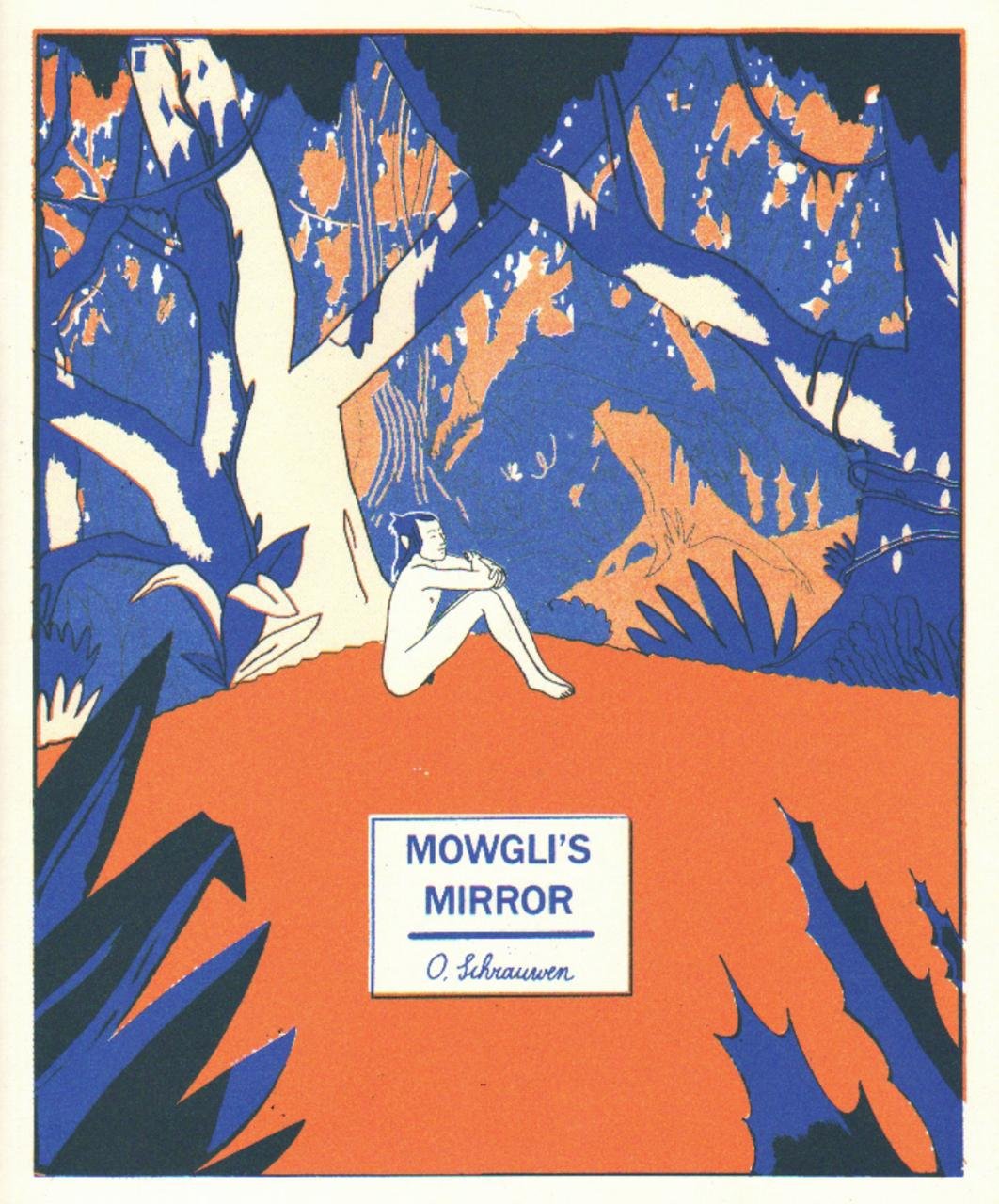
Intelligibly being a huge influence on Edgar Rice Burroughs' Tarzan of The Apes (1912), Kipling's book popularized planting civilization into the wilderness, wherein white man ensures himself to be superior to animal instincts, or overcoming them by *erecting* civilizations. Though, in Mowgli's case, who was more of a student than a tutor, and because of being of Indian heritage thus of a skin color rather tanned, the white burden seemed gently redeemed.
But with the birth of Tarzan and hordes of epigoni following afterwards, which not only capitalized on the success of the lord of the jungle, but also helped to establish the lore of white men taming the wild, simultaneously evangelizing those still untouched by the hand of god – and consecutively offering their often unwanted assistance, a motif clinging to popular culture like a venereal disease.
Above, when reviewing the Tarzan strips by Russ Manning, TCJ editor Chris Mautner caught the following:
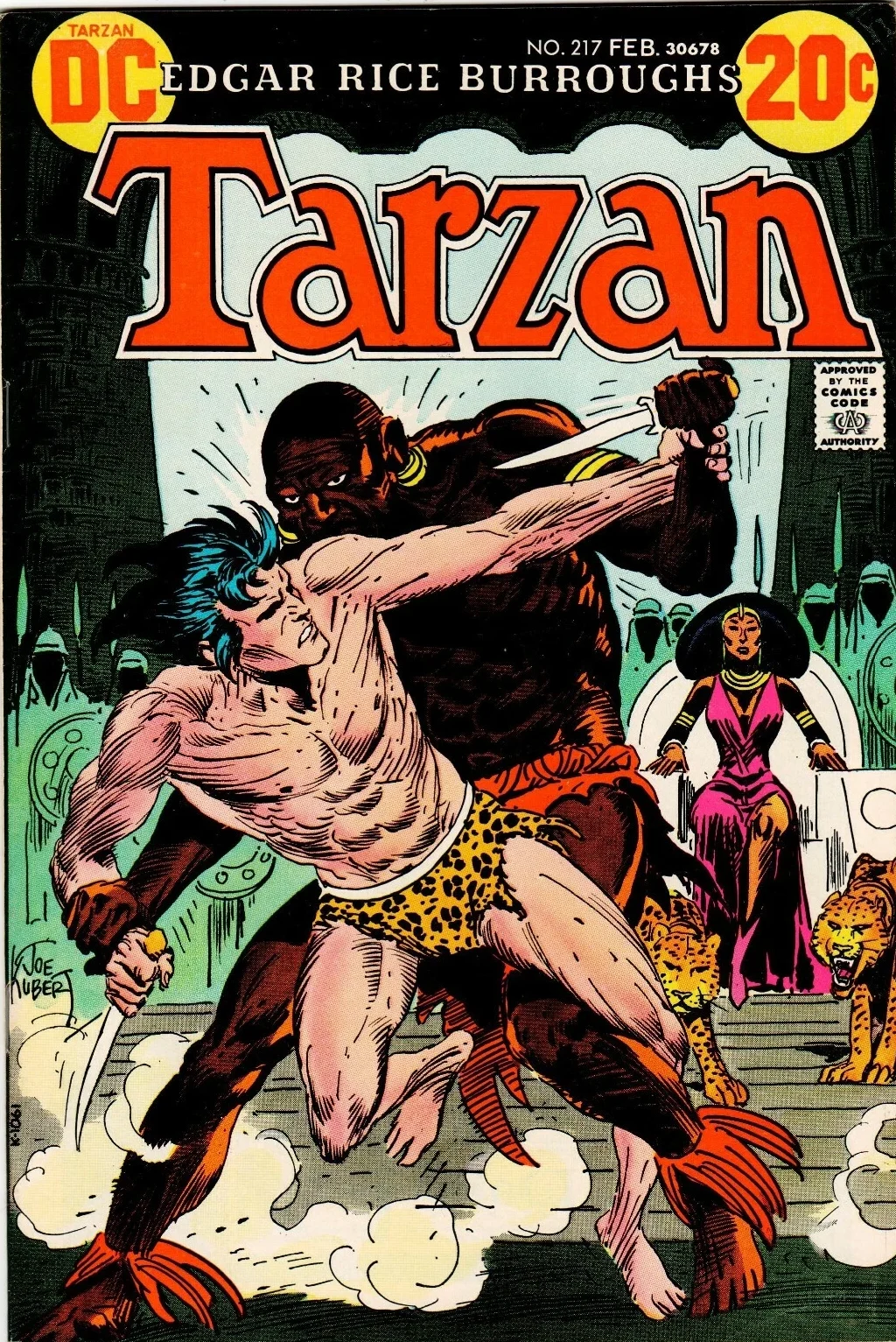
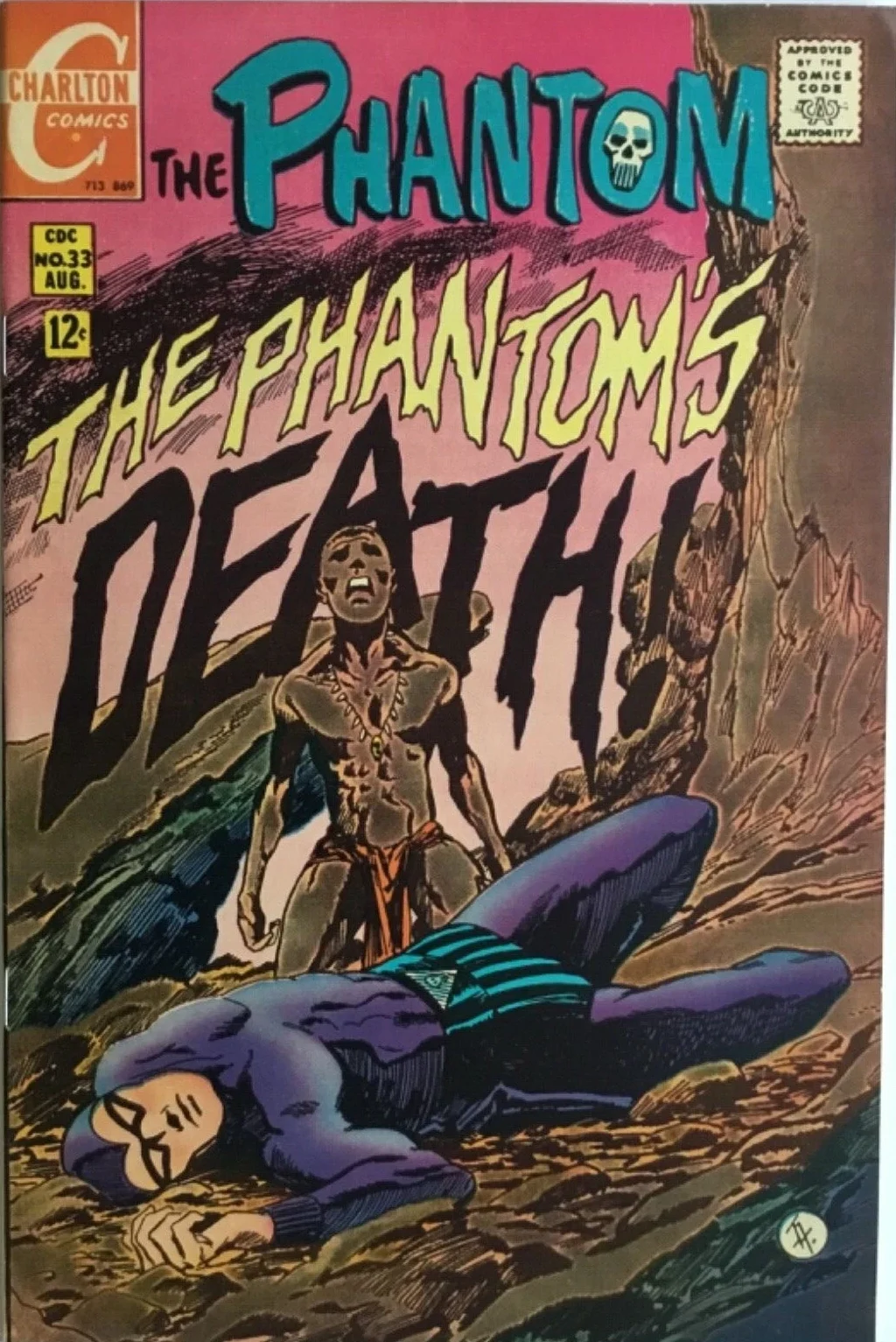
Back to those rather killing natives and animals instead, some of the troopers sent into the jungle known as noble savages were carrying names like Bomba, the jungle boy – whose tales found their setting in South-Africa, of all places – or Marvel's Ka-Zar roaming in the Savage Land. In Germany they had Tibor, while in Italy Akim ruled over the wilderness, but on top of it all – and despite a heated climate – the fully-costumed and first-to-be-so hero, the Phantom arose.
“The ghost who walks” is decidedly different from his vine-swinging colleagues, since he prefers to travel by riding a horse.
In. the. jungle.
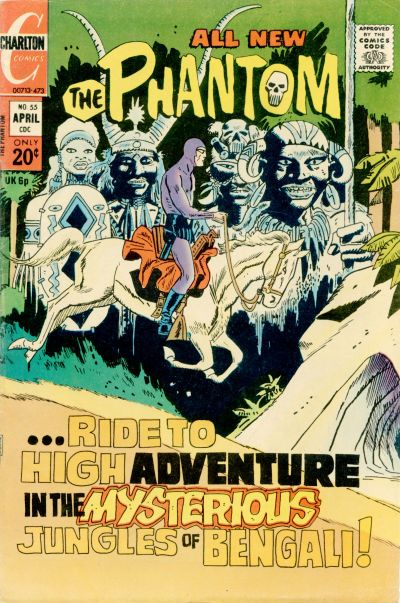
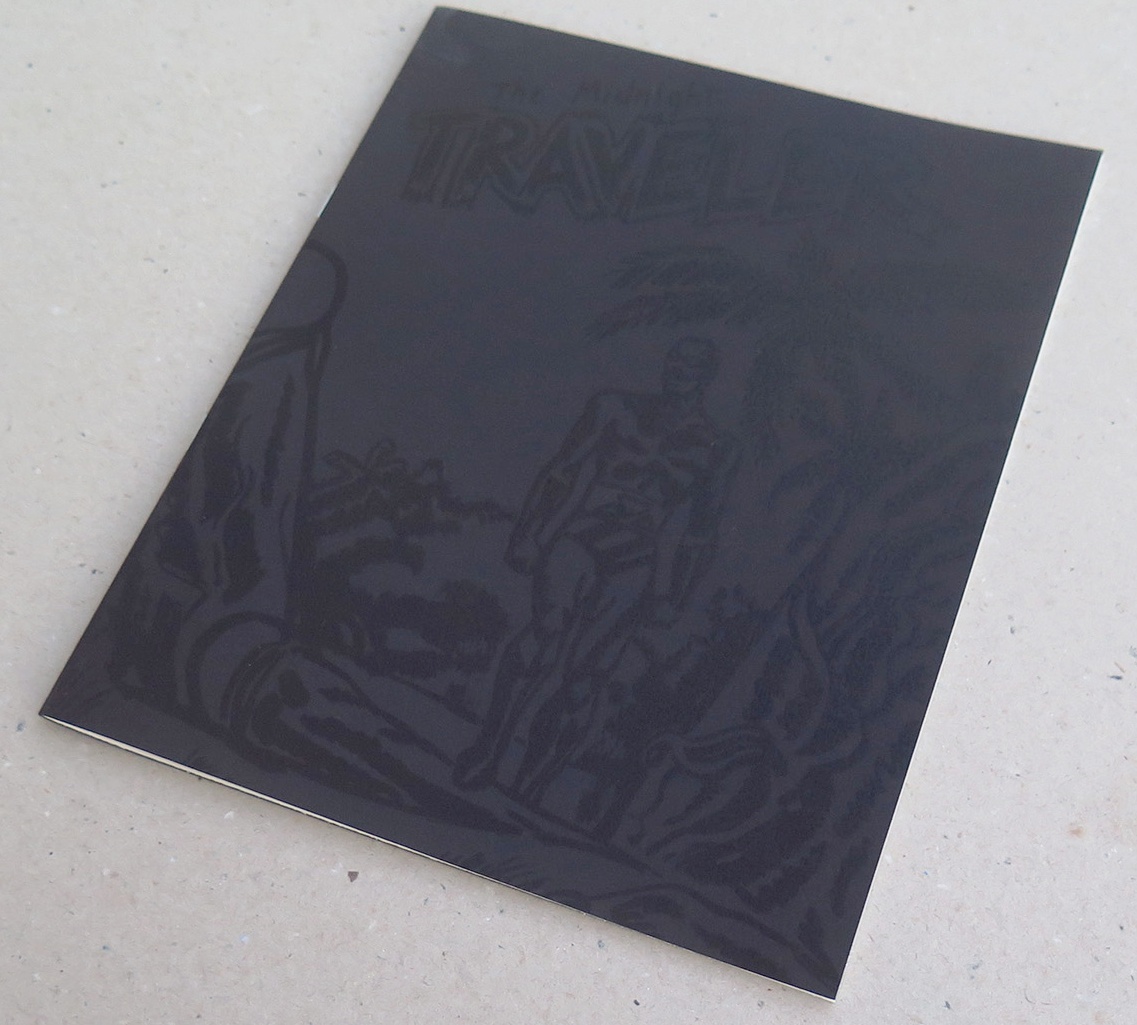
So for his 2025 release The Midnight Traveler, soul sister to Le Voyageur, Yvan Alagbé chose the most odd of all the otherwise loincloth-sporting jungle gents, who, if occasionally not dressed in a costume, obviously goes by the name of Kit Walker. Alagbé's choice might've been due to the myth behind the seemingly immortal man, because the Phantom job gets passed on from father to son when cracking with old age, but the savages just don't get it.
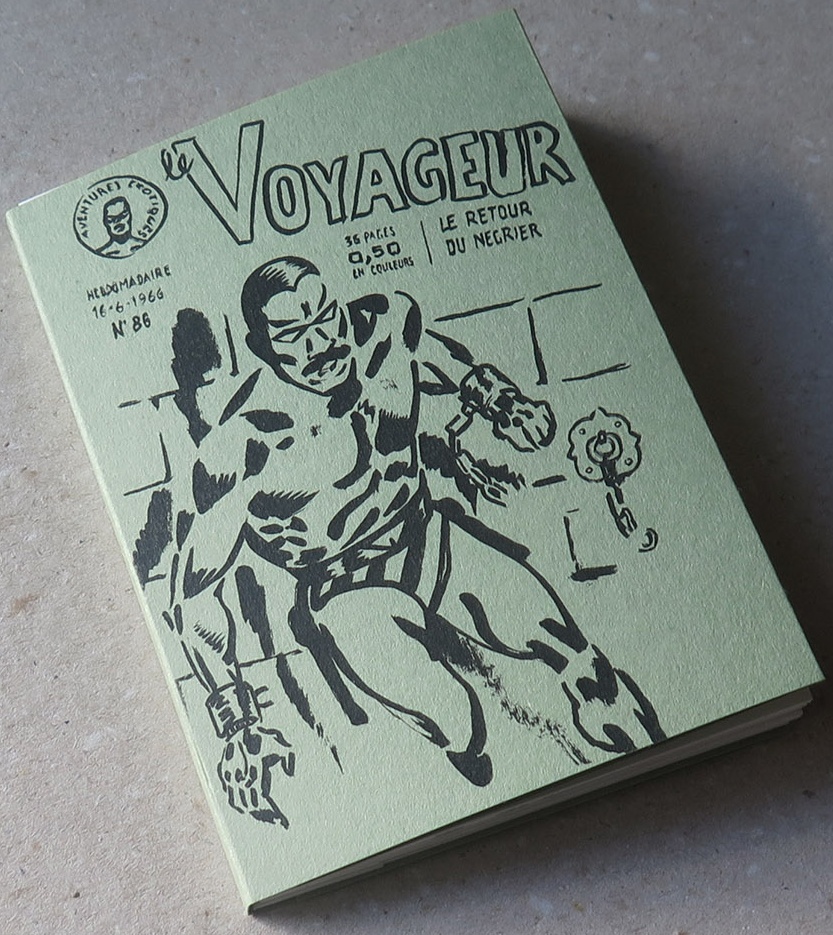
Le Voyageur, an essayist pamphlet leporello initially created for the Italian edition of Yellow Negroes, or, as the legend goes, hidden in it, and republished just this autumn by one of the French publishing houses most dedicated to the art of bookbindery, Éditions Adverse, presents jungle plagiarism and fumetti neri italiani pastiche galore, a meta-textual retelling of the relationships between black and white, readable as an allegory on the depiction of people of color, held hostage in white territories. It was created under Alagbé's nom de guerre Démoniak.
Here's an excerpt from Dieu, ce héros (God, that hero) Episode 1 by Yvan Alagbé from À partir de n°6:
- Okay. So, what are you reading?
-Lucifera. But in French. Luciféra, if you like.
-Dude, dude, but... You can't read it in French, dude. It's Italian, make an effort! You have to read them in the original version. And you have to read them all, in the right order. Otherwise it doesn't make sense. Yeah, buddy, you have to collect them. And spend money on them too.
- But, but... Each issue is a separate story. It's a serial story, man. It was originally a series. It never ends. But there are cycles. Spirals. Yes, spirals. Like in “Devil's Tales,” man. Like in “Ego monstre” by the Afghan writer Sayd Bahodine Majrouh.
- Ego monstre? I don't understand. Do you mean Eros negro?
- Leave it alone, man.
- I'm swimming in my blood. In ink. I draw, I sketch, I paint, I write. Like the prophet Mani. Like Aristophane. Like Magnus or Sandro Angiolini. Fumetti neri, dirty bibles.
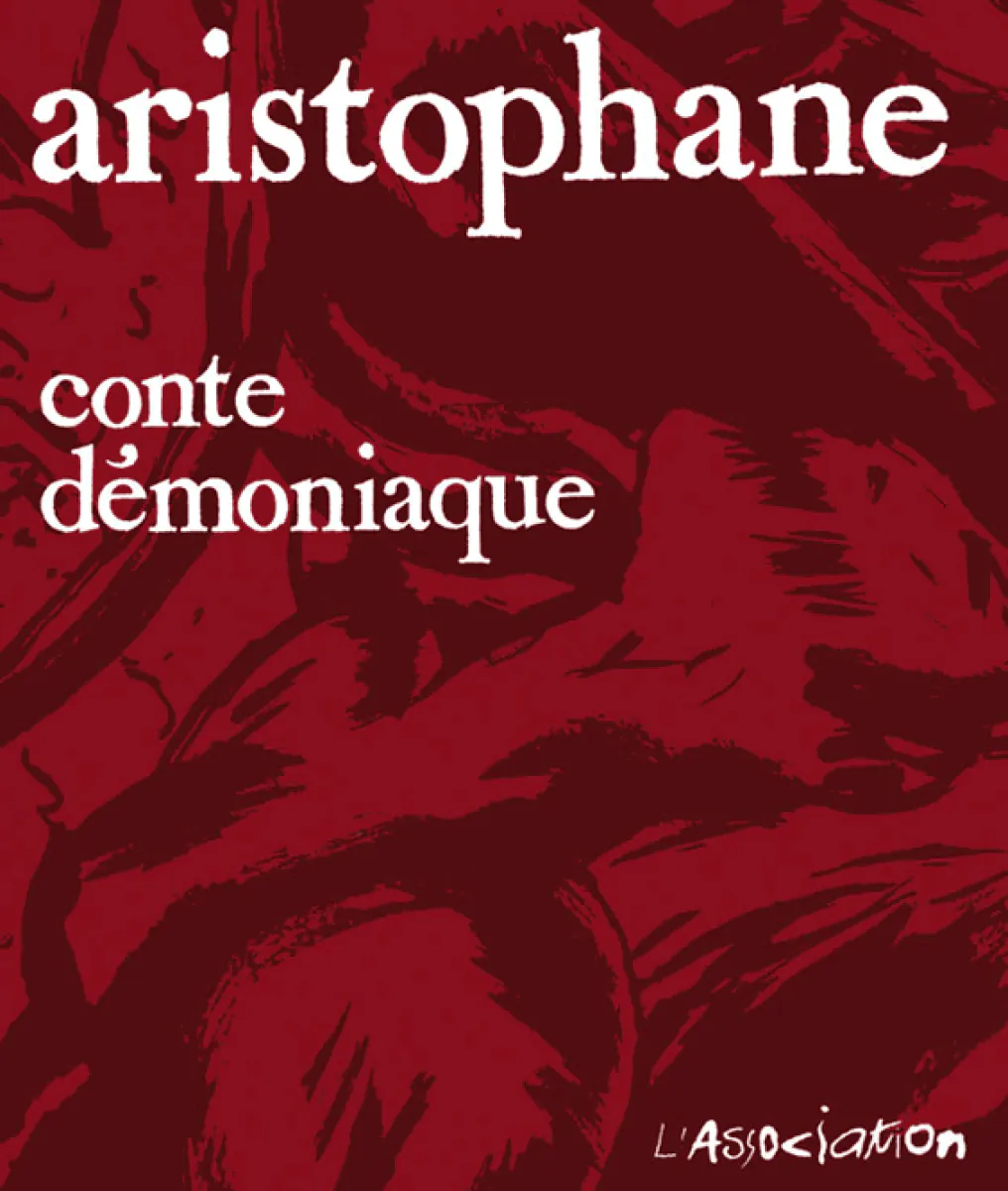
It's only con~sequential to put scholars of religious teachings on the eternal struggle between good and evil next to defining artists of fumetti neri, because it ain't christened “dirty bibles” for nothing – while Aristophane is a shout out to another French artist of color, Firmin Aristophane Boulon, known for Conte démoniaque, among other notable and influential works, and whose rough black and white art bears similarities to Alagbé's, often aiming for an effect similar to carving-out characters from a woodblock.

Above, the harking back to an Afghan doctor of philosophy, who additionally has to be considered an avid keeper and collector of the popular culture of his homeland, needs to be singled out. Said Sayd Bahodine Majrouh is easy to recognize in Le Voyageur, only that he's a Frenchman here, a re-colonization of sorts, if you so will:
Under strange circumstances, Professor A.’s research on the figure of the colonial spirit came into our possession: in a suitcase that had been left behind on a train between Limoges, the famous scholar’s birthplace, and Périgueux, the prefecture of the Dordogne.
The object, discovered by the cleaning crew, was handed over to the stationmaster and, given its strange contents, very quickly “reported to the authorities.”
Alongside carefully ironed laundry, it contained numerous photos of “prominent” or “sensitive” figures in highly inappropriate poses.
And, followed by an intermission of two panels, one of them showing two 'stached Phantoms, the one pulling away his lookalike by grabbing him under his armpits, while he's accompanied by a thought bubble, stating “There was a small, run-of-the-mill gangster who had been drugged and was wearing my disguise”, one more hint on the plagiarism concomitant with possessions of all kinds.
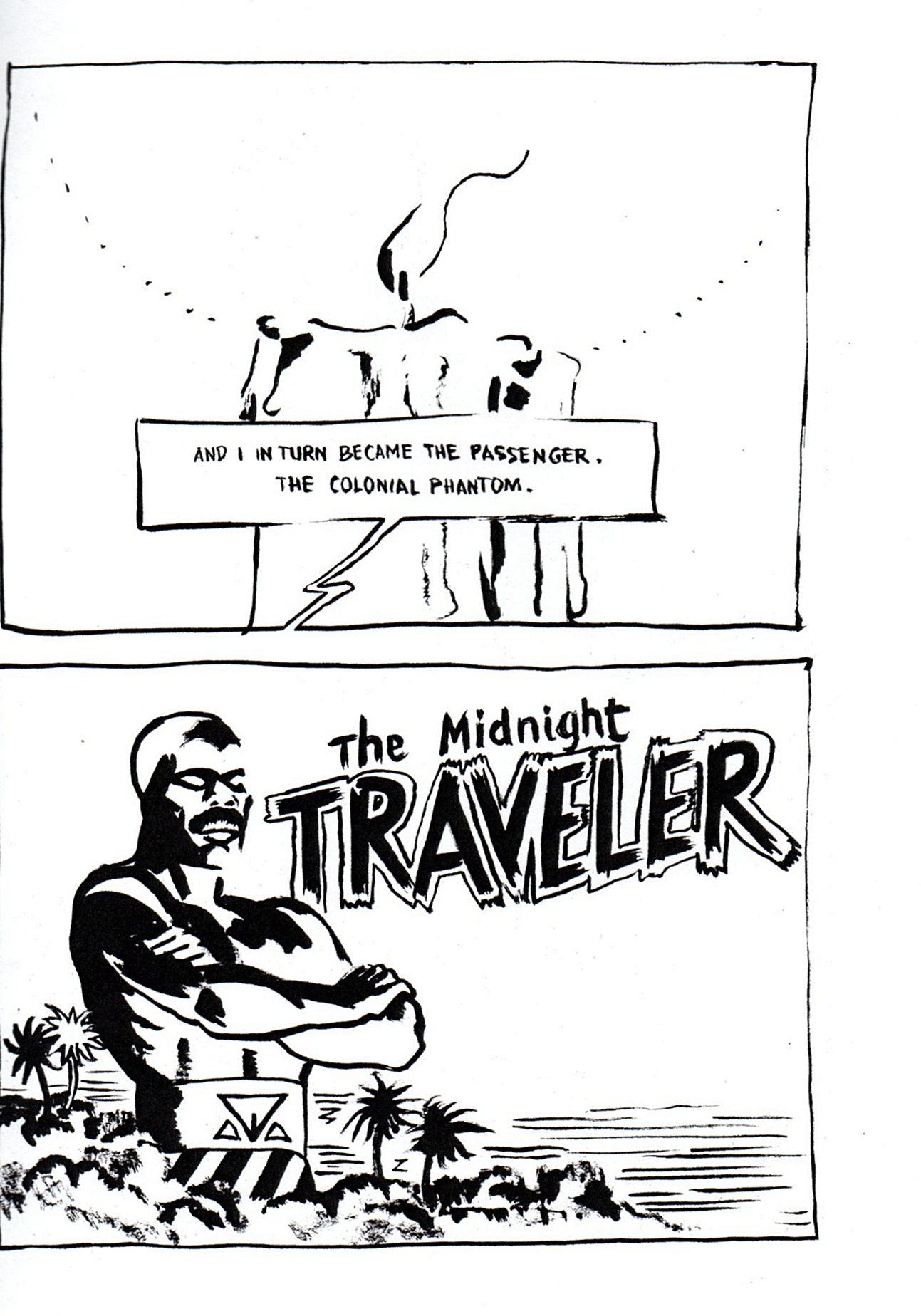
The text continues:
The suitcase also contained “revolutionary” writings and a large number of “train station comics”— small-format publications from Italy that blended sex, crime, and “exotic adventures.”(…) These “adult comics” were discovered in a cabinet at Place de Valois, the headquarters of the Ministry of Culture, and recount the adventures of various satanic or Tarzan-like characters, male or female, sometimes asexual or hermaphroditic. We thought it would be revealing to present a few copies that we were able to obtain. The suitcase was reported lost, but its contents were archived at the Ministry of the Interior on Place Beauvau; for what purpose is unknown. An anonymous enthusiast was able to “rescue” a number of obscene illustrations that investigators had overlooked.
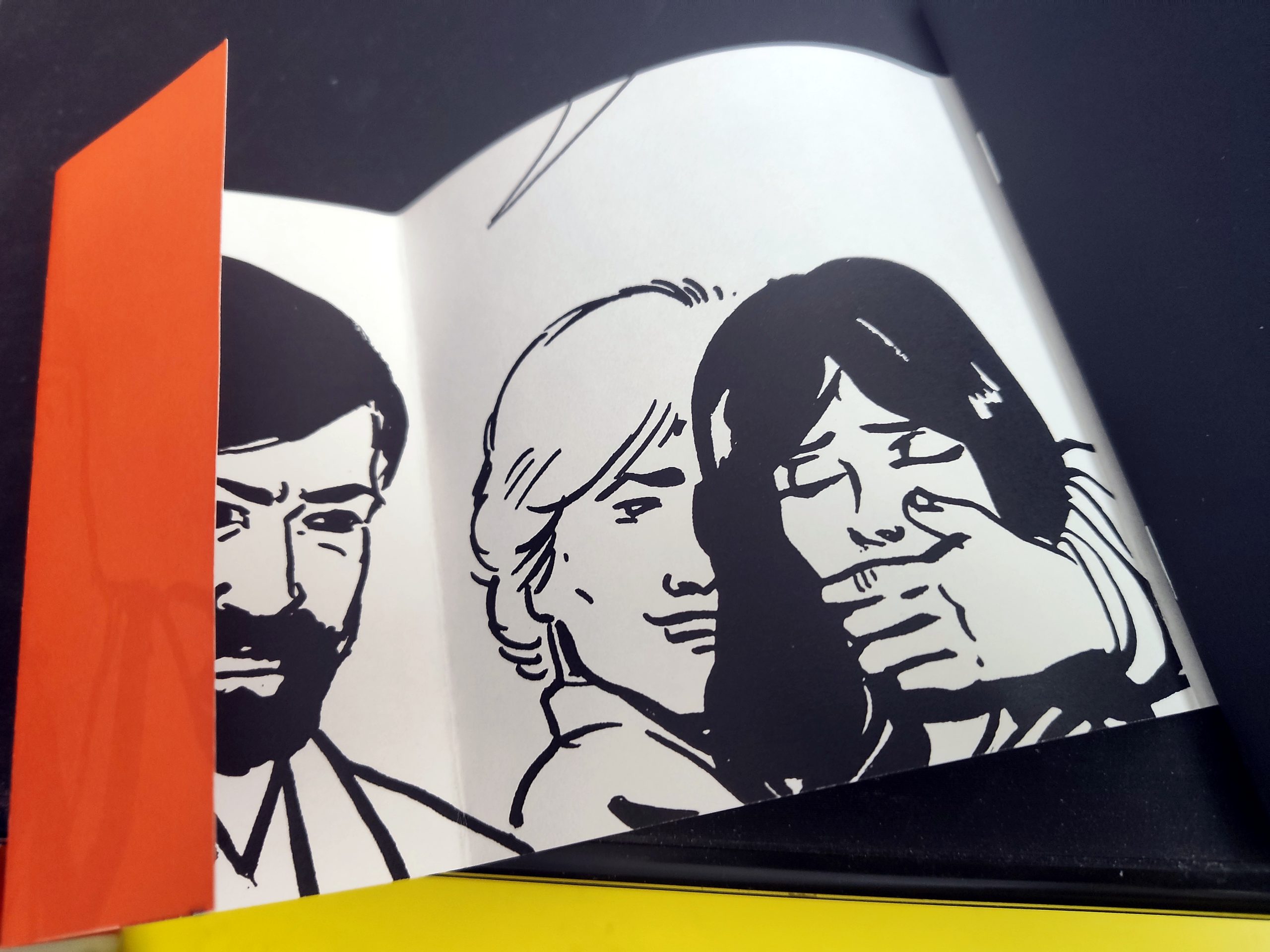
The solution provided is also part of the suitcase's content, as it is the suitcase for the libidinous power fantasies – it claims to “terrorize the terrorists”, and tells about a secret academy named Frémok in reality, or that what's recently left of it, the publishing house for a semi-biographical story about interracial relationships colonized by the ratings of others, mostly white people, in Yellow Negroes. The visually eradicated backgrounds of immigrant history surrender to the bold brushstrokes of structural racism, the not just recent culture wars on anything non-compliant or out of the mainstream, be it race, gender or what not. So what we're in need of are intersectional tactics.
I'm closing out with a citation used for a coda to Eros Negro #1:
“(...) The soul is missing an image. We are dependent on a state of being that has inevitably come to pass, yet will never be revealed to us. This missing image is called the “origin.” We seek it behind everything we see. And this persistent lack, this absence that stretches through the days, we call “fate.” We seek it behind everything we experience. There, the gestures we unconsciously repeat are lost, the same words that let us down. (...)”
PASCAL QUIGNARD, The Sexual Night*
*(Quignard's book is a collection of famous sexual imagery considered as high art by some, accompanied by his thoughtful commentaries. He also wrote a book about Sex and Terror, chronicling the turning of sex into something not only joyful, as it was performed by the Greeks before the Romans took over. There must be a deeper reason Donald J. Trump is in favor of cage matches.)
The post The Wild Colonial Boy Conquers Rome appeared first on The Comics Journal.


 Hello, my name is Jack Sparrow. I'm a 50 year old self-employed Pirate from the Caribbean.
No comments:
Post a Comment