

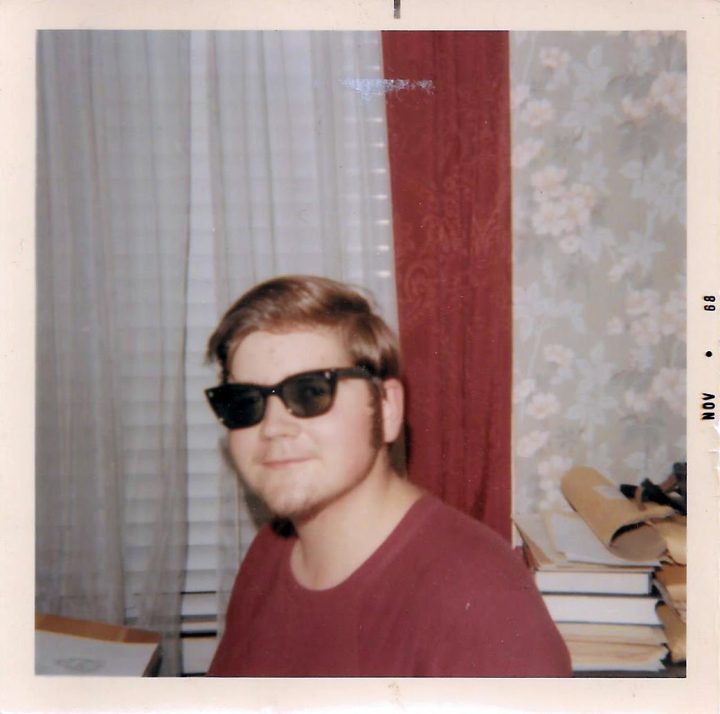
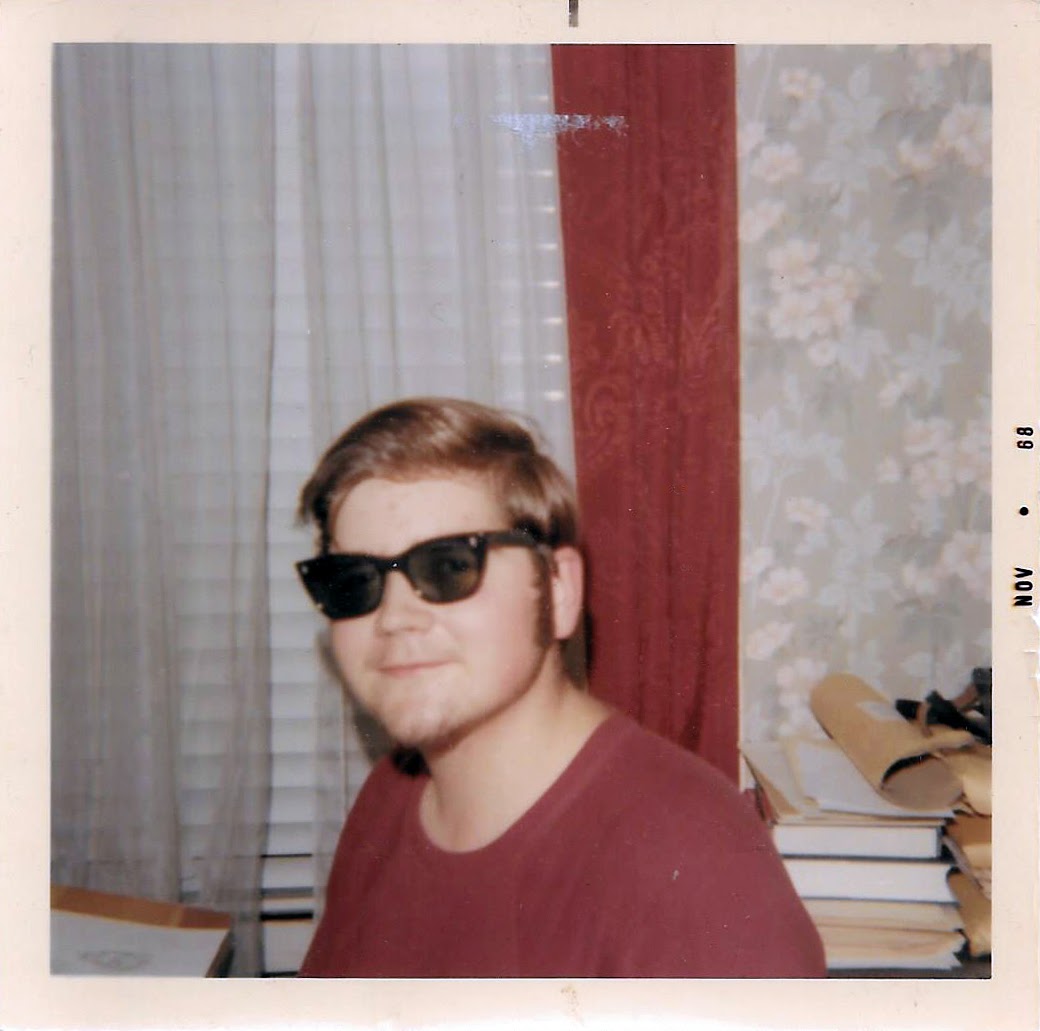
On May 23rd, comic creator Will Franz passed away of heart failure at 75. Although his tenure in comics was relatively brief and confined solely to the war genre, it is outstanding both for the overall quality of the work as well as his youth when he produced it.
William Stephen Franz was born on November 14, 1950. Growing up, the native Brooklynite passed over the superhero comics for titles like Gunsmoke, Classics Illustrated, Air War, and Combat. He particularly admired the art of Sam Glanzman, who became his most fruitful collaborator and mentor at Charlton Comics.
At fifteen, Franz wanted to be a comics illustrator. He sent his art to Glanzman, who was at the time living on Long Island, for critique. Glanzman was amused to see that many of the images in Franz’s swipe file were his own work and encouraged him to send comic scripts to editor Dick Giordano at Charlton and subsequently gave advice on how to properly format scripts for Giordano’s approval.
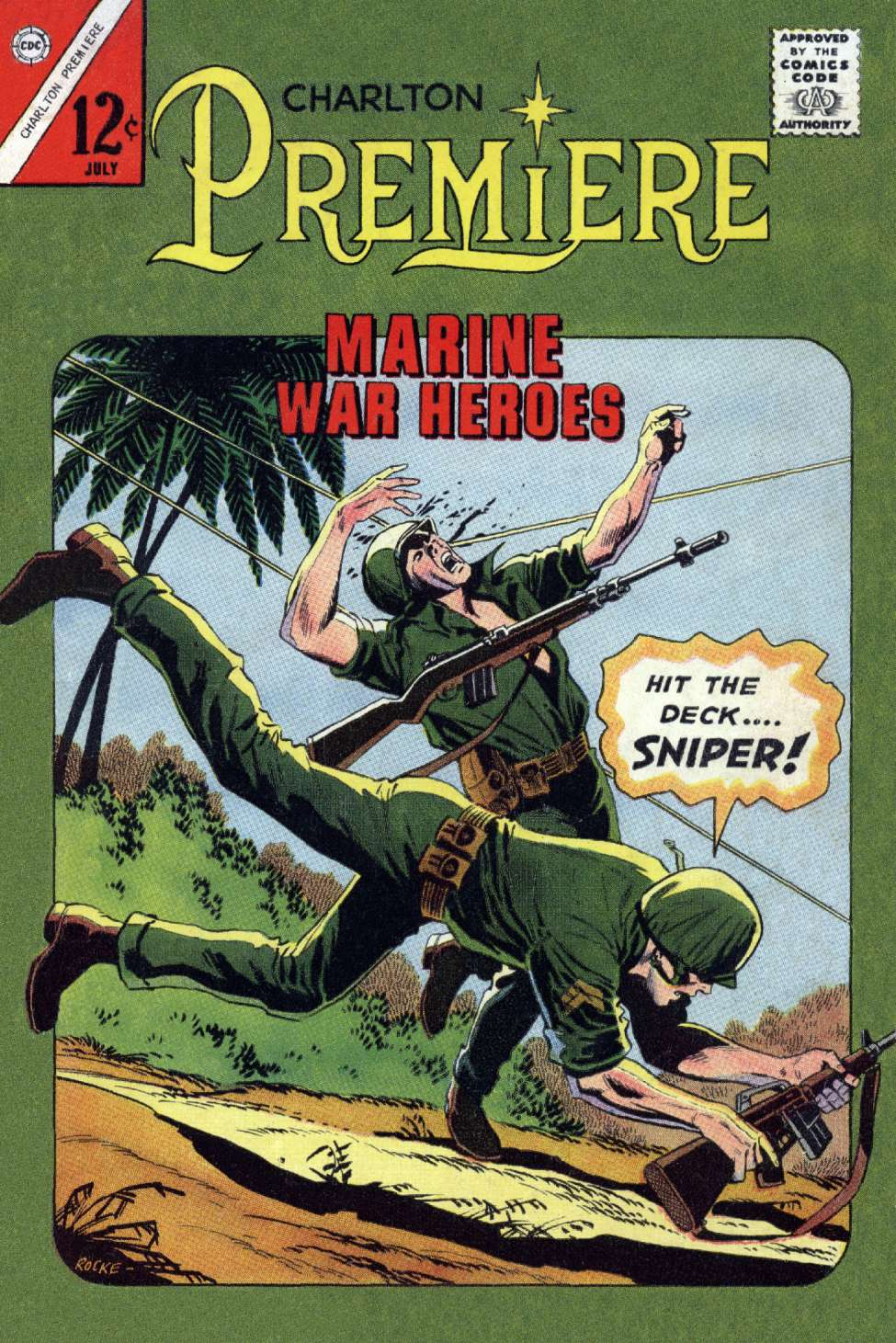
Franz’s first published story, “The Sniper,” appeared in 1967’s Charlton Premiere 19 when Franz was only 16. Giordano was impressed by the level of maturity in the juvenile's writing . In an interview with Charlton Spotlight, Franz called the Vietnam War story (featuring a clearly heroic GI and clearly villainous Vietcong) “a bit of propaganda” that he was “a little embarrassed by.” “Still,” he said, “it got my foot in the door.” He followed up “The Sniper” by scripting a full issue of the company’s title D-Day.
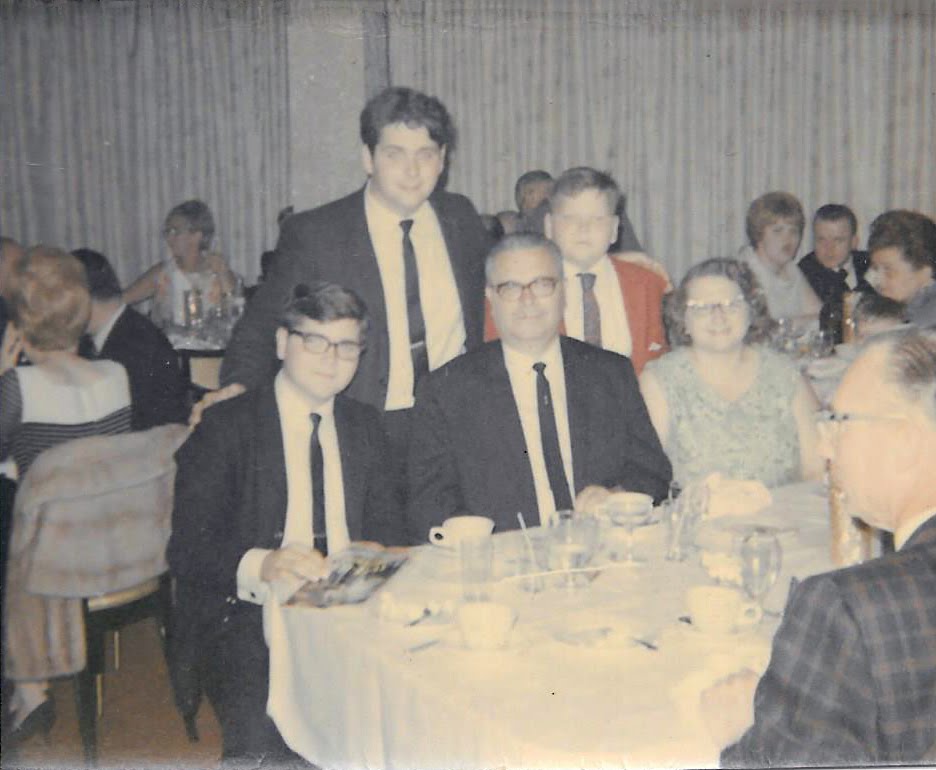
Despite his ambitions to be an illustrator, Franz penciled only two stories for Charlton: His own “Huertgen Minefield” from Army War Heroes 32 and the Joe Gill-penned “A Course in Murder” from Army War Heroes 36. Unfortunately, drawing and meeting art deadlines became increasingly difficult difficult due to the type one diabetes he developed in his late teens, as the disease made his hands unsteady. So it was through writing that he would make his greatest impact in comics, not his art.
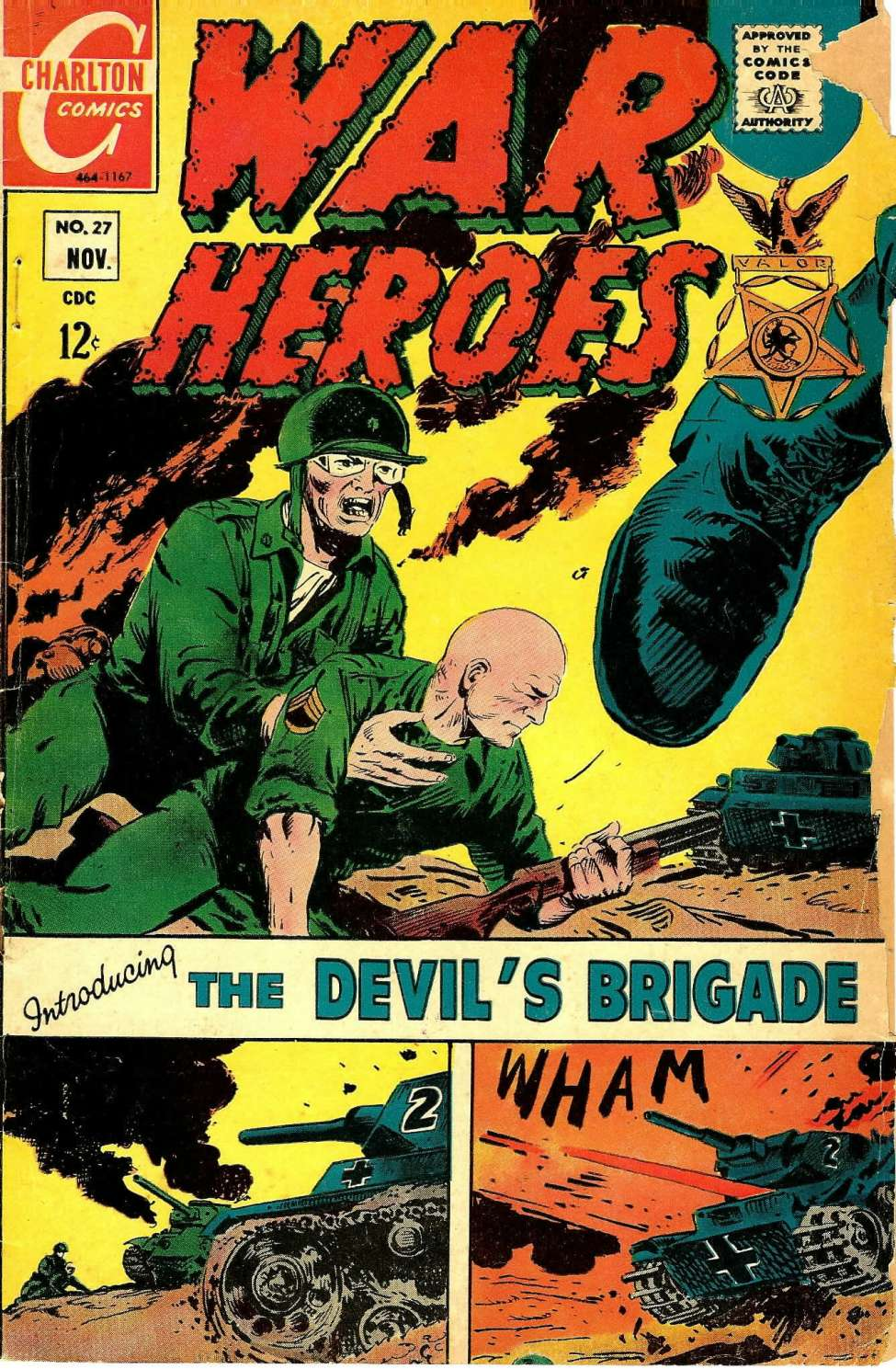 “The Iron Corporal,” “The Devil’s Brigade, and “The Lonely War of Captain Willy Schultz” were the three serials Franz created at Charlton. The company’s rates were reportedly rock bottom and Franz’s earnings were no exception. He was paid $4 per page, later raised to the princely sum of $4.50.
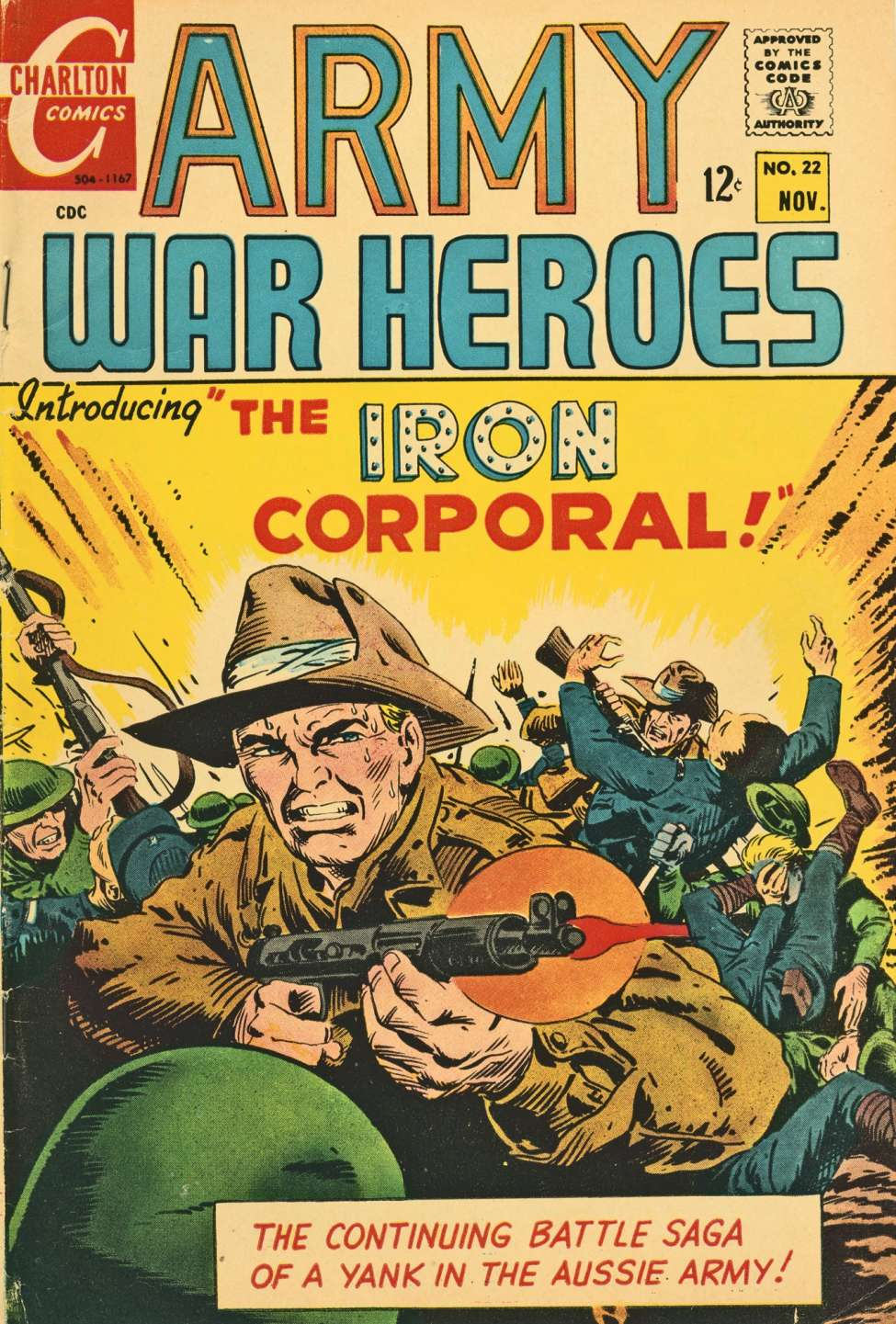
Ian Heath, the titular iron corporal, was an American volunteer with the Australian army who appeared in Army War Heroes 22-38. Franz was inspired by the 1961 war drama film The Long and the Short and Tall (known as The Jungle Fighters in the United States and Canada) and a New Guinea-set issue of Combat illustrated by Glanzman.
The odd scenario spelled out on the first cover of “a yank in the Aussie army” can be explained as a result of tweaks by Glanzman, who insisted Franz make his protagonist an American, rather than Australian. The corporal’s “iron cage” was the result of similar pressure to create a “gimmick” for the character.
Franz cleverly followed these rules for “The Iron Corporal” as much as he had to. Make him an American? Sure. It comes up in his first appearance and then never again. The iron ribs? Yep. They come up in two stories and that’s it. The series was a favorite of Franz’s, who remarked “there was so much more I could do with those characters than I could with Willy Schultz.”
“The Devil’s Brigade” was a “blessedly short-lived series” that Franz stated he was “relieved” to see canceled. Depicting WWII tank combat in North Africa, the comic was rushed and departed from his usual careful research. A few of the more prominent anachronisms are the British using a Centurion tank (Not developed until 1947) and Erwin Rommel holding the rank of Field Marshal (Then still a general.)
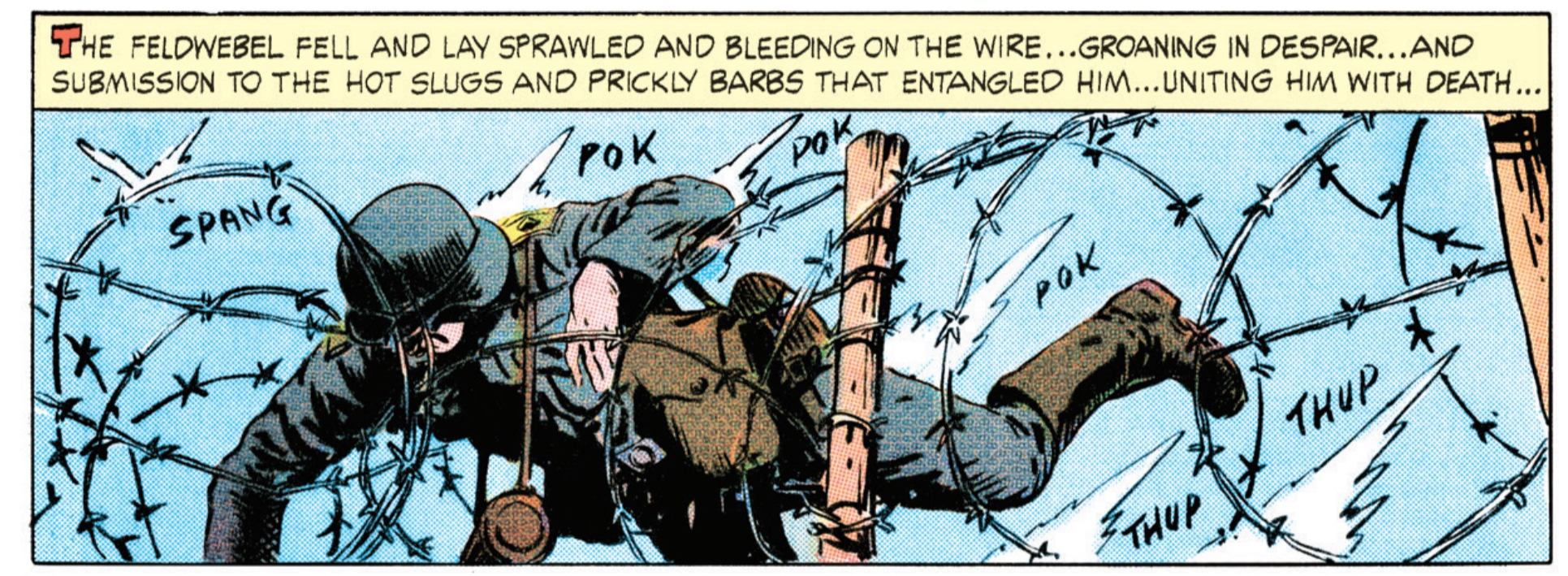
It was with “Willy Schultz” that Franz cemented his place in comics history. Included in Jenny Blake Isabella’s 1000 Comics You Must Read as “among the best war-comics series of all time,” the series follows wrongfully-convicted Captain Schultz as he attempts to survive World War II combat while wanted by the US Army for murder. The fighting in the title is harsh and unsentimental, not a glorious adventure. Its far from the heroics to be found in Marvel’s Sgt. Fury or DC’s Sgt. Rock. Instead it follows in the tradition of EC war comics Frontline Combat and Two-Fisted Tales. Schultz is no hero, just a desperate survivor.
Franz dealt with editorial interference on “Willy Schultz.” A story that ended with Italian partisans massacring German POWs was rewritten by Joe Gill to be a case of self-defense. A caption that was supposed to open one installment was moved to the end, where it became nonsensical. Dialogue was altered, and one storyline was forced to be titled “The Beginning of the End” over Franz’s strong objections.
But it was likely political considerations that led to the series’ early cancellation. Most Charlton war comics were hawkish and militaristic. Some of the text contents in the books stressed physical fitness and regular churchgoing as requirements for victory in the Cold War. The dour nature of “Willy Schultz” was an ill fit alongside other war comics the company published. As Franz told the Comics Journal last year “If you want to go to war after reading one of my stories, then I didn’t do my job.”
Franz wrote in 2019 that fifty years prior “a fan of my work, who was the son of a Hollywood notable, registered for the draft as a conscientious objector” citing Franz’s work specifically as a contributing factor. The following year, Franz got a call from the secretary for Sam Gentile, Charlton’s editor, explaining that due to “a large inventory of stories” (later revealed to be nonexistent) all of Glanz’s stories were being dropped, “Willy Schultz” included. Franz speculates the story of the pacifist “Willy Schultz” fan made its way to Charlton, who then decided to kill the series and avoid controversy.
After 1970, Franz mostly left comics behind. He wrote one story, “Slave,” that appeared in 1972’s Weird War Tales 5 sans byline and a few one-off war stories for Charlton. An attempt to write “Haunted Tank” comics for DC was dashed after an editor, who Franz never identified, sent a rejection letter mocking Franz for his overconfidence in sending completed scripts. Stung by the experience, Franz gave up on writing war comics for the company. In 2002, he reunited with Glanzman for the Ancient Rome-set webcomic The Eagle, which was printed in Negative Burn in 2006.
Outside of comics, Franz was an accountant for an insurance company and worked for The New York City Parks Department. He was Pace University’s Varsity Fencing Coach and City College of New York’s Manager and Assistant Fencing Coach. He expressed his interest in historical weaponry and reenactment by helping found The League of Renaissance Swordsmen and the Newcastle Infantrie. Franz devoted much of his last years to working with adults with physical disabilities. At the Center for Independence of the Disabled New York and Wheeling Forward/Axis Project Independent Care Systems he hosted creative writing classes, movie nights, and other social events.
In 2000, Franz joined Joe Gill and Sam Glanzman for WBAI’s “Nuff Said” to discuss war comics and changing attitudes towards war. Although Gill had previously dismissed Franz at a convention as “a dove,” there was no animosity on the air. After Franz said he was “tired of hearing that the Vietnam generation weren't pro-American enough or whatever...my generation would have fought against Hitler and Tojo and the rest of them. We just didn't want to be the Hessians in Vietnam,” Gill put his arm around him. The political rift was healed.
Franz long struggled with health problems, going back to his teenage diabetes diagnosis, and by 2007, he was in need of financial help to cover medical bills. Sam Glanzman auctioned off four pieces he had collaborated on with Franz to help pay for the costs. In 2016 he suffered a near-fatal heart attack, likely surviving only by managing to walk himself the six and a half blocks to an emergency room. Franz recalled that his diabetic counselor often speculated that it was these health struggles that attracted him to the war genre and its attendant fight for survival.
In 2018, a Kickstarter was launched by It’s Alive to republish “Willy Schultz” with Dark Horse, correcting the errors and editorial mandates plaguing previous reprints. Sadly, neither Sam Glanzman, who passed away in 2017, nor It’s Alive founder Drew Ford, who passed in 2022, lived to see its release. Franz contributed a preface to the collection, expressing his thanks for getting to work with so many talented individuals in comics, and the impact he had on readers, military veterans and not. As he described his work in his TCJ interview “I hope it wasn’t just an entertainment for people. I hope it made them think.” Thousands of readers will no doubt agree that the war comics of Will Franz are some of the most though provoking the genre ever produced.
Franz’s widow, Annalisa Rivera-Franz set up a website for donations to pay down the costs of his end of life care. Remembrances can be shared to his digital memorial.
The post Will Franz, Conscientious Writer (1950-2026) appeared first on The Comics Journal.


 Hello, my name is Jack Sparrow. I'm a 50 year old self-employed Pirate from the Caribbean.
No comments:
Post a Comment