

The first indication of the level to which Tillie Walden's star has risen comes when I attempt to fact check the name of the little Vermont town where she currently lives with her wife, cartoonist Emma Hunsinger, and their son. “I’d prefer my town not be named,” she says via email from the studio she shares with Hunsinger. “My fans can get a little intense.” This kind of caution is not usually the case with graphic novelists, but Walden is not your average comics creator. A bona fide prodigy whose first breakout book, The End of Summer (2015), was released to critical acclaim when she was just 19 years old, Walden honed her craft at The Center for Cartoon Studies in White River Junction, Vermont. It was there, where she met Hunsinger, launched one of the most prolific and successful comics careers of her generation, and where she is now a teacher. Her award-winning YA releases over the last decade—including On a Sunbeam, Spinning, and The Walking Dead’s Clementine Trilogy—have made her an icon of millennial storytelling. But now, it seems, the world of adult concerns is calling.
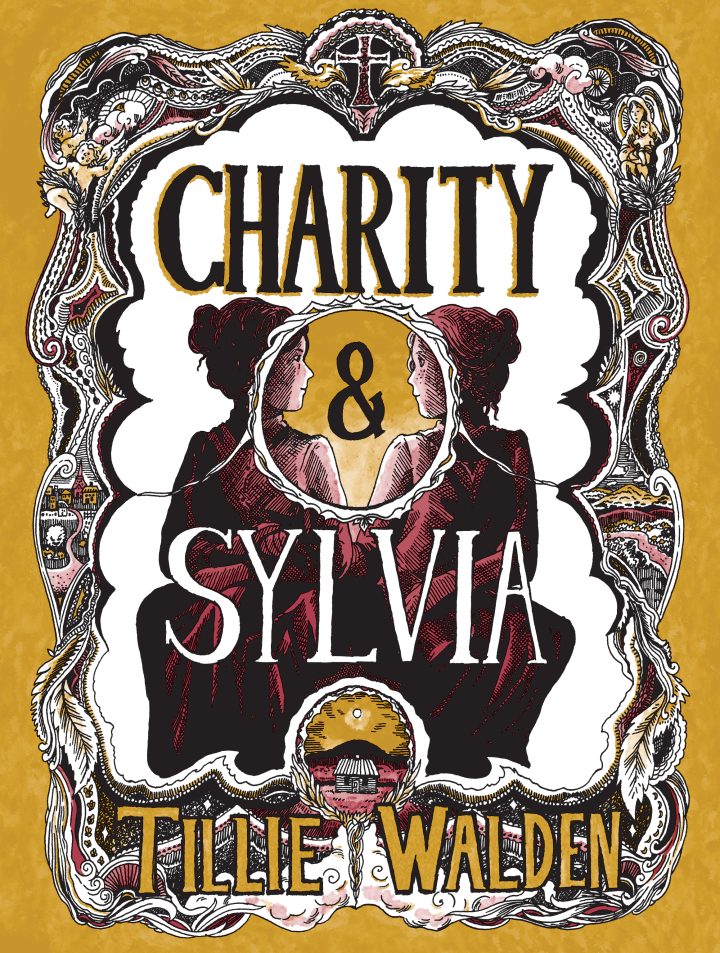
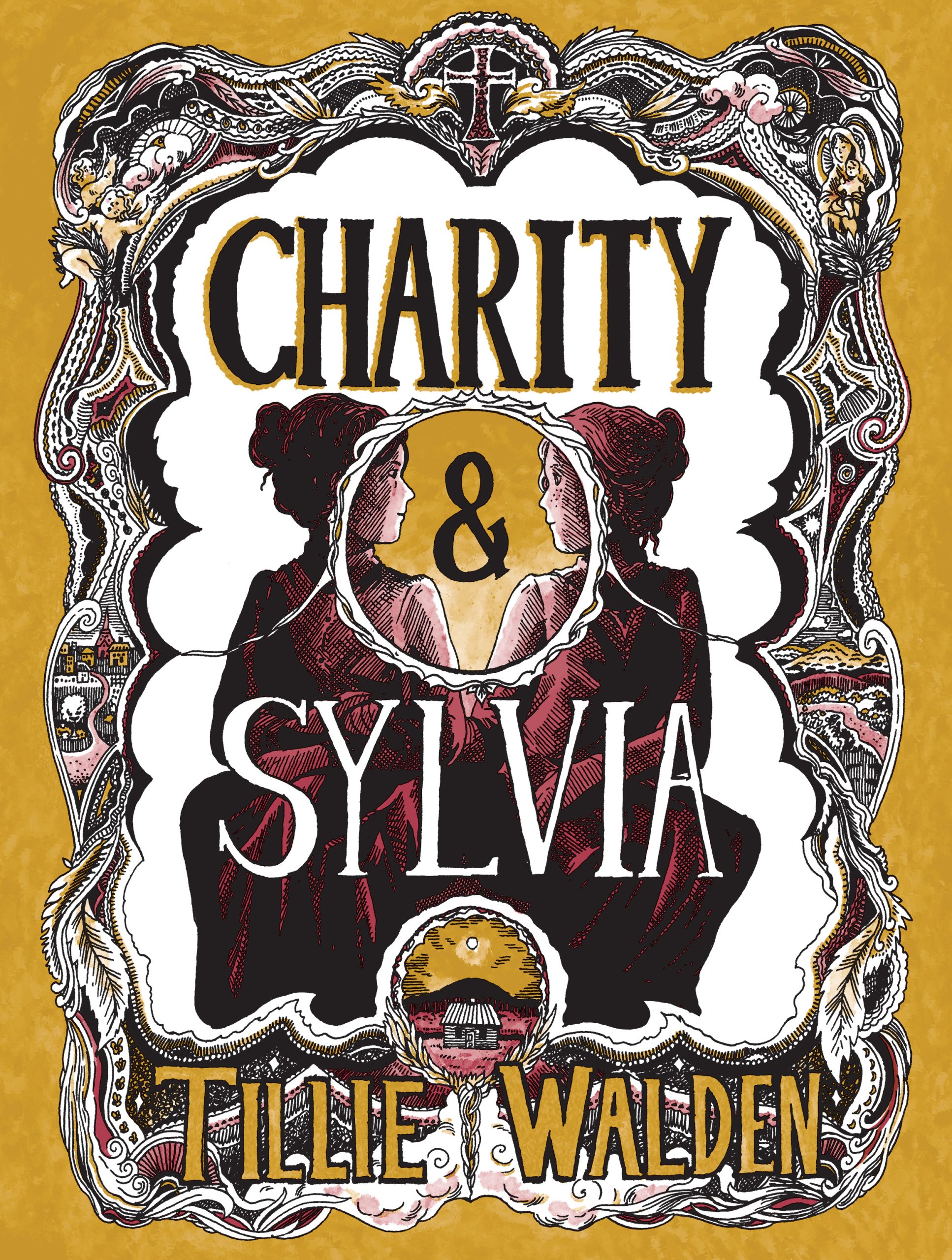
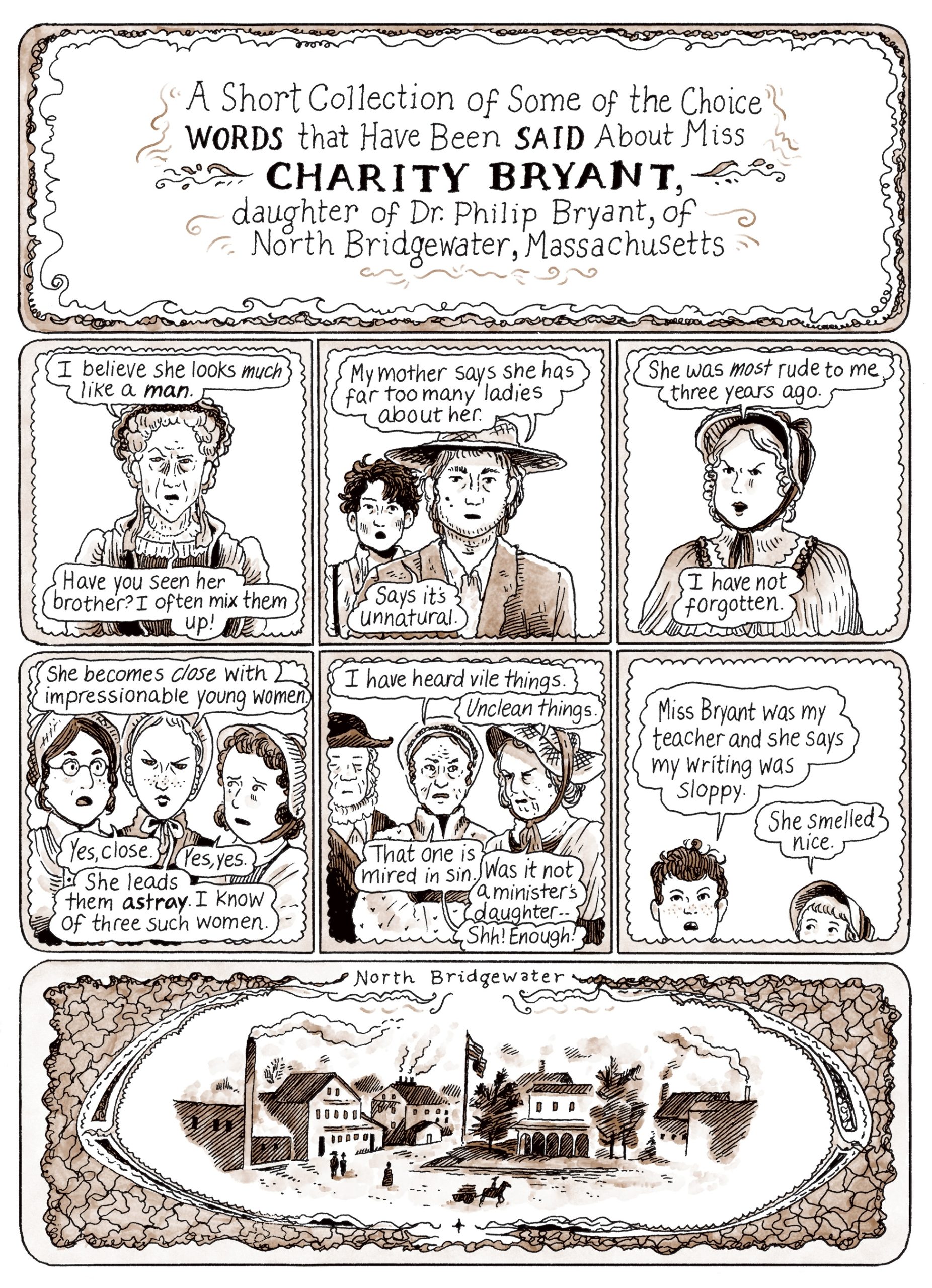
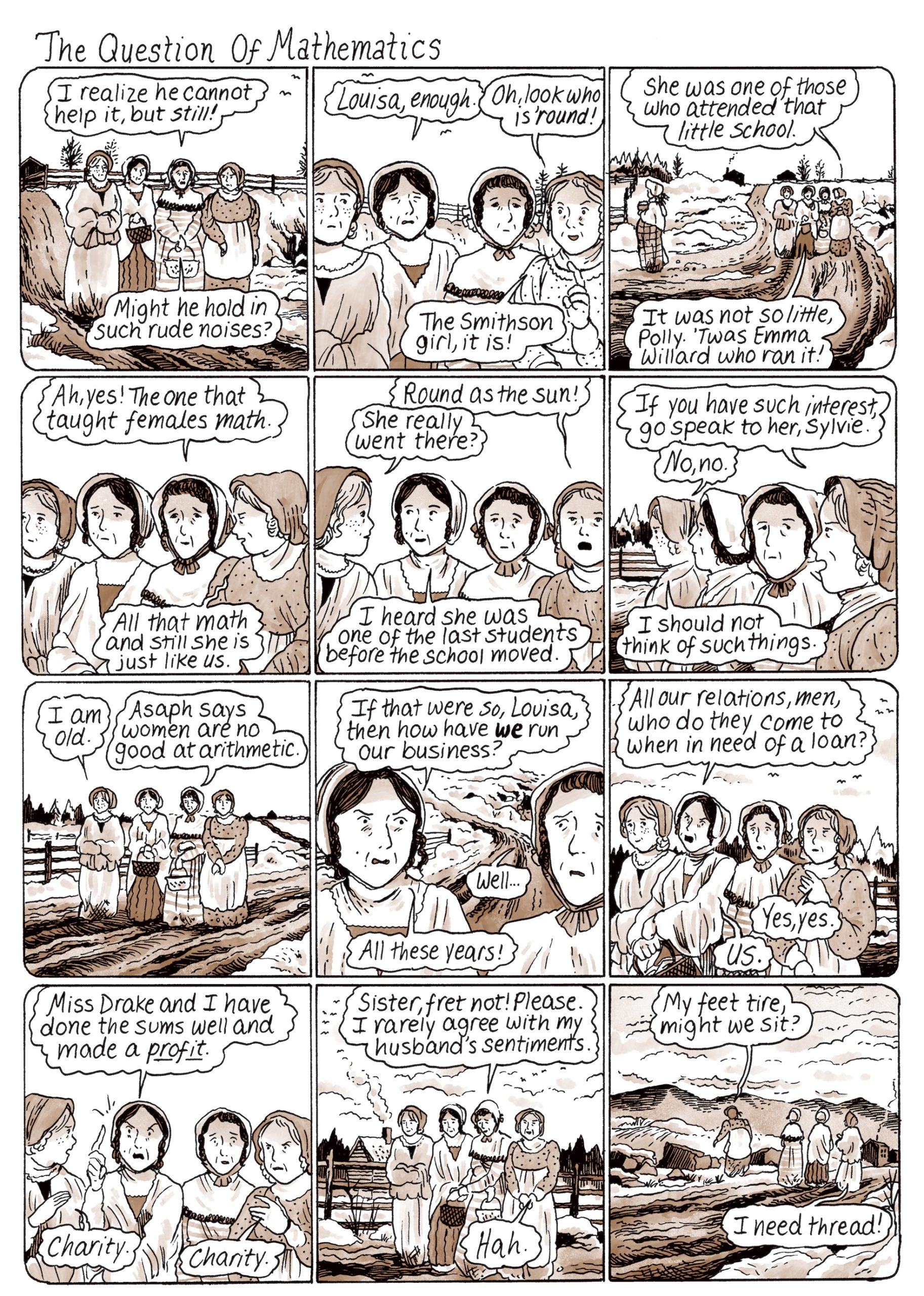
Now 30, Walden has undertaken an ambitious tour to celebrate the release of her 15th book—and first adult graphic novel—Charity & Sylvia (Drawn & Quarterly), the true story of an out lesbian couple who survived and thrived 200 years ago in a town not far from where Walden lives today. Working with primary source documents, including diaries and letters preserved by The Henry Sheldon Museum in Middlebury, Vermont, Walden not only creates an intimate portrait of two extraordinary women based on their own words, but also takes readers into the tumultuous times the pair witnessed as our nation was still finding its footing, mainly between 1807 and 1851. Drenched in rich sepia hues and layered with meticulously researched and rendered domestic details of the era, Charity & Sylvia is a fascinating history destined for queer studies reading lists the world over.
Here, Walden reveals what surprised her about bringing this love story to light, what challenges Charity Bryant and Sylvia Drake faced that she can draw inspiration from today, and how the loneliness of her 20s “almost broke [her] to the point of quitting comics altogether.”
(This interview was completed in June 2026, before a dispute arose surrounding Charity & Sylvia research accreditation, an event TCJ plans to address in a forthcoming graphic biography feature — Ed.)
Tell me about your workspace. Where are you answering these questions from and what else is going on for you today?
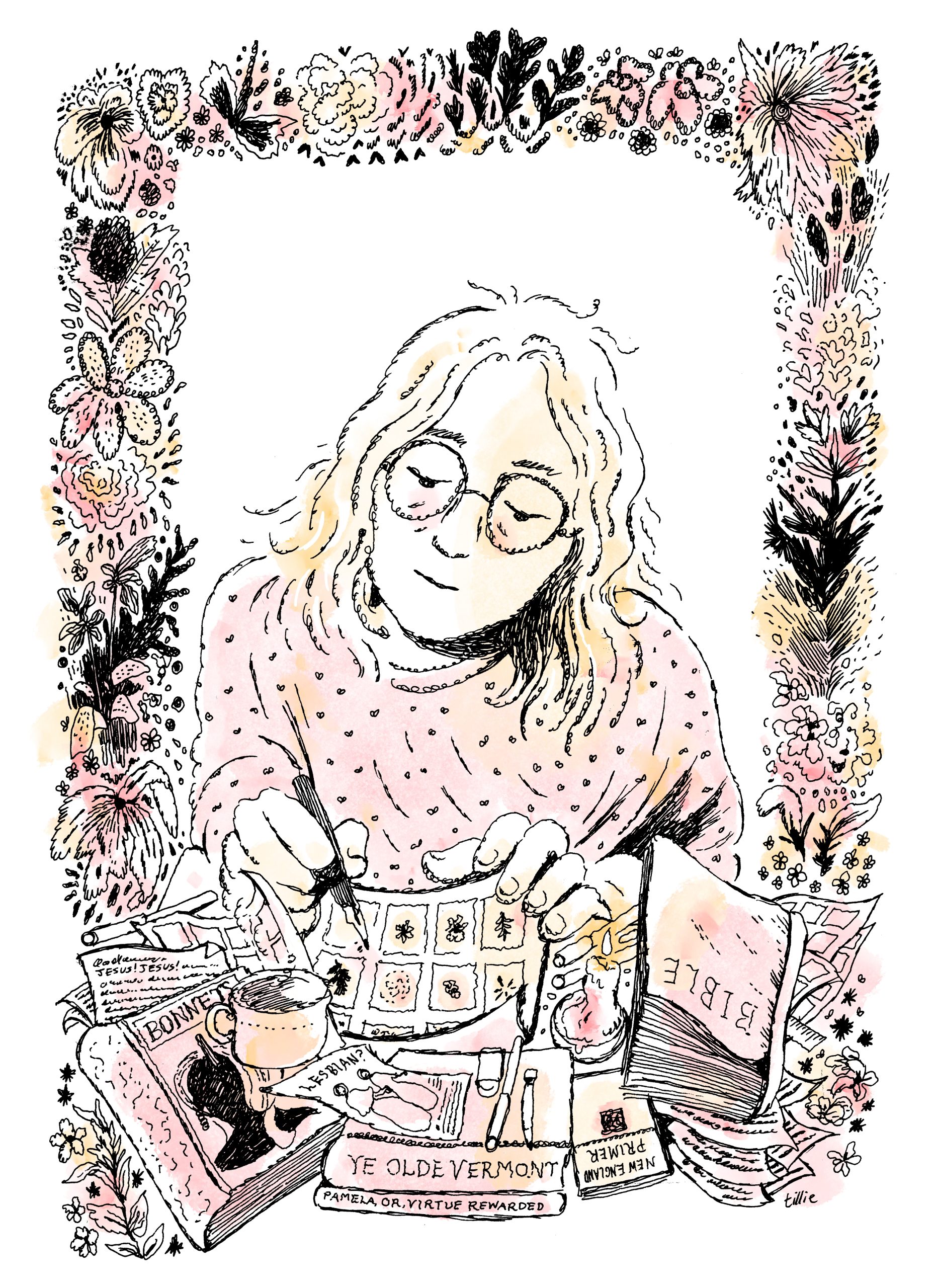
I am answering these questions from home, from our studio. I share it with my wife, Emma, who is also a cartoonist. It’s a separate building from our house, about a 10-second walk to get here. Emma works on one side, me on the other. I am sitting on the floor, leaning against the couch, typing these answers while a DVD plays on the TV in front of me. I wanted to watch Olive Kitteridge, but the DVD was acting up, so now I am watching Crazy, Stupid, Love. (“I jumped out of a moving car.”)
It’s spring here in Vermont, which of course means it was 30 degrees last night and is 60 degrees now. My surroundings are straight out of a postcard. Nothing but trees and mountains, nothing else to see out my windows. I can’t even see my neighbors, the foliage is too dense. This week and this time for me is one of busywork and parenting. Since finishing the book, I’ve been watching my son a lot, so my wife can do her own book. And taking care of little tasks (interviews, bills, cleaning the fridge) whenever there is time. My life consists of a lot of Thomas the Tank Engine right now, and I have the song “Day of the Diesels” stuck in my head.
As someone who lives in Vermont with your wife and kiddo, how surprised were you that a lesbian couple like Charity and Sylvia were able to live there as openly as they did 200 years ago? In the national imagination, Vermont seems like a safer haven for liberation than many other states—maybe because it is the adopted home of Bernie Sanders. Do you think there are factors specific to Vermont that helped Charity and Sylvia flourish back then and helped this project to bloom today?
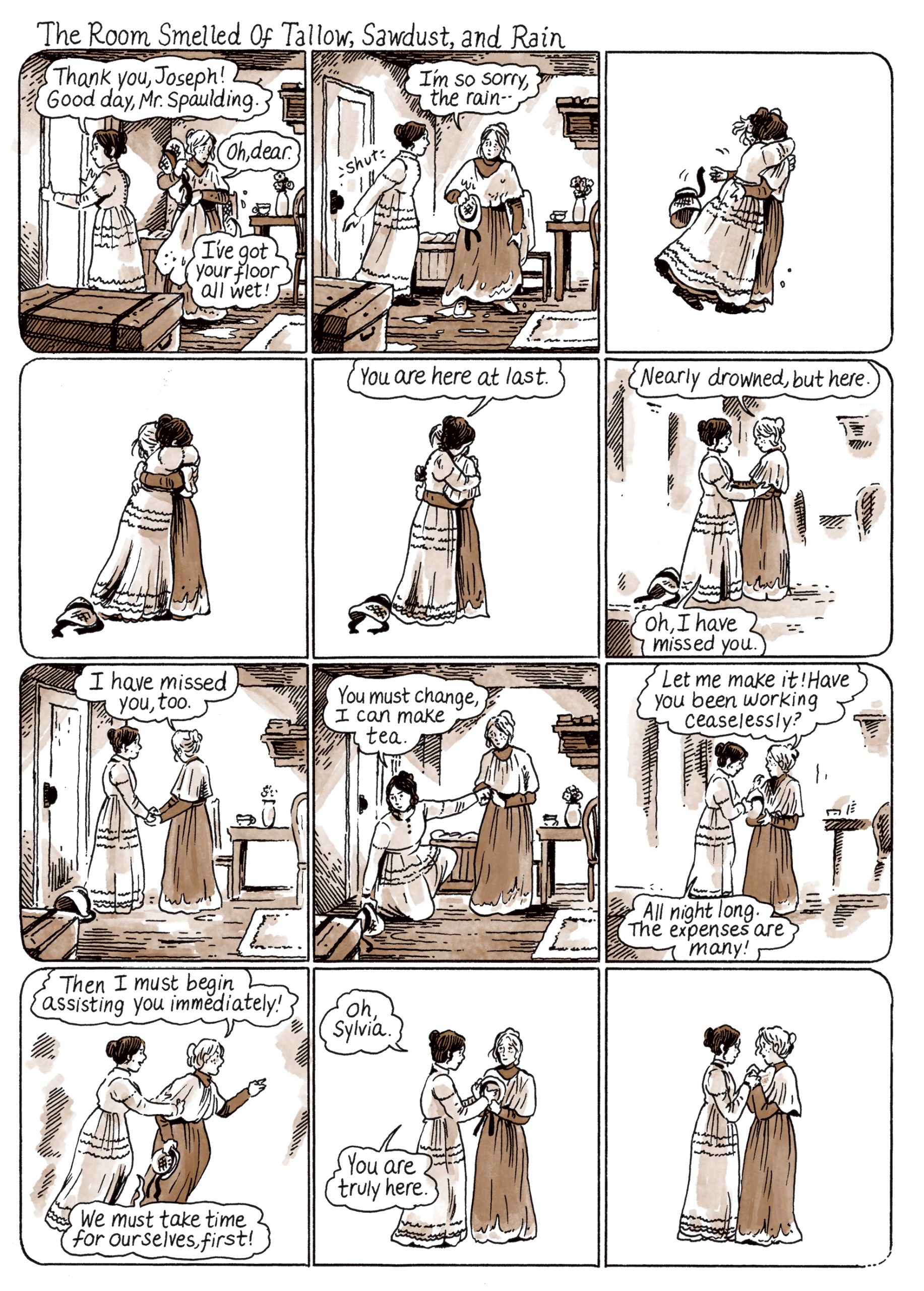
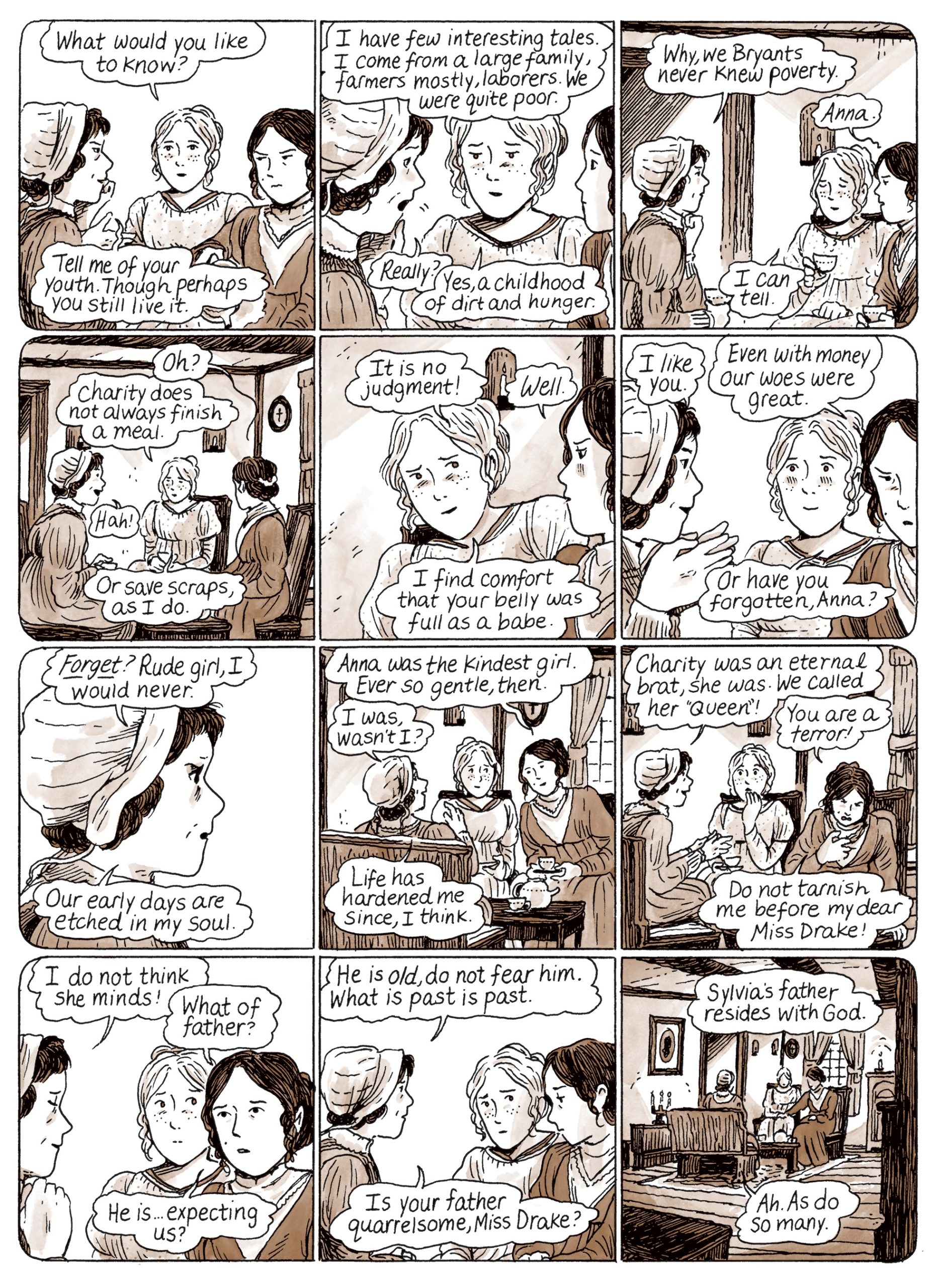
I was incredibly surprised to find out about them. Of course, I always knew that plenty of other lesbian couples existed throughout history, so it wasn’t their existence that surprised me, but the specific way in which they lived. They were incredibly domestic, and the pressing issues of their lives actually had very little to do with being two women in a relationship. I don’t want to downplay their concern for the state of their souls, and fears about the peculiar nature of their dynamic at the time, but after reading their archive, it was made very clear to me that other problems filled their days. Problems with neighbors and family, with church and gardening, with each other. And I loved that. That’s part of what drew me into their story, it’s how much it reminded me of my own life. While they certainly wrestled with their identity, it wasn’t what defined them. I suspect that being Christians was their most cherished marker, closely followed by being Vermonters, and then Americans, and then finally, female companions.
Vermont was a safe haven for them, but it wasn’t perfect. No state is. They were aided by the rural nature of their setting, though. Less people to gossip, less family nearby (especially for Charity). But plenty of rural settings can also be fortresses of conservatism, and part of why they found acceptance is that they were fairly conservative themselves. Their fundamental beliefs about life and God aligned with their neighbors’, and that’s what really brought them acceptance. If they weren’t Christians and close to their neighbors, I doubt it would’ve ever worked. They were also aided by the fact that they were the local tailors and people desperately needed clothes. The seasons in Vermont made it even more important to have someone who could make you a sweet coat. It’s a kind of beautiful lesson about small-town life—what tends to matter most is not who you are in a community, but what you give back to it. And giving properly fitting pants is crucial.
I want to believe that there is just something really kind and beautiful about this soil of Vermont, and within its people, but a lot went into how they managed to live 44 years together in the same house.
Tell me about how you were introduced to all of these primary source materials about Charity and Sylvia's lives at The Henry Sheldon Museum of Vermont History. How did all this material end up there? What about this archive made you want to dedicate a whole book to their story?
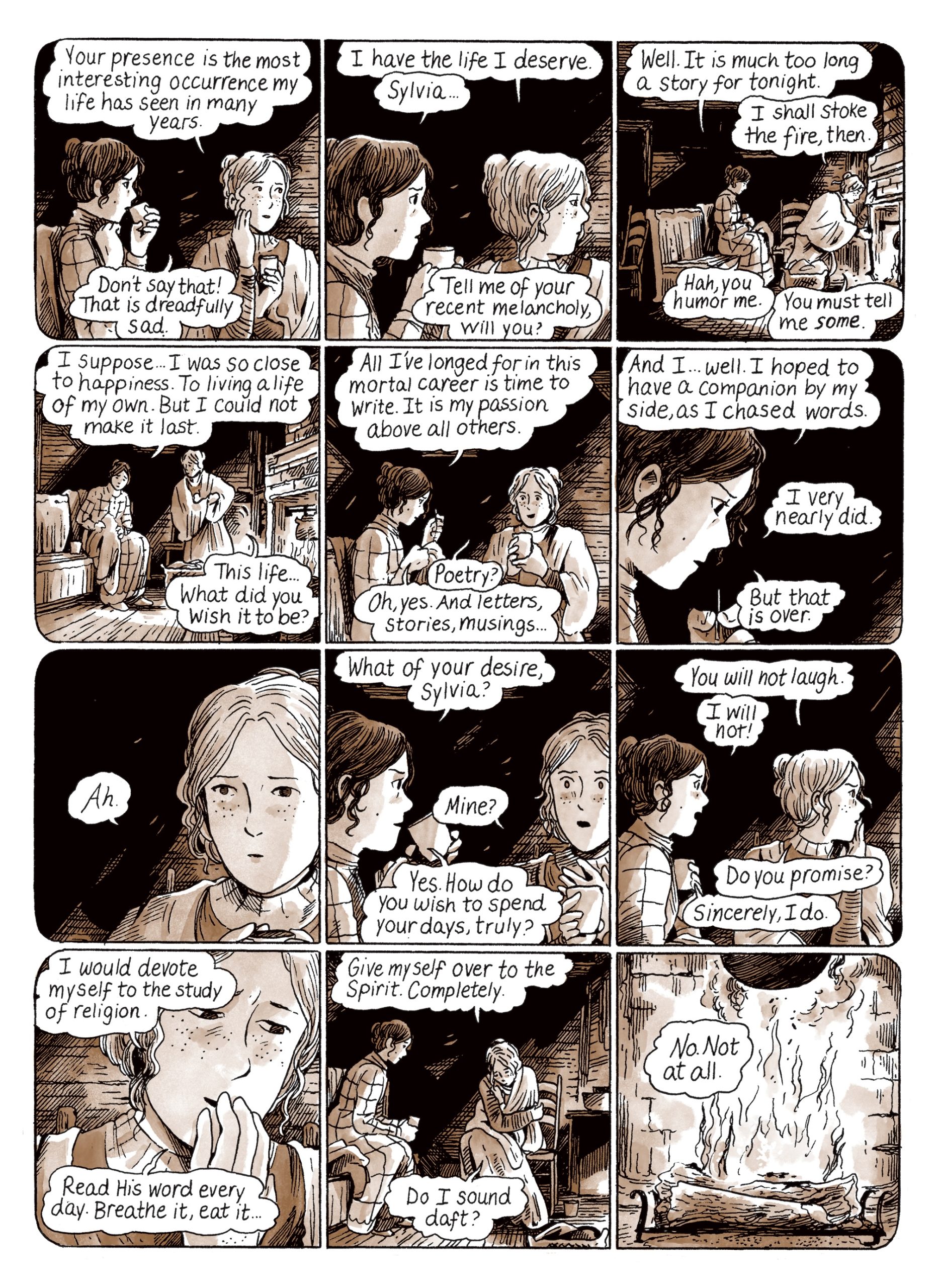
I was introduced to Charity and Sylvia’s story by Vermont Humanities [a state affiliate of the National Endowment for the Humanities that selected Walden as their “Cartoonist in Residence”]. They told me right away that everything I would need was at The Henry Sheldon Museum in Middlebury, Vermont. I used some other archives and locations for research, but the majority of the book’s sources were at the HSM. The material ended up there through luck and a little care. Henry Sheldon was this fascinating, eccentric guy in Middlebury—Charity and Sylvia lived in the next town over, Weybridge—and Henry was a child when Chairty and Sylvia were getting up in years. After Charity died, Sylvia was tended to by a niece named Sylvia Louisa. (Hang with me, I know it’s a lot of names.) After Sylvia died, Sylvia Louisa held on to their things. Meanwhile, Henry Sheldon grows up and decides he must make a museum and puts an ad in the paper asking local people to bring him all the things that are no longer needed, especially things that express something about life in Vermont.
So, either Sylvia Louisa or some other family member ultimately takes all of Charity and Sylvia’s things to Henry’s brick house/museum. Their papers live there for some time before archivists and historians start looking a little more closely at it all and realize…by God, they were gay!
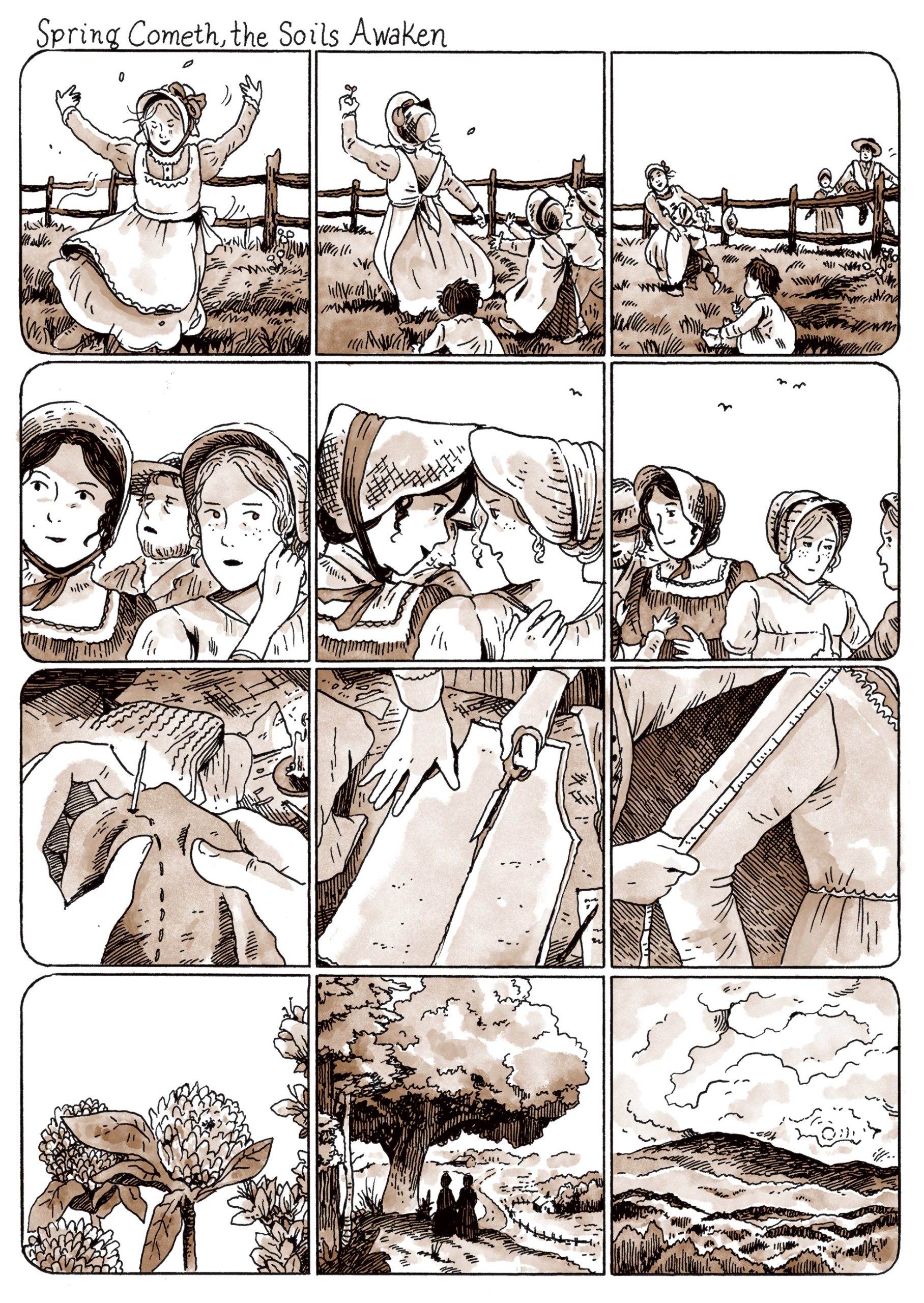
I found their archive fascinating and wanted to make a book out of it all pretty immediately. Some of that has to do with their story being compelling, but I also just really like early American history. I always have, but I never really thought that interest of mine would combine with one of my books. I’ve read extensively about American history and had a fabulous field trip to Plymouth Rock as a kid. So, reading the archive felt like this nascent interest of mine really coming alive, and every detail felt delightful. Meals they ate, local births and deaths, their beliefs and hopes. There was a point where the fact that they were lesbians didn’t even matter that much to me, because I was so enmeshed in the constellation of their everyday tasks and worries.
In today’s political climate, it’s not difficult to imagine society rolling back to the point where it was when Charity and Sylvia were finding their way in a world that didn’t want to accept their family. Was that part of the reason you felt it was important to write a book about them now?
It’s unfortunate, thinking about how far we’ve come in all this time, and how there are still so many forces trying to take it all away. But I really didn’t set out to make this book for this current political moment. It simply happened that way because of the timing of my life. When I became the Cartoonist Laureate of the state of Vermont [in 2023], I took a meeting with the director of Vermont Humanities, [Christopher Kaufman Ilstrup], which seemed like a logical thing to do. Christopher just happened to bring up Charity and Sylvia, and inquired if I would want to make a comic about them. Very fortunately, I was just wrapping up a book and happened to have time. Had I had another contract going, none of this would’ve been possible. But I had a window of time, I was pregnant, and a little bored, and I started researching these women and got totally hooked. The fact that the book is coming out just in time for America’s 250th birthday is cosmically good luck, but not intentional.
This couple’s story is inspiring because it so vividly describes the ingenuity women of their time needed to have just to be themselves. They had to always be socially innovating and finding a way forward. Did you learn anything from their saga that you want to carry forward in your own life? Not just as a queer person, but also as an artist and innovator finding your own way?
The big takeaway from their story is in the power of perseverance. Not only in their work, which was endless, but also in their commitment to one another. Their lives were so difficult at so many junctures, and they still found a way to get out of bed in the morning. I think that’s a pretty good guiding light for an artist. I’ve never been one to let creative slumps get in my way. I’ve always considered making comics a job that one must simply show up to, just like everyone else. When it gets hard, I consider the circumstances they were in, and it makes my situation seem much, much easier. Charity had terrible aches and pains and had to work by candlelight. I can take Advil, I can turn on a bright light. For her, and for me, I can’t give up on my pursuits.
You have been called a prodigy many times in the press, because you are only 30 and this is your 15th book (!!!). How is your relationship to that term—and to the expectations that go along with it—changing now that you're entering your 30s?
Ahh, I am very pleased to be 30. I look forward to being treated like an artist, not a young artist. It’s been 12 years of this, I’m over it. I know it came from a place of love, sometimes, but my relationship to that term has only grown more negative over the years. It made me feel sectioned off, and a little despised. I felt like through my 20s, I could never really speak on how it felt, either, because it would come across as entitled. I found a lot of success very young, it’s true, and there’s a lot of gratitude I have for that. But there were some pretty extreme drawbacks that came with it. You can’t publish one or two graphic novels every year without some suffering. All I did was make books for this decade, I didn’t make friends, I didn’t date. My relationship was with my desk and pen. That loneliness almost broke me to the point of quitting comics altogether. Luckily, I got myself back into the world and now have, you know, friends and a wonderful wife and a great kid. But I do wonder if I could’ve taken a year or two off in there to go out dancing and actually have some experiences. I still have yet to ever go to the “club” that I hear so much about. Guess I’ll have to do it in my 30s!
I will also add that I was lucky to not feel too influenced by being called a “prodigy” early on. I never took the expectations of that too seriously, and my motivation to work insanely hard and insanely fast genuinely came from within me, not from any industry sources. I always wanted to get better at comics because it felt like a mountain I was meant to climb, not for anyone to witness, but for my own gratification.
Do you think Charity and Sylvia would have considered themselves feminists? Do you consider yourself one?
They definitely did not consider themselves feminists. I sort of doubt they even knew that term. (I also don’t know when this term first appeared?) [French philosopher Charles Fourier is often credited with coining the term in 1837. But British author Mary Wollstonecraft is commonly known as “The Mother of Feminism” based on her most famous work, A Vindication of the Rights of Women, which was published in 1792.] I think it’s unlikely they thought women should vote or have too many rights. I do think they may have felt women deserved the right to own property, given the circuitous way they came to rent land themselves. But that’s about as far as it went for them.
I’m also not totally sure I consider myself one, given how much the term has changed over the years and has been co-opted by movements that are determined to be cruel to trans people. But I do believe strongly in women’s equality and empowerment. Which probably makes me a feminist.
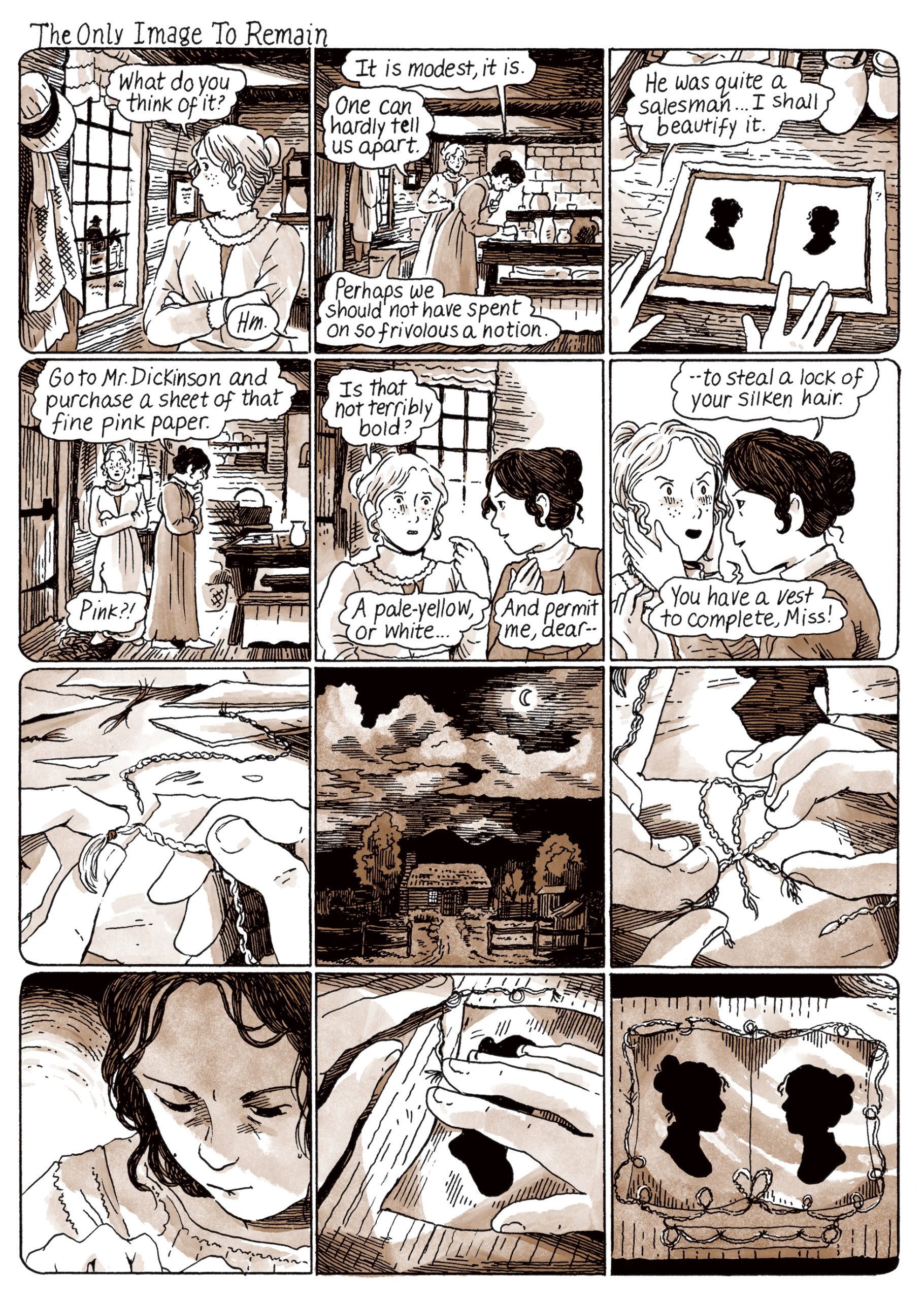
Talk me through your art-making process for Charity & Sylvia. What made you decide on the gorgeous, sepia palette? What did a day of work look like and how long did the whole shebang take? What computer programs and materials did you use?
Ahh, the sepia was a last-minute choice. Originally, the book was going to be black and white with a gray tone. But while I was working on it on vacation (ha!) with some dear friends, one of them looked over my shoulder at the gray and made a mild comment that it wasn’t how they were expecting it to look. The comment kind of rooted in my brain and I realized, Wait, I agree! Then I had to convince Drawn & Quarterly at the last minute to actually print the whole thing in color. They were great about it, of course.
In terms of the timeline—research took about a year and a half, drawing the whole thing took about 11 months, and the research and drawing overlapped a bit. Also, while researching, I made multiple drafts of the whole thing, which took maybe five months before the actual drawing. Within the 11-ish months of drawing, it took 3 months, hilariously, to just do the panel borders and text. I went through every single page and made 12 panels with rounded corners. After doing 250 pages of 12-panel grids, I went back and did all the lettering, by hand, of course. It felt like it took centuries.
Then it took about eight months to do all the final art and toning. I had done the text with a lightpad (the draft beneath a piece of paper that the final art goes on), and then I did the art the same way—inking over my penciled draft with the lightpad. Then the tones were done digitally on an iPad.
When I was drafting, the writing and drawing happened concurrently, but for the final art, it was much more separate—borders, text, art, tone, [all done separately].
What's next on your agenda? I know you’re going on an extensive book tour for Charity & Sylvia during Pride Month that sounds like an amazing opportunity to connect with your fans. What will you be working on next?
I have no idea what’s next, and I’m pleased about that. I would love to exist for a few months without a book project. Frankly, I’m exhausted. And there’s always something to occupy yourself with when you have a toddler.
I’m really excited to travel around and talk about this book! I hope I can meet some fellow history buffs—it seems likely. It’s always a little surreal getting to this stage where the work is finally done and you get to express all your thoughts about it and have people actually read it and care about these people like I do. That seems like the dream!
The post Charity Begins at Home: Hello How Are You, Tillie Walden? appeared first on The Comics Journal.


 Hello, my name is Jack Sparrow. I'm a 50 year old self-employed Pirate from the Caribbean.
No comments:
Post a Comment