

A member of the San Francisco underground, Sharon Rudahl was one of the “founding mommies” of the Wimmen’s Comix Collective. Besides contributing to and editing issues of Wimmen’s Comix, she made work for Anarchy Comics, Bizarre Sex, Comix Book, Corporate Crime Comics, Dope Comix, Rip Off Comix, Tits n Clits, and Wet Satin. She contributed to Strip AIDS U.S.A. and Choices. Her 1980 comic Adventures of Crystal Night was included in Dan Nadel's anthology Art in Time: Unknown Comic Book Adventures, 1940-1980. Under the pen name of Mary Sativa, Rudahl authored two novels, one of which, Acid Temple Ball, has achieved cult status.
Much of her career has been spent making short comics and illustrations. The past twenty years have been some of Rudahl’s most fruitful and productive years as a cartoonist, even while sustaining immersion in her trademark elaborate page design. She wrote and illustrated two heavily researched graphic biographies, 2007’s A Dangerous Woman: A Graphic Biography of Emma Goldman and 2020’s Ballad of an American: A Graphic Biography of Paul Robeson, the two longest works she ever made. Rudahl wrote the nonfiction graphic novel The Bund. There has also been a large body of short work made for anthologies including Studs Terkel’s Working, Wobblies, Yiddishkeit, and last year’s The Partisans. In recent years she’s been making collages and contributed full page illustrations to the new graphic biography of William Morris.
Rudahl and I spoke by phone to talk about her unusual career, about how much the world has changed and hasn’t, and the almost accidental way that she began working in comics.
-Alex Dueben

How did you become a cartoonist?
I was working on an underground newspaper. Part of their art department. Trina Robbins came to a meeting of the group and said she wanted to have a comic that was all women artists. Was there anyone working on the underground newspaper that would be interested? I raised my hand– me, me, me– because I had been hanging out with this cartoonist, Guy Caldwell, and watching him work. I'd done a few panel cartoons for another underground newspaper, one in Wisconsin I worked on. It was something I was aware of and interested in. I didn't know if I'd be able to do it, but I volunteered, and I never looked back. That was how I got started.
I ended up being Trina's roommate for like five years, starting not that long after that. So it was a constant stream of other cartoonists in and out of our flat. Wandering over to other people's houses and being able to ask technical questions or being told tricks to use. It was a special time in San Francisco then, in the early seventies.
When I was in New York– I was an art student at Cooper Union– and although a lot of this stuff was going on, in fact I probably bought a dress at the boutique where Trina made clothes, I didn't know any of those people then. I was just struggling to get through. I was going to Cooper Union, which is very demanding. I did okay, but I had to work really hard. I actually didn't know any of the working cartoonists that were in the town at the time. Later, I learned that a lot of the people I knew in San Francisco had been in New York at the same time.
I actually grew up in the suburbs, I'm embarrassed to admit. I was born in Virginia and grew up in Maryland. You just get used to things like seeing trees and sky and stuff. New York had a lot of cultural advantages, but it did wear on me. It was definitely a metropolis, and not where I was comfortable. San Francisco at that time was just a perfect medium where there was beautiful architecture, and lots of spacious parks, and a sea breeze blowing over the peninsula. You felt like you had all the advantages of a city without the sense of being in some urban interior or something.
Once we built BART, it all became more connected up. For a while, I lived in the East Bay and sort of commuted to hang out with friends in San Francisco. It really wasn't that divided anymore. It wasn't that hard to stay in touch.
Did you study painting at Cooper Union? What were you interested in?
Cooper Union is all scholarship. I remember reading an article about it in a magazine. That was what interested me. I thought, an all-scholarship art school in New York City is going to be full of fascinating people that come from families that wouldn't pay money to send them to an art college, but they got in for free. Well, it was actually exactly what you'd expect. Upper-middle-class Jews and Italians, basically, that allowed their children to go to art school because they figured they'd end up making a living some other way. It was a good experience. I liked going there. A lot of the teachers were very demanding. Actually, the teacher whose class I found the hardest and the most difficult– I'd be staying up all night, my hands bloody with work– was my lettering teacher. He had his diploma from the Prussian School of Lettering up on the wall. I hated the class at the time, but everything I learned in it has been useful in my work ever since. More than almost anything else that I did.
I wanted to be a painter, I think, but painting at the time was busy devolving into all-black and/or all-white canvases. That just wasn't what interested me at all. I have to tell one anecdote I haven't had a chance to tell since I remembered it: My painting teacher, in maybe the second year, actually appreciated my work because I did a certain amount of old-school oil painting. In fact, I had another painting teacher who said, but why would you want to paint like Vermeer? I was just speechless. [laughs] Why wouldn't I want to paint like Vermeer? What's your problem?
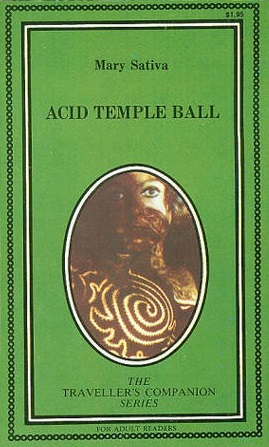
It was around this time that you wrote a novel under a pen name.
Acid Temple Ball. I've been told it's online and you can read it for free. You should just do a search for it. I mentioned it to a fellow cartoonist and I said, you can read it if you want as long as you promise not to talk to me about it. I never got any royalties for anything. It was available and things go off being available online, but you should probably still be able to find it pretty easily.
I know Olympia Press was kind of famous for not paying people.
Yeah. Actually, a nice book came out in Australia about a year ago that gives me a whole chapter as one of the few good writers for Olympia Press. So my persona has been broken and people are aware of it if they want to be aware of it.
The book came out in 1969. Was this after you finished school?
I wrote it, I think, in the last year in school. It came out that summer, and provided me with money to travel to California afterwards. So even though I got cheated, it was still good money by my standards of working as a file clerk while going to school full time. I thought it was a great deal. I think they gave me, I don't remember anymore, $2,000 or $4,000. Then they paid me $100 a week to write something else, which basically supported being a hippie in California for quite a while.
It was a good deal by standards of college gigs. I would recommend it to anyone. Except you can't make any money off pornography anymore, can you? Because everybody can just get it free online. That's the secret of supporting yourself as a student. You have to come up with something that everybody else isn't doing yet. [laughs]
Did you intend to write another novel?
I did. Another one came out. It's not very good. It was basically The Seventh Seal with the dirty parts put in. [laughs] I had fun with it. I mean, I had fun writing the parts that were like The Seventh Seal and then I would just, you know, slot in a sex scene for the witches or the flagellants or the plague victims or whoever.
That reminds me of an anecdote I want to tell somebody. My high school literary magazine won some big regional award and then they took it away because they said no high school student could have written my story. Which was about an artist in the Middle Ages who wanted to paint a painting of some saint. The character in my story that no teenager could write, they couldn't find the right way to paint this person that was the saint. Then the plague passed through his village and he got to see a dying plague victim and then he found what was the subject for his painting. They took away our high school literary magazine's big award because no high school student could write it. But only a high school student could write it. Anybody more mature wouldn't have written something like that. It was a brilliant high school student's work. I mean, to me, obviously.
I can see that. Well, what made you stop writing novels? What did comics offer you that prose didn't?
I never wanted to be a writer. I think I was eleven when I decided I didn't want to be a writer. I have written poetry off and on since then. I know better than to bother anybody with it, but I've written some excellent poetry. But I'm not a prose writer. I found that out about myself when I was quite young. I've always loved to paint and draw.
I think, to some extent, comics is a way to use my literary gifts to sell my drawings. People wouldn't be interested in them as drawings. They're not great. They're okay. But as they become part and parcel of the words, they're more than okay. They actually achieve something. That's why I did it. It worked for me. It was an outlet that actually used my gifts in an appropriate way.
That's interesting. You decided at eleven not to be a writer.
Well, I'd never be a prose writer. It's one thing to put in porn scenes, but once you do that, what do you do for your second act? [laughs] Whereas comics really is a great medium. That was being discovered. I wasn't the first person to discover it, but I was in on the ground floor with Wimmen's Comix and such. One of the first things I did was a story of my grandmother coming from what was now Ukraine. There was nothing like that in comic books, but because I didn't know that comic books didn't have stories like that, I was able to tell all sorts of stories that I wouldn't have wanted to write as prose. I wouldn't have been able to draw them as frescoes or something. Comics was a great place to tell those stories.
I never thought there was any reason for people to retire, as long as they could still sit up and write or draw, but you lose your fluency for putting things together, and you lose your motivation for putting things together. You cannot fight time at some point. Now it's all what people do on the computer, and what they'll use AI to do. Media can continue to change. Comics was about the same age as motion pictures. When you had the print industry the way it was and the paper industry the way it was, comic books were something that could be churned out cheaply in great numbers. That's come and gone to a great extent.
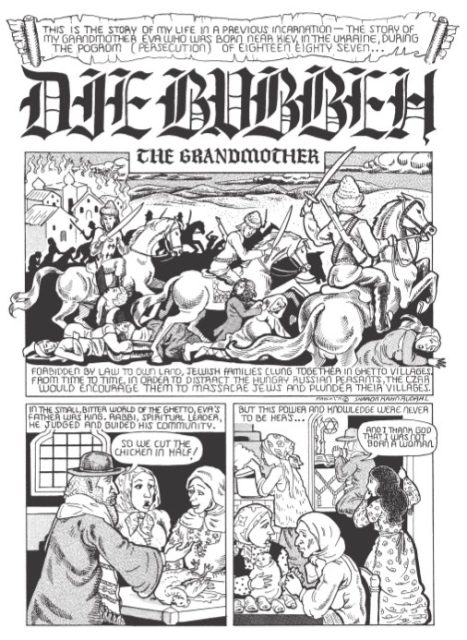
In the collection of Anarchy Comics a few years ago, which collected all the issues, there was also a new comic of yours in there. Have you just over the years made short comics and then found a place for them?
Yeah, by and large. I actually did think of this recently, that I still, in some ways, am like a smart high school student. I work best on assignment. I always want to have an assignment. I like deadlines. If I have an assignment and deadlines, you get great work out of me. If you just wait for me to sit around and do some wonderful individual work of art that no one would appreciate, no one will appreciate it. [laughs] I really am a person who's comfortable with assignments and deadlines.
Usually it's a minimum amount of payment that I know I'm going to get, even if it's not enough. This is something I remember from when I first started comics. It was $25 a page, and I was actually figuring out how many pages would I have to draw a month to pay my $65 a month rent, and food and cigarettes at that time. There being some actual deadline and somebody putting some skin in the deal. If somebody offers to pay you something for something, it gives it some sort of assigned value.
Maybe it's partly being a woman, maybe it's partly being from my own particular ethnic group, but I don't have enough confidence ever to just say, this will be my great work of art. I want to have somebody tell me to do it and promise to pay me something. Because when they have some skin in the game, they're going to put money into producing it. That gives me enough faith in the project to continue and do as good a job as I can. So I'm a hack. I'm a born hack, that's what I really am at heart, as an artist.
I understand that. Deadlines are always helpful.
I need that motivation and I need that confirmation that my work has value to other people. Maybe that is partly being a woman. When I think back to how things have changed over the decades, I was the best in my oil painting class. My Italian oil painter teacher, every summer he chose somebody to be his apprentice to go to Italy with him. He said to me, of course, I would choose you, but you're a girl and you're just going to get married. He just said that to me. Not apologizing for it. Not even realizing it was something to apologize for. And I accepted it. That that's what people thought and that's what might happen. They wouldn't put their money on me to be the person that should be an apprentice.
It's probably hard to imagine just what a shadow that is hanging over one's career expectations. That everyone sort of assumes you're just going to give up and not do anything with that. That was the world at the time. It hasn't changed as much as it might have, but it's changed a lot.
Luckily, I was stubborn and badly behaved enough that it didn't slow me down fatally. I still felt that I wanted to do what I wanted to do. I never learned to type, among other things. Partly because I'm just the sort of person that has a really hard time learning things like that, but it was also important to me not to develop the skills or background to be able to support myself doing something really dumb. If I was going to be broke, at least I'd be doing something I really wanted to do and be broke.
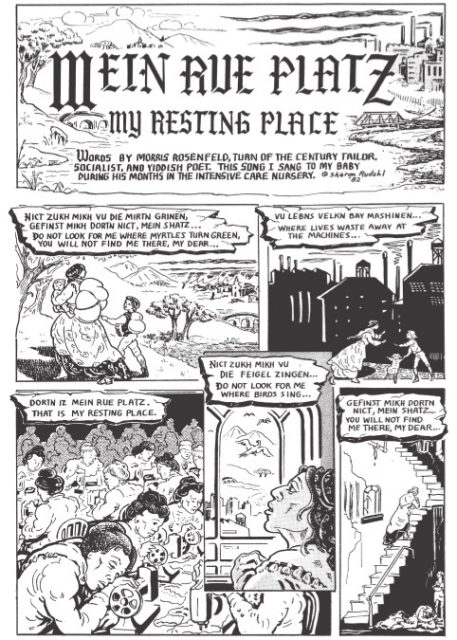
Between that and the why-would-anyone-want-to-paint-like-Vermeer, it's amazing any woman survived art school then.
Maybe it was Velazquez, come to think of it. I think it was Velazquez, because Vermeer is too precise and exacting. I think it was Velazquez that said why would anyone want to paint like that. The big thing that year, my first or second year of painting class, was the all-black canvas. That was like the year of the all-black canvas. And then people got bored with all-black canvases and they had all-white canvases for a while. [laughs] Then they had things like my painting teacher was someone who had become a big star because he drew– you know how when people paint the dashed lines on a highway? He was a professional that painted things on highways and he made some canvases like that and he became a big star that year.
It was easy to become a cartoonist faced with that. I definitely felt like everything I had thought being an artist was didn't seem to be reflected at all in what art as a business was being done in New York. To find a way to do what I wanted to do. I'm seventy-eight, almost seventy-nine, and deteriorating fast. When I look back on my life, I really felt it was really important to me to find some way to do what I knew I needed to do. The amazing thing, and I should be very pleased about it, is that underground comics– I mean, comics as an art form– actually became that. It actually became a medium that wasn't just ironic and it wasn't anti-art. It was a way to be fully an artist and yet because it came from a popular form, there was nothing snooty about it, you know? People could share it and it was disposable, and yet you could put your heart on your sleeve when you were working in comics.
There's a way in which you incorporate all these elements from lettering to design, and bring all that to bear in your pages.
Looking back, I didn't really think of it at the time, but one of the first comics that I did that got published was a story about my grandmother leaving Russia– I guess Ukraine, the Jewish Pale. When I did that, it was basically, well, why wouldn't I do a comic about that? I wasn't aware that people didn't do comics about subjects like that because I wasn't really a comics fan. To be perfectly honest, I took the form of comics and used it to do what I needed to do and wanted to do.
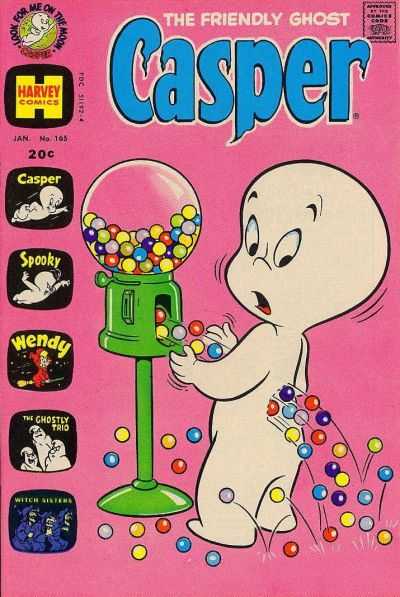
Growing up in that era, you knew comics because they were around, you were just never really a big fan.
I used to like Casper the Friendly Ghost. I had an uncle, or second uncle, who ran a little candy store that had comic books. I'd go in with my cousin and we could take comics home. So I read Casper the Friendly Ghost and I think there were one or two other ones. We also got, there was a machine where you got round bubble gum balls, but you also got little plastic charms. Those were even better than the comics.
I'll tell you an anecdote about the store at the time that I've only learned in recent years. A black man came in– we’re talking the 1950s in the Washington, D.C. area– really suffering from thirst, and begged my uncle to give him a glass of water. My uncle looked around and realized he was risking perhaps his ability to be in business. He gave the man a glass of water, and then he took the glass and broke it on the floor.
It's important to remember things like that, because you see how much the world has changed, and you see how much it hasn't changed. The way they're treating people with Spanish accents now is very much on the same level. Their lives are actually being endangered because they can be read from a distance as dangerous aliens. People get back to that so quickly without there being any real intervening period of halcyon grace of everyone getting along. Kind of discouraging, isn't it?
It is. It's also a reminder that Washington, D.C. was part of the South and had Jim Crow, which doesn't always get mentioned or remembered.
Definitely at the time I lived there.
When Trina kind of recruited you, other than those few small experiments you mentioned, was Wimmen’s Comix the first comic you made?
I think so. Trina had made a comic called It Ain't Me, Babe. I saw that. I was still living in Madison, Wisconsin at that point. I actually remember being disappointed that here women were finally making a comic of their own and, I don't know, it didn't strike me as the kind of original and interesting work they could do. There was a lot of girly stuff in it. It didn't offend me, but it seemed like they weren't taking advantage of their pioneering situation.
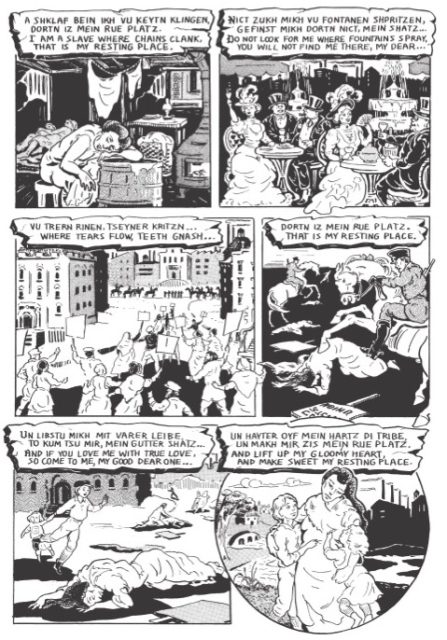
You've always thought about comics a little differently than a lot of your peers.
Well, I may think about them differently, but a lot of the people I knew in San Francisco really had been obsessive comics appreciators. There were a lot of people of this group that took a real serious interest in the history of comics and animation. I was interested in it as a medium. How could that medium be useful? How could that medium be useful for the things that I thought art should be doing?
You’ve definitely found an outlet for that more recently.
Since I've gotten old and feeble, I'm doing more illustrations and less comics. Comics are very demanding. I'm doing illustrations for a book about William Morris that's going to be coming out in August or September. Nick Thorkelson is doing the basic visual biography, but I have 17 pages of illustrations. You can put a lot of time on that one panel. That suits me better now than making all the little bitty pictures that you have to do comics for.
Similar to the two-page introduction to Partisans that you made.
Yeah. There's a lot of weird things where I don't even remember where they showed up, but they'll turn up over the years. Do you have Studs Terkel's Working? That's a good one. It has a lot of strips by me in it. Paul and Harvey Pekar actually said, you can have the whole book, and I said, I just don't work that fast. Let me pick half a dozen stories or a dozen stories and get other artists to do it. I think somewhere where I really failed as a cartoonist, or didn't use the medium in one of its traditional strengths, I didn't come up with simplifications that I could use like a language. Like an ideogram, like Chinese or something, that I could use over and over again. I’m always sort of drawing from scratch, which you're really not supposed to do.
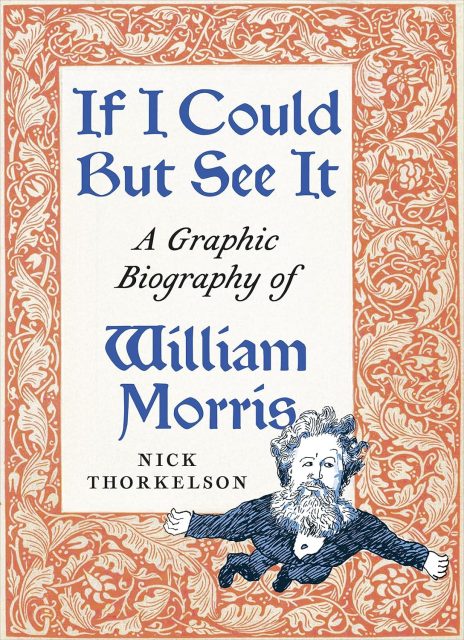
It is a lot to do. And also, you’re coloring and lettering and doing everything.
I will do just very limited things now because it’s just too much just to deal with. I started doing these anti-Trump collages. I think I'm going to give that up, but I discovered collage is a great way to save time and energy when drawing is difficult. You can do a lot with collage.
The first page of almost every chapter of the Robeson book, you opened with a collage.
That's how I started using it. It also was a big thing in the thirties in anti-Nazi art. Collage is traditionally used in a– revolutionary may be too strong a word– but a way to provoke.
It also fit in with the Robeson book itself. It didn’t feel dissimilar to how you would have approached drawing a full page illustration with all these different scenes and elements.
I've already begun to forget some of the work I've done. If I just stumble on moving a book on the bookshelf, I go, oh, this is nice. [laughs] This is fun, this is interesting. While I'm working on something like that, I just become totally immersed in it and that's what I think about. When I'm walking to Trader Joe's or something, I'll stop and sit on somebody's wall and make notes in the margin of my paper New York Times. Ha, those were the days. It's in my mind all the time when I'm working. I think I did some of my best writing for comics while walking. If you just sit at your computer or desk, for me at least, it doesn't work nearly as well as just going off and doing some errand and then just letting my mind roam. Things come to me.
So much of your work over the years has been short comics.
It's because it's so hard for me to do. I put so much into it. I keep thinking, I'll cut myself a break by making it be only so many pages. Then I end up making like twelve panels on one page, so I really didn't get away with anything. [laughs] As I've gotten older, I've learned, give them a couple of pages with just a couple of pictures on each page. The last few things I actually did for publication, that was the case. The last comic that I did was for a book called Partisans, and it's about Josephine Baker. It's just three pages.
It’s beautiful work.
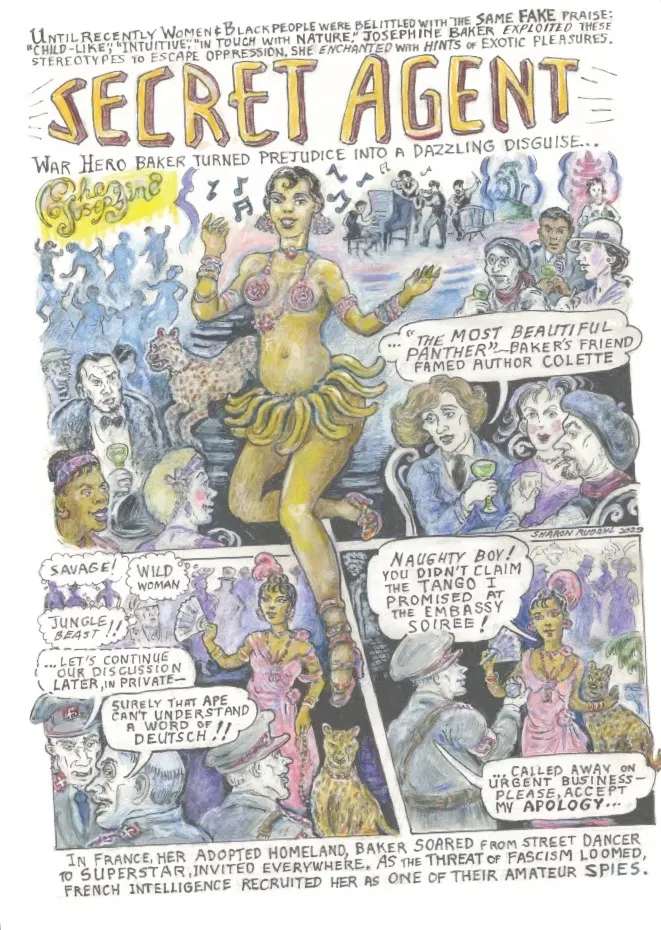
Thank you. That's my last comic, and it was very hard for me. I did it in the middle of the night with great difficulty. I'm proud of it. I knew that if I got through it, it would be my last comic. Comics, the way I did it at least, is really hard. Now I know people rely a lot on stuff they get off the computer and copying things, and it's just done a different way. But the way I did it, it's hard work.
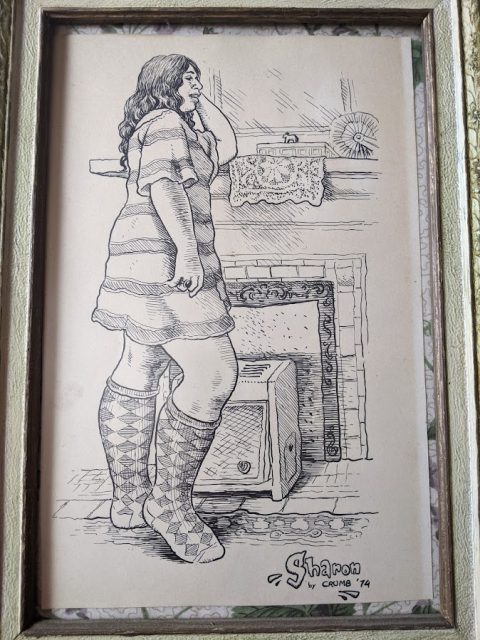
This is something I remember complaining to Trina about decades ago. It was already decades past the heyday of underground comics. Some of the people I knew that were still producing them, their work wasn't changing, it wasn't improving. Of course traditionally with comics, it's not really supposed to change. But in my mind, if you keep doing something, you should keep doing it better as long as you can. You should keep working at an angle, leaning over your skis in a way that you're gonna be learning something as you do it, and making new steps in what you do. I mean, if you're not gonna get paid anyway. [laughs]
I can say all these really dumb things now that I'm as old as I am, but an aphorism I made up for myself waiting for the bus to go do temp work. I would draw charts and graphs and stuff part time to support my underground comics habit. The aphorism was, “if you're building in sand, you may as well build castles. If you're skating on thin ice, you may as well dance.” You can quote me!
I was going to ask how much of that was defined by economics.
Yeah, but also just what went into it. How to find the time to do it. I always wanted to do my best, so it was easier to talk me into doing something short. They'd say, give us a page or two for this book. Rather than a really long piece. I had young kids for some decades, too. There were always other things to do besides being an artist, which I think is also the typical female experience of being an artist. No matter how you seem to have allocated time, there always ends up being responsibilities that a female artist has that a male artist wouldn't have, to some extent. That may be less true now, but I still think it's basically true. If nothing else, women take on that responsibility, as the nurturers and emotional providers, even if it's just taking care of the sick cat. Maybe a generation of women, several generations younger than me, don't do that anymore, but I think they still have the curse of Eve in that regard.
How did you and Paul Buhle first meet up and start working together?
I think it was the IWW book. He had done some things with Trina, and he was working on that and contacted me to do something in that. The sort of projects he did definitely matched with the sort of projects I like to work on. So we ended up collaborating on an awful lot of stuff. And with Harvey Pekar, too.
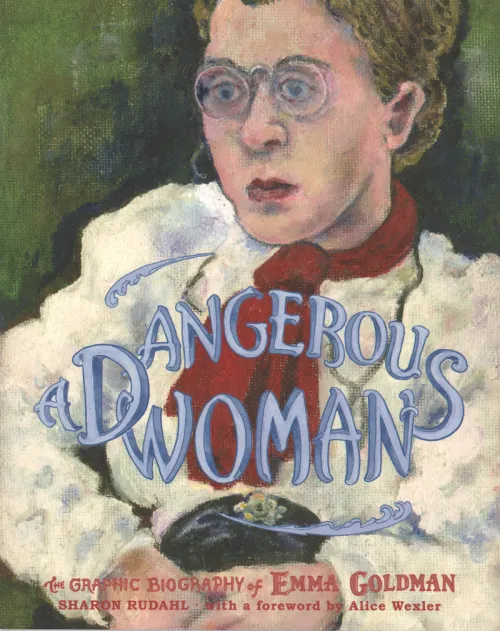
I was going to say, the three of you had a lot of overlap in how you worked and thought about comics and what interested you. For the IWW book you did a short strip on Emma Goldman.
That's when I did the first Emma Goldman. Paul said, I think it's my favorite thing in the book. I said, she deserves a whole book of her own. He went out and made the proposal and got me the deal with New Press, which is a pretty decent publisher, to do an Emma Goldman book. I'm pretty pleased with what I did on that. Some of the little artistic things I pulled off that no one will ever notice, but they were important to me at the time.
Like what? What were some of your favorite touches?
I finally got to do a ball scene. In a lot of my favorite old movies, in Tolstoy in Anna Karenina and everything, there's the scene at the ball. I finally got to draw the scene at the ball that I've been reading about for a long time. [laughs] There were a lot of little things like that that I got to do that I was happy to have the excuse to do.
That's a motivation in my cartooning work and I don't know to what extent it is for other cartoonists. Do you know if that's a common thing? Having an excuse to do something I've wanted to do since growing up is one of the things that motivates me in long-form comic work. Do other cartoonists feel that, or are they more just into doing their own style of things?
I think a lot of artists try to draw what they want or gravitate towards genres or approaches they like. I remember one artist said that what I described as style is just a way to draw what you want to draw and avoid drawing the things you don’t.
That's exactly how I feel about it. Okay, so I am in company with that.
One thing I loved about the Emma Goldman book was it was larger in size and it got to show off your art.
I have no control over that.
I was wondering about that because the Robeson book was smaller and square. What size do you usually work at?
I always draw relatively small. If I have a bigger space, I'll just pile more and more little things into it. Also because I'm cheap, and I've never really had a lot of money to buy supplies, I work on 11” by 14” Bristol board, and just reduce enough in size. You probably know, it's always good to have your comics reproduced a little bit smaller because you just get a sharper image that way. I like to work at a size that sort of controls my tendency to be overly elaborate. The size that it gets printed at, again, is totally out of my control.
In the biographies I had more pages to stretch out and think about how I was going to design. It mattered a lot to me how I set up the panels on the page and how that related to what was on the facing page as well. That design was important to me.
You were thinking about it in the books but not necessarily with shorter comics?
Yes. Even though I still had to work fast by some standards, I had this big block of time to do a big block of work. I used to set myself really rigid schedules, like pencil half this one night, then pencil the second half, and then ink it in one day when I was on tight deadlines. It just seems ridiculous now, but that's what we did.
With your shorter comics you just thought about the page, since you couldn’t control where it would go and how it would be organized.
With the shorter pieces, definitely. In the bigger books that I was able to do that.
I mean, I also feel in some ways that doing so much biography was a limitation I wouldn't have chosen if those were the assignments. And good publishers, that Paul [Buhle] got for me to do those, and wonderful characters to learn about.
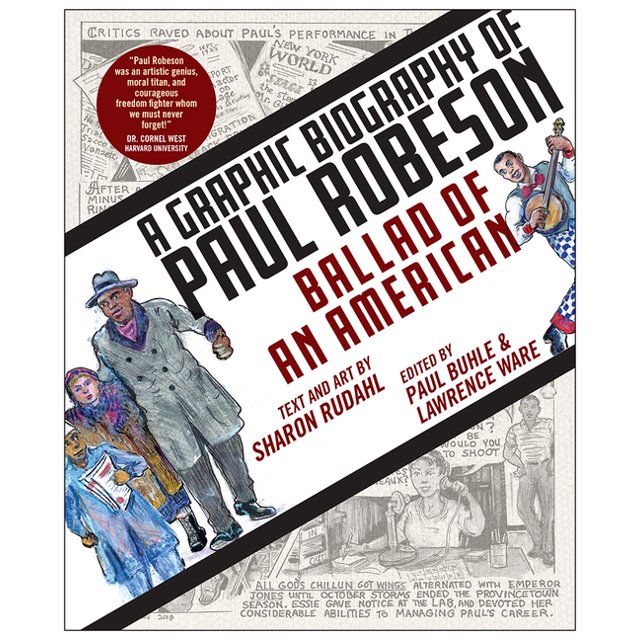
How did the Paul Robeson biography happen? And what was the process for you?
The Paul Robeson book happened the way most of Paul Buhle's projects happened in our heyday. Rutgers University Press approached Paul as someone they were aware of who put out the kind of books they were interested in. Paul approached me and asked if I would be interested, and I grabbed it. For children of lefties in my generation, Robeson was a sort of secular saint. But I must admit my opinion of him actually went down slightly in the course of researching his story. When working on a biography, I try to do appropriate research, but I think I also prepare a lot like an actor prepares to play a role– finding parts of myself that I can share with a subject.
One of the books I have of yours is The Bund from a couple of years ago.
I wrote The Bund, but I didn't draw it. That really wasn't planned. I was working with a person who was writing it. First she said she wanted help, and then she kept saying she couldn't do it, and at some point she just threw up her hands and stopped having anything to do with it. Paul called and said, can you write it? I didn't have much of a choice at that point. I had such a short deadline, I couldn't have illustrated it myself and written it myself.
I was wondering if you were thinking about or had any interest in writing for other people.
That was one of the first things and I enjoyed it. I wouldn't have necessarily turned down the opportunity to write for other people. By and large, my stuff is so personal and idiosyncratic, that it's probably not really appropriate in most cases for me to write for others. But if someone feels like having something that I would write, if they’re familiar with my work, I'm willing to give it a try. Paul's a couple of steps beyond me, in the moving away from it all, and not being able to do it anymore. He reached a point that almost everything that came up as an impossibility, he asked me if I could write it, if he didn't want to write it anymore. [laughs] But none of those deals actually came through. He wanted to do a book on surrealism, but he just kept going in spirals and not being able to decide what he wanted it to say, so it didn't happen. And when I wrote a sample chapter, I was just witty and concise and he wanted to be real academic. We wouldn't have been a good match for that anyway.
I ask in part because you mentioned moving away from comics. If there was anything else you still wanted to do or were thinking about or had in mind?
I wanted to do like an update on Emma Goldman. Sort of Emma Goldman in the 21st century, and what she would think about what's going on. The script that I was first writing for it was just that it had become such a kleptocracy and that the people that she warned against that would take over a democracy hadn't done so. Then it just went so far downhill from there, I don't even know what I would do. Somewhere in between, I discovered collage. I think what I would do if a project came up that I couldn't resist working on, but I didn't have that physical concentration and strength to draw anymore, is that I would use collage more.
You can do an awful lot with collage. There would be ways to deal with that. But I'm moving away from being able to do any of these things, to be perfectly honest. I'm ready to just curl up somewhere and watch TCM. [laughs]
You have a lot of comics, some of which have never been collected. Is there a chance we might see a collection of your work?
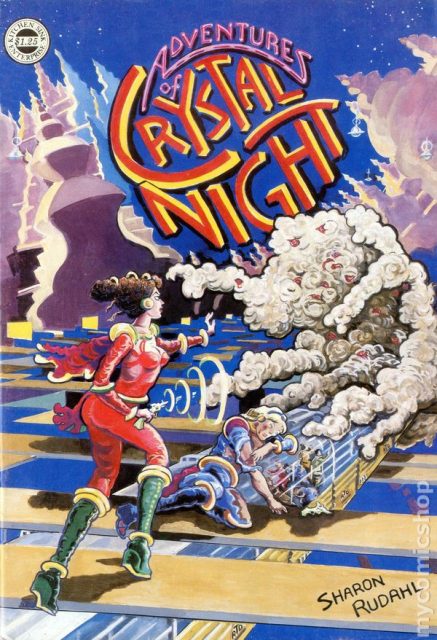
A lot of people have brought that up, surprisingly enough. In the past, my reaction was always, why collect what I've already done? I'd much rather you give me an excuse to do something new. But at this point, I don't think I can do much new. The Paul Robeson book is now in the permanent collection of Rutgers University, because I knew I wasn't taking good care of my own stuff. The idea of finding the stuff and making a collection– someone would have to come to my house and be willing to dig through cupboards, under the floor, to find some of these things. We’d have to find it. But there's a lot of stuff in archives now, too. Denis Kitchen has a lot of stuff that he holds on to. If somebody really wanted to do it, it could be done. The guy that took Crystal Night and then collected it in Art in Time?
Dan Nadel.
He would be able to do it. I mean, I was surprised that anybody even knew about Crystal Night (read it here).
I would have liked the opportunity to do more stuff like that. I do enjoy Philip K. Dick-ian science fiction, and I think it's a great place for comics to go. I'm sorry I didn't get to do some of the stories I would have liked to do along those lines. I'm writing something right now, maybe for another cartoonist to draw. It's the movie that dolphins are going to write about humans after we’re reduced to a few gibbering primates on the beach somewhere where they make money selling souvenirs to the dolphins. [laughs]
So far it's just speculation. Something I enjoy thinking about. What can I say? Thinking about things is easier than drawing them, and drawing them is easier than inking them– and it's all very difficult when you do it the way I did. I would have profited from better technique in all these things. To be able to work more fluently and not grind it out so much. But you work with what you've got, and that was what I had to work with.
You mentioned before that the Josephine Baker piece was your last comic. Are you drawing or collaging or making anything at the moment?
I was doing collages. I've been doing what I call collage comments since the second Trump victory that are collages that are mostly satirical. I'm not drawing much from scratch, though every once in a while I end up with a drawing in one of those. Collage is great. Matisse, when he was old and his hands were crippled, had the brush strapped to his hands so he could keep painting. Collage was sort of like that for me. It enables me to keep working even though I couldn't control the work myself with my hands anymore.
But I'm losing interest in that too now. That was really good for a while. I probably have a book's worth of really good political collages I did, but now I don't even find I have the enthusiasm. I've just been sort of ground down. I don't think this is even old age as much as just, the more I think about Trump I don't even want to try to do cartoons about it anymore. It's just too discouraging.
I understand. The poet Donald Hall, in an interview I conducted a couple of years before he died, mentioned that he wasn't writing poetry because they just stopped coming to him.
I can understand that. I really understand that. An artist that really influenced me when I first came to San Francisco was Guy Colwell. He went on a color fast until the Vietnam War would end. He wouldn't paint in color. I said, I'm going to go on a fast and I won't write poetry. I won't do anything to make this into a creative, artistic experience. I want to just experience what an awful thing Trump is doing and react to it. I'm afraid I really did myself a lot of damage. I stuck to that, and I think I've really physically and mentally done myself a great injury because it was a pretty awful thing to do. I was able to do it. I give my willpower credit. Every time I find out about the things, I just experience them completely, and it's awful. What can I say? What an awful government we have now. What awful things it's doing to people. How ashamed I am. I feel the shame of not being able to do more.
Until very recently, what I wanted from requests for work was an excuse to do something new, or an excuse to do something I've been thinking about. I've said this before, but it's like when I used to go to my neighborhood flea market. I live in Hollywood. I'm in a neighborhood near Sunset Boulevard. I would go to the flea market, and there were a lot of people that were acting in movies. I mean, bit parts, or they'd be in theater, but that was a real common profession in my neighborhood. The question they would ask each other was always, are you working? I understood what that meant. It wasn't, do you have an important job? Are you becoming famous? Are you making lots of money? It was, are you doing the thing that makes you feel alive to do it? That's the same way I would feel about having an art project to work on, an illustration project, or comics to work on.
The post Your Best Life, Sharon Rudahl’s Way: ‘if you’re building in sand, you may as well build castles’ appeared first on The Comics Journal.


 Hello, my name is Jack Sparrow. I'm a 50 year old self-employed Pirate from the Caribbean.
No comments:
Post a Comment