

With its carnivalesque title, The Jellyfish King colorfully renders a young boy’s descent into paranoia under the influence of his father who, crippled by grief after his partner dies in childbirth, develops conspiracy theories and survivalist obsessions. Like Brecht Evens’ previous books, it is a feast for the eyes. Literal images mingle with symbolism; objects reflect minds, monsters lurk. The story it tells is both disturbing and hypnotic. I read this book carefully; then I reread it, and reread it, in the order in which it was written, and then not, opening it at random, because so many pages, so many panels, could stand alone as individual, original works of art.
Originally from Flanders, Belgium, Evens currently lives in Paris. His unique artistic style and the ambivalent, dark tone of his stories sets him apart as one of the most interesting figures in contemporary European comics. In this latest book, the first in a trilogy, he combines ink and gouache drawings with lithography and etching. This refreshing analog approach infuses texture into his imagery, notably through the ghostly interplay of transparent layers. The variety of techniques allow the story to evoke opposing moods and atmospheres without losing its narrative thread. It is at times exhilarating, at times somber, or both at once. At the beginning of the book, the publisher includes a paragraph describing the techniques used by the artist, and I wish every comic or graphic novel offered this information. It makes the reading experience richer and brings another level of appreciation for the many months of work that went into creating the object we hold in our hands.
Even before you start reading the story, the covers and endpapers grab your attention. The front cover echoes the title and lends itself to several interpretations and theories: the blue figure in the center is the son, and the one in yellow below him is the father. But which of the two will be the king of this story, even if the son appears more centrally placed? Around them whirl secondary characters, objects, animals, symbols, the backs of cards, and many others appearing as shadows in the background, creating the sensation of falling into an endless pit. The images are taken from the story to come. Is this a game? Are the characters just pawns in a story they don’t control? Are they falling? On the back cover, the cards have been arranged into the fragile structure of a house of cards. In French, we say a castle of cards. Are the surrounding cards being added or is the castle falling apart with cards blown away? What happened to the king of this castle? These images can symbolize how the characters – and we, the readers? – build or make up stories to give sense to human life, grief, and a cruel world. At the same time, they represent the fragility of an illusion resting on a lie so brittle and dangerous as the one the father slowly constructs, an illusion that eventually engulfs his son. I’m just playing with language here because in Flemish/Dutch, a house of cards is a house, not a castle. Furthermore, if the English title is translated from the French title Le Roi Méduse, the original title of the book in Flemish is actually De bondgenoten 1, which means the allies or the partners. It goes to show how easy it is to go down the rabbit hole of interpretation…
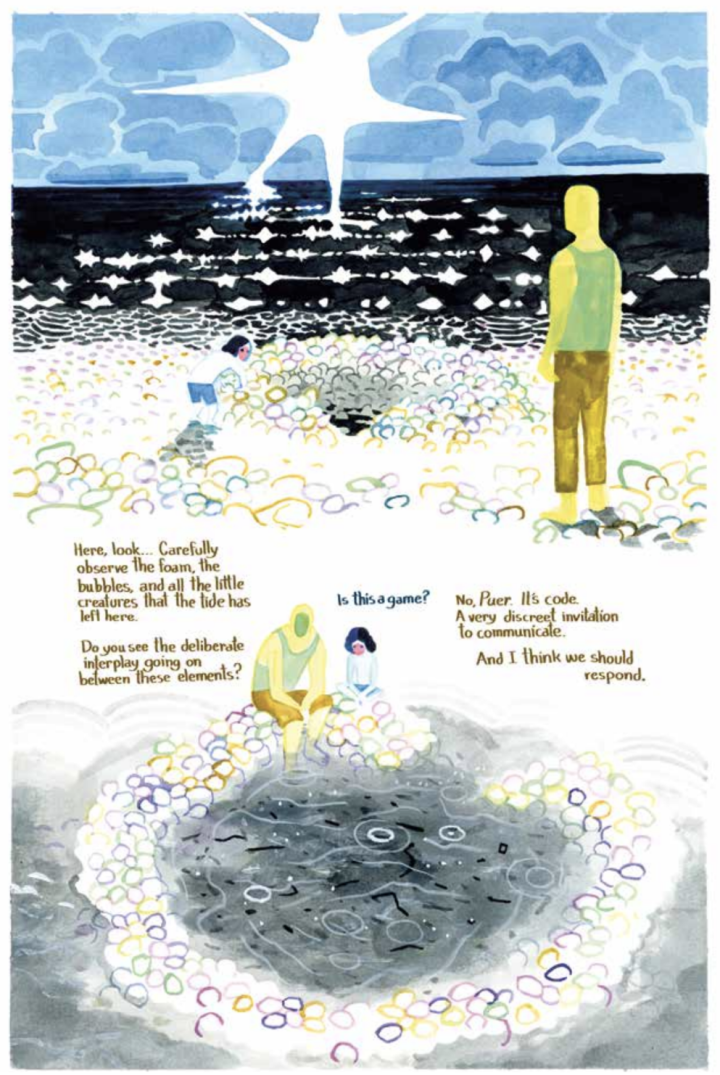
Although the characters’ faces are often abstract, iconic, Evens creates profoundly human subjects for his story, especially Arthur, who takes his son on a terrible journey, forcing his nightmarish visions on the child and passing on his own paranoia, all while being very tender and protective. It is obvious from the beginning that the loss of his partner has changed him, and his grand illusion is a way of coping with grief. Throughout the book, he wears a hood and his face remains a blank slate. We know his emotions only through his speech and body language. Although we can say that he makes bad decisions, we cannot, as readers, despise him; we can only witness his downfall – with compassion? And this could be said of many aspects of this beautiful comic, which rests on the constant interplay between opposites and the way colors contrast with one another. Yet, opposites, like colors, also blend and overlap: love/loneliness, reality/paranoia, joy/fear, humor/darkness. These pairs often coexist on the pages.
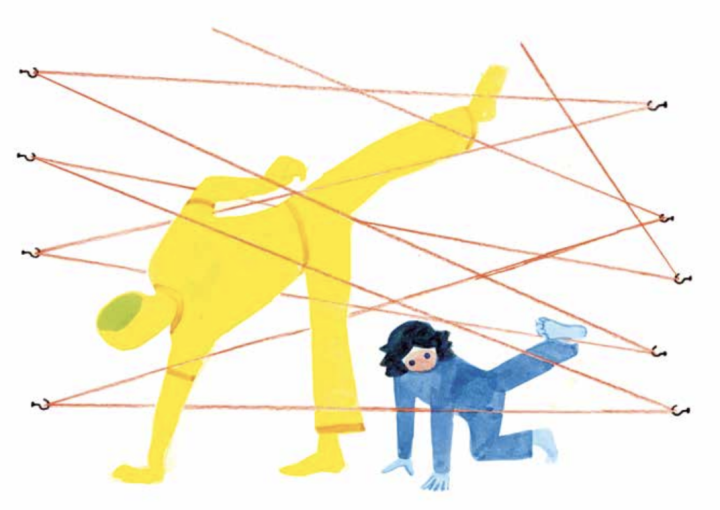
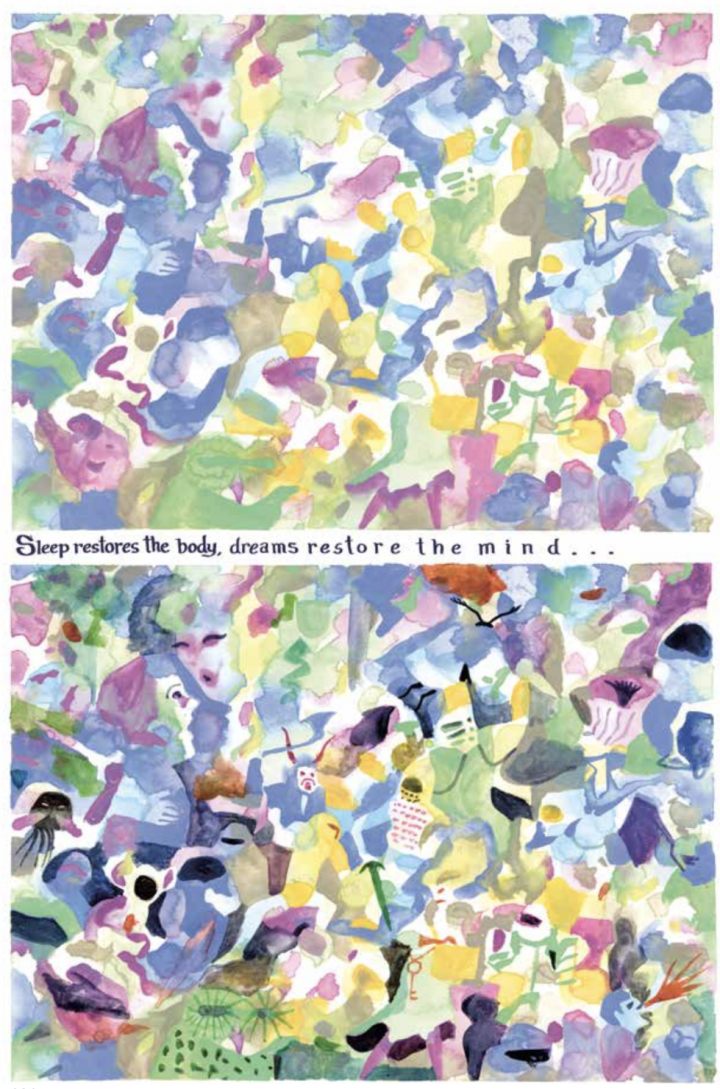
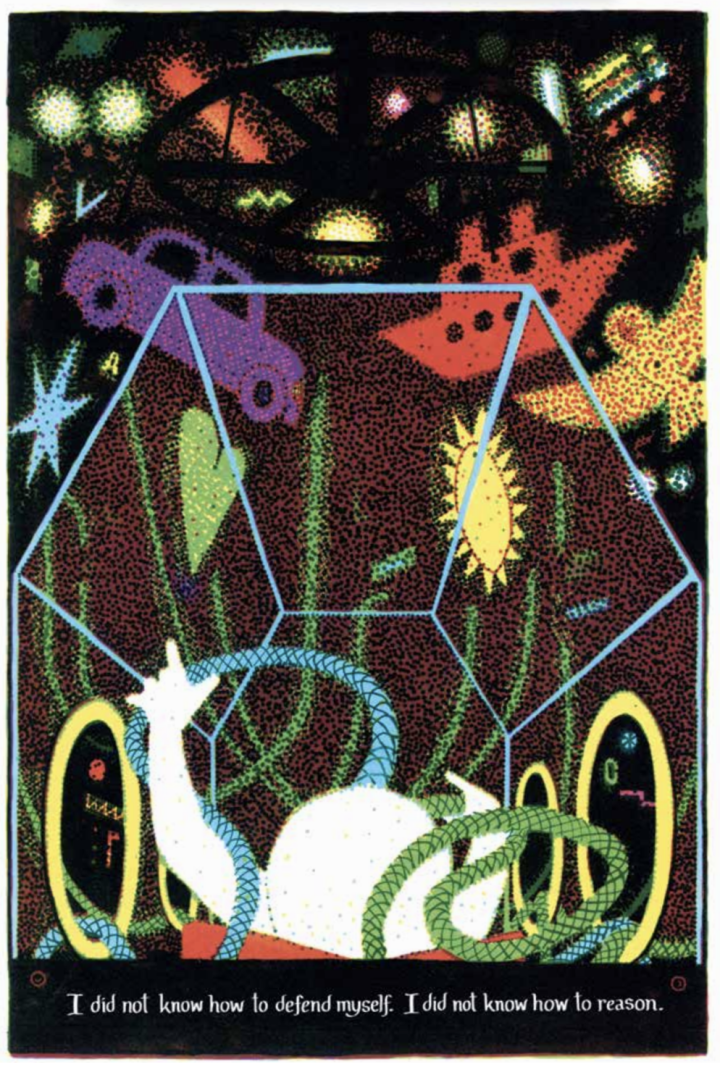
The story opens with full-page panels that depict the birth of a human child and, very subtlety, the death of the mother. Arthur’s son narrates his own birth and the rest of the story. The reading should begin slowly, one page at a time, taking in the breadth of each composition, accompanied by brief texts – no speech bubbles here. This opening is very Lacanian, pre-Mirror Stage: the baby (the son) describes how his initial environment is a gestalt of which he is but one part, indistinguishable from the whole: “I couldn’t recognize sounds. I couldn’t distinguish shapes, where one ended and another began”. According to Jacques Lacan, the famous French psychoanalyst and theorist, this is how we experience the first stages of life, before we recognize that we are separate from the world – a recognition that marks the beginning of our socialization. In the case of Puer, as his father calls him (for Puer Universalis), his introduction to human society will be quite different. This original stage is also a good metaphor for certain pages in the book, in which forms blend into one another in a dreamlike state. Dreams exist outside the realm of social conventions and may offer Puer a way to escape the stress of his everyday life. This delightfully slow start is quickly interrupted by a page with six borderless panels depicting a violent event in the life of the now slightly older child, who misrecognizes his father on a beach, another Lacanian moment, or perhaps, like Arthur, again, I’m reading too much into it!
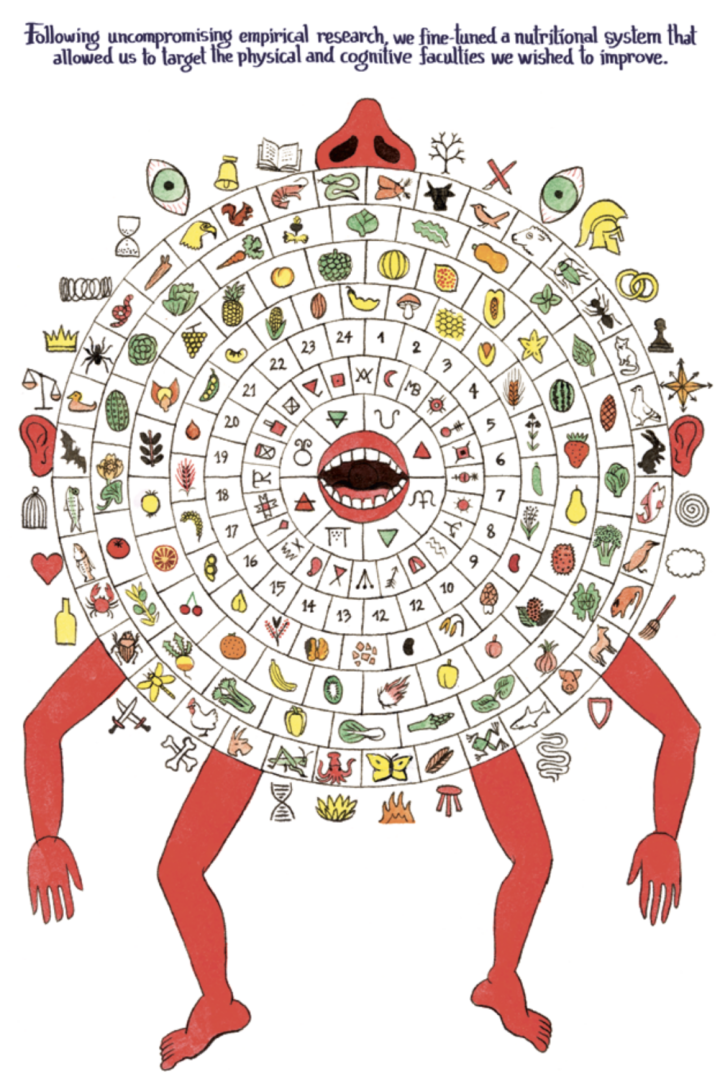
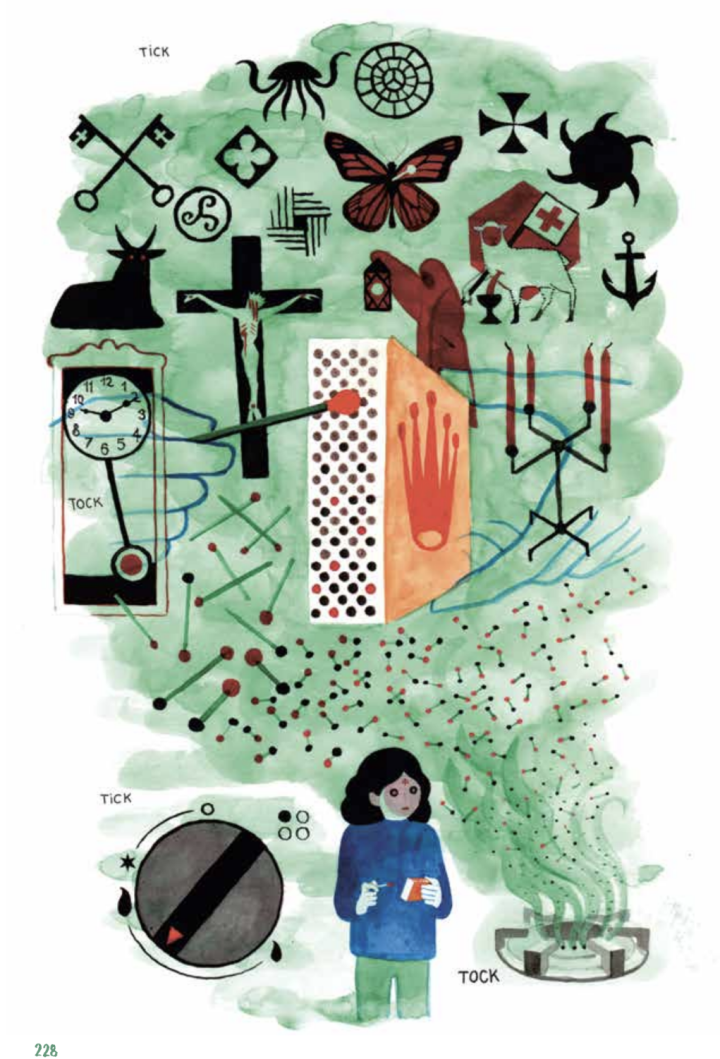
But you really don’t need to know psychoanalysis to get sucked into the story as it unfolds and to understand that the workings of the mind are central to it. The child reaches his (really) depressed father through drawings that initially function as a medium of reconciliation and reconnection between father and son. At the same time, however, the father misinterprets the images his son draws for him, some of which are copied from other sources, seeing in them what he wants to see. This is the first step in the descent into conspiracy theories and paranoia. The young child, unable, of course, to understand that his father is constructing an alternative reality for both of them, follows. He loves his dad. Nothing is left out in the son’s brainwashing journey, from learning camouflage to picking locks, which gives Evens the opportunity to draw stunningly beautiful pages in different styles that never clash – for example the full-page panel about food which really stands out in the book. Although bright colors dominate, Evens also draws images in monochrome black, still with an amazing range of style. The top panel on p. 222 could have been an etching, but it is not listed as such and must therefore be an ink drawing. In various online and print interviews, Evens explains that he no longer begins his drawings with pencil sketches. Instead, he draws very light, diluted ink outlines to get started and then proceeds directly to adding colors. The outlines of shapes, whether objects or people, are mostly created with color contrast rather than black lines. This also applies to the contrast between the borderless panels and the white of the page. The work definitely reads as a comic, but it is also an art book.
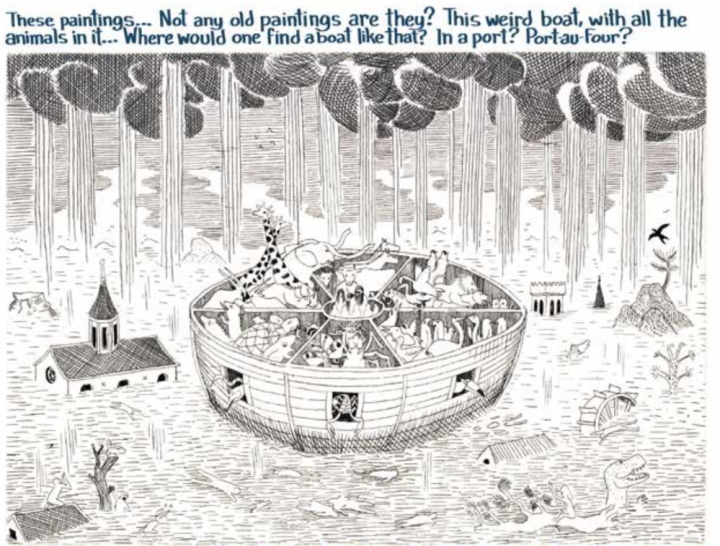
In all this, I should not forget to mention that the story is also funny. Towards the beginning of the story, returning home, and the father tells his son: “And we’ll transform our house into a veritable Headquarters, a place where we can work without being bothered. Out of sight.” In the next panel, as they enter the house, their neighbor, an old lady with an innocuous shopping bag, greets them, and the father greets her in return, “Hello, Madame Valois.” This simple counterpoint between the two facing pages is humorous and presents the father as someone quite ordinary. The “interruption” of normal, everyday life between the first panel, which presents a frightening image of the outside world, and the following spread shows a sketch of their house with its windows boarded up or bricked over, is ironic. But it also emphasizes how this could happen to any of us, or anyone around us. It shows the father not as a mean-spirited conspiracy theorist, but as an ordinary man who eats, sleeps, loves his son, and says hello to his neighbors. In the same vein, a little later, when Arthur finishes building a brick wall to block a door, Puer points out that he still has to go to school. They end up taking the wall down – another moment that raises a smile.
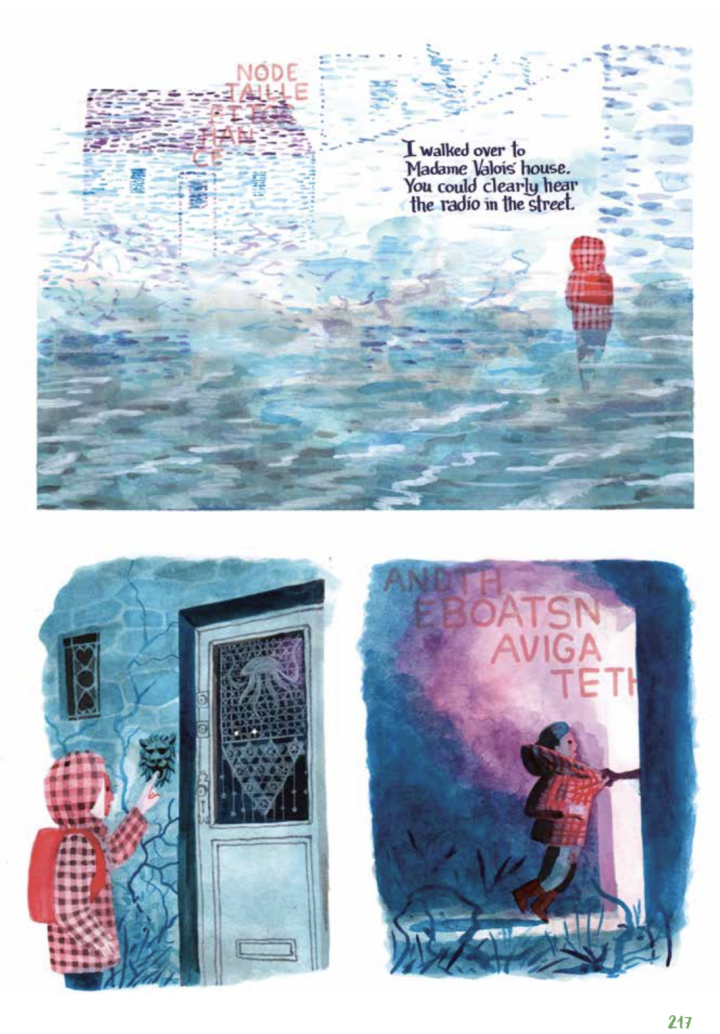
However, the humor becomes darker and more sarcastic as the story progresses. Later, the father comes up with a name for their enemies, the Operators, and tells Puer: “We see what we believe, rather than believing what we see”. For him, this justifies believing in what does not exist rather than questioning his own paranoia. As readers, we notice the contradictions in his reasoning. By the end of the book, the boundary between what is real and what is imagined becomes increasingly blurred. Even Madame Valois, the elderly neighbor, gets drawn into the conspiracy theory when her radio is “infiltrated” .
“Unconventional” and “coming-of-age story”, are terms several critics use to describe The Jellyfish King. And rightly so. But by now, I wouldn’t call Brecht Evens unconventional anymore. He established his style some time ago with books such as Panther and The City of Belgium (available in English from the same publisher), and if it is unique, it is because it redraws the boundaries of what “conventional” comics can be, rather than placing his work in the margins of the medium. Still, few artists do it as successfully (for this reason, I take the opportunity to recommend exploring the work of Elene Usdin as well. Her books, especially René.e aux bois dormants, are not yet available in English – hey, publishers?). As for the coming-of-age aspect, we’ll need to read the other two volumes of the trilogy to find out. I, for one, really want to know what will happen to Puer.
The post The Jellyfish King appeared first on The Comics Journal.


 Hello, my name is Jack Sparrow. I'm a 50 year old self-employed Pirate from the Caribbean.
No comments:
Post a Comment