

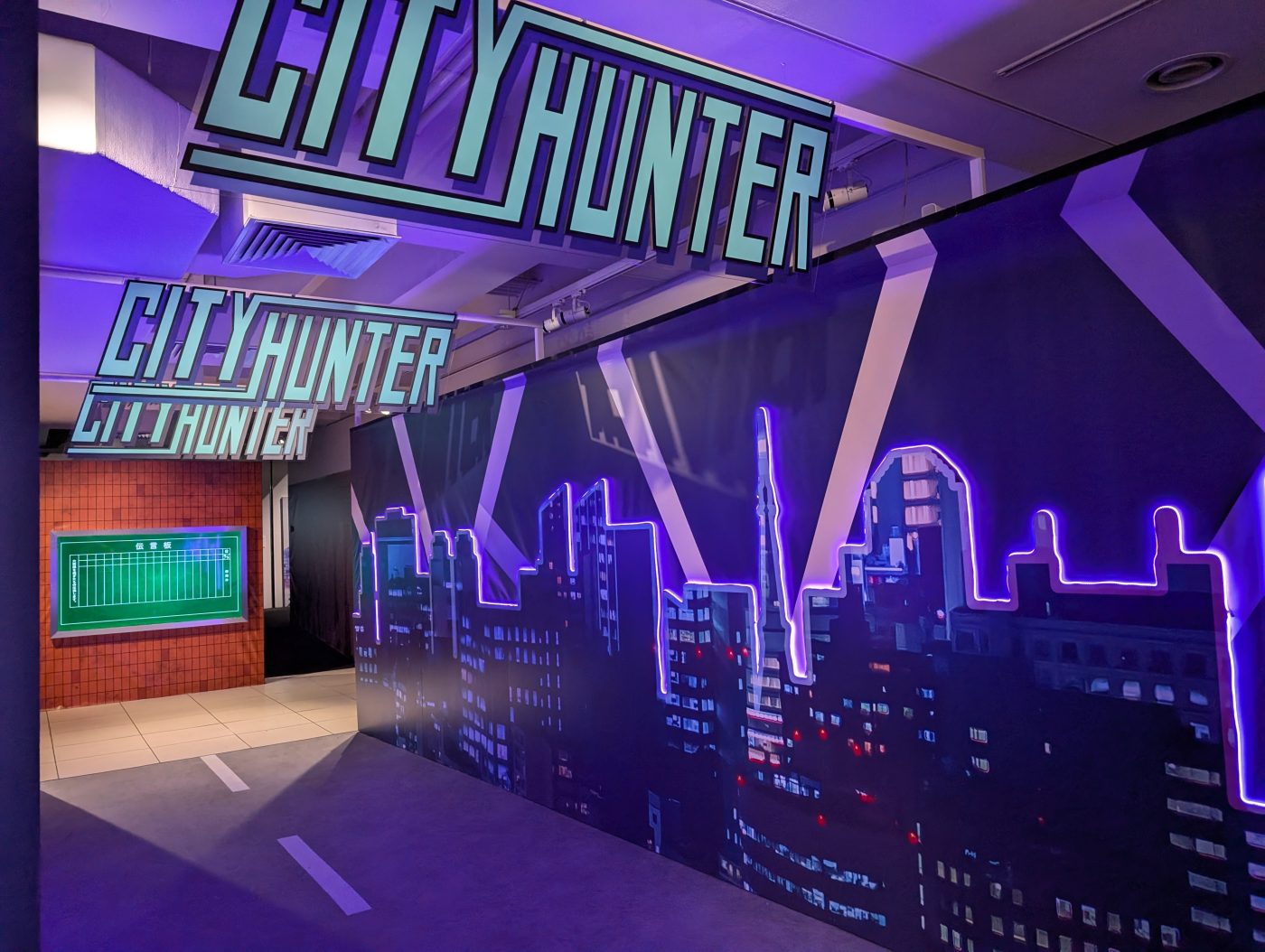
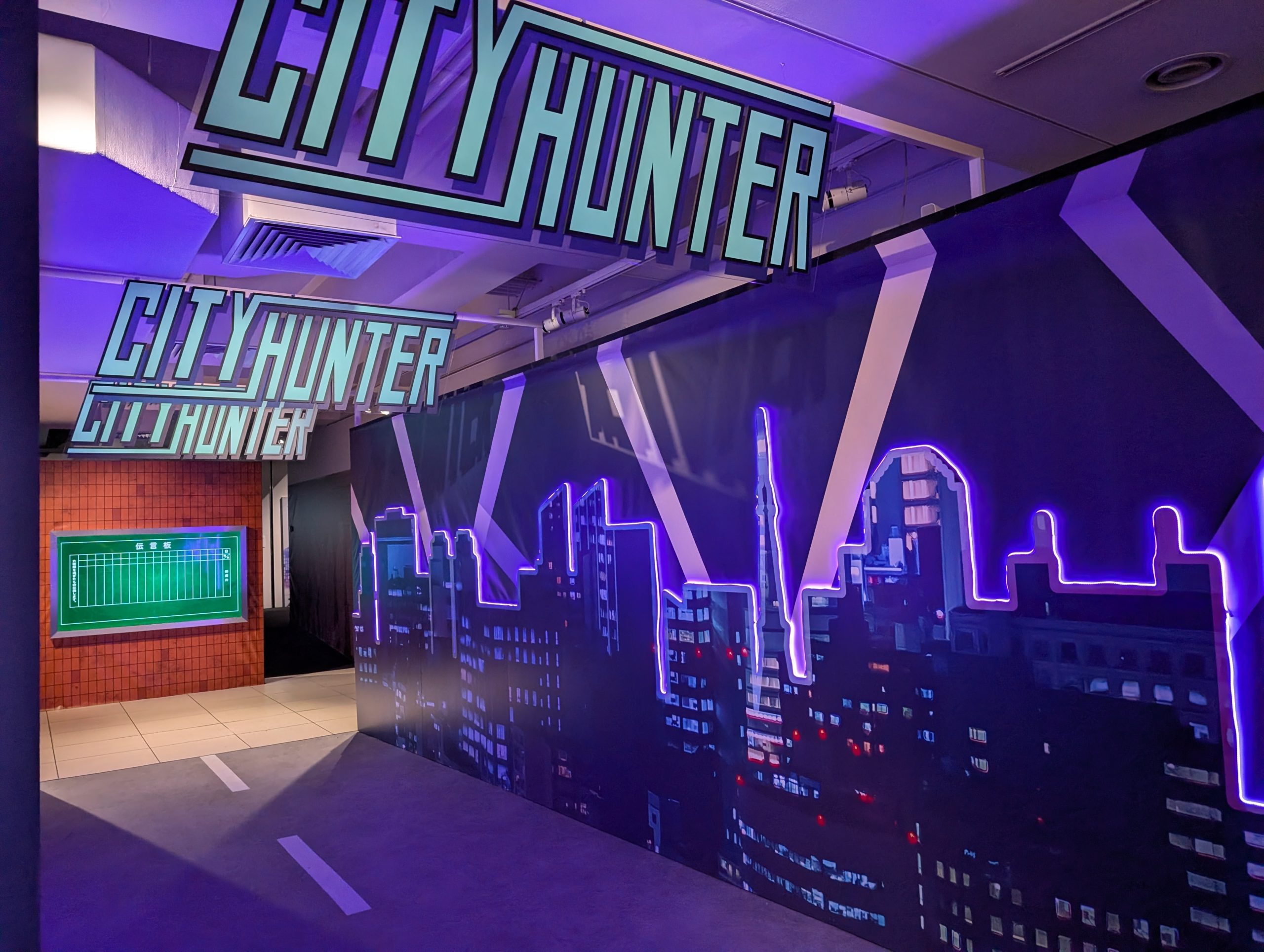
Forever, City Hunter!, an exhibition celebrating the influential manga City Hunter’s 40th anniversary, took place at the Ueno Royal Museum in Tokyo from Nov. 22 to Dec. 28. The exhibit, which featured enough original Tsukasa Hojo art to sate even the hungriest of City Hunter fans, did a lovely job of setting a grand tone for its display.
City Hunter follows Ryo Saeba, a “sweeper” who lives in Shinjuku solving crimes and chasing after beautiful women. The manga was originally serialized in Weekly Shōnen Jump and later adapted into a popular anime series. The exhibit leaned into the retro cool vibe, with the entryway painted a deep purple and decorated with a cityscape laid out in neon. The experience was a far cry from your typical stuffy gallery offering, featuring character cutouts, photo opportunities (a large model of Kaori’s 100t hammer graced the entrance, and the exhibit featured multiple built-out models including a life-sized Cat’s Eye Cafe manned by an Umibozu standup), and even piped-in sound matching the pages on display (i.e. rain sounds for a rainy scene) to add to the atmosphere. The overall effect expressed the tone and aesthetics of the manga, recalling an era of futuristic grit, windswept trench coats, and even more windswept hair.
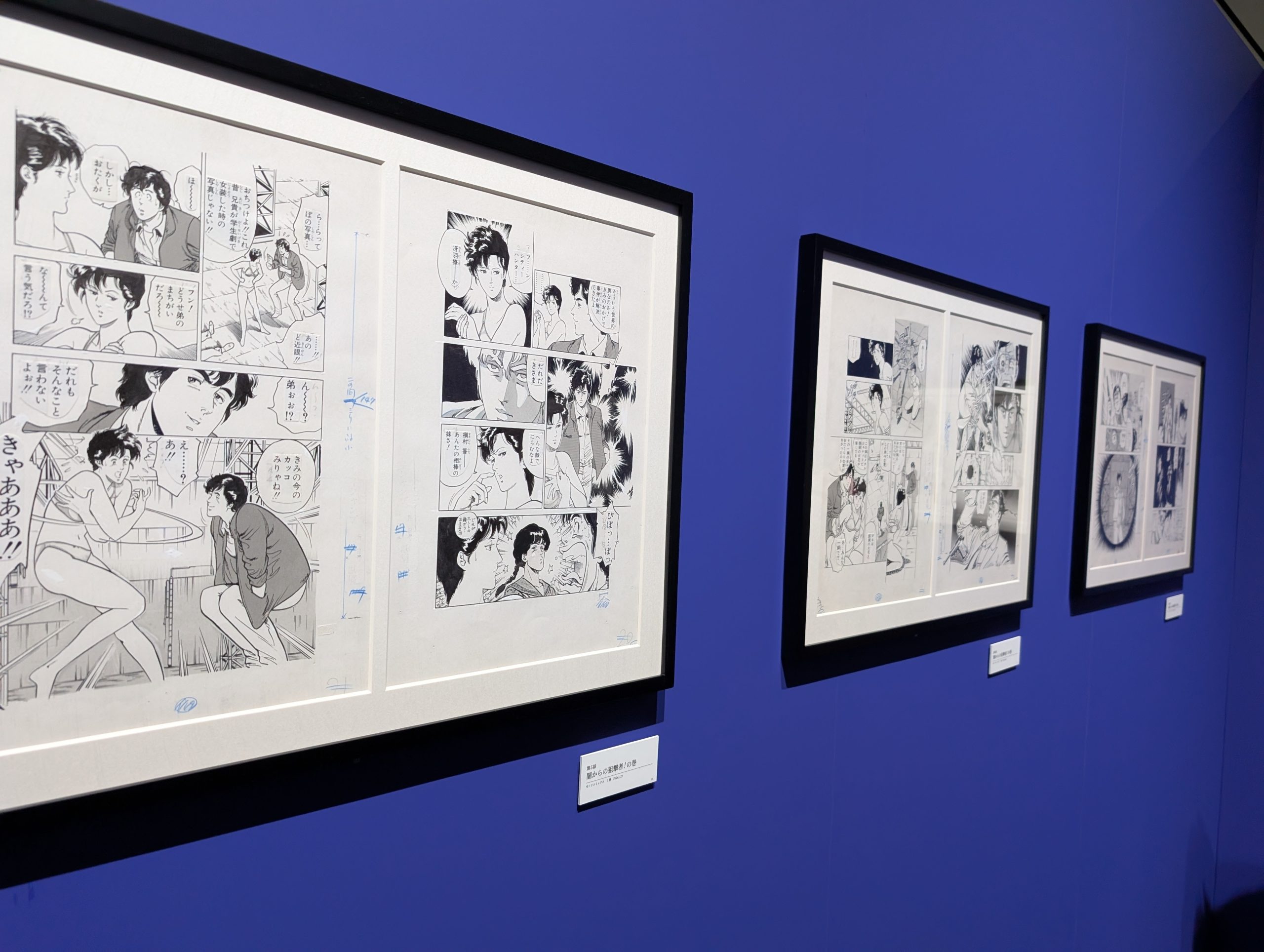
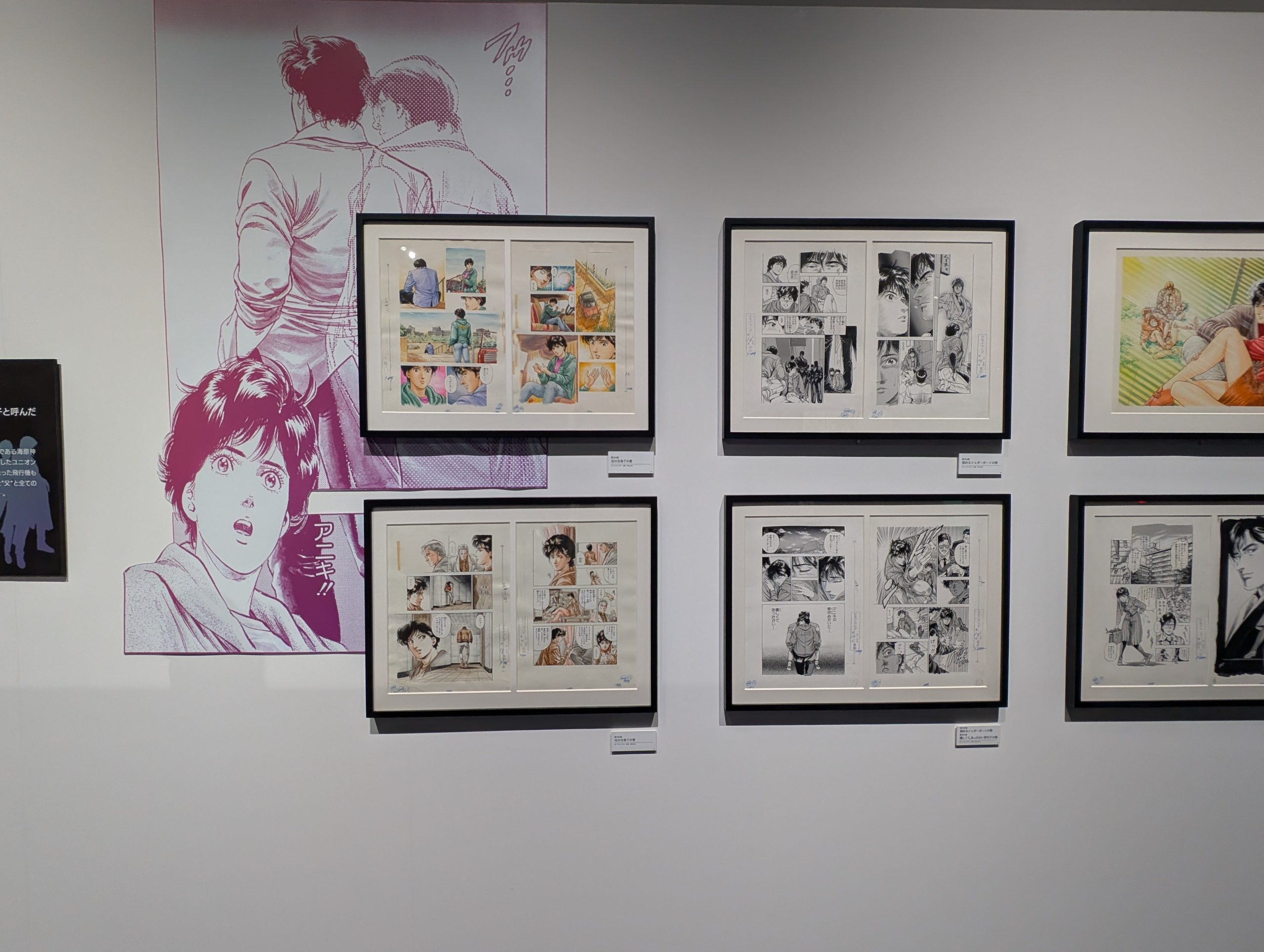
The original artwork was, unsurprisingly, the star of the show, with hundreds of pages of art from decades of the manga on display, making for a fun experience of tracking stylistic changes and artistic trends over the years. Original art is always a treat to see up close, so you can catch the little details of what’s been altered or whited out, how the artist applied tone, and what was redrawn. This exhibit had a great mix of inked pages, colored pages, and even a few notebooks displaying thumbnails, so visitors could get a good idea of what the manga process looked like, start to finish.
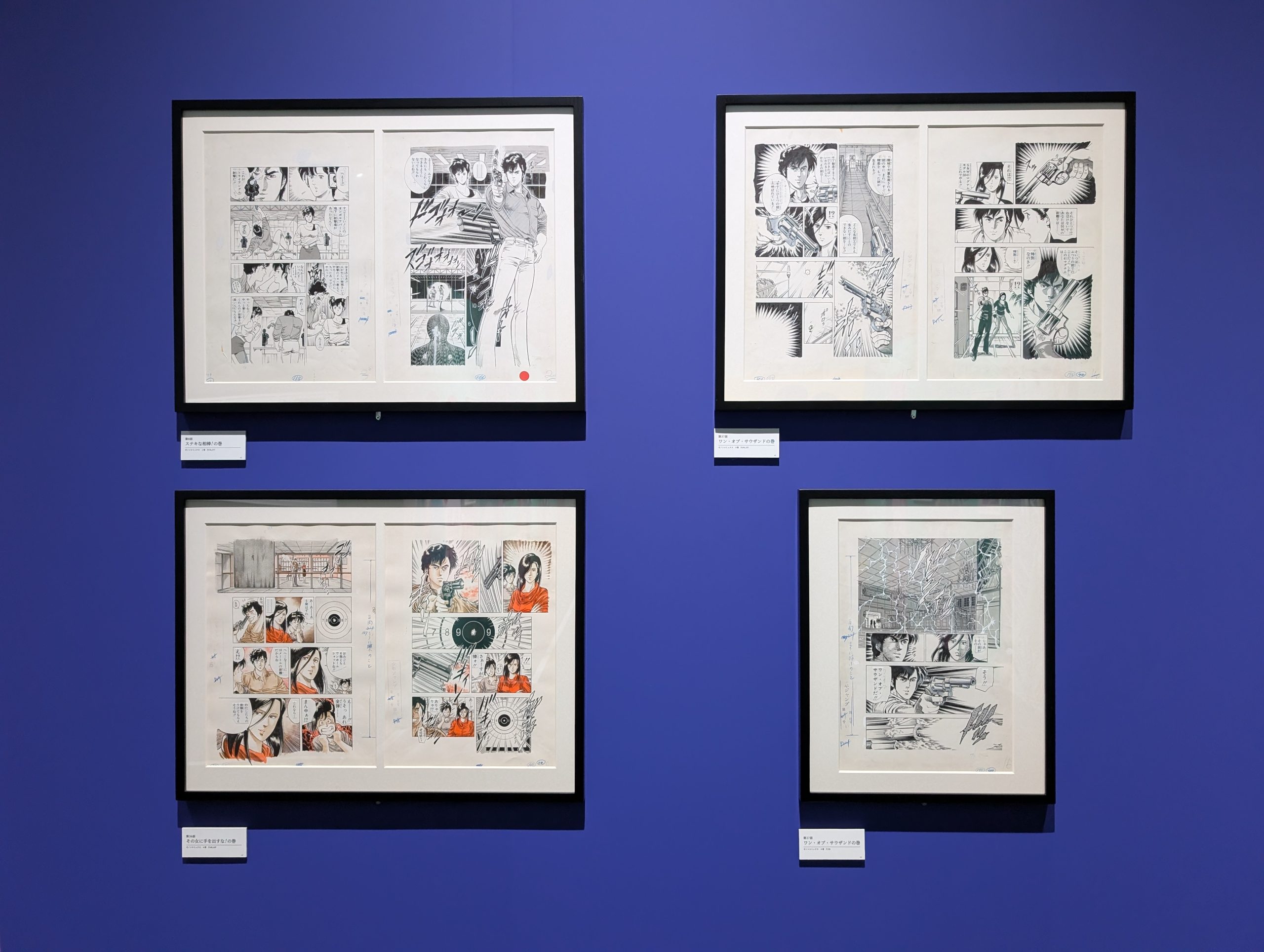
Each framed page was presented with a small scroll featuring a short caption as well as page numbers, with some sections featuring larger wall scrolls that briefed the audience about a character or plot point. Unfortunately, the exhibition lacked more thorough information about the manga itself, its place in cultural history, or even the development of the series over time. While the art was presented in chronological order, I did not find any markings designating the years or even decades when the art was made (though I was using Google Translate, so I might have missed out on something in translation), which felt like a lost opportunity, considering the breadth of work on display. The lack of signage seemed odd, especially considering what did make it onto the larger signs, which were summaries of basic plot points and descriptions of popular characters directed at people who have very little knowledge about the series, yet did not provide enough information to properly inform a new person about what was going on in the manga. The lack of proper signage stood at odds with the fact that the displays seemed to be catered to fans as opposed to a general audience. It felt odd to have so little information about art production, shifts in the series, or other sorts of lore that usually makes it into anniversary exhibits, (though there was an audio guide available in Japanese for purchase that may have provided that missing context).
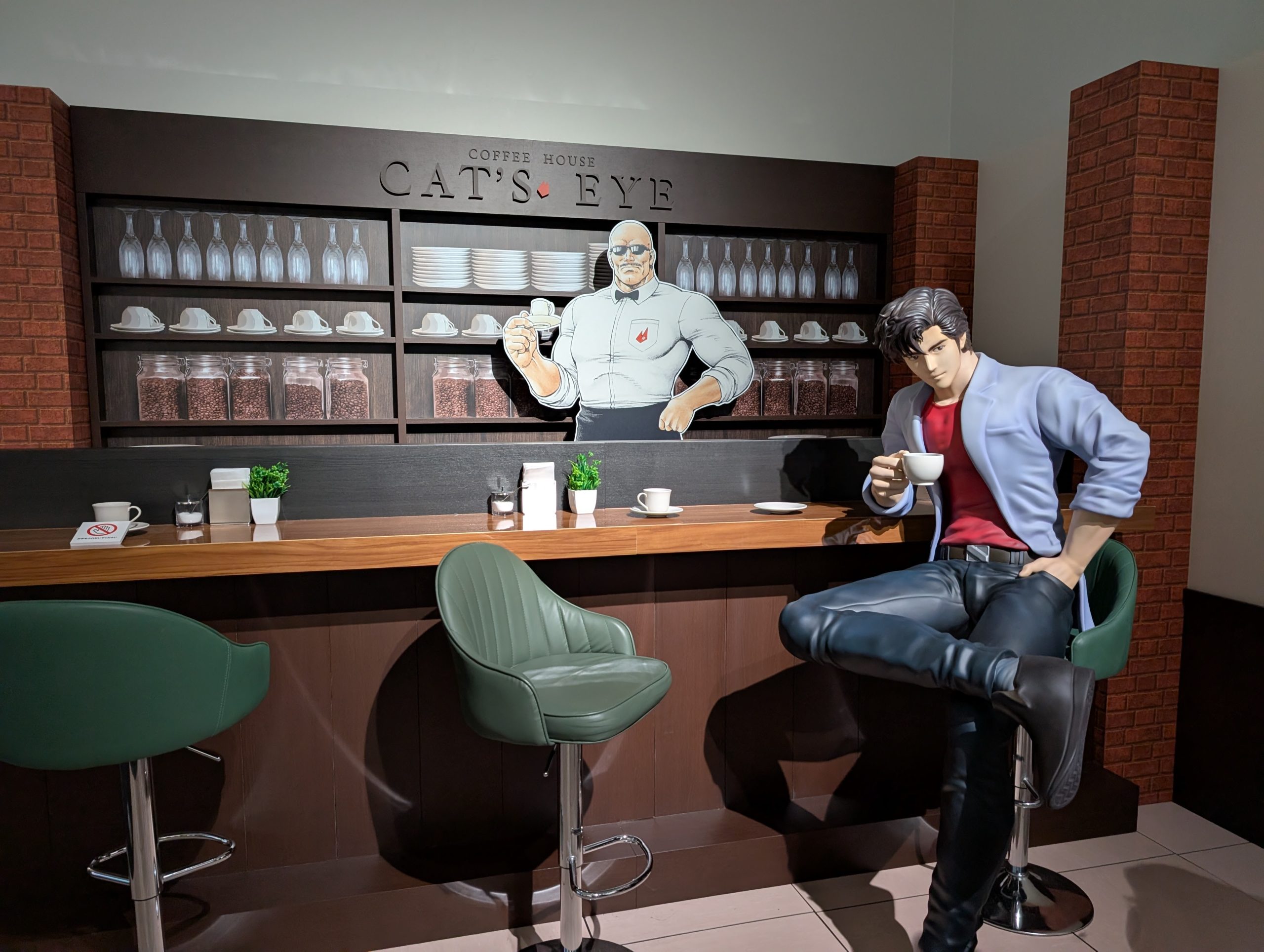
Even so, care was clearly put into making the exhibit an enjoyable experience for fans of the manga. Nowadays, curated visual experiences are often focused towards social media photos, and while this exhibit was social media and selfie and photo friendly, it’s focus seemed to be on building ambiance and calling back to the world and memorable plot lines of City Hunter. The exhibit, with its separate sections and meandering pathways, did a good job of breaking up the extraordinarily large amount of art into consumable bites and sections – which was helpful, especially considering the fact that (in my humble opinion) the more interesting art was up front. The experience was overwhelming in a good way. Seeing so many pages displayed at once really drove home what a task it is to create a long-time ongoing manga like City Hunter.
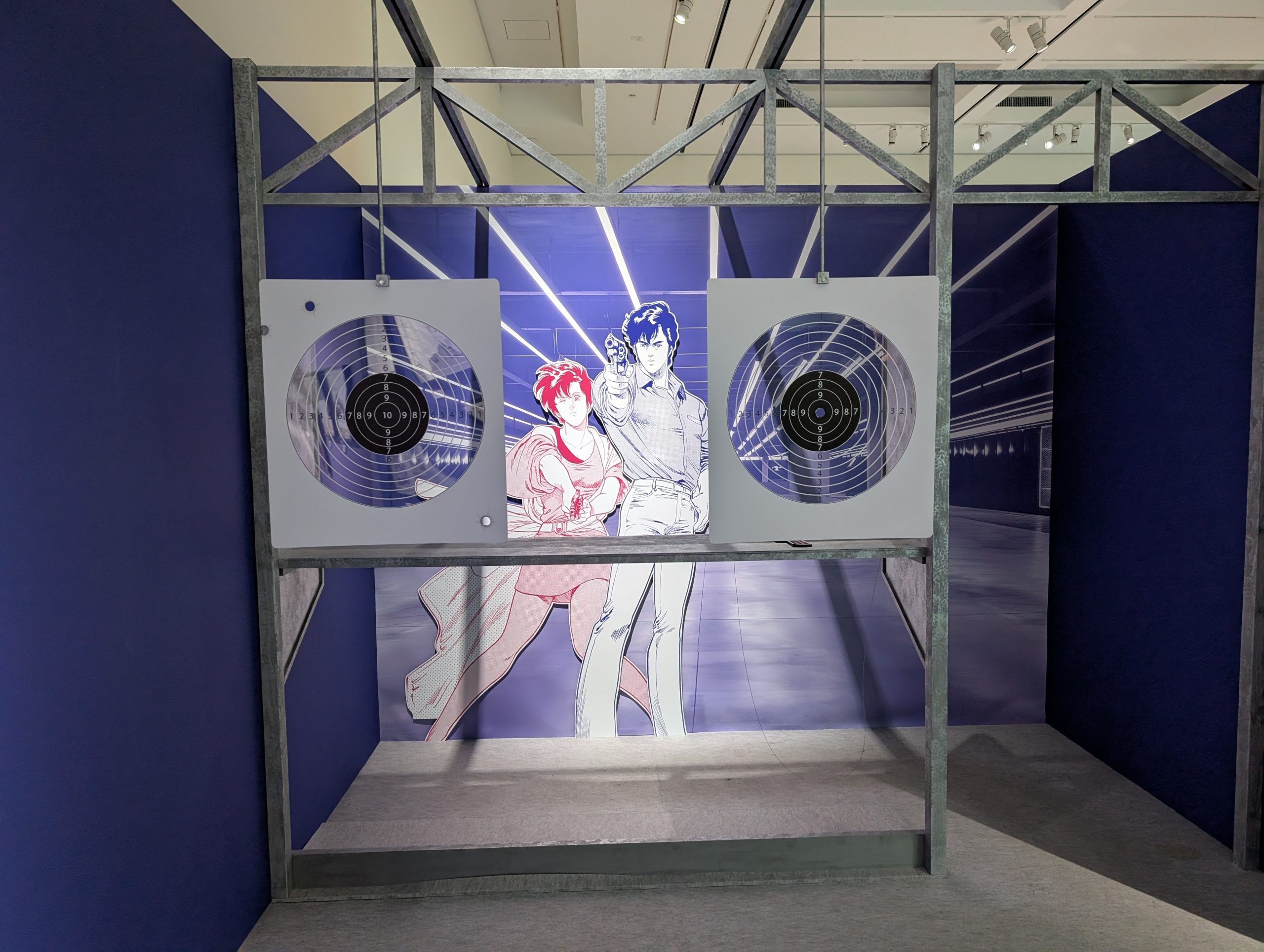
While the original art was the central draw and made up the majority of the exhibit, the exhibit also featured small touches that added to the experience, including vintage copies of the manga and a gun used as a model in the workshop, which helped the exhibit feel like a true celebration of the manga, both as a popular phenomenon and as an artistic effort. It was clear that though the exhibit understood that City Hunter was a global phenomenon, it began with and depended upon the art on the page.
At the end of the exhibit was, as with most exhibits, a gift shop featuring a catalogue, various City Hunter themed items such as perfumes(!) and keychains, and exclusive new copies of the manga. To my surprise there were also beautifully produced reproduction prints of some of the original art that was on display in the exhibit (unfortunately, it did not occur to me to take a photo of these). This offering stood out to me as one that I’ve never seen at an original comics art exhibition, which might provide reproductions of original art inside of a brochure or a catalogue, but not as prints for sale. It spoke, I think, to the focus of the exhibition on the object of the original art itself instead of solely what that art led to. It felt appropriate for the exhibit and I found myself hoping to see similar offerings at other exhibits in the future.
The post A look at the <i>Forever, City Hunter!</i> exhibition: Enough art to sate the hungriest Hojo fan appeared first on The Comics Journal.


 Hello, my name is Jack Sparrow. I'm a 50 year old self-employed Pirate from the Caribbean.
No comments:
Post a Comment