

Halfway through Bill Griffith’s 4th graphic biography, Photographic Memory: William Henry Jackson and The American West (Abrams, 2025), a college-aged Griffith rides the Hoboken Ferry with the ghost of William Henry Jackson, his great-grandfather. The imaginary conversation about their respective art forms unfolds with the respectful and affectionate cavernous generational gap in understanding, ships passing in the night. By the time you grow up enough to conjure the kinds of questions worth asking your elders, often they’re not there anymore. Griffith finds a way around this predicament in Photographic Memory, armed with the decades of observational eavesdropping that inform his long-running strip, Zippy the Pinhead as well as an avalanche-threatening pile of research about the famous photographer. Jackson’s photography (and murals and illustrations) documented the Indigenous People of the American West, helped establish Yellowstone as the first National Park and traveled as far as India, Siberia, and Korea in his 99 years. Griffith’s savvy layouts form a spectacularly energizing variety of mineral water-clear illustrations into that lightly-tread territory of stories fit for both comics-people and the unsuspecting public. Drawings go between the sketchy suggestion of forms in a Colorado snowdrift to crisp interpretations of the pleading and stately portraits of Indigenous People, the latter occupying a generous 6-page spread underlining the importance of devoting literal space for these stories. Griffith’s previous biographical subjects, his mother from Invisible Ink: My Mother's Love Affair With A Famous Cartoonist (Fantagraphics, 2015), Schlitzie from Nobody's Fool: The Life and Times of Schlitzie the Pinhead (Abrams, 2019), and even Ernie Bushmiller of Three Rocks: The Story of Ernie Bushmiller: The Man Who Created Nancy (Abrams, 2023) all find their way into Photographic Memory (look for the Nancy-wig among the images below), but Griffith’s delivery style of heavy-on-the-obvservation but light-on-the-judgement sounds like the heart of Zippy to me.
After various recording catastrophes on my end that are hardly any of your business, Bill Griffith spoke with me by phone on March 1st of this year about William Henry Jackson, times he’s been fired, the grotesqueness of cuteness, and perennial advice from Diane Noomin (who Madonna should be thanking in every press release, I think you'll come to agree). Thank you to Bill Griffith and Jacq Cohen of Abrams Publishing for making this interview happen, and thank you to Ash Fritzsche and Katie Skelly for research assistance. As usual, I’ve cut myself out of the print interview entirely so you can get what you came here for: please enjoy this time with Bill Griffith.
-Sally Madden
When I was first aware of my great grandfather's photographs, all I knew, and all most people knew, were his 19th century photographs of the Western United States. But I found out even as a teenager by reading his autobiography that he had a whole other photography career. Starting in 1899, he became a sort of an executive in a company that created photographic prints for sale. In those days there was no halftone process. It was a very crude version of a halftoned process to reproduce photographs in magazines, posters or whatever. People actually bought photographic prints made from these original negatives. That's what this company specialized in. I found out that all those photographs were available to look at in the Library of Congress. I was just leafing through them one day and I came upon Coney Island in 1903. One of Zippy's touchstones, one of his origin stories in Coney Island.
The images of the people in the photograph are very tiny. you We didn't have the luxury of printing the photograph at a huge size, but even at the size of the page of the book, you'll see a clownish looking figure with a polka dotted outfit, in the lower center of the photograph.
I blew that up from the Library of Congress image, it knocked me off my feet because not only did this little image contain a guy dressed up in a polka dotted muu muu, but he even had a slightly tapered head, likely a prosthetic as part of his clown outfit. He wasn't literally being Zippy, but it was a pretty close second. I had to use it. My best guess is this is a scene of Coney Island when it was not quite open, in the early, early morning. I think some of these figures were getting ready to perform or rehearsing. There are several dressed up in what were then supposed to be funny-looking costumes that Irish people wore. There's a guy with a sort of a broken top hat, a woman who looks like maybe she takes in laundry. These are actually kind of racist, stereotypical images of Irish people. And they were considered, you know, material to make fun of, so there's that going on in the same photograph. There are almost no customers walking around. I don't know when Coney Island opened in the morning, probably around nine o'clock, so this is before that moment. I couldn't find any more information about this particular clown and what kind of an act he might have done. But it was enough for me that he looked so much like Zippy that I had to tip my hat to him. There are more photographs that he took of Coney Island, but none contain that figure.
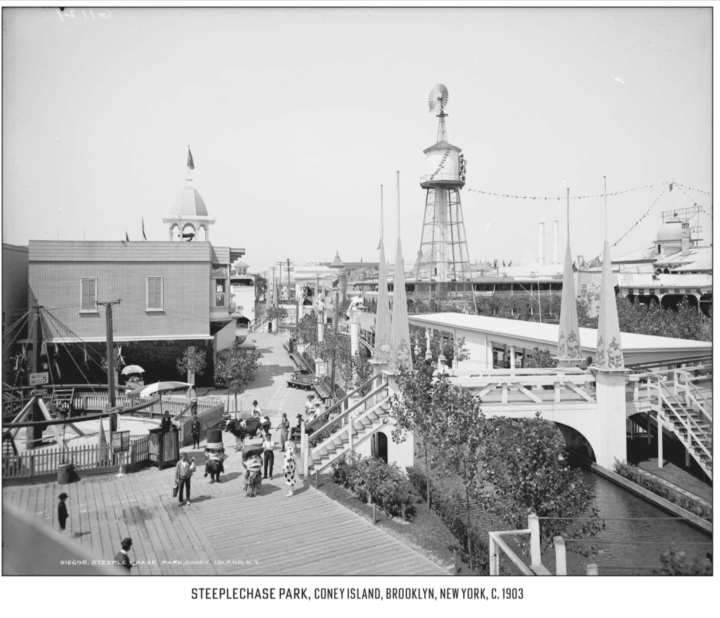
You can buy a copy of any photograph you see in the Library of Congress, and as soon as I found out that they had these photographs I sent away for one. At the time, in the pre-2000 years, when you got the photograph, it was actually not high-res, it was even slightly blurry, but I could tell it was a clownish figure with a yellow polka dotted outfit. Since then, they have re-scanned all their photographs, and they're now all high-res, totally usable for reproduction, so the photographs you see in my Jackson book are from the Library of Congress. It wasn't until after 2000 that my head really exploded because then I got to see it in complete crisp detail. The clarity that I got later when it really hit me, when whatever cosmic forces were at work to lead me to this moment, I remember yelling, “thank you, Grandpa!” That was a great, great moment.
would have liked to have known my great-grandfather because I think he would be happy to do it. I don't think I would get very far with Ernie Bushmiller. He had very little patience with anybody that was into analyzing what he did. He was very perversely happy that those whom he called “the head scratchers”, people trying to understand what was going on with Nancy that wasn't obvious on the surface, were wasting their time. He took sort of a delight in the fact that he could appeal to them while at the same time finding what they're talking to him about to be of very little interest.
I did extensively talk to his neighbor and best friend Jim Carlsson, and he gave me incredibly and fairly intimate insight separate from the strip, just Bushmiller the person. One of the things I got from him was that Bushmiller was not comfortable talking about hidden meanings or anything intellectual. It's not that he wasn't himself smart. He was quite smart, and he read fairly widely. But the whole idea of talking about the Nancy strip in anything but just gag humor terms, just rubbed him the wrong way. I don't think it would have gotten very far if Bushmiller was alive, either now or while I was doing Three Rocks. He notably only gave a handful of interviews. Starting in the 1940s when his script became really, really popular and in hundreds of newspapers. Requests would come to him and he would turn them down. He only gave one recorded interview, and it wasn't really an interview. It was on a radio show with another cartoonist in New York sometime in the early 50s. The host of the show is talking to him about his work, but Bushmiller just tries to parry any question with another with a joke. He doesn't want to open up topics that delve deeply into what he's doing. He just doesn't feel comfortable doing that. So if he granted me a meeting, it would have to be on his terms.
There are 26 published books about Jackson. Most of them are photography collections, but quite a few of them are biographies. Not one of them truly looks into the degree to which what he was doing had any detrimental effect on the indigenous peoples of the West that he was either photographing or just interacting with during his career. I thought that was odd because some of those books are fairly recent, and why would they not want to address that subject? He does have some blatant moments of racism, in his autobiography he used the word “savages” to describe Native Americans. But at the same time, he talks about when he had the opportunity to speak with them and to meet with them and to request permission for photographs, he valued those interactions. He sought out translators to help him speak with important members of different tribes that he encountered. There were plenty of white adventurers and settlers of that time period in Western America who were very likely anti-Native. They whites considered them to be something to be eradicated, and that was in effect, the official position of the government.
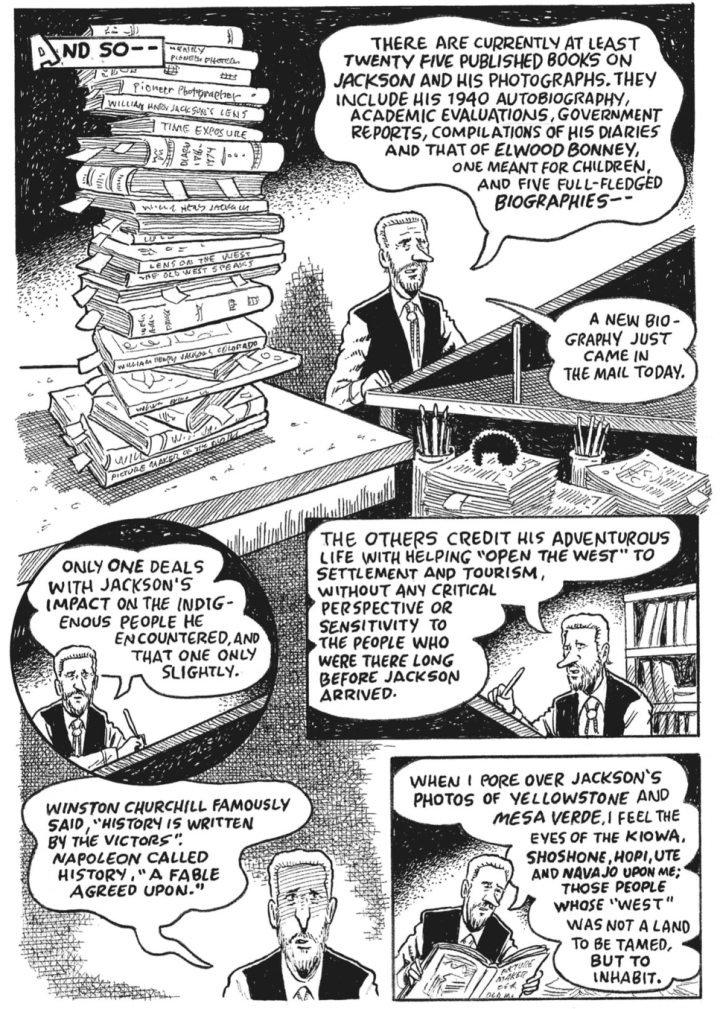
Somewhere in between those two, but much more towards the more humanity aspect, was where Jackson stood. But without intention, there's no doubt that what he did was part of what would be called the settling of the West, meaning the settling by white European settlers of land that had already been lived upon for 10,000 years by other people who they were now removing, either slowly or through violence. What am I to conclude? Do I have to shoulder some of this responsibility? Yes, because Jackson didn't, he wasn't required to. When he was alive, no one ever questioned him as to whether or not what he was doing was having a negative impact on the people that were already established where he was traveling.
He had only one or two occasions where there was dangerous conflict that might've been part of it. There were plenty of stories of people like Jackson, whether they were, mean, he was a photographer, but there were people who were guides, ranchers, soldiers, and all kinds of functions in that part of the world that dealt very often with Indigenous people, and there's a lot of stories of terrible violence between them. Jackson missed out on that. There's only two occasions I could find where he was close to having a violent confrontation with Native people, and they were both avoided. I started doing research and I came across this book that is in effect a compilation of one after another verbatim English translations of Native American testimonies of the time period, from mostly the 1870s and 80s. There's an entire book of them. And that's where I thought I would kind of leave it. I would give them a voice by quoting them from these testimonies of the actual people who were watching as their culture disintegrated. I felt I really had to deal with it, it was the classic 800-pound gorilla in the room. How could I not talk about it? How could all these other 26 books that are sitting in my bookshelf not talk about it?
I think the reason is Jackson gave them sort of an out. He never said or did anything particularly outrageous in the area of how he felt about the Native Americans he encountered in the 19th century. There's a famous quote from General Philip Henry Sheridan in the book, “The only good Indian is a dead Indian”, a thing that you heard quite often. I remember growing up with that too, as a kid watching cowboy and Indian movies and TV shows. I always identified with the Indian because the Indian seemed cooler to me. The Indian wore moccasins and was very stealthy and could sneak up on you. That was the stereotype, it appealed to me a lot. The “cowboy” is really just a misnomer because cowboys in Indian stories were just white guys with big hats. They were cardboard characters who rode horses, they had no interesting personalities.
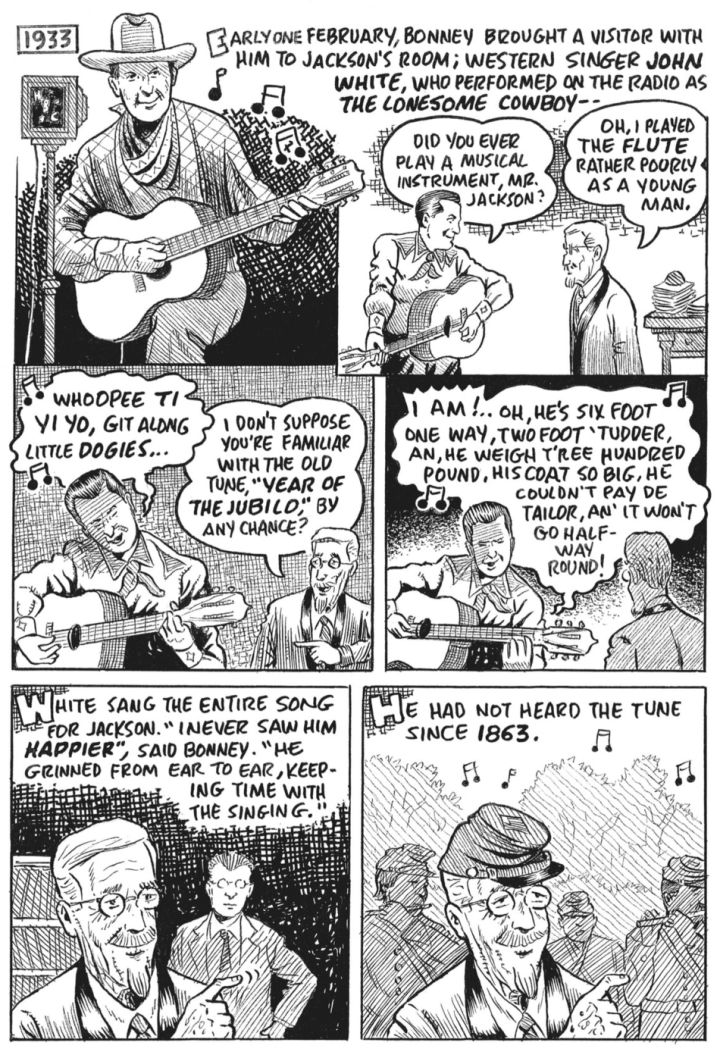
Those pages in my book of the Native American testimony form one of the emotional hearts of the book. They don't specifically refer to Jackson, but my great grandfather didn't leave a lot of evidence of his emotional life. I had to tease it out a bit and when he talked about his first wife dying in childbirth. In his autobiography, his sentence after he tells you that, he says, “On that matter, we shall not talk anymore”. You can see that as him saying it's too painful, but he’s also not respecting it. It’s a denial that it really happened and therefore he’s not respecting his first wife. This is somebody he married, that he was looking forward to a long life with, and suddenly she's gone and your child is gone. He didn't give you a lot of emotional touchstones, they happen accidentally too. Like one time, and it's another cowboy story, a radio-singer cowboy comes to visit him in his hotel room. He comes with his guitar and plays one of the songs that Jackson heard when he was a soldier in the Civil War. He closes his eyes and he's back there. That's pure, raw emotion. He doesn't describe it that way when he talks about this particular moment, but that's what it is.
He didn't give me too many insights into his emotional character. Although you can always say about someone who is not revealing a lot of emotion, that they're actually revealing all the time. They are hiding and pushing and pushing away, and you just have to be sensitive and find a way into that. When he's at his most desperate a longing for his first girlfriend who had jilted him, he's still hopeful. On a trek where he's travelling from Omaha to Wyoming, each time he gets to an outpost of civilization, the first thing he does is to ask if there's any mail for him from his girlfriend. There never is. Those actions say a lot, and it allowed me to portray him with a depth of feeling.
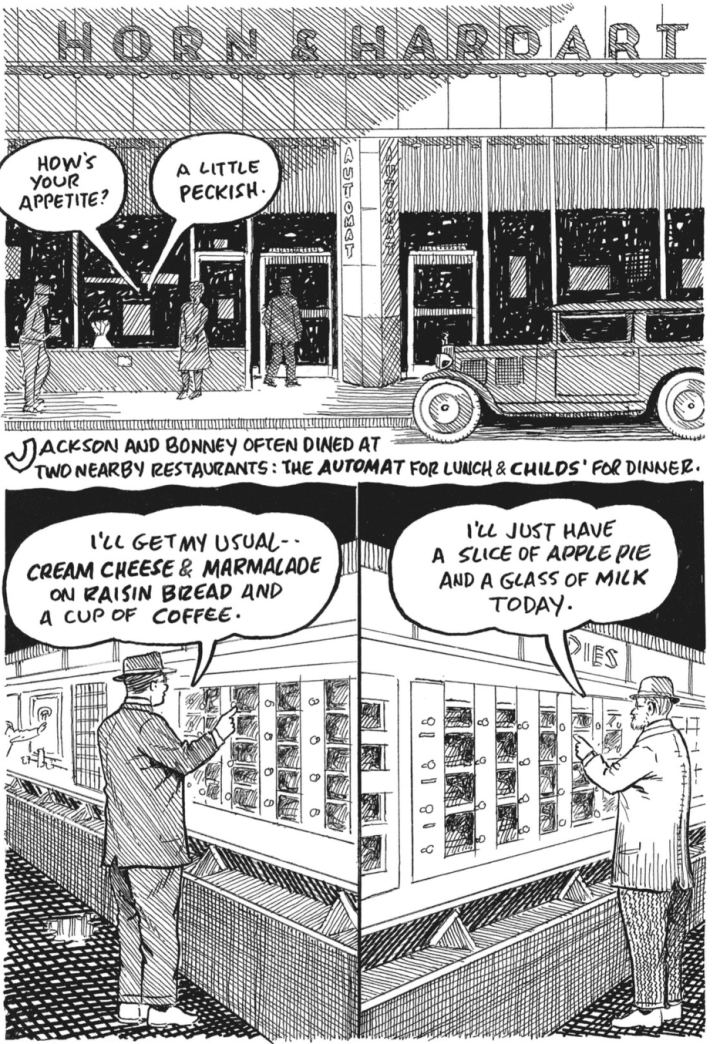
I have a moment like that every Tuesday. I go into New York to teach at the School of Visual Arts. On my return trip, I take what's called the Metro North, which you pick up at Grand Central Station. I arrive at Grand Central and I have an hour or two to kill, so I have something to eat. The main hall is just like a cathedral of this wonderful space, but beneath it is a whole level, which over the years became basically a big food court. There are several ways to get down to the floor below the main level of Grand Central. One is a series of staircases, and the other is a ramp. It was built in 1901 or so to accommodate heavy equipment and tanks in case New York City was to be invaded, so Grand Central could be used as a defense outpost. This is a very wide, very long ramp. When you walk down it, you kind of walk a little fast because it's fairly steep. When you walk up, you trudge a little because it's so steep. Either way, your physical maneuverings on this ramp change because of the ramp itself. In describing his trips to Grand Central in the 1930s to his buddy, Elwood Bonney, who kept that diary of all of their visits, he told Bonney, “You know, I'm getting old and going up that ramp at Grand Central is getting a little bit trying for me, but I can still do it”. Now I go up and down that ramp every week. And as I'm doing it, he's beside me, he’s right there. I'm saying, “Are you okay, Gramps? We're going down now. It's easy. When we come back up, I'll go slow for you”.
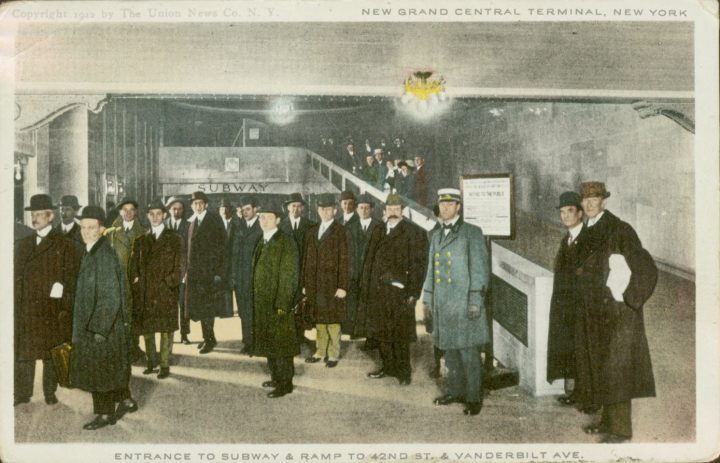
In his discussion of old age, there's almost no complaints. He talks about his eyes not being as good as they were, so he had to go to an eye doctor once. He was one of those people who had very little interaction with the medical establishment, he just was very lucky. The few [ailments] he describes are his old age symptoms, when he goes to visit Elwood Bonney's family in New Jersey, he has to take a ferry and two trains. He doesn't complain about it, but he just lets you know, it used to be easier. The Grand Central Station ramp is the one that I relate to because I use it, although if you look in the book, I have a scene where I'm talking to a kind of a ghost image of him on a ferry. And that was the ferry that my great grandfather took when he went from lower Manhattan to Hoboken to get a train to go visit his friend Elwood Bonney in Orange, New Jersey. That's there because, and I say it in the book, that's when I had my job as a store detective in Lower Manhattan. I was living in Hoboken, so I took that same actual ferry from Hoboken to downtown Manhattan five days a week, as long as that job lasted.
I went to art school, Pratt Institute in Brooklyn. Because I was snotty and arrogant and I thought they couldn't teach me anything more, I took my student loan, dropped out of college, and went to Europe. This is 1964. After I got back from Europe, I had no money and needed to work at, you know, just some crappy job. And I went to the Pratt employment office and they said they could find jobs for me. Even though I had dropped out I was still eligible for that service. I got six or seven jobs through them, all lasting no more than from a few weeks to a few months. One of them very early was as a store detective at a women's clothing store called Mr. Ephraim. They had two outlets. One was on Reed Street in the Wall Street area, and one was on Columbus Circle, 59th Street in New York. I was shuttled between the two of them, basically just taking dresses back and forth. Then one day they said the guy that was their store detective quit, so would I just take over in the Reed Street store? And I said, I didn't have any experience with that, but they said, just keep your eye out and if anybody is obviously stealing stuff, notify whoever's in charge in the store.
So what I did was just watch women steal bras. Very commonly, women tended to come into the store at lunch hour, crowd the store and go to the bargain bins. I would literally just watch them stuff bras and panties and slips into their purses. And it was so it was so rampant that it kind of froze me. I thought, what am I supposed to do? Are these people going to go to jail if I call the authorities? I couldn’t see the point in it, and thought the best course was just to ignore it. And so I did. It wasn't like they were stealing very valuable things. They were stealing, you know, $1.98, items already discounted. These women who worked menial jobs in the neighborhood, were not well-off. My store detecting consisted of just observation and I actually enjoyed it, I liked watching them steal. It's very clear in my mind, that whole episode. Of course, after a while, whoever was running the cash register noticed this and I was fired.
What usually happened with these jobs that I got through the Pratt Employment Office was that I was fired. That happened very often. It wasn't meant to be a temp agency, but for me it was. The final job I got actually lasted six months, and that was driving a cab. That was relatively very lucrative. You could make $100 a day driving a cab, which was a considerable amount of money. But the danger and the stress level was very high. I was only allowed to work the midnight shifts of midnight till 8 in the morning. And so after six months, I moved on to another crappy job.
[When] I went to Europe in 64, I met somebody who then became a lifelong friend. He wound up, after coming back to New York, he gradually moved up to Connecticut. One of my visits to him in Connecticut, sometime in the mid to late sixties when I was still living in New York, when I got to the train station, he was waiting in a cab to pick me up. He said he had just gotten a job driving the local cab. There was a guy he had to pick up first, and then he would take me back to his house, and did I mind? . So he drove a little distance, and he picked up this guy who he referred to as ‘Dooley’. So Dooley got in the back seat with me, looked at me, and within one second said, “are you still an alcoholic?” Dooley had a mild version of that particular birth defect, he was a microcephalic.
Schlitzie, from the movie Freaks, that a lot of Zippy is based on, was a more classically apparent looking microcephalic person with a tapered forehead and a short stature and a kind of childlike persona. This guy was somewhere in that area. He didn't have the physical attribute as much, so I couldn't tell right away. All I knew was that he was immediately talking as if he already knew me and saying random inappropriate things. After asking me if I was an alcoholic he said he said Walter Cronkite is God. Most Americans, when they watched the news, they watched Walter Cronkite. So then he went on to a whole big thing about that. He just went flitting from one topic to the next until he was dropped off at a factory where he had a job on the assembly line making plastic bags.
I had a big dose of an intimate back and forth with someone who would be called a pinhead, in sideshow terms. Apparently, he talked to his father, who then got in touch with me and said that I was never to have contact with him again. His father's interpretation was that I was tormenting him or making fun of him, which was the opposite of what I was doing. I was taking notes, I was grateful that he was sitting next to me. I understand it can be hard to communicate that. There have only been a half a dozen or fewer moments when I actually have had social interactions with so-called pinheads. And that was the first one.
Thinking about Cuteness
Cuteness is a relatively recent phenomenon in pop culture. If you look at dolls and figures that girls and boys played with going back to the 19th century, even up until the 1920s and 30s there's nothing in them that you would describe as cute. They look like miniature versions of adults, they don't really rise to the level of cuteness. “Cuteness” is another way of saying babyishness, so what we think of as cute in a face, whether it's an animal or a human, is a large forehead, small nose, a small lower part of the face, and big eyes. We're programmed to be attracted to that as a way of keeping the human race going, right? Mothers obviously are attracted to their own children, regardless of the placement of their forehead, but maybe men need the bulging forehead and the big eyes. They need that cuteness face to feel protective towards the child, and it transfers that to dolls and cartoon characters. My classic example I used in the strip a long time ago was the migration from a real pig to Porky Pig. If you look at a real pig, a big, heavy hog, there's nothing cute that registers with you at all. For that to have turned into Porky Pig, who looks like a human baby, it's quite a trip, it shows you how cuteness operates.
When I looked into the history of toys and comics in Japan prior to the 60s, there's nothing that would remotely be called cute by Western standards. But once that Disney formula for cuteness really finally took hold big in Japan, starting in the 20s and 30s, it got much bigger as it went on in the 40s and 50s. And it finally, I think, directly turned into Hello Kitty. Hello Kitty is cute without content, which is a real accomplishment for cuteness. Cuteness usually involves personalities and storylines and narratives. Hello Kitty, even to this day, has no storyline, it's pure cuteness. There's a thin line between cute and grotesque sometimes. The babyish cuteness face, if you really start staring at it, gets grotesque as you look more deeply because it's caricature. It exaggerates certain features above others, and exaggeration is the beginning of grotesqueness. In some cases, the difference between a cute face and a grotesque face is very little. Characters like Bugs Bunny or Elmer Fudd, Daffy Duck, the line there is very thin, very little difference between cuteness and sort of manicness or craziness. The cuteness that children have can also be kind of scary. It can get out of control. A lot of cartoon characters, especially from the 40s and 50s, had that tendency. Daffy Duck is my favorite irrational cartoon character. He was created in the late 1940s, I think just as a one-shot character, he represents an out-of-control, untethered kind of an id. And at the end of the first episode of the Daffy Duck cartoon, he sort of commits cartoon suicide. After doing something very outrageous and antisocial, he runs off into the horizon and disappears, The End. I'm sure that the people who created him did not intend to keep doing further adventures of Daffy Duck. Bugs Bunny is like that a little bit. Bugs Bunny is a little more rational, but his cuteness is offset by his two huge ears, they don't communicate cuteness. He has big teeth… he's more like a wise guy than cute, and also tends to go out of control. His nemesis is Elmer Fudd, with whom he has literally a love-hate relationship, even bordering into sexual attraction and at various points, without being specific or whatever. They have a very fluid relationship. They kind of go over the edge, that's the kind of cuteness I generally like myself. I don't have it in me to create cute characters, I just play with the idea. I've done a whole bunch of Zippy scripts where I make them cute, and it's just for fun. I know that's not what I'm doing, but I just want to show, what if I did do it?
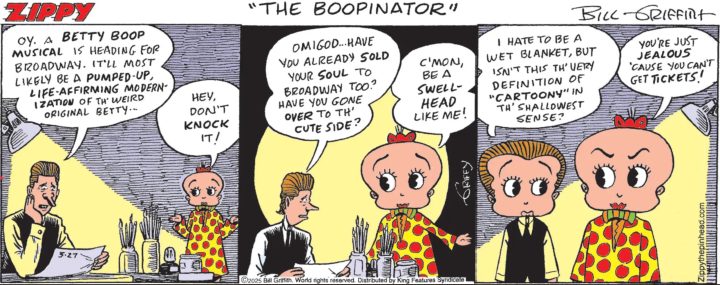
I've always been very interested in the whole idea of cuteness. In my first graphic novel, Invisible Ink, I talk about what Zippy would have looked like had I taken the how-to-draw-a-cartoon course that my mother's boyfriend offered. What would my other characters have looked like? His approach was all towards cuteness. In that book, I showed what Zippy would look like as he transmogrified into a cute cartoon version of himself. In a sense, Zippy’s outlook is cute. It's happy. Happy and cute definitely run parallel tracks. He also lives in an altered reality that is a fairly happy fantasy world. I like to think of Zippy as on the surface, appearing to be happy, but there's something else going on under the surface that is even a little disturbing. Like, if you were seated on a city bus and he were to sit next to you, would you get up and move? What would you do? There would be an element of concern. It wouldn't be just his outfit because as soon as he sits down, he would say something to you. With no intent to be threatening, I could see how that could feel disconcerting. And I like that element of Zippy, that otherworldliness. He's in another reality, and if you were to join him there, there might be some danger.
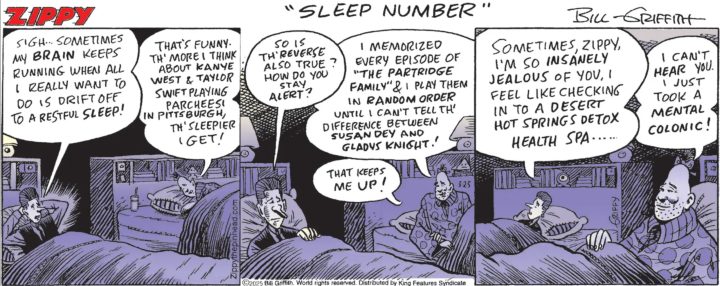
There’s a reflection of jealousy I feel towards Zippy. Whatever else is going on, he is at peace with himself. And that is not something that the Griffy character really experiences especially often, or that I do either very often. Real just acceptance of whatever is happening requires a certain amount of getting into a slightly meditative state. Sometimes when I'm going through a particularly unpleasant real life crisis, I think, “what would Zippy do?” You know, the truth is: I am both Zippy and Griffy. I don't know whether you would consider them equal parts of me or if that's even a relevant way to think about it, but I can carry on a conversation between my Griffy brain and my Zippy brain, and the Zippy brain is the calming, accepting, everything-is-okay part of my brain.
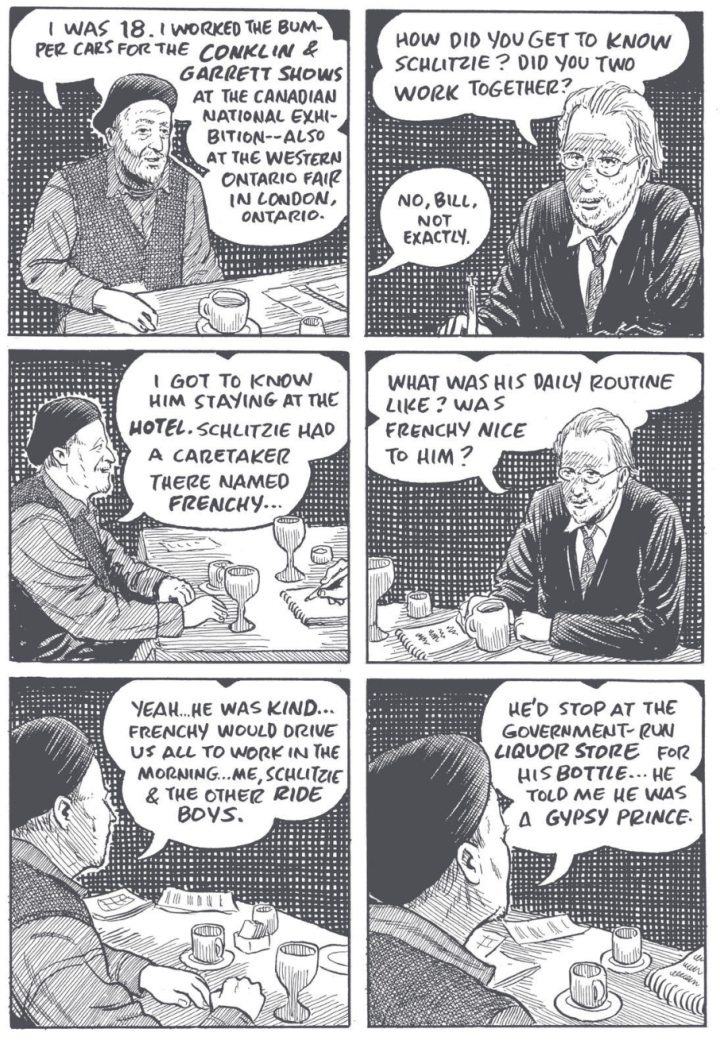
When I did Nobody's Fool, about Schlitzie the Pinhead, I came across this wonderful source, of this guy who had spent an entire summer with Schlitzie working the Canadian circus. I found out that he had lived somewhat near me in Connecticut. So I had a couple of really long conversations with him about that. And that was his entire take on Schlitzie. Schlitzie was a conduit to a reality where things were okay, where things were peaceful, and it was a privilege to be in his presence.
I had assumed that to be true, but I hadn't ever heard anybody say that who actually knew him. People who knew Schlitzie tended to exploit him. And even if they were relatively benign exploiters, they never would talk about any benefit that they received other than money from Schlitzie. But this guy, when he was 18 years old, spent a summer as Schlitzie's caretaker on the circus route or through Canada. He gave me that proof that there's something benign and valuable going on inside someone's head who doesn't function the way the average person does.
I had been trying to do that in my strip. And then after I talked to this guy about that for the book, it became even more obvious that that's what I needed to be doing. The catchphrase, “Are we having fun yet?” is interpreted as provoking fun, meaning “when are we about to have fun?” That's not what the intent was. The intent of that saying was to ask what fun was, it's a sincere question. At the height of people using that phrase in commercial advertisements, I remember seeing a huge billboard on the side of a building in San Francisco for a car, a Jeep kind of a car. It said, “Are we having fun yet?” People in the Jeep were screaming and carousing. And the idea was, are we having fun yet? It was a way of saying, “Yes, we are having fun”. That wasn't the kind of fun that Zippy is having. It seems kind of far from the true sentiment of the phrase, which if correctly used wouldn't just be limited. Zippy is observing, not judging.
On Attending Comic Cons
Last year at the New York Comic Con, my Jackson book was just published, and I did a book signing, a very not well-attended book signing, just because these are not my people, this is not my audience. After selling five or six books, I decided I'll take a walk around the convention, maybe there'll be something I can look at. This is hard to find sometimes, is anybody actually selling comics here? Because really, these things are not about comics anymore, it's a big Halloween party, it's all cosplay. It's all about things related to movies and TV shows and video games and all that shit. I made my usual tour of the Comic-Con to find it. There's always this one booth where this guy is selling boxes of old comics. What I mean by old comics are non-superhero, non-Marvel comics. Where you might find Nancy comics, for instance. So I found the guy, looked through his stuff, and then I got lost coming back to the Abrams booth. I made a funny turn. I didn't know where I was, and wound up in front of the only person there selling original comic art. I recognized him from San Diego and some other places. He takes out an enormous booth. There's a wall of comic art and it's almost all of interest. At the moment when I came upon his booth, suddenly staring right in front of me was a Little Nemo original, which were done in an enormous size. This flood of endorphins is pumping through me, having all day seen nothing but these strange cosplay people who I had nothing in common with. Right next to Little Nemo was an original Sunday Krazy Kat, so I'm just staring at these things. This is something Diane would often say to me, if we would go to a museum to see a certain artist or a group of artists and there's only one thing there that really grabs us -but it does grab us- that's okay, that's enough. Confronted with the thing in itself, the actual real thing, there's no substitute. You can have all the books in the world of Krazy Kat artwork, but staring in front of it when it's 12 inches away from your nose, it's a whole different animal. Anyway, I'm absorbed completely. And then I look down and see right near where I'm standing is a box of underground comic original artwork. I looked through, there's Spain and there's Art Spiegelman and all these artists who I worked with and they're all there. And then I came across a beautiful full page Rory Hayes. That just sort of lifted me out of the convention and you could say, back into the underground world that I came from. It eliminated all of the alienation feelings that I had about where I was.
There are very few cartoonists I would call pure artists, but Rory was a pure artist. What Rory was doing, he had no voice inside his head telling him what to do to be successful. He just did what he did. Very strangely enough for him, he attached himself to the underground comic world and we accepted him, but we always thought of him as an outsider artist, which is what he was. Even folk, he was in that category. A folk artist is by definition, usually without the ambition or the pollution of professionalism, they just need to do what they do and it just comes out. So when I'm holding that page by Rory, I'm holding that kind of world. He was difficult to know because he was so shy, withdrawn. All the other cartoonists that I knew at that time, we were all kind of hustling and trying to make a living and being competitive with each other, and there was Rory, just this pure spirit, it was a privilege [to know him]. He called me Mr. Griffith when he talked to me, he was a little bit like a pinhead in a way. He had all the regular functions of an adult, but he was living somewhere very different from the rest of us in his head. Holding a piece of his art in this context, with all these crazy cosplay media people all around me, it was just a healthy slap in the face. It brought me back to where I belonged, and I sort of thanked Rory. In my memoir, I use that moment. I segue to meeting Rory literally, in 1971. He more or less spent the day, I never understood where Rory got money to pay the rent… I never could figure that out, but he spent the day at the San Francisco Comic Book store. It was kind of place where we all hung out, and Rory was always there.
I liked his work a lot, but I didn't think of it in the same vein as I did all the other cartoonists. His storytelling ability was very childlike and wonderful, but there's no connection. The fact that Rory thought he was one of us was so funny because what reminded me of is when I knew about the turn of the century, at the turn of the 20th century in Paris, when people like Picasso were kind of getting all the attention, there was a painter by the name of Henri Rousseau. And Rousseau was, in a sense, a folk artist, but he thought he was part of the avant garde art world of Paris and they let him think that and they kind of they kind of liked that he was there he was a funny character to them. He thought that he was Picasso's equivalent; not just that he was part of a scene that Picasso was part of, but that he and Picasso and Apollinaire, the writers, all the artists, were all his compatriots. He had a job as a customs inspector and he painted on weekends, and he did these beautiful, huge paintings with jungle themes, Rory was like that. Rory somehow became enmeshed in the underground comics circle of people, ultimately to his demise, because that's where he started his drug taking, specifically methamphetamines. He died at the age of 33.
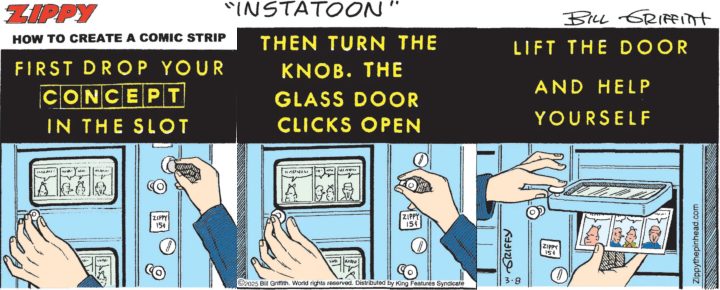
That's Showbiz
There is a university press published of Elwood Bonney’s diary entries. But my mother, sometime in the mid 90s, she got a letter from Bonney's daughter saying, “I have this transcript of all of my father's meetings with your grandfather, would you like them?” My mother said to send them, so that's what I had: the unedited, raw, two-inch-thick transcript of Bonney's meetings. He was anal retentive, describing every little aspect of the meetings. It was what a biographer would kill for, so close and detailed. It was waiting for me to write it. That was true for all of the graphic novels that I've done so far, all four of them.
When I first saw Art Spiegelman's MAUS in 1984-85, aside from just being impressed and thrilled and happy to see it, the thought I had very quickly after reading it was, “Do I have a book like this in me?” And I said, “Well, if I do, it's not ready to come out yet because I have to do a daily comic strip. My schedule is full, so it'll have to wait”. And it turned out it had to wait over 25 years before I did my first graphic novel, which I had made notes for as early as the 80s. Also, I thought Zippy was still headed for something bigger. In the memoir that I'm working on right now, I just finished the chapter that tells the sad story of my Hollywood career. At the time, there was an effort to make a Zippy movie which was always aimed at Hollywood studios, because people around me were telling me that that could happen. I was always completely creatively involved. Diane and I wrote nine drafts of a Zippy screenplay together because in 1982 I got a phone call or a letter from somebody, a producer in Hollywood who wanted to know if I would agree to do a rewrite of a movie he was working on. My first impression was to say no, but just ask a few questions. And I casually said, “Well, how much money are you offering?” And he said, $10,000. So he hired me and Diane, because we were at that point, working on the beginnings of a Zippy screenplay. In those days if you had just one offer and could get a paycheck from one of these people, you would then qualify to become a member of the Writers Guild. So Diane and I became members of the Writers Guild. Every time we got the request to do a new draft of the Zippy screenplay, we were paid writer's guild minimums. We had considerable income during the 80s and 90s. We both had free health plans through the guild, all kinds of benefits coming to us, so I saw no reason to stop that.
At the same time, I was realistic enough to know that this movie was probably never going to happen. Every time we got close, the same problems would always occur, which were basically,
am I willing to change enough about Zippy to make him more of a mainstream character? And if I wasn't, then that was the end of the conversation. Every one of those many, many deals we got involved with always ended the same way. At the time I thought of it as me asking for too much creative control, Diane said it was more like creative sabotage. On my part I knew very well I was sabotaging deals left and right, but also collecting paychecks.
The Zippy movie turned into lots of strip material, so there was really no downside to it. I guess you could say the only downside was maybe giving it too much time and effort that could have been spent doing something else like a graphic novel. But I eventually did the graphic novel. There was one really, really, horrible, very last thing that ever happened before my, whatever you want to call this, showbiz career, completely disappeared. That was in the year 2000. We had been contacted by a production company called Sunbow. Remember The Tick? They did The Tick. We were contacted by them, and they were interested in a TV show, and they commissioned and paid for four half-hour TV shows from Diane and me. We worked with two former Seinfeld writers, which was very educational for me. They weren't necessarily Zippy fans, although they sort of were, but they were really good at a plot, good at moving stories along.
They also paid for me to work on what's called turnarounds for each character that would appear in the series. You have to make drawings of a front view, three quarters front profile, three quarters back rear. You hand these drawings over to the animators to use to calculate their animations, to see what each character looks like from different positions. It was getting very real. Then we had Showtime more or less signed on, so it would be a Sunbow/Showtime production. And we had the four episodes and we were getting very close to happening.
And one day, sometime in the year 2000, someone called me and said, “did you see the latest issue of Variety? They talk about the Zippy TV show”. And it said that Showtime announced the show. In other words, this is a show in production and it will be coming soon. But they announced it from New Delhi, India, and I thought, “that doesn't sound good”. Two weeks later I found out that the reason it was announced from New Delhi was that these companies were trying to make a deal with an Indian software company to be a major financial partner of the Zippy show. That fell through shortly after the announcement was made in New Delhi. So the whole deal died within two weeks. A lot of times when Zippy TV or movie deals died, I could see them coming, I could think of them as funny anecdotes to tell people.This was not in that category. Diane and I were actually looking at places to live in LA because we would have to be down there for a while, we thought this was really happening. The way it died was just so bizarre. That was the last time it got anywhere.
But I did get financially rewarded. I got free health care and lots of anecdotes to tell at cocktail parties, those are valuable things. I wasn't destroyed by any of this because no matter how I may have hoped or believed some of those things would happen, they weren't essential to me. They never were, I had a whole other life going.
I met people along the way, especially in that last juncture of the Sunbow/Showtime deal. I worked with one particular writer who was the classic bitter Hollywood guy. He made his living as a script doctor. A movie or TV series would be in trouble and they would just call somebody to try to help make it work. So he was involved with dozens of movies and TV shows, earned easily a quarter of a million dollars a year but never got to produce his own work, never saw his name on the screen, and he never got credit. He was trying to put a good face on it, but I could see this was not a good life, he was not having a good time. I could see it wearing him down, understandably. I was not susceptible to that, it couldn't wear me down because I was too busy doing my daily strip.
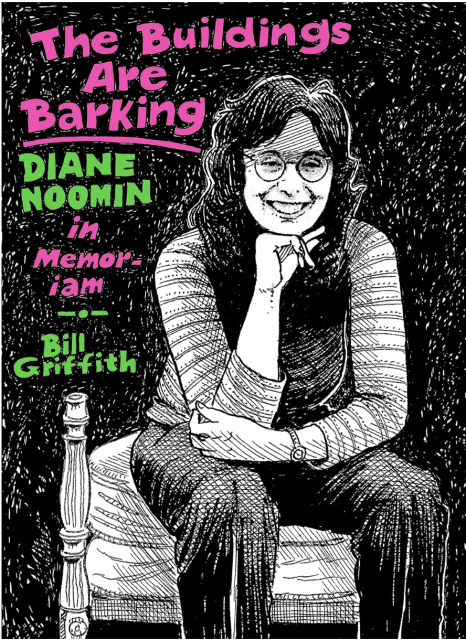
What I would do for many years with Diane was I would work on my daily strips, and at the end of a week I have seven of them and I would show them to her. Except maybe telling me there was a typo here and there, her reaction to my Zippy strips was just that she liked them. She thought they were funny. That was it. But, especially my first two graphic novels, she was a real editor. It went both ways, I was her editor too. Luckily, having had such a long editorial partnership with Diane, having gone on for so many years, it was hard not to internalize [her editorial voice]. She said things that were sometimes hard for me to hear. She would say “I don’t believe you gave this character enough of an emotional life” or, “there's a page missing in this continuity that you just showed me”. And that's the worst thing in a long narrative. Reading graphic novels is not a passive experience, it's an interactive experience. You don’t want the reader to feel a displaced moment, because some people will just drop the story, you risk the reader saying, “OK, I've had it with this”. When you're sitting in a movie theater, a displaced moment happens so quickly, and you're in a passive receptive state so you let it happen.
Diane would say these things to me, and my first reaction was almost always to somewhat argue with her and to say “wait a minute, I don't think that's right” and defend my case, and then she would talk to me about what she felt, and I would go back to the studio. An hour later I would be working on the fix that she had suggested. That happened time and time again. Gradually I stopped objecting because I began to trust her so much that I knew no matter what she said to me, it was either a germ of truth or or it was a, complete rewrite, so either way, I had to take it seriously. She was in effect my first audience, the first audience who had editorial chops, real strong editorial skills. I wasn't looking for editorial direction from anybody else, and I wasn't getting it. I never asked Gary Groth, or Kim Thompson, when he was alive. I never asked for my undergrad publisher or Charlie Kochman at Abrams, I never asked them to be editors, I didn't want them to be. I thought, “Who are they?!” Diane had all the requirements and the intimacy that they didn’t have.
She was a terrific editor. I'm in the middle of a little sequence in my memoir where I'm just leaving behind the showbiz chapter. I'm creating a scene that sort of happened of Diane and me talking. We often talked in bed, you know, which was usually referred to as pillow talk, your defenses are kind of down when you're in bed, you're a little more vulnerable, a little less likely to disagree. Diane telling me, “Bill, you just did that chapter where you laid out the twenty-odd years of your failed showbiz career. Now it's time to talk about how that felt. When it was over, when it was finally over, what was it all about? If you sabotaged it, how did you sabotage it?” This is all Diane speaking, Diane told me to do this. Diane always said, as a kind of a catchphrase, “Put more feeling into it”. You can go along in a narrative, with a series of maybe interesting anecdotes, events, and incidents. But if you don't let room for feelings to come in, then you're only telling part of the story. Diane was very good at doing that in her own work, and I was not quite as good. So she provided that kind of editorial encouragement to me, and she still does.
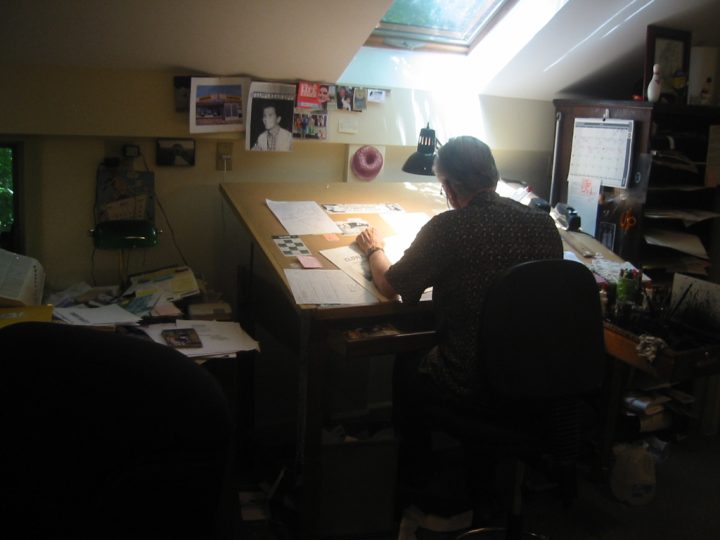
My mother, who was a writer of short stories and science fiction, used to tell me quite often what she thought of my work, which was that she was proud of what I did. She had a Zippy tattoo on her shoulder. She wore, this is in San Francisco, Zippy buttons in the hopes that somebody would ask her about them and that she would say, “I'm Zippy's mom”, that would give her a burst of happiness. I once had a dream in which I came to the drawing table in the morning, and my mother is in a sleeping bag on the drawing table. After my initial shock she basically says, “Get to work”, and then goes away. My mother's contribution to my work mostly was things like spelling and putting the apostrophe in the right place, things like that. okay well I thought you were going to say wordplay. She was the kind of person who, if walking down the street she saw a store sign that had the apostrophe in the wrong place, she would go into the store and ask to speak to the owner and tell them about their misplaced apostrophe. She was really into grammar.
I went with Diane several times on what are called press checks when a book of hers was coming out. Press checks means when your book is actually being printed, a representative of the publishing company is there to make sure things are going right, that there’s no big problems happening. There were several paperback versions of Twisted Sisters in the early 90s, she was an editor all the way back to the first Twisted Sisters in 1976 with Aline Kominsky. We would find out where her book was being printed in one particular case, it was in a place called Secaucus, New Jersey. Those days, publishers often would send somebody to do press checks. Printing problems have almost completely disappeared since then because of computerization. I have had no reason to do a press check for any book that I've done for many years.
Underground or semi-underground publishers didn't really have the budget for that unless the printer was in the Bay Area in San Francisco, which it usually was. When it was in New Jersey, we got on a plane to Secaucus, and if we hadn't gone, it would have been a complete disaster. They completely fucked up the book and they had to agree to reprint it. We stayed for a couple of weeks and they reprinted. These things happen. It felt like it was happening to me. It was such an assault to see a book that Diane had worked on for years be ruined by a terrible printing job. The thing about most people who did the printing of comics in those days, is they weren't into the aesthetics of comics. If it was printed too dark, they didn't notice it. If it was printed too light, they didn't notice that either.
I would give her more practical support and she would give me more moral support when it came to our careers. You know, it's just the kind of stuff you get from a good, solid relationship. I do remember in the underground days, before one of my comics went to the bindery, before the covers were put on, I would always ask to see the printing, the guts of a comic.
This was done by Rip Off Press, who did the Furry Freak Brothers. And I saw my comic, that had already been printed, had a page out of order. I didn't know what to do. It's already been printed. Rip Off Press was not really willing, at first, to do anything about it. Comics and all publications are printed in signatures, so the entire entire book is just one big bunch of paper, which is a bunch of signatures that are stitched together. Diane said to me, “Your page out of order is in just one of those signatures, what if you ask Rip Off if they’ll reprint just that one signature? And I'll get a bunch of our friends, we'll all come down and we'll insert that corrected signature into the book before it goes to the binder.” I remember Willy Murphy, Art Spiegelman, a bunch of others, we all just spent like a marathon 12 hour session of inserting one signature into 10,000 copies, Tales of Toad number whatever it was. And that was all Diane.
Before she died, the book she was working on was in the research stage. There were some drawings, but mostly research, and it was called Red Diaper Baby, [that] being a term given to the children of leftist and Communist parents in the 1940s. Diane's mother and father were idealistic communists from the late 1930s when Communism, especially in America, was more of a humanitarian crusade than it was anything else. Something that would benefit workers against capitalist owners, that kind of stuff. Diane's parents would go on demonstrations, and when she was a baby, Diane’s mother would be pushing the baby carriage and holding a big sign saying ‘Peace Now’.
Diane found a bunch of her parents' friends who were willing to talk about this. They weren't willing for many years to talk. They weren't willing to acknowledge it, they were still too paranoid because during the fifties to acknowledge that stuff was, was to be potentially disastrous. Diane's parents were both tracked by the FBI for many years. Diane got somewhat redacted papers showing all of the interviews that the FBI had with Diane's neighbors when she was a kid. They also gave her photographs and started to open up to her. She was in the process of putting together this book when she died. The research and interviews took years, and she had only done some preliminary drawings.
In Diane's last 10 years of her life, she had also partially switched from doing comics to doing sculpture. When she entered the art world at a high school of music and art in New York, sculpture was her interest. She was thinking about doing a series of DiDi bas-reliefs that would actually involve a narrative. Her illness made her slow down and then eventually ended in her dying. So these things were never meant to be.
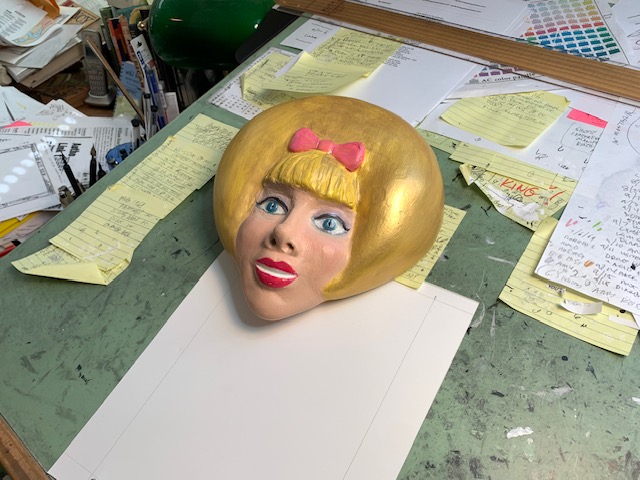
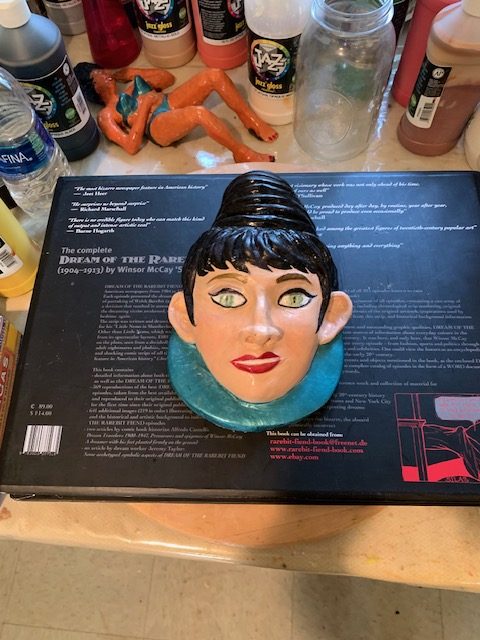
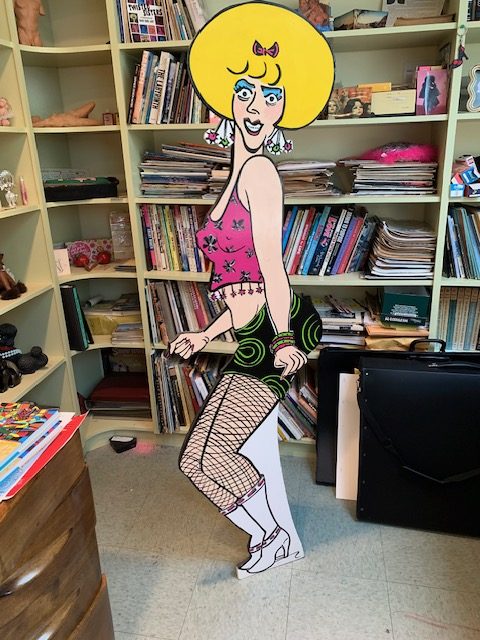
Diane's medium, for the most part, was scratchboard. She chose it originally because it lent itself to creating patterns really nicely, you could create a white pattern on a black background. All of her early DiDi stuff is heavily patterned based on DiDi's aesthetic preferences, floral prints and somewhat psychedelic stuff. Scratchboard comes in two forms. It comes either in white or in black. In black, you literally get a big sheet of thick paper that has been coated with a black. It involves a layer of clay and ink. So you scratch white lines into black. But Diane always preferred white because then you could put on the black where you wanted it, then you could scratch away. Or you could leave it as white and then you could just draw as normally.
She spent almost her entire career working with a scratch board. I tried it more or less because of her and it didn't go anywhere for me. I'm already fairly accustomed to my pen and ink drawing style, I did a few things, but nothing published. It was difficult for me but not for Diane. She just took to it, she was something else. Some artists have to find their tools, their medium of expression.
I try to just let her voice come to me and it does, almost every day. Right now I’m doing this couple of pages where I'm having this pillow talk with her, so I'm drawing her in every panel, and it took me a while. I have to go back to my earlier drawings of her in my memoir and correct them. It took me a while to get her because I have to make her into a cartoon character a little bit. Not a literal portrait, but not a caricature either. Somewhere in between.. Her iconic face is there. Diane was very pretty, very attractive to me. She had beautiful long hair and hooded eyes. It took a while to be able to capture that in a fairly small space inside of a panel and then to be able to reproduce it. With Diane, I just have to get the minute I draw her eyes being hooded, and she looks like Diane to me. So I have to go back and see where I drew her earlier and see, did I leave out those hooded eyes? And if I did, I have to fix that.
I just got some pictures of her from 1982. Diane was involved with a women's theater group in San Francisco (Les Nickelettes). They put on a musical comedy based on her characters. And the woman that organized the theater group is still alive and still lives in San Francisco. They're working on a documentary film about those years. So she sent me some pictures of Diane.I have to say this is Diane at her absolute happiest. There's no two ways about it. You can't fake the joy that comes across on her face in all these photographs. I think it was probably the most fulfilling thing she ever did, at least in the sense of a group effort. She was 35 years old and she was just in heaven. She wrote with them, she wrote the script, she designed all the costumes. I went and saw the play 17 times. It was very educational. I would see the play one time, and the audience would laugh at the right moments, there's a lot of jokes, a lot of laughter happened, and there were musical numbers and they came off well. Then I would see it another time and the audience would react slightly differently. And then I would see even a third or fourth time and they wouldn't respond at all to things that the first audience laughed at. I brought this up with Diane and some of the other women in the group and they said, “Oh, that's very common. The audience is an organism and the organism responds differently each night. It doesn't have the same reaction to what's being shown”. Sometimes, they’d have an absolute, guaranteed laugh-getter one night and the next night: no laughter. I said, “Well, what if… when that laughter doesn't happen, if I laughed at that moment?” And they said that would be great, because that would create laughter for the rest of the audience. [No laughter] doesn't mean they don't think it's funny, it means there's no one in the audience at that exact second who has a physical burst of laughter coming out of their mouth. But if somebody does laugh, then the others will join in. So I would laugh, and they were absolutely right.
They took their show to New York and did a six week run of it in an off-Broadway theater. On one of those nights I flew in they did a musical version of it at a place called Danceteria, which was a big disco in New York. And on the same bill, before their performance, for the first time in front of an audience, was Madonna. It was Madonna's first time performing in front of an audience, lip syncing. The same night an actor who occasionally played Zippy in San Francisco joined the Nicolettes, and he did a bit that we wrote. And so Madonna and Diane and Zippy were all on the same bill, that was kind of a fun night.
The post Bill Griffith Returns to the Drawing Table to Put More Feeling Into It appeared first on The Comics Journal.


 Hello, my name is Jack Sparrow. I'm a 50 year old self-employed Pirate from the Caribbean.
No comments:
Post a Comment