

Have I wrestled with Keiler Roberts these last few days? Dear reader, I have. We have struggled mightily.
It doesn’t take long to read Preparing to Bite (Drawn & Quarterly). You can breeze through it in a sitting. Maybe it even gains something from the focus. It packs a punch, it does. I’ll tell you that for free.
I’m speaking in combative terms - wrestling, punching. It doesn’t look like that kind of book, maybe, from the outset. Placid waters. Did I underestimate it? Probably. From what I understand the book’s release was heralded with significant discourse, regarding the cartoonist’s premature retirement and then coming out of retirement with another book. All very Jay-Z, from a distance, making a big deal about walking away and then coming back with another book.
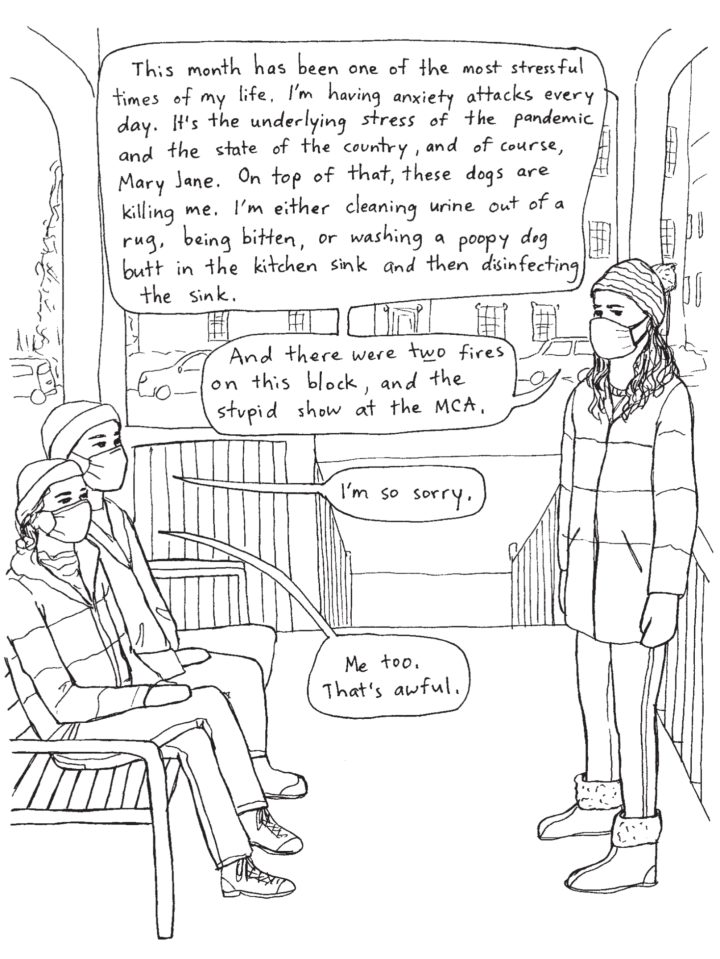
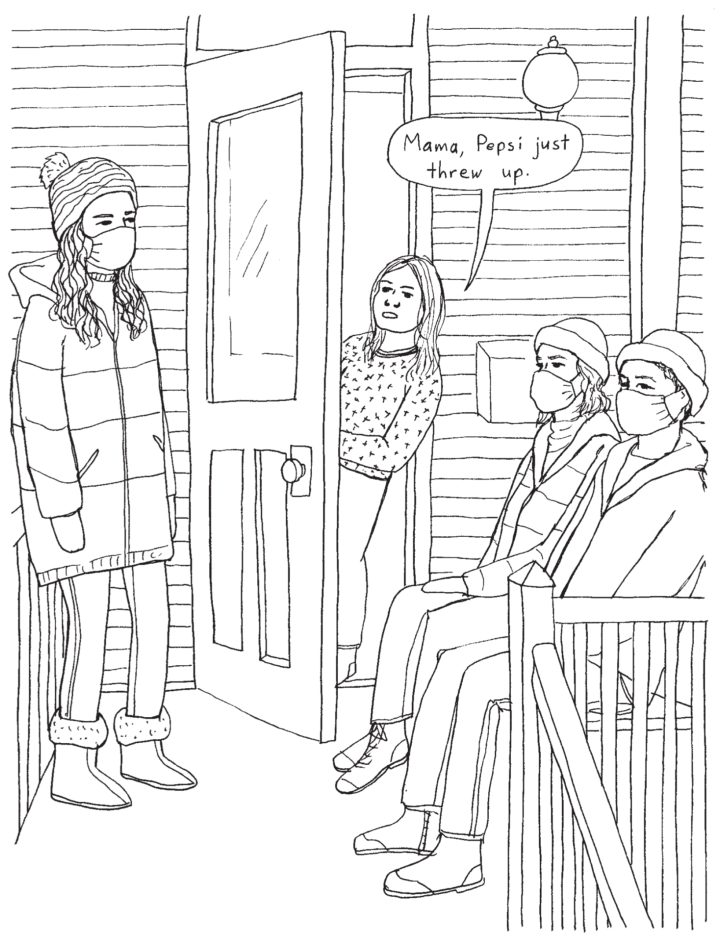
In detail it scans a bit differently, as you’d hope. There are extenuating circumstances.
It’s in illness memoir, quite poignant in places, without every being cloying. There’s the trick: touch just enough to register the sensation, before stepping back to let the reader go the rest of the way alone. Omae wa mou shindeiru.
It’s a subtle thing, Preparing to Bite. Sneaks up. Struggles a bit itself, I think, but that’s the point. You’re being lulled into a false sense of security. It’s not over when you close the cover.
Structurally it reads very much as if initially serialized. It wasn’t, unless the indicia is fibbin’. In form it’s either full page illustrations or four-panel strips, with only a handful of exceptions. It’s the story of a few years, and not just any few years but the last few years of all our lives that included Covid, as well as the general darkening of the national mood. I don’t know how to break it to you, but the news has been kind of intense for a while.
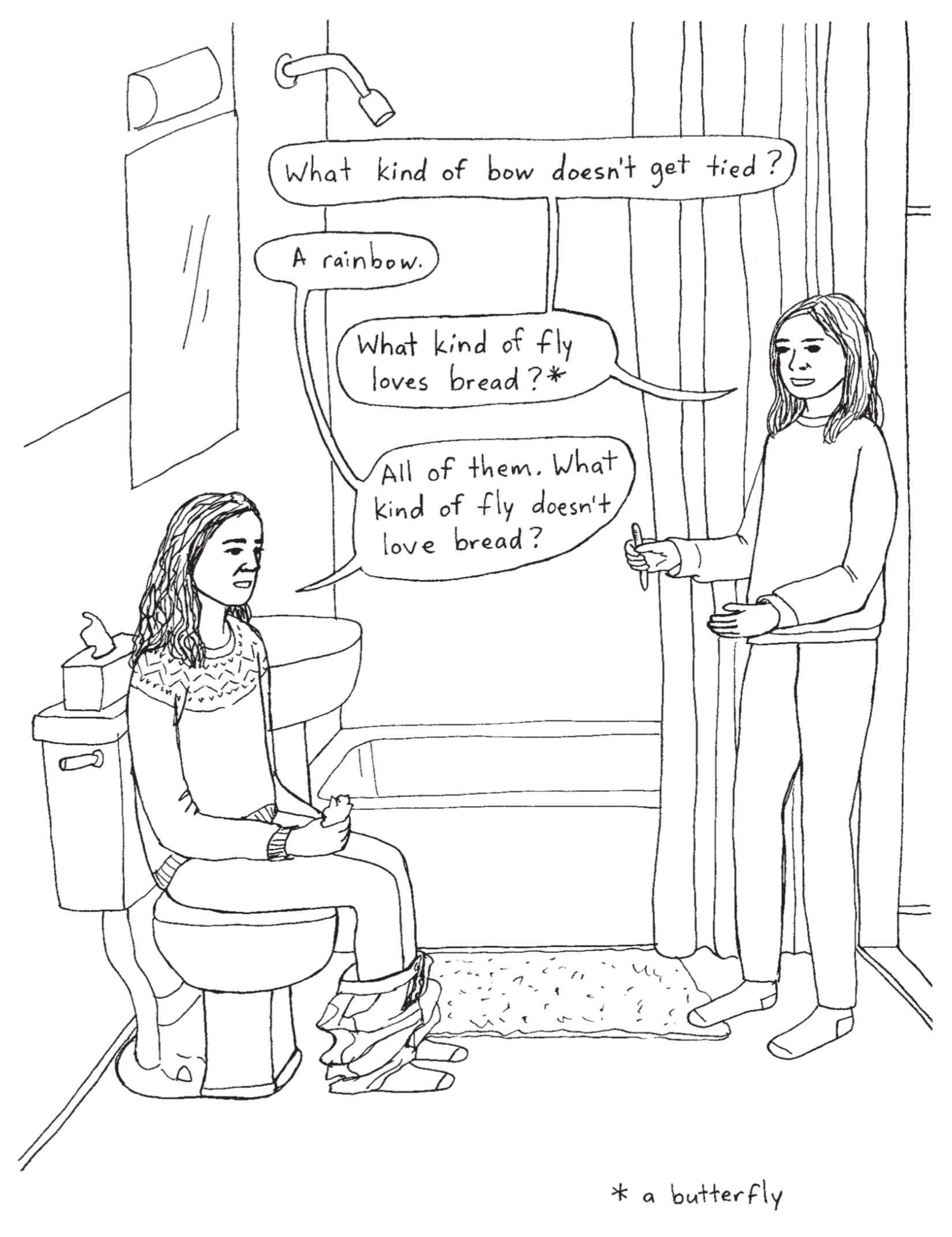 It’s a few years in the life of her kid, progressing from the last moments of childhood to the last moments before the onset of the teens, and tangentially her husband. The fellow pops into the frame here and there - a Matt Berninger type, you know the drill. The banter between Keiler and her child fuels much of the book. Yes, I’d call it banter, just as you’d hear from any particularly close parent and child - dry, mordant. We all talk like sitcom people now, that’s just the way the cookie crumbles. It’s not Roberts’ fault for pointing it out.
Or perhaps I should correct myself: it’s not that we talk like sitcom people, it’s that we talk like Cheers, inasmuch as every significant television comedy for two decades following Cheers was created by people who learned how television comedy should work through studying closely or directly working on Cheers, and from there filtered down to defining the diction of a generation, or at least until quite recently, and the collapse of broadcast TV, and with it the cultural primacy of the sitcom. For many, many decades, children were raised on a steady diet of the television comedy of the previous generation, and it definitely affected the way people talked.
There’s a fair amount of quippy material here: domestic comedy with a sardonic presence, all as the world passes by underneath our feet. In truth, what we are given to see are periods of relative domestic idyll beset by intrusion of that bastard reality.
Ah, yes, him. What a schmuck! Not a fan.
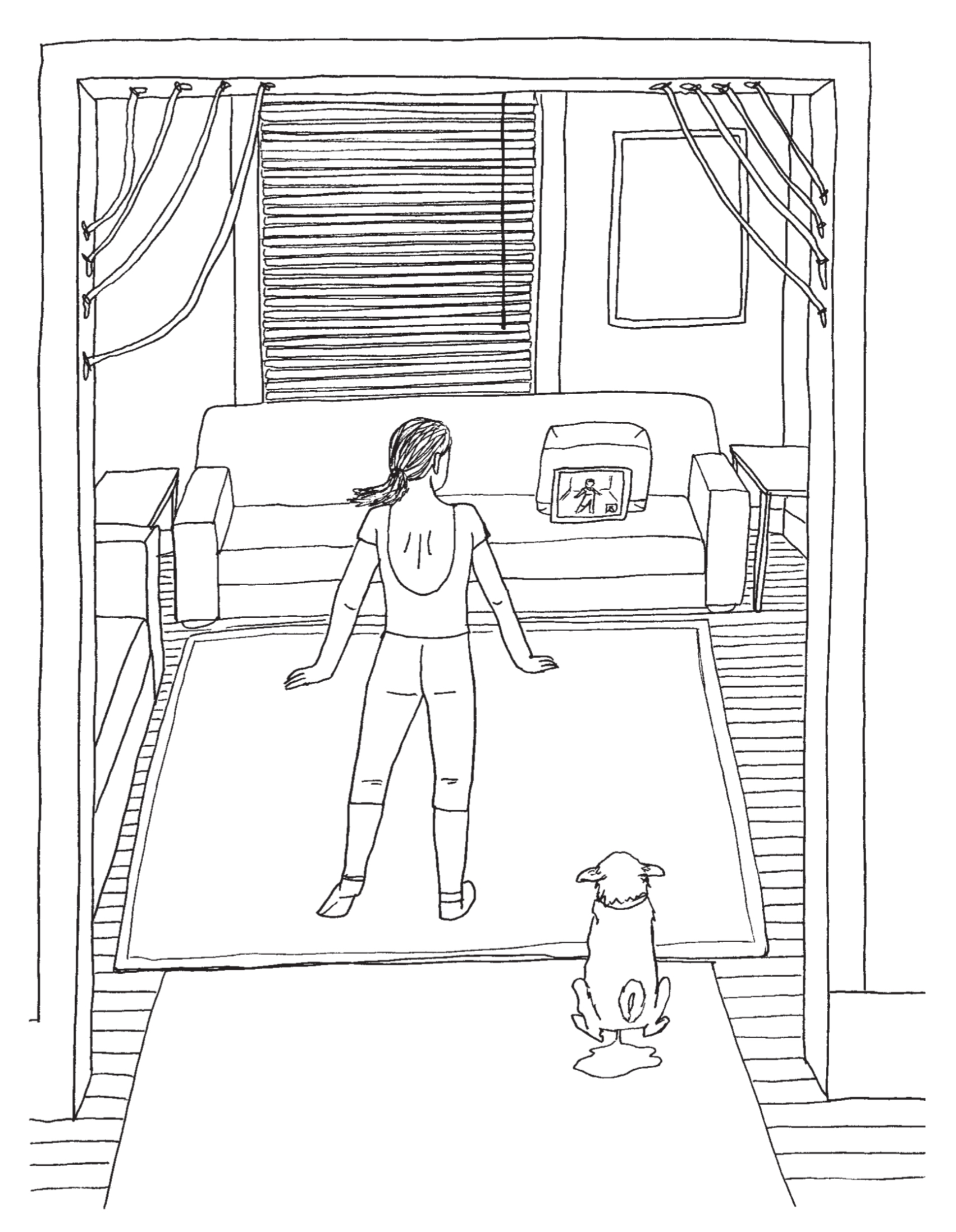
Roberts sketches in ink, as detailed in the book itself. These aren’t sketches how you or I would sketch, because they’re good enough to put in a book. They’re well composed, sparse. She knows how to use the thin line to create planes of negative space on the page.
Deadpan is the word that comes to mind, even if it seems overused. Accurate, all the same. Roberts and I are close to the same age, we both grew up swimming in the same Gen X backwash. Soaked in sitcom reruns, either personally or through cultural osmosis. I wonder, did Roberts read Sean Landers’ “Genius Lessons,” in SPIN? Perhaps a more influential comic strip than many are wont to reckon. Deadpan confessional doodles on the back page of a music magazine, at the last moment in history when that mattered.
So yes, I struggled with Roberts, over the course of her chronicle. It is a prickly story, although seemingly approachable. Preparing to Bite is a good description for the process, here. Only after you’re through and back do you look down and realize, oh yes, blood was indeed drawn.
What are we doing here? We’re keeping a tight grip on the normalcy that we can. Isn’t that a defining feature of the present moment? I wish more normal events for every single one of us. We’ve had enough in the way of the unprecedented.
How do you react to unprecedented events? Well, you put one foot in front of the other and eventually you have a book of it. There’s a conversation about craft throughout. These pencil sketches - pencil sketches! - Can't but impress. Sheer skill, illuminated by style. She puts a more detailed study into the later passages of the book, taken from a photograph of her husband. Gorgeous. Like unto early Wrightson. I can’t begin to imagine what it cost her.
Oh, I see, I stagger at a sudden sharp intake of breath.
No, you don’t, she says. Of course you don’t. But you will, perhaps.
And now you may see: Keiler Roberts has hands. Are we still saying that? I’m still saying it. It’s the truth. She can put that in big print on the cover of her next book, courtesy of me: “Keiler Roberts has hands.” We’re all old now, so the funniest thing in the world is whatever the kids were saying five years ago.
Now, I have spoken my peace. Begone with you. I would be alone with my thoughts.
The post Preparing to Bite appeared first on The Comics Journal.


 Hello, my name is Jack Sparrow. I'm a 50 year old self-employed Pirate from the Caribbean.
No comments:
Post a Comment