

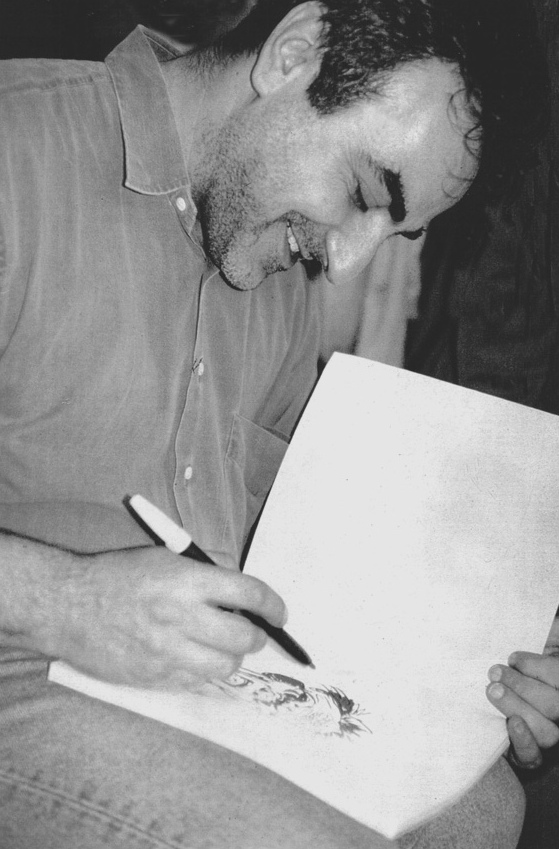
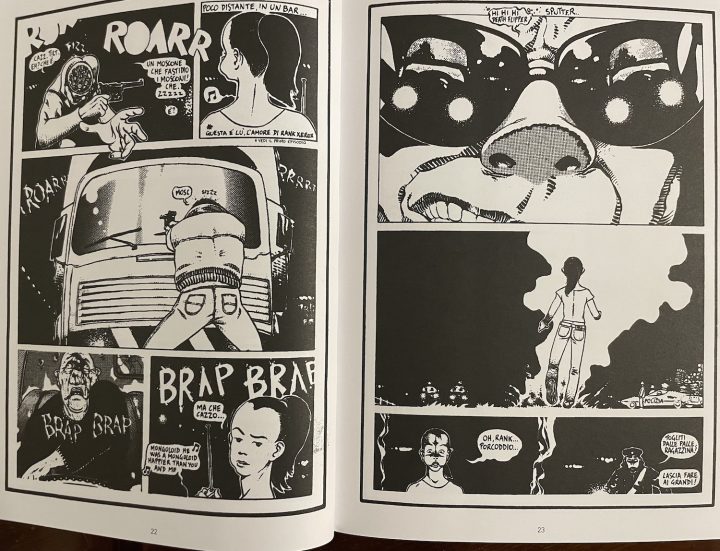
Ranxerox was, and still is, a pure punch in the face of conformism. When was first published in the late Seventies, it envisioned a future society in ruins. The pure nihilism product of a time filled with revolt and rage, born from a group of young cartoonists who didn’t have the patience, time, or will to deal with mainstream comics and society’s status quo.
Ranxerox is a man-machine living in a not-so-distant future, whose name came from a photocopy machine company (who wasn’t too happy about it and soon sent a cease-and-desist letter to the character’s creators). While we already live in a dystopian reality where machines are quietly trying to take our place, and the difference between the ruins of an old society and the decadence of the new one is anything but clear, the myth of Ranxerox is still very much alive. Over the past few decades, it has been a huge influence on science fiction. Now, only one of its fathers is still alive: artist Tanino Liberatore, as writer Stefano Tamburini left this Earth far too early, dying of a heroin overdose in 1986 and leaving a huge mark on underground culture.
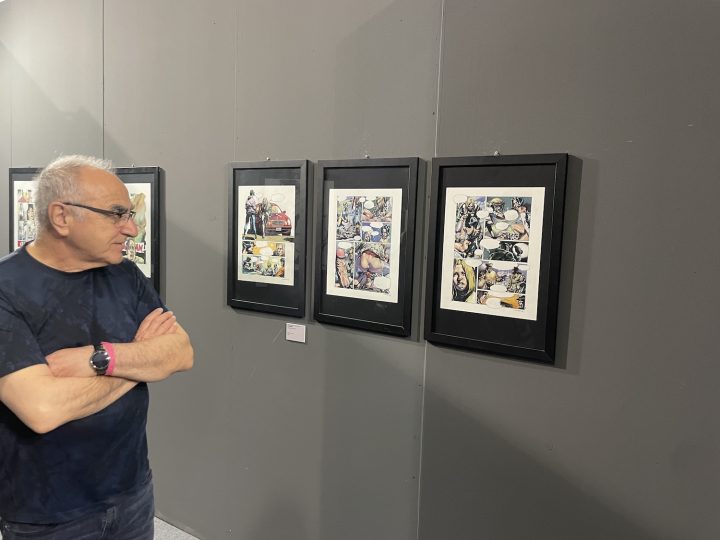
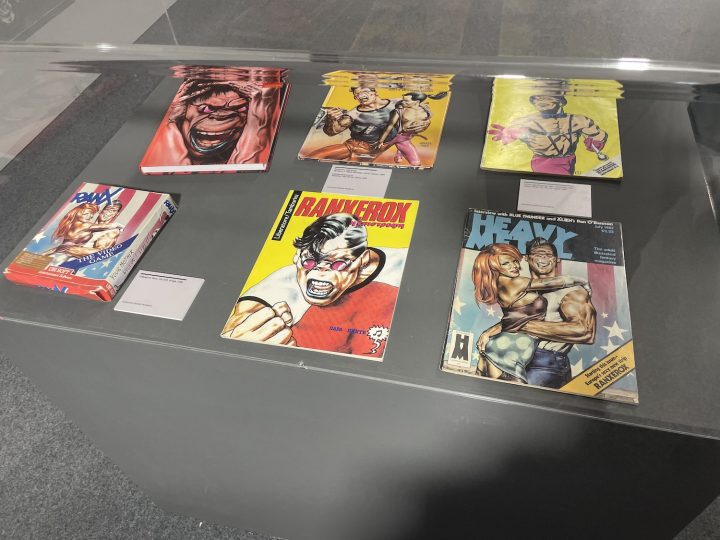
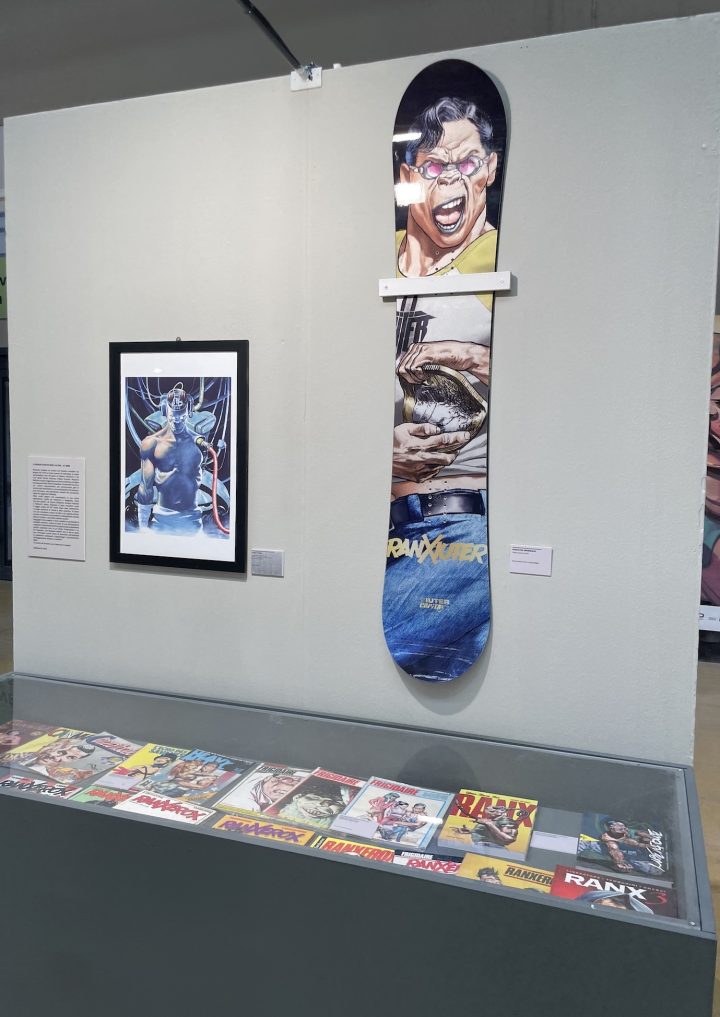
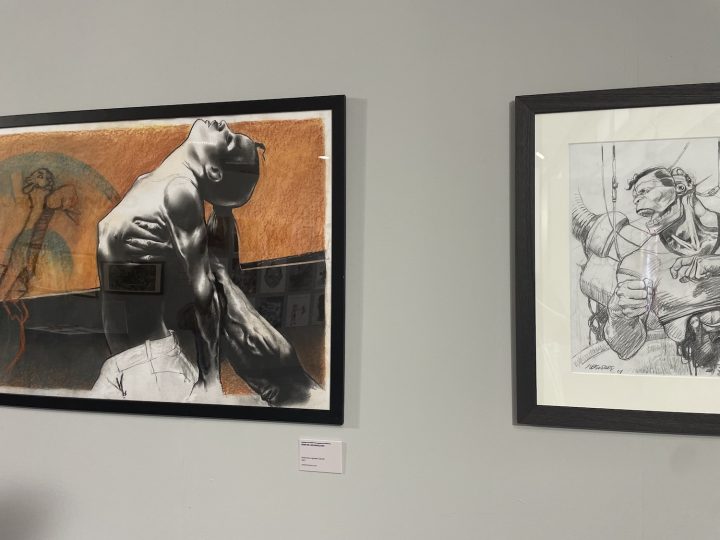
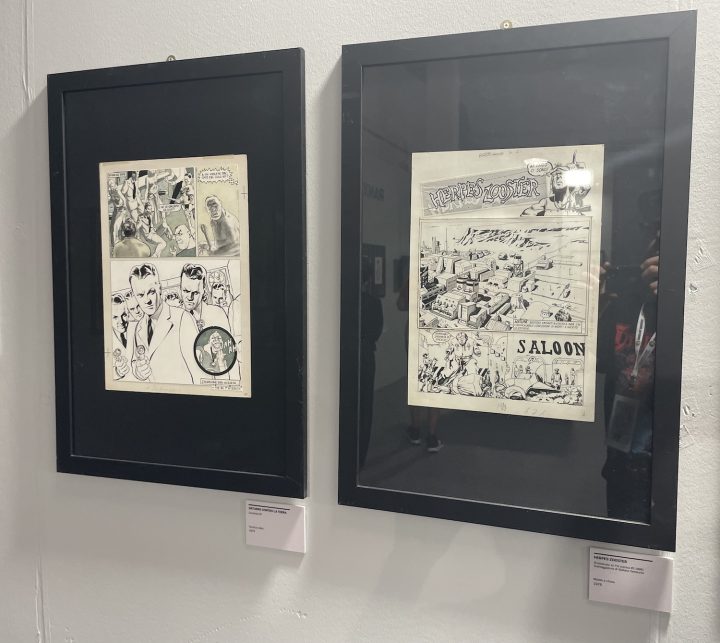
Tanino (born Gaetano) Liberatore was the guest of honor — the “magister” — of the 2025 edition of the Italian festival Comicon in Naples in May and in Bergamo in June, under the artistic direction of Matteo Stefanelli. A special exhibition, along with panels and events, was dedicated to him.
Born in 1953 in the small village of Quadri, in the central region of Abruzzo — an area mostly known for its mountains, seaside, and national parks — Liberatore, while still in high school in the city of Pescara, met another soon-to-be major Italian comic artist: Andrea Pazienza.
It was only in the late Seventies that Gaetano became Tanino, at a time when the Italian underground comics scene was emerging, thanks to the work of the already mentioned Pazienza and Tamburini, as well as Massimo Mattioli, Filippo Scozzari, and a bunch other artists. These were the minds behind the magazine Cannibale, which started publication in 1977 and lasted nine issues, until 1979. To the Italian comics scene, Cannibale was basically what Zap Comix had been to the U.S. scene. It changed everything, starting a revolution. The artists involved later went on to be published in major magazines while continuing to act as agitators of underground movements that went far beyond comics, involving other performing arts and music as well.
Nowadays, Liberatore still finds it hard to define himself as a comic artist and would rather be considered an illustrator. His early works show influences both from classical Italian Renaissance art and from the international New Wave of comics of the Seventies, with clear hints of Moebius and Richard Corben.
Tanino Liberatore became a comic artist almost by accident, when he came into contact with the Cannibale crew, reconnecting with his high school friend Andrea Pazienza while eager to show his artistic abilities in the big city of Rome. That was a time when things were going through deep changes in the European comics scene, and — a little later than in France — great changes were coming to Italy as well.
VALERIO STIVÉ: What was the moment like when Ranxerox was about to be born? For you as an artist — not exactly a beginner, but still very young, you had already made a few short stories. But what was the world around you like, and what did it feel like to be part of a group that was just emerging — a group of underground artists?
TANINO LIBERATORE: I was basically a product of those times. And I can say the same about the others. We were on the same page. When I first met Stefano [Tamburini] and the rest of the Cannibale crew, I was introduced to them by Andrea [Pazienza]. I was a son of those times, and the same goes for the others. We were on the same page. I first met Stefano and the rest of the Cannibale crew thanks to Andrea, whom I’d known since high school. We were also very different from each other — socially, culturally, etc.
And that happened in Rome?
Yeah. I was living in Rome at the time. Andrea was in Bologna, as well as Scozzari, while Tamburini, Mattioli, and I were in Rome. And when we met... well, that was a very weird time. In the cities there were demonstrations and riots in the streets every day.
Tough times.
Very tough. People were literally dying in the streets — not every day, but quite often. There were clashes in the streets. Once I was in Largo Argentina, and the whole square was covered in smoke bomb shells. It was total madness. You’d walk and hear gunshots in the distance; it was like urban guerrilla warfare. That same day, a young girl died in Trastevere. Those were tough times for sure — very repressive, but also very subversive. Yet as artists we had the chance to do whatever we wanted. Mostly thanks to the satirical magazine Il Male, which was doing very well at the time.
What kind of support did you have from Il Male?
They basically sponsored us and Cannibale. Stefano knew Vincino [satirical artist and co-founder of the magazine – Ed.], and Andrea also used to work for Il Male every week. That was our luck. With the help of Il Male we were free to do whatever we felt like doing. And we weren’t stupid — we did interesting things, even if we didn’t fully realize it at the time. Back then, it was pure fun.
In a promotional video recorded for COMICON I think I heard you say something like “Ranxerox was a toy for Stefano and Andrea, and then became mine as well.”
No, I don’t think it was like that. Sure, it was a game — it was all a game. That’s true. For the early episodes of Ranxerox in Cannibale, Stefano asked me and Andrea to do the pencils, and then he did the inks. When Frigidaire magazine came along — which was Stefano’s idea — he wanted a glossy, full-color magazine, something less... how can I say...
Less rough?
Yes, not a fanzine. It was a real magazine. Frigidaire’s motto was “the necessary redundant” — which was true, that was its claim. You could read lots of articles and columns in it; I remember one on HIV, which was probably the first article on the subject ever published in a European magazine. And so, first with Cannibale and later with Frigidaire, Stefano asked me and Andrea to work with him on Ranxerox. But Andrea, who at first said yes, soon became reluctant. Stefano knew Andrea very well — he knew he was someone who couldn’t be controlled. So he asked me instead, as we had already worked together on some [recently collected in an anthology titled Frammenti di caos, published by Comicon Edizioni. Ed] stories. But I hadn’t done anything in color yet. Ranxerox was something totally new for me. But I did it — and that’s what came out of it. Honestly, when I drew the first eight pages and brought them to the others, I had no idea what the reaction would be. I was so sure I had messed up big time. But their only reaction was: “Yeah, that’s okay.”
Their reaction wasn’t exactly enthusiastic...?
Yeah, but that’s how we were. Everything felt so obvious to us, almost taken for granted. Then other people made us superstars. When Frigidaire came out, and the French publishers saw it too, they bought Ranxerox the moment they saw it. But for us, everything we were doing it was no big deal, it didn't mean shit at the time.
It was all between friends...
There wouldn’t have been anything without that. Especially me and Stefano — we were basically living together back then. We’d sleep in different places, but we spent the whole day together, eating, working, everything. He told me about Ranxerox even before he started working on it. That character had always been there somehow...
So it was born in Tamburini’s head, and you gave it its definitive shape...
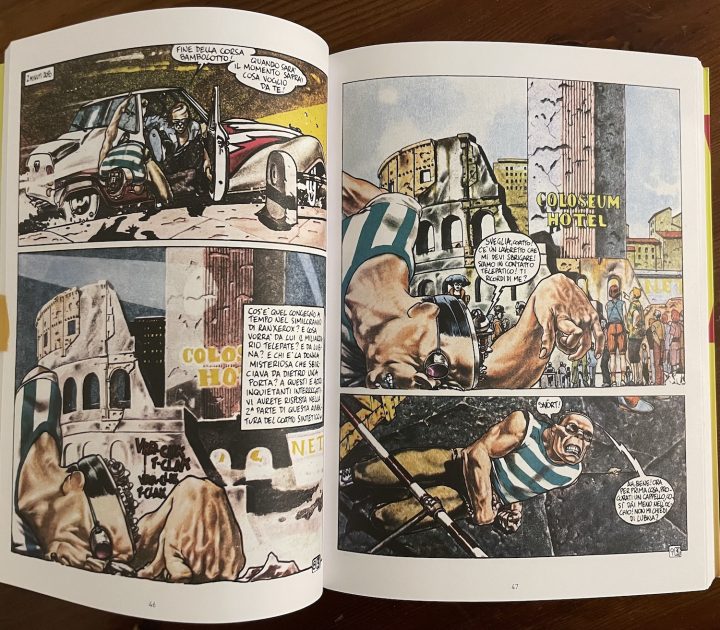
Yeah. At first, Stefano drew this character — even before the early stories in Cannibale. It had a kind of proboscis nose. It was different... he wore a denim suit and had a pompadour hairstyle. But then, in the Cannibale black-and-white stories, he gave him that pig-like nose. Stefano had this idea, and then he gave it to me and Andrea, and we drew the pencils. Later, in the color stories, I draw almost whatever I wanted — the character, the setting...
And you gave Ranxerox that muscular physique?
I gave him the muscles. Yeah, that’s what I did. And the goggles — those were Stefano’s idea. While Lubna... Andrea drew her first, but her personality came from Stefano. All the main characters’ personalities came from Stefano. And we gave them form. Andrea drew Lubna, and she’s always given me a lot of trouble. I never understood her. I never liked the character.
She’s still a very complicated character. Now more than before, maybe. When I look at her, she aesthetically reminds me a lot of Balthus’s little girls.
When I was drawing her, there was no sexual implication whatsoever. Stefano was a genius. When Martina, her friend, says: “You loved him after all,” and she answers, “Yeah, just like my mother loved her washing machine.” That gives you an idea of what kind of person Lubna is. We couldn’t draw her today because people are sick. If you hear that she’s 13, you immediately think: pedophile. But for us, that was never the idea. And nobody thought about that at the time — not even the critics. The drugs were criticized, the violence too, but nobody talked about the sex parts. And it was violent, sure. Maybe nobody cared that she was 13 because she’s the badass in the story.
Last year, during a panel together at Comicon Napoli, we talked a lot about the representation of bodies in your work, which led us to your influences — back to classic Italian Renaissance art. Which I guess was very important for the image of Ranxerox as well.
I just think that in my art, no matter what I’m drawing, there’s always this strength coming out of it... it just comes from my gut. But people keep saying I’m the Michelangelo of comics and so on... and I have to admit that apparently Michelangelo is the artist who influenced me the most. I realized I use human bodies kind of the same way he did. I mean, I know anatomy by heart, but if I need an extra muscle to give more strength, I draw that extra muscle, I put it there, I don’t give a shit. The way Michelangelo used to do. He didn’t actually add muscles, but he’d still exaggerate one, or two... He knew anatomy so well, yet everything he did was driven by what he wanted to represent. When I first saw the Prigioni... that was amazing. I mean, they were made five hundred years ago, but they’re so modern. You can feel all their power in sculptures that are barely finished — yet they have everything. You can feel all the inner dynamism of the stone.
Sometimes sculpture can be more important for comics than we think. Comics need to come out of the page and be physical.
Yeah, off the page. If you look at the David, so full of expression — in the eyes, in the hand — and then at the Prigioni, with that willingness to come out of their own substance that imprisons them... I mean, they were done in the 16th century, and they still stand above everything else.
I clearly remember when I visited the Accademia Gallery in Florence and saw all those unfinished sculptures that reminded me so much of Jack Kirby’s characters.
Yeah, Michelangelo’s unfinished pieces... And they have the David and the Prigioni there... they’re amazing. I even like them better than the David.
Back to Ranx. You owe him a lot, and one thing is probably that it opened the way for you to France, where you also live.
I was doing pretty well in Italy, too, at the time. But when the book was published in France, I was at a comic convention and my publisher asked me, “Do you like Paris?” I said, “Yes, I could live here if you find me a place.” That was just a joke, but a few months later they asked if I still wanted to move, and I said sure and moved to Paris. Obviously, they didn’t pay for the apartment, but they found it for me and acted as cosigners. So I moved there simply because I liked Paris — I’d always liked it. I had this idea of Paris, and I wanted to live there. Later on, lots of other colleagues came to France too. But at the beginning it wasn’t a work-related choice, it was just a life choice. Then it also turned out to be good for my work.
We often think of Italian comics creators moving there because there’s a better environment for comics creators…
Well, we have to say that back then the French market was so much better… and even now, but even more back then. It was the biggest market in the world for the kind of comics we were doing. Even bigger than America. There were print runs of 150,000, 200,000 copies. Selling 80,000 or 100,000 wasn’t even unusual — it was almost below average.
Whereas for me, 10,000 copies was already gold, even in France. But now there are 5,000 titles a year… how the hell are you supposed to read 5,000 titles? That’s more than 200 a day, and it also means a lot of money. But the bigger problem is that most of it is crap. That’s really the issue.
The problem is that sometimes even the good stuff gets mistaken for crap, or buried under it...
Yeah, right.
There’s one thing that is often said about you — that your work has influenced a lot of other mediums. But of course, these things can’t really be proven, and it probably doesn’t even make much sense to try. A movie like Blade Runner came out after Ranxerox, and you see all those distorted urban landscapes… but I also see a bit of that vibe in Escape from New York: the big guy, but also kind of unlucky, in a doomed city, in a world in ruins.
Yeah, because it all came from sci-fi novels — Ballard, Philip K. Dick, but even a bit of Marlowe.
That noir vibe…
It’s noir, yeah. But it has to be said: Ranxerox came before Terminator, before Blade Runner, and after Alien. I don’t know what to say, but I was told that James Cameron knew Ranxerox. Also, when Blade Runner was about to be released in Europe, the European distributor asked me to do the poster for the movie.
How did that go?
Well, not great. They asked me for the poster and… at first they wanted me to draw the actors, like they always do — of course Harrison Ford, and the female lead, mainly. So I did an affiche, you know, those big ones, three meters by two, and I brought it to them. But it wasn’t anything special — just portraits of the two of them with some of the Blade Runner city in the background, which was amazing.
And their reaction?
They said, “No, we just wanted something for the vertical poster.” So I had to redo it. At the time, that meant doing everything by hand, with no help from a computer. I had to redraw it from scratch. The result was just an illustration, not even a real poster. I didn’t even like it myself.
Then when I went back, they said, “No, we wanted a kind of Superman-style poster.” And I was like, “Superman? Really? This is one of the greatest sci-fi movies ever, and you want to reduce it to Superman?” I don’t mean Superman was a bad movie, but it had nothing to do with this.
And how did you see it?
Well, I had my own idea. And I told them: “Let me try something else.” There wasn’t much time to do sketches, but I did one. I remember I used a piece of brown cardboard and made a quick sketch. There was like a crack or a tear in the middle, all dark. And there was — what’s his name?
The replicant.
Right, the replicant, holding his dove. And he’s there in the middle of this crack, and behind him you can see the city. To me, that was Blade Runner. Of course, nothing came of it. I don’t even remember if they ever replied when I sent them that sketch. In the end, they used the American poster anyway. So yeah, I was a bit disappointed. Mostly disappointed that they wanted to sell Blade Runner like it was Superman... something for kids, you know?
It kind of dumbed it down.
Yeah, they dumbed down something exceptional... a movie that, even today, I still think is one of the greatest, if not the best, at least when it comes to that kind of sci-fi.
But how did it feel to see a future you had imagined being shared with other artists in other mediums? I don’t mean inspiration, just the feeling of sharing a vision.
Honestly? When I saw Blade Runner, I was pissed off I hadn’t done something that good myself. I thought it was amazing. The city, that whole Chinese area, the ads... it was fantastic. Everyone copied it afterward.
But no, I’ve never thought I invented anything. I’ve always just done things naturally, never thinking I was creating something new. So when I see other stuff, I stay pretty detached. I don’t compare it to myself. It’s not because I think I’m better or worse... I don’t mean that. Like Terminator, for example, that’s really well made. And yeah, maybe they did take something from Ranxerox, but I don’t really think about it that way.
You were moving on parallel tracks.
Yeah, parallels…
With the time it takes to actually make something, right?
Exactly. But Terminator, I think, it did pick up something. At least a little.
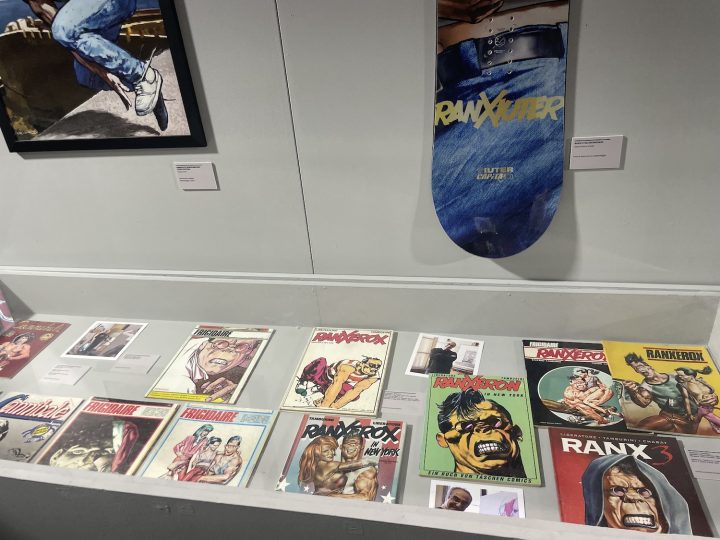
In the Ranx stories, the plots often feel improvised, and everything happens so quickly and unexpectedly. But the settings, on the other hand, seem much more constructed, more thought out. I’m wondering about that, because you’ve often said you’re not interested in perfect, far-future sci-fi — you prefer something closer to our present reality, a near-future vision. Were those cities you drew in the series a kind of satire of the time you were living?
Satire? No, I wouldn’t say that. It wasn’t a critique or a parody. It was just my way of seeing architecture. I’ve always felt closer to medieval architecture than to the American modern way, where they can tear everything down and rebuild from scratch.
The cities you draw in the series often show layers of time, with buildings that are composite, made of different architectural styles.
Exactly. A layering across time. I liked combining modern elements with ruins of the past and of our present, new constructions with crumbling ones. That was my idea of near-future architecture.
So it wasn’t a polemical representation of the world you just described where you lived back then.
Yeah, it was just exaggerated, for sure, but it came from the things we were living through. We never set out to “change the world.” That wasn’t the point.
Do you think that was because you guys were young and careless, or more about your personalities?
It was just how we lived. We felt that what we were saying already went against the grain. There was no need to force anything. It simply reflected who we were. I didn’t have to try any harder.
Let me ask you something that probably would’ve made more sense at the beginning: how did you get into drawing?
I started really young. It happened pretty much out of the blue. I was five, I remember it clearly. I was sick and stuck in bed, and my mother gave me a Cirio recipe book — about 400 or 500 pages. I spent two days drawing almost over the whole thing. Very basic drawings, of course. But from that moment on, I never stopped.
Then did you then have a classical art education?
Not really. I went to art high school in Pescara. There was one teacher who helped me understand some important things — like how to look at things and focus on the essentials. He told me something very important that I still remember clearly: “If you draw something and it doesn’t come out the way you imagined — even if it looks good — rip it up and start again.” I didn’t actually rip things up, but I always start over whenever I feel the need to.
That’s crucial for comics. A good drawing isn’t necessarily a good one.
Exactly. If you have a clear idea in your head and something else comes out, maybe it’s a nice drawing, but it’s not your idea.
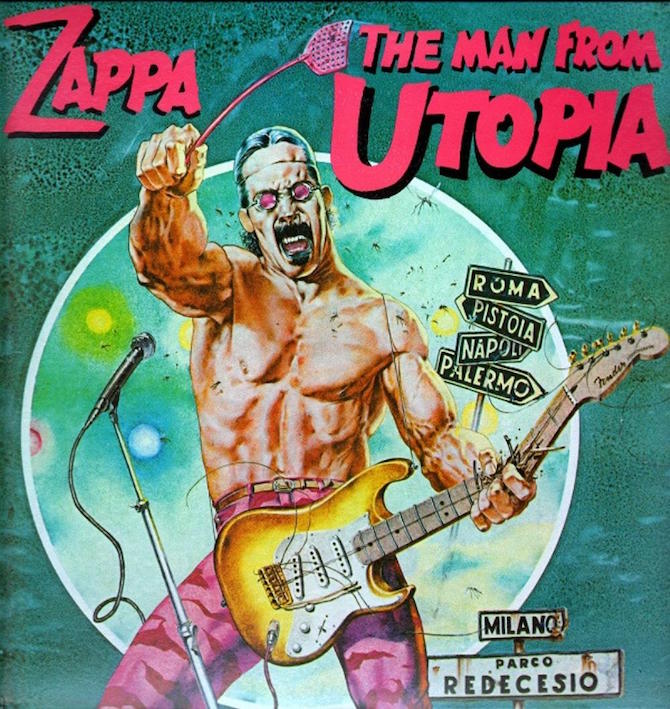
You mentioned cinema earlier, but music also plays role in your work. In the early Eighties, you collaborated with Frank Zappa. How did that happen?
It happened thanks to Ranxerox. I basically owe everything to Ranxerox, really... Though that doesn’t mean I owe it my ass too, you know what I mean. [Both laugh]
How did you two meet?
Zappa had been approached by a young woman who was there as a journalist for Frigidaire. I’m not sure if she brought him a copy of the magazine with a Ranxerox episode or the Ranxerox album. Anyway, apparently, as soon as he saw it, he forgot about her and her interview, and told his Italian agent to get in touch with me and Stefano. We went to the Excelsior hotel in Rome, I remember that moment very well. And there, when Zappa saw me, he pointed at me and pronounced those words that became famous: “After Michelangelo, the greatest Italian artist.” That’s how the whole legend started. It was a fateful meeting. To me, Zappa was a myth, one of my favorite musicians. Music has always been very important to me, also in my relationship with Stefano and the people at Frigidaire.
And you drew a cover for for one of his albums, and also did a lot of album covers for other musicians.
Yeah, but in that case, it was the kind of music we were all into — me, Tamburini, Mattioli... though not so much Andrea. Music has always been so important. All my work relationships have always had something to do with it. Even with Frigidaire, I didn’t get into the magazine because of the comics I showed to Stefano, but because of the musician portraits I had with me when I first met him. I remember I looked kind of like you back then, with a big beard.
A country boy...
Exactly. Stefano used to say I looked like an Abruzzese shepherd. A guy with that kind of look, listening to that kind of music — Brian Eno, Robert Wyatt, Frank Zappa, David Crosby — he figured there must be something else, something interesting in me. That’s why they asked me to collaborate. So yeah, music has always been the key. Zappa was one of my favorite musicians, along with Robert Wyatt and Miles Davis. And many others, actually. I listened to a lot of music. I had hundreds and hundreds of records, maybe even thousands. So when I got the call from Zappa, I was like: “What the fuck?” It was incredible. A dream come true.
And then what happened?
At first he wanted to do an actual comic book about his Italian tour. Then he settled for an album cover — The Man from Utopia (1983) — with that whole thing about the mosquitoes that tormented him during his tour in Italy. It was his idea. He wanted a “Frank Xerox,” that’s what he called it. He came up with the name himself. So I did that drawing.
It was such an amazing collaboration. There was an immediate connection between us. The only problem was that I didn’t speak English. If only I had, I think we would’ve become really close friends. Anyway, we kept in touch. After the cover, he called me again for the Boulez concert. He even put me in touch with Larry Flynt to do stories for Hustler — he gave Flynt my name.
When I met him again in France for the Boulez concert, I asked if he could write the intro for my first illustration book, Portrait de la Bête, which was published in France. At first he said, “I haven’t seen anything. Why should I write an introduction for something I don’t know anything about?” Then he looked at me and said, “Okay.”
Months passed without hearing anything from him, so I thought the thing was over. But then I got a letter from him apologizing for the delay. He told me he’d been having eye problems and couldn’t use his Sinclair computer anymore. It was one of the first personal computers, and he used it to write and compose everything. It had just become too hard to work for him.
But once he got better, he wrote the introduction. He wrote something like: “I’m writing a preface for something I’ve never seen, but I know the guy, and he reminds me a lot of my brother, so he must be good.” Something like that. It was beautiful.
You mentioned Miles Davis too — was there a similar story there?
Kind of. I had done a poster for a jazz festival in Nancy, France. There was a Black woman holding a strange instrument, kind of like a saxophone. Miles saw the poster and fell in love with it. He had his people buy all my books. Then, when he came to play in Milan, he had me come over from France. That’s when he made me an offer. That one ended badly — just bad luck. Forget it, it doesn’t matter anymore...
At this point, the festival’s press secretary enters the room and reminds Liberatore of another appointment, and we leave together. The conversation could have gone on much longer; Liberatore is the kind of person who’s easy to talk and laugh with, where one subject naturally leads to another. He begins every conversation with humble disclaimers about having nothing special to say, but once he starts reminiscing, you quickly realize things will go a different way — and you find yourself hoping the talk won’t end anytime soon.
Meanwhile, Liberatore’s ventures into music and artistic crossover are far from over. A new multimedia project sees him involved in a joint production between publisher Sergio Bonelli Editore and the music label Cam Sugar (focused on archive music and soundtracks). Presented at Lucca Comics & Games 2025, Nightmare in Rome is a comic book and an album that tells the story of a collective of antihero musicians who set fire to a dystopian Rome in 2045, where chaos reigns and music becomes salvation. Once again, Tanino Liberatore is showing us what the future might look like.
The post ‘rip it up and start again’: Tanino Liberatore on his illustrious career appeared first on The Comics Journal.


 Hello, my name is Jack Sparrow. I'm a 50 year old self-employed Pirate from the Caribbean.
No comments:
Post a Comment