

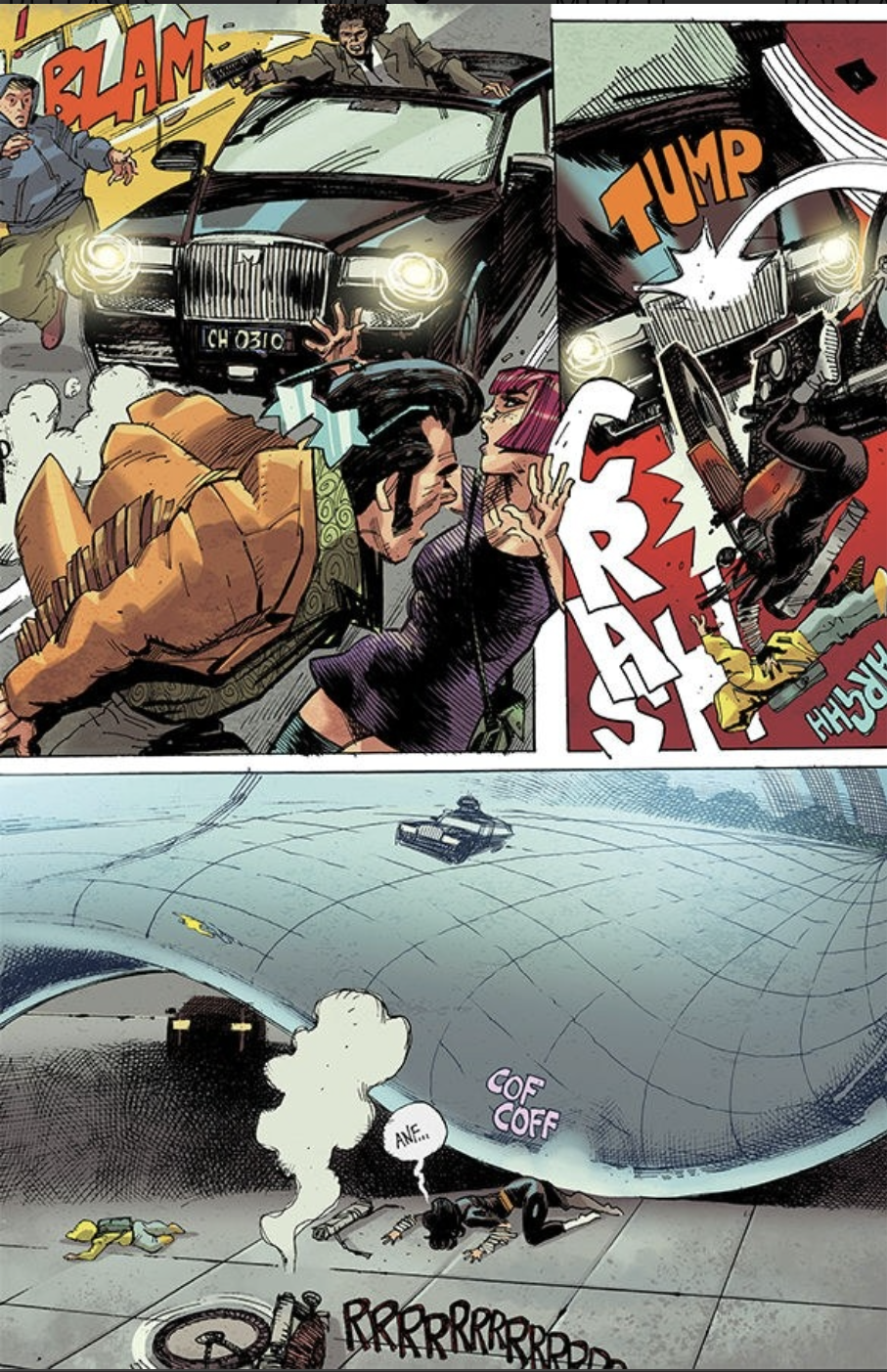
What have you been reading lately? I’ve been gorging on The Destroyer - yes, the adventures of the estimable Remo Williams, Esq., as chronicled by Warren Murphy and Richard Sapir. 155 novels in the series to date, beginning in 1971 with Created, the Destroyer; the most recent in 2021, Trial by Fire. The creators are long dead but the books are still available, albeit print on demand.
When was the last time you thought about The Destroyer? A franchise destined never to leave the 80s, I fear. An underperforming 1985 movie adaption signaled the idea had peaked, although the books themselves were successful enough to keep plugging along on newsstands for a while yet. They even tried comics, albeit a few years late, appearing at Marvel around when the 80s melted into the 90s. The best time for The Destroyer to have had a comics adaptation would probably have been during Carter. They could have got Tuska, done a black & white magazine inked by Ernie Chan. George H. W. Bush was too late for all concerned.
As for The Destroyer - if you were born after the turn of the century it would be difficult to describe just how ubiquitous this guy used to be. They published millions and millions of paperback books about this dude, and for a solid twenty-odd years they were literally everywhere. Drug stores, supermarkets, liquor stores, libraries, newsstands - newsstands! A thing that used to exist! Anywhere you could buy printed material, just about, was liable to have the adventures of Remo Williams on tap. And he wasn’t the only star of that genre, no - Mack Bolan started first, by a couple years. There were others, a natural outgrowth of the pulp formula updated for the era of the mass market paperback.
Absolutely everywhere for decades - and then, suddenly, nowhere at all. People stopped buying so many paperback books, or at least they stopped putting books in as many places. Wal-Mart still has paperback books but the selection is shit except for romance. I purchased a copy of R. F. Kuang’s The Poppy War in mass market paperback at my Wal-Mart a while back, if for no other reason than the novelty of finding a halfway interesting genre titles in that store. Wal-Mart sold lots and lots of Destroyer paperbacks back in the day. Every Wal-Mart in the country used to have a solid wall of books, stocked with everything - Dungeons & Dragons, Star Trek, and Clive Barker. What a resource. Now they have a couple racks.
Because, I’m assuming, men don’t read? Isn’t that what they’re telling us today? Men used to read so much they could support a category, Men’s Adventure, which really isn’t a category anymore, or at least not the same way. Jack Reacher seems to scratch a similar type of itch, but appears to lack the instinctual vulgarity of the true reactionary model.
Why does Remo William come to mind now, in 2026? There’s a streamline native to the form, a commitment to action as an end unto itself. Action as the primary structural principle of storytelling: it’s an honest way of being, even if other aspects of the model resist lionization or modernization.
In any event, the men’s adventure character found his ultimate comic book expression in the apotheosis of The Punisher across the late 1980s. The character had been around since the early 70s, a member in good standing of Spider-Man’s vast menagerie of bad guys. By the early 80s he’d graduated to occasional punching bag for Daredevil, after Miller found use for him. But it wasn’t until Mike Zeck drew that first Punisher miniseries in 1986 - his reward for huffing through the first Secret Wars - that he took off as a solo concern, notwithstanding a handful of early solo turns in Marvel’s black & white magazine line.
It sticks out, in hindsight, that such an unremittingly violent character could flourish under the Comics Code. And yet that was precisely what happened. At the height of his popularity The Punisher supported three ongoing titles, on top of a never-ending avalanche of high-dollar side projects. That only lasted a couple years, mind. All-American ultraviolence, if not precisely chaste. There were occasional scantily-clad women in Frank Castle’s orbit, but only incidentally.
The version of the Punisher that first became abnormally popular was not the weird guy with the intense widows’ peak who fought Spider-Man sometimes in the 70s, but nor was he the grizzled avenger of Garth Ennis’ oft-heralded Punisher MAX. The Punisher at his most popular was a distillation not just of the urban vigilante as a cinematic type, your Dirty Harry or Paul Kersey, but more specifically of Remo Williams and Mack Bolan. They were models for how to make that kind of character work on an ongoing basis. After the Punisher fell into disrepair in the late 90s he was refurbished by the aforementioned Ennis, who for his virtues didn’t seem to feel a lot of affinity for the same kind of (American) men’s adventure material that had inspired the character’s previous decade. Going forward after the turn of the century that influence fell away. No one reads The Destroyer anymore.
But if you grew up reading The Punisher during his first flush of mass appeal, that was the flavor on offer. Writer Patrick Kindlon specifically references issue #36 of the second volume of The Punisher in the text page of the first issue of his recent Image series, Gehenna: Naked Aggression, drawn by Maurizio Rosenzweig and compiled into trade at the tail end of the last year. It's really a beaut, no doubt about it. A much better comic book in every way than The Punisher #36, but I can also see the family resemblance.
The issue of The Punisher in question was actually part two of that year’s summer biweekly shipping event, a six-part storyline called Jigsaw Puzzle, which as you might imagine focuses on Frank’s archenemy Jigsaw. Well, “archenemy” might be pushing it. I doubt the Punisher thinks Jigsaw is his archenemy. He’s a really unpleasant person whose only real superpower is being difficult to kill. Anyway, this is the one where Jigsaw gets involved with a cult in Venezuela that turns out to be connected to everyone’s least favorite X-Men villain, Belasco. Not a historical beloved Punisher saga, is what I’m saying.
Part of that Summer’s biweekly shipping push, a hallmark of those last few salad years of the American newsstand. Books that sold well on newsstands double shipped during the summer months for a few years beginning in the late eighties. Most of the time it was an opportunity for extended storylines, like Jigsaw Puzzle, and often gimmicks to boot. To wit: successive years (1990-1992) saw Captain America high on crank, force femmed, and turned into a werewolf, in that order, for the Summer biweeklies. The Punisher got to fight Belasco. The book’s regular artist at the time was Bill Reinhold, who I still regard as the greatest Punisher artist of all. You may disagree, but when was the last time you looked? Bill Reinhold is criminally underappreciated, I have maintained and will until my death by firing squad: best Punisher artist. The only reason you don’t think so is that you’ve never read Bill Reinhold’s Punisher, because in fairness it was over thirty-five years ago and written by Mike Baron.
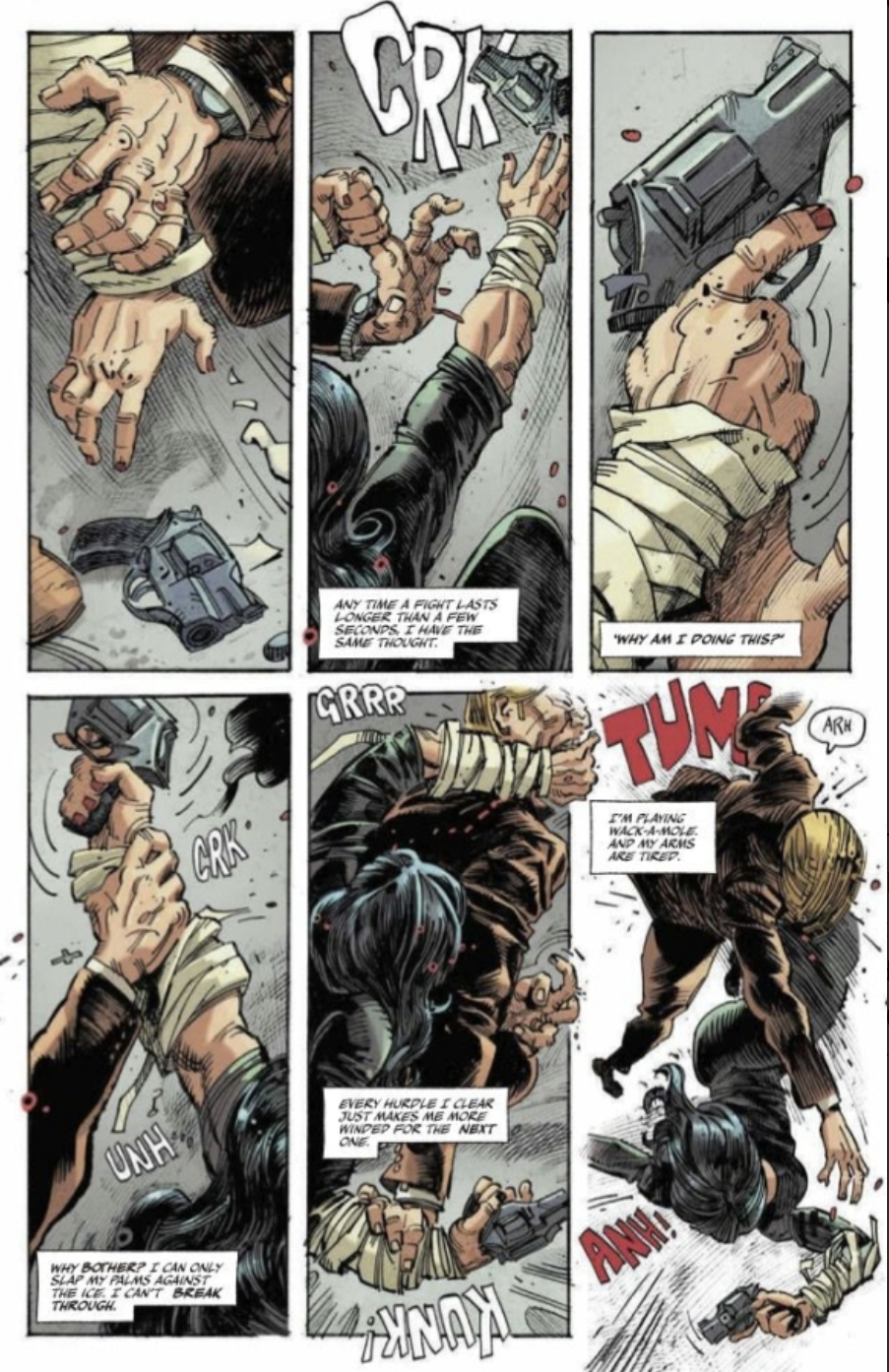
But issue #36 of The Punisher was not drawn by Bill Reinhold, who only drew half of the six-issue Jigsaw Puzzle. The second and third parts (issues #36 & 37) were drawn by Mark Texeira, with the fifth (#39) drawn by someone credited to Jack Slamn. At a glance “Slamn” appears almost certainly to be Ernie Colón, who actually was working for Marvel at that precise moment in time. How he came to draw an issue of The Punisher in 1990 is a story untold, but a quick scan of all the many names in the credits boxes of those issues communicates at a glance the fact that it was an all-hands-on-deck situation.
Again, I stress, it is not a good Punisher story, but it’s a perfectly readable story nonetheless. I think the Punisher needs to be able to have the occasional adventure in exotic locales. The men’s adventure is part of his DNA. Much as Batman should have always a jot of swashbuckler in his makeup - be able to swing a sword or fly a biplane - the Punisher should always be able to have a rousing, libidinous men’s adventure now and again. Sure enough, he ends Jigsaw Puzzle running around the jungle with a blonde, who isn’t wearing any pants. Her pants are taken from her in the course of the adventure. That happened a lot in the eighties.
Issue #36, drawn by a young Tex, is a striking comic book, even if it isn’t very good at all. Jigsaw Puzzle wasn’t a story that could support six issues. Jigsaw goes after Frank with a scheme involving pulling him into an active gang war somewhere in an inner city. The Punisher gets to step up and help the good people being terrorized in these communities by killing a lot of gang members. This comic book has a high body count, it must be said. The ground is littered with bodies, but the blood isn’t bright red so we’re doing fine. Plus, you know, the victims are those people.
Because that is a weakness of the character, this era especially, although less so as the conscious effort was made to move away from the visual association. In fairness to the Punisher, he kills a lot of people, of all skin colors. He’s an equal opportunity serial killer. Got his bones hate-criming fellow Italians, after all. He especially likes killing neo-Nazis and other hate groups, certainly a point in his favor. But, also especially around 1990, he was also occasionally stepping downtown and murdering lots of black and brown gangster stereotypes. Because that was absolutely inescapable across the culture.
It reads great, is the thing. It’s Frank stepping in like Yojimbo to save a town from warring gangs, Bloods and Crips with the serial numbers filed off. Because that was absolutely inescapable across the culture. The approach could read in certain quarters at the time as socially conscious, which I merely gesture towards because the past is a strange place. Check out Colors (1988) sometimes - not Duvall’s best, certainly (RIP Bobby D), but indicative of how pop culture treated the subject. Still, Punisher #36 featured a very young Mark Texeira on pencils, so it reads great even if your head hurts when you try to read the word balloons. This vast stretch of The Punisher was written by Mike Baron. It is what it is. We’ve all read plenty of Mike Baron comics, we can lie to each other but not ourselves.
There is something essentially unreconstructed at the heart of the Men’s Adventure genre. I have come to genuinely love The Destroyer, and even recommend the books if you can stomach the dated elements. But the dated elements are significant, can’t be sidestepped, and are probably deal-breaking for many. Probably why the character will almost certainly need to stay in the past. The early books? Also shockingly racist towards Italians. And I don’t know how you could fix a character like Chiun. Maybe someone could, the whole matter is above my pay grade. The Punisher, at least, can and has just moved on to kill different kinds of people, written by reactionaries and leftists alike.
So what’s the core question, then? Could it be any other than the expression of action as a formal prerogative for the artist? Can we separate out the reactionary impulse from the pleasure of the formal recitation of violence?
That is where we find Kindlon and Rosenzweig, in a spasm of their own eminently pleasurable violence. The story was originally serialized across the 2022 Image Thirtieth Anniversary anthology, which turned out to have some interesting work squirreled across its Brobdingnagian span. Gehenna was initially published in black & white, as well. The series was colored here by Matteo Vattani, and it’s fine work. Subtle palette, painterly in places. European in affect, which only makes sense. Maurizio Rosenzweig is a veteran of the Italian comics market but unknown on these shores. Very little of that market laps up on these shores, historically, with the exception of the right honorable Dylan Dog, who pops up now and again. Had a Batman team-up a couple years back that was actually pretty good. But that’s about it.
Mad props to Patrick Kindlon for finding this guy. Whatever roads brought them together were blessed indeed. For all Kindlon’s pretensions - spelled out in editorials, with a great deal of rousing rhetoric on the subject of the genre and non-genre divide - this is a work of serious skill, and it is so to a large degree because in Rosenzweig Kindlon found an artist able to meet the moment of a rather ambitious script. It’s an action story, yes, and devilishly precise to boot. The whole thing from beginning to end is one long chase scene. Even flashbacks in the imperative tense. No small challenge for any artist.
The very first thing we see is the kidnapping that instigates the plot. Our heroine, Gehenna, shoots a man in the face on the second page. It was supposed to be a hit against the crime lord who killed her husband, but it turned out to be the guy’s kid instead. So suddenly Gehenna’s in a moving hostage situation with the Chicago mob. And as it turns out, Gehenna’s move coincides with another set of players making their own move, and before she knows it she’s putting her life on the line to protect the kid whose dad she’d just been trying to kill.
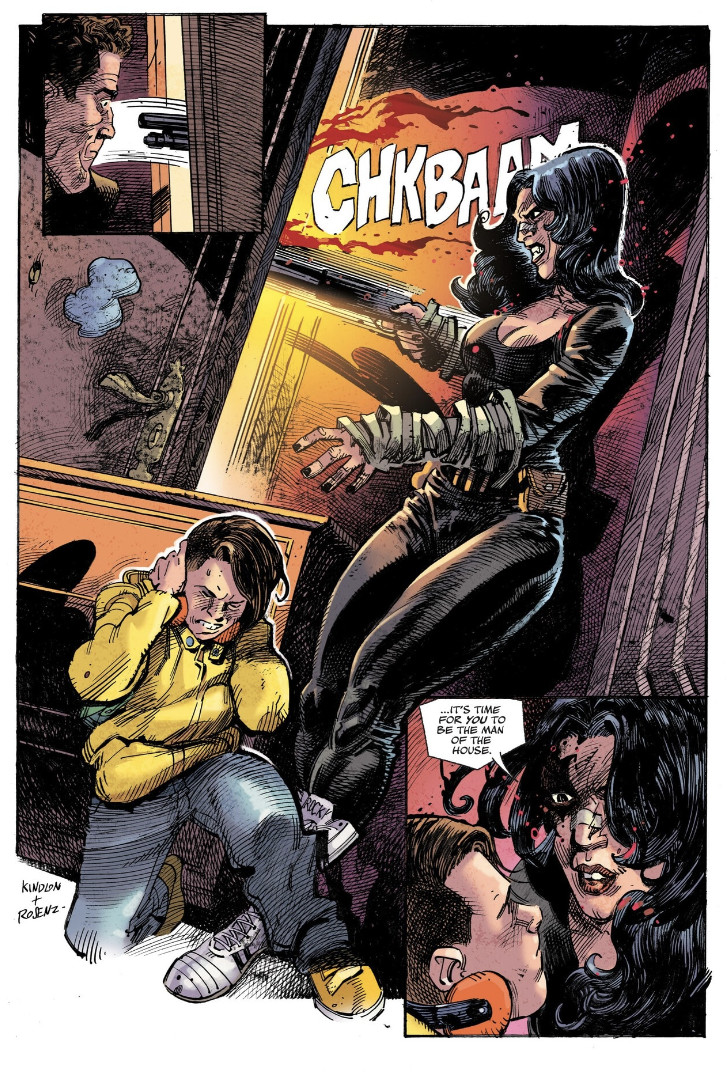
All well and good, but ultimately the details are unimportant. What matters is that everyone in Chicago is trying to kill Gehenna for the entire running time of Naked Aggression. The story ends with everyone still trying to kill Gehenna, on her way to the inevitable sequel, Lust for Conquest. I’m already camping out in the street.
It’s a packed narrative, wound tight like a spring. Purely propulsive. The plot is Gehenna staying alive. She kidnaps a kid, runs into a building and up stairs, barricades herself in an apartment to reload her guns, and shoots her way out. That’s the first eight pages, the first chapter of the serialized sequence. The finished product is built around providing a full story every eight pages, such that the finished whole feels pleasantly packed. The challenge of the initial serialization produces a gratifying finished product. No filler. Something is happening every second. There are no conference table scenes here.
Think about how many bad stories begin around conference tables! Such a ubiquitous element of modern dramaturgy, and a surefire method to dodge the hard work of making your story flow between events. Do you actually want to entertain the reader? Never give us another god damn conference table scene and our souls will all be lighter.
Anyway. Gehenna flows, my goodness does it flow. Each chapter opens with a double-page spread, two long panels across the top and bottom. That’s where you see what kind of steel this Rosenzweig fellow is packing. There’s a scene with a fire escape - yes! Miller’s hallmark, the fire escape scene. You must always pay attention to any scene set in a fire escape. The reason is plain, as Miller himself ascertained: a fight scene on a fire escape is showing off. You can’t cheat a fire escape. So look at the spread here, please, I beg you: is Rosenzweig cheating? Does that look like cheating to you? Upside down, at an angle multiple figures scrambling up the side of a building to reach the roof. No cheating. It has to be legible. It has to flow. If you can make a fight scene on a fire escape flow legibly you’re already in the pantheon.
Friends, I beg: you need this in your life. As an action story it’s trash, pitched precisely. Our heroine, Gehenna, loses her husband to the mob and takes a job as a contract killer. Her movements over the course of the series conjure such a remarkable portrait. We come to know her by watching her fight and seeing the decisions she makes in the most dangerous moments of her life, just the way it should be for action stories. She’s an effective killer but not because she fits any kind of stereotype, not a slinky femme fatale, nor a balletic spy, nor manic pixie murder doll. On the contrary she’s presented as a resolutely blue collar presence, in the game by necessity: brutal, efficient, joyless, but also reckless. More than willing to take a punch if it puts her in position for the follow-up. She gets her ass kicked up and down the running time. Like the Spirit, she’s good at getting back up again. Not above wearing a low-cut top in the hopes it buys her an extra split second to shoot you first. As the saying goes, she’s built like a brick shithouse, but I wouldn’t say that to her face.
There’s another guiding spirit here, outside of that particular stretch of Punisher comics - mentioned in passing by Kindlon in another text piece. Ann Nocenti’s Daredevil wasn’t double shipping in 1990, but the tail end of her run was nevertheless hitting stands alongside Jigsaw Puzzle. The influence is pronounced, especially when a legal-themed superhero named Public Defender shows up to put a stop to Gehenna’s rampage, and the story becomes a brawl between these two specific characters for a good stretch. That’s Daredevil’s schtick, after all, and many more such heroes besides: so many of their adventures consist of them inserting themselves into the last reel of the worst day of someone else’s life. Suddenly a fight breaks out in the middle of the neighborhood and everyone’s lives are impacted.
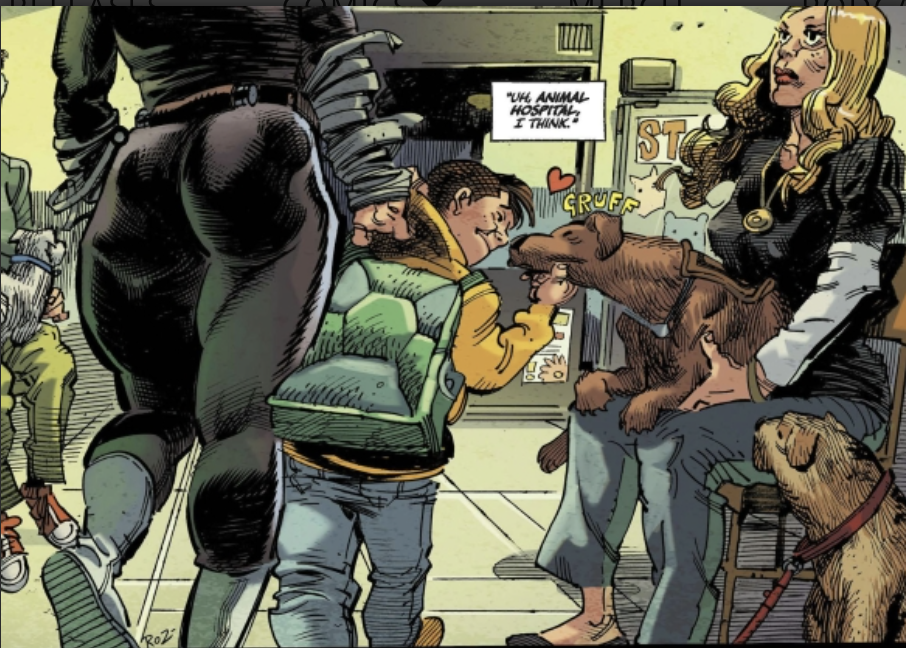
And that was Nocenti’s great insight, a quintessentially humanistic influence stamped across a generation of readers and against the current of so much culture of the time. Every party to a fight carries their own story on their back, a sum of failures adding up to having no better option but the worst possible choice. The stakes for Gehenna couldn’t be higher. She fights because she has to, and that duress hangs over the story like a crackling live wire.Gehenna: Naked Aggression is a raucous tribute to the final sunrise of the American newsstand. This is, after all, a story about an assassin cutting her way through the Chicago underworld while wearing a skintight leotard that leaves absolutely nothing to the imagination. Don’t let the European affect fool you - or rather, trust the prurient impulses native to the European affect. Gehenna is quiet buxom, certainly, barely contained by that utilitarian hitman’s leotard. A blatant play for mass appeal - or would be, if the conditions still existed to place this story where it belongs, a place of honor on the shelves of the gas station circuit next to Savage Sword of Conan and The Destroyer.
The post Gehenna: Naked Aggression appeared first on The Comics Journal.


 Hello, my name is Jack Sparrow. I'm a 50 year old self-employed Pirate from the Caribbean.
No comments:
Post a Comment