

“For a people forced to spread out among so many other cultures, it makes sense this would be the result . . . maintaining our Hye (Armenian) identity while taking in new ideas. That’s how I’d make something special.”
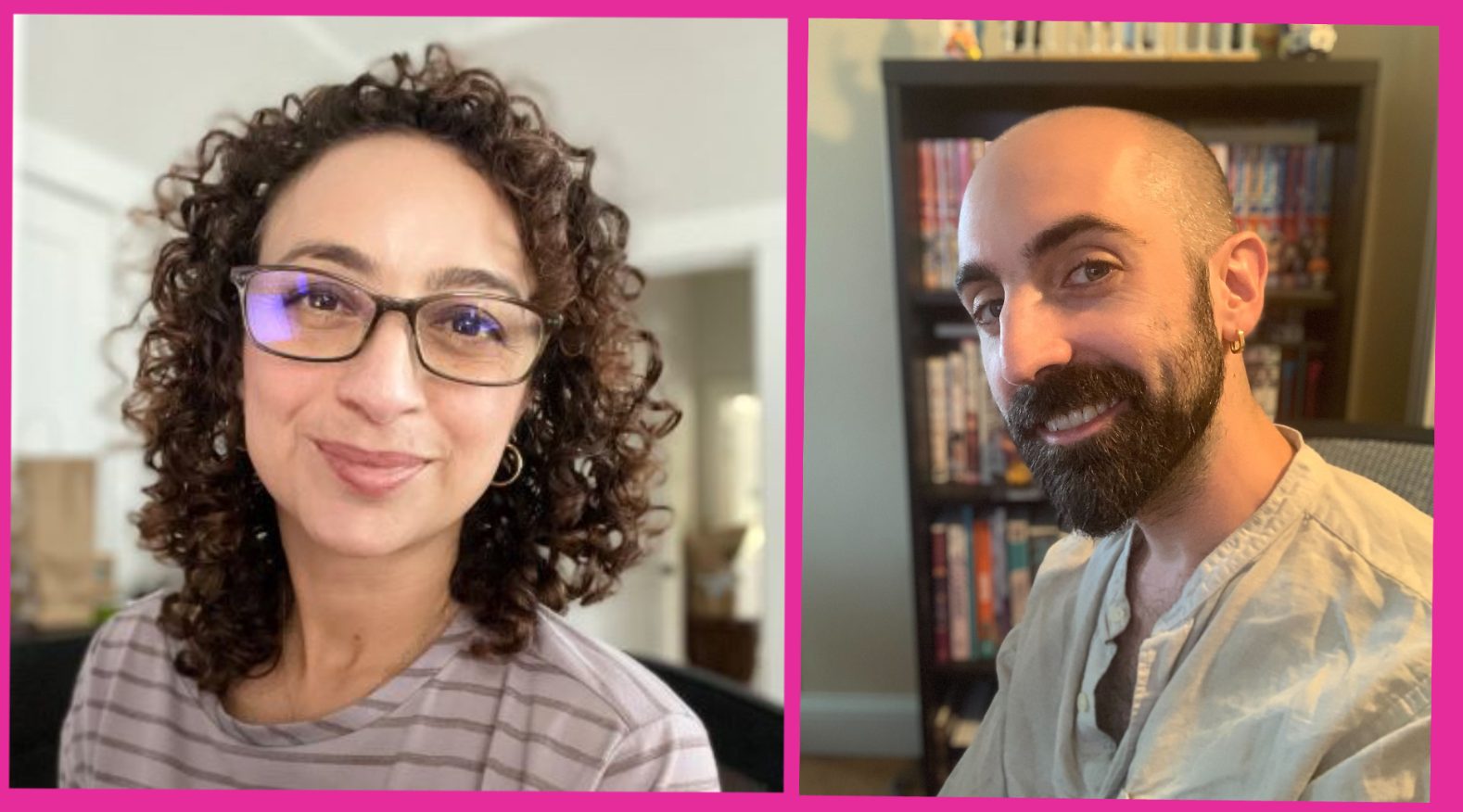
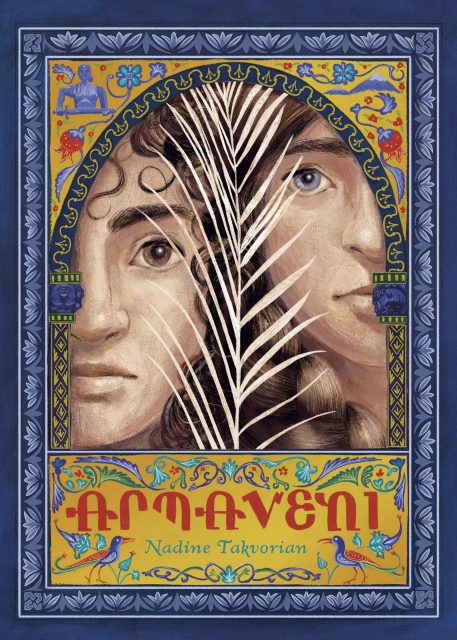
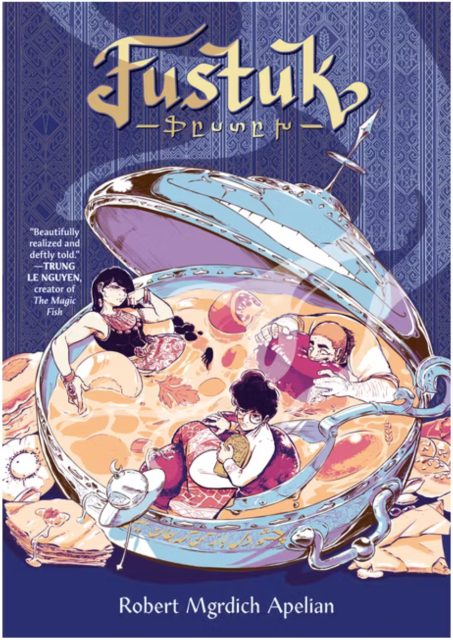
The Comics Journal presents an interview with Armenian-American comics creators Robert Mgrdich Apelian and Nadine Takvorian, both of whom have new graphic novels on sale this spring that reflect upon and explore their culture.
Robert Mgrdich Apelian’s graphic novel Fustuk is a magical realistic story about food and family. An Armenian American author-illustrator based in Everett, Massachusetts, a primary goal of his work is to celebrate the diversity and cultural excellence of the Middle East and to portray it as something other than tragic and war-torn.
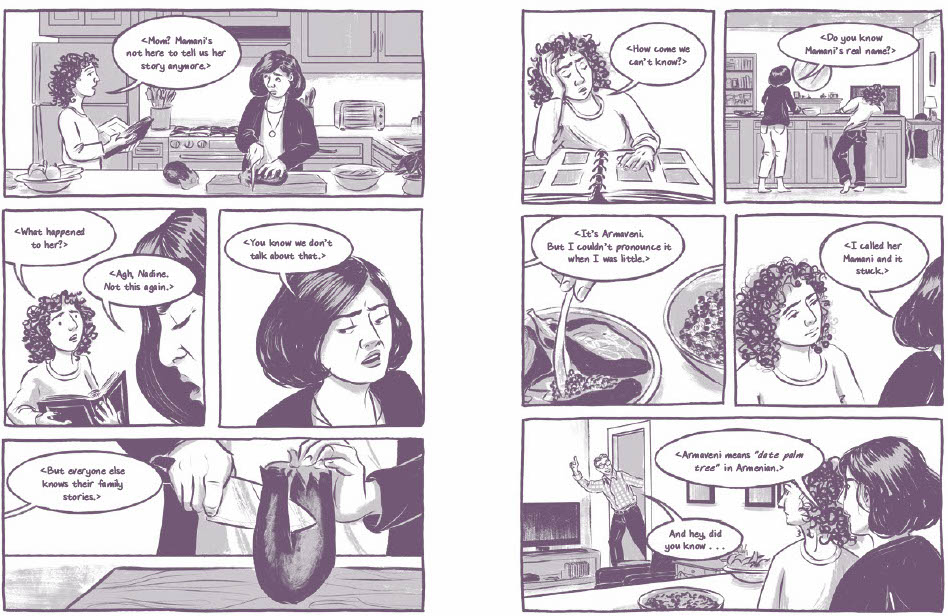
Nadine Takvorian’s graphic novel Armaveni: A Graphic Novel of the Armenian Genocide is an autobiographically-based work exploring her family history. She is a first-generation Armenian-American; from within the Armenian diaspora, Nadine’s family is “Bolsahye”―from Istanbul, Turkey. She is passionate about exploring Armenian identity and history, and battling cultural erasure.
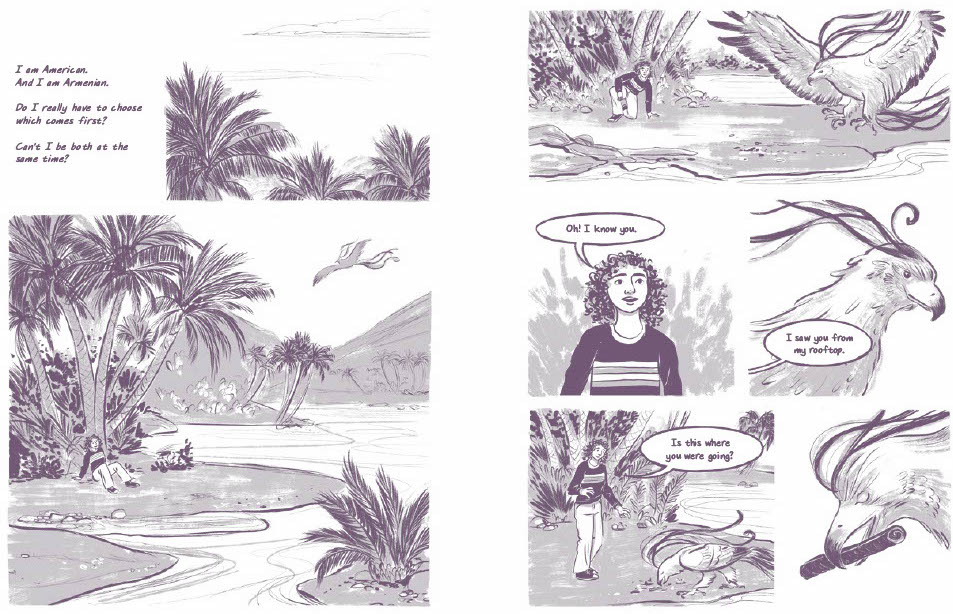
Nadine Takvorian says, “Growing up I was always searching for books and comics that reflected my experience as an Armenian. I wanted to see and celebrate my culture in the pages I read and immersed myself in, but there just wasn’t much to be found. That’s why I’m thrilled that graphic novels by Robert Apelian and myself are out this spring. We are adding our voices to the small and growing collection of Armenian representation in literature. We both celebrate our culture in different ways within our books. I hope it inspires others to dive in, experiment, and share their stories with all of us.”
- Gina Gagliano
NADINE TAKVORIAN: Congratulations on your huge achievement, Robert! I'm in awe of you because of all the detail you managed to put in your book. You must have been drawing 24/7, that’s incredible.
ROBERT APELIAN: Thanks, I like detail like that. I was going ask you this too. I think I got the book deal in 2021, so it was five years of work. It’s a long time for something that people are going to read in an hour. When did you get your book deal?
NT: I think it was 2022. I joke that it took me a year and a half to complete just the art, but you'll read it in like an hour. And I'm sure the art-making time was similar in your case, maybe even longer, because of all the detail and intricate patterns.
RA: That was one thing I noticed. There were so many similarities and stylistic decisions that we both made, which I thought was extremely cool.
NA: That goes into one of the questions I wanted to ask you, stylistically, about your design work. Every one of your pages is so full of rich decoration and design. I was really excited to see these designs and recognize where they’re from. Like designs from Armenian illuminated manuscripts, designs in khatchkars (carved stone-crosses), mosaic inlays from backgammon boards, not to mention all the rug design and the clothing designs! I wonder if you had any strategies on how to keep your pace going and not get lost in a page?
RA: For panel borders for each of the flashbacks, they have a visual language—like you mentioned, the khatchkars and the penultimate chapter, the tavli (backgammon) board in chapter six. That's based on my own board that I love very much. Because I'm reusing it for the whole chapter that was a little easy. I could make it once and then keep it throughout the chapter. Although it was a real pain when I realized that I messed up all of the gutters and I had to resize everything a little bit—that was a nightmare. But I had set a pretty concrete sense, “these are the things that are going to be patterned, and these are the things that I'm going to devote the time into doing.” Like the rugs.
There were certain things I wanted to draw fully by hand. I don't generally like copy/pasting the final art. I want everything to be by hand, pen stroke, original on the final result. So that’s the stuff that took longer. But some things I cheated, like the panel borders. I allowed that for myself because those are sort of meta. They're outside of the real world. Also some of the clothing patterns that were more of a texture that I could just apply onto certain things so that I didn't have to draw every time. I tried to pick and choose my battles to make sure that it was an achievable scope. The things that are going to have the biggest impact, the things I'm going to make sure are original and drawn by hand.
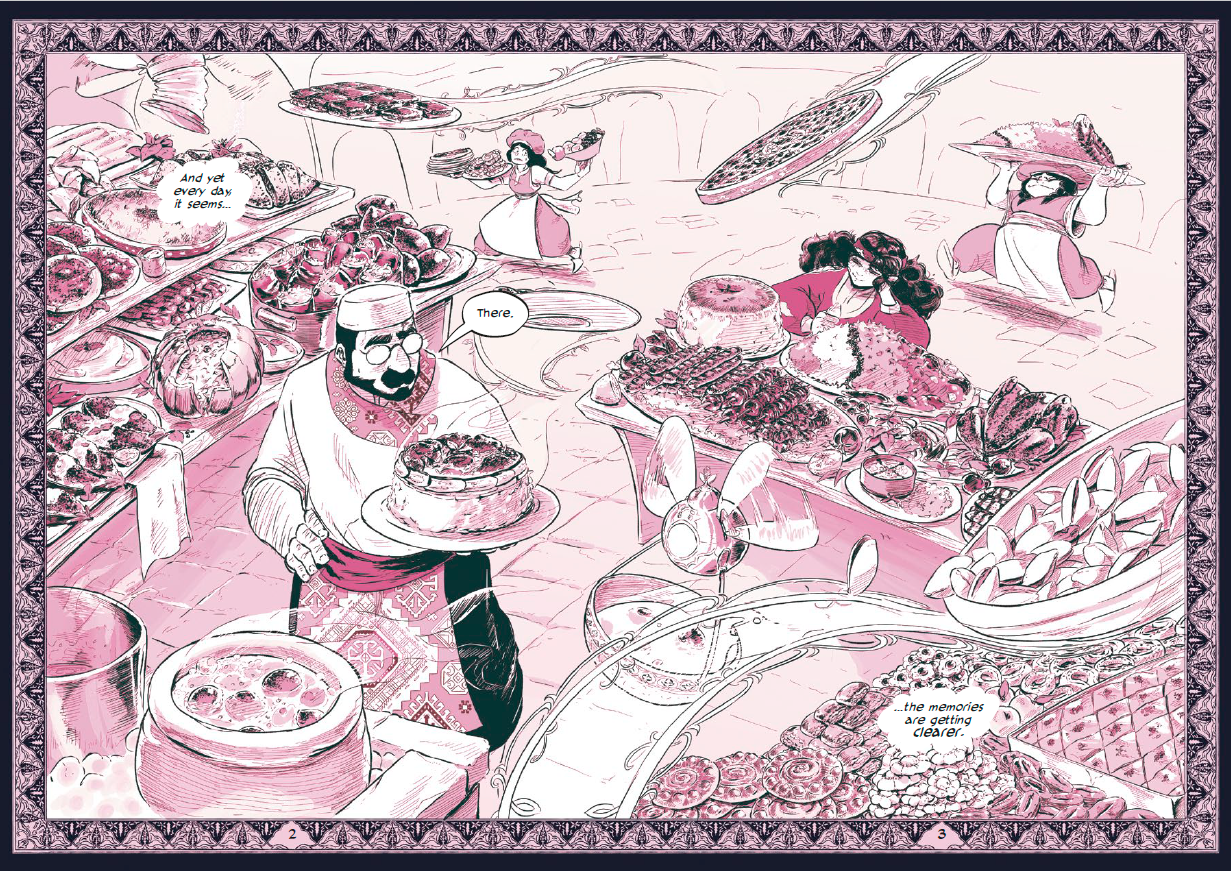
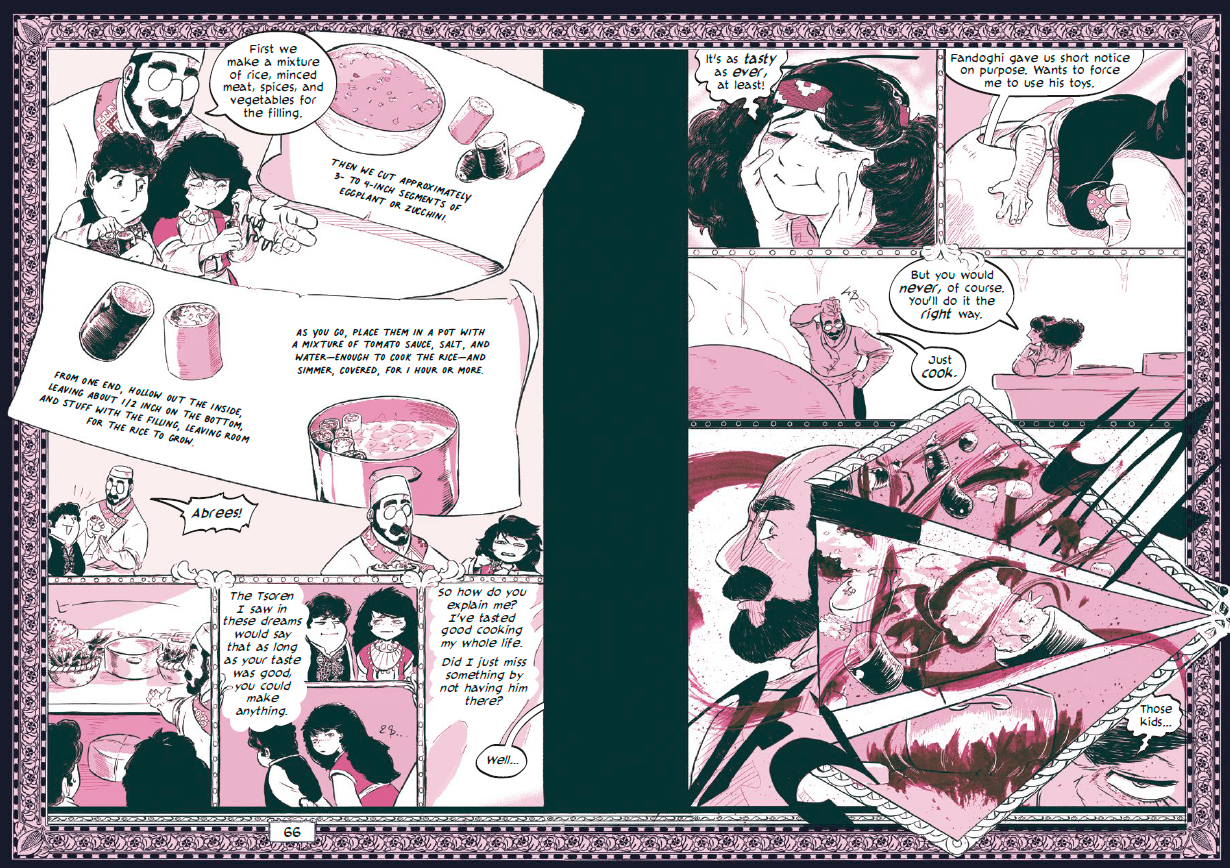
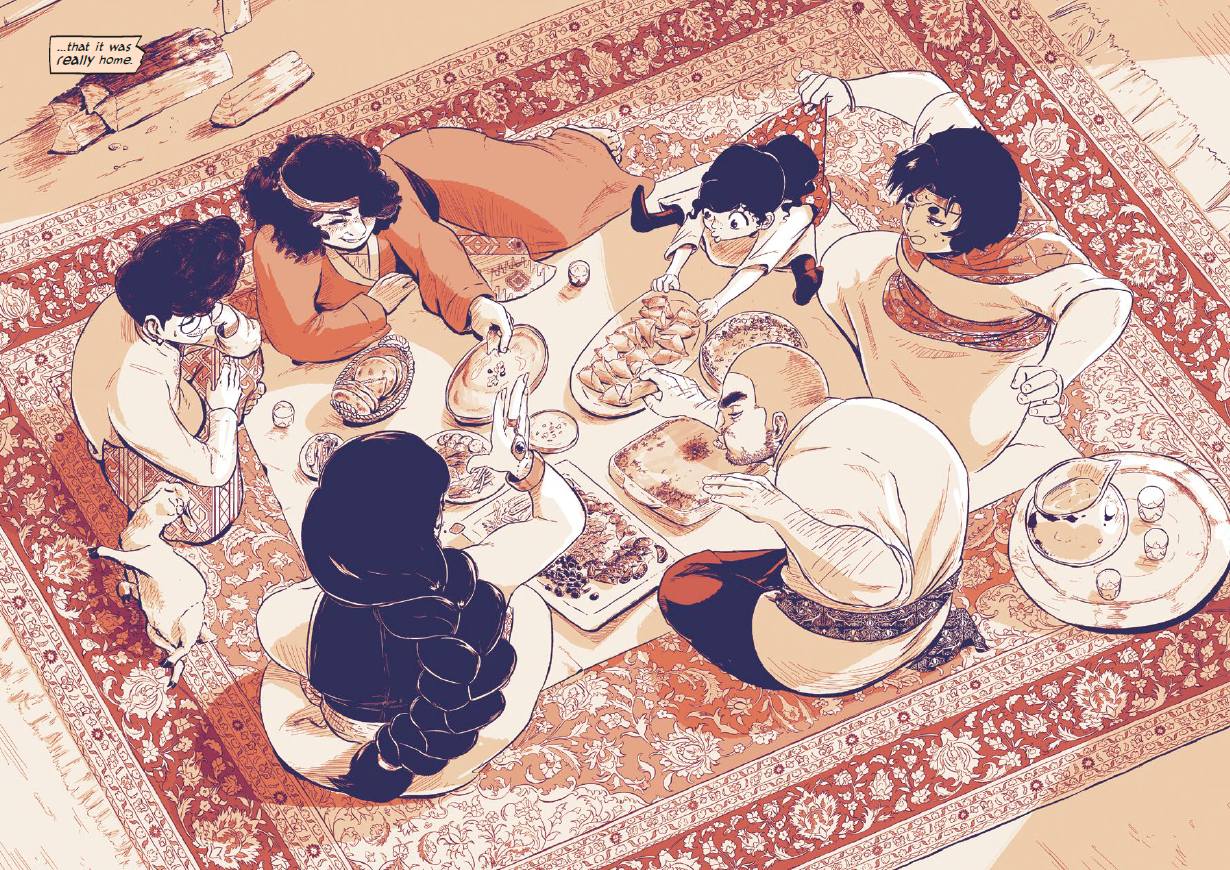
NT: That attention really shines through in every page, it's so luscious. That same attention to detail is also with the food which is a prominent part of your story. From your first double-page spread, there was this kitchen with just all these dishes, and I was like, “I am there with all this food,” I felt like I could just pick one and taste it. I could feel the textures, like a dolma that has this moist texture to it. Or like the kadaif which is nice and crispy, and it's soaking in syrup. I could feel it. I can see it in your detail, you put all of that in there. You can feel the love for the cuisine in your work. I just wanted to talk about that because it was just so striking, the textures.
RA: I think that's something monochrome is good at. We both chose to do our books in the monochromatic palette, and that’s something I really like about that “ink” style. I think it can really show texture.
Before we move on from the ornament stuff I also have a question for you. We both chose the same thing of having our flashbacks denoted by ornamental sort of borders. Was there a particular thing that led you to that conclusion, like a parallel evolution of the same concept?
NT: I didn't have that right away. As I worked on the book with my editor and my art director, we decided we needed some kind of visual cue. That took some figuring out. It took some experimentation to figure out what that would look like. I looked at illuminated manuscripts because there's so much ornamentation in there, and I knew I could maybe use some of that as an influence.
I noticed in your book, in some pages you had a very distinctive banner style that I’ve seen in illuminated manuscripts. I actually tried that banner style, and it didn't work for me. But we picked and chose what seemed to work, and we landed on what it looks like now. I like that we’re both showcasing our Armenian artistic history in our books, which I think we both really wanted to do.
RA: Yes, absolutely. For me, there were a lot of little choices involved like recontextualizing things I liked, especially from manga. Manga often denotes flashbacks with things like the black gutters, and I mixed that with designs that pay homage to our cultural background.
NT: So let’s go on a slight detour because you mentioned manga. It was so fun to see how you took this manga influence and made it your own. Could you mention some of the manga influences that inspired you?
RA: I do read just a lot of manga. Everything inspires me, what's on my bookshelf here in terms of my background in comics. One Piece is the one that I've always read from. I've been reading that for twenty years now. I think my sense of space and using two-page spreads—my favorite thing about all of comics—totally comes from One Piece. Witch Hat Atelier is another favorite. Witch Hat Atelier is, I think, the prettiest comic ever. I love the art style of it so much; it has a lot of very textured patterns in it. It even has expressionistic paneling where it'll use ornamentation.
So those are the two biggest influences on me lately. One I grew up with, and one that's very recent, but they are my biggest inspirations. How about yourself?
NT: I actually don't have a huge manga influence, only because when I was growing up it wasn't a big thing here yet. I haven't read the titles that you mentioned, but I'm familiar with the manga style.
My dad bought me comic books when I was a kid. He actually bought me a book on Doctor Strange, believe it or not. But also The Smurfs, Mickey Mouse, and Donald Duck. Then there were Sunday comics like Garfield, and Calvin and Hobbes. Later, a huge influence for me was ElfQuest, which is very fantasy, and the artist, Wendy Pini, is a woman. I thought, “Here’s a woman drawing comics and she’s amazing.”
As I got older I discovered Dave McKean, and his work was a huge influence for me. And then I discovered documentary-style and nonfiction comics. There’s one called The Cartoon History of the Universe which was one of my favorites. Books like Persepolis, Maus, the March Trilogy, and Joe Sacco’s Palestine—these documentary and memoir-style comics were super eye-opening for me, to see how powerful they were as a format in telling these kinds of stories. It’s something I really glommed on to.
RA: I definitely got that. I feel like the color palette and the brushstroke quality in your book has an intimate quality, like Tillie Walden. It feels very emotional. And then you have the sort of rigorous autobiographical or historical quality of something like Maus or Joe Sacco. A lot of those influences are coming together.
NT: You mentioned Tillie Walden, and I can also mention Jillian Tamaki as a huge influence. This One Summer is probably one of my all-time favorite comics. It's so quiet and intimate and that deeply resonated with me. I just wanted to capture the feeling of that.
Going back to food! I loved the way you set apart your chapters and how you decided on a specific food to highlight each chapter. Could you talk about your thought process there?
RA: I don't know when I decided on titling each chapter a food—especially because that particular food is not always the central part of the chapter. Sometimes it is, but at some point it just felt natural. I definitely wanted to do a full page spread for each chapter title, and that was a good way to highlight and draw a big closeup of food.
Food is such an important part of the plot that it was easy to pick something for each chapter. A huge part of wanting to write this book was to showcase all of the food that I loved so much—like kufta and kunefe. These are all the things that were so important to me as a kid that I had never seen in media in any capacity. I picked a lot of the foods based on what I loved as a kid. But some of it was Persian food, which is actually not my background. But I chose it because it has such a distinct identity. My actual heritage is Arabic-Armenian, Lebanese-Armenian, Syrian-Armenian. For me to contrast Armenian food with Arabic and Lebanese food, it's impossible. They're like same thing. So I wanted to pick something that had its own identity. And also, Armenian-Persian history was easier to pull from in that time period with slightly less conflict.
NT: I think you did a really masterful job of navigating that and creating this brand new world. I remember the map you drew.
RA: The book started off being set in more of a fantastical world. As I went on and wanted to represent the cultures accurately, it became closer and closer to the real world. I decided to base it on a more ancient understanding of the world, using more ancient maps. So it's the real Middle East, you can see the map and you can tell.
NT: I love that. Going into our culture and language, one of the most distinctive parts of your book is using actual Armenian lettering and words for your sound effects. I love that so much! It took me a little bit longer to read your book, because I can only read and write Armenian at a first grade level.
RA: I'm similar. I know the alphabet better than I can speak. I had an editor, a friend of mine who's way more fluent and is a linguist studying Armenian, and he proofread a lot of this.
NT: I know a lot of people are not going to understand the sound effects, but I think it's a great Easter egg for Armenians.
RA: I wanted to make it for two different experiences: one for Armenians who can read the sound effects and more natively understand it, but also intentionally for people who can't read it. So you just get the effect of the sound effect, as opposed to bothering to parse it in English. Because that was how I read manga growing up. I couldn't read Japanese, right? I could feel what this stylistic choice in a manga meant, but I couldn’t understand it.
NT: I assumed that was the reasoning behind putting the Armenian sound effects in there, and I love that. It's also a design element in and of itself that gets incorporated, on top of all the other design elements in there. It's amazing.
RA: That segues into a question I had for you. You also chose to represent Armenian language in a couple different ways; who is speaking what language and how changes a couple times. There are times where you have the brackets to indicate that this person is speaking in Armenian. Sometimes you present the dialogue with the written alphabet. What were some of the meanings and decisions behind that?
NT: That’s a good question. I knew Armenians would be reading this book. But I also meant for it to go beyond our Armenian community, for other people to read and understand. I didn't want it to be too confusing. So I thought for most of it I would just keep it in English and indicate a different language is being spoken. There are a few panels where there is Armenian spoken, and I transcribed it into English so the reader gets a feel for the sound of it. I think I only included one panel with the actual letters in dialogue, and that panel takes place in a more historical context. I wanted to really strike home that this language is different here with a different alphabet. And that one panel is actually the first few lines of a traditional poem, so it’s also an Easter egg for Armenian readers.
RA: That's something I was going to talk about as well—making the book with two audiences in mind. This is, for me, a difficult thing with talking about heavy subjects like the genocide where Armenians are invested and we can relate. We have our own genocide stories and we want to see them.
How much did you feel you had to cater to non-Armenians, to bring them in and make them care about it as much as we do? Or did you just tell the story in the right way just for you? People should hopefully care. How much of that was part of the calculus you had to do?
NT: The main calculus behind that was making it so it wasn't just a story that took place in the past. I wanted to bridge it to contemporary times, because I had never come across that before in other books that I’d read. They were always stories that were stuck in the past. And the thing is, the Armenian genocide is not stuck in the past. We’ve heard the genocide story a million times, but I wanted to bridge it to a contemporary time where readers would have more of an understanding to relate to and connect to it a little bit more. That was my thought process behind how to get people invested in the story.
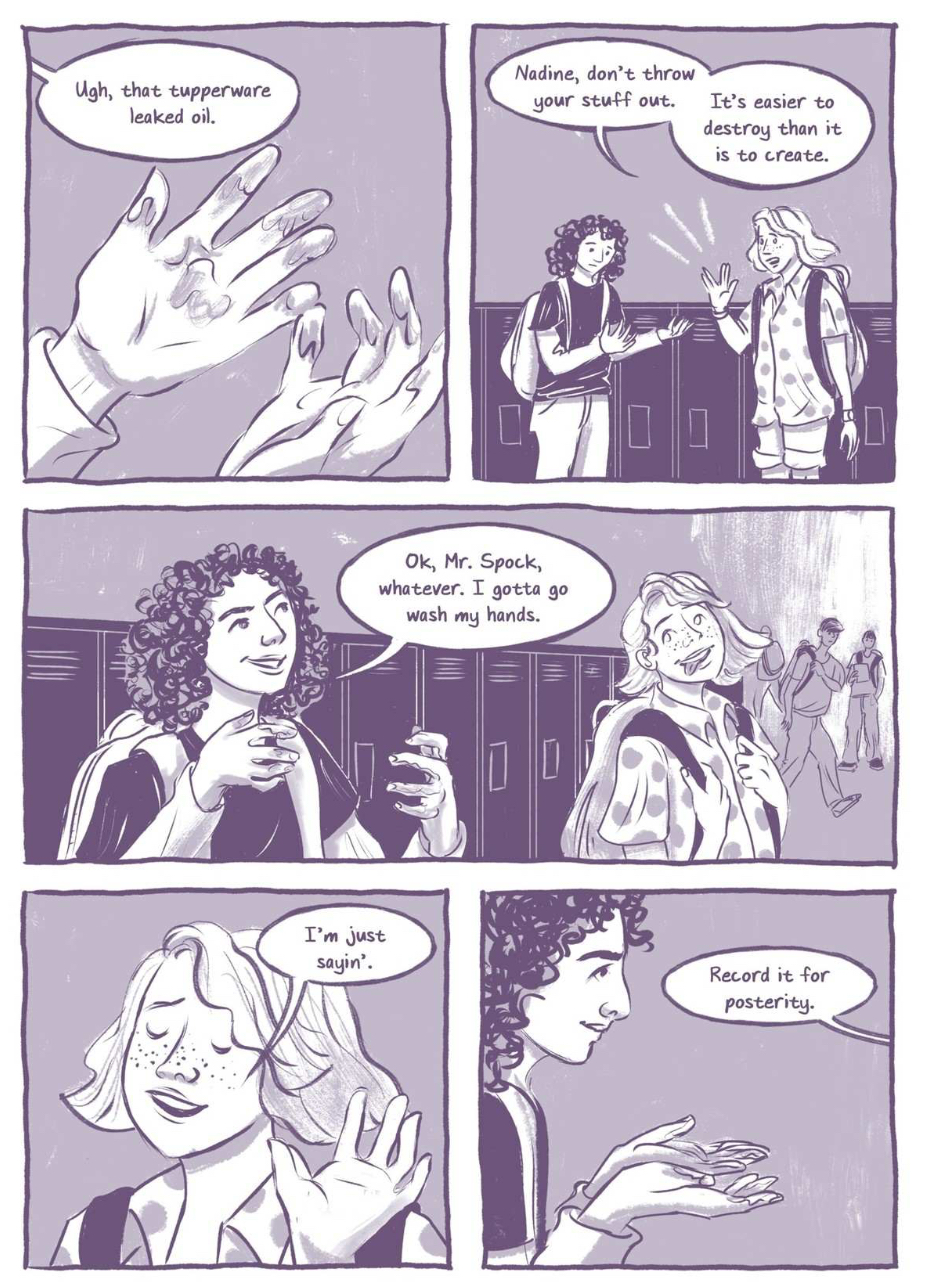
RA: I think that was really effective. Including a little bit of a high school drama, showing the Armenian club group on the trip, the relationship with your friend Ani—that was so good. I really think that people from other backgrounds can certainly identify with those kinds of conversations that happen in lots of diasporan communities.
NT: This will segue into another big question which is a conflict with stories around trauma—if as an author you want to create a story about trauma, or if you don’t want to. I think it was really awesome and trailblazing of you to just reject it and say, “I'm not going to go there.”
And we don't have to. I really love that you took Armenian culture and created something fresh and new and fun while celebrating the culture at the same time. I wondered if you could talk about some of your thought process around making that decision.
RA: I think it's good for both things to exist, right? And I think that's how you get to honoring the important stories, as well as just celebrating the simple joys. I think that overwhelmingly, stories of the Middle East are full of trauma and suffering. But joyful stories are the ones I wanted as a kid. Maybe it was short sighted to want to read things that were fun and adventurous, but I also wanted to create that to some extent. I wanted to celebrate Armenian joy.
I first saw it talked about with Black American communities where there's a lot of stories about slavery and trauma, but what about the joys of Black American culture? Let’s talk about that stuff and show people what there is. I think that hasn't happened yet for Armenians, so that was what I wanted to do. Hopefully that will raise up the experience of all these stories for everyone.
NT: Yeah, I think it will be really inspiring for kids in the Armenian community to read this story and see we're not defined by this one part of our history. Because our history goes back way longer than that, and it’s so rich. I really love that you took it there.
I have to say I was also really conflicted about going in and telling this story for the same reasons. I thought, “There are so many genocide stories, am I just going to be another one who's going to talk about the same thing?” But similar to you, I thought of the story that I wanted to see when I was a kid. And this was one that I did want to see.
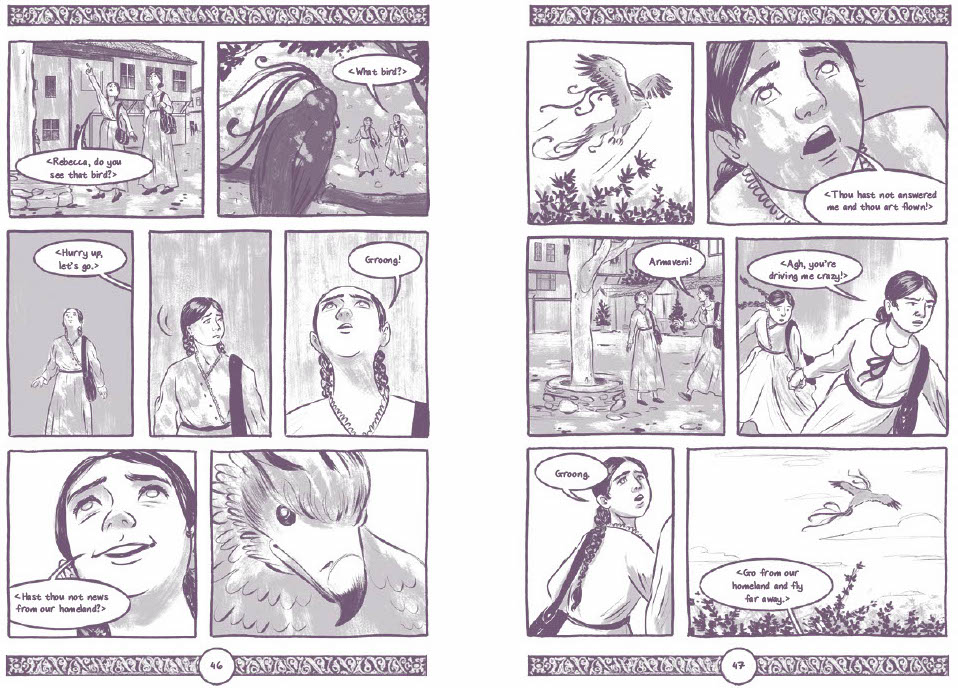
RA: I agree that I don't think I've seen an Armenian story that has the presentation your new graphic novel does where it's about a girl going on a journey to get the stories. There's a meta layer above just the stories themselves. Your experience was exactly how I experienced it, too—talking to grandparents and that kind of thing. So I think it is unique, and I do think it's special.
NT: And also, I wanted to do something in the comics format. I love comics so much and you love comics so much, and we both want to give it a shot and see if we can tell a story that will resonate with people. So I think a central inspiration is also the love of the medium.
RA: One quote that I wanted to call out is, “being Armenian isn't some checklist where you tick boxes off. We all want the same thing. To thrive. To be.”
I think both of our books at the core are about people figuring out what it means for them to be Armenian. And I think as children of survivors, that's all we want. All our family wants for us, really, is to succeed and to just do what we want to do and live freely. Was there a point where you felt like, “okay, this is what I'm doing. This is how I'm going to be Armenian. This is how I'm going to make a difference for you.” I assume making this book was part of it.
NT: Making this book was definitely part of it, for sure.
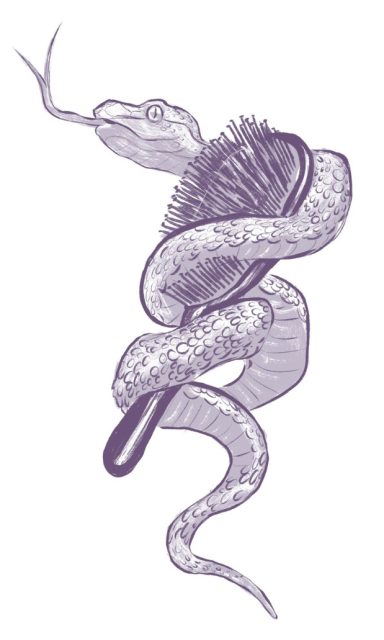
RA: That was another thing—throughout the book you have Nadine drawing as she goes through all these things in her life, processing the events. And it was fun to read that and be like, “Oh, I'm reading this book.” This is clearly the ultimate version of you doing that, right?
NT: Yeah, that was a fun little meta thing to put in there. Being “Armenian enough” is something I think a lot of us have struggled with here in the U.S. I read another book by an indigenous author where they talk about it as “cultural anxiety,” and I thought that was such an interesting term I hadn't come across before.
I speak Western Armenian but I never went to school regularly for it. When it comes to language, I feel like, “I don't speak as well as I should,” or “I don't read or write as well as I should.” There's so much pressure to keep our language alive and there's a lot of anxiety there.
RA: Yeah, that's the core. I never learned to speak Armenian growing up. I've started taking lessons as an adult, because I realized this is where it ends, right? If I don’t keep it up, then my kids won’t learn naturally. So I am trying to shore that up now. I wish I had cared more when I was young. Language is a really tough thing—it's a lot of work to learn and keep up, and you have to start at an early age, to some extent.
NT: Are there other places you felt some of that cultural anxiety?
RA: My family was pretty assimilated, so my Armenian community was just my family. When I went to college, that's where I found an Armenian club and started meeting way more Armenians. In Boston suburb Watertown, around where I’m based, there’s a big Armenian community. Then I realized how much I had missed out on and how different other people's experience or relationships with the culture was.
I felt like, “Okay, I can't make up for lost time.” But what can I do now to make sure that I'm cementing that identity and passing it on and doing something important in the community? So same as you, my answer was this book. Let me take the things that I've absorbed and present something that I hope will mean something to someone.
NT: I think you were beyond successful with this book. You say that you didn't really grow up with Armenian culture so much, but I could never tell from reading your book. It just shines with our culture and the language.
Let's go to something fun. If you were to throw a dinner party for your friends, what would be on your menu?
RA: I do that a lot. If it's summer, I’m making a bunch of kebab and khorovats (barbecue). I love mutabal (grilled eggplant). Sarma and dolma is my other classic go-to, with some madzoon (yogurt) to dip it into. That's more winter-time.
I learned some dishes while doing this book. The pivotal dish in the book that they finally end up using is one that I didn't know before working on this book. But now I've cooked it a lot and it's really flashy and cool. Other Persian dishes like tahdig are great, as well. I practiced cooking a lot while doing this book—dishes that are really fun to cook and to eat, and that I think taste fantastic.
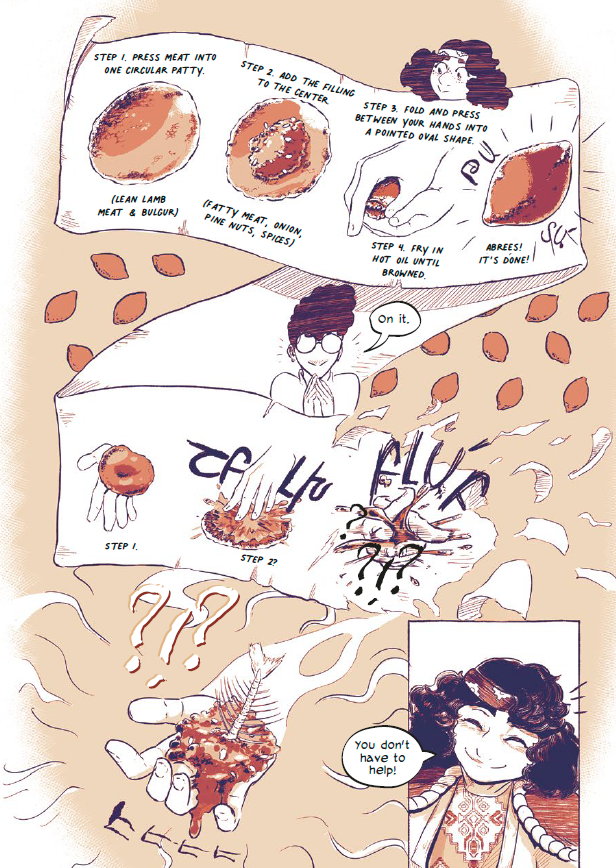
NT: That's a great revelation that you practiced your dishes for the book! I didn't think to ask that, but I'm glad you mentioned it. There are a few places where you included a recipe card, and you made a panel out of it. It was so cool to come across that.
RA: How about you? I don't know a lot of classically Bolsahye (Istanbul Armenian) recipes. Are there ones that stand out?
NT: Getting into food, some people will argue with you about food ownership, how a dish is from a certain region. We all grew up eating this cuisine that we love, and that’s shared throughout a large region.
I just got together with my family last week, and we made mantı together. That’s one of our favorite winter dishes. For springtime, we'll start making midia dolma, which is stuffed mussels. And that's a very Bolsahye—Istanbul Armenian—thing. Then the last one I'll say, is su borek, which is basically like an Armenian lasagna. It has layers of dough and gooey, melty cheese and butter and just like the best thing you've ever eaten.
The post Telling Armenian Stories That Will Leave You Hungry For More: Nadine Takvorian in conversation with Robert Mgrdich Apelian appeared first on The Comics Journal.


 Hello, my name is Jack Sparrow. I'm a 50 year old self-employed Pirate from the Caribbean.
No comments:
Post a Comment