


The auteur Hermann Huppen, who signed himself "Hermann," passed away in Belgium on March 22. Huppen, 87, was comics royalty — one of those pioneers who transformed "kiddie comics." Sanctified ten years ago by Angouleme's Grand Prize, he leaves behind 60 years of work, represented in 120 albums. Although he had battled cancer over the past two years, Hermann refused to set aside his tools. In autumn of 2025, he even published Les Larbins (The Flunkies), the 42nd volume of his Jeremiah series.
Hermann's Grand Prize is only the fifth bestowed on a Belgian and there has yet to be a sixth. The list of his fellow countrymen already honored includes som mighty names: his close pals Franquin (1974) and Jijé (1977), as well as Morris (1992) and François Schuiten (2002). But Hermann remains the sole member of the "école de Bruxelles," the artists linked to Tintin magazine, to be thus anointed.
Hermann's capacity for work was legendary. "A day without drawing," he told the journalist Hubert Leclercq, "is a day wasted." It wasn't just talk. On April 30, Le Lombard will publish Cartagena, Huppen's last completed tale. It was scripted by his son Yves H., who had been his collaborator for decades.
Huppen was an autodidact who found comics by chance. Born in 1938 in Bévercé, a village in the Ardennes close to the Belgian-German border, he was trained for industrial decoration. He employed those talents at Brussels' Expo '58 (the source of that city's well-known Atomium monument). He also worked briefly in Manhattan and Montréal. But, when he returned to Belgium, Hermann settled down. In 1964, he married Adeline Vandooren, whose brother Philippe would join Lombard, the publisher of Tintin. At the time, however, Philippe was running a Boy Scout magazine called Plein-Feu.
Many cartoonists had already made a start with the Scouts, names like Hergé, Jijé and André Franquin. Plein-Feu was adventurous, too, and Vandooren soon got his brother-in-law on board. Right away, he was noticed by one of Franquin's friends.
This was Tintin's main scriptwriter, Michel Regnier. Better known as "Greg", Regnier wrote and drew in numerous genres, and he created classics like Achille Talon. When he encountered Huppen, he had just begun to run his own studio. It was a rented, two-room apartment packed with young artists. Most of them shared one thing: a childhood shaped by the legacy of Belgium's Occupation. The public their adventures addressed were still facing post-War problems, some of them social, others psychological. Against this, the studio's best tool was imagination. The virtual glamour they devised thus featured exotic heroes –—cowboys, sailors, spacemen and spies — but also comic takes on ordinary life.
A slew of artists passed through Greg's pair of rooms: Robert "Bob" Pire, Luc "Dupa" Dupanloup, Luc "Mazel" Maezelle, Jean "Mittéï" Mariette, Jean-Marie Brouyère (known as "Jean Roze"), Daniel "Dany" Henrotin, Philippe "Turk" Liégeois and Bob de Groot. Some were Greg's ex-classmates, others simply pals. Dupanloup was recommended by the local butcher, Maezelle by a niece of the cartoonist Sirius (Max Mayeu). De Groot and Turk, who lived close by, had simply installed themselves.
Many handled Greg's backdrops and minor characters and not all of them became household names. But they had a huge effect on Hermann. Then 26, he felt intense pressure to compete and succeed. As he remembered, "Greg had me go over work again and again. He would eye my sketches, then, with countless marks, highlight my mistakes in red … and there were plenty. I was always in a sweat, but that's how I learned my trade."
This was the era of many such studios, some of them much more formal than others. They included the team surrounding Hergé (Morris, E.P. Jacobs, Bob de Moor, Jacques Martin and Roger Leloup, all required to work in suits); that of Franquin (Roba, Jidéhem and Fournier), and the group assembled by Peyo (Derib, Wasterlain, Gos and Walthéry). Publishers like Lombard and Dupuis ran workshops of their own. All of them nurtured both esprit de corps and future stars.
The rivalry that opposed Tintin and Spirou – Tintin's "school of Brussels" versus Spirou's "school of Marcinelle" – was, at the outset, mainly a matter of style. For, setting aside geographical distance (and Hergé), most of the artists belonged to a single world. They all traded contacts and colorists, cigarettes and landlords, pints of beer and professional advice. They loaned each other money, knew each other's wives and frequently pitched in when there were emergencies. Most were supported by now-famous editors: Maurice Rosy, Jijé, Jean Doisy, Yvan Delporte and Goscinny. No one was sitting alone, just staring at the boards.
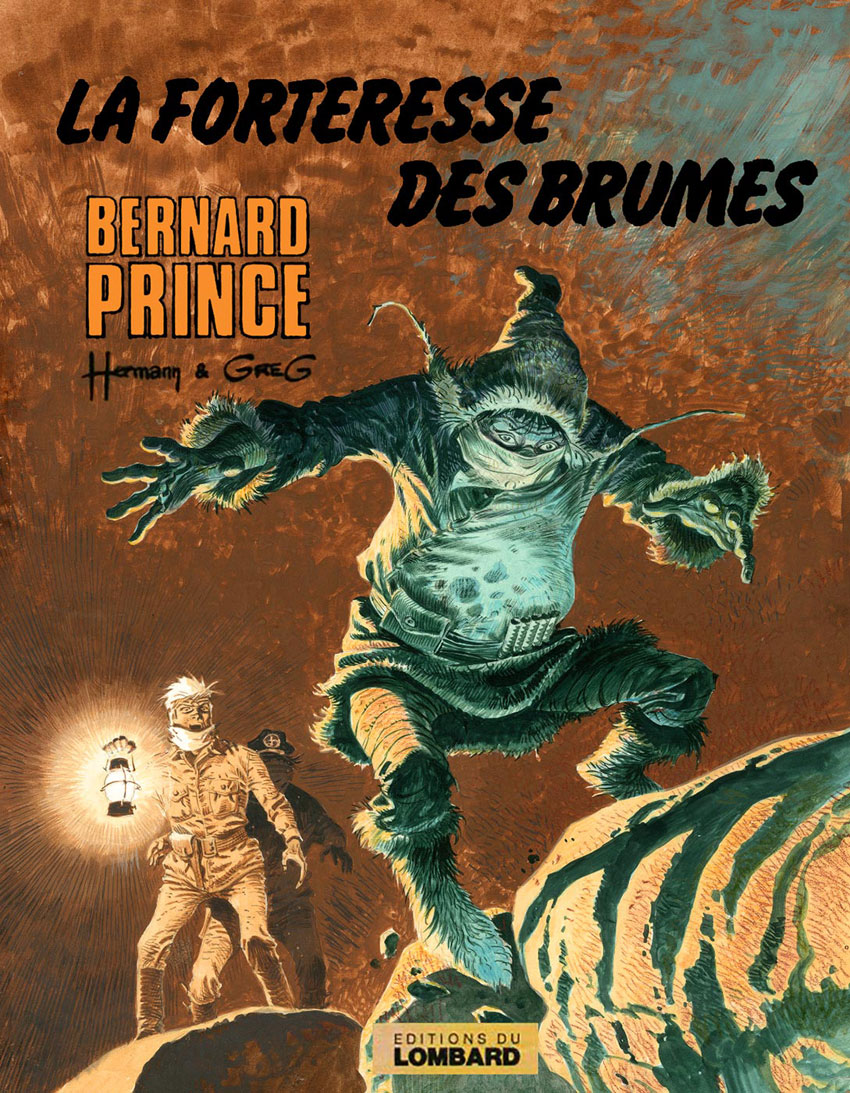
In 1966, Greg penned a series especially for his protégé. This was Bernard Prince, the tale of an Interpol agent turned explorer, who roamed the globe on a sloop called the Cormoran. Prince had two companions: the young Pakistani Djinn and Barney Jordan, a whiskey-swilling sailor. This, of course, echoed Tintin and Captain Haddock. Yet, from the start, it had hints of the Hermann to come. For what really made the series a hit was its villain, the grotesquely outsize "General Satan."
In 1969, Prince was followed by Comanche. Along with Moebius' Blueberry, Jijé's Jerry Spring, Tibet's Chick Bill and Morris' Lucky Luke, this would help remake the Western. Greg, however, made its title character female. "Once Greg had given Hermann Comanche," noted the Belgian critic Alain Lorfèvre, "his brushwork somehow seemed to liberate itself."
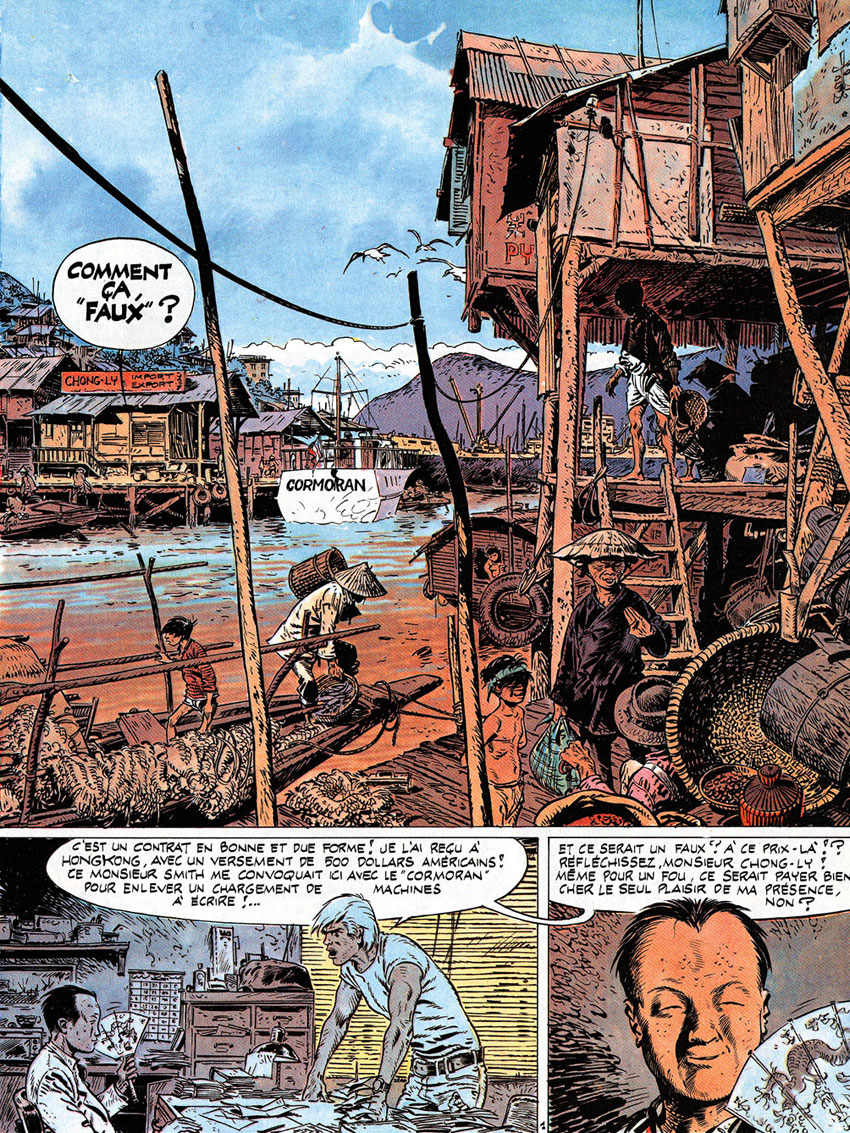
Jean-Marie Dersheid put it another way: "Ever since Comanche, every page by Hermann has been distinguished by its energy. He can use wide shots, close-ups and reverse angles every bit as well as someone like John Ford. His complete control over them gives his tales fluidity. But the real beauty of his work is its multitude of detail and his expertise in deploying it."
Dersheid was right. Hermann loved to draw the things others left to assistants: dense, snarling undergrowth, churning mud or ramshackle buildings. He also saw how the natural world could be as ruthless as any thug. In Volume 7 of Bernard Prince, the setting is an island completely ravaged by fires and all of Comanche's fifth tale occurs during torrential rains. Nor did protocols of the time hold him back. (Early on, Hermann persuaded Greg to have his hero shoot an unarmed man.)
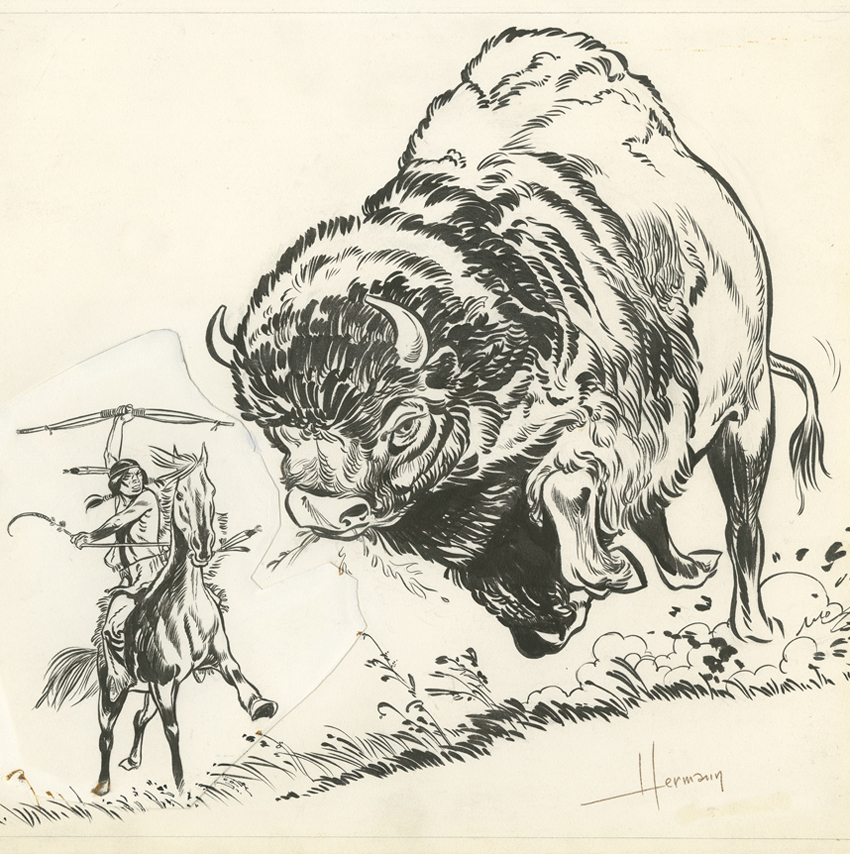
Huppen was just as adventurous with his tools, switching between sable brushes, nibs and, eventually, Rotrings. But whatever he used, his line remained incisive. He liked describing his style as "cinema dessinée" and in fact his skills were noticed by film professionals. In 1980, Huppen did a set of storyboards for Roman Polanski.
Hermann was tagged as a misanthrope from the start. But he seemed perfectly comfortable with the label. "Both humanism and God," he once said, "are as much our own invention as the bicycle pump. The difference being that a bicycle pump at least inflates our tires. That's all I've ever tried to convey … although there's a part of me that wants to shock the self-righteous and politically correct."
Other factors also played into Hermann's approach. At the moment his style was being formed, comics' pre-war heroes were colliding with the isolated loners of '60s and '70s cinema. The latter — enigmatic cowboys and existential detectives, social outsiders and deliberate marginals — featured in many of the movies Huppen loved, especially in works by Herzog, Kubrick, Leone, Kurosawa and Godard. Nor were media's changing archetypes confined to film. Before 1940, many heroes in Franco-Belgian comics had been knockoffs of American models. By the '50s and '60s, the country that had furnished such prototypes was deeply changed. Beneath its Cold War paranoia and racial strife lurked more personal, individual disaffections. These were exported through exemplars like James Dean, Holden Caulfield and the Beats.
At the same time, America's post-war boom supercharged U.S. industry, and the results were pouring into Europe. Belgian cartoonists were as dazzled as everyone else by the new music, movies and consumer goods. But they could hardly erase or forget their youth. Dogged from infancy by his German name, Hermann was forced to spend his years at school masquerading as 'Armand'. For him, the epoch's dislocation was intimate, and it would always continue to affect his art. His debut as an auteur, 1979's Jeremiah, embodies the fact.
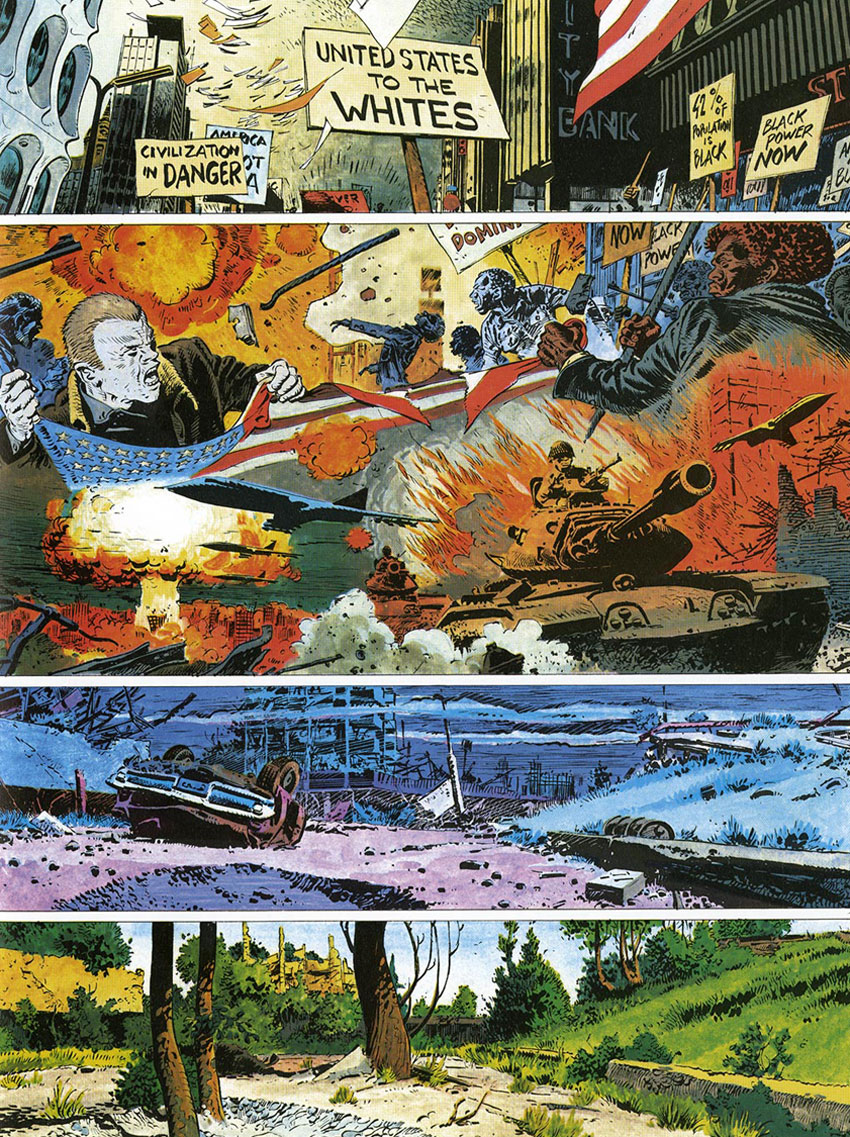
The Jeremiah of its title is an orphan. Clearly, he's also a son of the spaghetti western. But his American frontier isn't some random wilderness. It's the landscape left over from a civil war, one in which U.S. racial hatreds have caused atomic disaster. Initially published as a strip in Zack, Jeremiah was picked up by Metal Hurlant and, after 1988, issued by Dupuis.
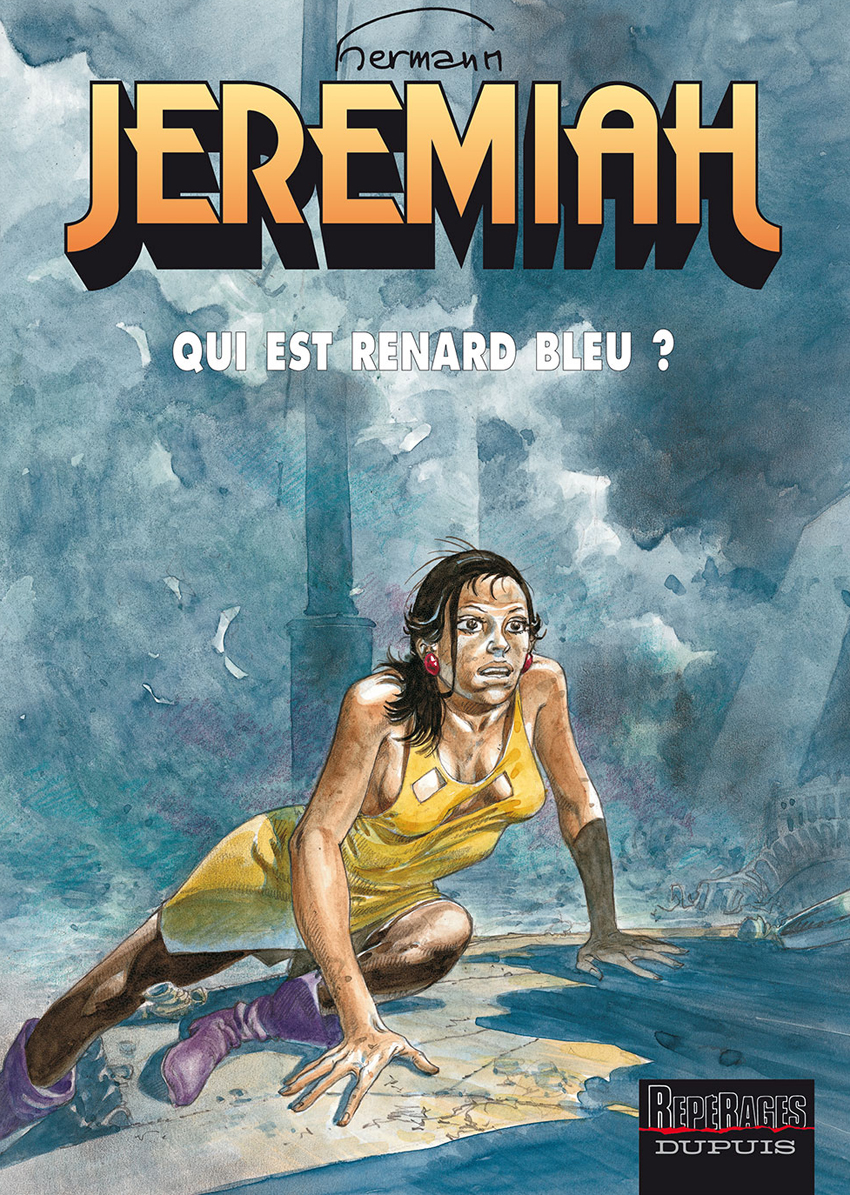
Jeremiah has all the graphic panache of its time — and the oddball futurism then being birthed in comics. But it also marks a more specific first: the systematic use of couleur directe. Couleur directe is color application straight onto boards, rather than on "bleus" (the analogue era's coloring templates). This technique, which increased both control and nuance, was pioneered by Hermann in 1995, for his anti-war album Sarajevo-Tango. Right away, couleur directe became his full-time practice.
What the Jeremiah series best capture is how zany the famous transition to "adult comics" often looked. Its cowboy hero and his hooligan sidekick drift between modern encounters, meeting up with racists, offbeat sects, profiteers, dictators — even hedonists out of Fellini. Each, however, also wrestles with true love and its bourgeois obligation to "settle down," As Jeremiah ages, readers also learn his real problems stem not from apocalypse, but from a puritanical childhood.
It's a peculiar series, and a large chunk of this peculiarity comes from its women. Because Jeremiah features plenty of casual sex (not to mention prostitution, peep shows and sex toys), its range of female figures can seem surprising. All have sexy, muscular bodies equal to those of the men, but Hermann's girls are miles away from Peellaert's Jodelle, Robert Gigi's Scarlett Dream or Forest's Barbarella.
Almost all of them look mixed-race or indigenous and this difference led to many years of derision. Critics lambasted Hermann's women as "mannish," "unlovely" creatures, "devoid of any charm." At best, they were labelled cageots, ugly plain Janes. Even today, they form an unexpected line-up. At one end of Huppen's harem is Olga, a fast-food server who exploits every man and, at the other, a freckle-faced adolescent who resembles (and is named for) Gatsby's Daisy. In between are Comanche (Verna Fremont), rugged Alex (who — shades of Jane Goodall — cares for both her father and a troop of chimpanzees) and a hot-tempered character called Gazoleen, an escort girl with an enterprising brain. There's also Lena, who Jeremiah nearly marries and whose fancy background fails to halt her moral slide.
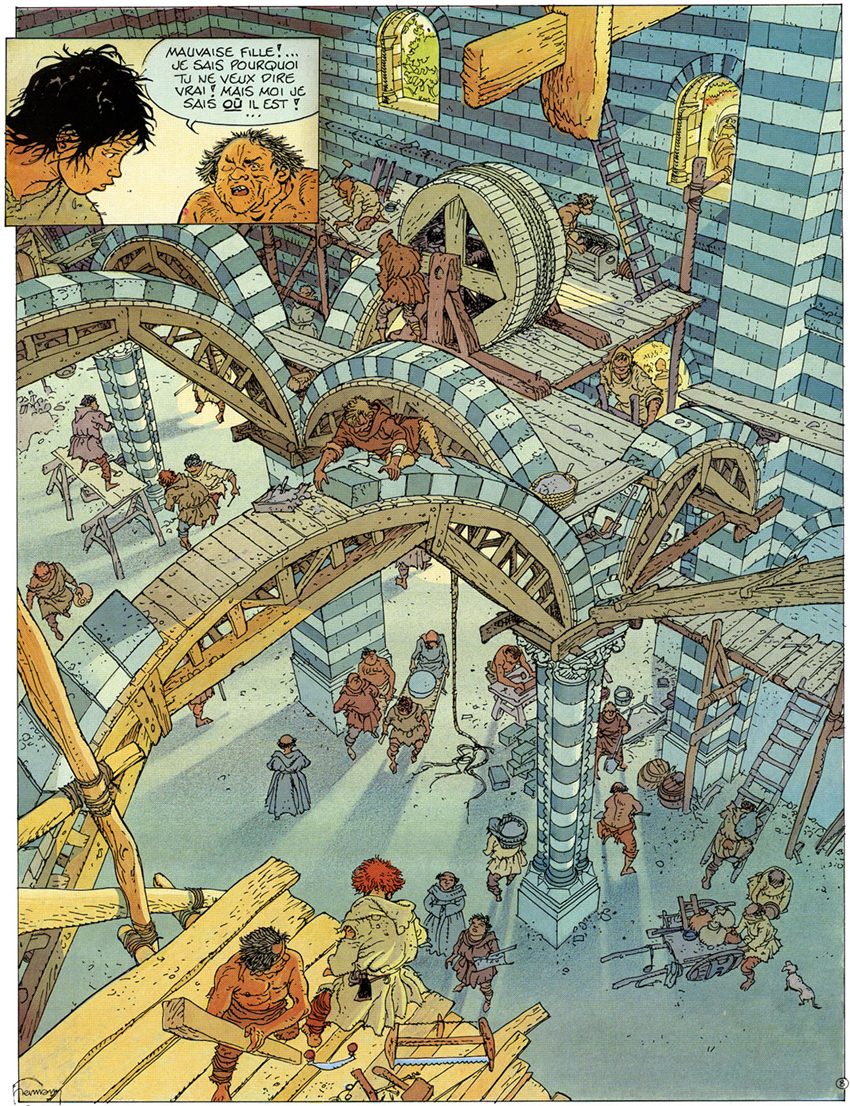
Hermann's medieval epic, Les Tours de Bois Maury (1984-2021), features a similar roster. It has Assunta, a young (and very dark-skinned) Sicilian noble, the peasant Babette, who gives her life to save her suitor and Eloïse, a crop-haired avenger handy with a crossbow.
By 2016, when Angouleme honored Hermann, views about these women had changed considerably. But it wasn't for the better. That year was one filled with argument, accusation and strident feminist demands regarding women in comics. Huppen's Grand Prize was, as Le Monde put it, "not quite to everyone's taste." Yet the artist himself was, as ever, impenitent. "All this calumny is not completely unfair; I've always been criticized for my pessimism. But that's just how I interpret the world … I create by instinct and I'm no intellectual. Still: I've never put bimbos in my stories. I prefer to give my women a bit of character."
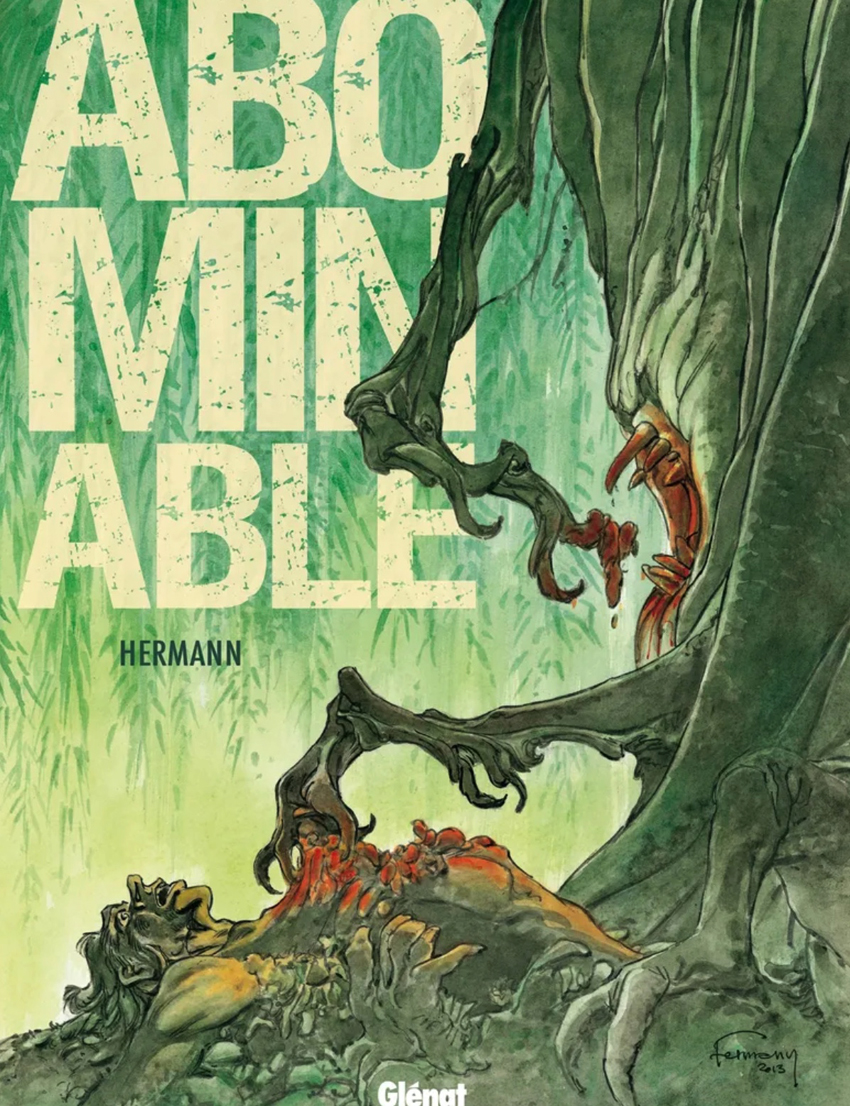
Every six months, Hermann produced an album. For fifteen years, his productions alternated volumes of Jeremiah with those of Bois Maury. In addition, there were one-shots like the 1988 anthology Abominable. Billed as a collection "out of Hitchcock and Argento", this took its title from a previous Huppen story. That vignette, re-titled L'Aimez-vous saignant ou bien cuit? (Do You Like It Well Done or Still Bleeding?), was originally published under a pseudonym. It trails a vigilante as he finds and kills — one by one — a gang of mass murderers. Inspired by Charles Bronson's Death Wish and the Manson killings, its violence reaches a level rare for Euro-comics of the time.
Hermann had intended it as the first book in another series. But he soon pulled the plug on that idea. "Stories concerned only with violence," he told a journalist, "are a little like porn. Very soon, you realize you've had enough." Still, his bleak perspective racked up plenty of sales and, in 2014, Abominable was re-issued.
But there was always more to Hermann than holocaust. His 1981 Nic, for instance, shows a softer side. Nic is a three-volume update of Little Nemo, scripted (under the name "Morpheus") by Vandooren. It was first intended for another artist and Huppen almost passed on the project. But then he showed some tentative sketches to Franquin, who raved about them. While, in the end, Nic proved too poetic for Hermann's public, the artist always remained extremely fond of it. When the city of Brussels established a "trail" of BD murals, his contribution was a four-story frame from Nic.
Hermann's art is now regarded as the oeuvre of a master. It features in top-shelf auctions, is celebrated by works like 2024's Revoir Comanche, and enjoys pride of place in exhibitions such as "The Golden Age of Belgian Comics." For "Golden Age," a wealth of modern BD stars agreed to discuss the pioneering greats. Cartoonist Frank Pé, who, as a kid, worshipped Huppen's work, had this to say:
What I once thought so natural now seems utterly foreign to any such term. Because Hermann's drawing is never realistic; it's the polar opposite. All you have to do is look at General Satan's face. Anyone who's after for exactitude finds only errors and approximations in it … Yet, it's this very space, the place between appearance and truth, where our individual worlds receive a welcome, where we find ourselves in harmony with the author … It's like the way an instrument's cords vibrate to the sound of a voice. When you achieve that kind of agreement, you know both the unity and the illusion are perfect. Hermann convinces us that his world of paper is just as rich, as fertile and as infinite as the real one.
People pestered Hermann about retiring for years. But his answer never varied. "Don't ever mention that word. It would kill me! My entire means of expression is the bande dessinée." Seven days before his death, he reluctantly entered the hospital. But, on his drawing table, one page was left behind. Meant for the next Jeremiah, it contained a single frame — and that frame was perfect.
The post Hermann, hero of the hard boiled, 1938-2026 appeared first on The Comics Journal.


 Hello, my name is Jack Sparrow. I'm a 50 year old self-employed Pirate from the Caribbean.
No comments:
Post a Comment