

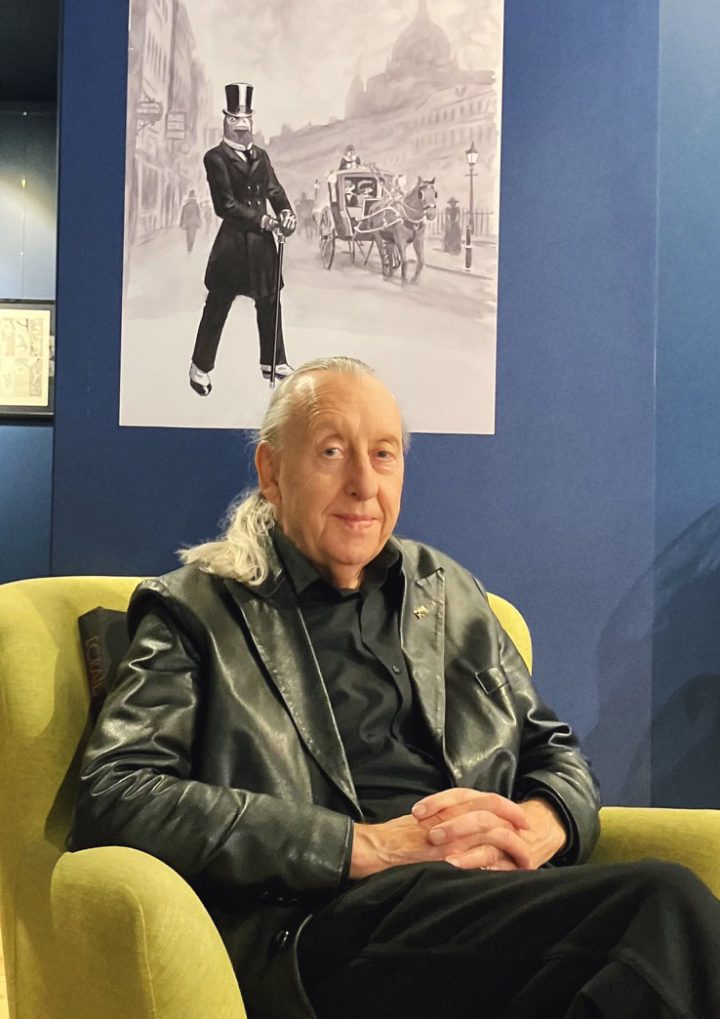
In a storied career that’s impressively lasted for over fifty years, Mr. Talbot has been dubbed the “David Bowie of Comics” by his esteemed peers for his coveted ability to experiment and excel in every style and subgenre he’s tried his hand at—both as an illustrator and a writer. Recently, he’s opted to return to his acclaimed Grandville series, a steampunk anthropomorphic detective-mystery saga set in an alternate history where France is the predominant superpower, with a spinoff titled The Casebook of Stamford Hawksmoor. The book is a prequel following fan-favorite Detective Inspector Stamford Hawksmoor as he investigates a vicious serial killer on the streets of London, as France is about to end its occupation of Britain. Mr. Talbot, an old friend, agreed to an online interview from the basement of his Victorian terrace in Sunderland amid his busy schedule in February to discuss The Casebook of Stamford Hawksmoor, as well as the recent string of remasters and rereleases of his classic comics, upcoming projects that have taken the place of the ones that failed to materialize, and, of course, updates on the long-awaited adaptations of some of the most iconic graphic novels in British comics history. Join us as we delve into the underappreciated stripography of one of the undisputed masters of the art form!
J.D. HARLOCK: Fans were under the impression that you were done with the world of Grandville. Now, eight years later, you've returned with The Casebook of Stamford Hawksmoor. Did you always have this spin-off in mind?
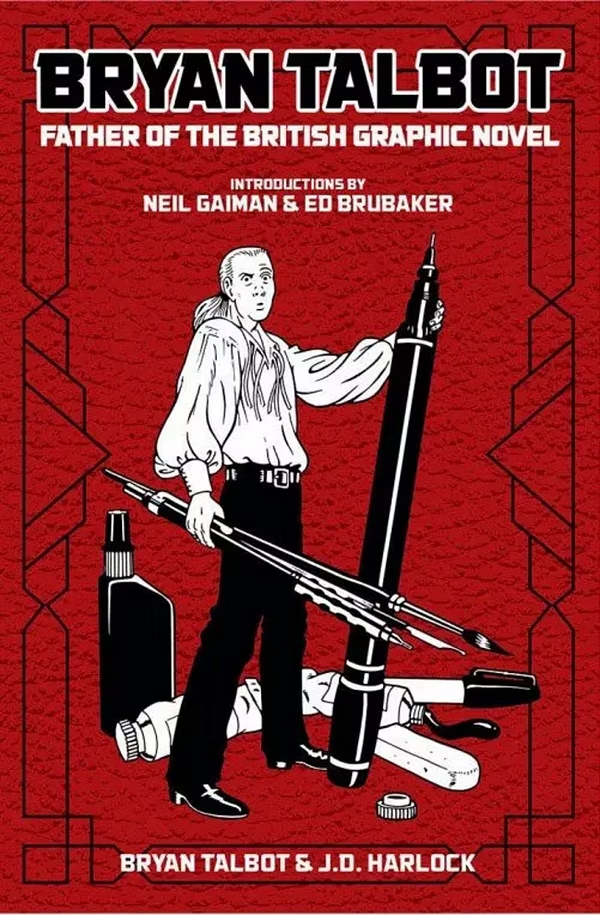
BRYAN TALBOT: I knew that Grandville: Force Majeure would be the final LeBrock adventure. I tried to make each stand-alone story different from the last. Even though my personal favourite is Grandville Noël, I genuinely think that each installment was better than the one before, and I wanted the series to go out on a high note, rather than risking it becoming a repetitive soap opera. Not only that, but Grandville: Force Majeure was a deliberate culmination of all the major plot threads to give a satisfying final volume. It was only five years later that I started wondering about LeBrock’s mentor, introduced in the final volume, and what he was doing twenty-three years earlier during the dying days of the French occupation of Britain, at the height of his detective career. At the time, I was drawing Armed with Madness, my wife Mary’s biography of Leonora Carrington, and working with you on Bryan Talbot, Father of the British Graphic Novel. You may remember that you were very keen when I mentioned that I’d had an idea for a Hawksmoor story, and that spurred me on to think seriously about it. I knew from the start that, if I wrote a prequel, it had to be very different both in ambience and execution from the Grandville stories, which it is.
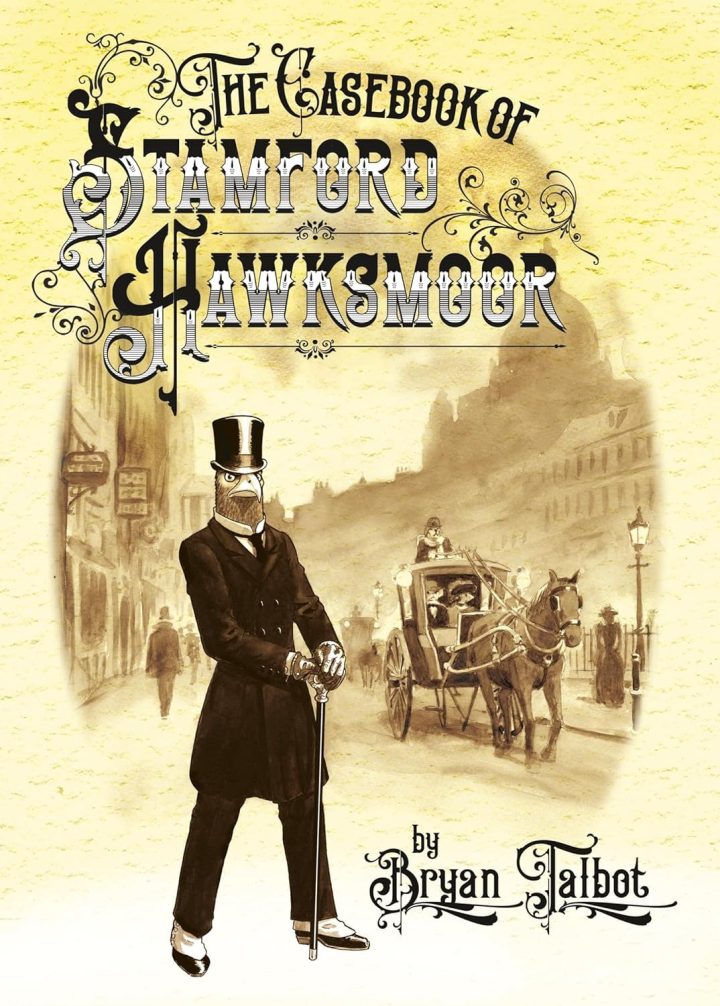
Stamford Hawksmoor had such a memorable presence in his relatively brief appearance that I immediately understood why you wanted him to be the lead at the time. However, one thing that stood out after reading the prequel was that he had a far more sombre air to him in this. In fact, that sentiment applies to The Casebook of Stamford Hawksmoor as a whole, and that's what made it such a compelling installment. As you were conceptualizing it, in what ways did you intentionally try to differentiate The Casebook of Stamford Hawksmoor from the mainline series?
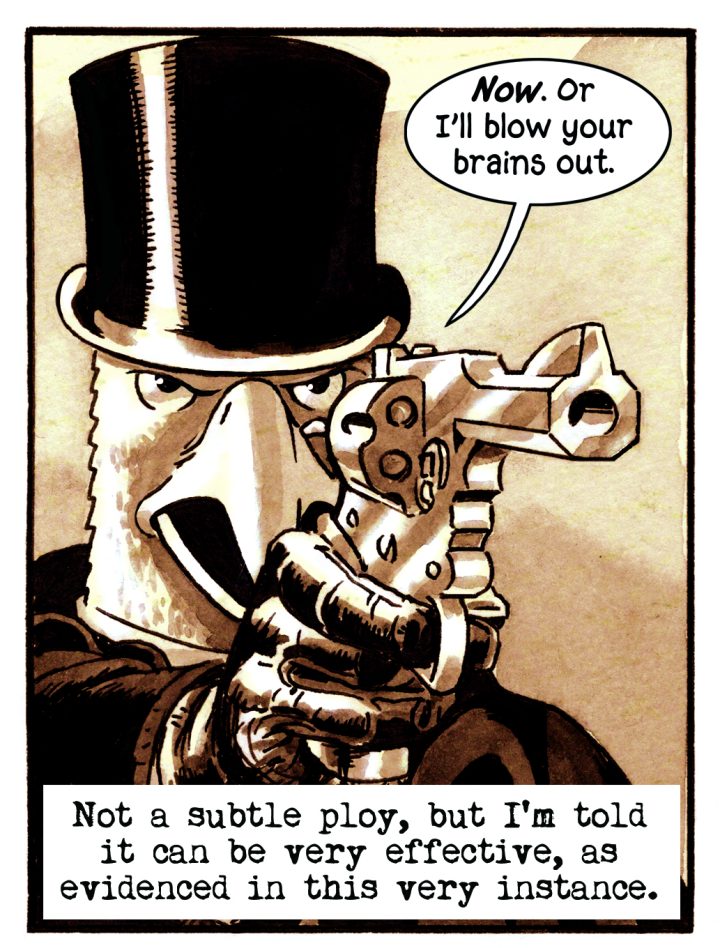
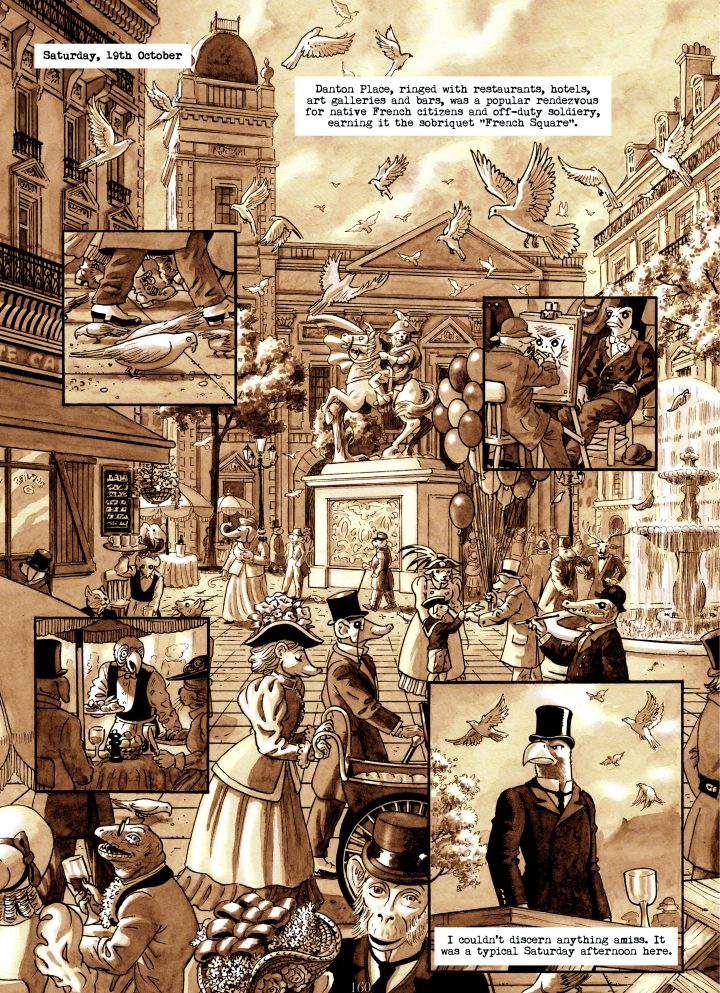
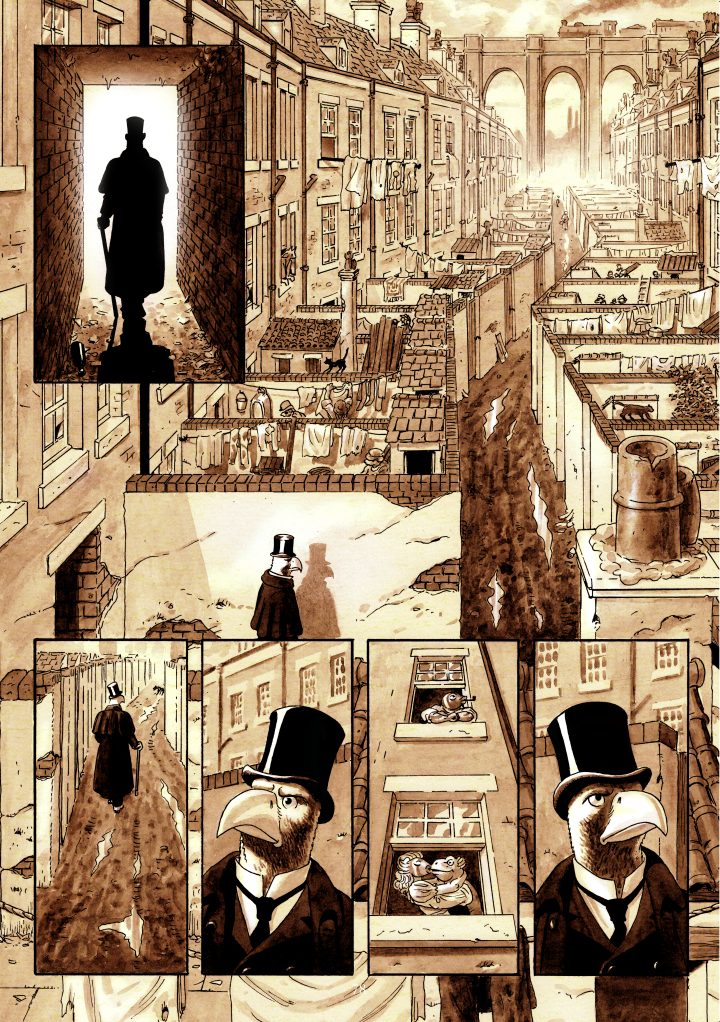
The Casebook of Stamford Hawksmoor takes place twenty-three years before Grandville, the first installment, so the art had to reflect this. Rather than the fully digitally painted style overlaid with ligne clair penwork that I had used in the Grandville series, I drew The Casebook of Stamford Hawksmoor in fine ink line with grey watercolour washes, which I then tinted sepia on the computer to evoke 19th-century photographs. The setting is no longer an imaginary Belle Epoque Paris, but a very Victorian London, so, instead of the Art Nouveau styles and Edwardian clothing, there’s high Victorian design and 1890s fashion. It also takes place before the steam technology revolution, the results of which we can see in Grandville, so it’s all horse-drawn hansom cabs, street-sweepers, and pea-souper fogs. Another big difference is the narration. In LeBrock’s stories, all the text is the spoken word in balloons. Here, we have text boxes with Hawksmoor dictating his own story and musings in a faux-Victorian style. And, as you said, the story, while containing exciting and violent scenes, is more thoughtful and tinged with sadness, despite his occasional witticisms and sometimes outrageous actions.
What new influences did you draw on for this installment?
Although I did a lot of visual research, collecting old photographs and illustrations, I did very little to get into the narrative style, save for re-reading a little Charles Dickens and Arthur Conan Doyle. I read A Christmas Carol again, for the first time in over 60 years. It was, in fact, the first "grown-up” book I ever read, when I was eight or nine. I also read, for the first time, Sketches by Boz, Dickens’ first published book, plus a few short stories from Conan Doyle’s The Adventures of Sherlock Holmes, a book I’ve read several times, not to mention the various TV episodes and audio dramas based on it I’ve enjoyed. I don’t think that these fed into the story directly; they just got me in the appropriate frame of mind to approach the script. The faux-Victorian preface was great fun to write and, once I had the idea, it practically wrote itself.
Are you considering any other spin-offs at the moment? Personally, as a citizen of a Francophone country who's also into steampunk and westerns, I was particularly fond of Chance Lucas, the Lucky Luke stand-in, and it would be interesting to have a human protagonist take the lead in a “cattlepunk” setting.
Not at all, especially not one featuring Chance Lucas, as much as I like the character. Having a pastiche of Lucky Luke in one volume of Grandville was legitimate “fair use,” but doing a whole story starring him would be pushing it. Interesting idea, though!
Are there any plans for Stamford Hawksmoor beyond this installment?
After I finish drawing my current collaboration with Mary, which is currently titled, Lo! An Amazon! The Interesting Narrative of the Life of Mary Wollstonecraft, I’m planning on drawing three Hawksmoor short stories, two of which I’ve already written. They take place after the events chronicled in The Casebook of Stamford Hawksmoor but before the first installment of Grandville. They’ll either appear in one graphic novel or, if I can interest a publisher, a series of comic books first. I’ve not done a regular comic for some while. Fables issue #11, which was titled Bag o’Bones and released in 2003, was the last, so it would be nice to do some more. I’d like to do the covers in the style of the 1940s posters for Universal Pictures’ Sherlock Holmes film series.
I'm surprised you’re returning to comic book series after all these years. You've tended to alternate between a book with Mary and one of your own for more than a decade now. Once the Hawksmoor shorts are completed, are you returning to graphic novels?
I think that I’ve more or less finished with graphic novels now, after I finish Mary’s next book. They take a long time to draw, and I’m not getting any younger.
You’ve been such a driving force behind the development of the British graphic novel for decades now that it’s hard to imagine a future for it without you. Are you considering putting down the pen and brush permanently, or do you imagine carrying on with serialized issues?
I'm never going to retire. I'll probably die on the job. Having a serialised comic version of the short stories seemed to be a nice idea, but I’ve not even approached any publishers about it. I envisage doing three stories: the two I’ve written and the one I’m currently working on. If and when they are all drawn, I’m hoping they’ll be published together as a graphic novel, so I haven't abandoned the graphic novel format entirely. If I can, I might even draw the heroic fantasy story that’s been in my head for several years. I do have a basic structure for the book that I did about fifteen years ago, which would come to two-hundred and twenty-three pages as it stands.
If that heroic fantasy story ever materializes—and I really hope it does, as I know it’s a project you’ve passionate about for a long time now—will you bring your unique ‘perspective’ to the subgenre, or will you play it straight?
It would be my own take on it, for sure. I’ve always imagined it in a sort of Bone-esque style. You know that I like a challenge and doing something different—resulting in The Tale of One Bad Rat, Alice in Sunderland, Metronome, and even me taking on the anthropomorphic genre in Grandville. A slightly cartoony fantasy story is something I’ve never attempted. I discussed parts of it a couple of decades ago with my old mate Jeff Smith, who thought it was a great idea. Unless he was being kind!
Considering how instrumental The Lord of the Rings and other medieval heroic fantasy works were in your development as both a writer and artist, I always thought it was a curious happenstance that you've never pursued the subgenre for one of your graphic novels after five decades in the business.
Frankly, I’m not that calculating. What story I write has always depended upon what has bubbled up in my noggin. It usually takes me a long time—sometimes years—to develop a story. I do love medieval architecture, after originally being taught it at grammar school, and can date a British church or cathedral, or different parts of it, to within fifty years. For a long while, I considered creating a Robin Hood graphic novel, going back to the original 11th-century tales. My first encounter with the character was in the British TV series, The Adventures of Robin Hood, starring Richard Greene, which ran in the 1950s, and I loved it. However, the folktale has been so flogged to death by Hollywood that I didn’t think I could do something unique with it.
Personally, I disagree. I think you can definitely bring something new to the table. I also don't think there's any oversaturation. Only four major adaptations have occurred in the last thirty-five years, and the older ones aren't well-remembered. Still, the overall consensus is that they tend to be very bad with obscene historical inaccuracies and, as a result, bomb spectacularly. Even if it never pans out, I'm curious to hear about the ideas you had for it.
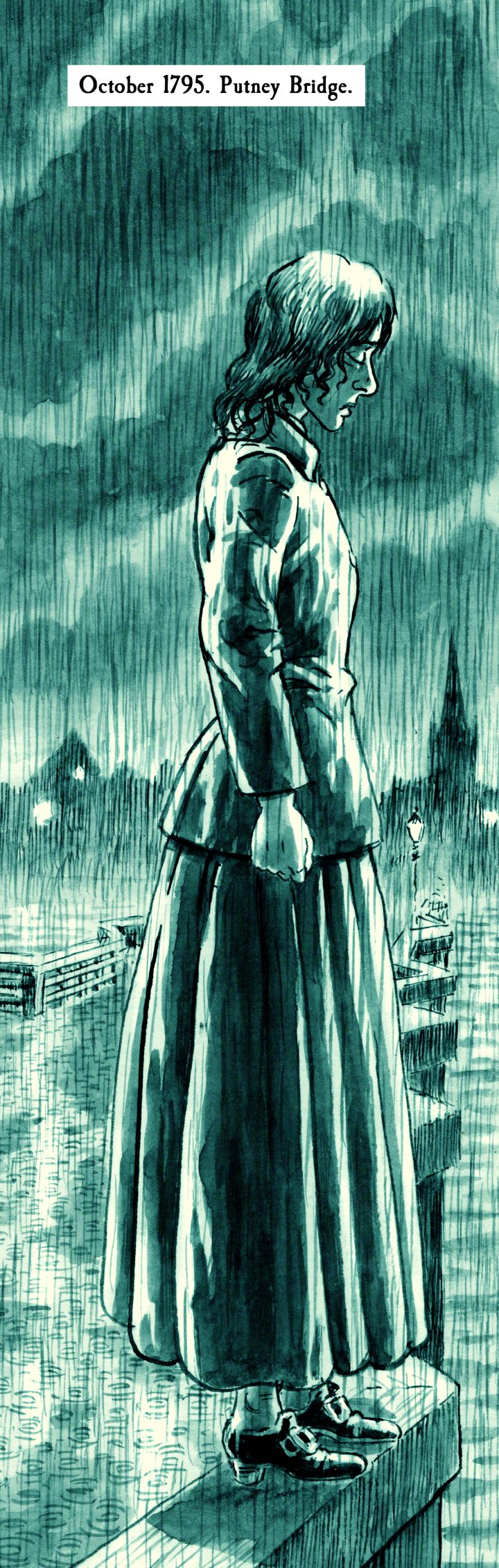
It would have been firmly set in the 13th century, would have contained contemporary historical details and elements of old English folklore, and would have played up the jungle guerrilla warfare tactics used by the outlaws.
It’s a shame it probably won’t come about then, as it sounds like the kind of adaptation that fans of the folk hero have been craving for as long as sequential art has been around. On that note, you’re known as one of the few artists in the industry who can write just as well as they can draw, so I’m holding out hope that it might see the light of day with you as the writer in collaboration with an artist who is equally talented. Once you're unable to continue drawing—hopefully later rather than sooner—do you think you'd continue to write comics that would be illustrated by others?
That would be great. I love developing and writing stories. That's the fun part. Drawing, for me, is very hard work and extremely time-consuming. If I ever stop drawing at some point—and it’s something that’s looking increasingly likely, as I now have arthritis in my thumb joints, so it actually hurts when I draw—I will continue to write. Whether I could produce enough comic scripts to do it regularly is another matter. I can’t churn out potboilers. I’ve never written generic stories and won’t start now. I like to think that my stories are special and that only I could have written them, which is why my graphic novels are developed slowly, usually over a number of years. Also, it would be very hard to find artists with whom I’d be satisfied. After the bad experience I had after writing The Dreaming four-parter, Weird Romance—the story of which I spent a lot of time on and was hyper-pleased with, and which looked like crap after it was drawn—I was put off writing for others for years. Admittedly, that was a result of the original artist dropping out and the replacement having to draw it under tremendous pressure at the last minute. Cherubs! worked so well because it was scripted with Mark Stafford in mind. I did all the page layouts, and the story suited his drawing style down to the ground.
With how much time you put into scripting Weird Romance, have you ever considered filing off the serial numbers and taking another swing at it? It seems a shame to leave it like that, as I also think it has a lot of potential and "romantasy" is "in" right now.
It wouldn’t be possible. It’s so bound up with The Sandman universe and characters that it would need a completely new story, which would defeat its objective.
Does Mary have any plans to continue scripting graphic novels once you stop illustrating?
Yes, she’s been checking out the work of up-and-coming female artists, but hasn’t approached any yet. She still isn’t sure what her next project will be yet.
I honestly can’t wait to see what she has in store for us, since I loved her work with Kate Charlesworth, but we have to return to the present. I wanted to dive into a topic that's become a fixation of the aging Anglo-comics readership, rereleases and “remasters.” Even though you're still as active as you've ever been, there have been numerous attempts to rerelease a lot of your underappreciated works over the decades in recent years. Let's start with one I've developed a particular attachment to, and which has become a particular sore point with how things panned out. The Nazz, a collaboration between you and the late writer Tom Veitch, has become a sought-after cult classic, and I'm proudly among the avid fans who sing its praises. Published by DC Comics in 1990 across four prestige issues, it hasn't been reissued in any form since then. In 2022, its fortunes seemed to have been changing when indie publisher It's Alive successfully crowdfunded an IndieGoGo campaign to have it collected for the first time—only for plans to tragically fall through due to the unexpected passing of its proprietor, editor Drew Ford, who had successfully pulled off similar campaigns in the past. It's been three years, and those who followed the campaign are wondering whether there are plans to revive this collection effort.
It was very sad what happened to Drew, who had a true passion for comics. Last year, I had some interest in a collection from an editor at Titan Books, who reiterated it several months later, but so far, I’ve heard nothing about it.
Due to the situation that unfolded with colorist Steve Whitaker on The Nazz after his excellent work on the first issue, there's a noticeable downgrade in the quality of the coloring after he had to vacate the post and hand off duties to a replacement. Are you hoping for any rerelease of The Nazz to address this issue with the coloring in the latter issues?
I doubt very much that any publisher would want to pay to have it recoloured. I thought it wasn’t a bad job, considering Les Dorscheid had to do the three issues at the last minute. He did some good work.
Was the original script for The Nazz adapted fully, or was there any cut content we missed out on?
It was adapted fully.
Considering just how much the tastes of the average comic book reader have changed since it was first released, do you think The Nazz still has a chance to find a larger audience when it's finally collected?
Who knows? I’m of the opinion that a good story will remain a good story, however old it is. I still think it's one of the best post-Watchmen superhero stories. If there are any publishers out there interested, do let me know!
Can't argue with that! In light of the success of the crowdfunding campaign after decades of the fan eagerness to finally see it collected, I’ve been wondering if we’ll ever experience more of the strange world of The Nazz. Were there any plans at some point for further stories in that universe?
Not at all. We never discussed it.
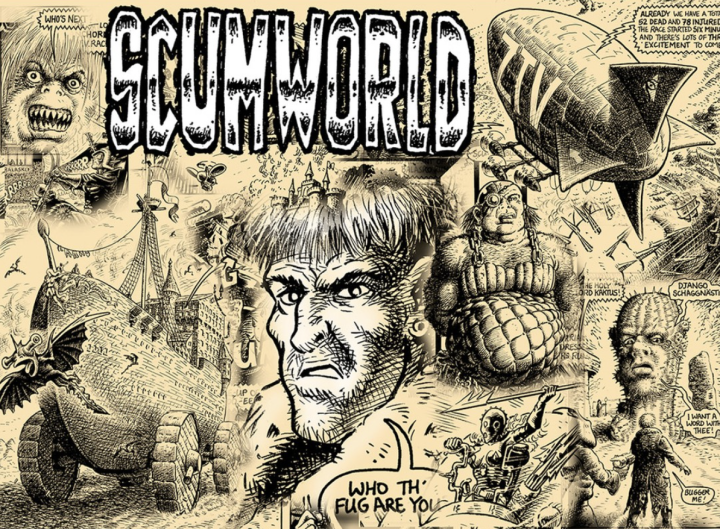
In 2023, you rereleased Scumworld on your fansite, which you remastered yourself, for a limited time. I think it’s an underappreciated space western, but it’s easy to see why it never found a larger audience: it was published in installments in Sounds, a defunct UK weekly music newspaper; it was never completed because the editor cancelled it; and it’s never been republished before. Before you handled it yourself, had any publishers shown any interest in republishing it at any point?
No.
What compelled you to rerelease it yourself?
It only came about after a longtime fan, Mic Streeter, spontaneously volunteered to scan all the strips he’d clipped from Sounds. The publisher never returned quite a few of the originals. I just took the opportunity to scan the pages I had. Daft of me, really, as it took several days out of my paying work, just so I have a complete copy.
What was your process and technique for this remastering process?
Simply cleaning up the original artwork and yellowing newsprint strips in Photoshop using the dodge tool for lightening and the brush tool to paint out smudges and marks with white, repairing any damaged or faded linework with black.
Are there any plans to make it available for sale in the near future?
James Robertson, my webmaster, is planning to put the PDF on sale for a couple of quid.
You had a full plan on how to end it, and it seemed to be nearing its conclusion before it was cancelled. Will you ever consider having it redrawn from scratch, either by you or someone else, to finish the story?
I’m not interested in redrawing it myself, but I wouldn't mind if another artist wanted to have a crack at it. I’d definitely change some of the language and make the strip a lot less puerile. It was a commercial job, and the editor gave me very explicit instructions to make it as outrageous as I could without the publication getting sued. “Make it as underground as possible,” he told me. He then proceeded to censor me most weeks! He stopped the strip when he moved on to become editor of Kerrang! magazine, saying that he wanted to take it there with him, but, after I’d drawn a couple of pages upfront, he suddenly decided that "it was too heavy for Kerrang!”
Do you remember what was sent into Kerrang! that was never published?
The first Kerrang! page, which was never sent back, was a one-page recap of the story so far for their readers who’d never seen the strip. I think I also drew a map of Scumworld for it, but it’s so long ago I can’t remember.
So, only the editor has them in his possession if he hasn't already lost them after decades?!
I very much doubt that the unreturned pages were kept by anyone.
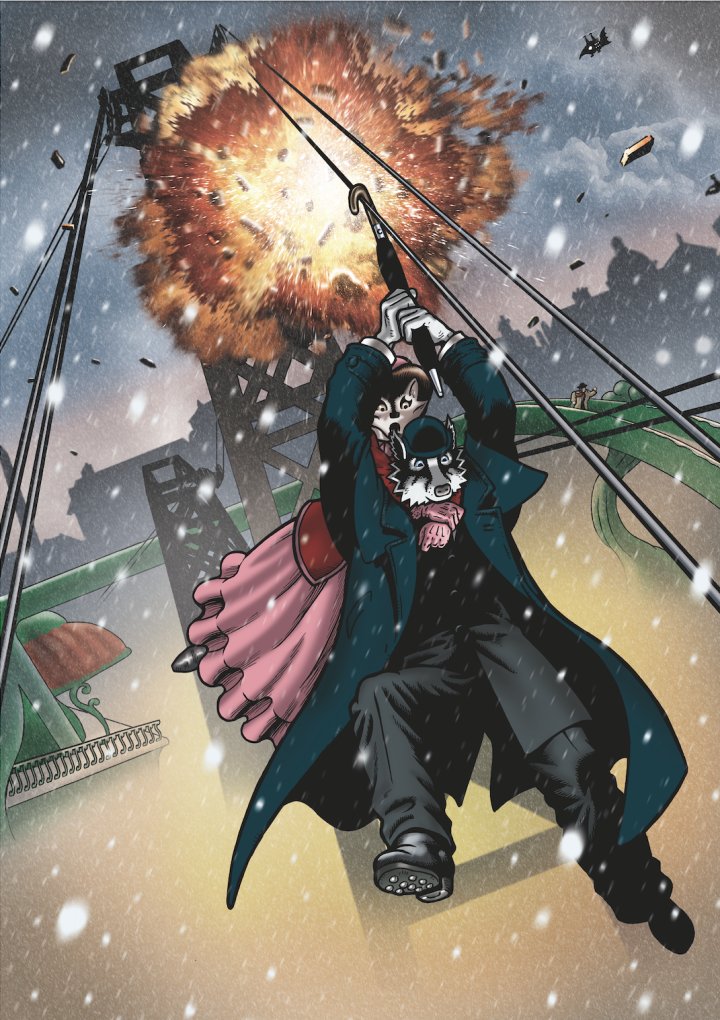
Finally, in 2024, Nat Gertler's About Comics reprinted one of your earliest works of BrainStorm! (1975), which hadn't been in print in twenty-four years, as well as Metronome, which was initially published under the pen name Veronique Tanaka back in 2009. Brainstorm! is one of the last great works of British underground comix, but it's not as appreciated as it should be. Have both found a new audience in recent months?
Unfortunately not. As soon as Nat republished them, Diamond Distribution went tits-up. As far as I know, all the stock is rotting in a warehouse somewhere.
That's honestly heartbreaking to hear. Shame that it had to happen to Metronome, especially since it’s never gotten its day in the light. You seemed very enthusiastic about the prospect of using the pen name Veronique Tanaka before you felt like you had to reveal your true identity in order to boost sales, which unfortunately didn't work. Did you ever consider reusing the Veronique Tanaka name if the book had taken off?
I had another story I’d developed for her style, but after Metronome didn’t sell well, I never drew it. This was despite the book being listed as one of the ten best graphic novels of the year in New York Magazine.
Care to elaborate on what you had in mind?
I didn’t spend a great deal of time on it. I just played around with it in my head while I was working on other stuff. According to the fictional backstory I created for Veronique, she was a conceptual artist. ‘Veronique Eroique” was going to be a short graphic novel account of a piece of performance art she had supposedly done in Paris. She was going to walk around the city dressed in a full burka, wearing only stockings, a garter belt, and high heels underneath, while being filmed from multiple angles before ending up sitting down to contemplate Delacroix’s Liberty Leading the People on the bench opposite it inside the Louvre. I suppose that it was a statement about how monumentally daft conceptual art is.
Couldn’t agree with you more there! Amid this new wave of rereleases, are there any other underappreciated comics of yours that you'd like to see rereleased in the coming years?
Cherubs! the supernatural comedy adventure I wrote, drawn by Mark Stafford, was published by Dark Horse in 2013 amid a blaze of no publicity whatsoever. I saw only two reviews, both of which were ecstatic, but it sold very poorly. It’s a shame because Mark is, to my mind, the most talented cartoonist in Britain. His work on the book is stunning, and the visual storytelling is exceptional. I was also very pleased with the script. The story involves a gang of bored cherubs who are framed for the first murder in Heaven and escape to chase the actual assassin, a renegade archangel, to New York, where they find themselves the last thing standing between humanity and the apocalypse. They discover a whole supernatural underworld in the city before descending into deepest Hell in a pastiche of Dante’s Inferno. The story was stuffed with a myriad horror film and other movie references, including skits of The Exorcist, Ghostbusters, Dirty Harry, Woody Allen, and The Warriors, and others too numerous to mention. The Forbidden Planet website review described it as “pants-wettingly funny”. So, why didn’t it sell? Nobody knew about it.
I agree with your stance on Stafford. His talent is undeniable. Besides what happened with Cherubs!, why do you think Mark Stafford's career never took off?
Who knows? He’s comparable to cartoonists who have made a big name for themselves, such as Bob Fingerman or Evan Dorkin. His work would be right at home in a Fantagraphics comic. Perhaps he’s a little too far from the commercial mainstream for some people’s tastes. His style certainly is the opposite of bland, and it has a genuine hard edge, but he’s endlessly inventive and has a wicked, very dark sense of humour. He’s done some great graphic novels, written by David Hine, including a brilliant adaptation of Victor Hugo’s The Man Who Laughs. By rights, he should be one of the most famous cartoonists/illustrators in Britain.
Are there any other talented cartoonists you've come across in your career who you thought deserved to have found more success?
There’s the highly talented Hannah Berry, the great graphic novelist who wrote and painted Britten and Brülightly. She found that they took so long to do, she’d make more money working at McDonald’s. I know how she feels. Half my income comes from royalties from work I’ve done over the last fifty years and artwork sales—one reason I don’t draw my comics on a computer. To Hannah’s credit, she did stick it out for three whole graphic novels before turning to short strips and illustration.
Speaking from experience, it’s the unfortunate reality of trying to make a living as a creative in this day and age, I’m afraid. Let's turn our attention to adaptations, which have become all the rage in Hollywood. Quite a few notable ones were produced based on DC properties you've been a part of, but I wanted to follow up on the major announcements regarding your creator-owned works, which we haven't had any updates on in a while. First off, any update on the highly anticipated TV adaptation of The Adventures of Luther Arkwright, or has that fallen through the cracks again?
That it did. The director, John McKay, had Scott Free, Ridley Scott’s production company, on board. I was told that a major TV company wanted to produce a science fiction adventure series, and the commissioning editor was deciding between John’s The Adventures of Luther Arkwright and another proposal. Then she changed jobs, and her replacement scrapped all previous plans to concentrate on their own. I’ve heard that happens very often.
That's unfortunate, as this one had the promise of being a prestige event. This one was announced even earlier, so I'm assuming it met a similar fate, but whatever happened to the live-action Grandville adaptation?
I was very optimistic about this project for a while. There was a great buzz around it from the would-be producers, Euston Films, part of the massive Fremantle group, a company responsible for many internationally known movies and TV shows, and it seemed as if it really was going to happen. The managing director, Kate Harwood, who was previously the head of the BBC drama, was exceptionally keen on it. We had several meetings, and she was very open to my input. It was her concept to do it as live-action with CGI, and she approached it intending to produce a top-end TV drama. It would have been revolutionary. Doctor Who’s Julian Simpson was going to be the scriptwriter. Apparently, Kate had lunch with him to ask him if he’d be interested in the role, and, without telling him anything about the project, she just said “What do you think about this?”, showing him some Grandville images on her iPad, and he declared that he already had the graphic novels and loved them! Within the first year, he’d scripted the pilot and structured the first eight-part series, taking Grandville Mon Amour as its starting point. Then they started trying to attach a director, and that’s where it stalled. Apparently, due to all the drama being made at the time, with new streaming services popping up and starting to produce their own movies and series, all the prime-time-quality directors were tied up for years. They kept renewing the option, meaning that I’d get a much-appreciated advance every year, but they eventually gave up.
Did they ever explain to you why they decided on a live-action adaptation as opposed to an animated version, which seems like the more obvious choice?
They never said why, but I thought it would be great as a live-action piece, with CGI for all the animal heads and special effects. They even had Sarah Greenwood, the production designer for Guy Ritchie’s Sherlock Holmes films, on board, who would have been ideal for Grandville.
With the decades of bad luck you've had when it comes to film and TV adaptations of your creator-owned work, do you ever consider pursuing filmmaking, animation, or video game development in some capacity once you've retired, as contemporaries like Alan Moore, Neil Gaiman, William Gibson, Mark Millar, and Grant Morrison have?
Not at all. About twenty years ago, I wrote a film script, just because I had the idea, and I thought the story would be more suitable as a movie, rather than a comic. What works in one medium doesn’t necessarily work in another. I actually wrote most of it on planes while flying back from Australia, in the days before we stopped flying. The thing is, I know virtually no one in the film world, so that’s where it ended. I did show it to a British producer, who happened to be one of my readers, who liked it and showed it to a couple of directors, but I didn’t get any interest. It was quite a dark sex dramedy set in both the 1960s and the 1980s. Three friends reunite at a funeral for the first time since they left school, and the film follows events on that day, interspersed by their story in the 1960s as they recount it. It would have used songs from the two eras as the soundtrack.
Who was the British producer who shared your script around, and which directors did he share it with?
Faisal A Qureshi. He shares the same name as at least one other producer. He’s worked on several British documentaries and on the film Four Lions as assistant producer. He’s a longtime fan of The Adventures of Luther Arkwright. Apparently, he was blacklisted for several years after having made a claim of institutionalised racism.
Considering what’s come out in recent years about Hollywood, it doesn’t surprise me that he would’ve encountered that in the British film industry, too. I do hope he managed to bounce back. Do you know which directors he shared it with?
I only knew that they were British.
Did you ever consider turning it into a graphic novel after it failed to find a director?
No, I’m not sure it would work as one, but it would definitely make a good film!
You’re definitely a cinephile, if I’ve ever known one, and are widely known for the inspiration you’ve drawn from world cinema for your comics work. It seems to have always been a subject of interest for you, so I’m wondering whether you have any history with filmmaking?
When I was around fourteen to sixteen-years-old, I made a series of short 8mm movies with a schoolfriend, Geoffrey Simm. One of them, a silly comedy titled So Much for Paperboys, won the Film of the Year in 1966 at the Wigan Ciné Club! Quite an achievement, considering that the other members were all adults, some of whom used 16mm cameras and expensive lighting and editing equipment. Emboldened, the following year, we submitted a longer film—a total of ten whole minutes! It was an experimental psychological thriller called When Jonathan Came Home, using all kinds of avant-garde techniques, such as switching between black and white and colour, using repeated shots, jump cuts, strange camera angles, and so on—and it came last! No one understood it. On the strength of it, Geoff was accepted into the London Film School, however.
One can only wonder what impact you would’ve had on British cinema had you been the one to attend London Film School, which is why it’s so disheartening hear what’s happened with all these attempts at adaptations of your work, but I think there are more avenues than ever to adapt comics into other media successfully, and none have been as successful as video game adaptations for the last decade. Since I've gotten the impression that you’re averse to video games, I wanted to bring your attention to the fact that Blacksad, a series that Grandville has often been compared to, was adapted in 2019 into a point-and-click adventure video game titled Blacksad: Under the Skin. Factoring in its success, do you think you'd be finally more amenable to having Grandville or any of your other properties adapted into video games?
I would. Someone do it, please! I'm not averse to video games at all! It's just that what I do is so immensely time-consuming. I've avoided them from the start, knowing that they would eat up time that I couldn't afford to lose. My youngest son, Alwyn, is actually a top video game concept artist—one of the visual designers of the Star Wars video game adaptations!
I was really happy to read that your son, Rob, debuted as a horror comics creator with GraveWorms at LICAF 2025 after spending the last decade and a half writing for horror-ific movie fan organs like Scream, Diabolique, and Starburst. It's a marked departure from the kind of work that you're known for in the industry. What are your thoughts, and how did all of this come about?
I think he did a great job, especially considering he’s not drawn for twenty years. Like Alwyn and me, he used to make up his own comics when he was a kid. After spending a lot of time writing about other people’s creative work, he decided he’d like to do his own and produced and self-published Graveworms, a love letter to the horror comic genre, complete with its own story hosts. He’s not considering going professional, but he’s having a lot of fun with it and is currently drawing the second issue. By day, he runs an arts centre, a job he’s had for many years. After he told us he was going to self-publish a zine, we decided to take a booth at LICAF so that he could launch it there.
Here’s hoping that Rob finds the kind of success you’ve had over the last fifty years!
Cheers!
The post ‘I’ll probably die on the job’: An unambiguous conversation with Bryan Talbot appeared first on The Comics Journal.


 Hello, my name is Jack Sparrow. I'm a 50 year old self-employed Pirate from the Caribbean.
No comments:
Post a Comment