

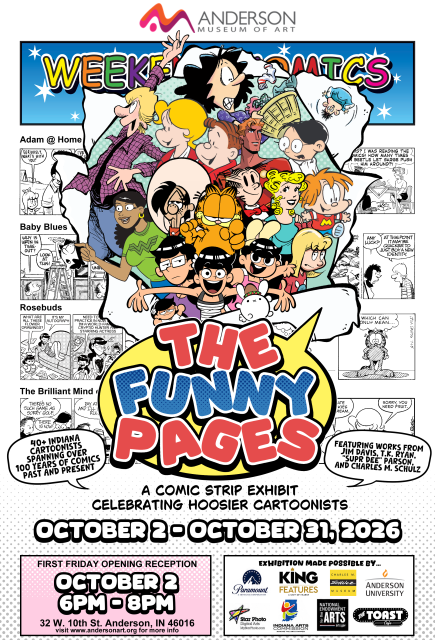
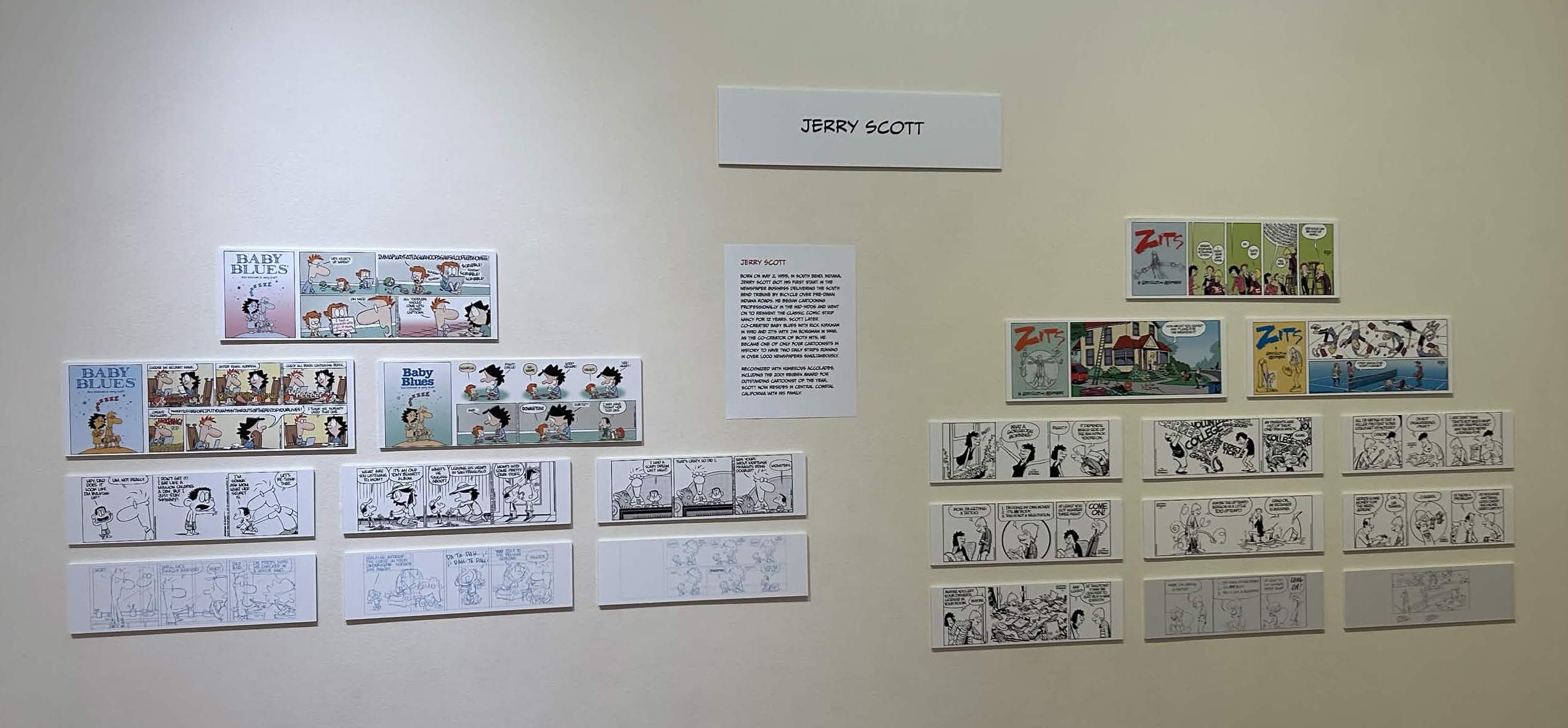
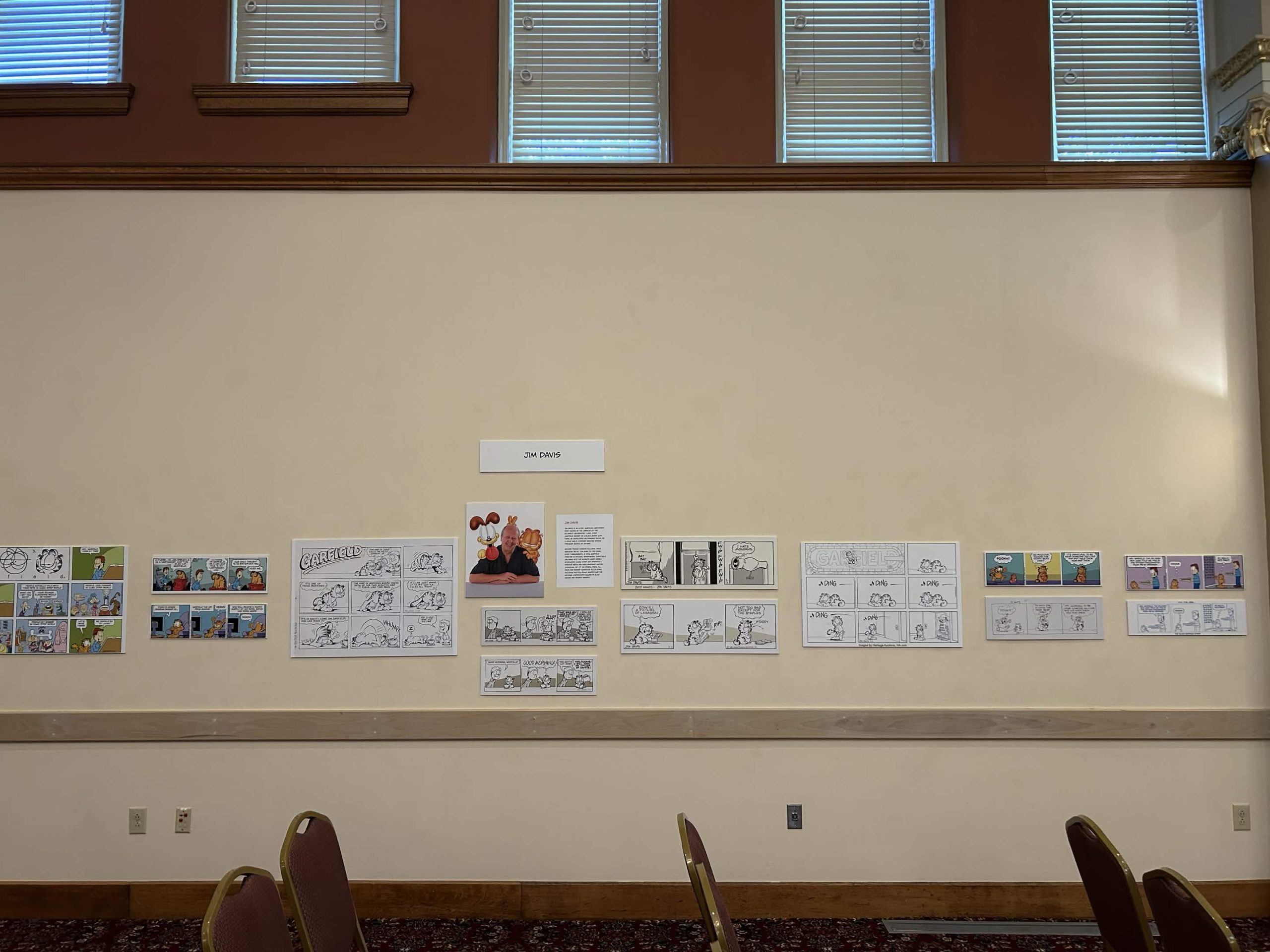
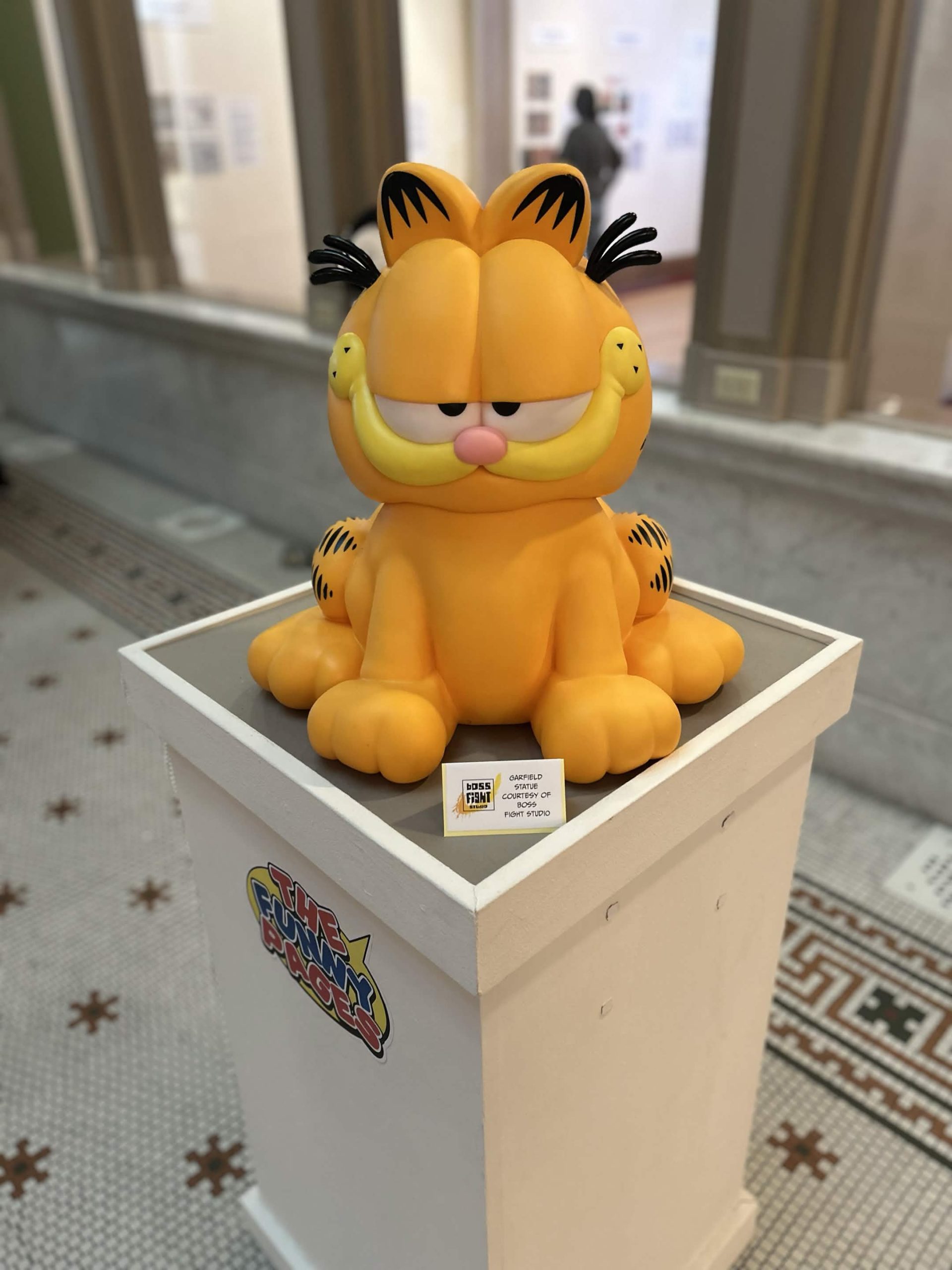
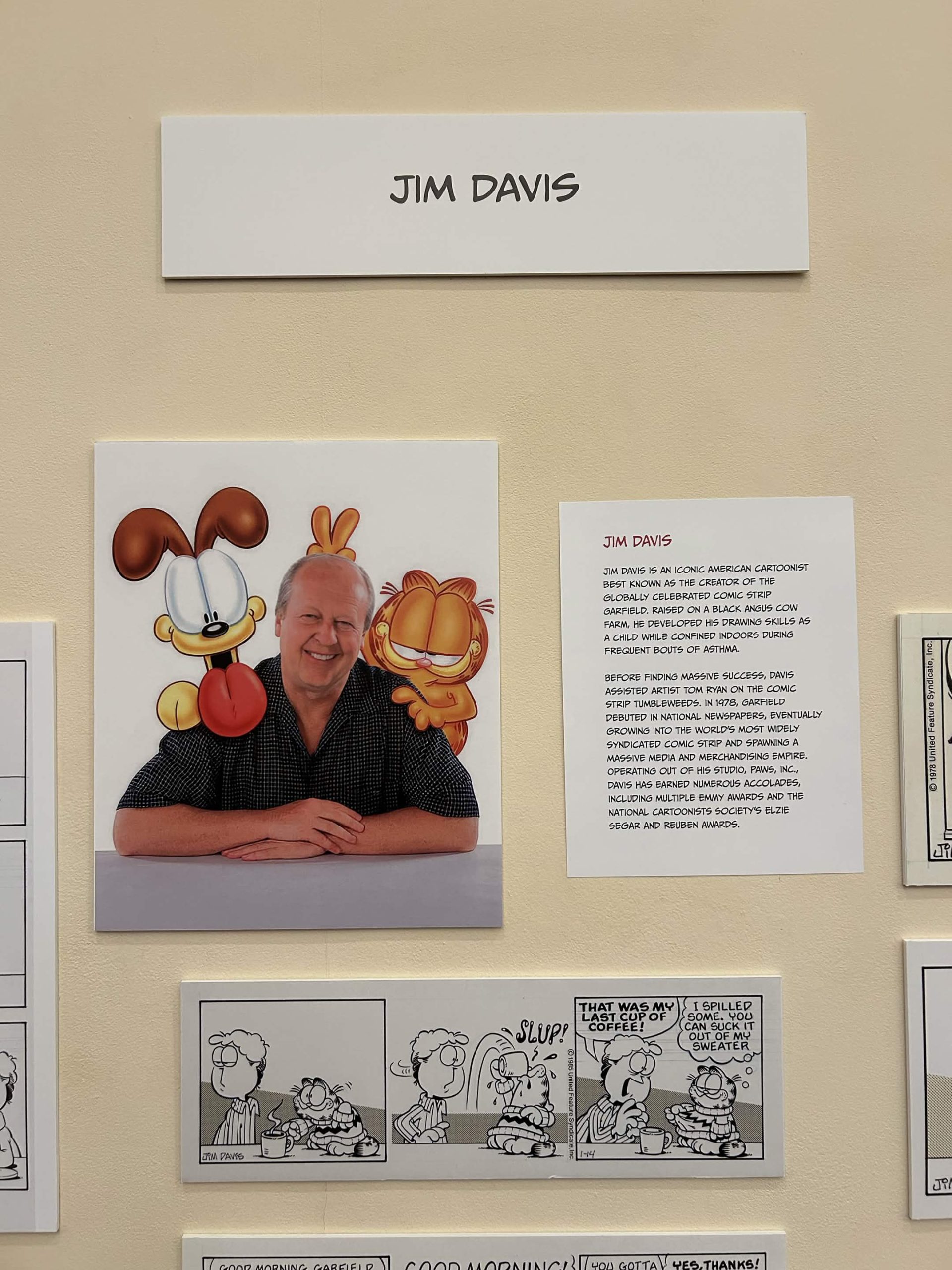
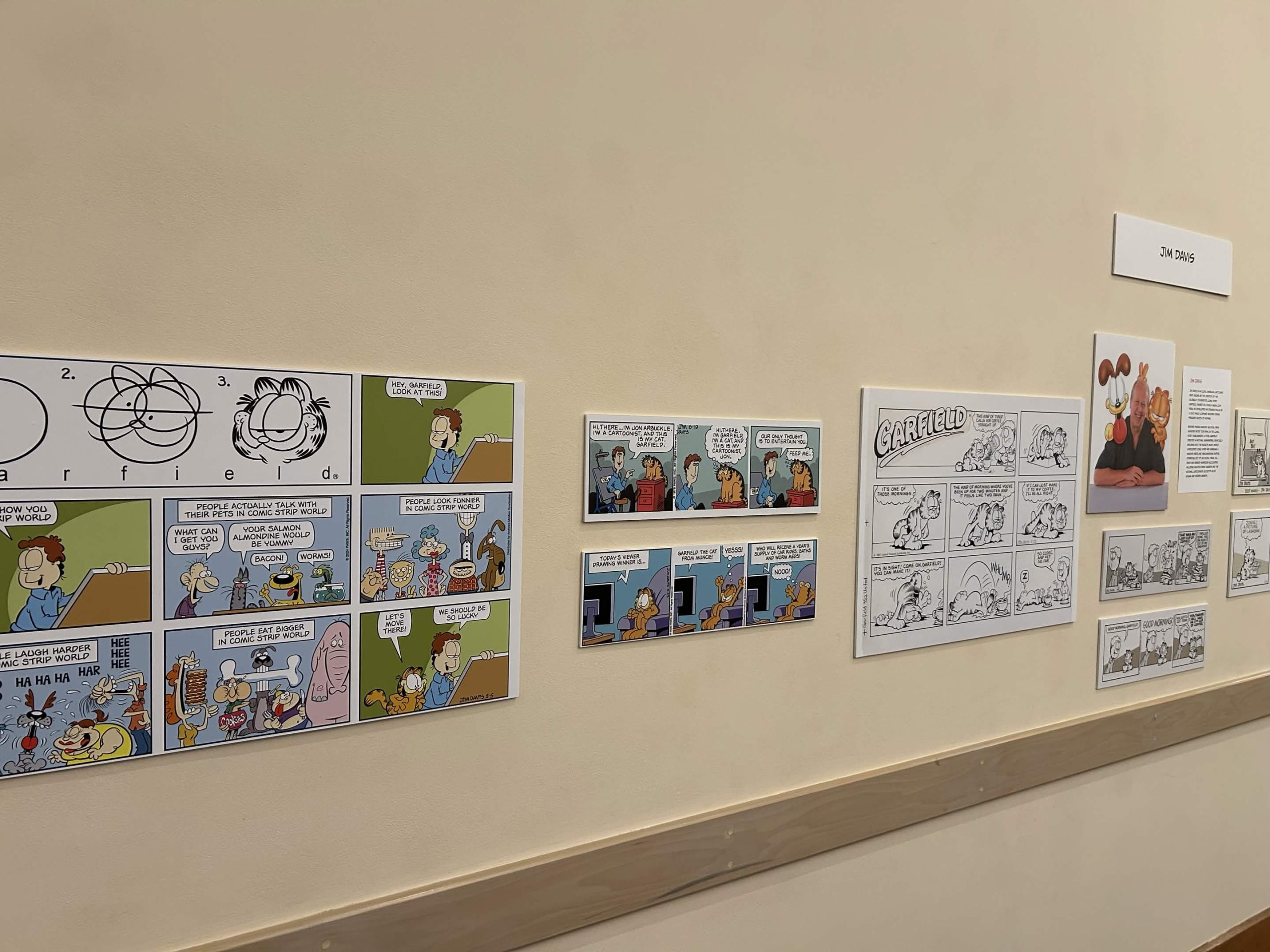
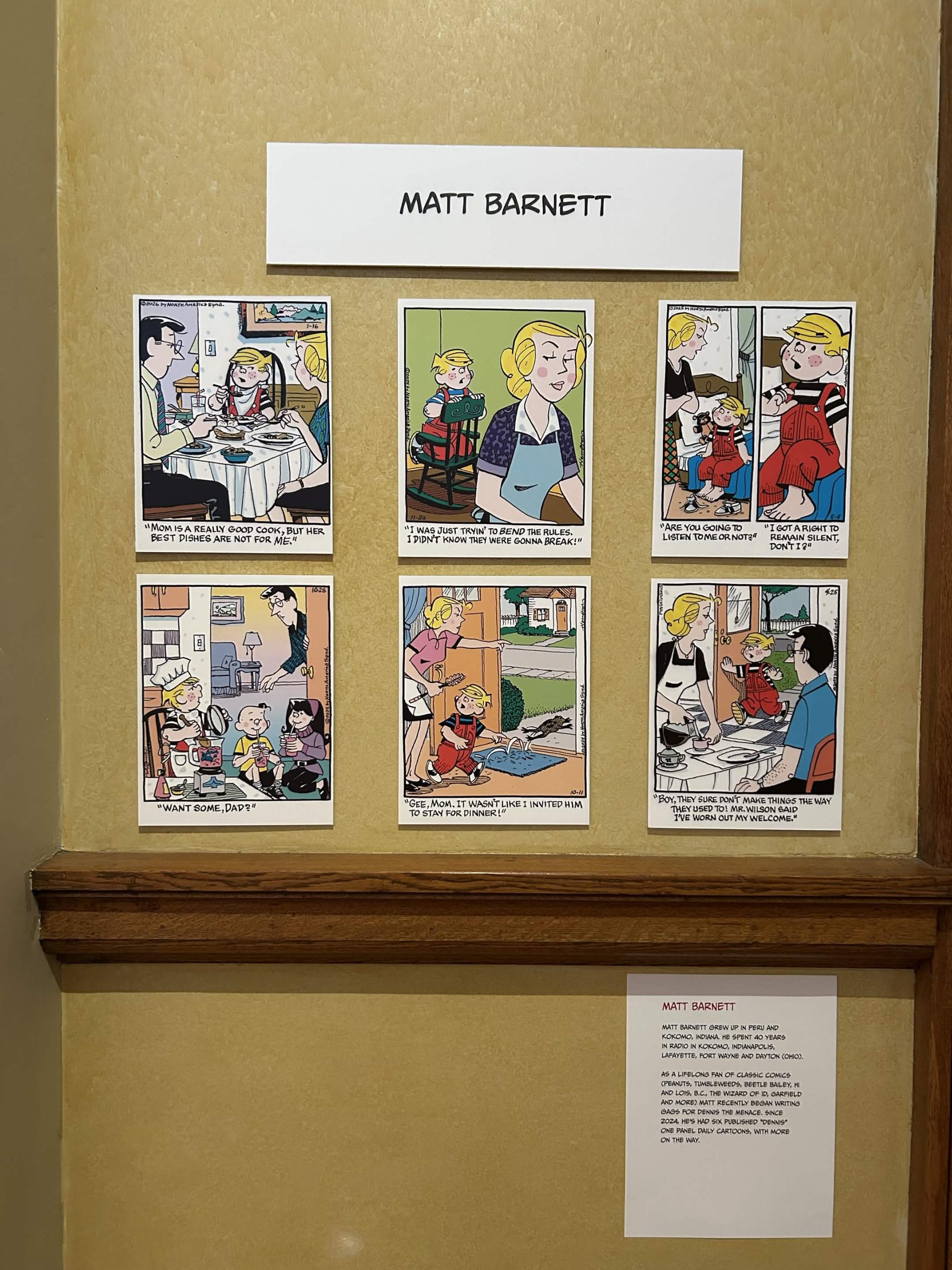
 For most, there's only one name in comics they're likely to associate with Indiana. Jim Davis, and this is mainly because Garfield is tightly associated with tourism in Muncie, among other Indiana locations. An ongoing exhibition at the Anderson Museum of Art in Anderson, Indiana seeks to change that. Spearheaded by Deon Parson of Rosebuds fame, The Funny Pages gives a surprising answer to the question no one generally thinks to ask. How many contemporary artists in the newspaper comic industry call Indiana home? Apparently, fourteen! A lot more deceased cartoonists with big names have Indiana connections than you might think, most notably Charles Schulz.
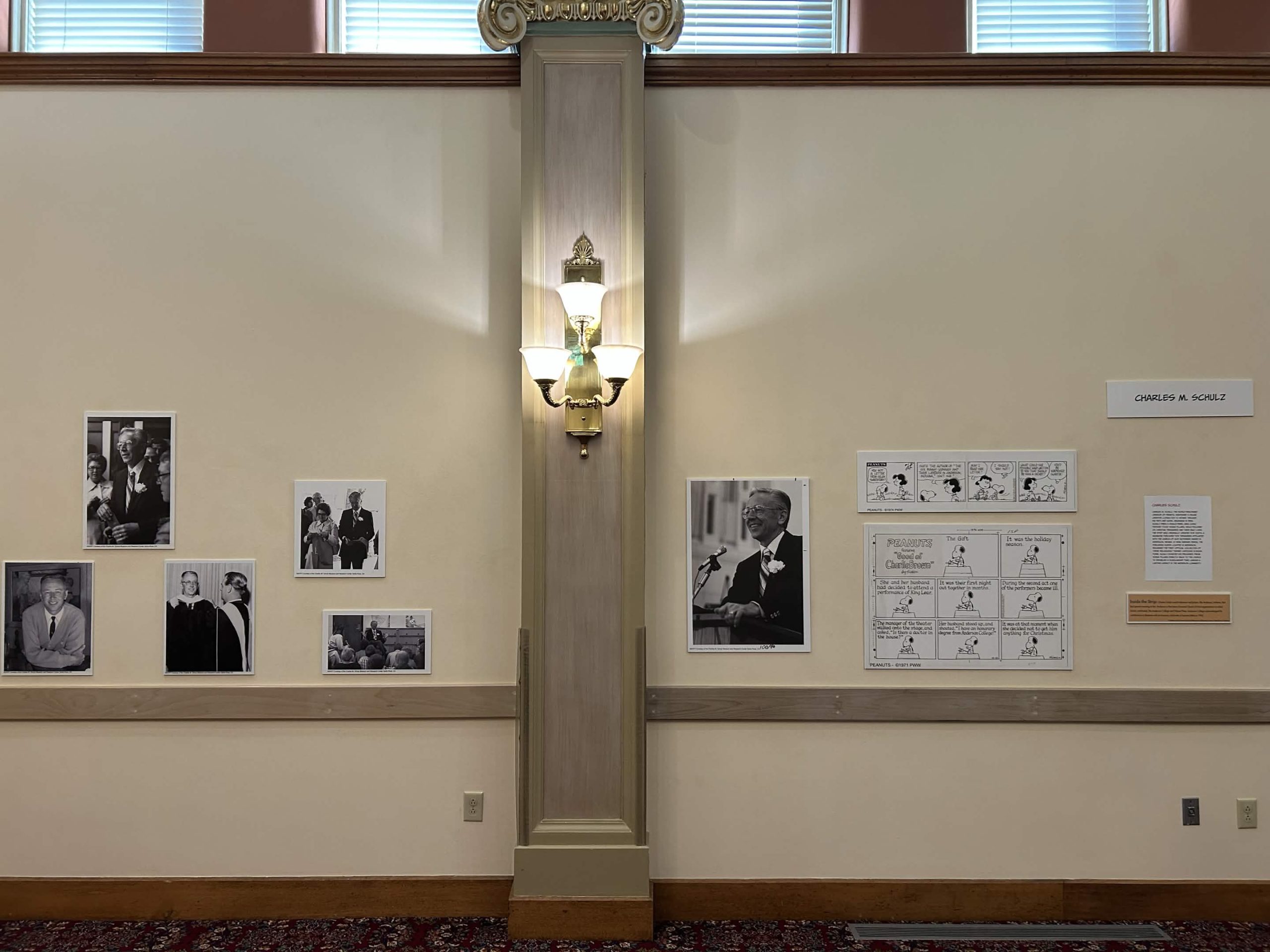
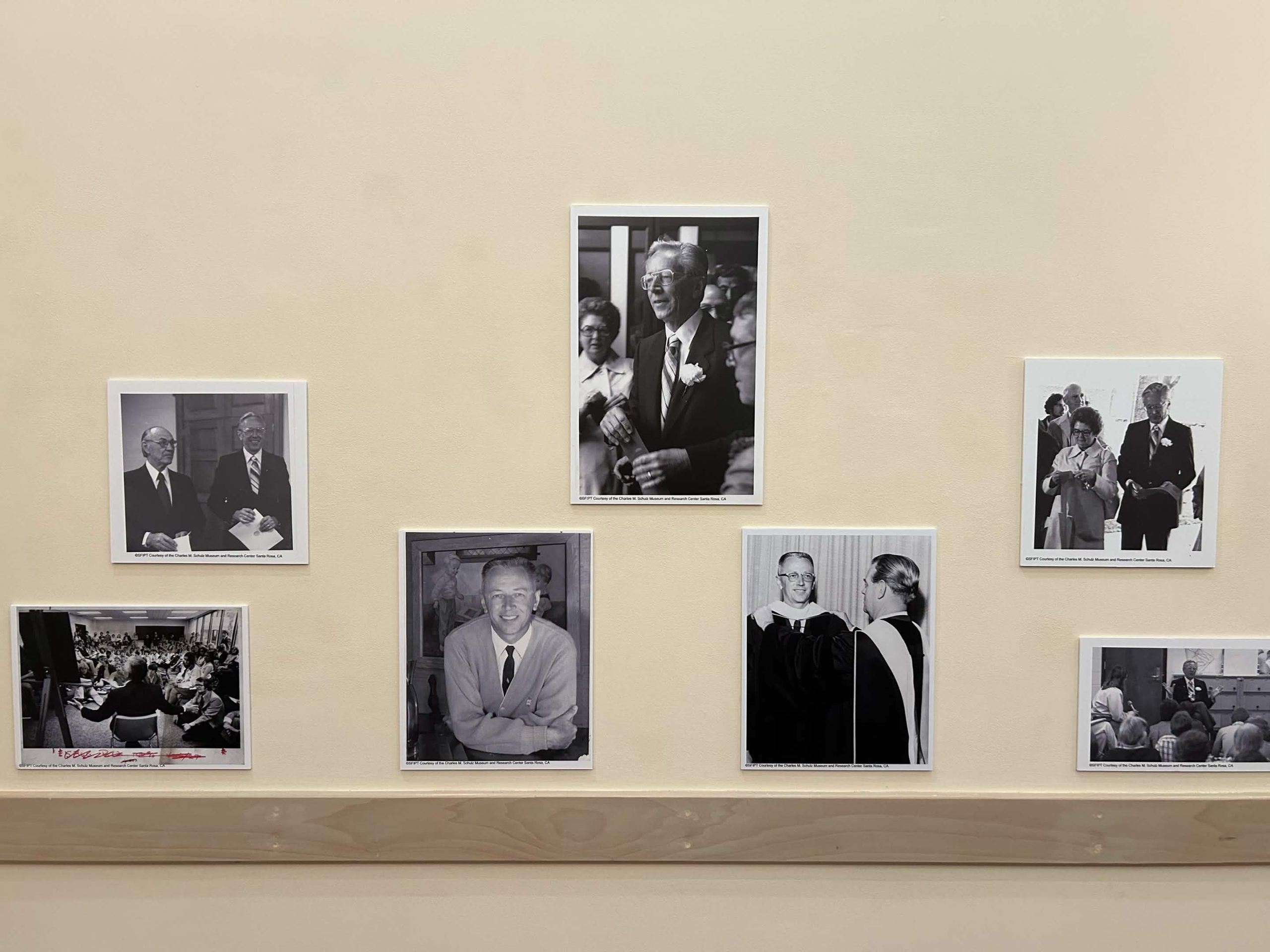
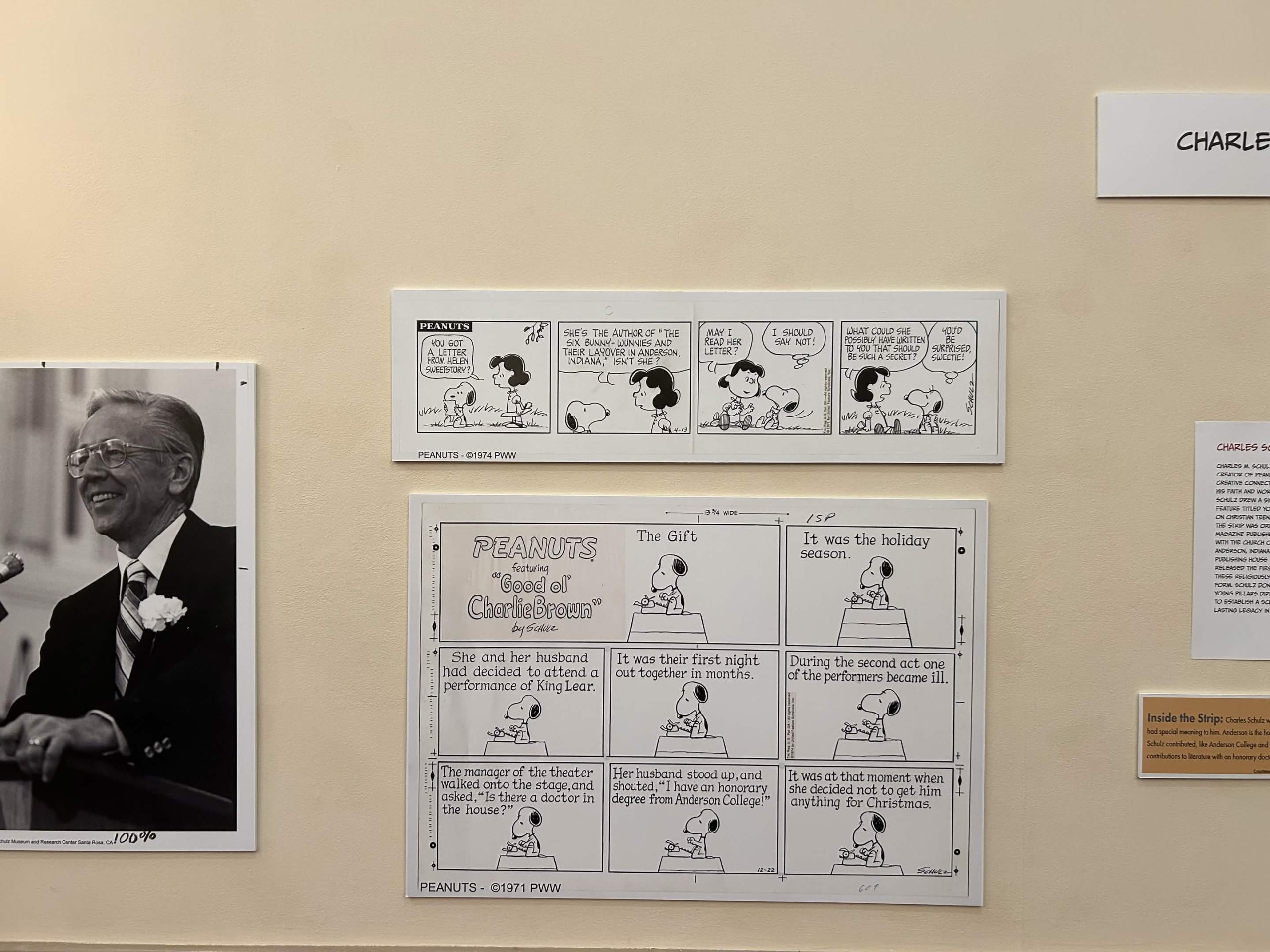
It's a trivia question, really: What school gave Charles Schulz his honorary doctorate? The answer is Anderson University. The question as to why they gave him an honorary doctorate is a tad complex, and as it isn't a focus of this exhibition, I'd rather not dwell on it except to note that this ties into Schulz's affiliation with the Church of God. This led to his writing the relatively obscure Young Pillars, a weird little comic that takes the awkward, anxious style Schulz is best known for in Peanuts and applies it to a single panel, teenage divination school context.
Any good museum exhibit should be designed in such a way as to evoke parallels, and this is exactly what Young Pillars does here, representing an alternate form of evolution for Schulz's work, its unnamed characters expressing lanky anxiety about social interactions. Having had time to think it over, I'm a bit disappointed Li'l Folks didn't make an appearance, as Schulz's earliest comic has a similar sort of short, punchy structure. But even getting Young Pillars for the exhibition was a challenge for Parson, as ownership of the comic is disputed between the Schulz estate and Anderson University. Thankfully, both were willing to cooperate on this particular exhibition, allowing the comics to be displayed with full respect.
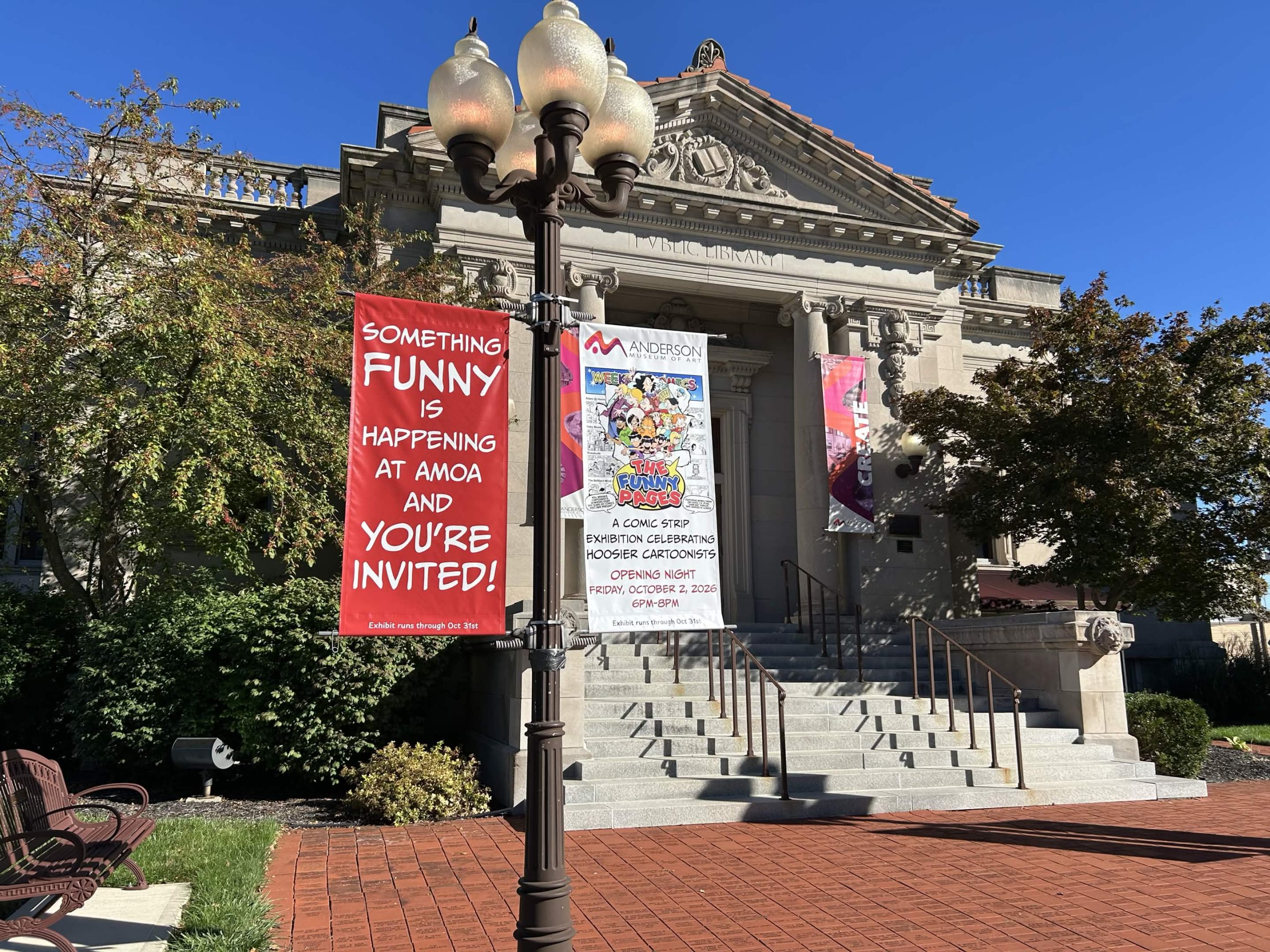
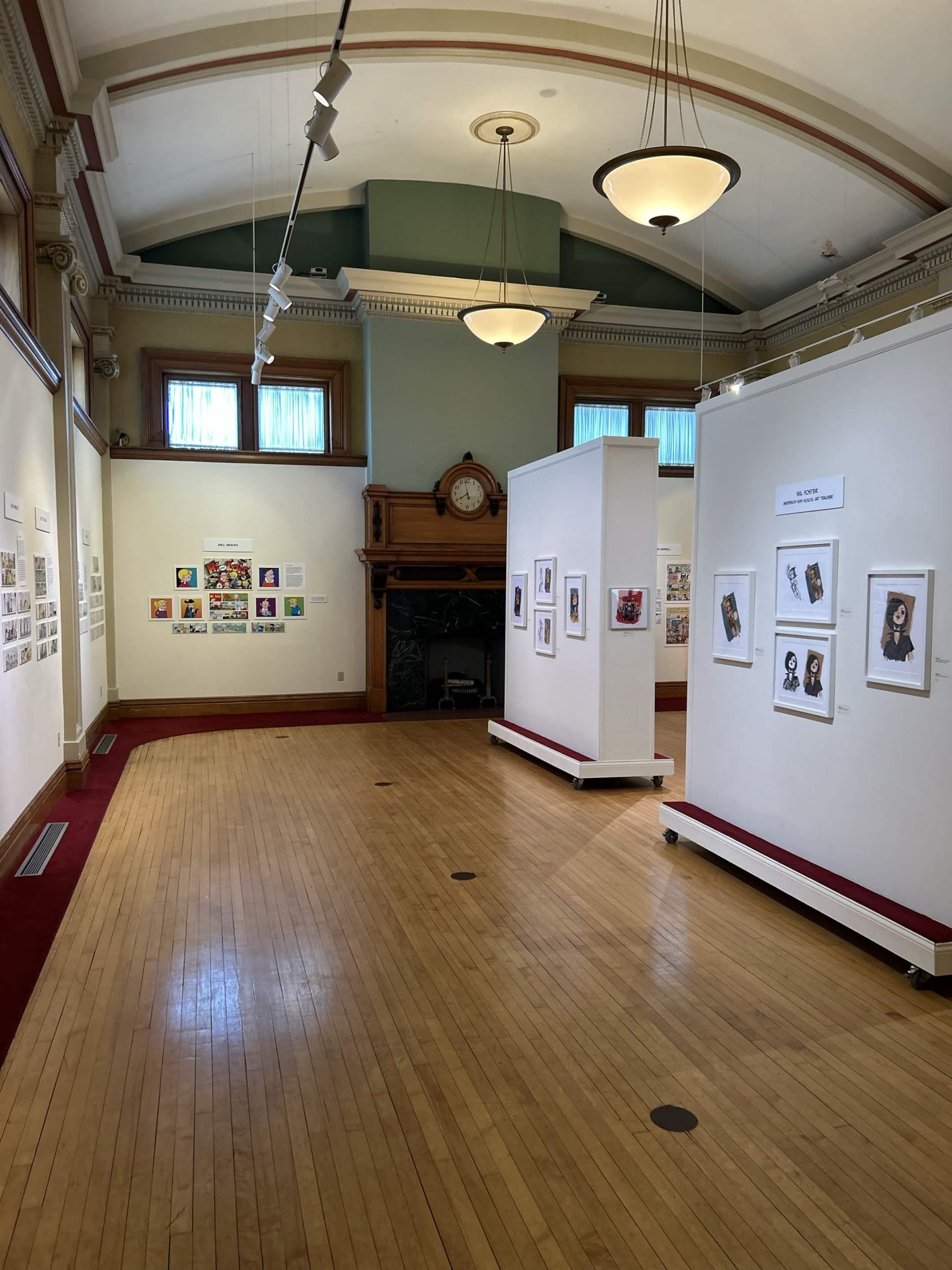
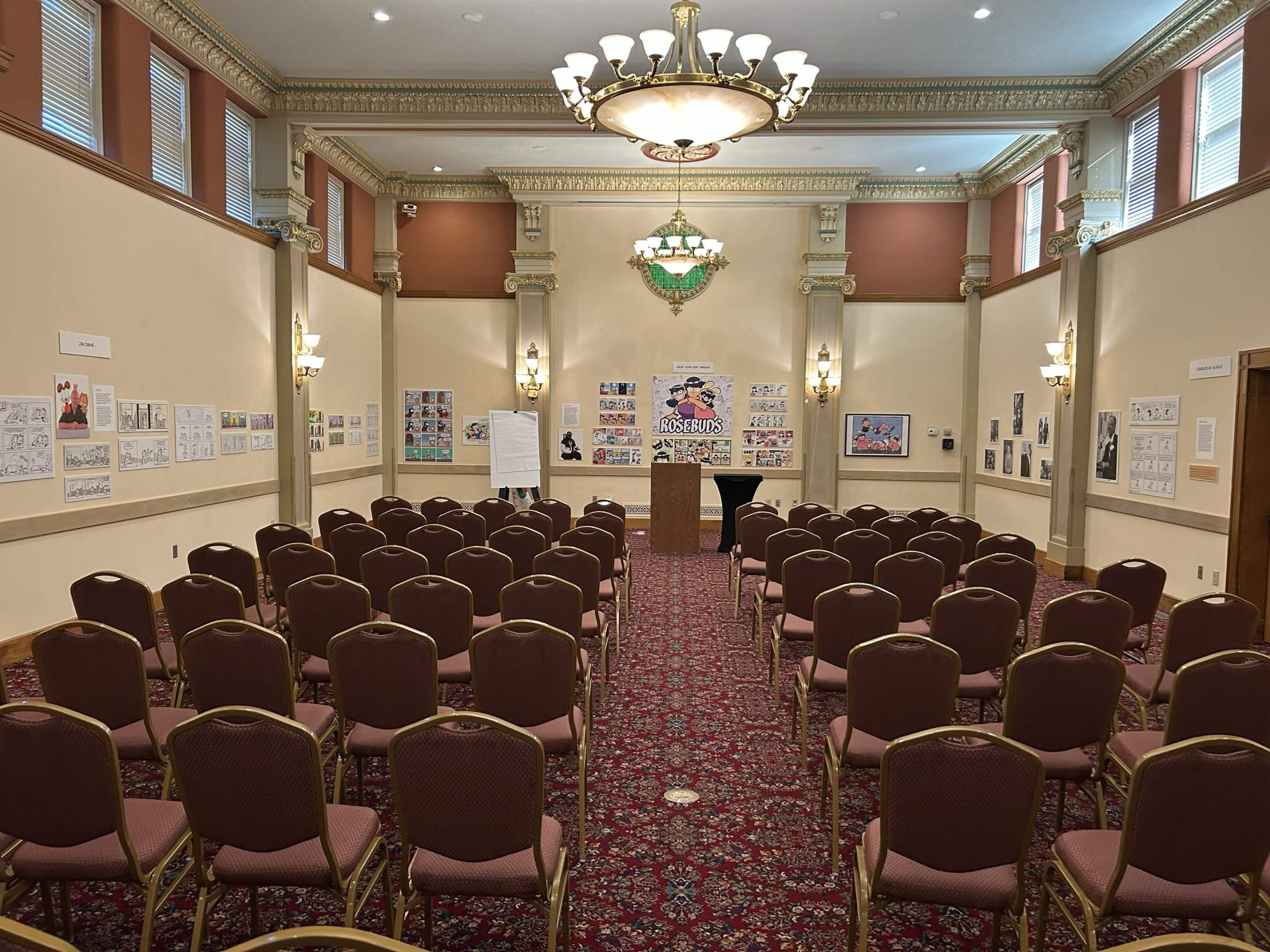
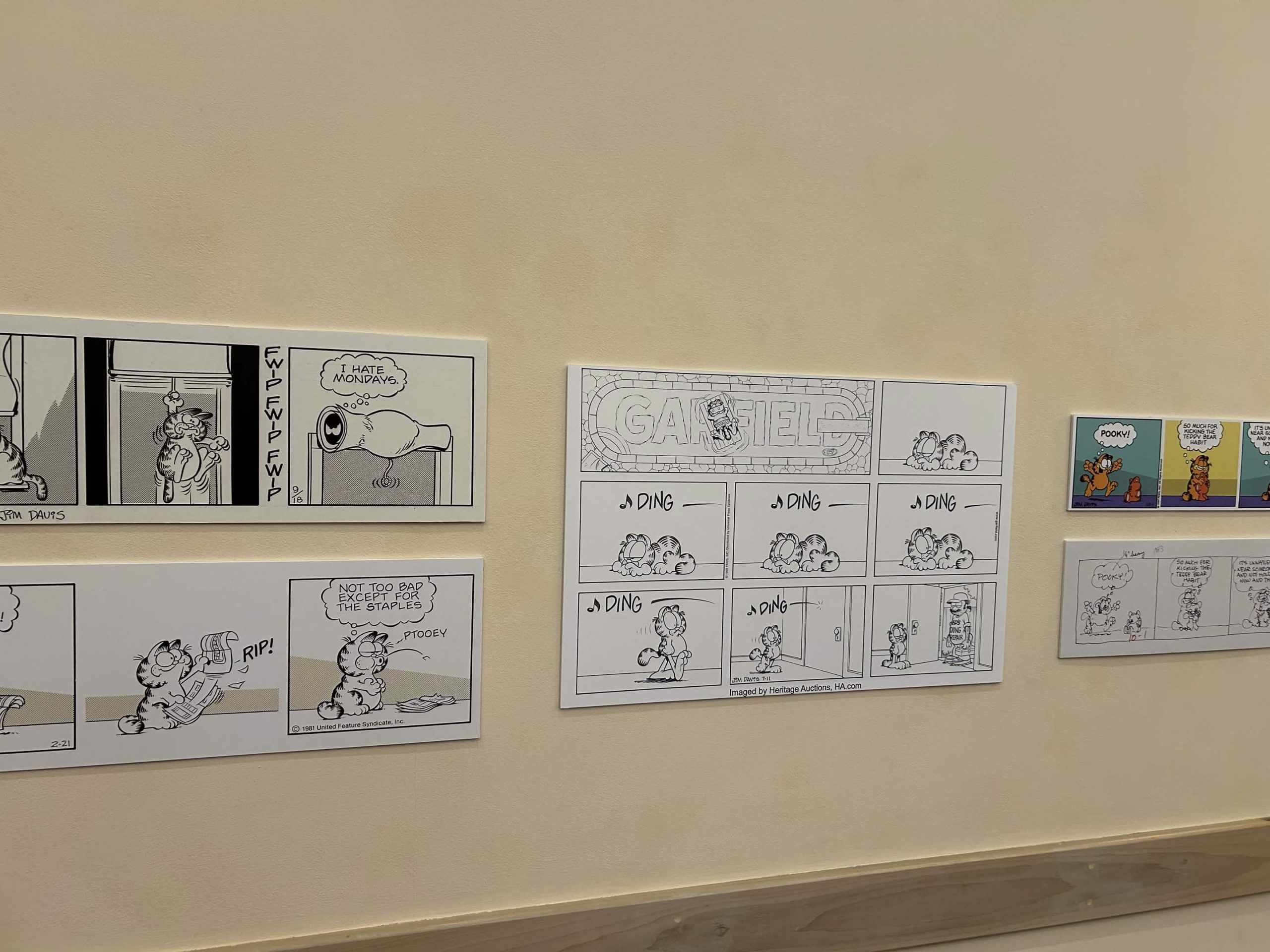
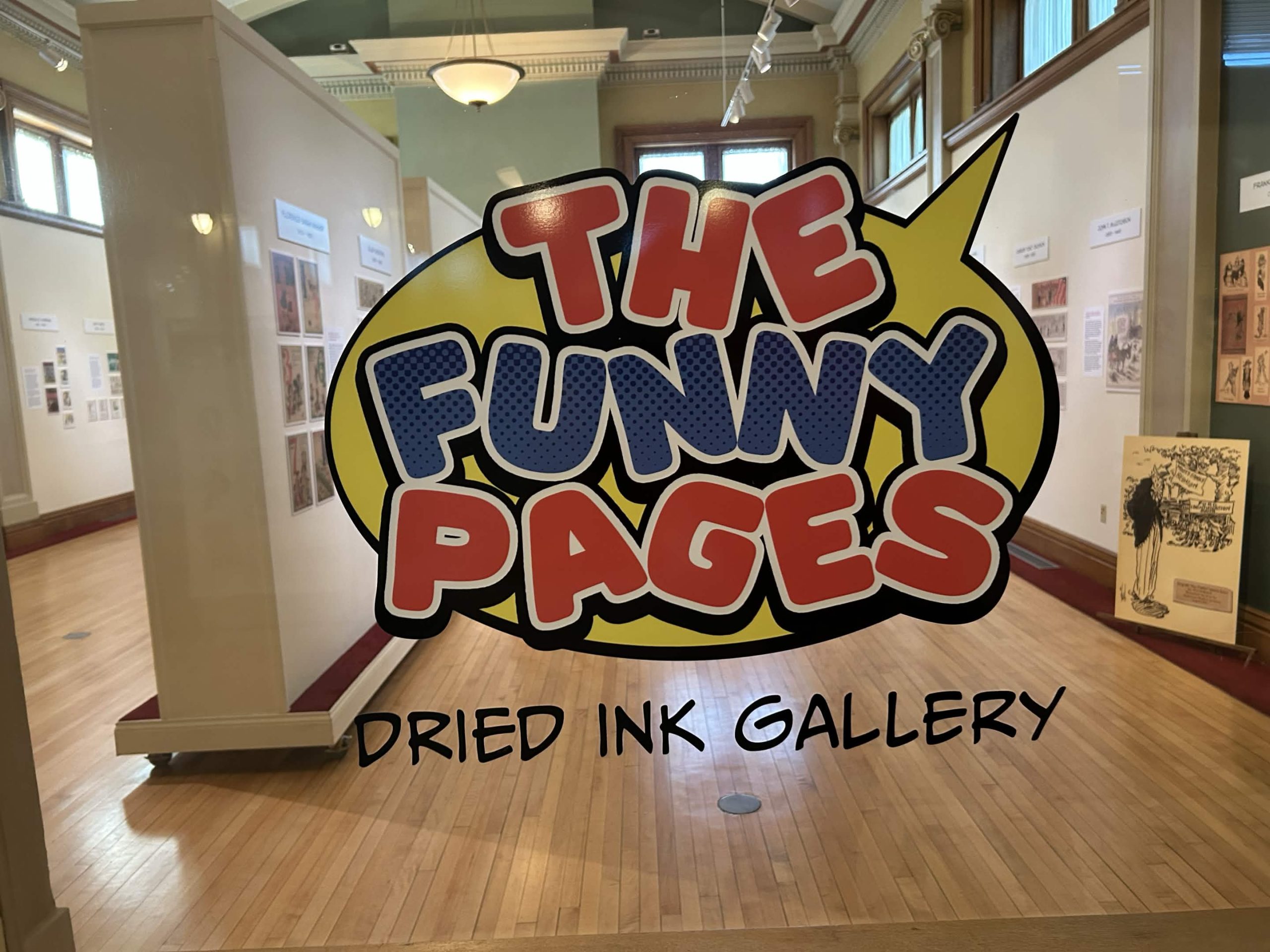
The overall vibe of the Anderson Museum of Art is quite austere, owing mainly to the age of the building, a former Carnegie Library which now looks like a museum relic in its own right. It's a very appropriate location to house an exhibition featuring so many comics that were contemporaneous with even the Carnegie Libraries of their heyday. The skylight and even the stopped clocks provide an enhancing effect to the sheer scale of the tradition, helping recall what we are otherwise likely to have forgotten.
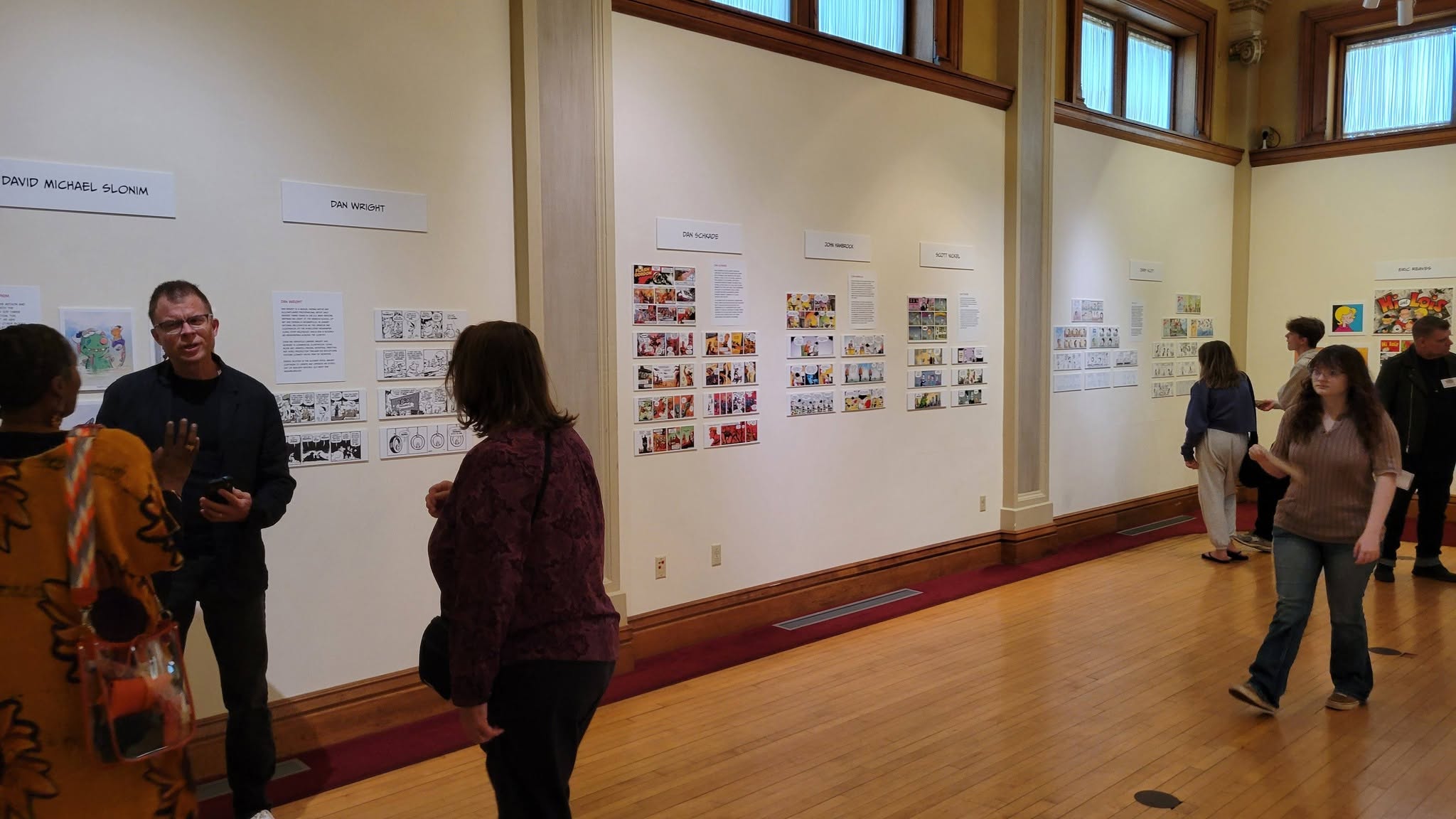
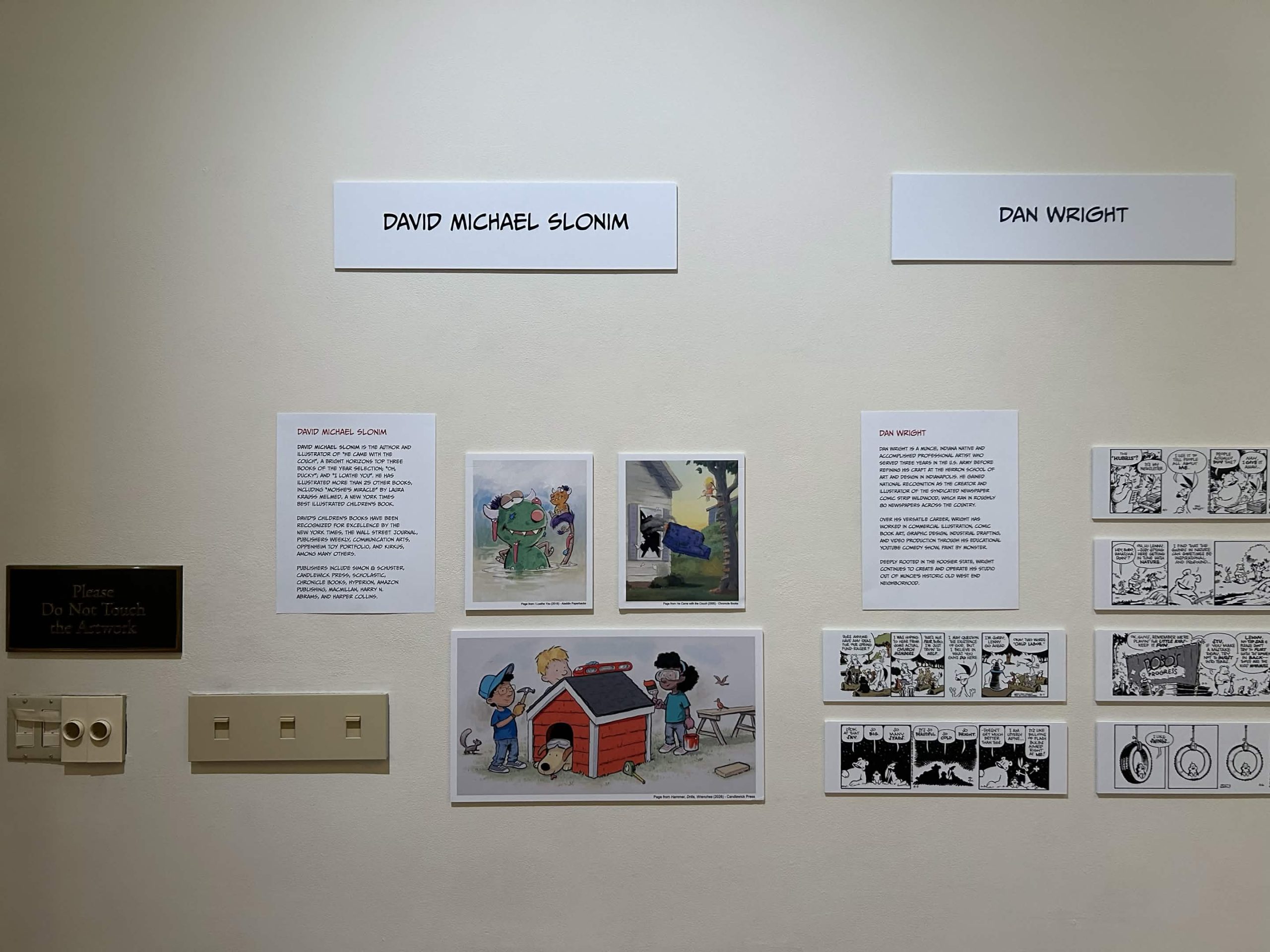
Or at least, this is what I felt when I saw Dan Wright presented in the Fresh Ink gallery for Wildwood or, as I remembered it from the newspapers myself as a kid, Bobo's Progress. A theological comic about a patient bear ministering in the woods, I was struck by the similarity to Young Pillars having seen it for the first time in so long. I remember my hometown paper, The North County Times, dropping it because religious readers sent in letters complaining about the snarky rabbit character occasionally making jokes about taking a cut from the till.
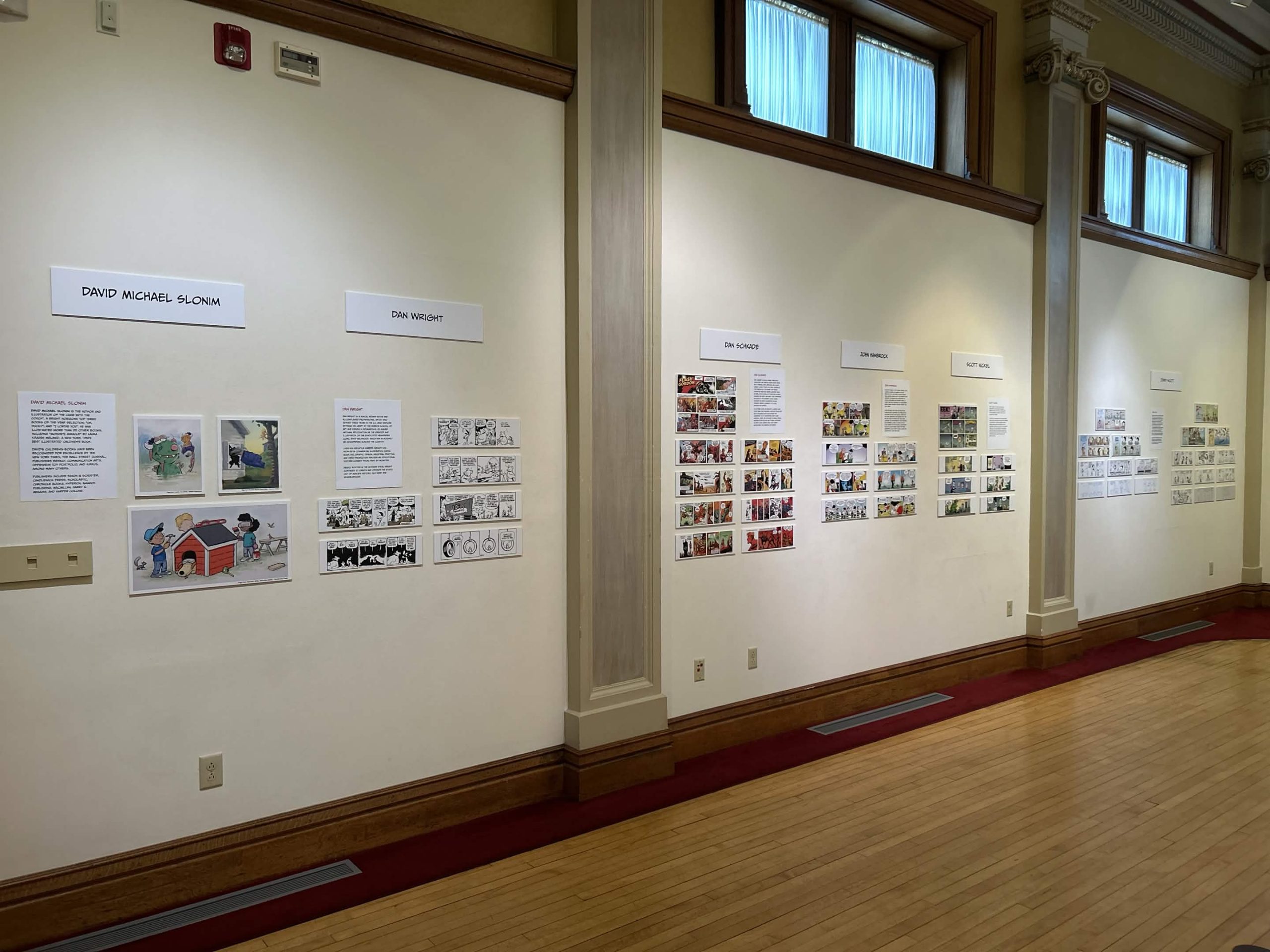
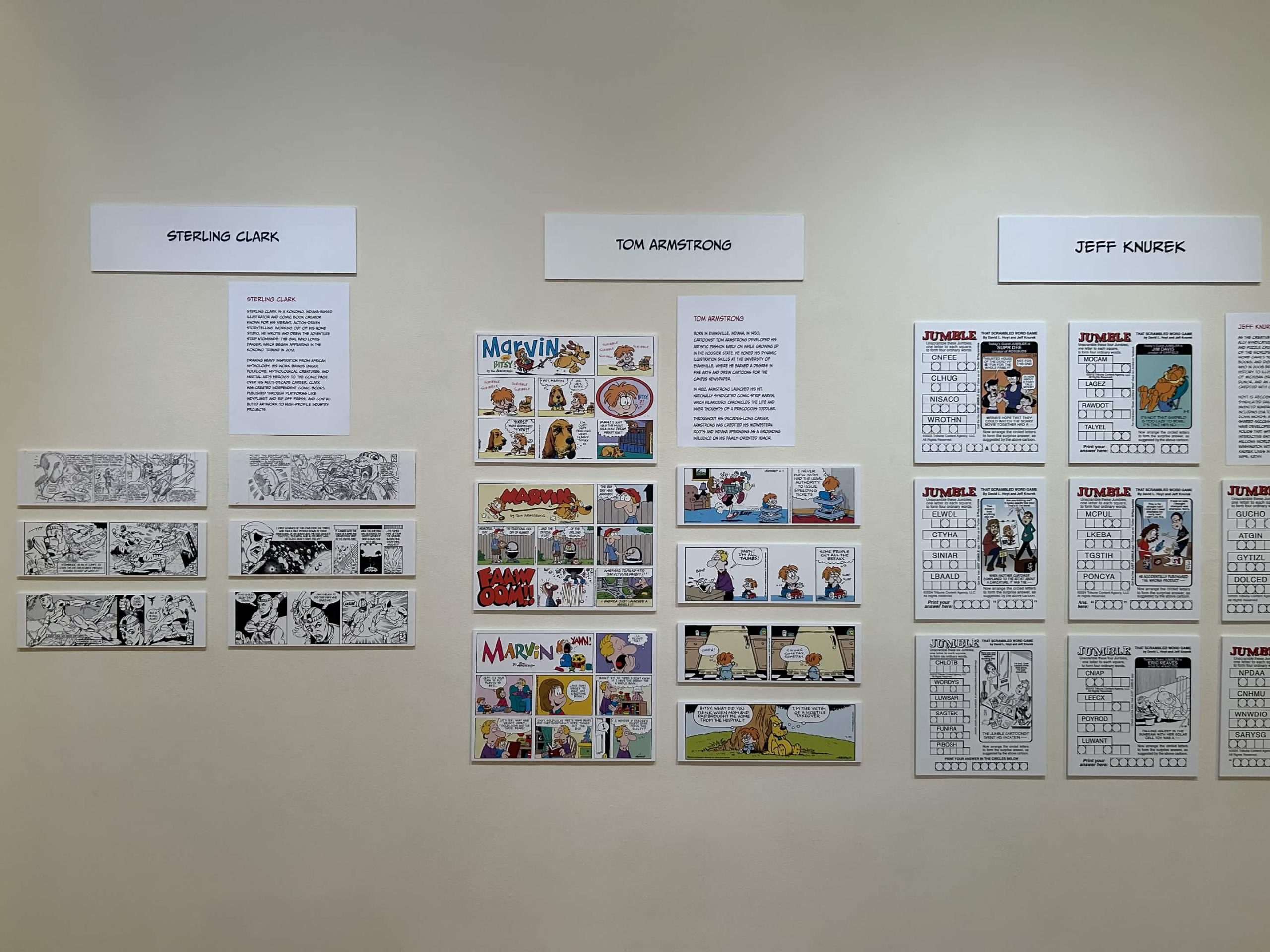
Not to suggest this exhibit is stuck in the past. On the wall opposite the Dan Wright section is a feature for Sterling Clark. Never heard of him? Don't feel bad, I didn't either, and I'm not quite sure where anyone would find his work outside of Kokomo, where apparently he's been serializing his strip Ntombinde: The Girl Who Loves Danger since 2012. He's done other work, of course, but it's easy to see why Ntombinde in particular was selected for this exhibition because it's that all too rare example of a modern action strip which takes up the tough challenge of trying to tell a coherent story three panels at a time in such a way that the dailies still feel like something you can easily jump into. The task isn't an impossible one, and it's that much easier to appreciate the legacy involved when it's only a short walk to the Dried Ink gallery to see older strips in their original context. Clark is also in good company in regard to the Dan Schkade corner of the exhibit. It's hard to believe that it was three years ago that he rebooted Flash Gordon in the newspapers, as it continues to feel like some of the freshest work on the comics page today despite its legacy approaching a hundred years of age.
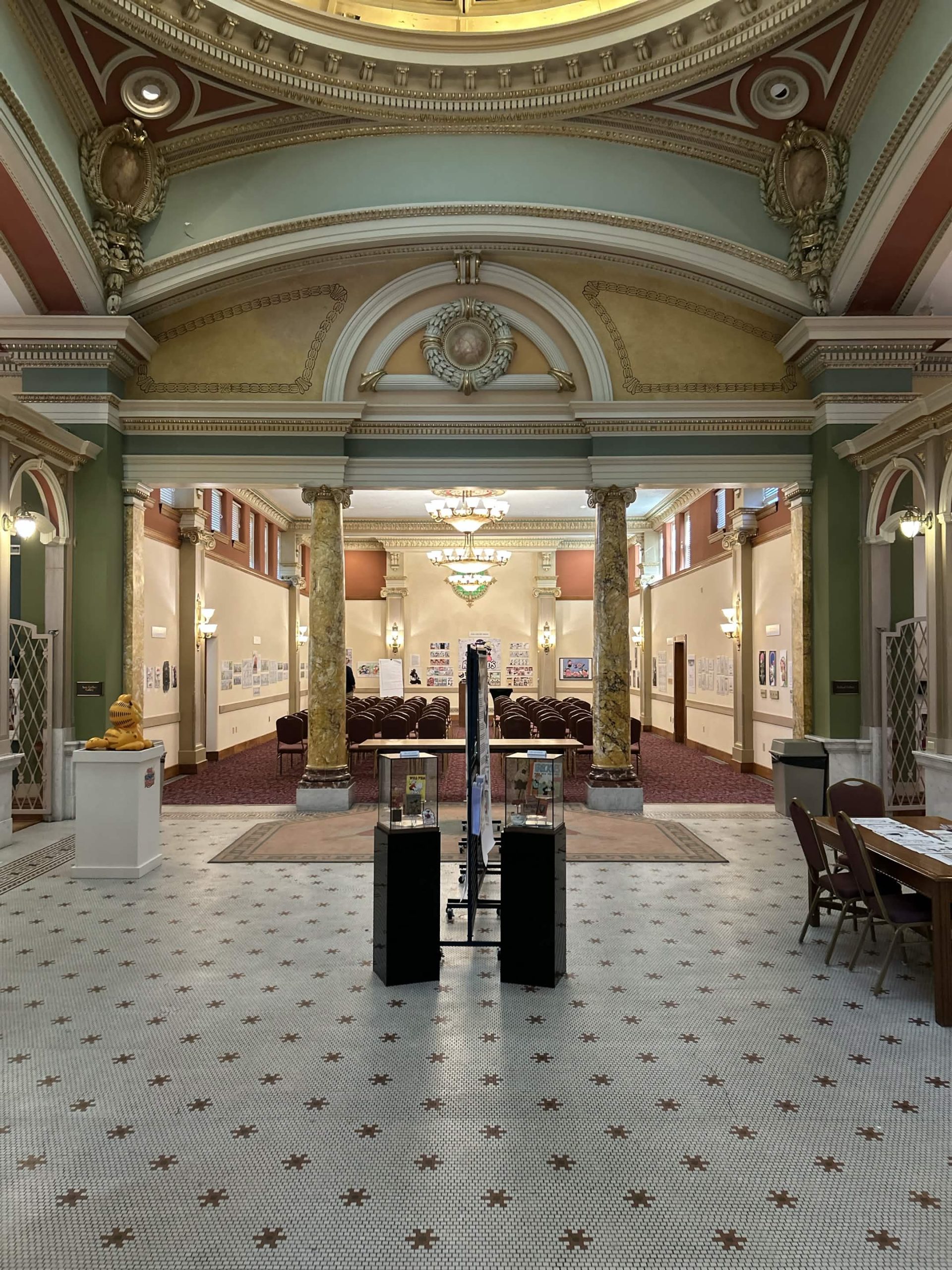
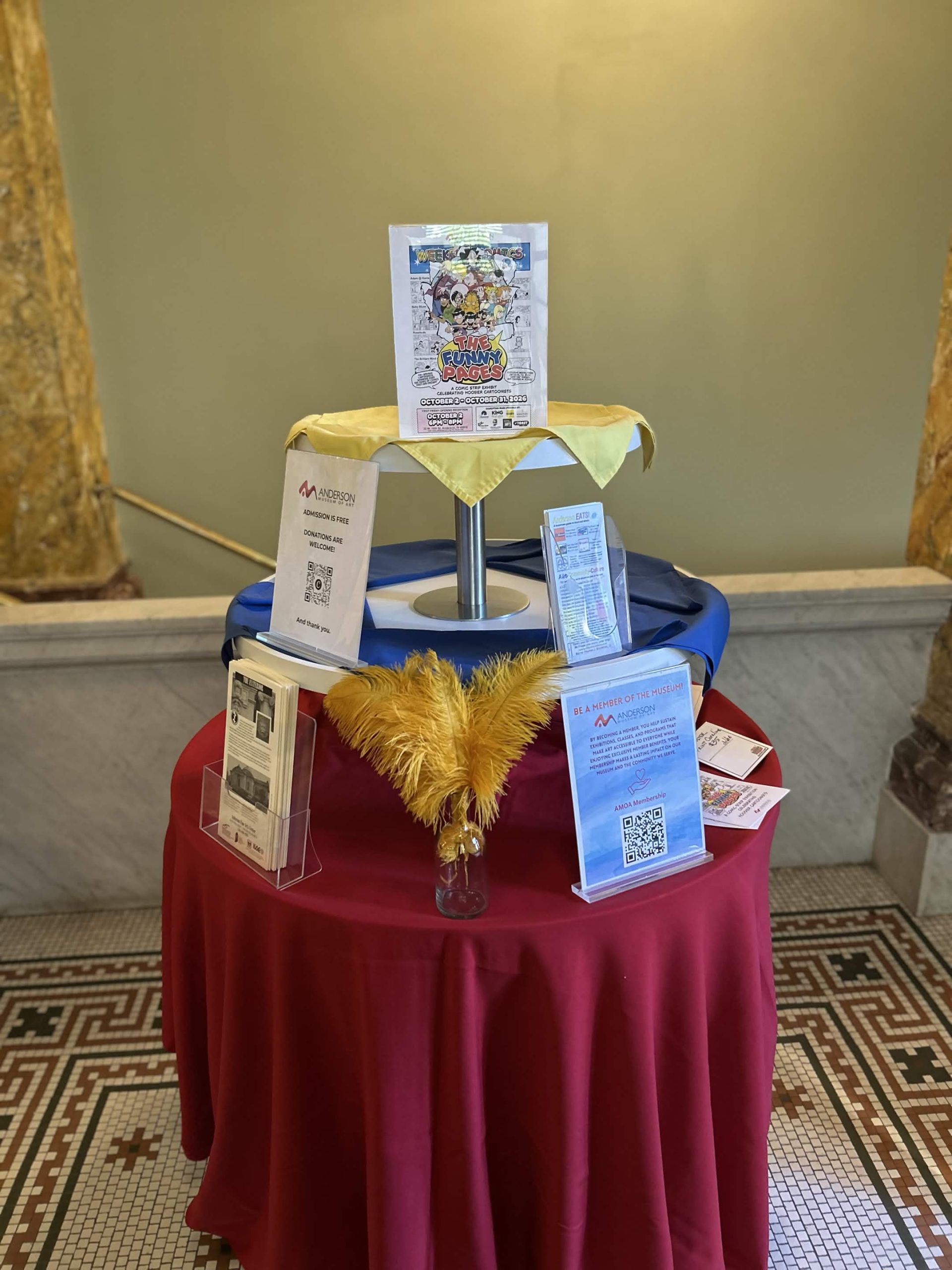
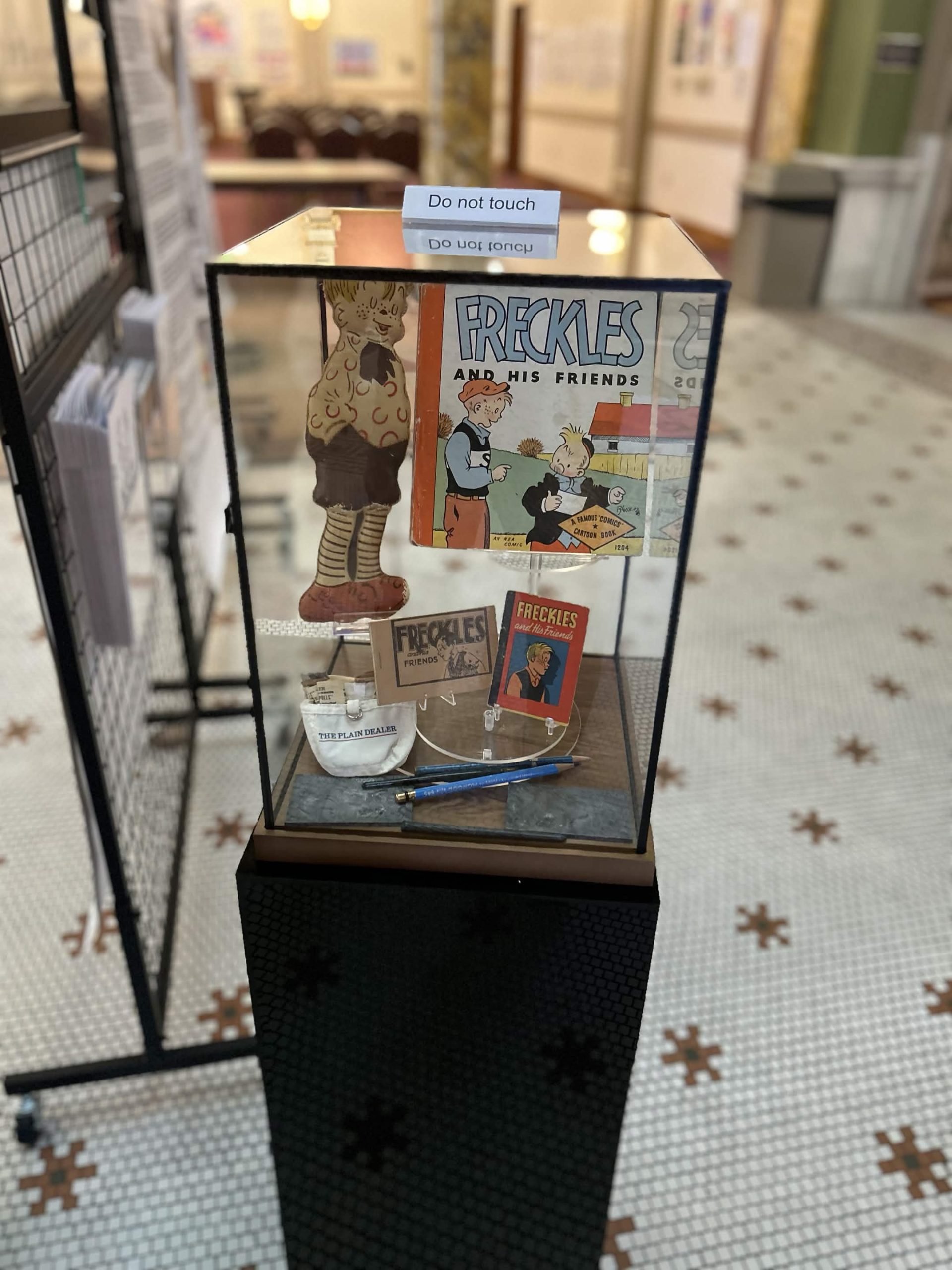
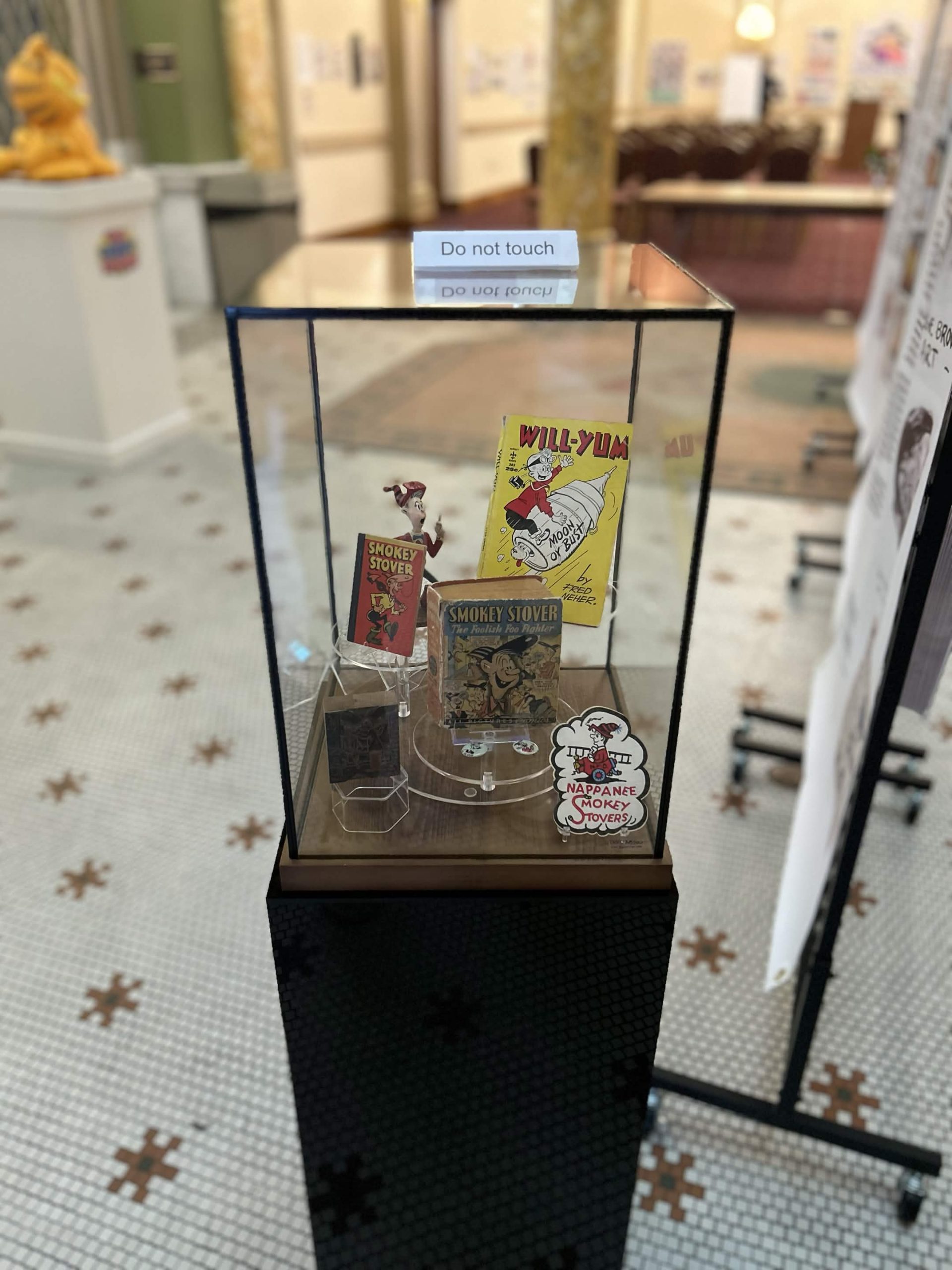
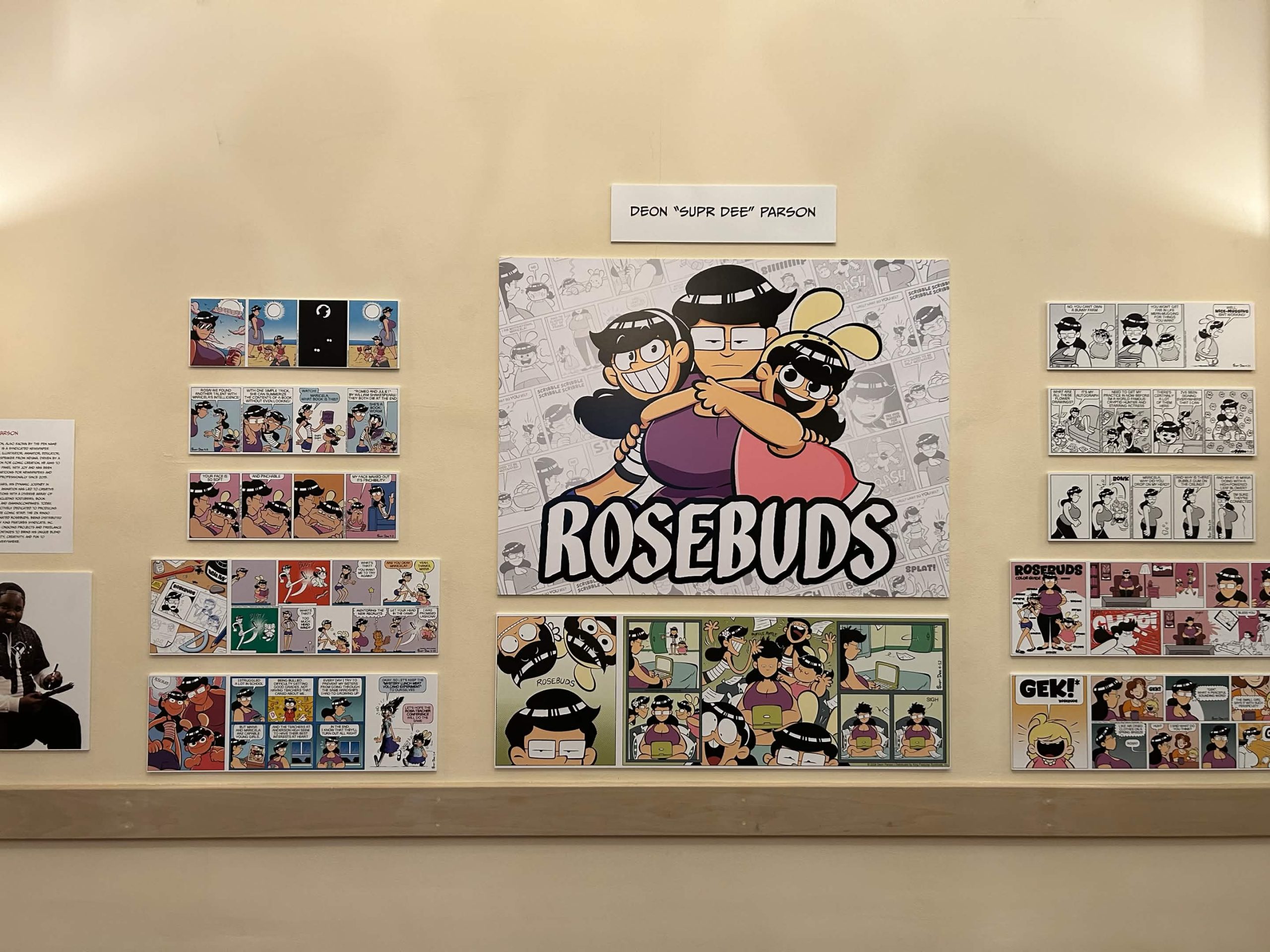
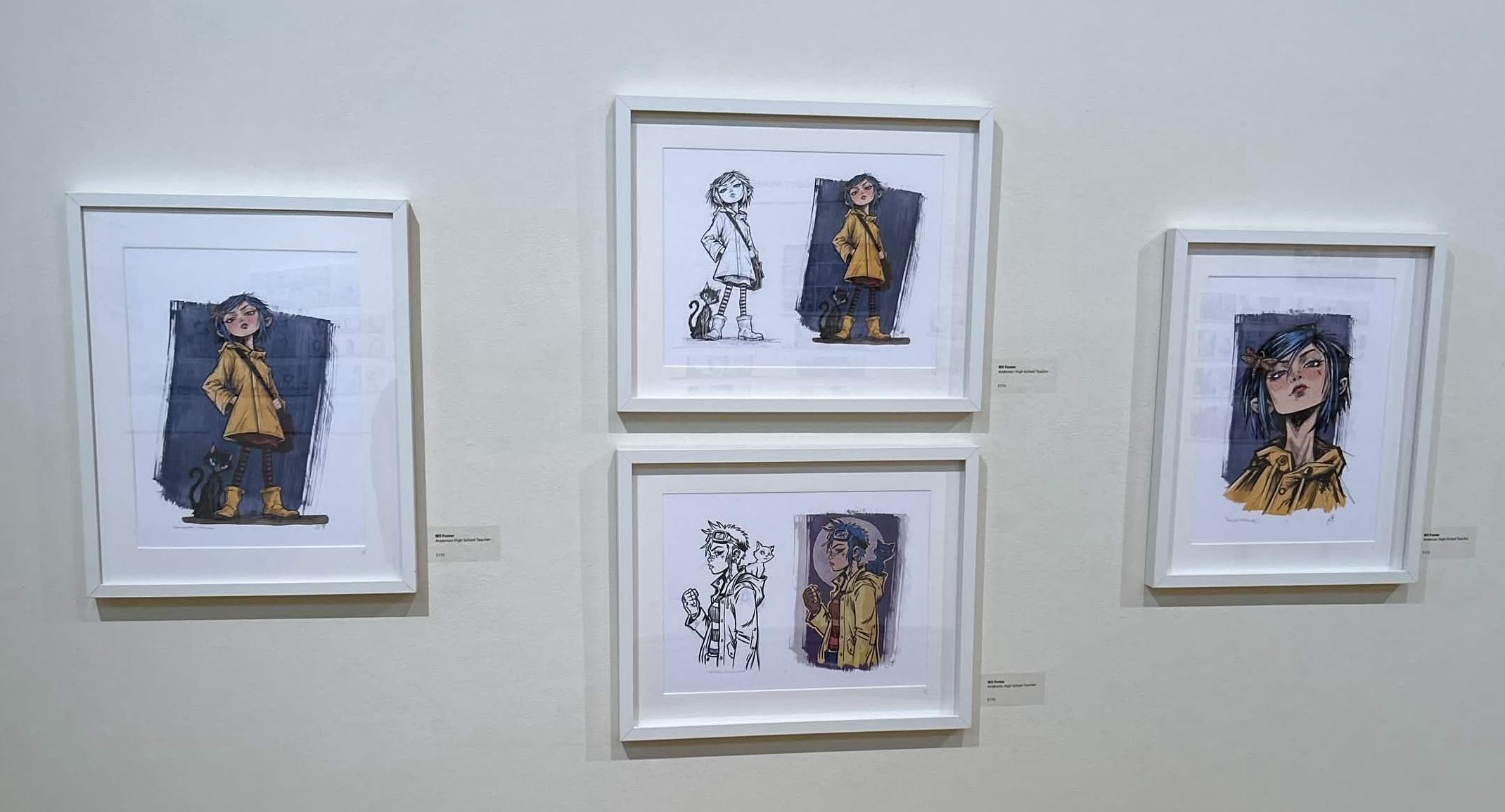
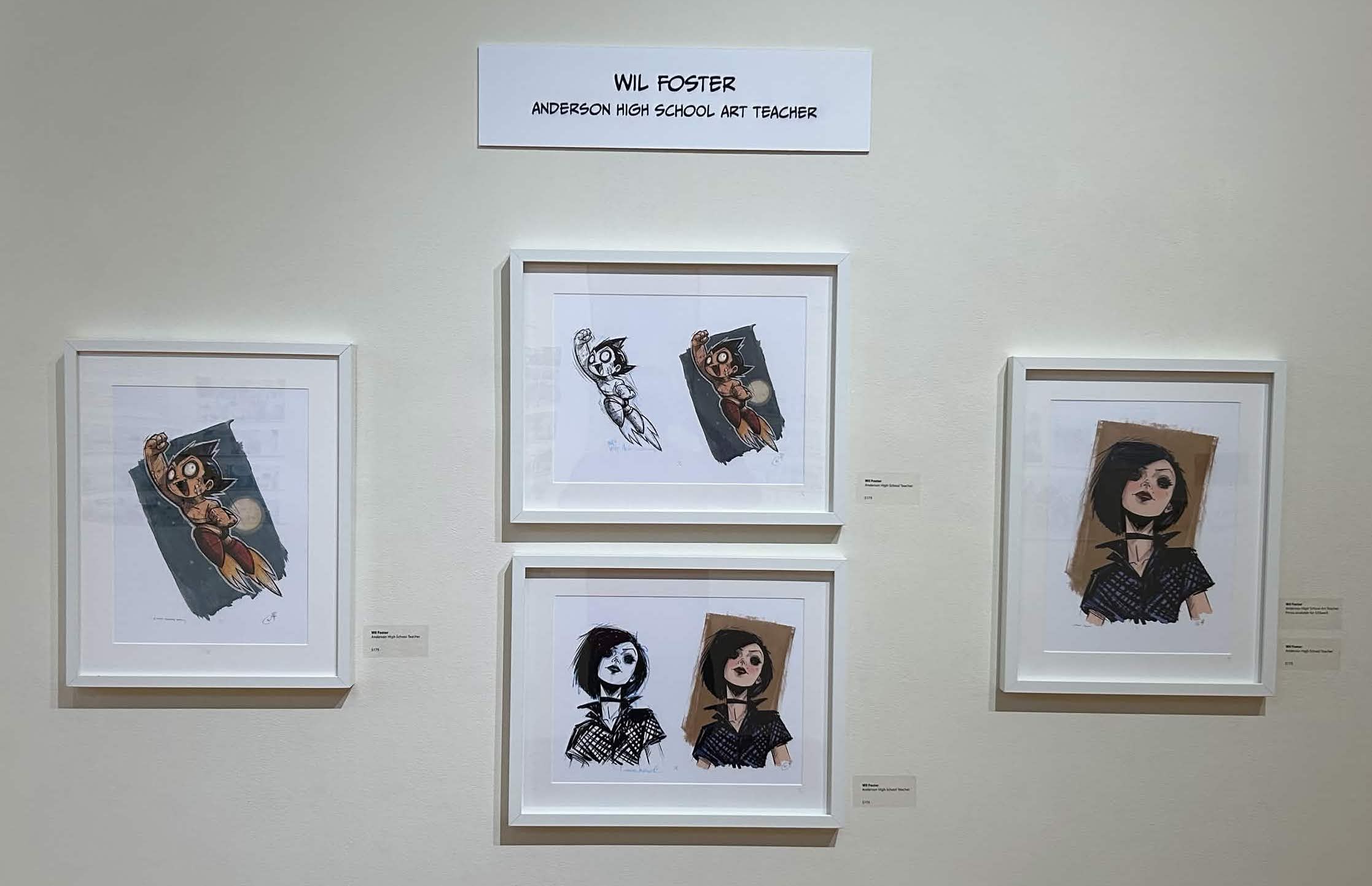
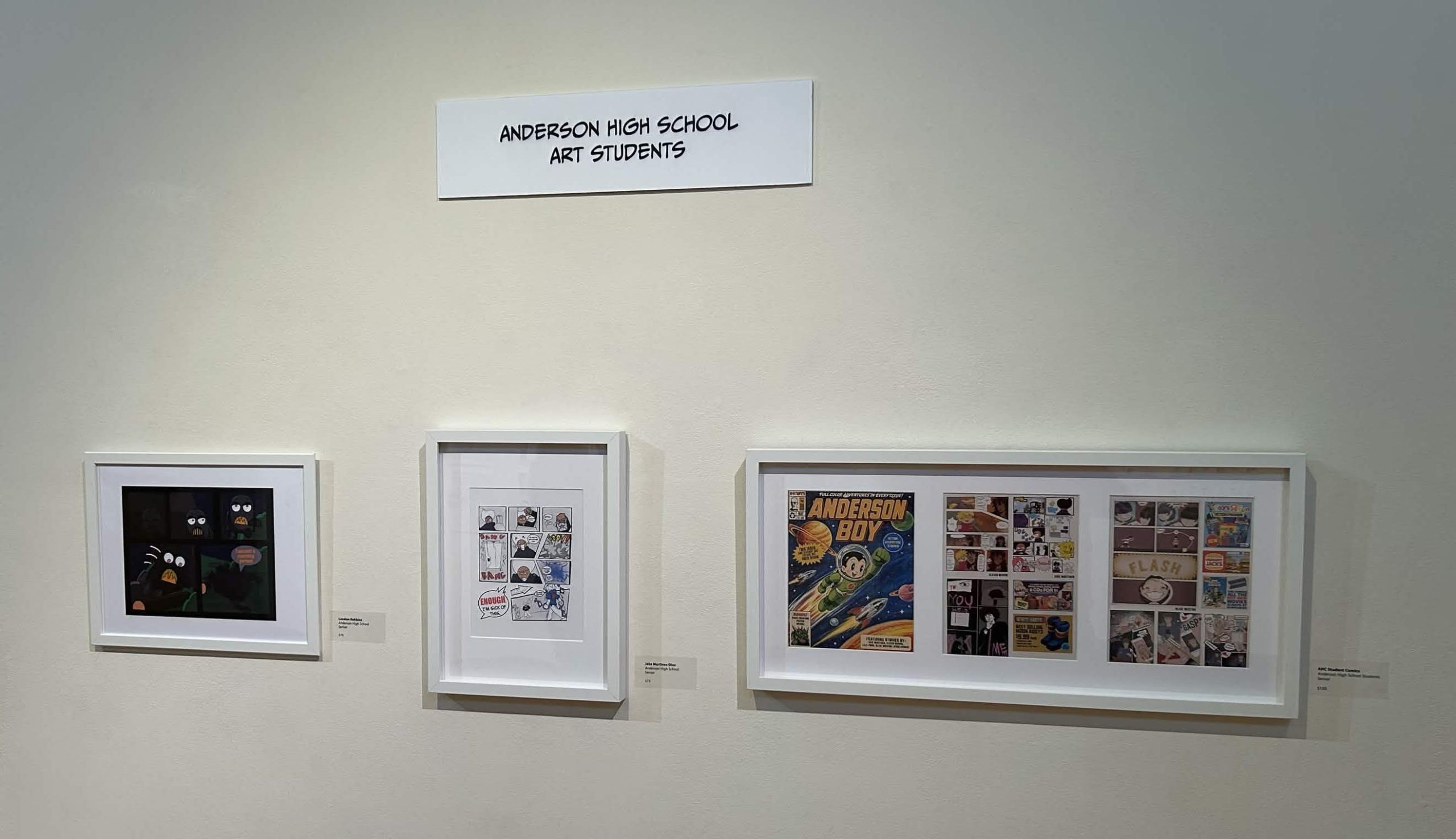
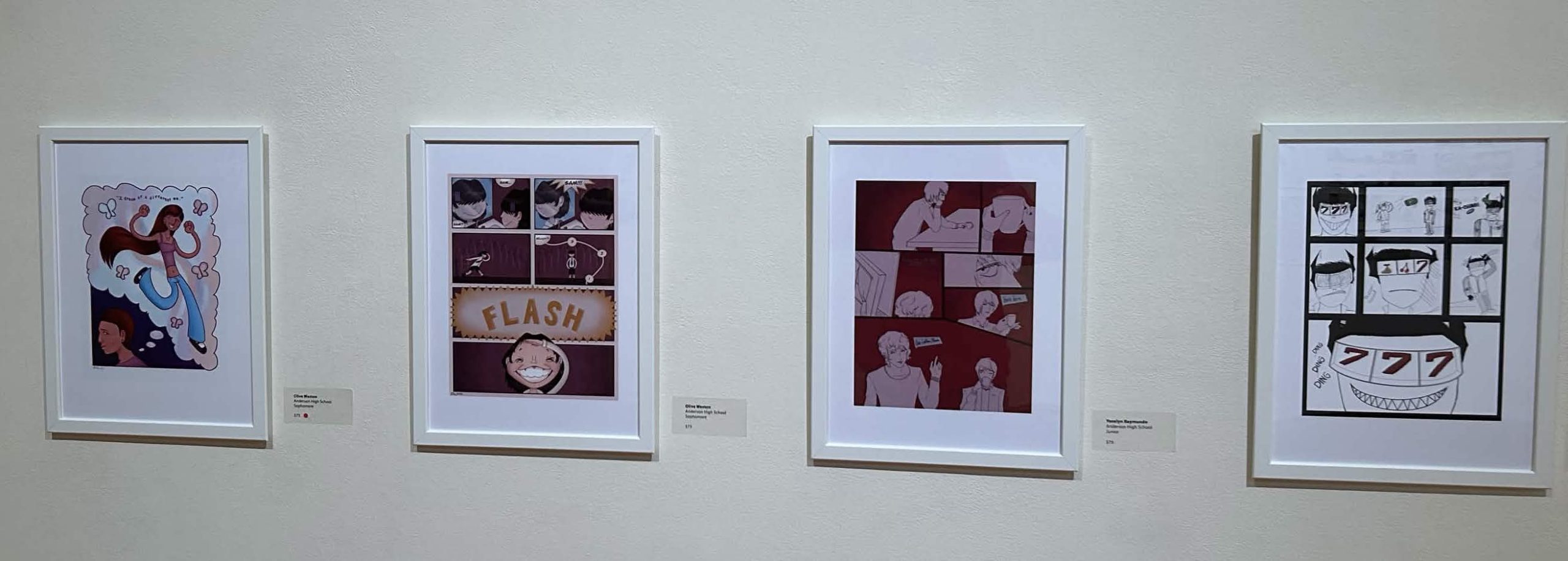
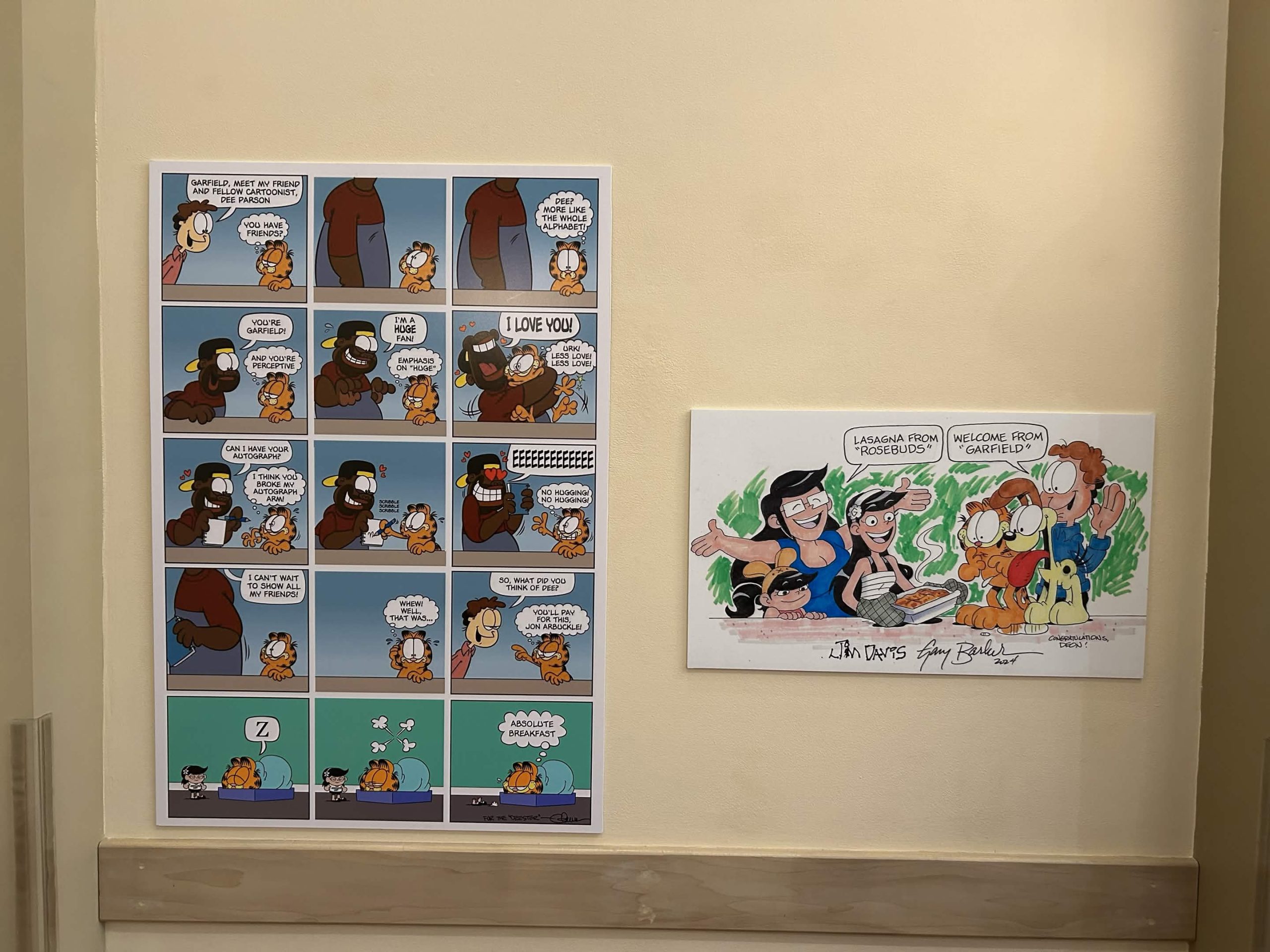
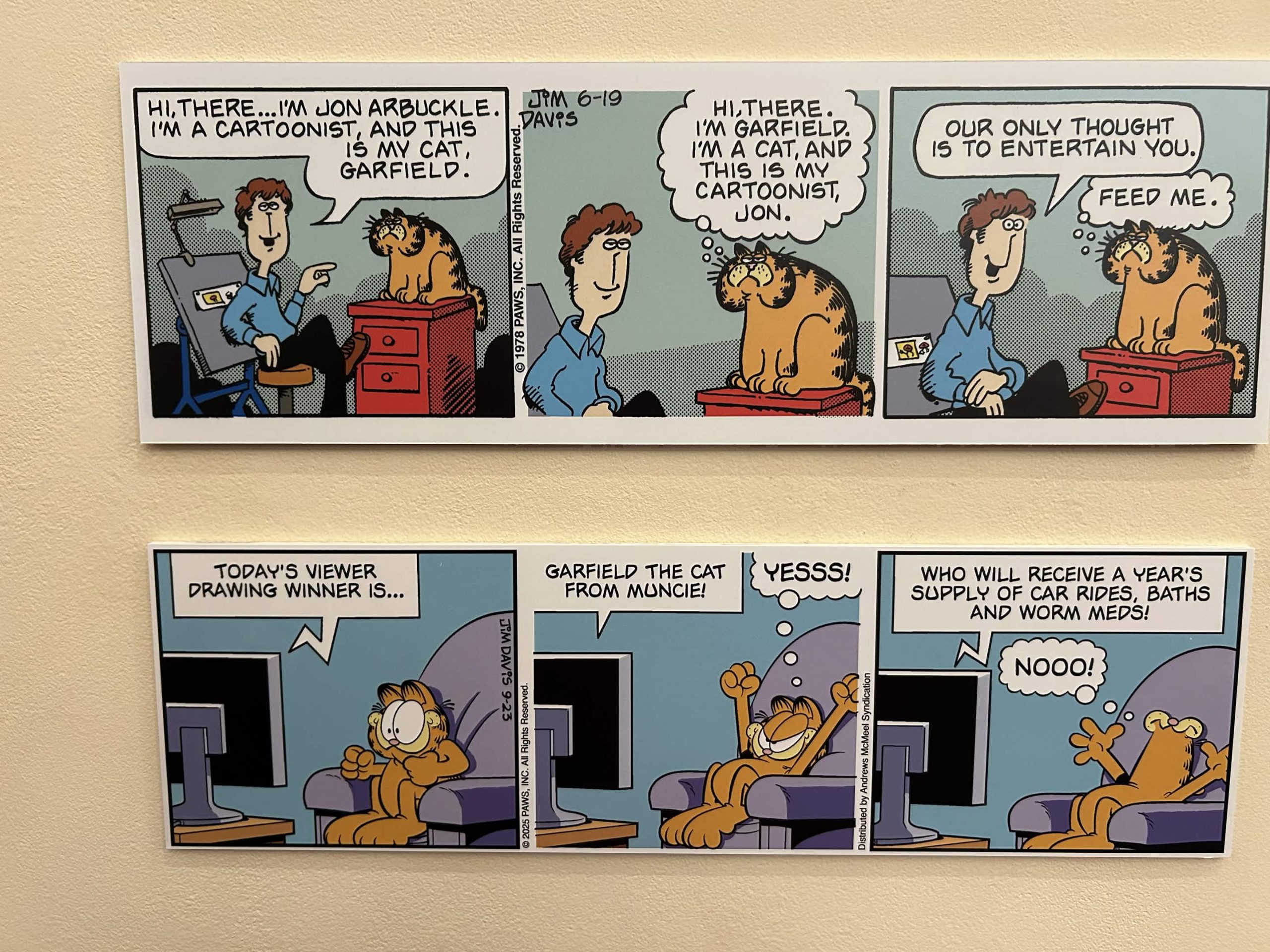
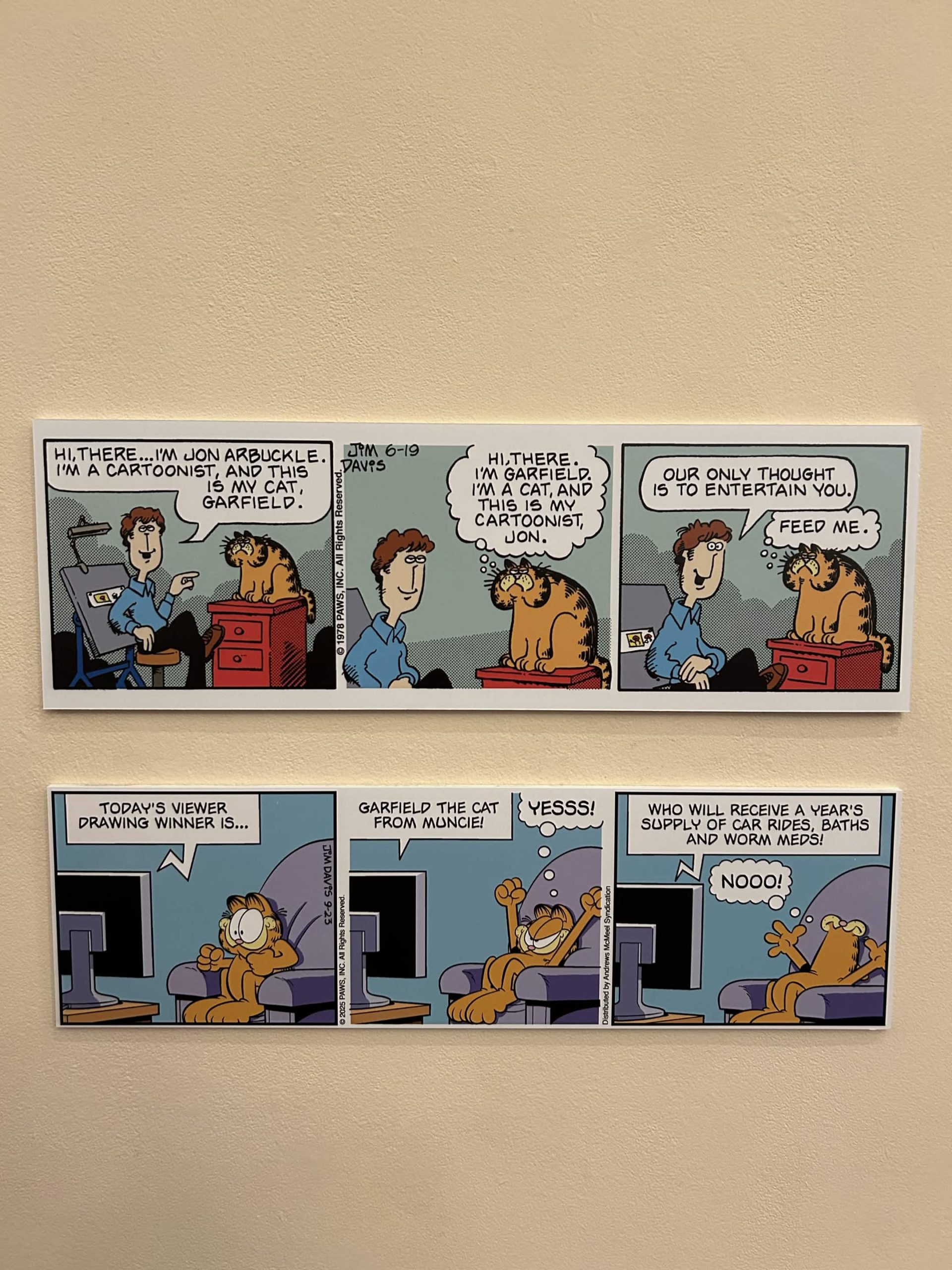
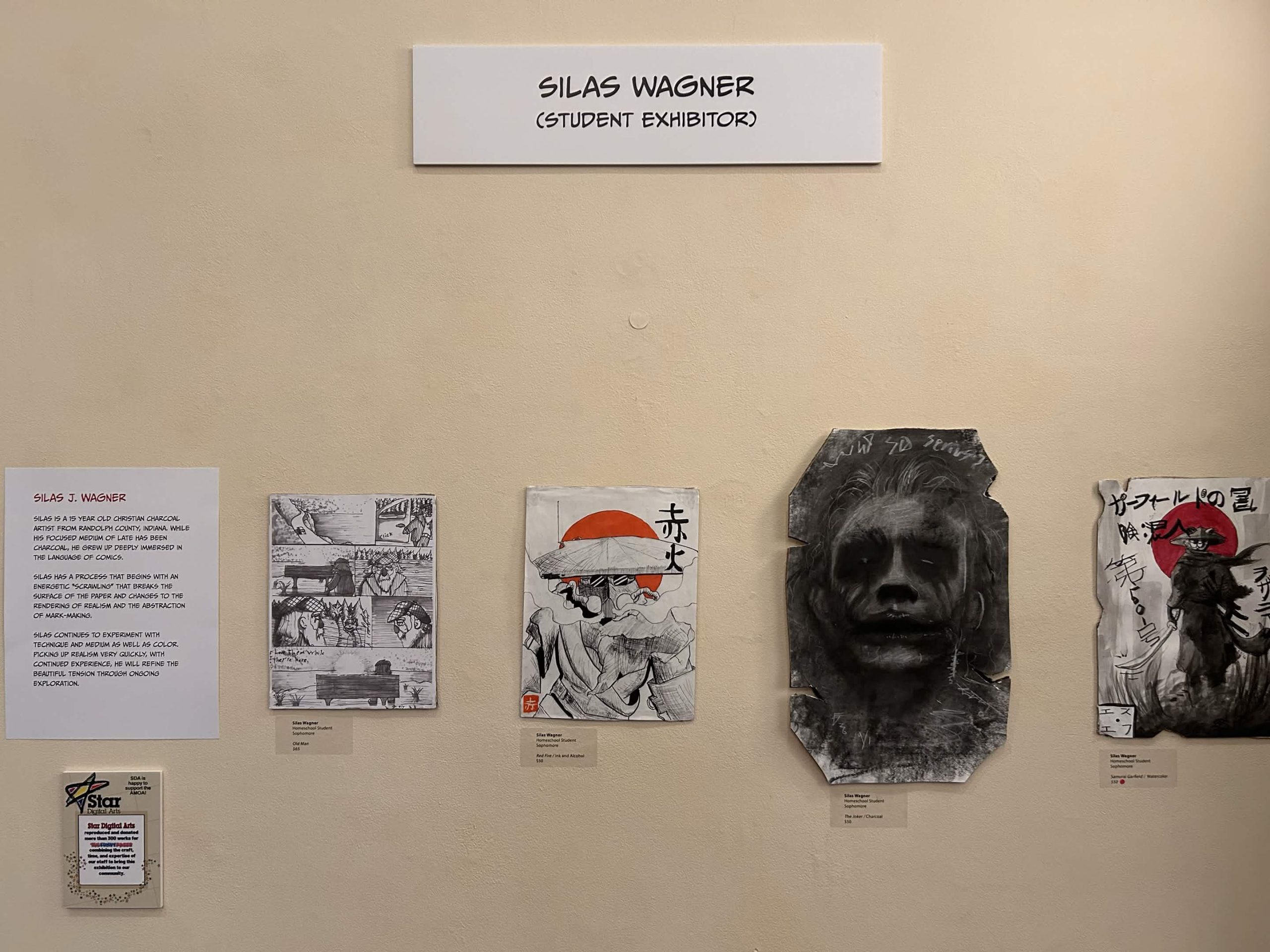
What makes the exhibit so appealing isn't just the spotlighting of the art itself so much as it is how easy to see the interconnectivity between the various pieces of it. Jeff Knurek does the Jumble, for example, which we don't generally think of as a comic (it's mostly a word puzzle after all) even if it's always illustrated. But Knurek, too, is part of the Indiana collective, which is why half of the sample jumbles on display are guest pieces from Indiana artists. Deon Parson of Rosebuds, Jim Davis of Garfield, I've already mentioned. Erik Reaves of Hi & Lois and Dean Young of Blondie are also represented here. There's also a whole consortium of work from the art program at Anderson High School, which was high quality enough and numerous enough I was disappointed they weren't collected in zine form. One piece that looked like a zine cover was, I learned to my regret, actually just a stylistic choice for the high school yearbook that year.
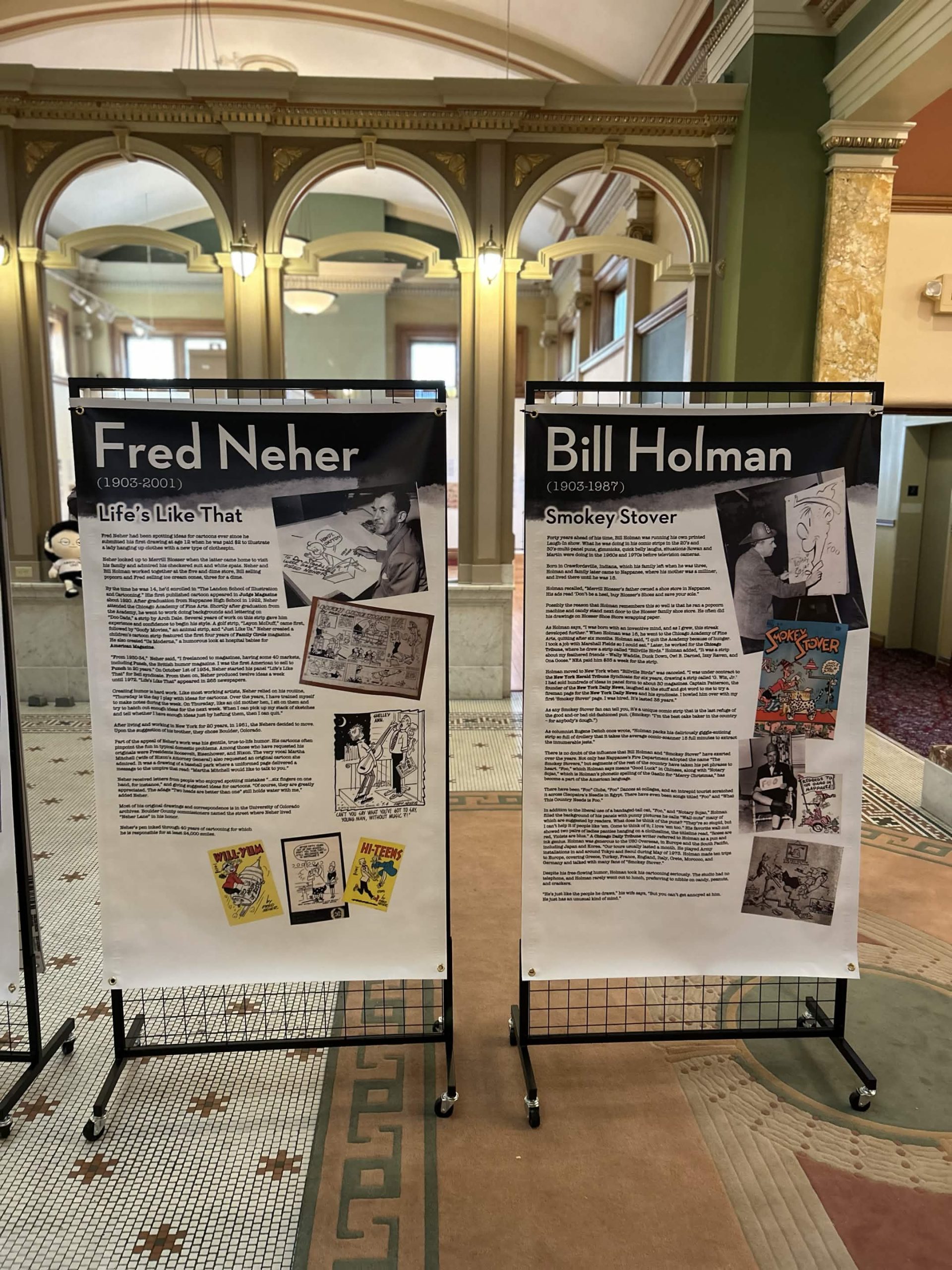
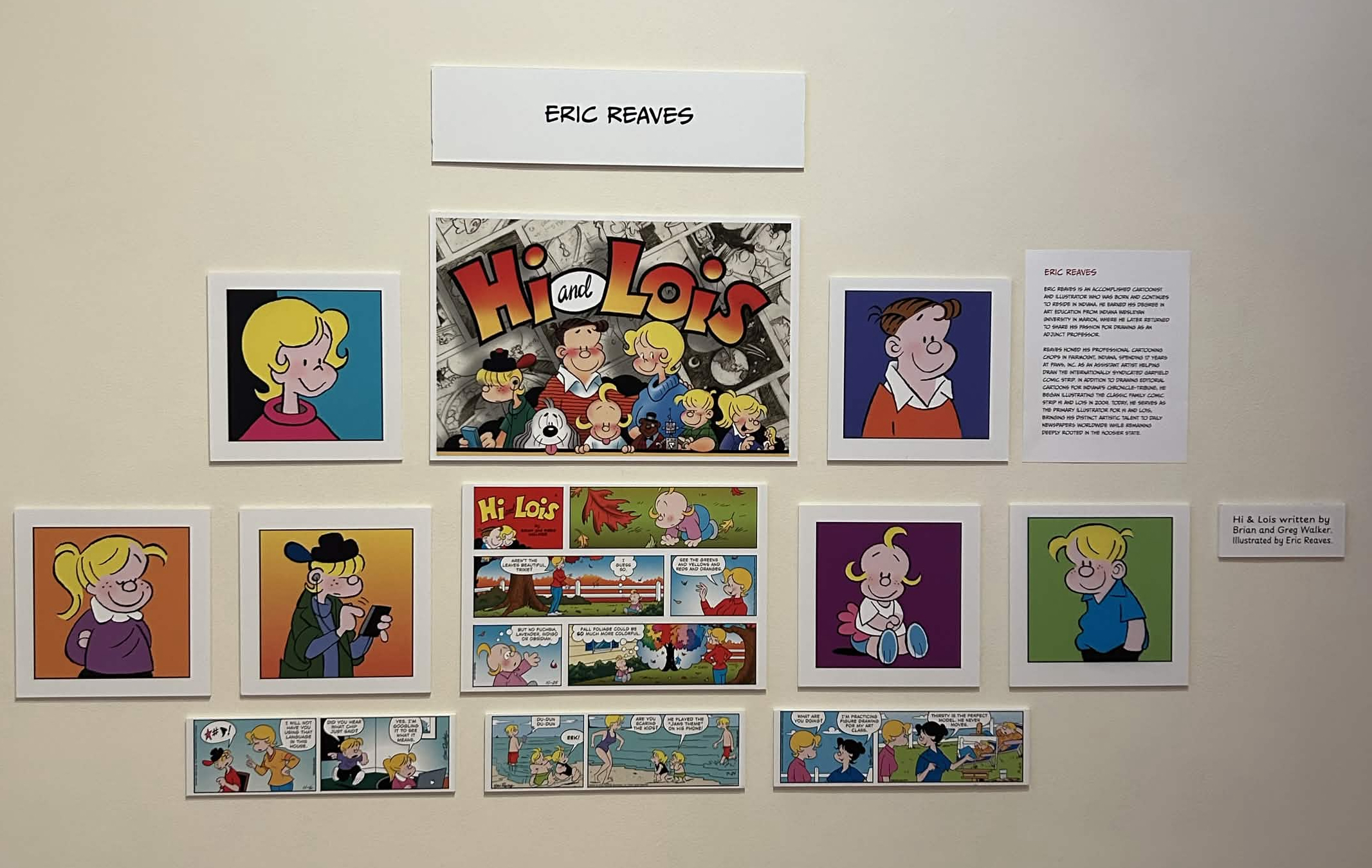
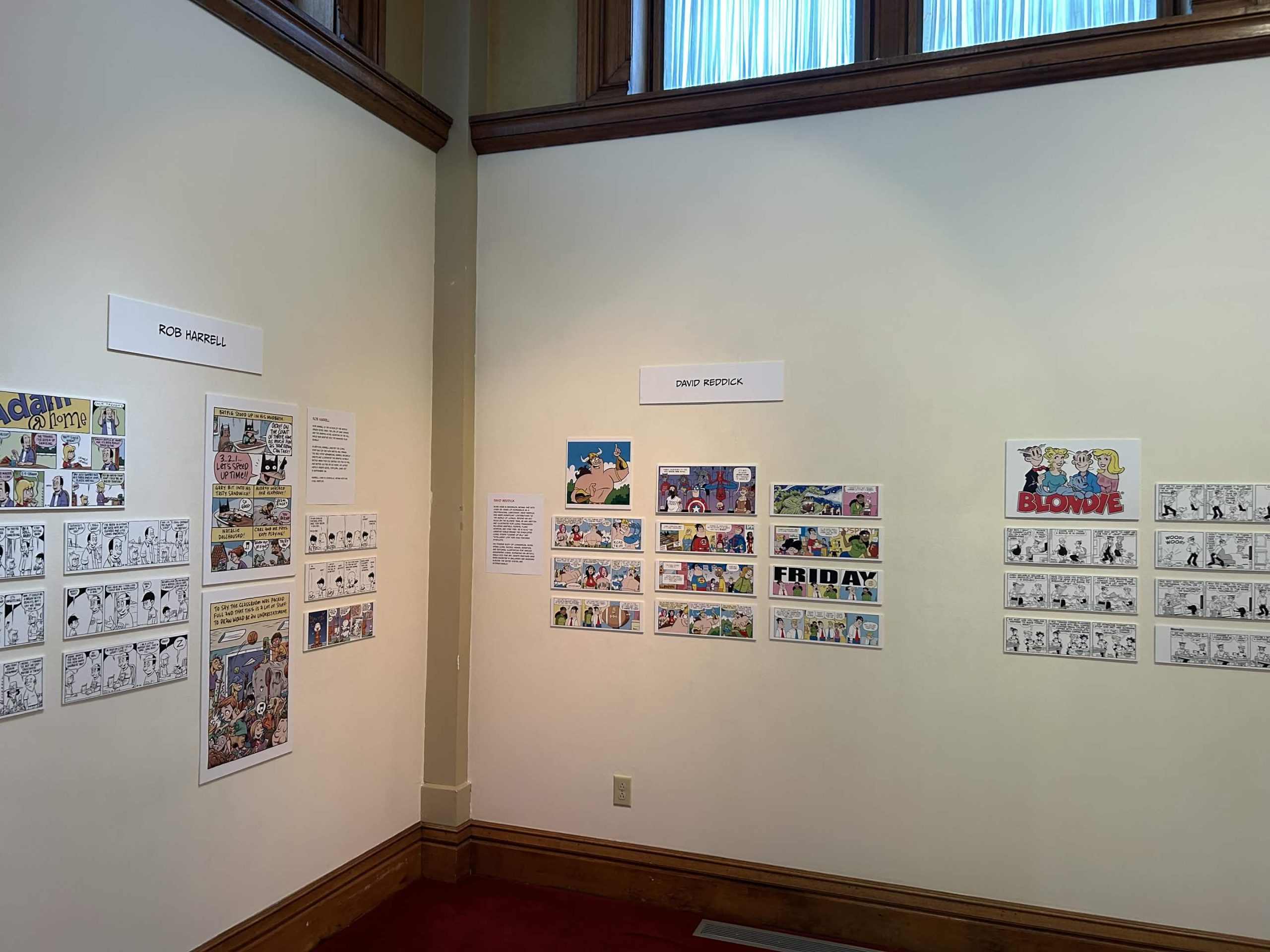
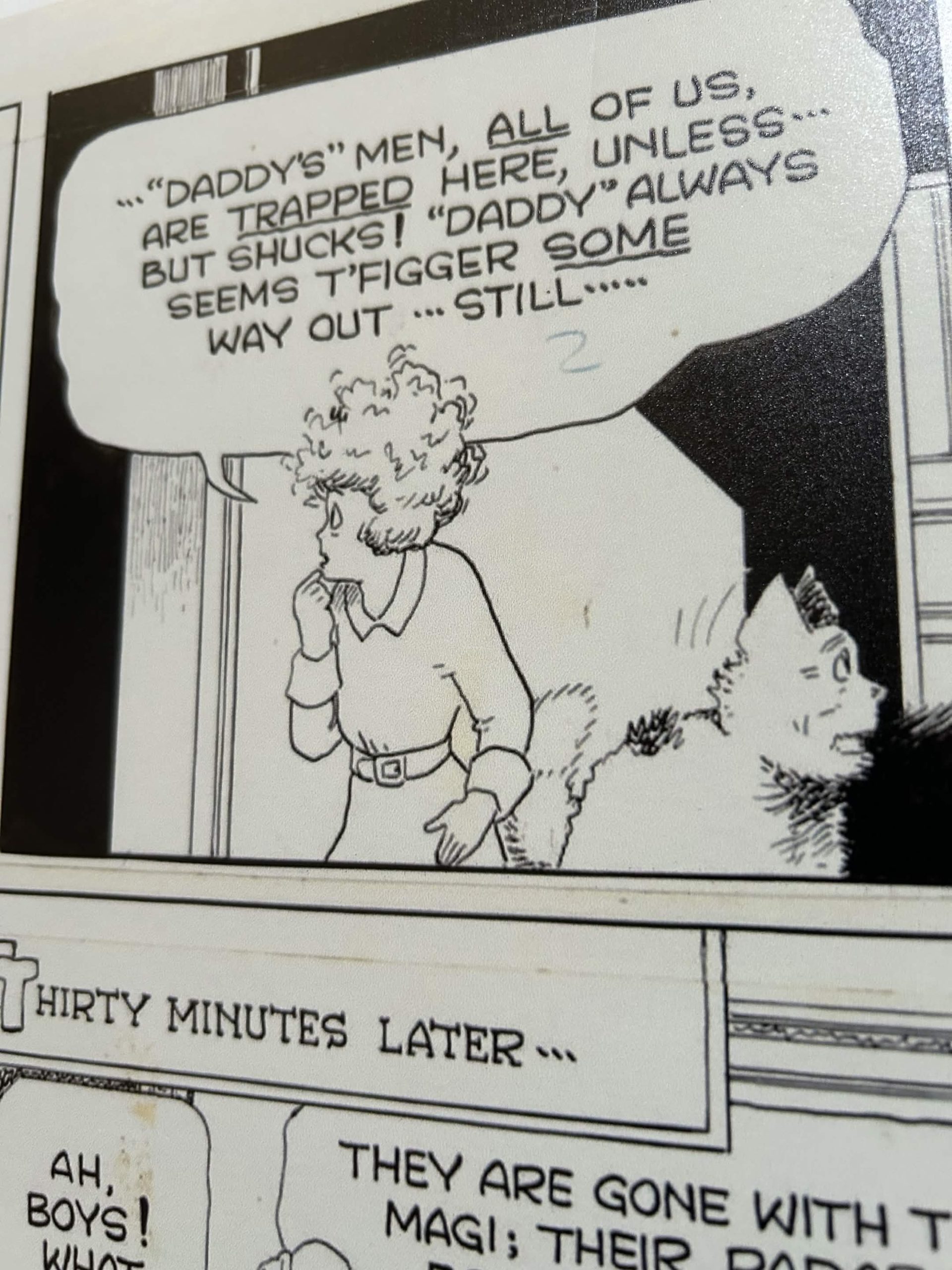
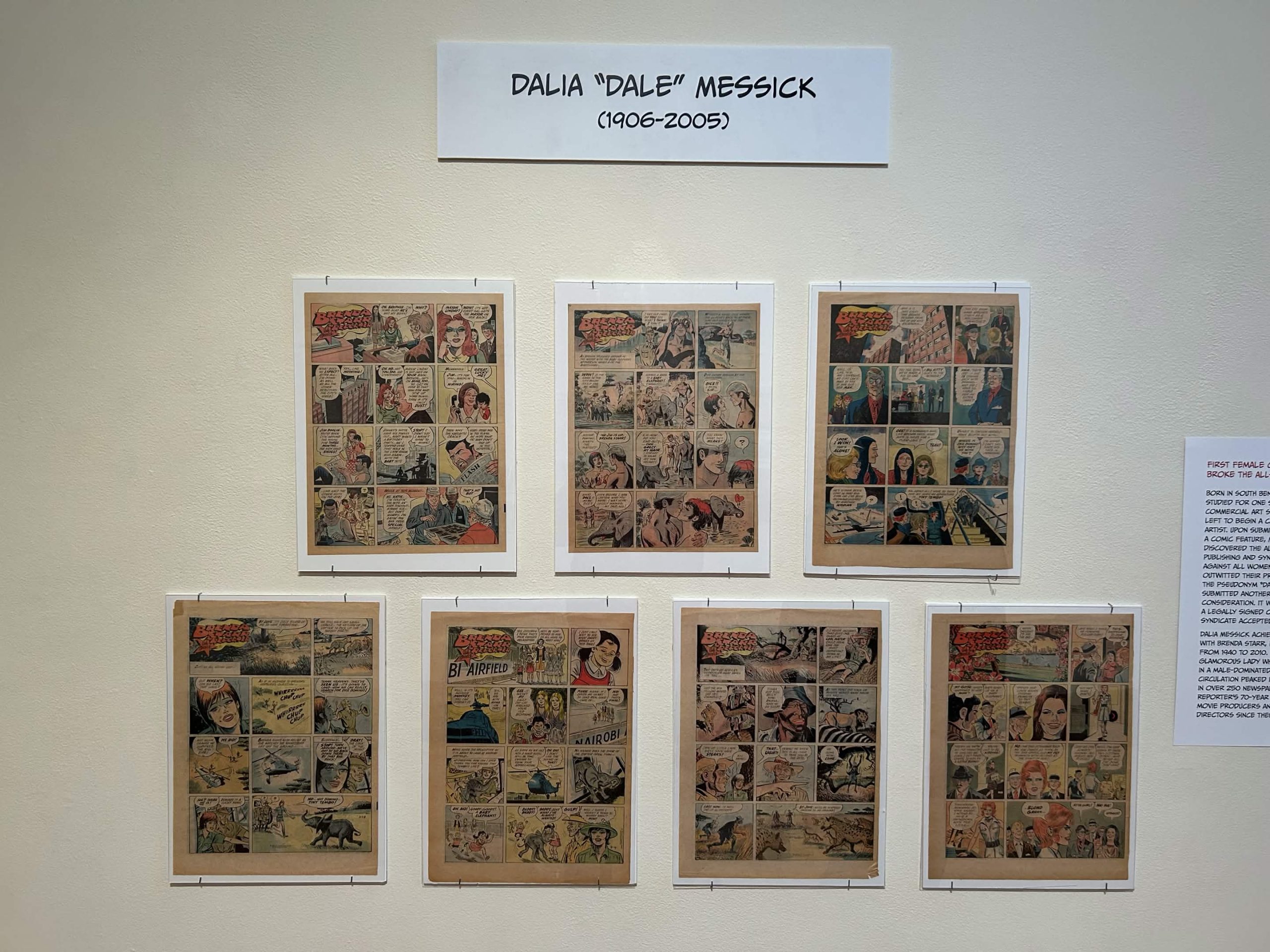
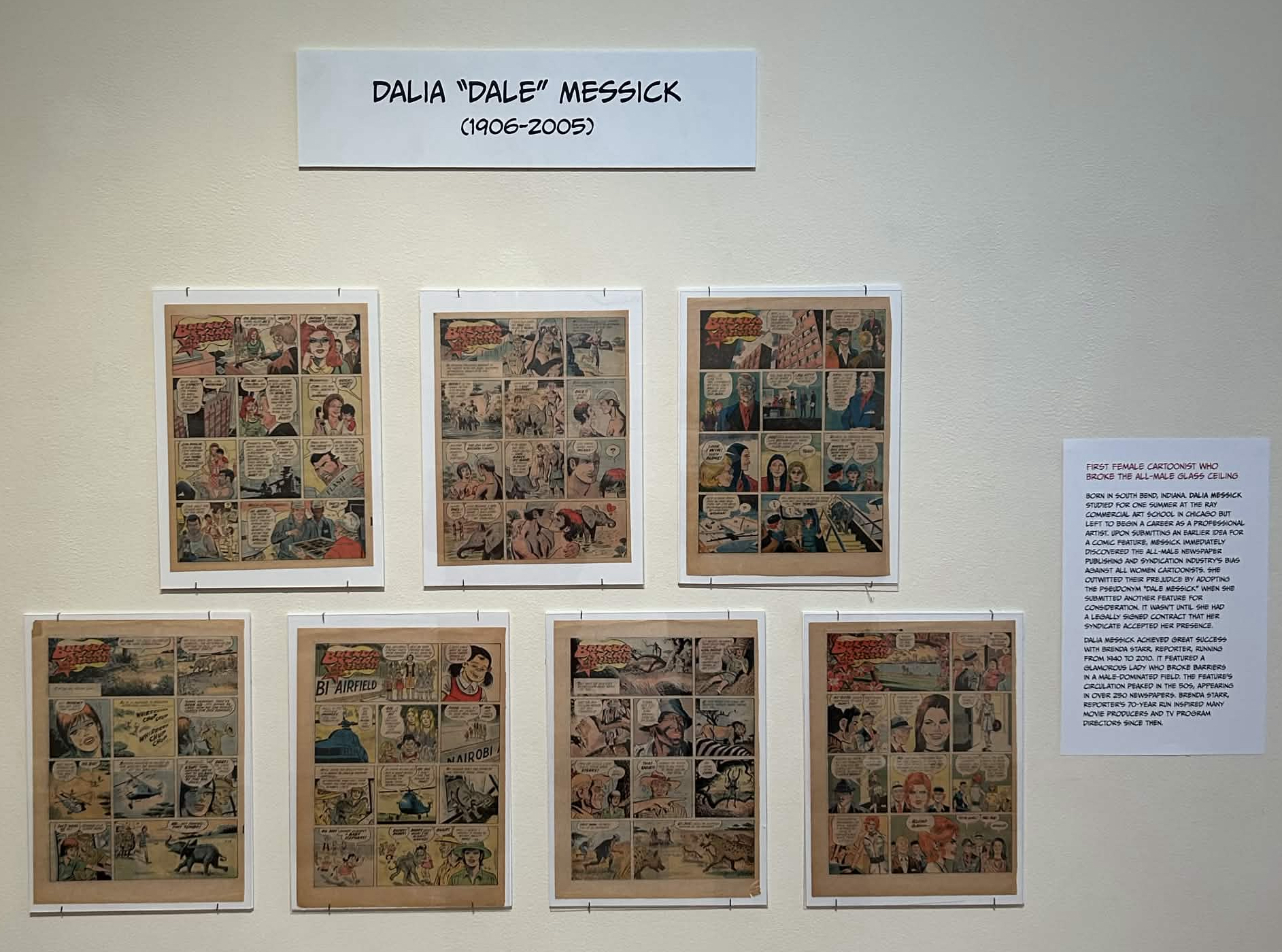
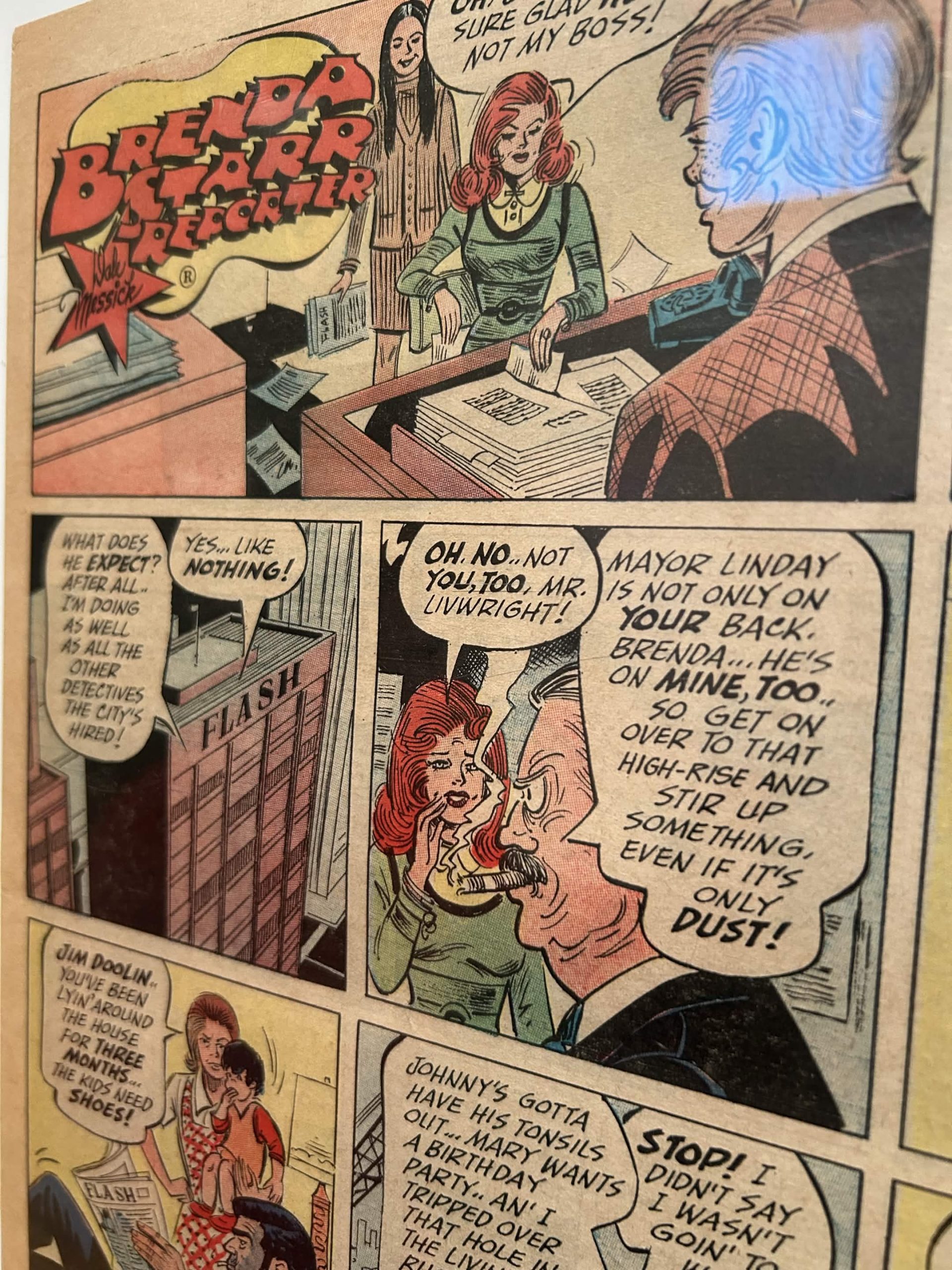
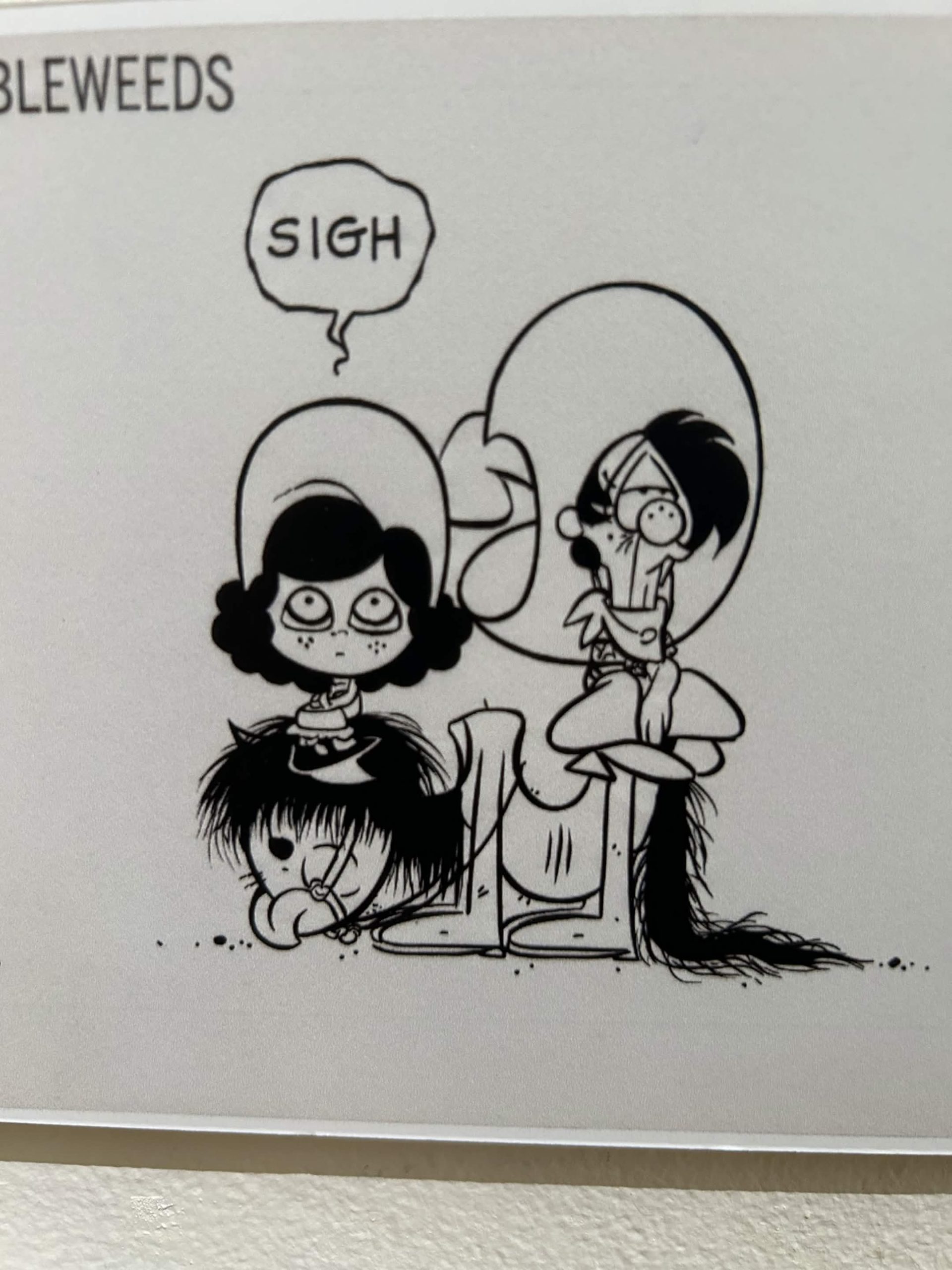
Elsewhere in the Dried Ink Gallery (a diplomatic way of stating that all the artists featured there are dead), I was surprised to learn that Dale Messick, author of the long-running Brenda Starr, and the first woman cartoonist to break into the serial daily format, has Indiana ties. I was also more surprised than I thought to see Brenada Starr's bright red hair. I knew as a matter of fact that Brenda Starr has red hair. The black-and-white versions I'm used to seeing make frequent reference to it, but it's a different experience looking at old archived black-and-white newsprints compared to the collected color markups under museum light. Harold Gray of Little Orphan Annie fame is another Indiana connection. But Tom Ryan of Tumbleweeds has the most concrete relation to the present day, as Jim Davis got his start as Ryan's assistant.
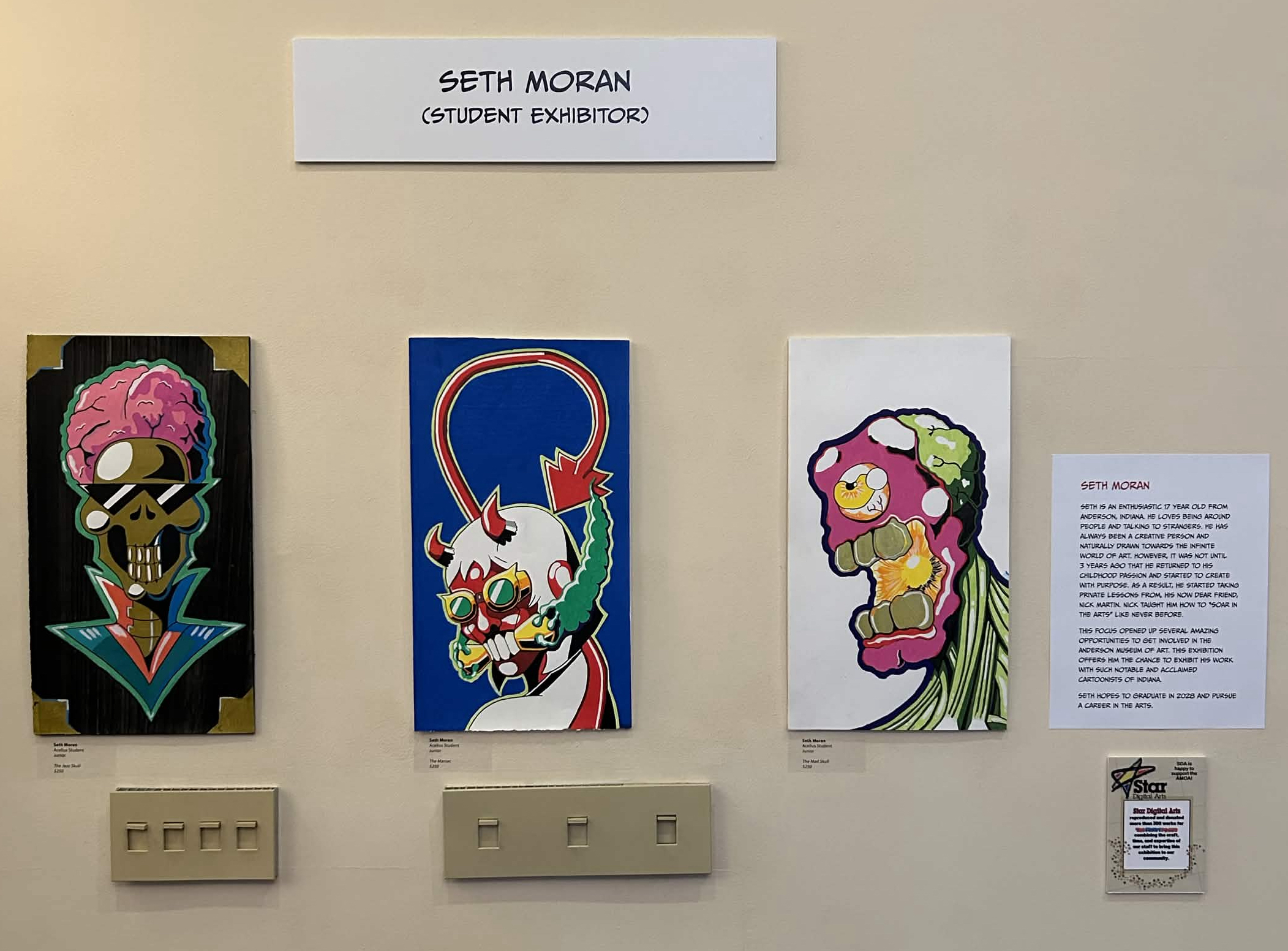
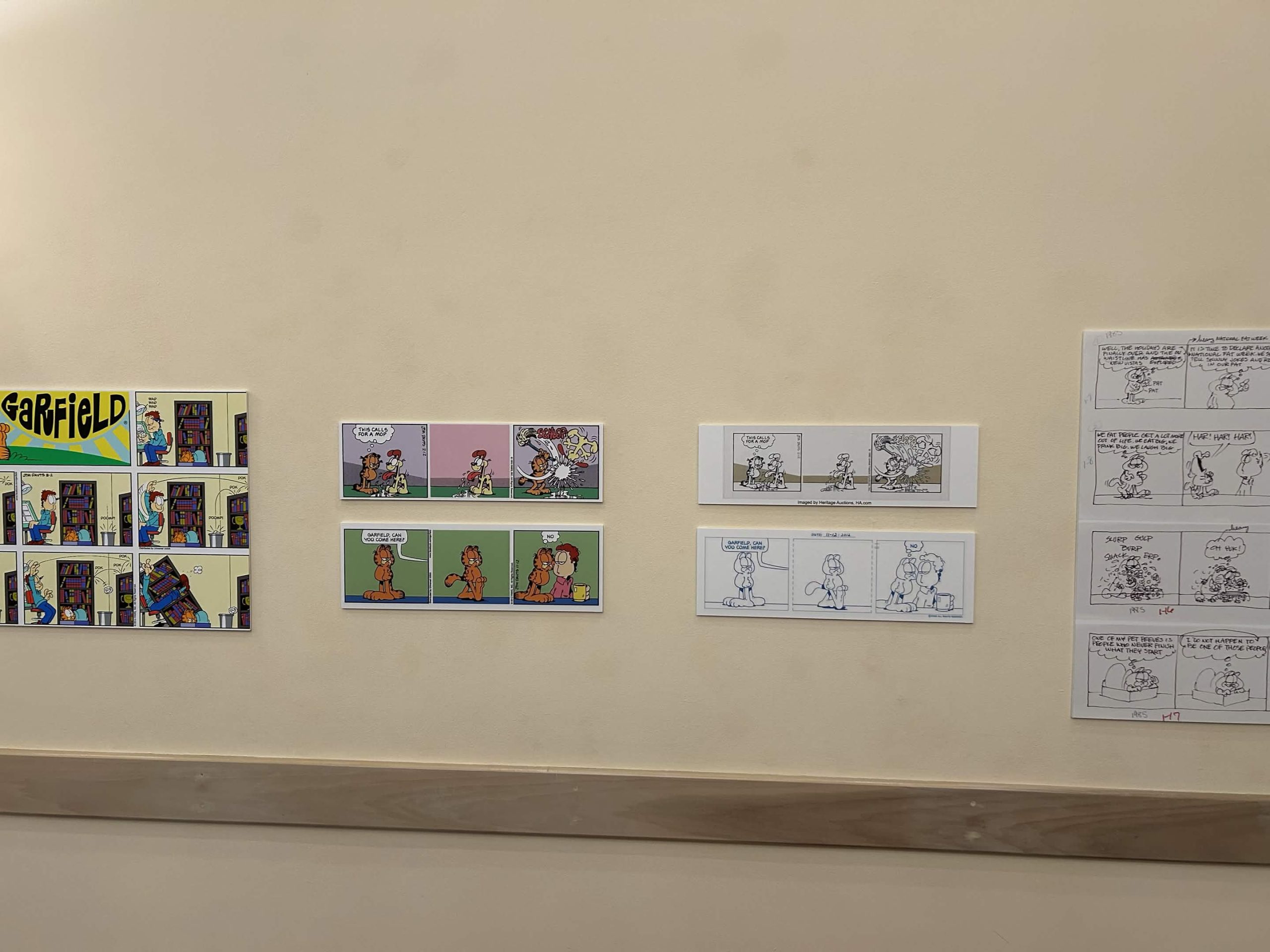
All these roads, naturally enough, lead back to the Grand Gallery, where Davis, Parson, and Schulz share space with a couple of student exhibitors. There's not as much to say about Davis and Schulz that hasn't been said many times before. What makes their work compelling here is their continuity with other artists, since outside of the funny pages themselves, we don't generally think of comic artists as colleagues rather than competitors despite so many of them calling the small state of Indiana their home.
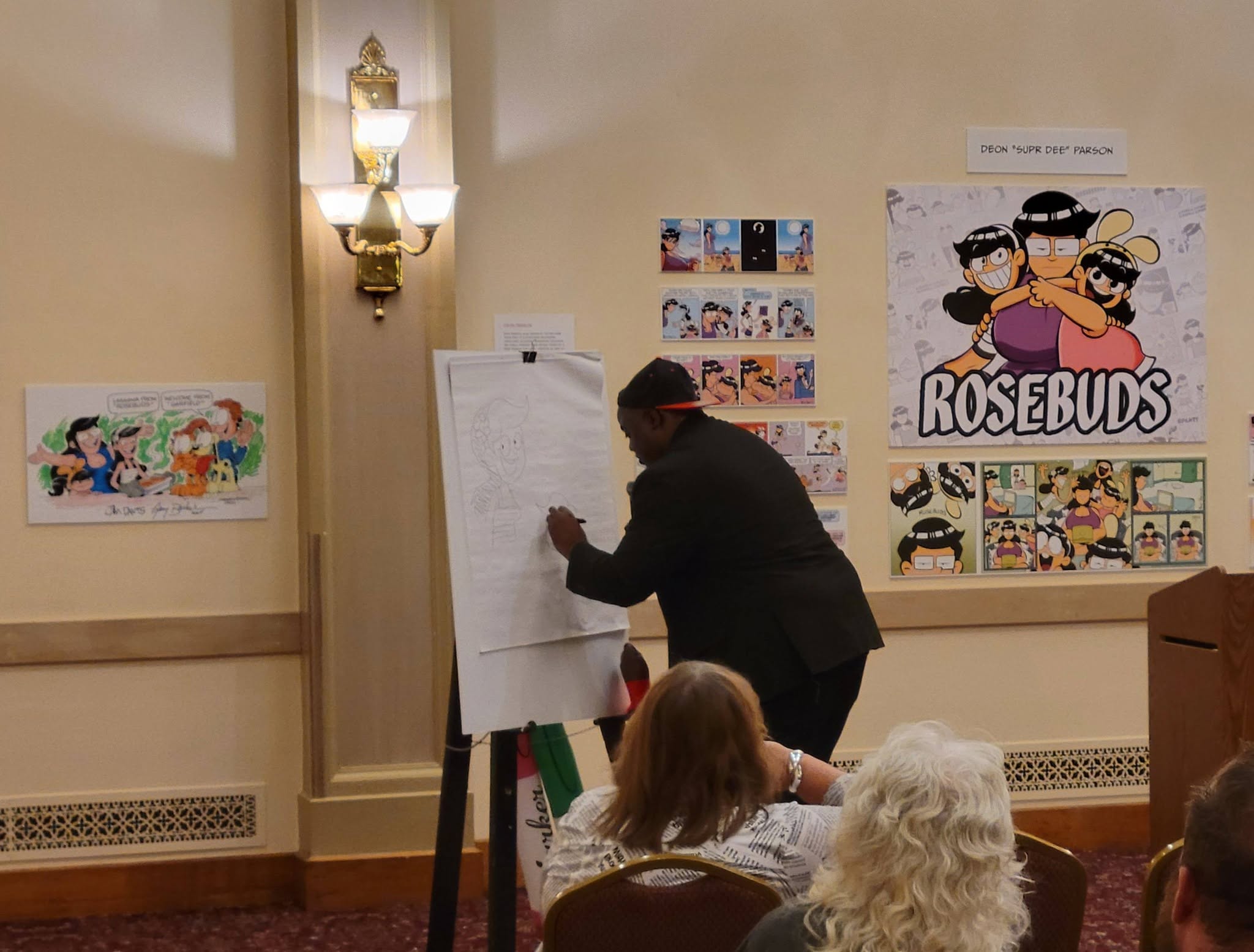
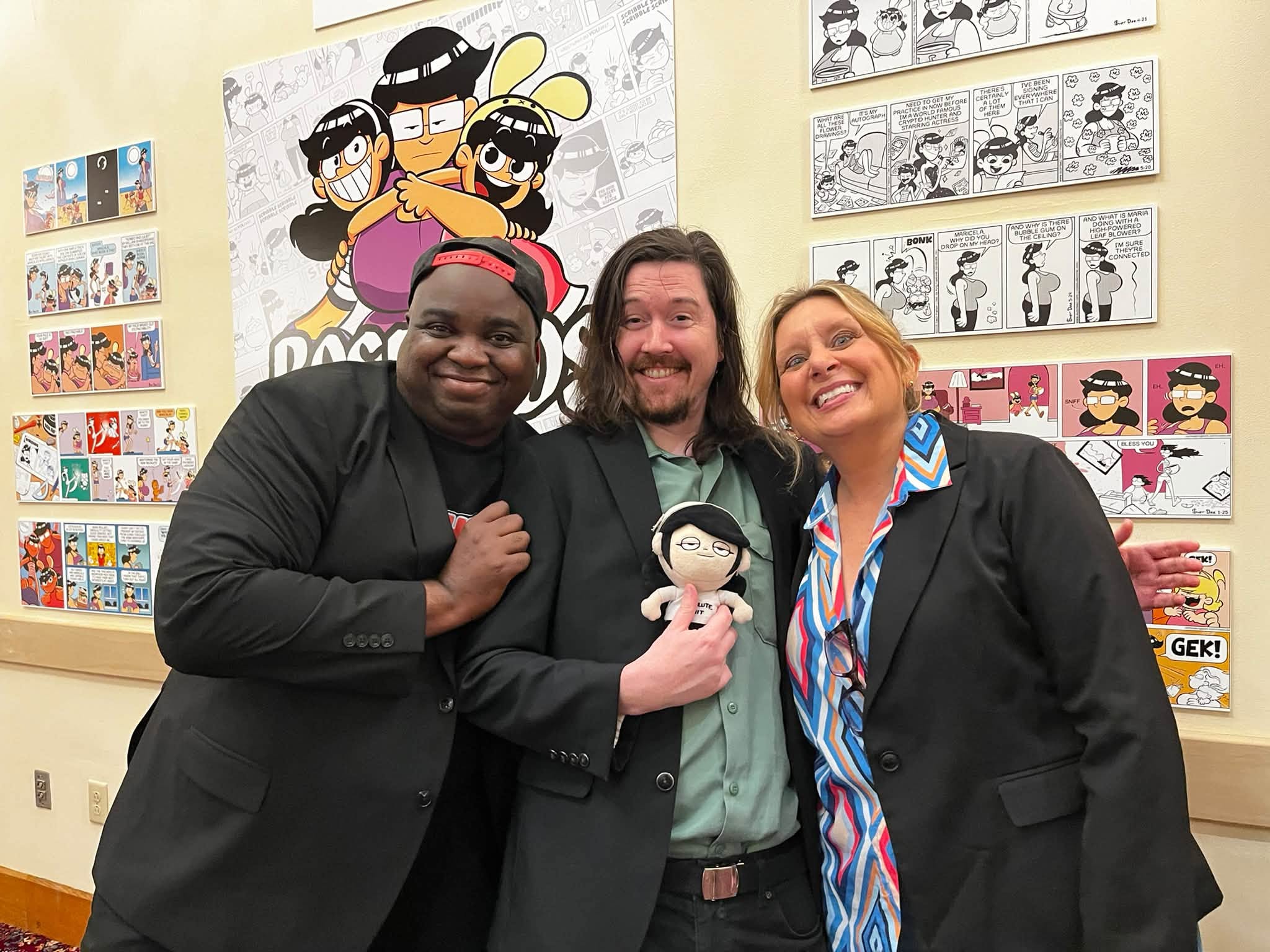
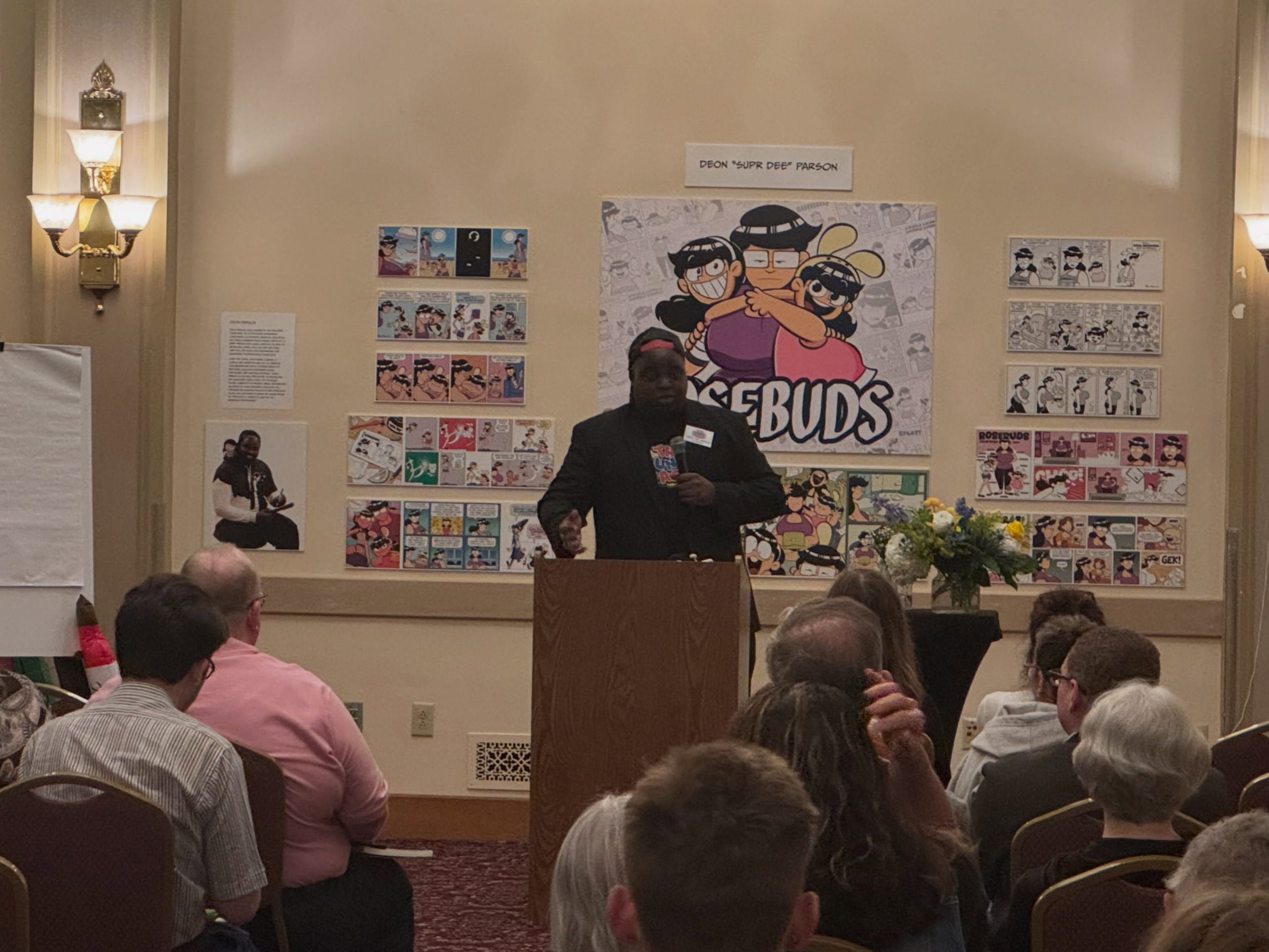
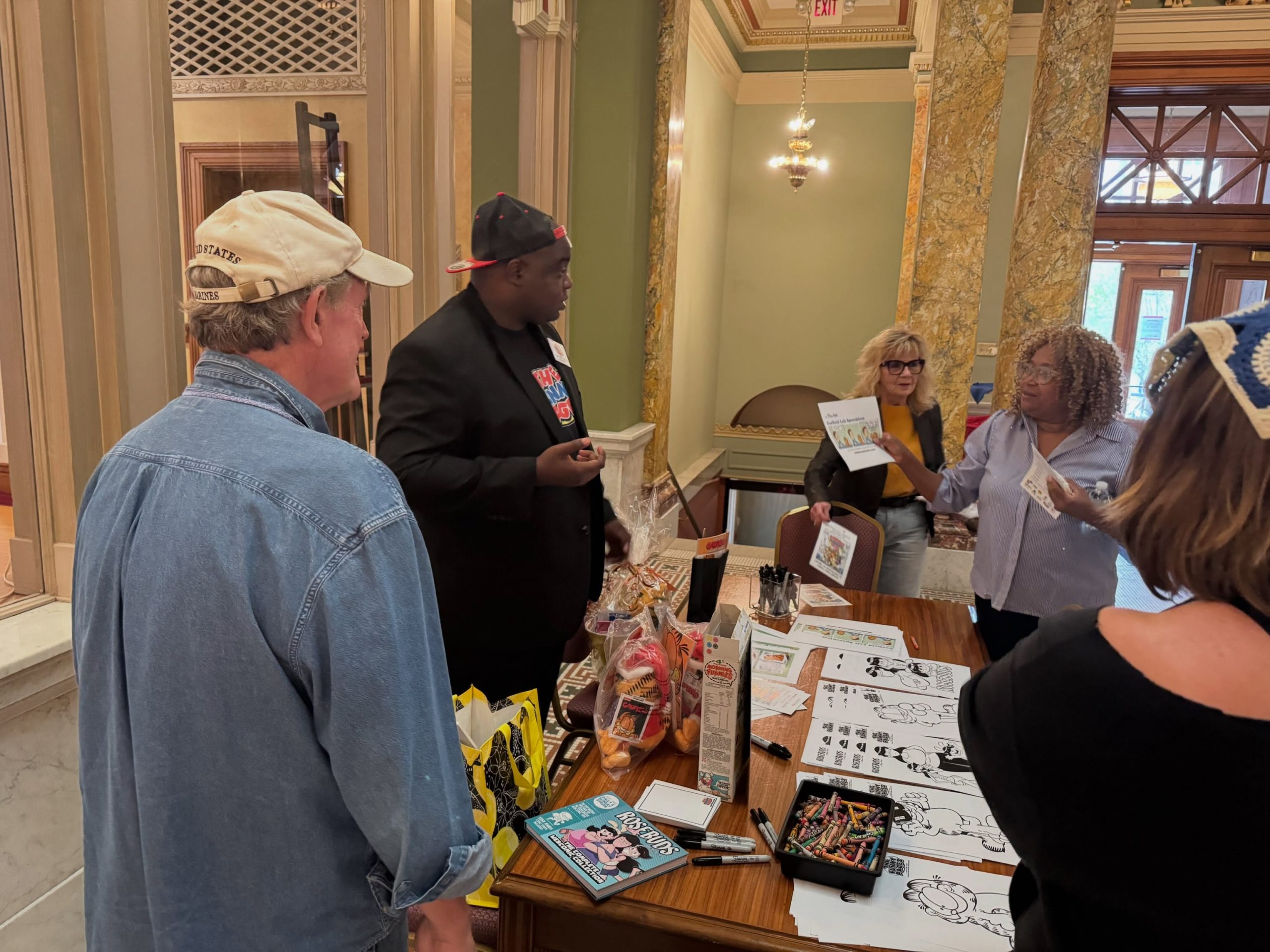
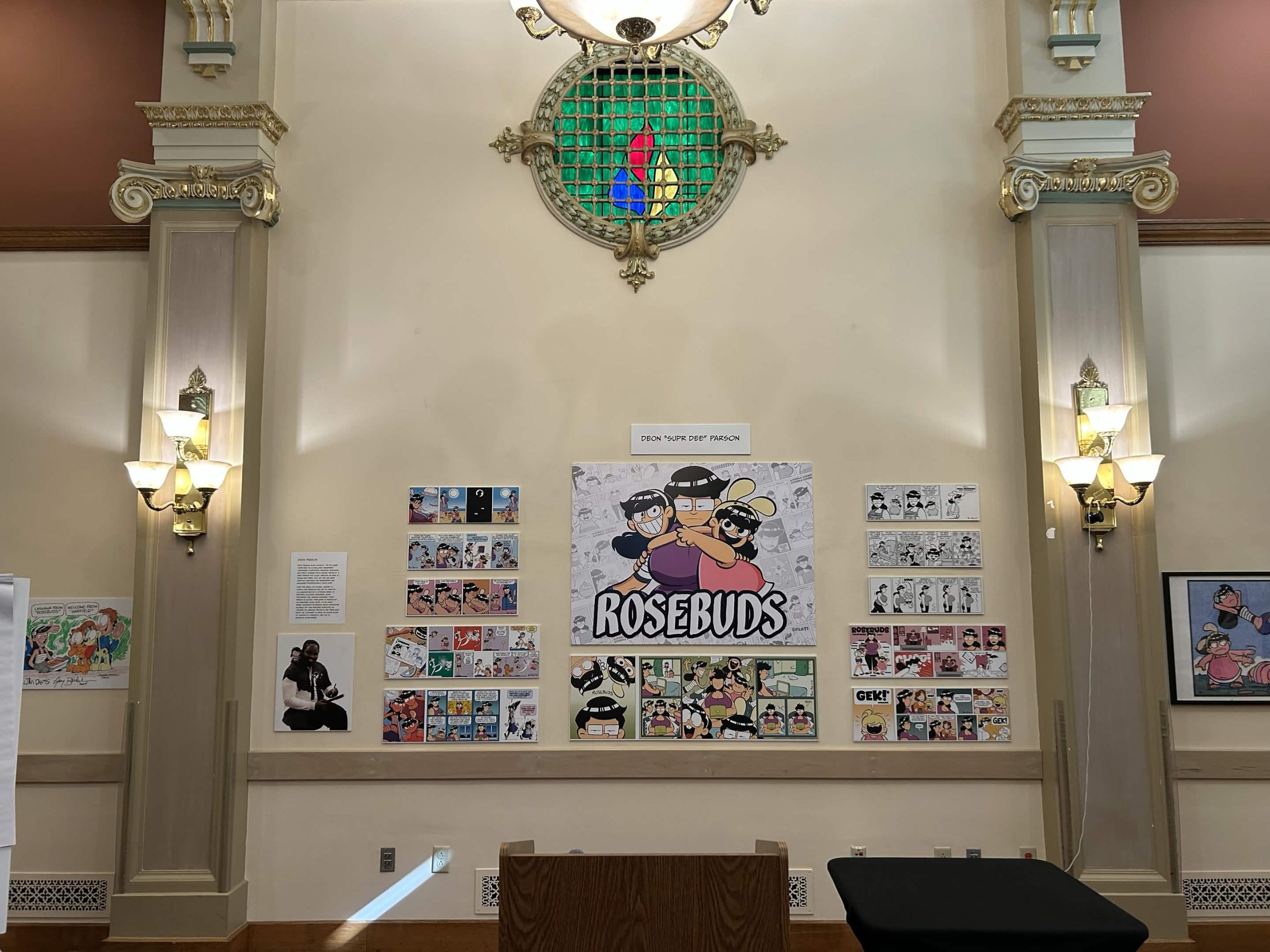
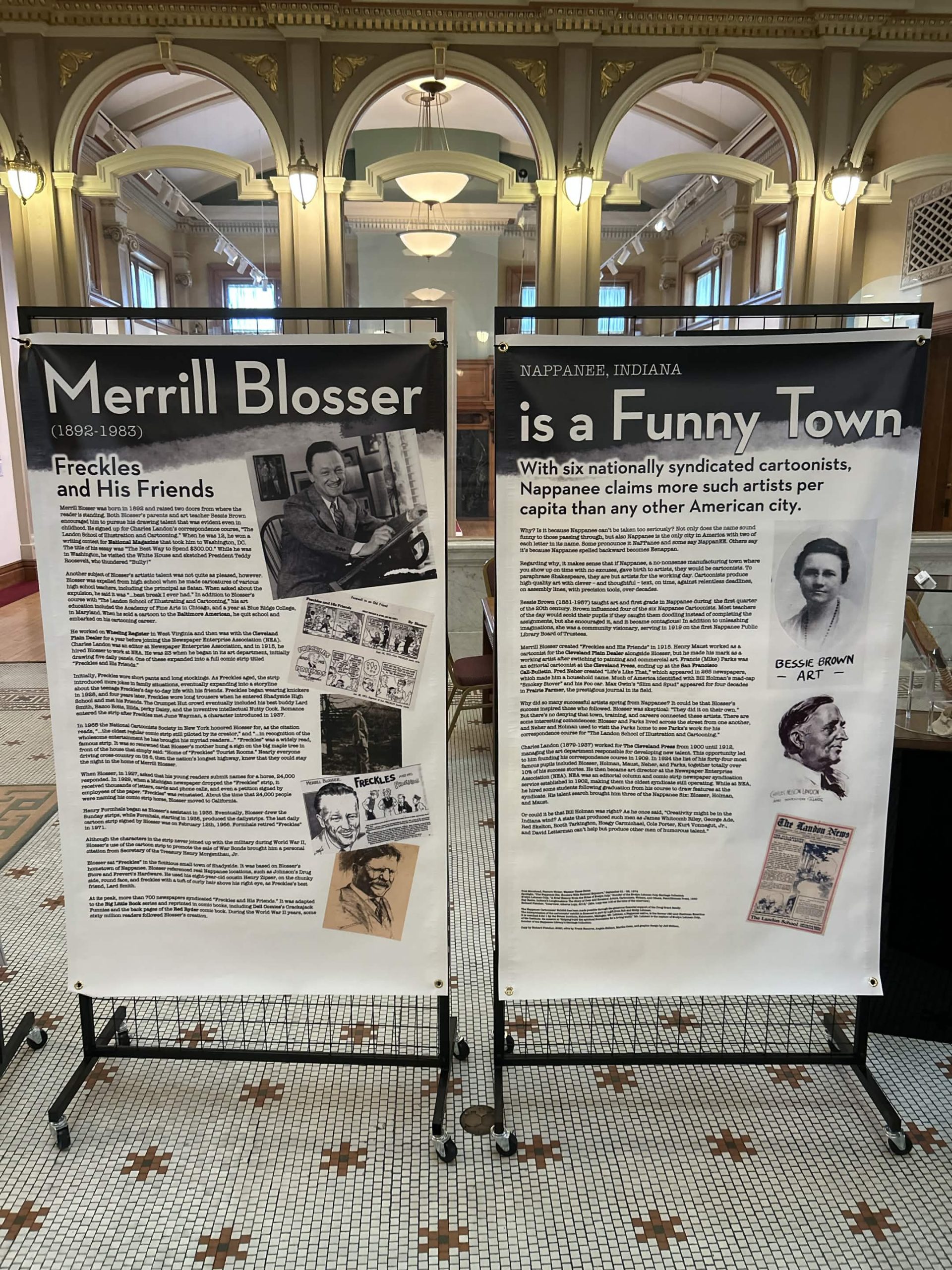
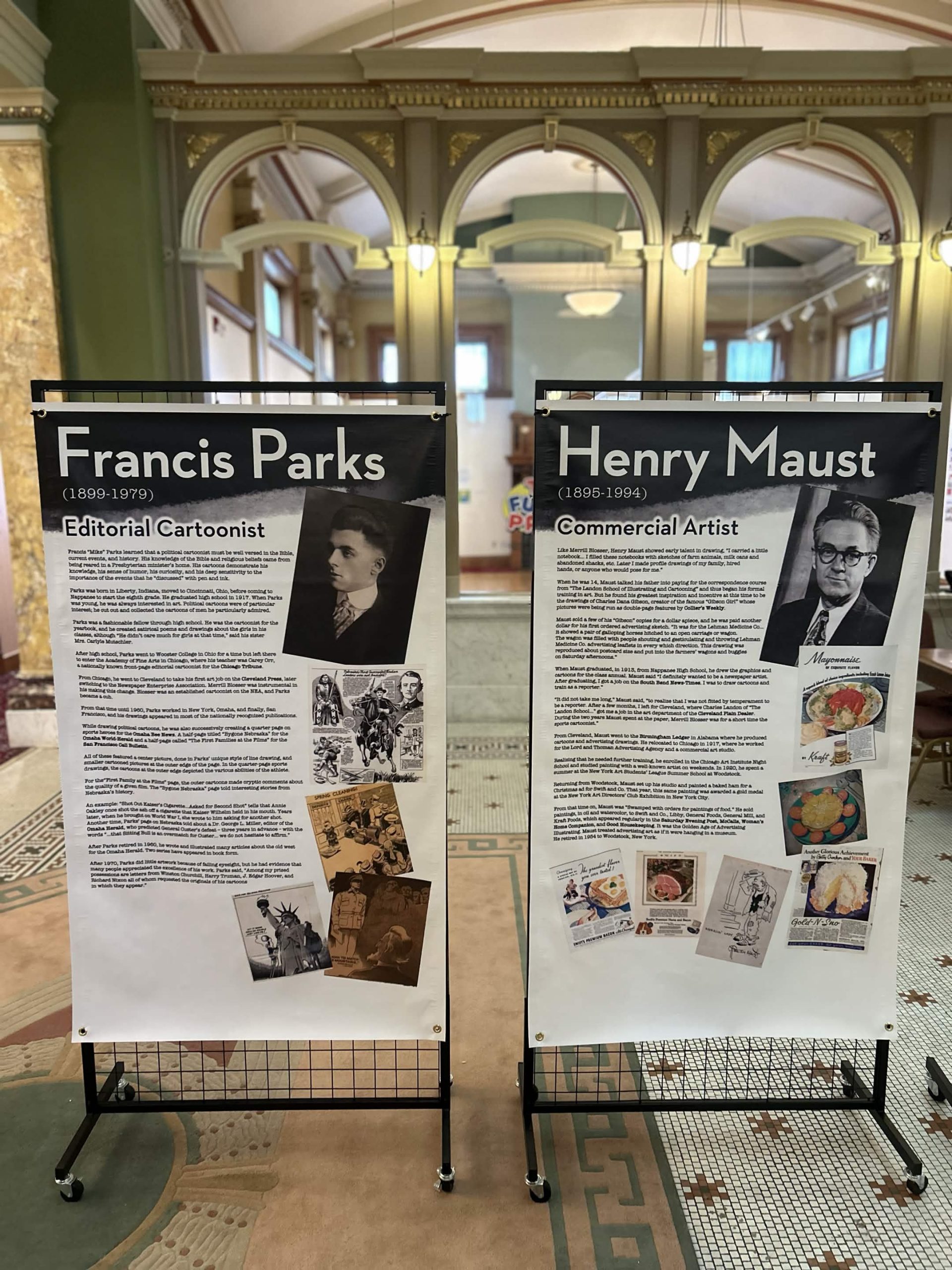
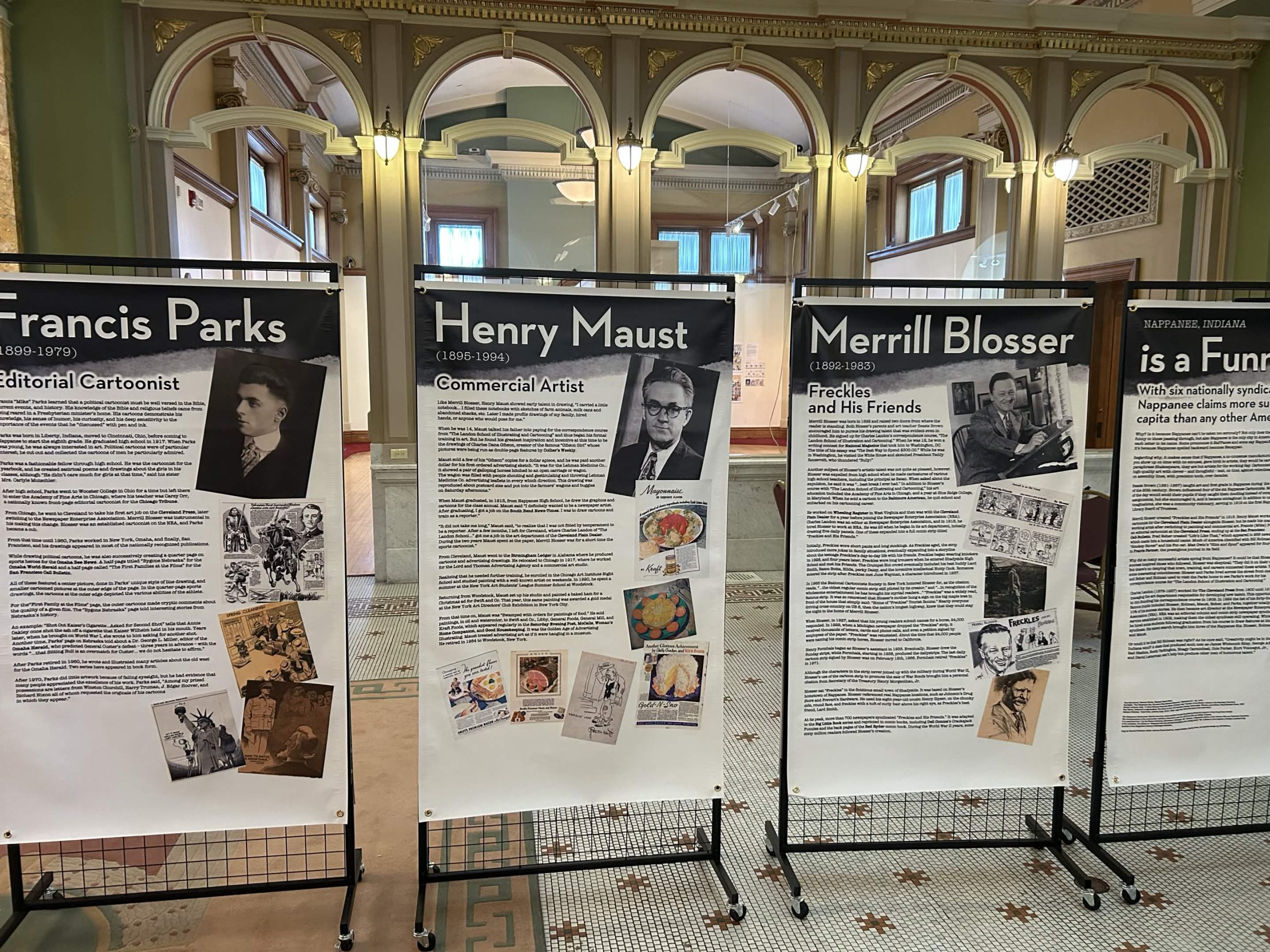
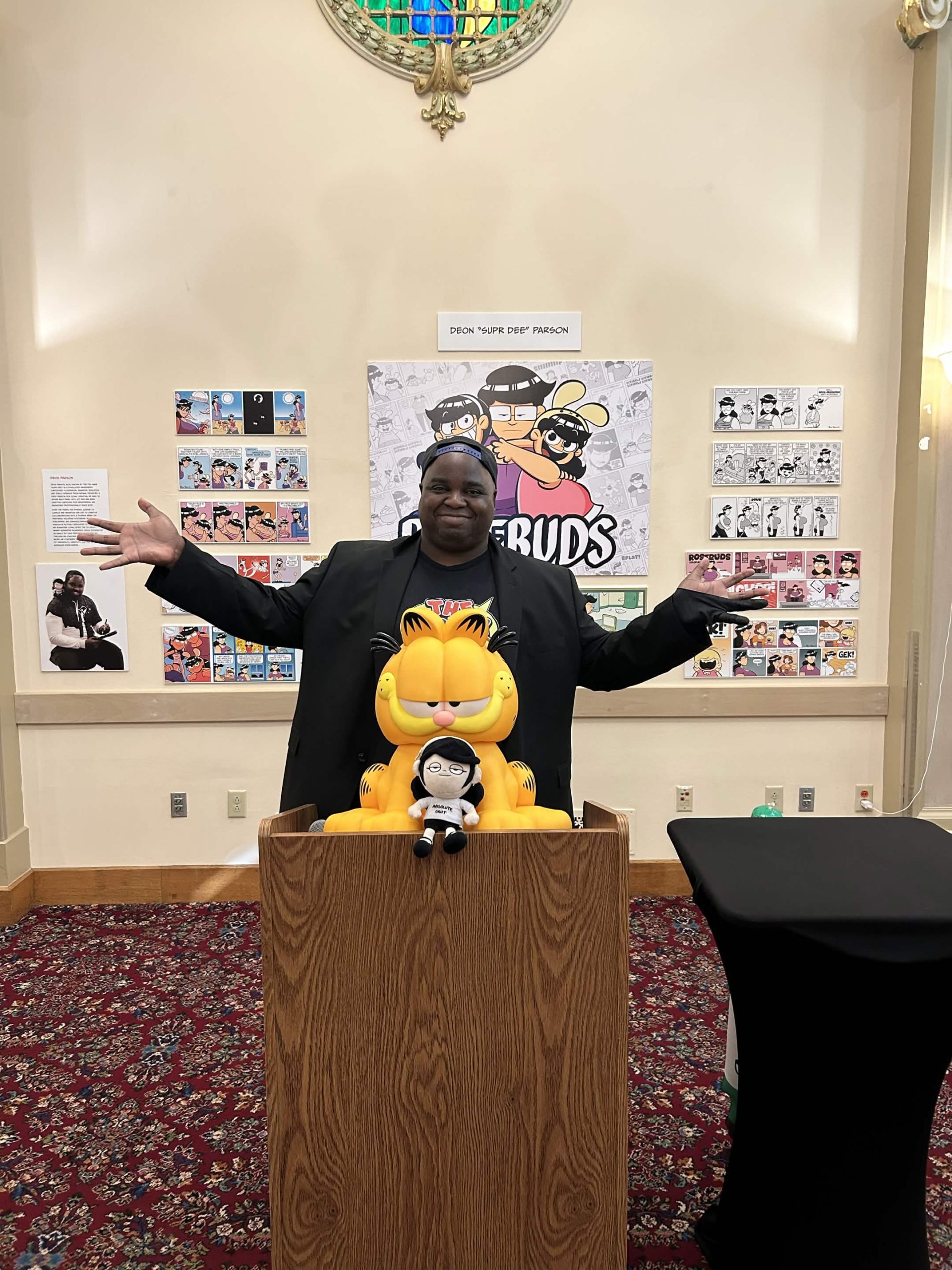
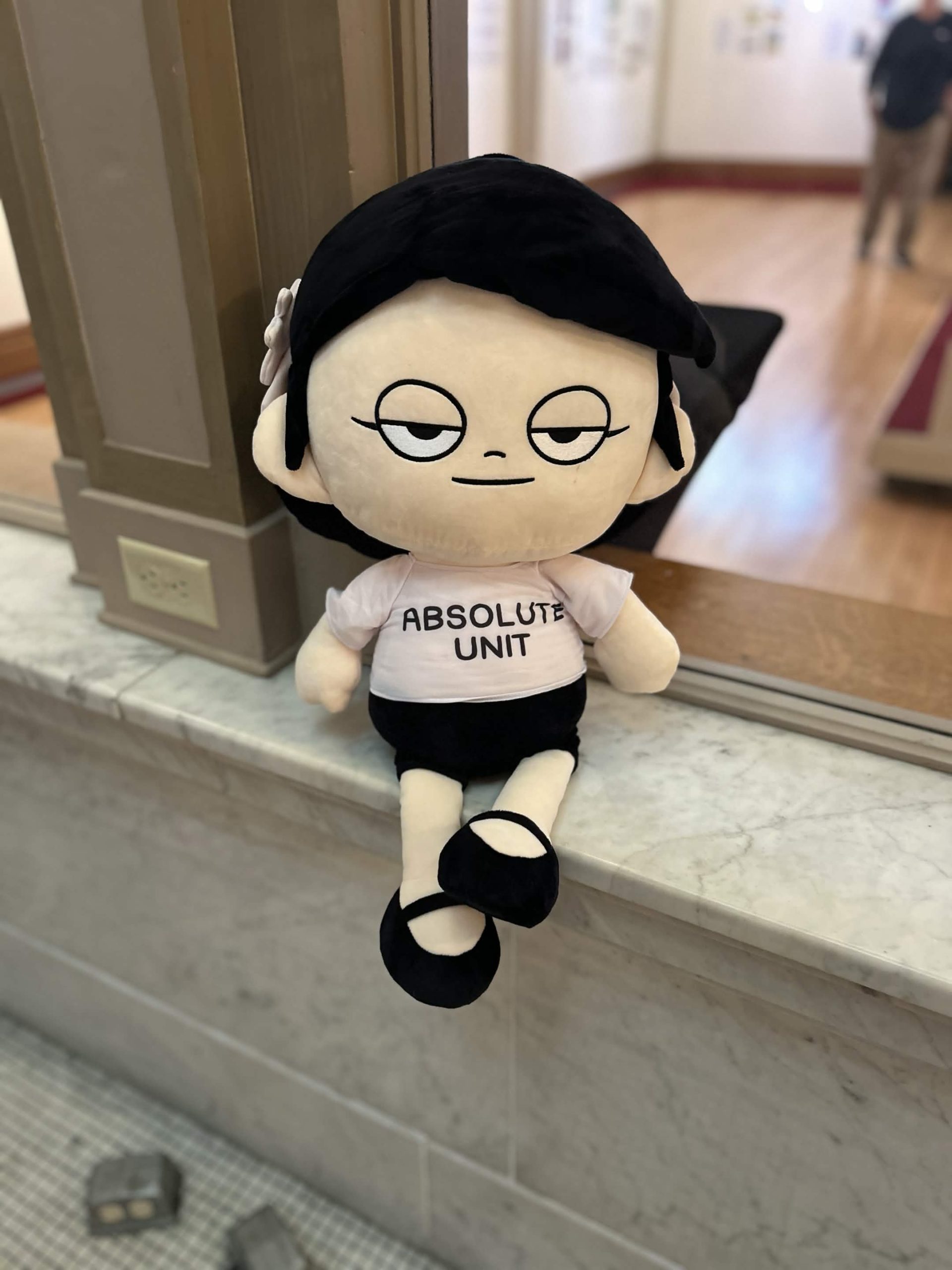
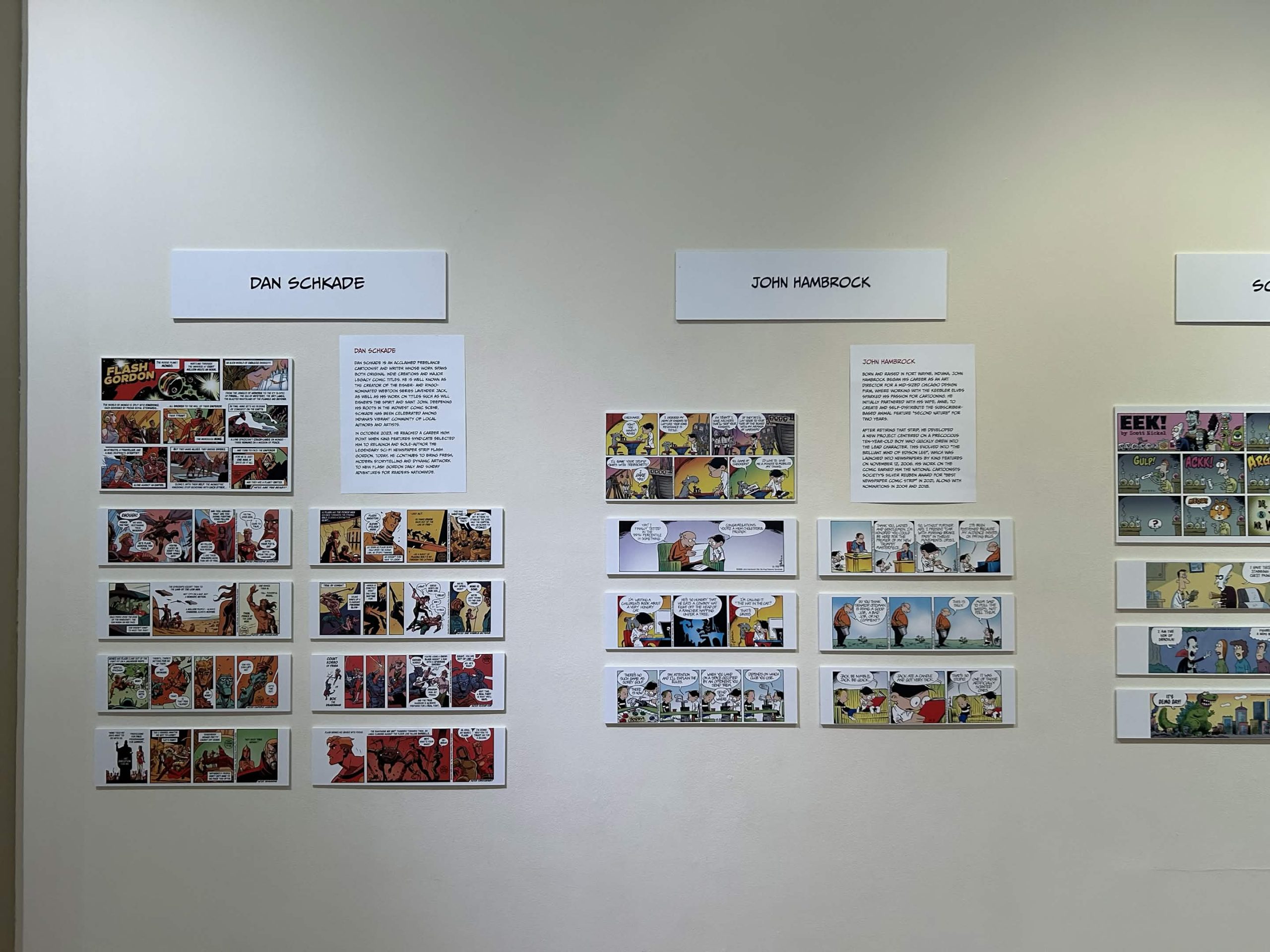
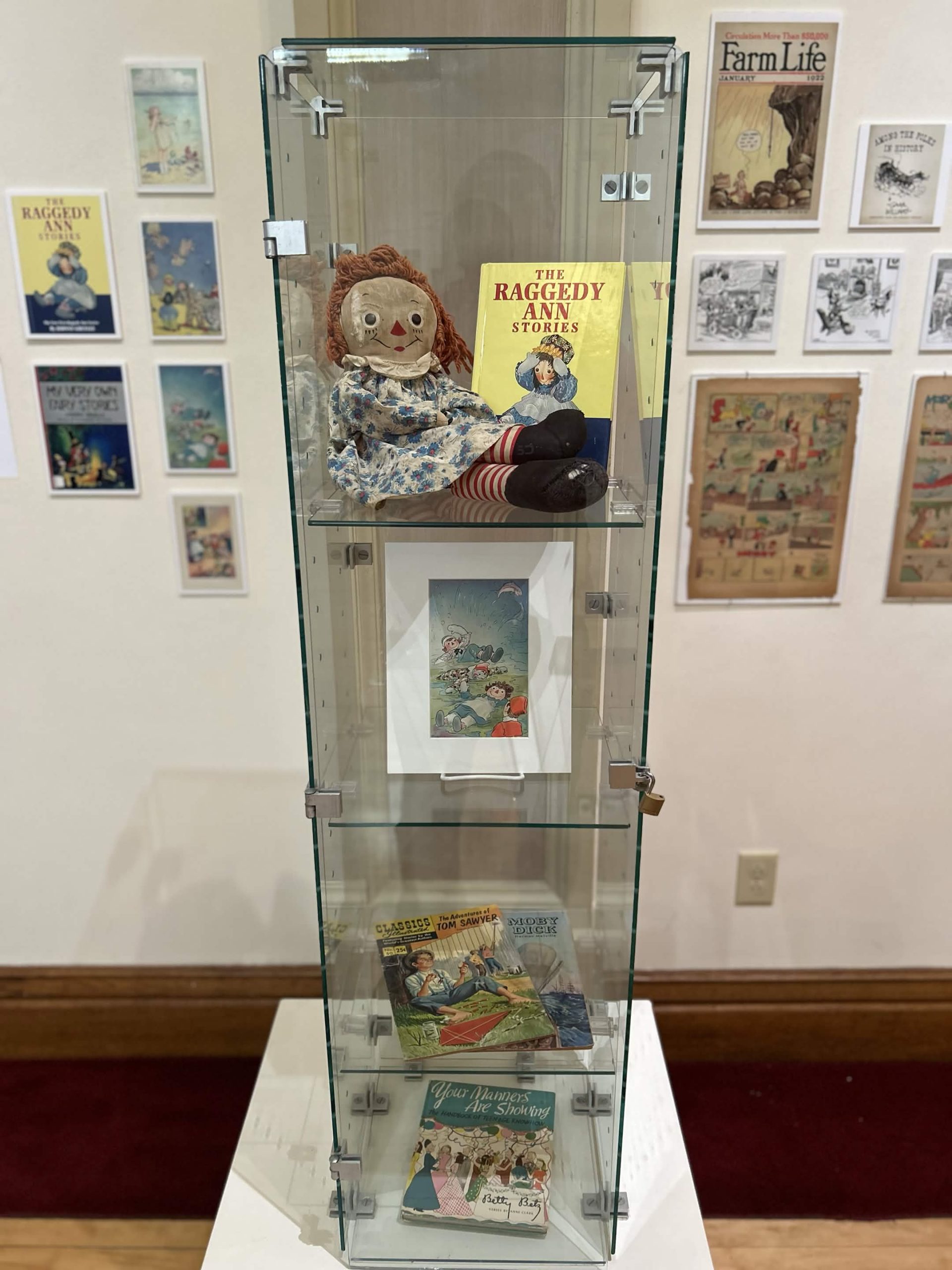
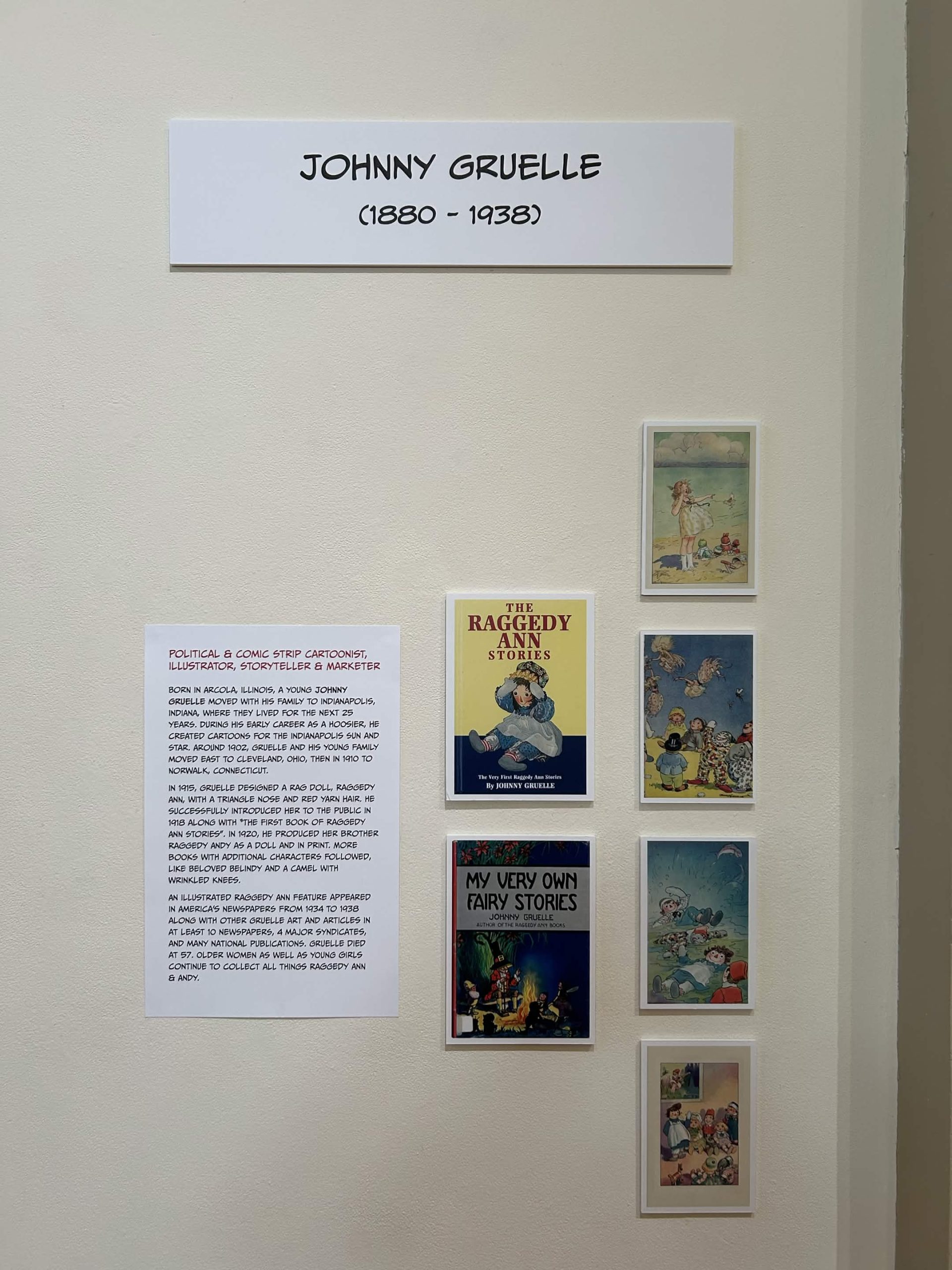
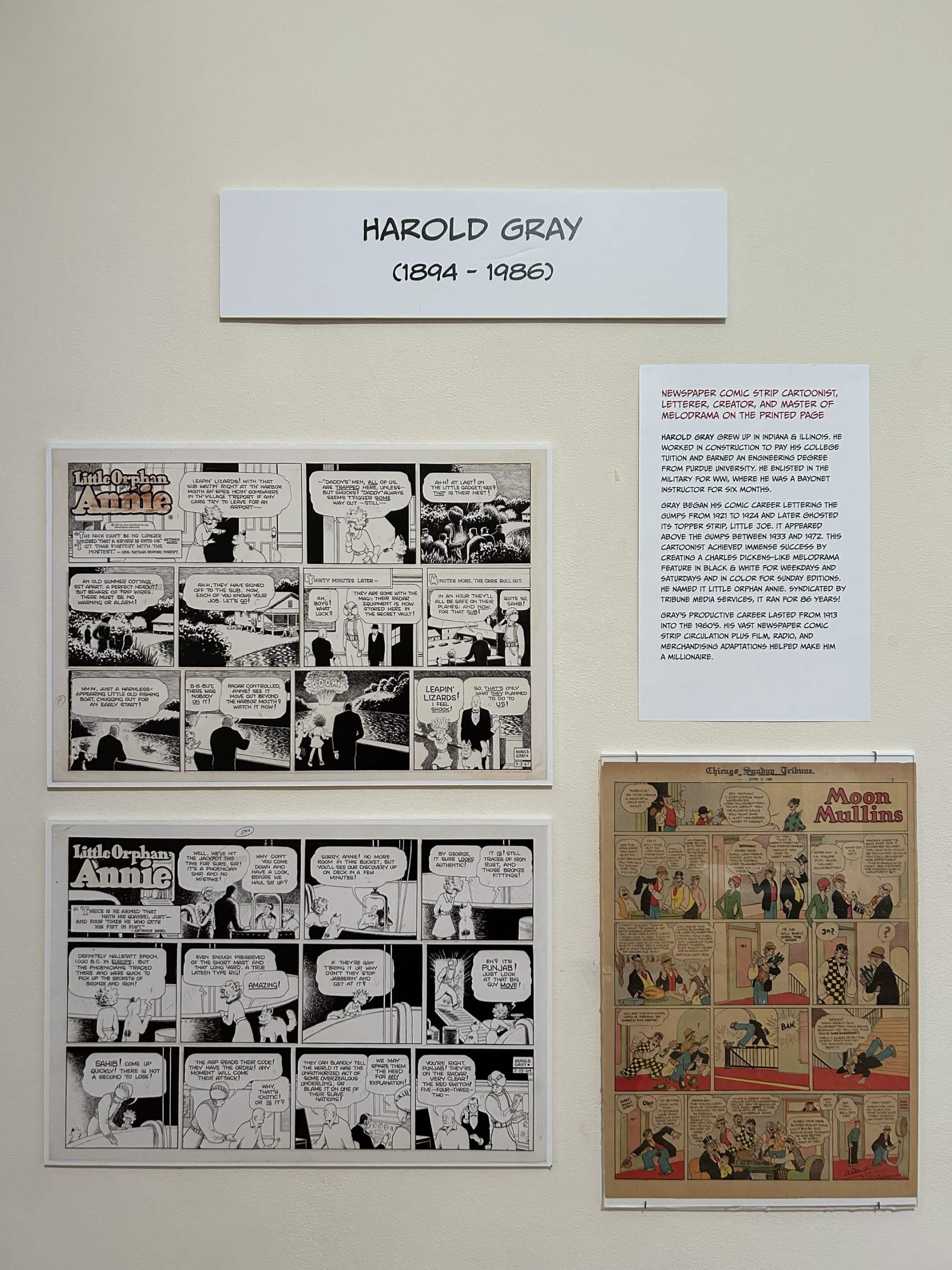
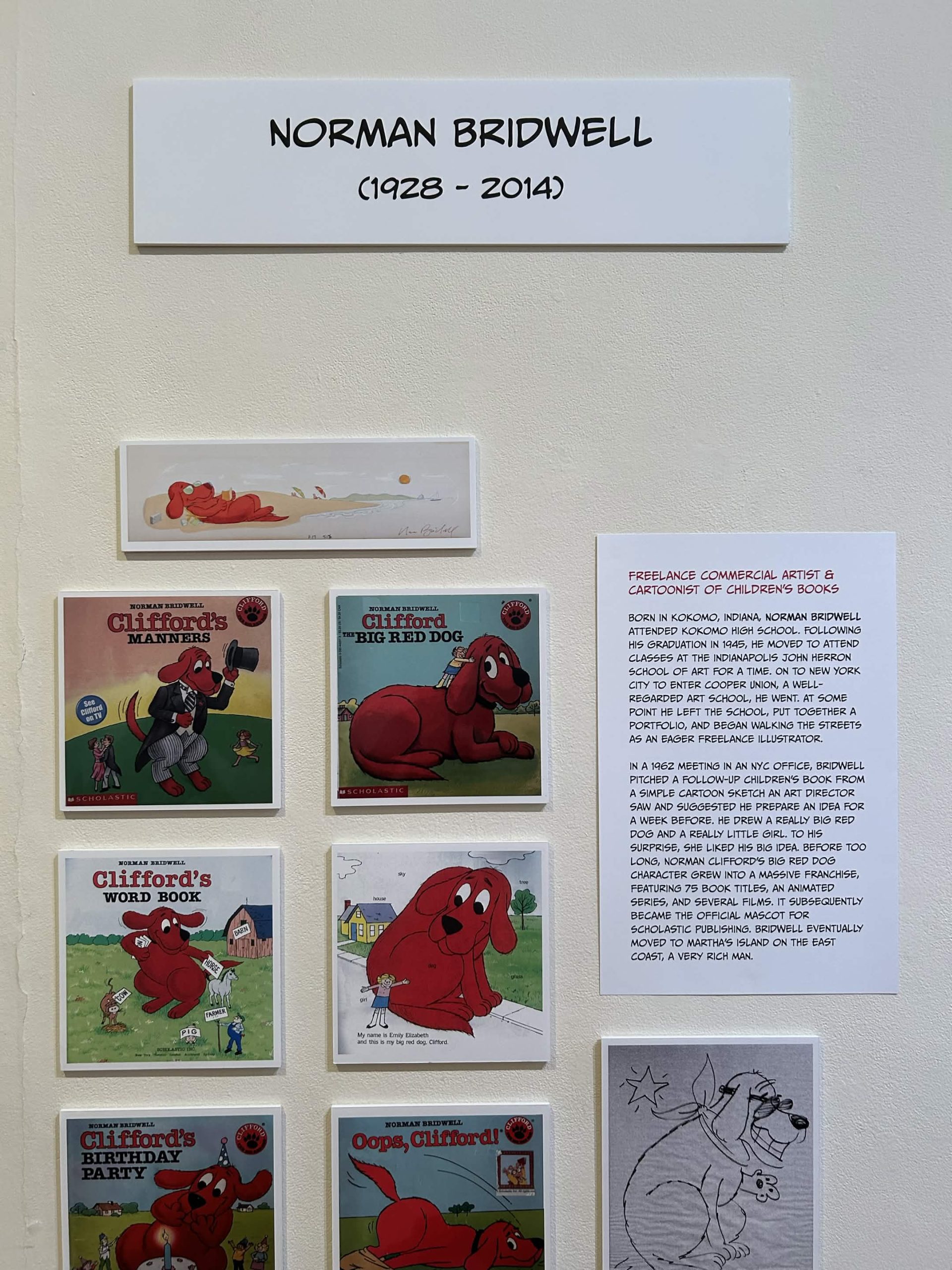
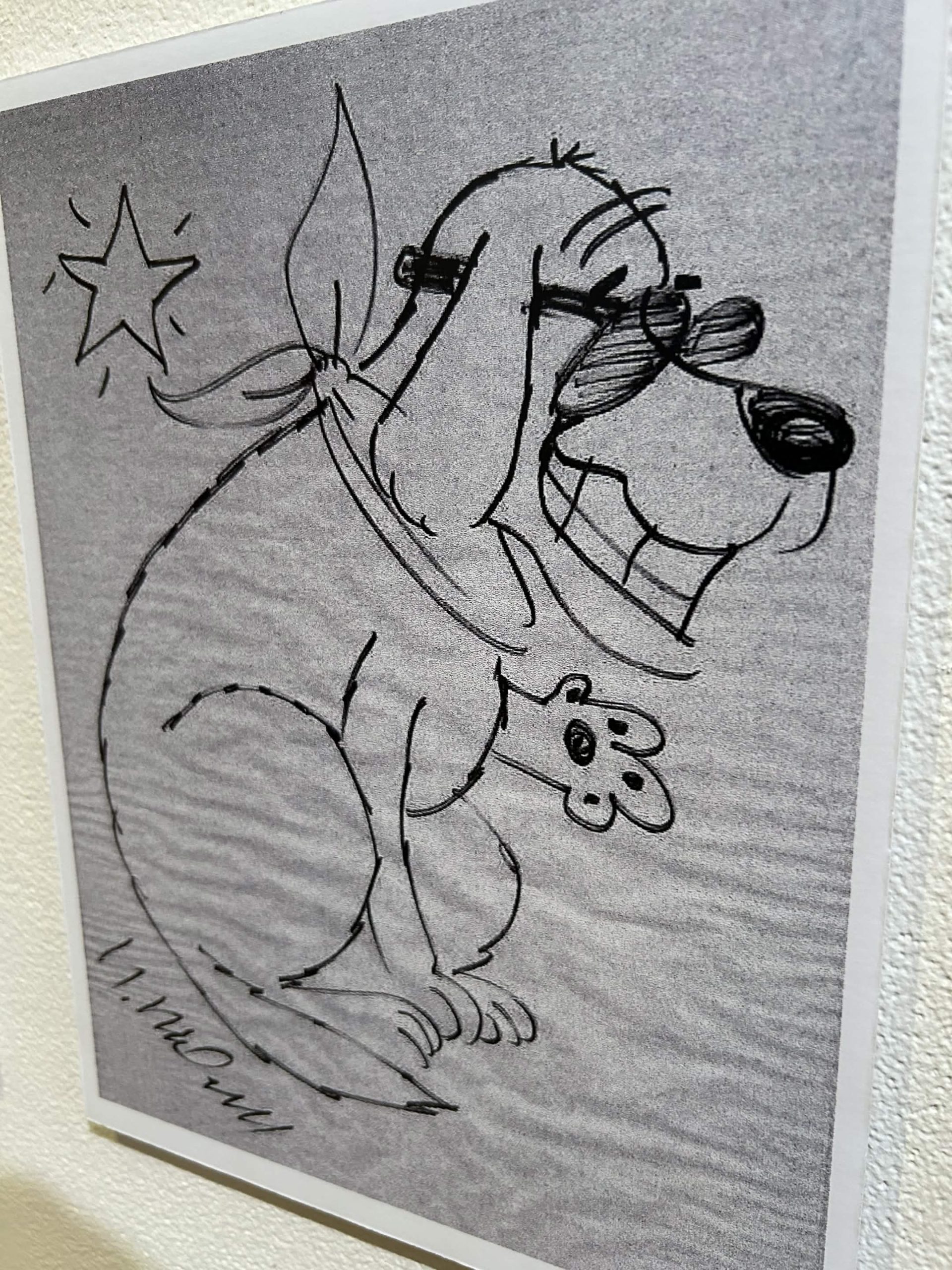
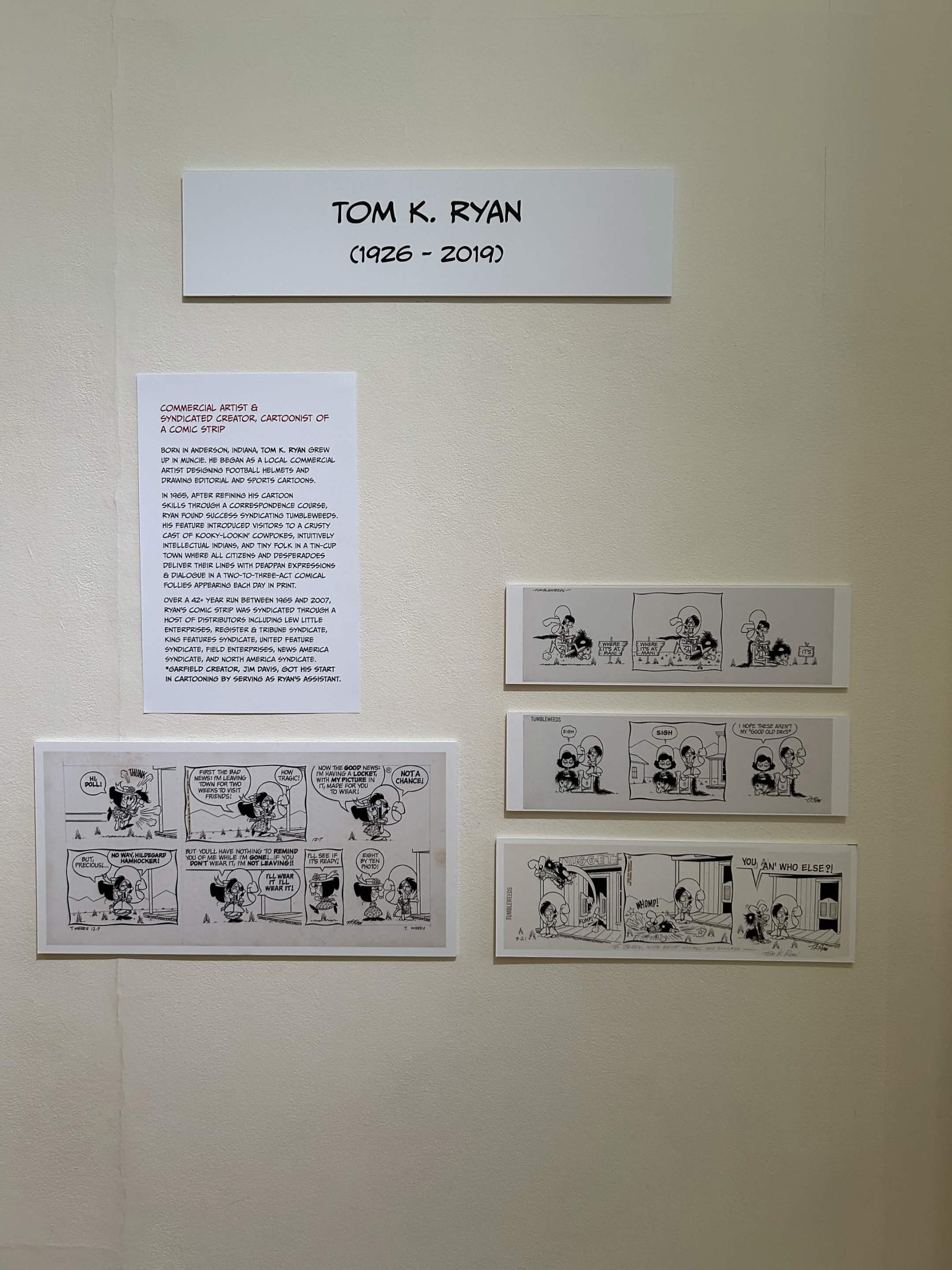
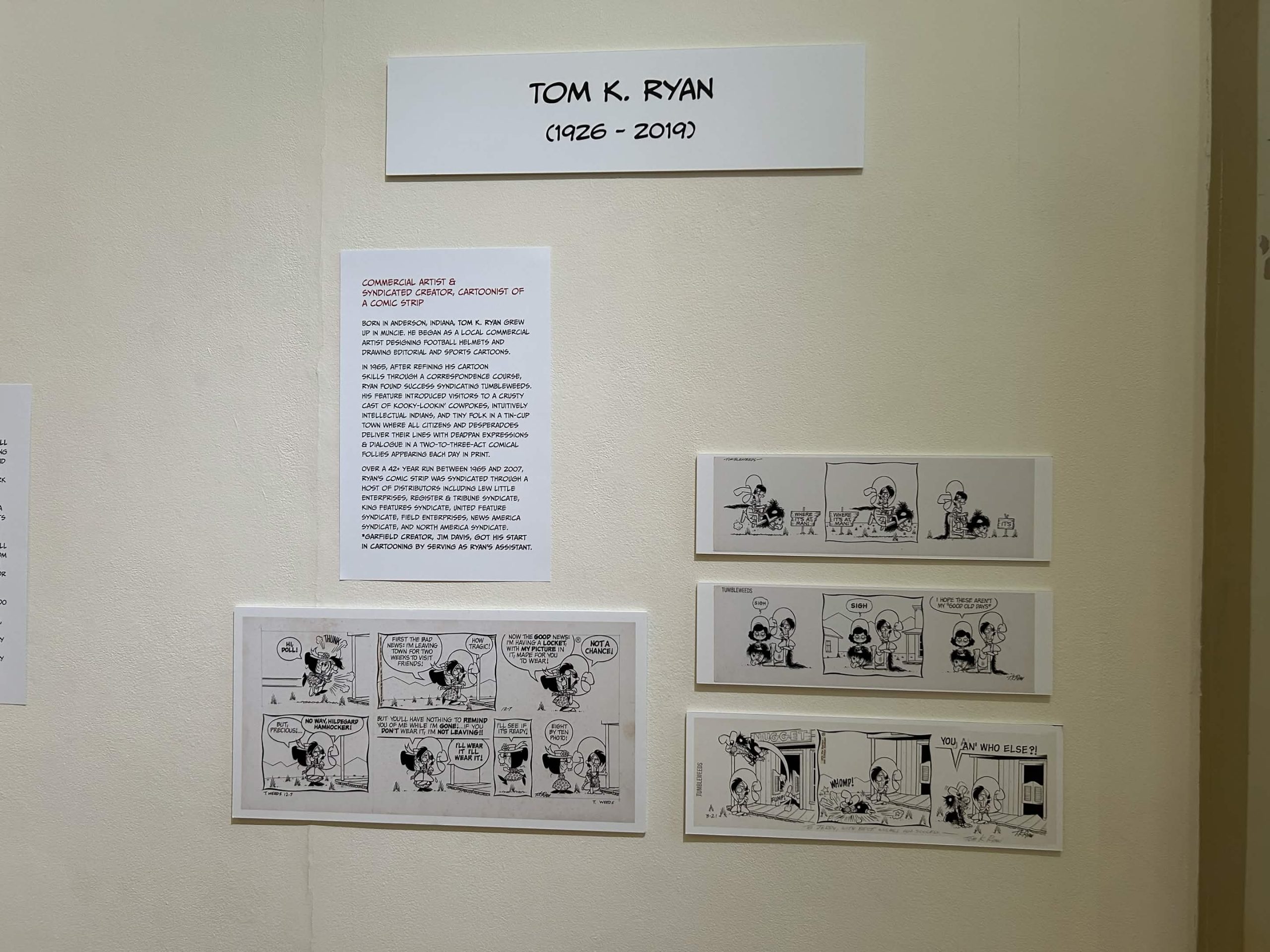
As for Parson, I have an interview with him scheduled for TCJ before too much longer. For the purposes of this story, what's most worth noting about him is that this was originally just supposed to be an exhibition solely for him. But, ever appreciative of his greater field (and Parson’s friendship with Davis, whom he idolizes), Parson worked to expand the scope of The Funny Pages to something genuinely remarkable. If you're an Indiana native yourself, or at least nearby, it's well worth the effort to come out for this exceptional exhibition. There will be a closing day reception on Halloween. Be warned that the museum is closed Mondays and Tuesdays, and be advised that there's an artist alley quite literally right on the other side of the street in downtown Anderson.
The post Anderson Comic Exhibition appeared first on The Comics Journal.


 Hello, my name is Jack Sparrow. I'm a 50 year old self-employed Pirate from the Caribbean.
No comments:
Post a Comment