

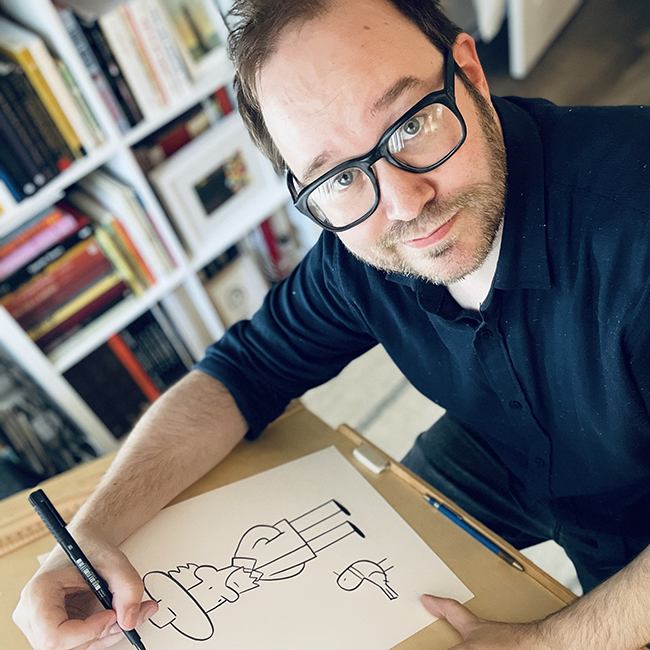
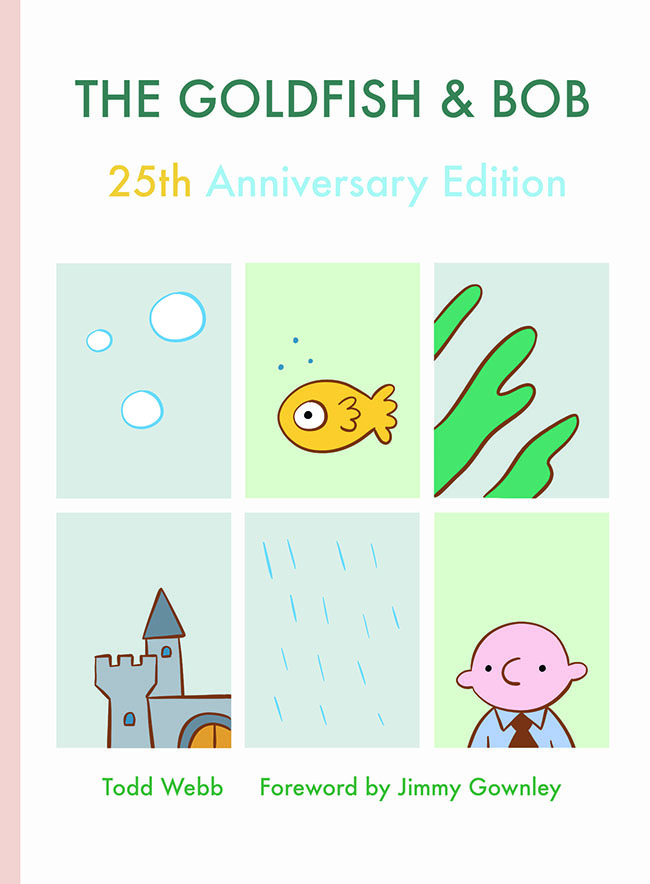
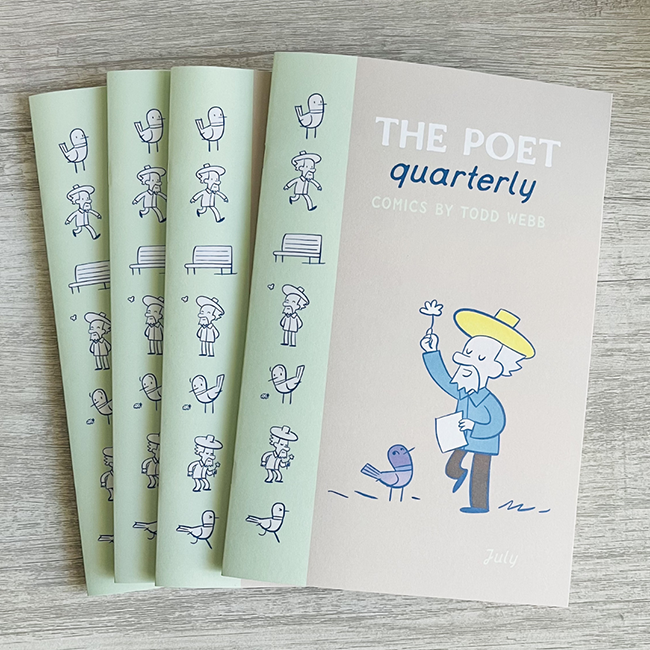
Todd Webb has created an impressive body of work in the last twenty-five years. His work includes diary comics, experimental comics and music, illustration, animation and, since 2020, the daily comic strip, The Poet. This year, Webb launches The Poet Quarterly, a new showcase for his comic strip only available through subscription via his website. The last two issues will be available at this year's Small Press Expo. Webb is looking forward to returning to SPX after a hiatus. Webb's involvement with SPX goes back to the turn of the century. It was during those early years of struggle and experimentation that he created his first long-form work, The Goldfish & Bob (2021). Webb will debut a 25th anniversary edition, packed with extras and notes, at this year's Small Press Expo.
When I first started to follow Webb’s comic strip on Instagram, I was instantly struck by what a tidy and funny comic strip The Poet is, compared to all the webcomics I come across. The more I dug into his work, I discovered it had gained praise by such comic luminaries as Jeffrey Brown, who said, “Todd Webb’s comics are less about chronicling life’s events than expressing an unabashed love of living, good medicine for anyone in a bit of a funk.”
The best way to describe Todd’s work is that of a wise adult in step with a child’s vision. This is work that leans into a landscape that is less cluttered, more primal, like something out of one’s childhood. It’s a state of mind that more of us are rediscovering and trying to reach. In terms of daily comic strips, no one navigated that whimsical no-nonsense world better than Charles Schulz. Existential issues are forever confronted in Peanuts, without hesitation and done with such grace and, especially, humor. It is in this tradition that Todd Webb treads, and what a fine place to be.
For this interview, I wanted to bring out the qualities that I find so appealing about Todd Webb’s work, it’s lighthearted irreverence. Some of the best creative people don’t take anything too seriously but do take that carefree approach seriously. It’s a balancing act done mostly on some instinctual level. And I believe Todd has tapped into that mindset.
I have had Todd Webb on my Comics Grinder podcast a couple of times and I find him to be easy to talk with. The Poet comic strip got on my radar again recently with the release of the new quarterly edition. So, I decided to pay the cartoonist a visit for a long sit-down interview. I discovered someone who is very dedicated to his craft and to learning about the comic strip tradition. His studio is lined with a vast array of books on comics. And, just a while ago, he came into possession of quite a stash of vintage Sunday funnies dating back to the 1920s. There is an uncanny pleasure in reading a comic strip in its natural habitat, especially works like Gasoline Alley and Thimble Theatre, with its timeless energy.
What emerges from this interview is a voice for a generation without even trying. Like the best authentic and organic stuff, it just happens. I go on this journey with Todd Webb, a cartoonist who is drawing a daily comic strip the old-fashioned way, the sort of comic strip so many of us out there grew up with and read in actual newspapers. There must be more to this than the simple act of creating an original daily comic strip. In this conversation, we follow the arc of a career in comics, from an uncertain youth figuring things out to, at age 44, a seasoned veteran of what it takes to be a true cartoonist and that involves acute observation and acute persistence.
Todd Webb was born in 1981 in Hartford, Connecticut. Todd fondly recalls walks as a boy on Long Pond Road where he grew up in Westfield, Massachusetts. In his anthology series of the same name, he recollects: “Long Pond was exactly that: a long pond – and the road circled it. There was a secret beach you could get to if you hopped a fence and hiked a ways through the woods and I loved hanging out there with my friend Derek, sitting on a burnt out log with our feet in the water and a stack of comic books.”
HENRY CHAMBERLAIN: What you do with your comics, and anything else creatively, at its core, is inviting people to chill out with you. Any thoughts?
TODD WEBB: I guess that’s accurate. (laughs) I like to think I’m giving them a break from the nonsense of the day.
Yeah, good answer. If I had a starter pack to introduce newcomers to you, it would include the OAHU CD, Tuesday Moon, and The Poet Quarterly. Does that sound like a good package to you?
I would say Seamonster over OAHU. Nobody listens to OAHU.
I do.
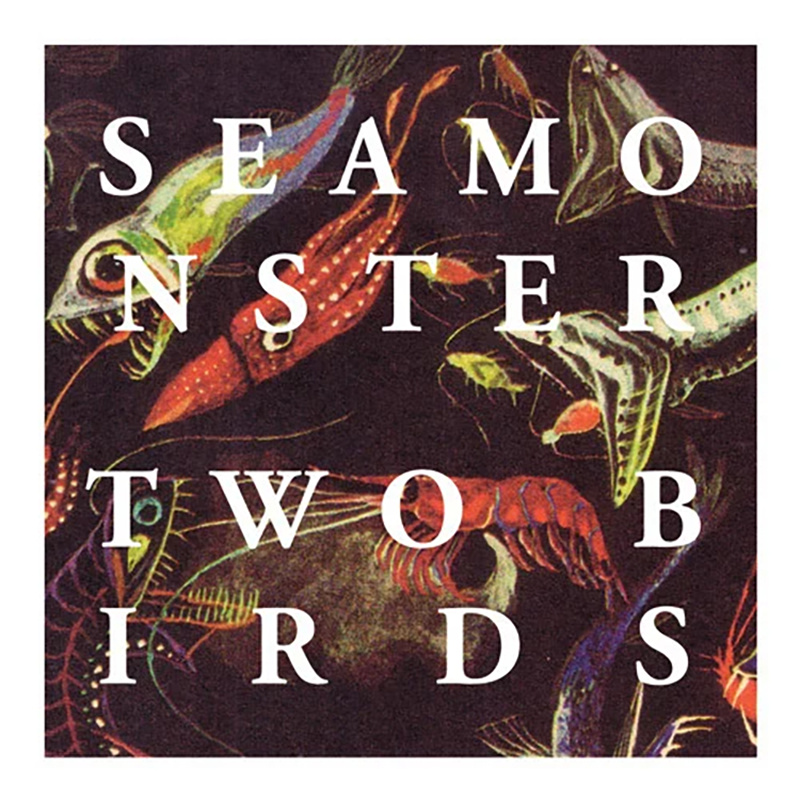
Okay. (laughs) One person listens to OAHU. In my mind, that’s a failed project. It culminated in that CD set, which I do think is really nice. But Seamonster was always my real musical outlet – the one I actually toured behind when that was a part of my regular goings-on.
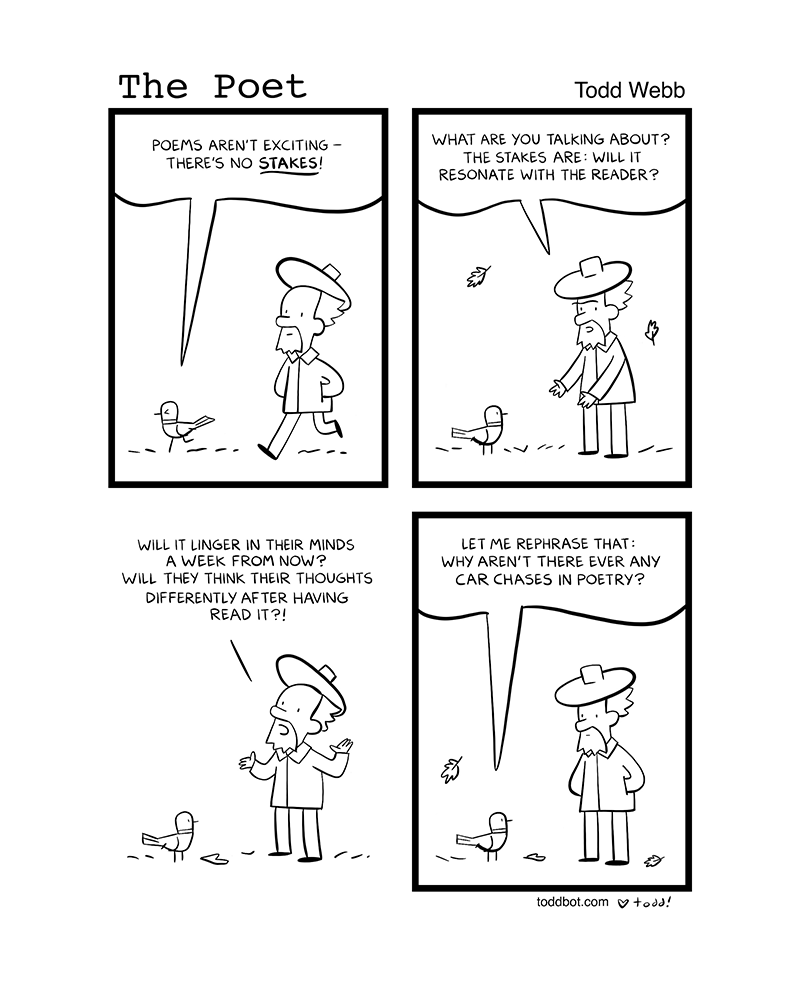
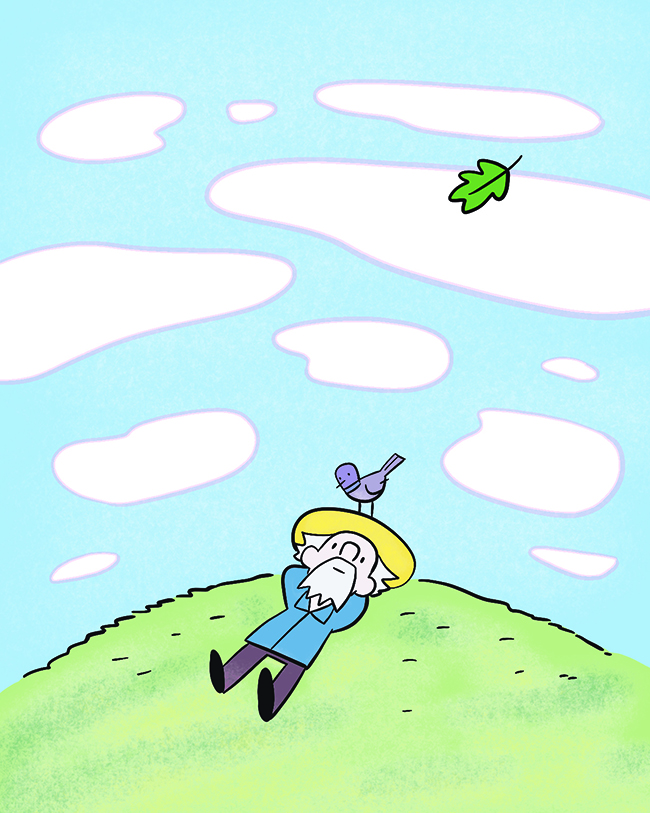
Let’s dive into The Poet. I want to talk about how you’ve evolved as an artist over the years and how you see yourself, and your work. You began this daily comic strip about a poet and his pigeon friend in 2020. Tell us about The Poet.
Let's see, there's a crib notes version in the Afterword for Volume One of The Poet that gets into some of this. I had done a few biographical comics about creative people – Georgia O’Keeffe, Katherine Mansfield, and Ray Johnson – I liked being able to sort of have conversations with them over the years by using their writings as the basis for what I drew. It was fun. It was short. It was a nice get-in-get-out kind of experience.
I wanted to do one with a poet that I really love named Robert Lax. He's not very widely known these days, but he was friends with a lot of notable characters in the literary scene of the ’50s and ’60s. He was American. He moved to Greece, specifically to Patmos, the biblical island. Revelation takes place there.
For the whole second half of his life, he was on this little island in Greece writing very minimal poems. He was hanging out with fishermen and stray cats, living a very quiet sort of life. And I really like his poetry. I wanted to do a book about him and I was going to call it Robert of Patmos. And I figured it would be like the Katherine Mansfield book, between 40 and 80 pages in single-page installments with six-panel pages. Basically, a comic strip format of single-page installments about Robert Lax.
As I was trying to figure out how to draw him, it just wasn't clicking the way I wanted it to. I ended up rereading a MUTTS collection by Patrick McDonnell and a Mark Newgarden book where he had all these comics about big noses. I’d never put a big nose on any character. So I added this big nose and, all of a sudden, it worked as a character, but it started to abstract away from the person that it was going to be originally. And then that abstraction process continued. I was developing the story: very basic; about a poet taking a walk down to the beach; trying to write a short little poem to mail to a friend. He interacts with some fishermen down by the water. There’s all these stray cats - so I made it just one cat. I had the setting of the beach and the ocean, which mirrored the minimalist look of his poems. But drawing a beach felt TOO minimal, so the setting changed to a park with a pond. And then I lost the fishermen.
There’s a lot of cartoon cats already. I didn’t feel the need to make a new one so I changed the cat to a seagull. Finally, the seagull turned into a pigeon because that made more sense at a park. I was now down to the basic premise of “A” poet trying to write a poem. It was no longer about Robert Lax specifically.
At the time, I had several daily projects going on at once. I used to do this thing called Dailybleeps, where I’d film something every day, make an ambient score for it, and post it to Instagram. Some of those are collected in the Oahu CD you mentioned. I did that for five years. And during lockdown, I re-started my journal comics (which I had drawn periodically from roughly 2000-2010). And this activity coincided with the Robert Lax project, which I was now calling The Poet, the Pigeon and the Park Bench.
In February of 2020, right before lockdown, I released a mini-comic of the first eight pages at a comics convention with an even simpler title: The Poet. Then a month or two later I started posting those pages online daily, thinking it would be an easy way to knock out the book. I was already drawing about my lockdown experience every day. And the world was getting very intense. And I was not happy spending so much time distilling that stuff down onto a comics page. I didn't feel like it was my place or position to comment on crazy world events.
So I decided, okay, after one hundred days, I'll stop the Covid journal comics. But I was still doing this Poet thing and I said, well, you know, if I'm still doing that after a hundred days, let's see if I can make it to a year. And then I made it to a year and I was still having fun doing these Poet strips, so I said, I guess it's a real strip now - let’s see if I can do it for five years.
And then I hit five years and now I'm aiming for at least ten, which was how long Calvin and Hobbes ran. And I figure if I hit ten years and I'm still enjoying it, which I can't imagine I won't be, I'll just keep going.
So, it really is an accidental thing. I've wanted to do a comic strip for my entire life, since I learned about them as a kid. I just wasn't sure how to do it. And it turned out all I had to do was twenty years of other comics before I stumbled onto this thing and somehow the mechanism unlocked and I was able to do it. The Poet, I call it my accidental life’s work because I was not planning on it at all. But it's the best thing that I've managed to squeak out into the world.
Well, I love all the back story and process talk. Yes, you're absolutely correct. Once you have that comic strip, the one that you've been seeking out, then you run with it. Charles Schulz had Li’l Folks, and that wasn't quite it. And then finally, he has Peanuts, and he never wanted to call it that, but when he gets what he wants, he's not going to stop. Of course, I don't know, we're liable to go down a rabbit hole, if we start talking about Charles Schulz for too long. That’s a whole other world, too. But there's some similarities.
Yeah, he's the pinnacle of the form as far as I'm concerned, and I've modeled a lot of my approach after his example. Before I even drew that first page, I did a deep dive back into comic strips and made notes on what appealed to me from each one. Peanuts and Calvin and Hobbes were my big ones as a kid; later, as an adult, I discovered Nancy, Gasoline Alley, and Barnaby, and tried to pull bits from each into my own work so it could sustain itself.
Something Schulz did that I haven't yet is introduce new characters every couple of years for a fresh boost of energy. So far I've kept it to just three: the Poet, the Pigeon, and the Bench. It'd be interesting to make it a decade without bringing anybody else in. Maybe at the start of year eleven, suddenly someone new shows up. Who knows
This segues into my next question. Considering this long track record you already have as a cartoonist working in a daily comic strip format, with everything you’ve learned about the form, how would you define a comic strip?
Comic strips were originally created to sell newspapers - basically ads, filler to help sell them every day. Over time that "filler" became its own legitimate art form. But the constraints stuck: daily, and confined to shrinking amounts of space (much to the frustration of cartoonists.)
For me, the tiny space works because my strip was meant to be visually minimalist. I look to Peanuts, Nancy, and MUTTS as models for drawing just the essential information you need to make your point.
Most strips tend to be gag-a-day: same characters, a joke, no real growth. But some break that mold with continuing stories – usually adventure strips, though Gasoline Alley was a family strip where time actually passed and characters aged, had kids, died. For Better or For Worse followed that model too.
Ultimately, I guess comic strips are just a subsection of comics – sequential art, words and images supporting each other to tell a story.
Newspapers are no longer in the forefront, to say the least. And media is so fragmented. What remains is a genuine love for the comic strip. How do you explain people’s perpetual and universal love for comic strips?
It's a byproduct of how we experienced them. When you're with characters every day, they become part of your life - differently than a comic book, which was monthly and let you dip in and out. With a daily strip, you'd wake up, read the paper over breakfast, see what your favorite characters were up to, maybe cut them out for the fridge or send one to a friend. They became part of the fabric of our lives in a way comic books never quite did.
That way of consuming strips has gone away, but the love for the experience hasn't. We're still figuring out, as a culture, how to disseminate it. There's the internet, but nothing has replaced newspapers' old distribution power. That's something I've grappled with in getting The Poet out there - trying different forms and places to see if any can catch on in a way that might support the whole endeavor. Or not. But I'm still going to do it.
Let's start with your first significant work, in 2001, The Goldfish and Bob. Tell us about it and what it means to you now.
Prior to The Goldfish and Bob, there were a lot of mini-comics and a couple of standalone pamphlet comic books. But Goldfish I consider the first thing that was trying to say something with.
It evolved from my journal comics that I was doing as an exercise to get better at making comics. I drew journal comics off and on for about a decade starting around 1999 or 2000 - I was inspired by Jim’s Journal (a fictional diary comic strip by Scott Dikkers, co-founder of The Onion) and a mini-comic by James Kochalka where he’d drawn a daily strip about his trip to the San Diego Comic-Con.
For me, a cartoon journal was just the thing I needed to improve my observational skills and my drawing abilities bit by bit each day. Everybody makes journal comics now, but back then there were three of us - James, myself, and a bit later my friend Drew Weing. I changed the format many times over the years, trying to keep myself interested in the project, but eventually I gave it up, even though it was popular online. My Cartoon Journal had served its purpose and improved my art - it was never my goal to just draw about my life. For a long time I was lumped in with James who’d started his fantastic American Elf series, but people kept trying to pit us against each other, which wasn’t cool.
Anyway, I did this little tiny booklet called Bob Goes to Mars. Bob was an astronaut sent up to Mars and then he got eaten by an alien on live television and that was the end of that. But I kept drawing Bob, using him as my stand-in in the journal comics.
Then I did a mini-comic with Scott Mills and used the same character called, Work Ethic. It was a two or three page story about this guy named Bob who quit his job. The Goldfish and Bob grew from Work Ethic. The Goldfish and Bob allowed me to tell a longer story by thinking about what happened before and after the events of Work Ethic.
Palookaville by Seth and the High Water Books stuff that Tom Devlin was publishing, gave me sort of “permission” to do something slower and quieter. Cartoonists like Brian Ralph and Tom Hart showed me through their work it was okay to do that.
At age 19, when I drew the book, I had never worked in an office. I just knew I didn't want to. I did have a series of weird day jobs. When I drew Goldfish; I was working at UPS. Picking and scanning boxes in the warehouse. And throwing them down shoots. Upper management rubbed me the wrong way. And so, you know, that was Bob's boss. And the desire to quit and find a more creative path.
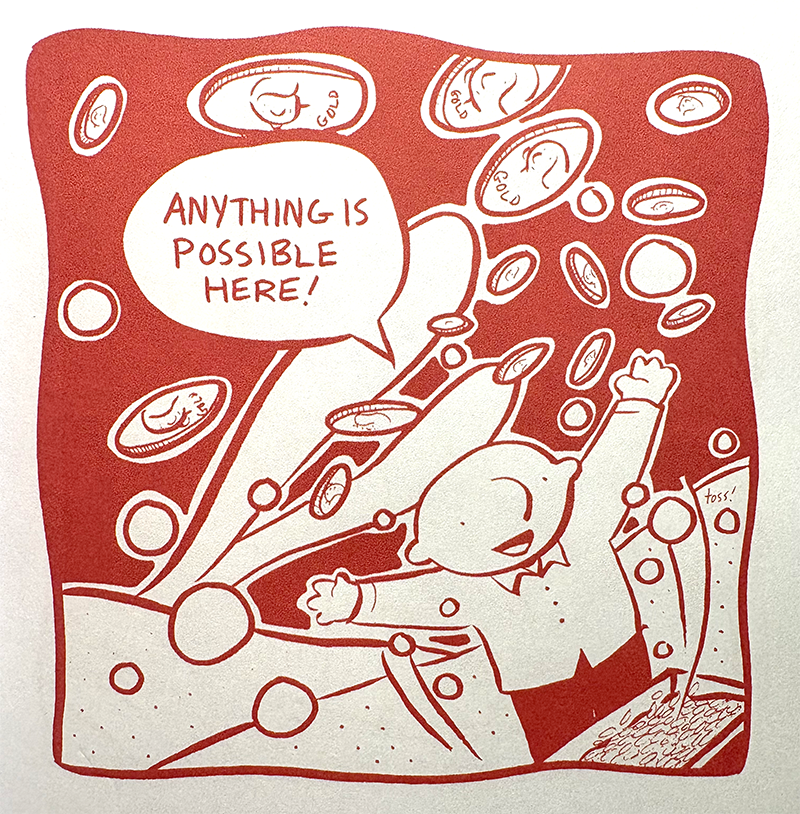
The story is about how Bob has this job. He doesn't like it. He talks to his goldfish about it. The fish never says anything because it's just a fish, but it has these emotive eyes. And at the end of the story, he quits his job and becomes a garbage man. He had grown up wanting to be an explorer and being a garbage man was a fulfilling way to do that. By just exploring his own surroundings. At one point in the story, Bob mentions that he needed a coat rack to hang his coat up on. And at the end of the book, there's a little epilogue where he comes back from his day as a garbage man and he had found a coat rack on the side of the road. And that's kind of it.
It's a very simple little thing. It was my first long project and I self-published it. I pitched it to publishers originally because, by that point, I already knew Tom [Devlin] and Chris [Staros] at Top Shelf. And I tried it out at Drawn & Quarterly. I sent it to a bunch of different places at the time. Even places like New England Comics who published The Tick. Top Shelf opted to put it on their website which they had just started, so it was one of the first online comics that they had. And then when I self-published it, they distributed it for me. They didn't publish it, but they did bring it to all the shows which was nice. I self-published it as this little four by four square bound book. And, yeah, at age 19, it was my first book. It’s older now than I was when I made it, which is pretty crazy.
All cartoonists are doing some kind of day job. The cartoonists that stay the course are treating a part of their life as if they're going to a laboratory to create new work. And they're not just creating work and examining it on their own. They're also putting it out into the world on a regular basis. At least, that’s one strategy but there’s variations on that theme.
Yeah, for sure. There was a period when I kind of stopped. Around 2008. I was doing stuff for Nickelodeon Magazine and they shut down. And the state of things necessitated me getting a full-time job again. This would cover 2008 to 2015. This was a time when I wasn't going to shows anymore and I wasn't really putting stuff online or being part of the scene. I was still making stuff, but I wasn't visible, kind of disappeared.
Somewhere in the middle of that, around 2013, was when I connected with my friend, Dan Goodsell. And I started working with him on the Mr. Toast books. And that was when I did the first iteration of the Katherine Mansfield comic (The Continuing Adventures of Katherine Mansfield) for a friend's anthology. And those got me back to what I am meant to be doing.
Also when I stopped doing comics publicly was when my music stuff was coming to the forefront for a while; so I spent those years touring. It wasn't like I stopped making stuff. It just was a different season.
Well, let me ask you to maybe give us a little bit more flavor of the early years, because you have two passions, comics and music. Have they ever commingled or have they complemented each other? What can you tell us about that?
One of my favorite bands is The Apples in Stereo. I had a random dream one night that Robert Schneider, the singer for The Apples, had an abacus (he’s big on math) and he was showing me that you could make music with it. So I wrote a song about it called “Robert Schneider's Abacus.” So, I recorded the song and I threw it up on MySpace. A mutual friend noticed that song and sent it to Robert because it just so happened that the day that I put it on the internet was Robert’s birthday.
Then Robert and I started corresponding and he had a children's record that he'd wanted to do for years called Robert Bobbert and the Bubble Machine. He asked if I wanted to work on it with him so I ended up doing a comic book and coloring book and all the packaging that went along with it. And then we did an animated video for Yo Gabba Gabba!
That was an instance with a one hundred percent comics and music crossover. I was drawing a comic book based on songs written by one of my favorite songwriters for a musical project.
Perfect. That really ties in with the next phase of our questions. I'll name some milestones from your creative career. And just share whatever thoughts come to mind. Let’s go back to Mr. Toast.
Okay, I’m going to tell a long story that is pretty crazy about how Mr. Toast Comics happened.
I moved to Virginia in 2003 in my early 20s to work with my friend Harold [Buchholz] who is also cartoonist. Harold had a print brokering company because back then, you couldn't do what you do now and just print a few copies of a book. You had to order a thousand copies - but Harold worked as a middleman between several printers and figured out a way to print as few as a hundred copies. He invited me to help him with that, so that my day job would be related to comics (I had been working at a gas station in Connecticut).
One of the comics that we printed was a Mr. Toast book by Dan Goodsell. It was called Imaginary World Comics #1. It was a bunch of little non sequiturs with his Mr. Toast characters. And it was my favorite thing that we printed. We printed a lot of stuff and some of it was interesting, but a lot of it was very amateur stuff. And so when we got stuff like Imaginary World, it was very exciting. We were still doing paste-ups and things for people - old school days, right on the cusp of everything becoming digital…
This is another one of those weird moments of things crossing over:
I went with a friend of mine who needed to buy pants for a job interview. I went with him to Old Navy. And in the checkout line at Old Navy, they used to have all these odds and ends, including some books. And there was one of those little Taschen Icon books. It was, Krazy Kids’ Food - pictures of vintage cereal boxes and snack packaging. I really wanted to buy it, but I was pretty broke so I didn’t. When I dropped my friend off and I went home, I checked my mail and I had a package. I unwrapped it - and it was Krazy Kids’ Food! And it was like Twilight Zone music playing. I'm like, What is happening? What? And when I opened it up, it was inscribed to me, you know, it was like a little message to me signed, Dan Goodsell. I'm like, What?!
Then I realized, that's the guy that does the Mr. Toast book that we printed. But how does he know me, you know, personally? And it turns out, Harold had mentioned that I was a big fan of the Mr. Toast things and so Dan had looked up my website (toddbot.com) and became a mutual admirer and sent me the book. Dan is a big collector of packaging and stuff. The book was by him and Steve Roden.
Dan, at a certain point, said he wanted to do a Mr. Toast comic book, but he didn't want to draw it. He didn't think he had the skills to draw settings and locations and tell a story, which is bunk. He can draw anything. But I love the characters. We both are on the same brain frequency about everything.
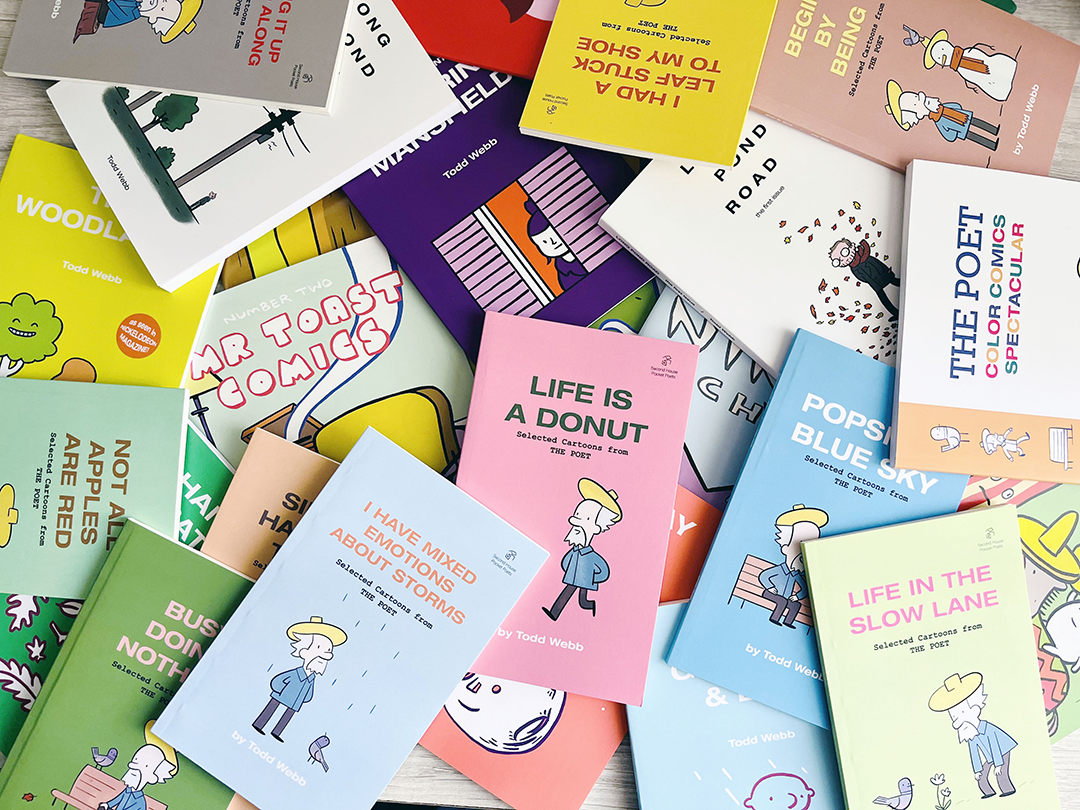
So I told him, I'll draw whatever you want me to draw. And so we did the first issue of Mr. Toast Comics, which was hide-and-seek stories - just Mr. Toast looking for all of his friends in different areas of the world. We ended up doing nine issues of it over several years. And it became a thing. Dan brought me out of hiding and back into the comics world. I started going out to San Diego again. And then in 2015, I started reprinting older books of mine like Goldfish and Bob and Tuesday Moon and Valentine and doing new stuff beyond that under my own little imprint.
But yeah, Mr. Toast made a huge difference. It was a lot of fun to work on - it reminded me how much I love making comics at a time when it had kind of been beaten out of me by the world. And it introduced me to one of my best friends.
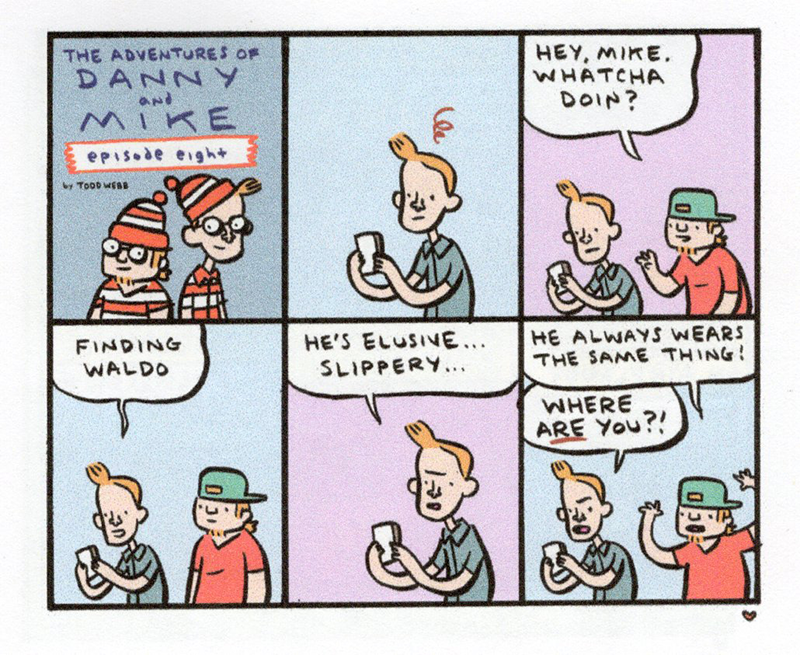
Yeah. Well, I'm glad I asked because each of these projects is a world to itself. And I should mention that a lot of this stuff you've collected into an anthology series, Long Pond Road, which there's two issues so far, and they're like a grab bag of things from yesteryear with a few additional recent gems. I'll mention a few more titles and feel free to share your thoughts. How about The Adventures of Danny and Mike.
My favorite show as a kid was on Nickelodeon: The Adventures of Pete and Pete. It was very surreal. It was about two brothers with the same name. The goldfish in Goldfish and Bob is named Pete in a little nod to them. That show was created by two guys, Will McRobb and Chris Viscardi who I think are geniuses for kids programming. Steve Buscemi was in it and Toby Huss, so many great people. I'm sure there's a bunch of people my age who were wildly influenced by it. It had an amazing soundtrack. A guy named Mark Mulcahy from a band called Miracle Legion wrote all the songs. Yo la Tengo and Magnetic Fields were on the show. The first time I heard The Apples In Stereo was on Pete and Pete.
Anyways, the two Petes were played by Danny Tamperelli and Mike Marona. Danny and Mike reconnected as adults after there was a Pete and Pete reunion and realized they lived near each other. They started a podcast called The Adventures of Danny and Mike. They would go off and do something together and then talk about what they did. They announced the podcast on Twitter so I wrote to them and offered to help if they needed any art. The producer contacted me, and then I talked with Danny and Mike about it and we decided it would be fun to recap every episode with a comic. It was a monthly show when they started it. So for the first year or so, maybe 13 or 14 months, I did a comic strip for the show, and when they made their first merchandise, I did the t-shirts and the posters and hats and all that stuff for them. It was fun.
Danny is in a band now too because of his time on Pete and Pete, and we even played together - his band Jounce, and my band Seamonster. We got to hang out. It was very cool. Another side note, when I was working with Nickelodeon magazine, my friend Dave Roman was the comics editor and he's a big Pete and Pete fan too. And we had kicked around the idea of doing Pete and Pete comics in Nickelodeon but it didn't go anywhere. So years later I ended up doing comics about the two Pete's, but as themselves, which is pretty funny.
And there’s some more to this story. Around 2020, there was another Pete and Pete reunion. Will [McRobb], one of the creators of the show, emailed me to say he liked the comics I’d been doing with Danny and Mike and invited me to do artwork for the reunion posters. And I did that. And then he tells me he’s working with Apple. He was developing a show and wanted to know if I might have any ideas for it. And I ended up developing a TV project. It didn’t get picked up but Will was my writing partner on it. So, there I was co-creating a show with one of the creators of Pete and Pete. It’s all very interconnected in wild ways that don't really make sense but I’m grateful for it.
Let’s refocus to one of your most unusual projects, Reading War and Peace. What can you say about that one?
Every year I make notes on ways to get back into that project. Reading War and Peace was started in that era when I wasn't really publicly making comics, but I had just started doing Mr. Toast. I was renting a little room. There was a lot of personal nonsense that went down after a car accident and the economic crash and I was a nomad for a period of time during those years.
I kept seeing War and Peace around. And I thought maybe I should read that. I also felt like if I do start reading it, I should document it - a way of doing an autobiographical story that wasn't about me. It was about me trying to read this giant book that the only thing most people know about it is that it's very long and we all assume it's boring. Which is not true, there are parts that are very funny.
There are a million characters with long Russian names. It's a hurdle to clear. I started drawing. My parents had gotten me for Christmas this big sketchbook that looked like the book from The Never Ending Story, all leather and this big metal buckle. What am I going to draw in this crazy sketchbook? This sketchbook's about as thick as War and Peace. So maybe I'll draw about War and Peace in there. And I just drew a panel per page about the process of reading it and talking about it with my friends. And I keep finding things in the world that relate to War and Peace.
There was a little subplot in there about stuff that I was reading when I should have been reading War and Peace. Like I would put the book down and read something else. Dang, I read this whole other book. The only reason I stopped was because I was touring for Seamonster, and I couldn't draw about reading the book as fast as I was reading it. I told myself I’ll put it down until I get caught up. And life just kind of got in the way and I never was able to do that. So, it's to be continued. But I cannot recommend War and Peace enough to anybody who's curious about reading it. And Reading War and Peace, the two issues, are on toddbot.com for free. And they're in Long Pond Road.
This brings to mind a Peanuts comic strip. It’s Lucy chastising Charlie Brown about watching television. And she says something along the lines of, “Well, you could be reading Tolstoy!”
War and Peace was one of Schulz's favorite novels, I found out later.
Of course it's a masterpiece. Like any expansive work of literature, it tugs at you on many different levels. I think wanting to read it ties in with what used to be the American work ethic and this compulsion to improve yourself. At least that was the American ethic. I don't know if it still is.
Another thing I like about the Reading War and Peace comic was that it documented this time where I had a lot of friends locally that have since moved away and gotten married and had kids. I got married to the girl I was dating in the comic at the time, War and Peace spans this epic period of time with all these characters. I like the idea of, when I do eventually catch up on working on the comic, all of this time will have elapsed, which was accidental, but matches the theme, you know?
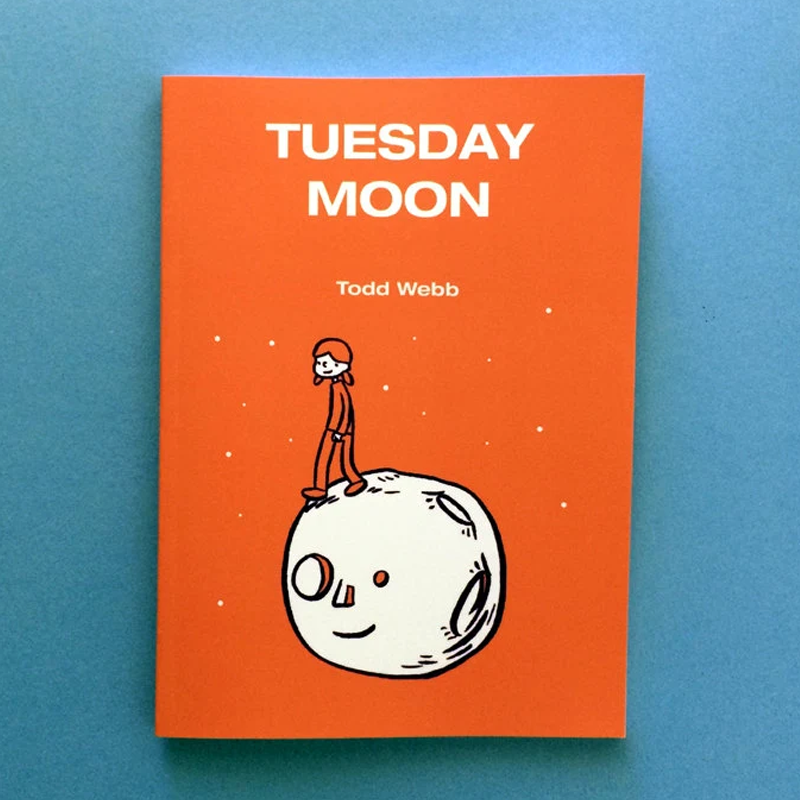
I'm trying to keep track of things, I'm looking at relatively more recent work. And this is still back in 2015, Tuesday Moon. A great children's book you created. The story is about Tuesday, a grade school girl who becomes friends with the moon and travels throughout space with him. The moon has all sorts of reassuring things to say, like, “It's never too late to make a bad day good.” What thoughts come to mind?
Tuesday Moon, I did that in 2007, And so the 2015 edition was when I started to re-enter the world of comics, and print-on-demand was a thing by then, so I was able to repackage older books and get them out in an affordable way.
So, one of the bands that's connected to The Apples in Stereo is called Neutral Milk Hotel. And they had a song called “Tuesday Moon,” which is where the title of the book came from. I was listening to that song one day and I was doodling and I drew this little girl on the moon and I scribbled “Tuesday Moon” over it. And that led to that comic, the next long work after The Goldfish and Bob.
Tuesday Moon was 2007, a time when all-ages graphic novels were really blowing up. Jeff Smith’s Bone was reprinted by Scholastic. And my friend Raina [Telgemeier] was doing Baby-sitter’s Club. This whole new category of young adult graphic novel was emerging. My friend’s little sister, Rebecca, and her friends were complaining that there weren't any comics for them to read and I said, well, I make comics, I'll make one.
For the book, I asked kids that I knew questions about stuff that they liked or disliked or stuff that bugged them or annoyed them or embarrassed them. I wrote it down. All of the anecdotes in Tuesday Moon are connected to stories from real kids. The house she lives in was one of the houses in that neighborhood. Tuesday’s room was the same as Rebecca’s.
I made it for these specific kids to get a kick out of, rather than there being some kind of moral or lesson. In a way it was a kid version of The Goldfish and Bob where the main character, Bob, perceived his world as being something negative and he was dreaming about being in the goldfish tank. He found the clarity to try something else and realized that it wasn’t as bad as he thought it was. In Tuesday Moon, Tuesday thought she had this terrible day and then she talked to the moon about it and realized her day wasn't bad at all. She was just bringing her own baggage to it. The book was a conversation rather than a plot-driven thing. I think that’s why it works.
I did get approached by a lot of the book publishers who now have graphic novel lines but they all said the same thing: It's too mature for little kids; or it's too twee for older kids. They said things like, “We need to see her having her bad day.” And I’d say, “Well, you do see that. There are four silent panels as you go into the book where each panel is one of the things that she talks about with the moon. But the book's not all about that. It's about her shifting perspective of that. It has the picture book logic of being a conversation. The kids I wrote it for really loved it. The kids that find it love it. You can't tell me kids don't understand it. Tuesday Moon was a big book for me - and it’s still making its way into the world.
Okay, well, this is all in jest, but it makes me think this could be a good joke for a comic. You have these publishing people that are tearing to shreds the Mona Lisa. They don’t like the background. And they just can’t figure out that smile. “Is she smiling or is she frowning? Why can’t she just smile?” But I digress.
I’ll do a little digression of my own here with my experience with book publishers. They’ve nearly all individually approached me at some point and said, “We like what you do, make us something.” And when I do make them something, they come back and say, “No, this isn't what we want. Or they’ll say, “We can't market this because of X, Y, and Z.” The problem is that they’re book editors, not comic editors.
I don’t think they know how comics are different from books and they treat them like the same thing - and they're not the same thing. And I think that's a big issue. There are good comics editors at these publishers sometimes. But, overall, it seems like they're approaching it the wrong way. A good editor will improve the work. But a lot of the time these suggestions are just horrible and will damage the work because they're applying the wrong filter to it. This is why I've never worked with any of them, because their suggestions go against the nature of what the book would be.
Right. That's a constructive observation. You’re saying you need to find the right person and those people do exist.
Any publisher that wants to do something for real, I’m open to it. I'm not opposed to it, but I'm done seeking it out.
Looking over your Second House imprint titles some more, what can you tell us about The Woodlands? This book collects work you did with Nickelodeon Magazine.
The Woodlands were comic strips about talking trees and rocks and mushrooms and such. In the middle of every issue of Nickelodeon Magazine, there was a comic book. At the bottom of the pages, there were these little, tiny comic strips that ran across the whole comic book section. I did a bunch of full-page strips for them over the years, but The Woodlands was one of those little strips that ran along the bottom.
So, they would buy those in batches of eight. And I think I did 16 of them. I think there were two issues that had Woodlands comics. And when the magazine shut down, Chris Duffy, the editor, kindly emailed the artists to say, “You can do whatever you want with your stuff. We're not going to hold it under restriction.” So, I made a standalone book with those comics and a handful of new ones.
That book led to some other projects down the line. At a San Diego convention I met Joel Kuwahara, the president of Bento Box Entertainment. They’re the people that make Bob's Burgers and all those cartoons for Fox and Netflix. He asked if I’d make some animated bumpers for Bento Box and I did a few of those, with the Woodlands characters. Then I heard from Chris Ballew, the singer for The Presidents of the United States of America, who had his own children's music project called Casper Baby Pants. And I did two animated videos with him - one of them had the Woodlands characters in it too. It's all a big mishmash of crossovers.
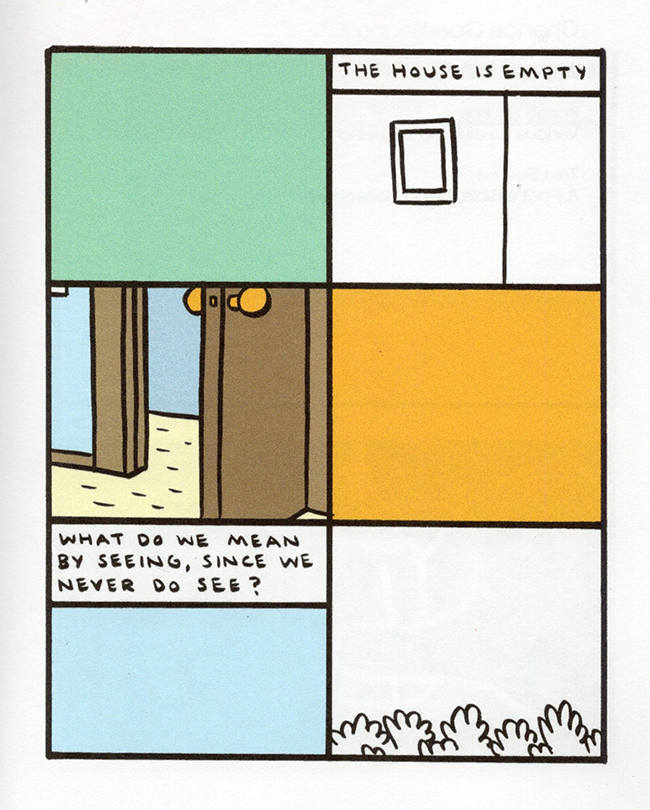
Now, your book, Chance Operations, is very interesting. Share with us how you incorporate comics into John Cage’s art methods.
Okay, Chance Operations is a weird book. That's what I tell people at comic shows. That's a weird one. I really like John Cage and his process of indeterminacy. He would compose music using the I Ching. He just took the chart from the I Ching and replaced all of the divination stuff with elements of music - time and sound and duration. He would flip coins and ask yes or no questions and chart it out and then perform it. It was a way of taking himself out of the process beyond making the choices of what the different elements were. He never knew what the music was going to be until he made it. I wanted to do something like that with comics.
Back in the heyday of Tumblr, Frank Santoro was doing this thing called Comics Workshop. He had a contest to do a 16-page comic and I thought this was my excuse to do a test of this idea of using John Cage's process. It had to be called Chance Operations because that's how I made it. And I did the first one as a 16-page comic. For years I’d been tossing fortune cookie fortunes into a jar and I had no idea what I was going to use them for. I figured I could use some of those as the text for this comic. And I just got rid of all the ones that were, you know, good luck things, and kept all the ones that were like aphorisms.
Then I was at a thrift store and I found a pile of photos of an old couple on vacation somewhere in 1957 or something and I decided all the pictures could be drawn from those photos. And then I made up my chart of rules to discern. There were requirements for Frank's contest. I think every page had to be an eight-panel page or something. There were certain rules that he had for his thing. And I just applied them to mine as part of the constraint. I liked the way it came out. I wanted to keep experimenting with it. I did several more with different rules or different source material and compiled them into that book.
I'm putting together this 25th anniversary edition of The Goldfish and Bob and I've been digging through lots of old stuff that I haven't seen in a long time. I’d forgotten I did a 24-hour comic as a teenager. For people who aren't aware, Scott McCloud came up with this experiment to see if you could write and draw a full 24-page comic in 24 hours from scratch with no preparation. I did one (on July 20, 1999 according to Scott’s website) called Duncan and the Game of Life. This was years before I heard of John Cage. I used Pictionary cards to write it. I pulled several cards out and whatever words were on them, had to be in the story somehow.
That was my first constraint, beyond having to do the whole thing in a day. The words were like grandpa, chess, chicken bone, simple stuff like that. And that story ended up being about this guy named Duncan who chokes on a chicken bone while he dreams about playing chess with an old man. And then he wins and he wakes up and spits the chicken bone out. And then he finds out that the old man he was playing chess with, in his dream, was his dead grandfather. Very weird. So, that comic is sort of the spiritual grandfather of Chance Operations.
I've done a lot of 24-hour comics. You have to pace yourself. Very often, it amounts to one page per hour, with text that is like an aphorism. Maybe your mind starts working in a certain way. You start creating your own constraints because you need constraints to stay awake and to keep the flow moving.
Staying awake was easy at that point. I was a teenager.
Well, I haven't done one lately, but I did some much older than a teenager and I barely survived. Now, the thing with Long Pond Road is that it was something that emerged during Covid And The Poet emerged during Covid too, right?
The Poet is why the third issue of Long Pond Road hasn't come out, because The Poet was supposed to end. And it just never did.
The idea was for Long Pond Road to be an annual, with odds and ends that people hadn't seen and things that I was working on that didn't have a home yet and I could serialize. I was using The Palookaville books as my model for that, how Seth releases one every couple of years. He has his hardcover series that has a whole bunch of different projects that are ongoing or unseen in it. And I like that as a format. But I only did two issues so far because The Poet never ended, and it's increasingly difficult to do other comics when you're doing a daily comic strip and then collecting it into books - and I do everything myself.
Yeah, you need an assistant maybe down the road. Share with us what a typical workday is like for you.
My “day job” is fulfilling my Etsy orders for pop culture prints. That’s what pays the bills. This is mostly art I made for Gallery1988. I did lots of pop culture art for them. I spent a couple of years just doing a ton of that and then making prints of it and now people order those. Every couple of days, I've got to pack up a bunch of those to mail out. So, that's the day job.
For The Poet, which is my main comics project, every couple of days, I'll have a writing day, and write a week's worth of strips. I usually try for more. On a really good writing day, I'll write enough for two weeks. And then over the next week, I'll draw those. I try to draw two strips a day. So that I still have time to work on other things. And, you know, help with chores and household things that need done and live life.
Whenever I finish writing a batch of Poet strips, I'll hop on FaceTime with my Dan [Goodsell] and read them to him. Sometimes there'll be one I'm stuck on. Within a few minutes of talking with him, usually I can write something that solves the problem. He’s my sounding board and I do the same thing for his stuff when he writes a short story or something that he’s stuck on. He’s in California so it’s nice, once a week, to have an excuse to talk to each other.
Yes, of course.
I try to stay at least two weeks ahead on the dailies and I’m even happier if I’m a month ahead. But it's tough to maintain because any day that you don't draw one, you lose one. If I do get three weeks ahead, usually that's when I'll shift gears and start working on a book project, like anything that needs to be designed or formatted or if I'm working on a different comic.
There's two times a year when I manage to do a different project under the gun - one is for a local comics festival called NOICE. I try to do a new mini comic every year for that show just to have an exclusive for folks who make it out. Last year I did my Schulz/Salinger mashup The Charlie in the Rye, and this year I did an even weirder one combining Samuel Beckett and H.G. Wells - Waiting for Moreau.
Some friends and I started this crazy jam comic thing where we will do a 20-page book and all four of us have five pages to ourselves. Every year we'll pick a new theme. We did one last year and I just finished the one for this fall.
So your comics anthology, that's called Fribbits, right?
It has a different name each year. Fribbits was last year's and the theme was frogs. So we all had to do a comic with a frog in it. My contribution was called “Dog and Frog.” So it's a frog in a pond talking to a dog that wanders around. And in my mind, it's the same pond that The Poet and the Pigeon hang out at sometimes.
What's the name of the new one that's coming out?
The new one is coming out in September, and it's called Creature Nuggets. Art Baltazar names these things, so they always have crazy names. This one is monster-themed. The story I did for it is a crossover of my interests. I like using real writers' work. In this case, I used writings by Virginia Woolf, but turned her into a werewolf. So it's called Virginia Werewoolf. Her words but in a new context. Very silly and fun.
Talk about the Katherine Mansfield book, where you’re quoting from her work.
I found her diaries in a thrift store years ago, and I found them to be both tragic and entertaining. She died very young, had a lot of problems, but did a lot of interesting stuff. And was very creative. And so the journal entries that I used were from a period when she was kind of having a bit of a breakdown. Which I probably sort of was too at that point. That was when I was, you know, technically homeless and drifting around and healing from this accident and stuff.
A couple of friends of mine, Greg [Steele] and Matt [Harrison], who later organized NOICE, asked if I’d do something for an anthology they were putting together, so that’s where the Katherine Mansfield story started. Later on, I expanded it and made it into the book The Continuing Adventures of Katherine Mansfield.
Seth was an influence for that comic because in one of his Palookaville stories, he had his version of a comic diary which used rubber stamps. His idea was to make a handful of drawings that he knew he would have to draw over and over again, and turn them into stamps. So, he could stamp out his comic and just change the captions. Brilliant. For my book, I just drew 14 panels and then photocopied them and rearranged them based on what the text was. Coloring each differently helped too. Nobody ever notices it’s the same panels over and over.
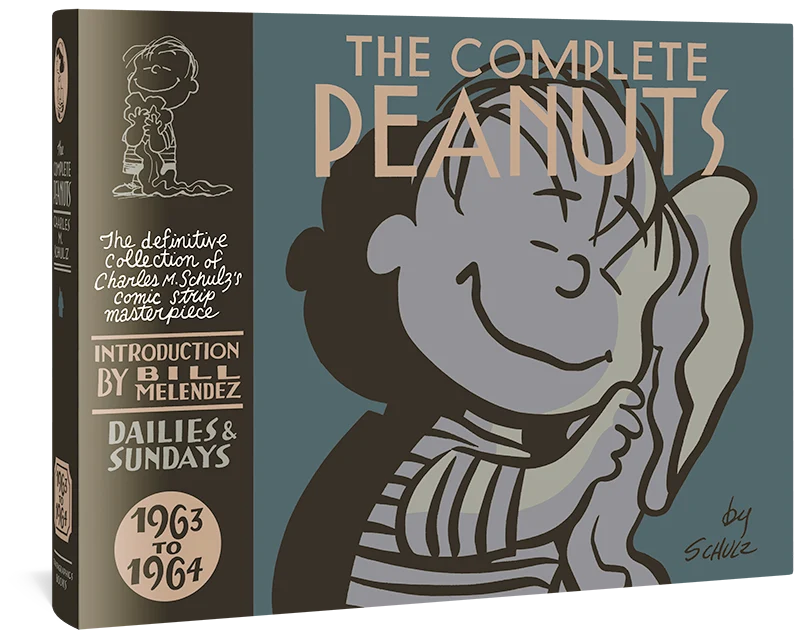
Well, I feel compelled to try to say something substantial about Charles Schulz. I'm going through the Peanuts collection published by Fantagraphics. And I was thinking last night on whether or not the general public might be conflating the animated features with the actual comic strip. But I don’t think so. First, people love going back and reading the comic strip. And what's mind-blowing is that the comic strip and the animation both kind of grew together. The first attempts were in 1960 for a Ford commercial. It was shelved for a while and then, just by serendipity, Coca-Cola says, “You know, wouldn't it be nice if we did a Christmas special?” And it all comes together five years later. And this is still so early, 1965. And it leads to 40 animated features, my goodness.
Well, the other crazy thing is, you know, by 1965, the strip was 15 years old already.
Yeah, and it's interesting just how true the animated features, at least the first ones, are to the comic strip. It was so organic and it all just came together in a magical way.
Those first ones are the only ones that I really go back to because they drew directly from the comic strip. All of the jokes in those first Peanuts specials were taken from actual daily comic strips, just animated. And then the holiday theme is threaded through for the Christmas special. It's really amazing.
It's a given that Charlie Brown is the alter ego to Charles Schulz. Looking back at the Fantagraphics Peanuts collection, one of the books has a Forward by Jonathan Frazen and he takes it one step further and he says, Charles Schulz is not only in all his characters but he's especially in Snoopy because he's like the ultimate joie de vivre subversive. So, I wanted to ask you about The Poet. Is The Poet your alter ego or what thoughts come to mind?
Am I The Poet? I don't think so. I think elements of me are spread across all three of the characters. This is one of the reasons why it works for me as a daily strip. I can hand off anything I’m thinking about to these three characters, and they'll turn it into something that works. I think that's the secret sauce for a daily strip: characters that'll use whatever you throw at them.
Kerouac, in one of his letters, called himself a casual poet. And I thought that was interesting. Because it was non committal. It was like, yeah, I like poetry, but I'm not a poet, you know, I'm casual, I'm a casual poet. And comics and poetry have a lot of similarities. That stuck with me and led to my journal comics being called Casual Poet. And then, all these years later, I’m doing a strip called The Poet. And I didn't realize that link until I was putting the first Poet mini-comic into Long Pond Road and realizing like, wait, I had Casual Poet and now it's The Poet.
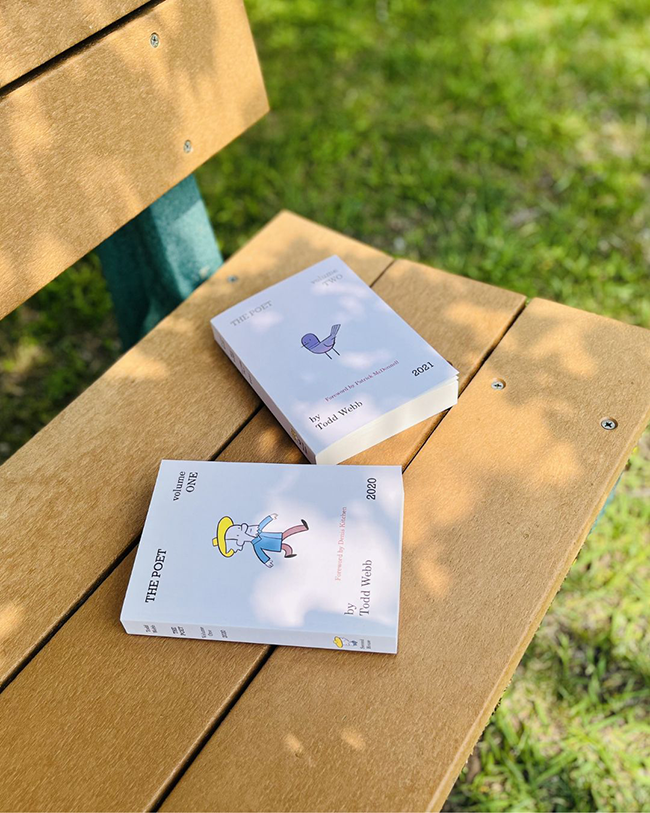
So, what does that mean? I wrote about this in the Afterword to The Poet, Volume 2. There's a poem by Frank O'Hara called, “Why I'm Not a Painter.” O'Hara worked at the Museum of Modern Art for a long time, and he wrote a lot about art. He was friends with a lot of artists, but he was a poet and not a painter. He wrote this poem about watching one of his friends make a painting and him writing a poem about it. And so I wrote a little riff on it called, “Why I'm Not a Poet.” My comics about my real life were called Casual Poet. And then the comics that I do now, which I consider more about my interior life, are called The Poet. Make of that what you will.
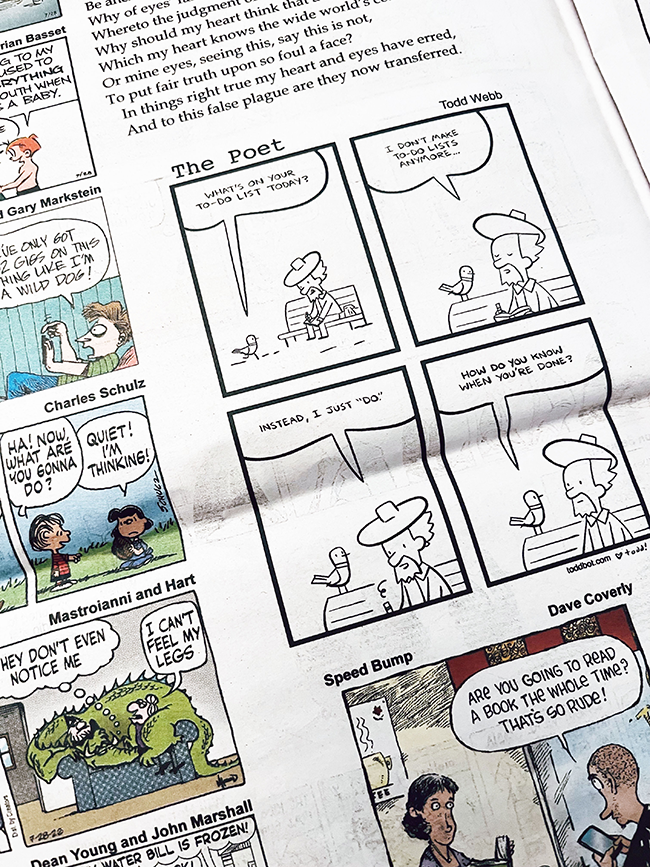
You've been steadily making inroads. The Poet has been added to The Ducktown Weekly, a newspaper that collects some of the best contemporary comic strips. What has that been like for you?
It's been awesome. Because newspapers aren't really a viable platform anymore unless you're syndicated. I believe I could get The Poet syndicated if I wanted to, but why bother handing a little piece of it over to some third party at this point. When I found Ducktown Weekly, I knew it'd be so cool to be a part of this. I emailed the editor and said, "I'm sure you're not looking for new comics, but if you ever are, you might like mine." And thankfully he wrote back almost immediately and said, “I do really like this. Let me see if I can figure out how to make room for it.”
The Ducktown Weekly is a newspaper that's just the comic section, but it's the whole week's worth of strips. For The Poet, instead of having seven strips, like all the other ones, there's only two a week - just because of the space that was available, and the deals that he’d already made with the syndicates for those strips. But it works out nice for me because I can go back through the archives of the strip and pick a pair that go well together each week and send them to him.
I'm hoping that it'll grow the audience to people who are specifically comic strip fans. But the coolest thing about it is just getting it every week in the mail and opening it up and seeing Peanuts and The Poet next to each other. And I'm just like, I'm done. I can die. That was the dream as a kid, you know, as a five-year-old, and there it is in a newspaper. Yeah, it's an honor to be in there. I think I'm the only non-syndicated comic strip in there.
And you keep branching out, finding new ways to present The Poet. You're launching The Poet Quarterly. Tell us about that.
The Poet Quarterly is something I'm very excited about. I'm fed up with algorithms and corporations telling us where to place our attention. In the early era of the internet, the internet lived in a room in your home and you'd go get on it for an hour and then you'd shut off your computer and be free. But now we are never free of it. I’ve posted The Poet every day on Instagram since it started. But now Instagram doesn’t show it to people the way that it used to, because of the algorithms.
I shifted over to posting it on Substack so that people can sign up and get it right in their inbox. But even that is not ideal. It's good that it doesn't send you down another app doom scrolling. You see the strip and that's it. And the email is daily, so it has that vibe of the old newspaper delivery. But I wanted to do something tactile and I've done so many different formats of book collections with The Poet that all have their own kind of limited reach. I wanted to do something that was more direct and would get reader participation and interaction on a more personal level. I thought of the mail club format where people subscribe to get something in the mail. That would work great with a comic.
I found a way that I could print it and keep it affordable. If I only have a handful of subscribers, the Quarterly will sustain itself. Which is nice because I've done the strip basically for free for six years. It seems to be working. I don't have a ton of subscribers, but the first year is paid for. It’s going to happen. The July issue is shipping out now. It’s a 24-page, physical comic book that's subscription only.
These are curated strips from The Poet. In this first issue, they're all summertime strips that feel like it's just telling one story, which was unintentional because I just do it daily over years. But by picking and choosing certain ones, there's themes that just happen. And it's in color for people who don't like black and white. And I get to experiment with different ways of coloring them, which is fun for me.
I'm encouraging people to write letters, like how we used to have letters pages in the ‘90s. And I have a page that recommends other things I like. There’s a coloring page. And I have this feature called The Park Bench Appreciation Society. I think it's so silly and to get strangers to send me pictures of park benches that they like. And I'll print them. I got one the other day and it just made my whole week. I was like, It's working! People are sending me a picture of a bench and telling me why they find it meaningful. It’s delightful.
Also, I always wanted to do a book like this, a little bit smaller than a standard comic size, because I really love this format, like what Chester Brown was doing with Louis Riel. Tiny pamphlet comics, like Jay Stevens’s The Land of Nod. It's just another way of realizing something that I couldn't do back then. It’s on nicer paper. It feels good to hold it. And I throw in extras too. The first one comes with a bookmark. I'll probably make some little posters or other fun things that can go with it. Based on however many subscribers I get, I can afford to do extra things. You know, maybe I'll do a separate little booklet sometimes. If it continues to grow, and pay for itself, then I'll add as many extras as I can.
There are so many parks, and benches, that your bench feature can run forever. Okay. This brings us back to your first major comic, Goldfish and Bob. You’re releasing a new edition this year, to celebrate its 25th anniversary. What would you tell your 19-year-old self in 2001 if you could travel back in time?
Keep going. Yeah. I guess that's it.
You know, that's a classic. Classic last words. Okay. Thank you.
Thank you, Henry.
The post Todd Webb Interview: A Journey in Search of Peanuts appeared first on The Comics Journal.


 Hello, my name is Jack Sparrow. I'm a 50 year old self-employed Pirate from the Caribbean.
No comments:
Post a Comment