

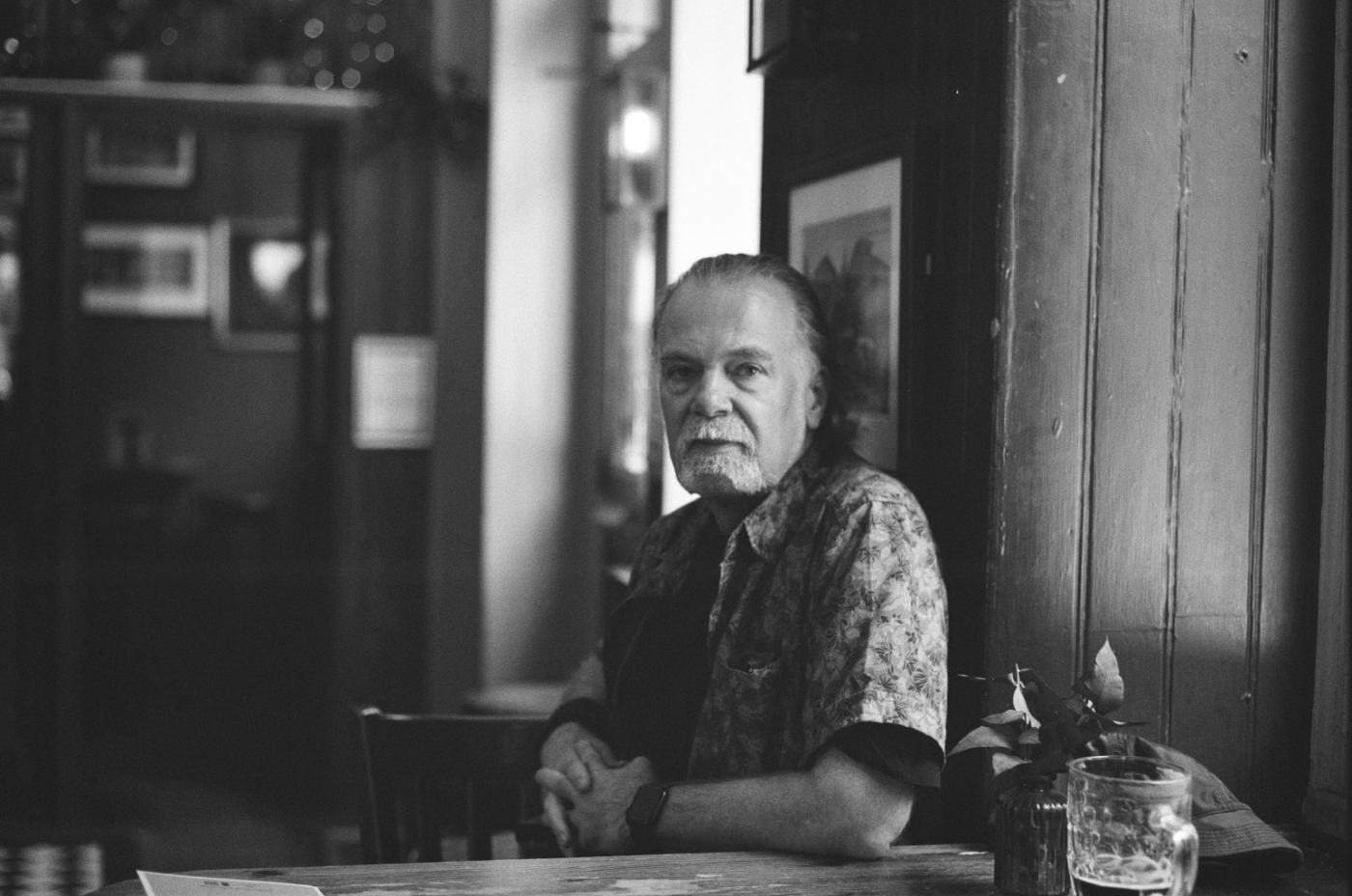
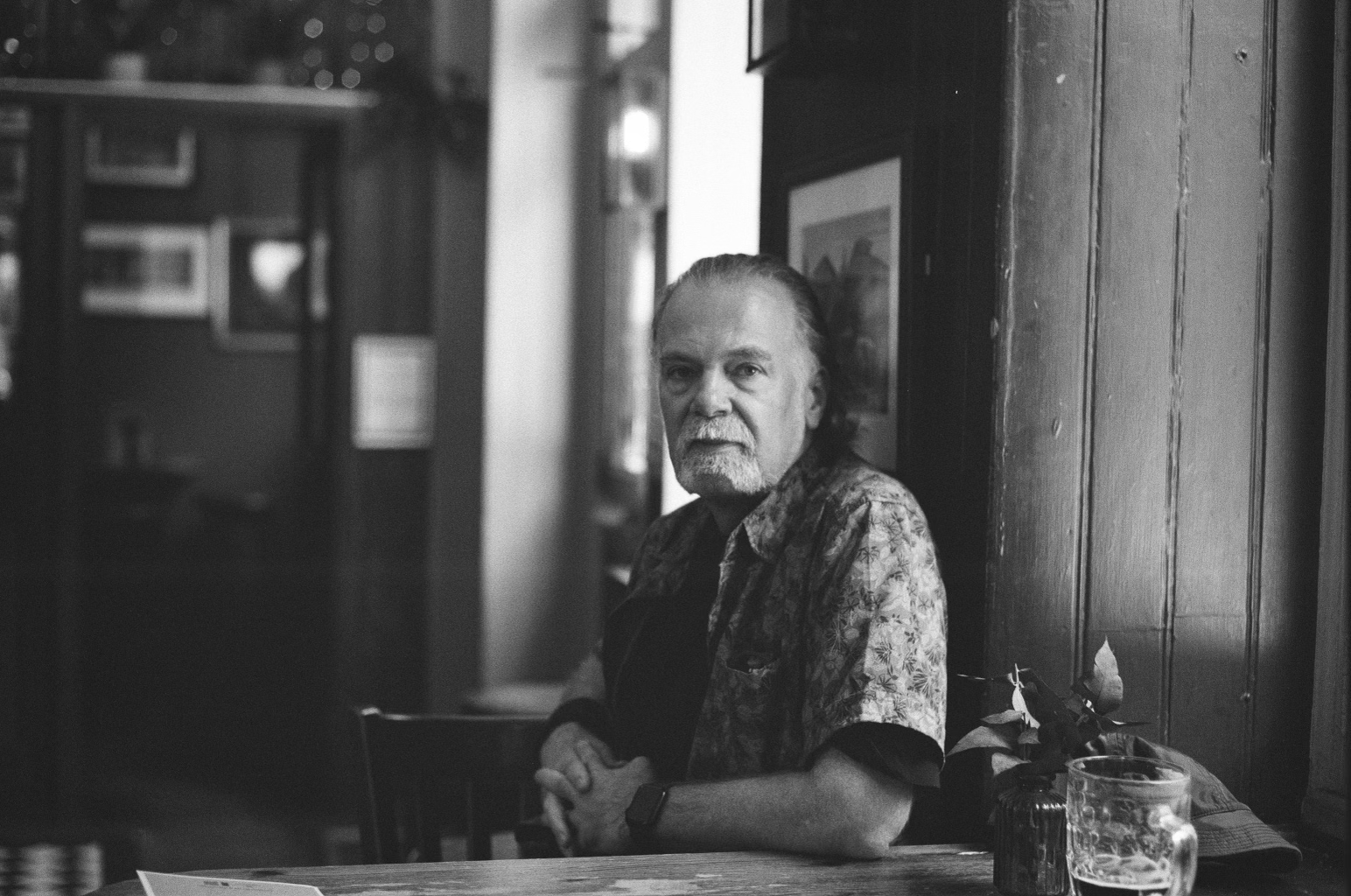
Nick Abadzis has been making comics since the late 1980s. From his early underground hit with Hugo Tate in the Gen-X comics anthology Deadline, to his work as an editor, writer and artist in in both mainstream and children’s comics, he found great success with his Eisner-winning graphic novel Laika.
As a longtime fan, I was keen to talk to Nick about the influences and methodology behind his unique body of transatlantic work. This is part two of my interview with Nick, conducted in late May 2026 over Zoom to mark the release of his latest book, My Beloved Other: a memoir of love, race and optimism in a time of denial, co-created with his wife Angela Watson. You can read part one over here. — Sacha Mardou
SACHA MARDOU: Nick, I’ve always thought of you as an “indie cartoonist” who had his training in the traditional comics realm, is that correct? Can you talk about your early comics influences?
NICK ABADZIS: I had a lot of different cultural influences growing up, with my dad being Greek and my mum, who was British. My mother loved comics and cartooning and great animation and film. I was aware of American mainstream comics from an early age, but it was the U.S. newspaper strips I knew first. In the U.K. we had black and white reprints of U.S. 4-color newsstand comics, published by Marvel U.K. I'd read Schulz and Peanuts, I’d read Dracula Lives (a reprint of Tomb of Dracula), The Dandy and the Beano, all the Fleetway stuff, all those British war and adventure comics, and I read a thing called TV Comic that had a regular Doctor Who strip.
So, my mother used to go around junk shops and pick up all these collections for zilch and bring them home to encourage my siblings and me to read, which we did. She loved comics, literature, TV, anything that stimulated the imagination, while my dad was very methodical and scientific in nature. She was very encouraging of our creative endeavors, and luckily my dad had an excellent sense of humor.
So did your mum encourage you to go to art school?
She did, and this created a bit of a problem, because, out of his three children, I think I was my dad's best hope for a scientist.
I did a Foundation course in art at Chelsea Art School. I didn't know how to get into comics, I had no idea how to train for it and felt terribly directionless so I took a year off and worked, during which I went to New York for the first time. I remember dragging a portfolio around New York City when I was eighteen years old. I didn’t succeed in getting an interview at MAD Magazine, but I did manage to meet Neal Adams, who was famous for that incredible run drawing Batman. I remember him looking through my portfolio and saying, “You’re all over the place. You've got all these different, conflicting styles.” He could tell I was driven, but muddled. He was very kind to see me and he tried to be helpful, but he had this very straightforward, workman-like attitude about how you get into and do comics. I didn't understand, back then, that he was very New York-centric — that is, to focus on the figurative and the mainstream and nail down one style. He didn't really know about how you would break into comics in London, and neither did I.
But his advice helped, because I went back home to the U.K. thinking about how I might invent my own approach, something that would free me from having to be so figurative. I was pretty sure, early on, that I would never be a superhero artist, but maybe I could be a satirist, a newspaper cartoonist.
In my head, I think I was trying to boil down all these influences, the American, the British and the European comics, the newspaper strips and the TV spin-offs, the cartooning and the animation, into one approach. All of this eventually fed into the invention of Hugo Tate to free me from what I perceived as the constrictions I was facing.
How did things eventually take off, back in London?
Around 1986, I got a job in Forbidden Planet in central London and via that, made a connection with Steve Cook, a designer at Marvel U.K. He got me to interview for a job of color separator, which was the lowest of the low, at that time, but was also a foot in the door. And, once I was in there, I didn't go back to Chelsea Art School. What I did do was sign up to Putney Art School (which doesn't exist anymore), just to keep my drawing skills up. This was all part of my mission to become more at home in my own skin as an artist.
My first published work occurred while I worked at Marvel U.K, a half-page comedy backup strip on Thundercats called One Cat and His Cod. I was trained as an editor in the “Marvel method.” I tidied up my lettering skills and worked as a freelance letterer and colorist. I commissioned covers, created my own batch of “Christmas annuals,” kids books based on TV animation series. I was there for a little under two years. There were a lot of people at Marvel who you could learn from and I absorbed a lot, very quickly. It was a sort of university for comics production.
Afterwards, I went freelance and shared a studio with Steve Cook and another fellow ex-Marvel U.K stalwart, John Tomlinson (who went on to be one of the editors on 2000 AD). But I was still kind of directionless, which is where Hugo Tate came in.
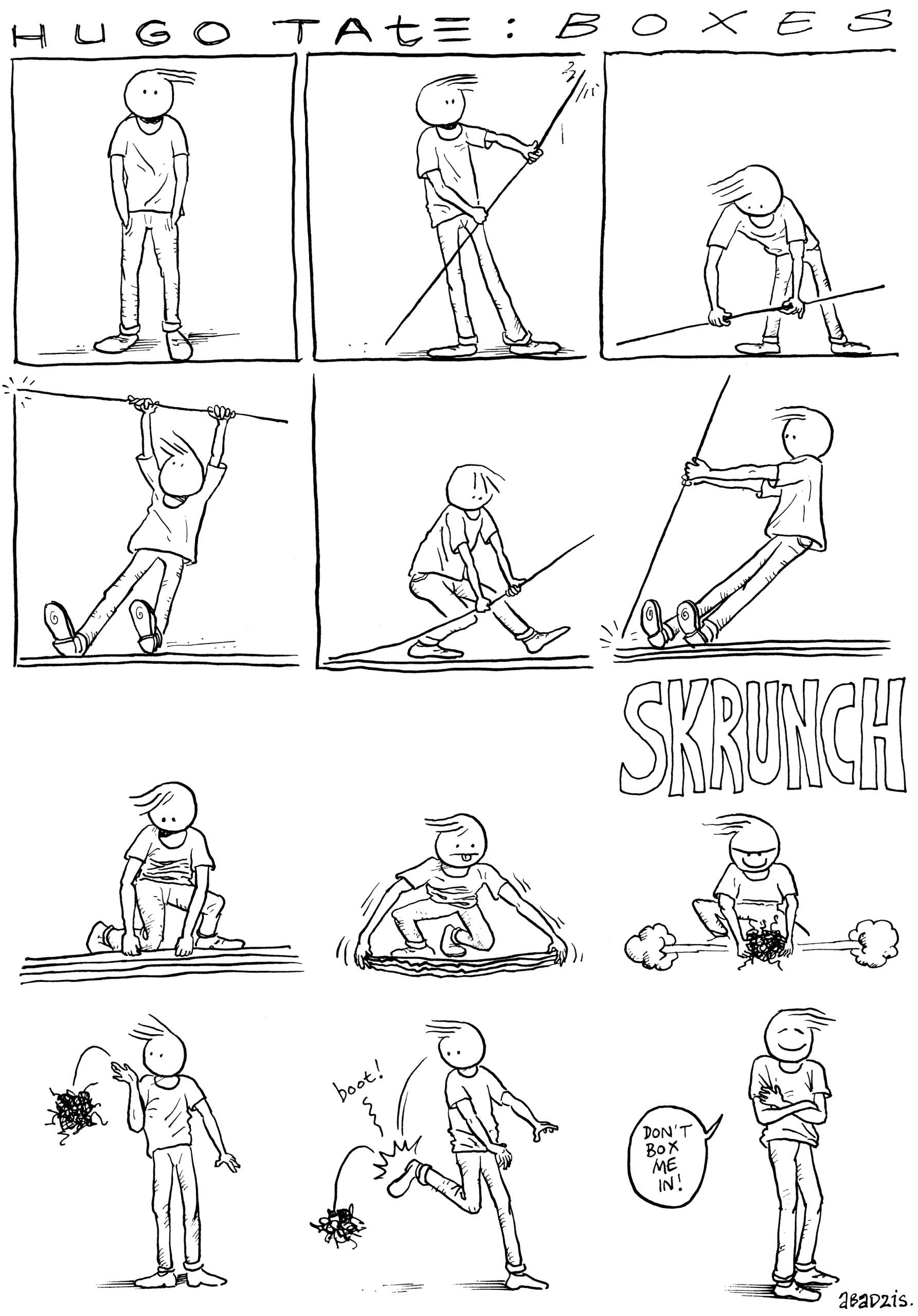
So Hugo Tate ran in Deadline, and for American readers who might not be aware, it was a hugely influential late '80s/early '90s Gen X-era magazine featuring music and comics. And it was created by Steve Dillon and Brett Ewins, at that time largely known for their work on 2000 AD, right?
Right. Yeah, Steve Dillon and Brett Ewins together gave me my chance, my “big break.” I was still cramming that bloody portfolio with samples of the kind of work that I thought I should be doing, and hid these very scratchy early (and mostly unfinished) Hugo Tate pages at the back of it. They were patient enough to look through all the “conflicting styles,” that Neal Adams had dismissed, and found the Hugo strips at the back, and Brett paused. “Oh, hang on a minute, what's this?” And he and Steve both looked, and Steve went, and I can recall the tone of his voice very distinctly, “Yeah, we'll have this. This is what we're after, this kind of thing.”
I see Hugo Tate as more personal work, is that fair to say?
Yeah, it is. There were quite a few unfinished Hugo strips before the very first one that appeared in Deadline. He really was invented as a way to get around my own preconceptions and my nervousness about my drawing skills, which, at that time, I thought were shaky at best. I decided to dispense with the rules completely, and just draw a stick man, straight down on the page, and see where it went. With Hugo, I could find my way around how I thought comic artists had to draw, and just tell the story.
I never really understood that you didn’t have to emulate someone else’s style; that you could have your own. I think my problem was that I didn't really have any filter and I just really loved all comics. When Hugo came along, he presented himself as a way out — drawing him was an act of expressive freedom.
As a character, he was a philosopher, a commentator. He was the thing that allowed me at last to make comics about what I was really interested in, which was emotion. It was a personal comic in that sense, and what happened was, a lot of Deadline readers thought that it was about me, that it was purely autobiographical. It wasn't at all. The emotion was, but not the plots!
So was Hugo’s American road trip taken from real life?
That never happened, at least, not until I was a lot older. A lot of my adventures and incidents in New York gave me ideas that made their way into the strip. I went over there for the first time when I was 16 and began exploring the city in 1981. My version of New York City in Hugo Tate is very much an early '80s one, which was quite a dangerous place then, but it was also incredibly exciting. Plus, from my point of view, it was the heart of American comics culture. Marvel Comics and DC Comics were based there, RAW, Mad Magazine, the New Yorker and all these incredible American cartoonists and part-time playwrights like Jules Feiffer.
Was Steve Dillon an early mentor for you, in terms of encouraging you as a writer?
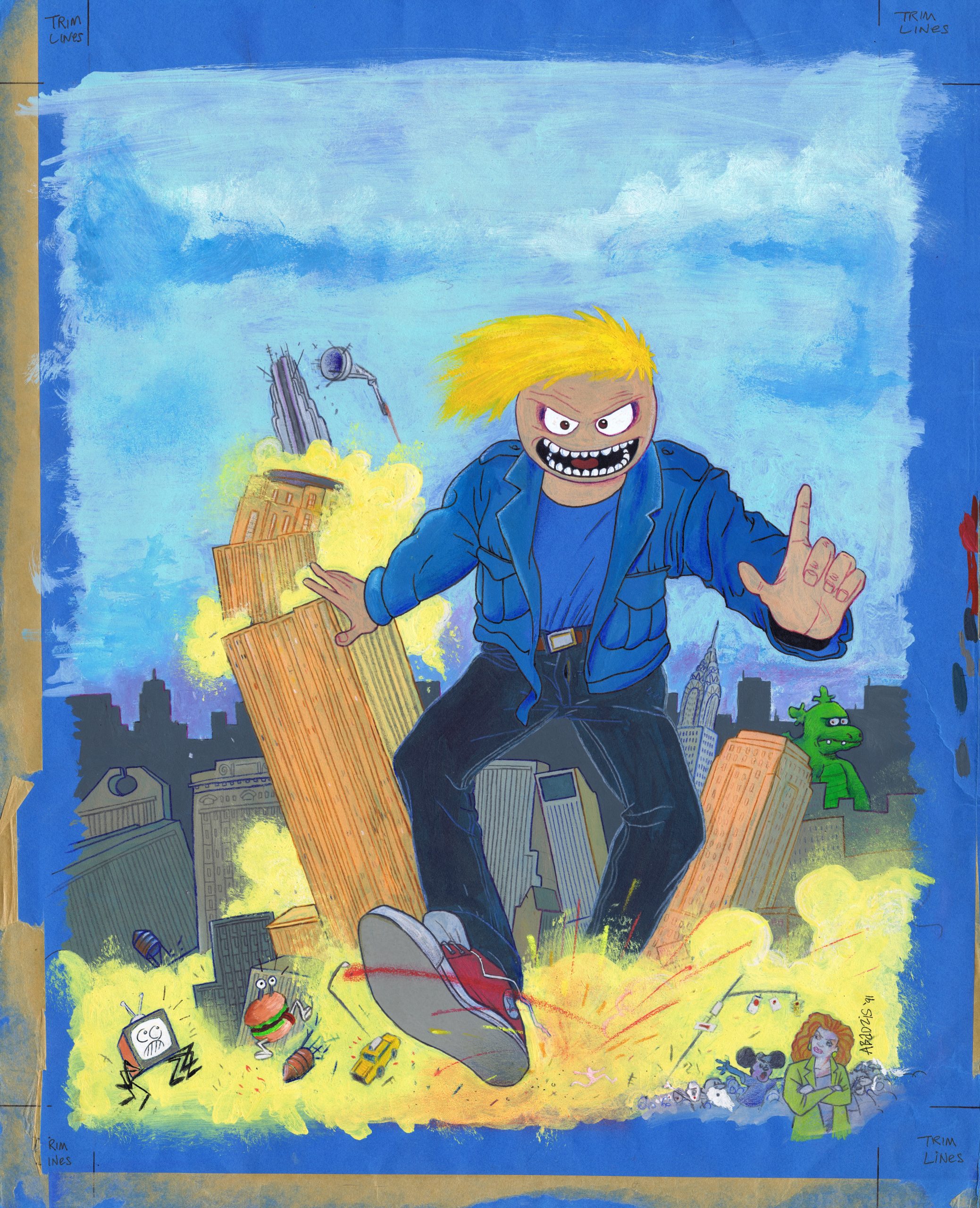
Yeah, he was, but the two of them together were, both Steve and Brett Ewins. Brett liked it when I did weird shit. He really liked things like Night of the Living Fish and Mr. Pleebus. He really liked and wanted me to do more of that, all the little newspaper-style “marginals” I’d do like Eric the Lighthouse and Urinal Face and stuff like that.
Steve didn't edit in the traditional way that a magazine or comics editor might approach it, like suggesting fixes for transitions in pages. What he did was, he encouraged you, he suggested building on certain strengths that he’d identify. He was open enough to look at what you brought in each month and say, “There's something new here, which is unique to you.” I remember going for drinks with both he and Brett and, saying, “I can't really draw like those other guys, like Philip Bond, Glyn Dillon or Jamie Hewlett or D’Israeli or whoever.” And this was Steve, he’s like, “Don't worry about that. What you can do is, you can write, and you can make a story hang together on something else.” He was very, very definite about that.
That was the first time I'd had somebody, other than Dave Lloyd, who'd encouraged me a little bit earlier at the Cartoon Centre (a London charity in the 1980s that encouraged budding young cartoonists). He said something like, “You're trying other things too much; all these different approaches. You need to find your own style.” And that was the first piece of good advice I think I'd received, and, come to think of it, it wasn’t much different from Neal Adams’ observations.
There was also Garry Leach, who used to come in when I worked at Forbidden Planet, who was interested and encouraging. But Steve Dillon was the first person to nail it, to say, “Focus on your writing, focus on the little story that you want to tell. The rest will follow. Just do it the way that you do it. Nobody else does it like you.”
I should probably also mention Brendan McCarthy, who used to give me all sorts of jobs, lettering jobs and inking work. The first inking job I ever did was some illustrations that Brendan knocked up for a text story in a 2000 AD annual. It was terrifying, but he just threw me in at the deep end.
I've got to say, Steve and Brett were only a few years older than any of us, the younger guard who they were ushering in, but they were incredibly generous and open-minded. It’s something that isn't really talked about in the wider terms of British comics culture. In the US, they're known as these mainstream guys. Preacher in Steve's case, or Skreemer in Brett’s, or both of them as 2000 AD artists. However, both of them, in terms of their own taste, just published what they liked, whatever they perceived would fit with this spit and sawdust, punky DIY ethos of Deadline. They brought in women cartoonists, like Rachael Ball and Carol Swain. I recall Brett saying, “Deadline is for girls too.” That had never been done before, not like it was done on Deadline.
Yeah, girls did read it. I was reading it when I was 17!
You did. I know!
Deadline never felt mainstream, even though it emerged as this subset of traditional comics publishing. It had funding, but it's not like anyone was getting rich out of it. Hearing all this, it sounds like the driving energy of it was generosity, and that’s something internalized. Because, Nick, you were someone I reached out to when I was starting out in mini-comics in England, and you in turn gave me that support and encouragement.
Well, I think it's the way to be. Not everyone was like that, but I don't really know any other way to be. I think that, in a sense, the comics landscape that we always wished for in those days has come about. But it's also incredibly difficult to get seen, to be visible now, and I find myself fighting to keep afloat in that. It's an ocean.
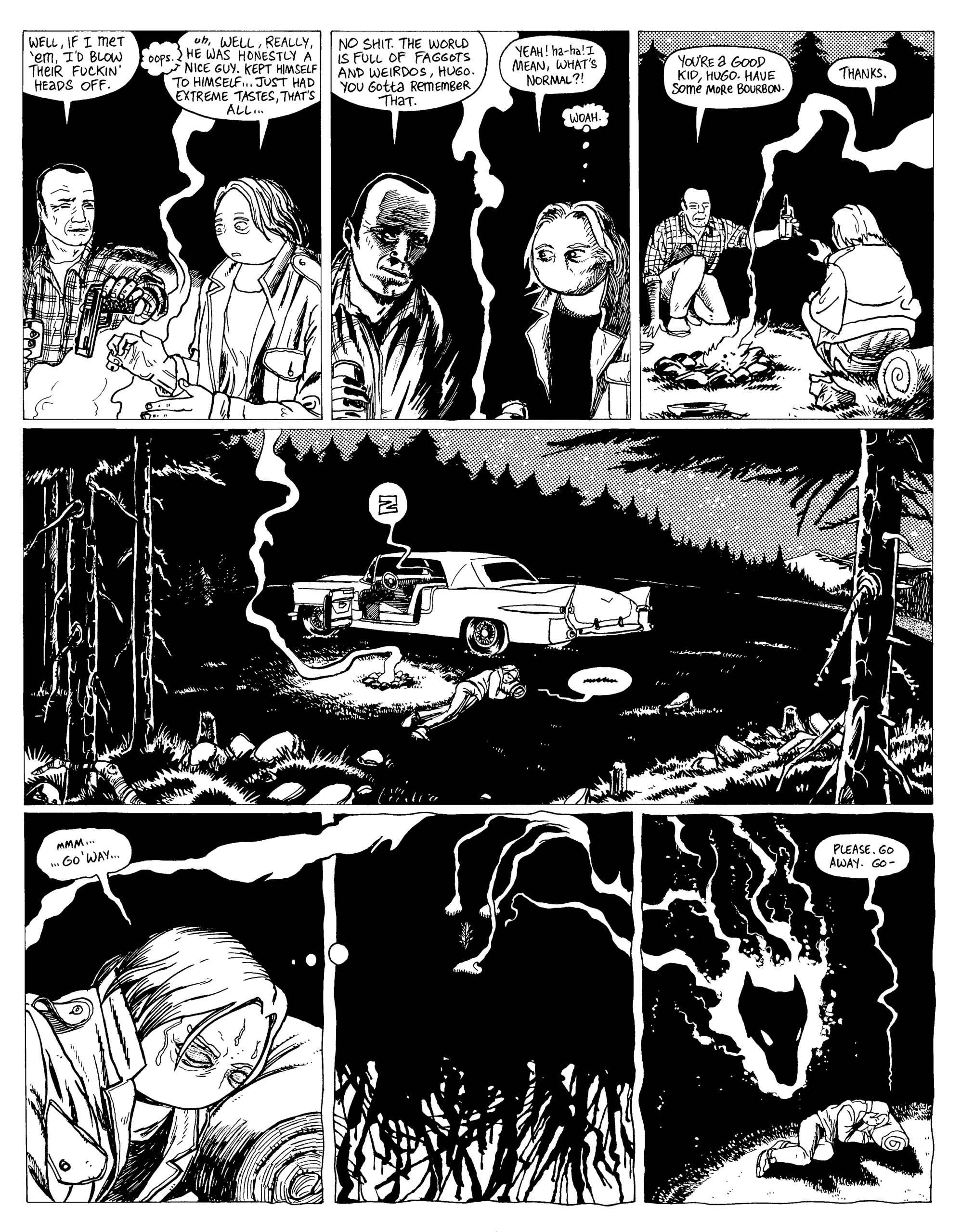
Can we talk about finding artistic confidence? You talk about your limitations as an artist, and finding your strengths with the help of good mentors. Is that what’s helped make you such a nimble artist?
I s’pose so? It probably sounds a bit insane to a lot of people. I think, from the outside, I’m probably perceived to be successful and very able to switch from one gear to another, pretty fluidly. That may be how it appears, but there's always some effort involved. Often, when I was younger, that was just me, being ambitious, learning on the fly, and wondering, “Can I do this?” It was definitely Steve who gave me that push early on. He was very much of the opinion that I could tackle sophisticated comics storytelling, even with my cartoony style. ”Yeah, you can do it!”
Steve Dillon or Steve Cook?
Both Steves, actually. The name Steve has been synonymous with good luck in my life, because there's also my friend Steve Marchant, who now works at the London Cartoon Museum, and was somebody else who helped me find confidence in teaching comics via workshops, public speaking and the like. In a sense, we all helped each other. He was, “Let’s do this together!”
There is also Steve White, another friend at Marvel U.K., who I worked for as an editorial assistant for a while and who later got me in to write Doctor Who comics for Titan. So, the four Steves.
The four Steves!
You know, my name's Nick. I don't have a musketeer outfit, but … [Mardou laughs] I’m involved somehow!
With Steve Dillon, he told me that when Deadline started, he was having a bit of a problem himself, creatively speaking. What the early period of Deadline did was, it sort of regenerated him, or it was the beginning of a new creative period for him. Around that time, he also met Garth Ennis too, and of course, we know what a powerhouse creative pairing they became, and how successful they became as a creative duo (on Preacher, Hellblazer and The Punisher).
Would you say that your early lack of confidence was actually a positive attribute, because it made you push yourself?
I believe that doubt is a great and underestimated force for good in life. If you remain doubtful, or at least allow room for it, and if you're humble about your own abilities, then you can expand in all sorts of different and unforeseen directions. There should always be room for experimentation, to explore, to come upon new facts, new possibilities. If you're absolutely 100% definite you know a thing, you probably don't know much. You’re already narrowing your point of view. Remaining curious and uncynical, beyond your own field of vision, is incredibly important for artistic or creative growth.
Right, and I think it's important to note, because I feel like a lot of young artists are exposed to a lot of work on the internet now and, in order to get ahead, they believe that they have to be perfect or slick. It’s experimentation that makes for or leads to interesting work. Imperfections are interesting to me.
Slickness can be great. It depends who it is. There are certain people whose work is slick, but it’s also absolutely, definably, expressively them. An artist like Moebius, I suppose, looks incredibly slick from the outside. I mean, his penmanship is second to no one’s. But he was propelled by curiosity, and the desire to exceed, to go beyond his own limitations.
That makes me think of how I’ve heard you define yourself as a cartoonist rather than a comics artist. Do I have that correct?
When people used to ask me, I used to say I was a “cartoonist who draws comics.” If you push me nowadays, I'll just call myself a storyteller, because I write too, and always have done. I've written a lot of scripts for other artists. I've written a lot of prose, I’ve written and drawn a lot of comics, so I suppose it’s accurate to call me a visual storyteller, sure, but it’s always dangerous to define yourself as this one thing. People then pigeonhole you. The easiest thing to say is I'm a storyteller.
That makes sense, yeah.
Certainly, in terms of my drawing, my stuff errs towards the cartoonier end of the expressive spectrum; there’s a looseness that I’m always attracted to. I like that there's always an indefinable element to drawing. If you don't know where it's going to go, then there's still an open-endedness to it, and that means open-mindedness too. I think that that's important.
I've noticed my own stuff get really tight sometimes, and that's the version of myself I like the least. When it becomes looser and a little bit more organic, I like it more. The scratchier, more painterly inking style on Laika came about by accident. When I discovered that, I was like, “Oh, yeah, that looks like me. I'll just go there.”
Making comics for children became a successful niche for you. How did that come about?
I'd pitched some writing for 2000 AD, but they weren’t really interested, until my friend John Tomlinson talked them into it. I wrote a horror strip called Darkness Visible for John Ridgway, who was an artist I loved. He’d worked on some of the best Doctor Who strips for the Doctor Who Magazine. I did a mini-series for Marvel U.K., Children of the Voyager, which was a sort of folk horror story, back before it became named as that sub-genre. I did a one-off for DC when they were coming over to London seeking British talent, in the mid-'90s. That was another mini-series, this time for Vertigo, called Millennium Fever with Duncan Fegredo on art. After that, and further unsuccessful attempts to get in with Vertigo, and an incoming editor at 2000 AD deciding they weren’t going to do horror, I was offered some children's graphic novels by a U.K. children’s publisher, which they asked me to write and draw. To me— because it wasn't about money— that was a great job. It should have been about the money, because I was I woefully underpaid! But the creative freedom was terrific.
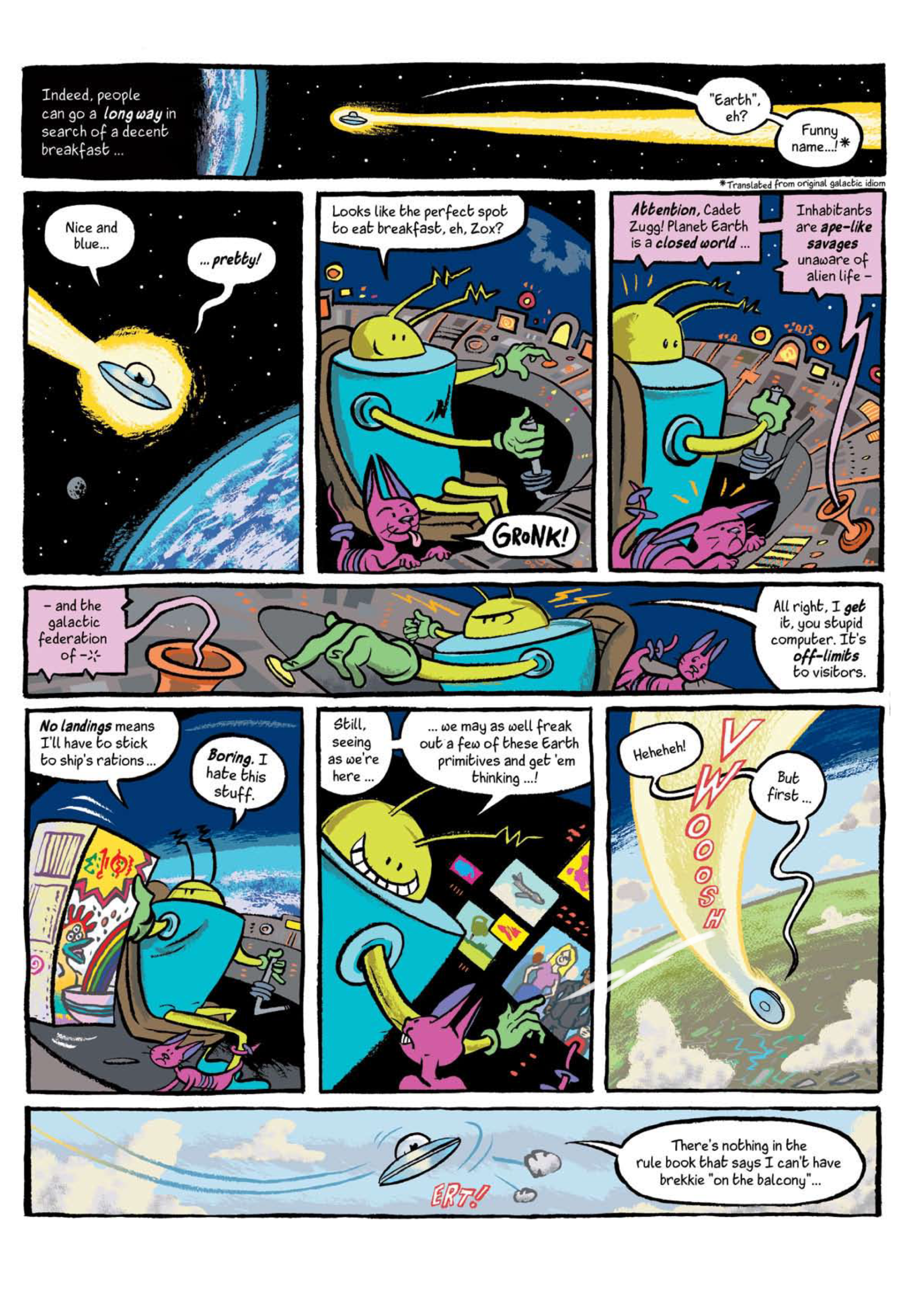
Are those the Mr. Pleebus books?
The Pleebus Planet books, yeah, and there were four of those, 62 pages each, like an old Tintin album, but black-and-white. I also did a lot of children's illustration, much of it forgotten now. I doubt if I’d even recognize it now, if you showed it to me.
I did a lot of that sort of thing in in British publishing. I worked for Eaglemoss Publications as a development editor for years. They were a venerable U.K. partworks and magazine publisher. I was freelance and Glenn Dakin, an old compadre from my Deadline days, got me in there. Oh, and Alan Cowsill, another refugee from Marvel U.K., came along a little later. Between us, we made a lot of money for that company. We got to do comics on the side, because sometimes we'd be allowed to put comics in the various children’s magazines that we set up.
The higher-ups would ask, “Can you do a comic or magazine based on this IP we’re looking at?” They'd give you a subject area, we'd go off and research it and map out a direction for a potential publication. We used to sit in this big room with a whiteboard and I’d do lots of drawings and we’d just throw a lot of ideas around. We’d use those as the basis for all sorts of different kind of magazine lines, sometimes books too. In the same way that Marvel U.K. was an incredible training ground, Eaglemoss was a training ground to hone your skills and instincts for the wider realm of publishing.
Is that how you learned your editorial skills?
Yeah, in addition to what I’d learned as a comics editor at Marvel U.K. At Eaglemoss, I was involved in a lot of cover art, a lot of magazines, a lot of books. I do know how to make an eye-catching cover, and I know the difference between a bookshop and a comic store and online entities, and how you have to approach a title with all those different outlets in mind. It's got to have a life of its own.
Your writing for kids seems very intuitive. Do you just have a knack for knowing what makes a good children's story?
I think that's probably as much about me having a good line back to my deep child-self. He's still inside me, and I can just ask him, “Would you like to read this?” And he'll tell me yes or no, and I can bounce ideas back and forth off him.
When my own kid was growing up, I'd also try stories out on her. Children are great because they're the most honest critics in the world. They'll tell you if they're bored or interested in something. It’s good if you can recreate the conditions in your mind where your child-self is answering back to you honestly.
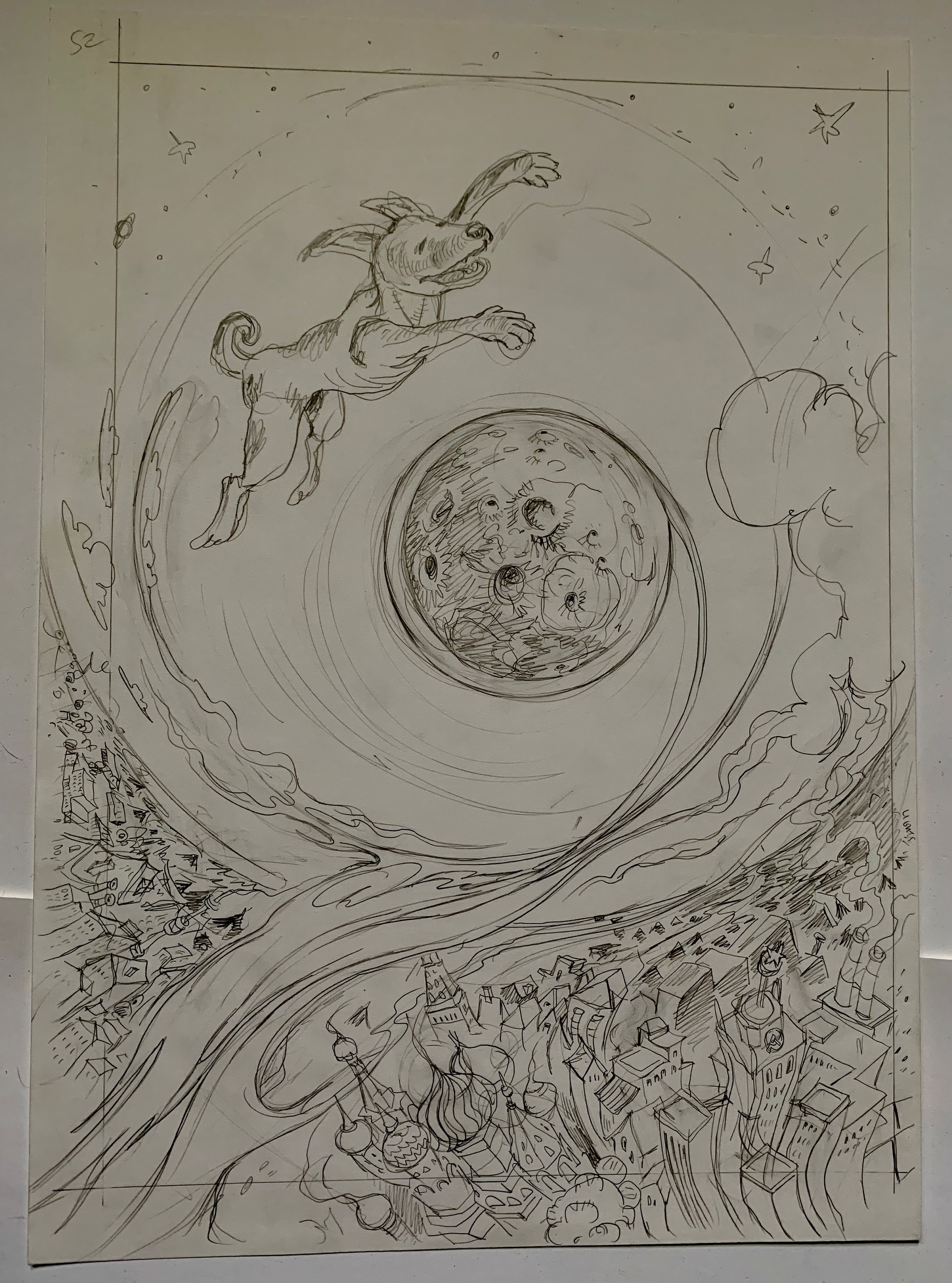
Well, this brings us to Laika. It’s one of those great crossover books loved by both adults and kids, and I know it required a ton of research and historical digging. How was the experience of making that book?
It was really hard work. That said, I think that My Beloved Other beats it in terms of the actual hours I put in. But, in terms of getting it approved, then getting it to print, the turnaround for Laika was, relatively speaking, extremely fast.
I wanted to do the book because I was always really interested in the Soviet side of the Space Race, because just not a lot was known about it. There was a lot of research, a lot of prep. About, maybe, five years' worth, which slowly built to thumbnailing a working script, and then came the making of the actual artwork. The thumbnailed script itself was what took the longest portion of time in that period to finesse.
The actual artwork itself though, actually sitting down and doing it, penciling it and inking it, my memory of that is that it all happened extremely quickly.
The Space Race was 1957–1975 and you were born right in the middle of that, in 1965?
Correct. When I was 7, I stayed up to watch the 1972 moon landing, Apollo 17. I could differentiate between real space and history, and the fantastical stuff, like, Thunderbirds or Star Trek or Doctor Who. I just found it all fascinating, but the story of Laika was an aberration. Why did they do that, when they took such care, in all other instances, to get these creatures back down safely to Earth again? Like Ham, the American space chimp. I know, it's an experiment, but why did they send the dog to die? It just stuck in my head as a child, just lodged there.
As an adult, at Eaglemoss, I’d been working on a magazine version of the Horrible Histories books for kids. I felt that you had to respect history, really know it, before you could make fun of it. If you want to do a comic about a specific event, then you have to really research it and look at it, and see what kind of storytelling it demands.
Around 2003, new information about Laika and both Sputnik missions came to light, and it triggered the childhood memory of my reaction to the dog’s death, the cruelty of it. I thought maybe I’d do a short strip about it. I began researching it, and of course, the whole thing snowballed, and we ended up with a graphic novel.
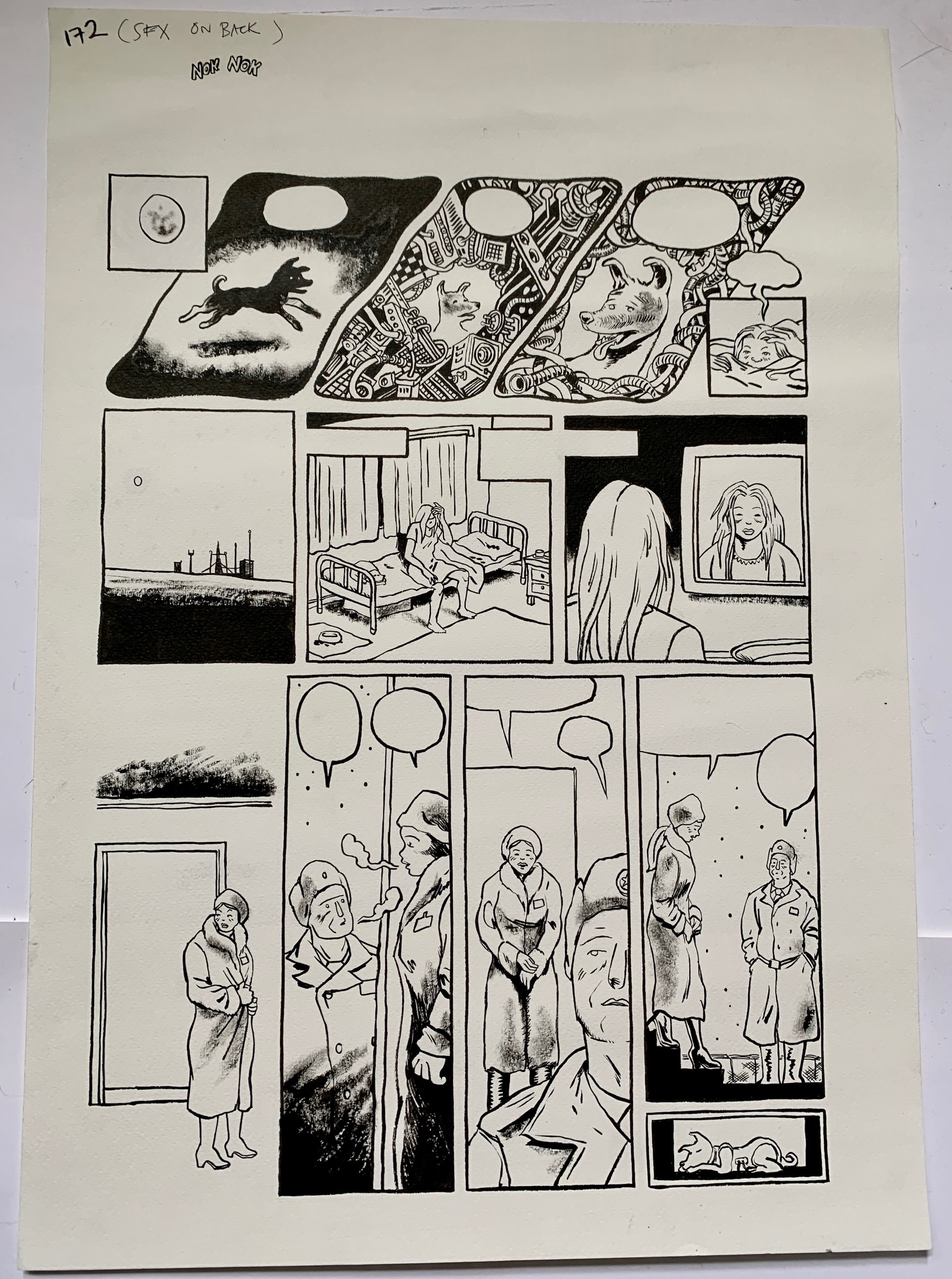
Laika is about 200 pages long, but you get so much in there. I noticed how you use the visual metaphor of confinement. There's lots of cages and boxes, and you even go really small with your panels sometimes.
There was an earlier draft. I was originally given 125 pages, and struggled with that page count. A lot of stuff was getting cut that I wanted to include. I showed Mark Siegel that draft and asked him if I could have more room. He understood that the story needed to breathe, and gave me 200 pages.
I'm being a little bit disingenuous here, because I'm making out that the format was what dictated the smallness of some of the storytelling, but that's not entirely true. There were occasions when I took a deliberate decision to create postage-stamp sized images. The ethos at the very start of First Second was that Mark wanted a format that was “easily portable,” books small enough to fit in the pocket of a pair of cargo pants. This was before we read everything on smartphones; he was ahead of his time. He also was talking about maybe doing larger, more deluxe editions in the future. I wanted to accommodate that idea, to make a book that would fit both formats without complication.
I'm always trying to think ahead, like that. I'm always hopping ahead, running before I walk, and thinking, well, how will this work further down the line? If you reformatted it and did it another way?
You actually went to Russia as part of your research, right?
Yes. Russia's a very different place today to how it was when I visited in 2004. I went before I did the finished pencils, because I wanted to know how things really looked. There was a certain amount of stuff you could find online, but not the details. I'd written to a few Russian (formerly Soviet) Institutes of Science who did eventually respond, but it was much later, after my trip — the pace things moved there were glacial. Luckily, via the Museum of Cosmonautics, I got an invitation to Korolev's house, which is preserved as a museum. That trip was really valuable for experiences like that, seeing Korolev’s place, where he worked and lived, observing the details of his study, seeing the personal details and knick-knacks he kept around his house. Getting a sense of him, and of course, of Moscow and its people.
Was it more about providing the look for the book, rather than giving you nuts and bolts research?
A bit of both. You're trying to be a good investigator as much as a researcher. You're taking clues from what you see and what you've researched and building a larger theory of what happened, a tapestry of how things worked and how events unfolded.
Historical fiction is fitting your story around real, established events. You don't want to contradict anything. That’s something that pisses me off about Hollywood films set in real history, in the way some of them might change things and make up stuff that didn't happen. That’s legend, or mythology, not history. It’s cheating, you're ignoring the necessary constraint. Work within the constraint. It’s harder work, but it’ll make the end result more dramatically interesting and truthful.
Laika has become your calling card, in a sense, because it became so huge. When did you realize that this book was taking off for you?
Yeah, it became a signature piece. It won an Eisner, which was a real surprise because I just thought I was such a rank outsider. To be recognized by your peers in American publishing was a huge honor. It did change our story (mine and Angela’s, and our daughter’s), because it was the success of that book that made us consider emigrating to the U.S., and taking advantage of the opportunities we were being offered at that time. None of which actually materialized in the end, because the worldwide economic crisis of 2008-9 was on the horizon, ha-ha!
That’s interesting, though, isn't it? Laika actually opened a door for My Beloved Other to exist, as well.
Yes, indeed. It's definitely true to say, My Beloved Other probably wouldn't exist in the form that it does without Laika.
So do you work on multiple projects at one time?
Probably? I've always got something on the go, or I've got something planned. It usually takes longer than I think it will to get something up and running. There's not usually a smooth transition from one project to another. I think I just work very hard, being steeped in this sort of South London work ethic that my mother inculcated in me, plus my father’s immigrant Greek work ethic.
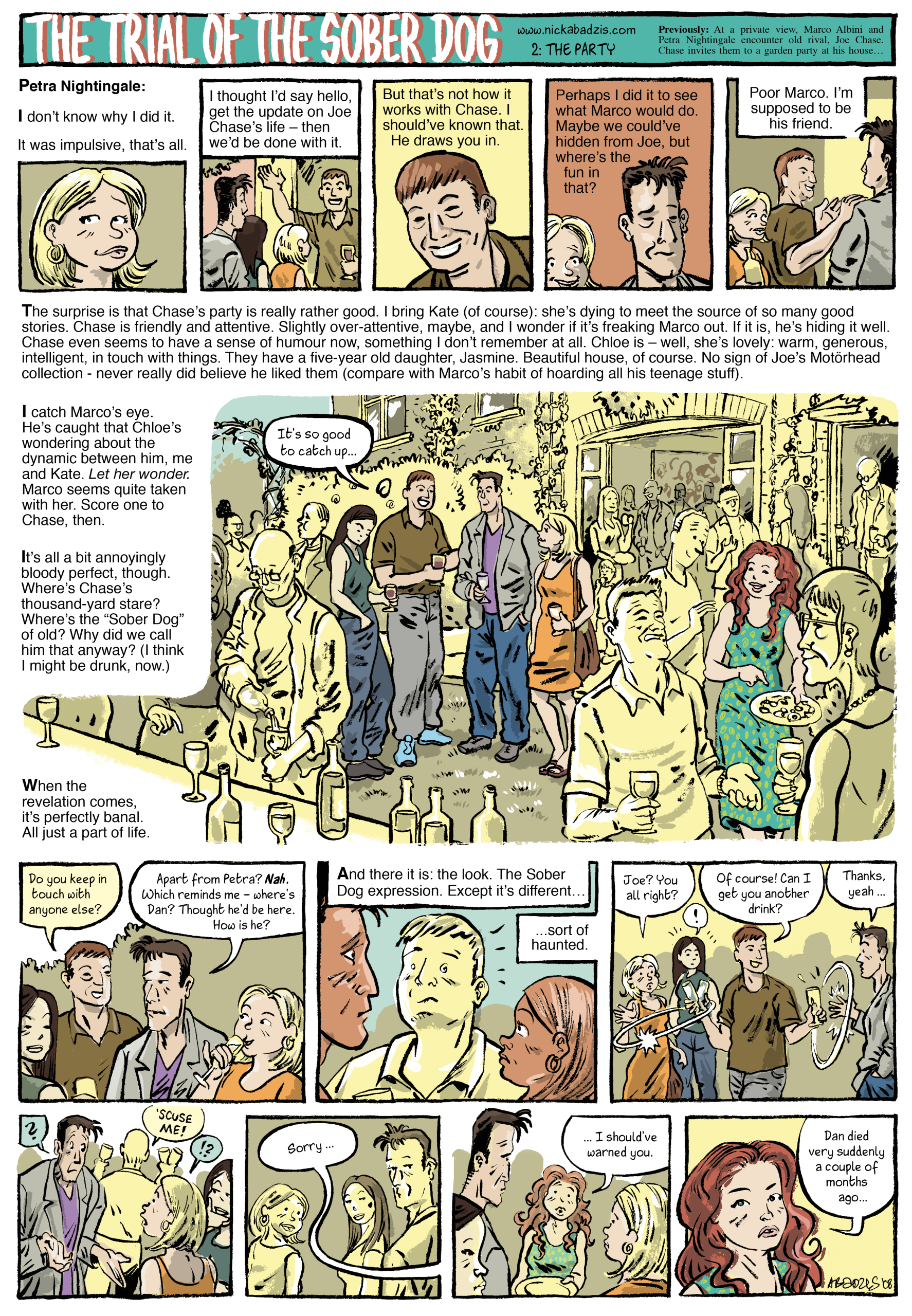
You’ve done a lot of commissioned work, including a story I’d never read before, The Trial of the Sober Dog, which ran in The Times newspaper in the UK in 2008.
Yeah, and it's a peculiarly British format, that mix of text and illustration.
Right, similar to Posy Simmonds, whose work is very well known in the U.K.
Yeah, and that's what they asked me to do. The (then) assistant editor of The Times, Emma Tucker (now editor of The Wall Street Journal), contacted me and said, “We want a graphic novel, and you’ve won an Eisner, so we want you.” I said, “Okay, how long have I got to do it?” She responded, “Well, we've got two weeks before we run the first episode.”
Two weeks?!
Yeah, but I like a challenge, so I accepted! Emma was actually a great editor and except for the stipulation that it be a “bit Posy Simmonds,” she gave me a really free hand and the occasional bit of feedback about what readers were responding to. That said, overall, it was a difficult job, largely because of the lack of prep time. I just didn’t have time to plan anything, and that always makes anything that’s supposed to have a bit of depth to it a really hard job.
I'm sure, yeah.
The format was great though, so I couldn’t resist. It was large format, so you had almost a page in what was a broadsheet back then, I think. Sort of A3 roughly in size, maybe a little larger, so you had a lot of room to work in that mix of text and illustration. They wanted a fair bit of text, “so as to not frighten our readers,” and it was a rule I followed at first, but I slowly dropped that over the run of the strip.
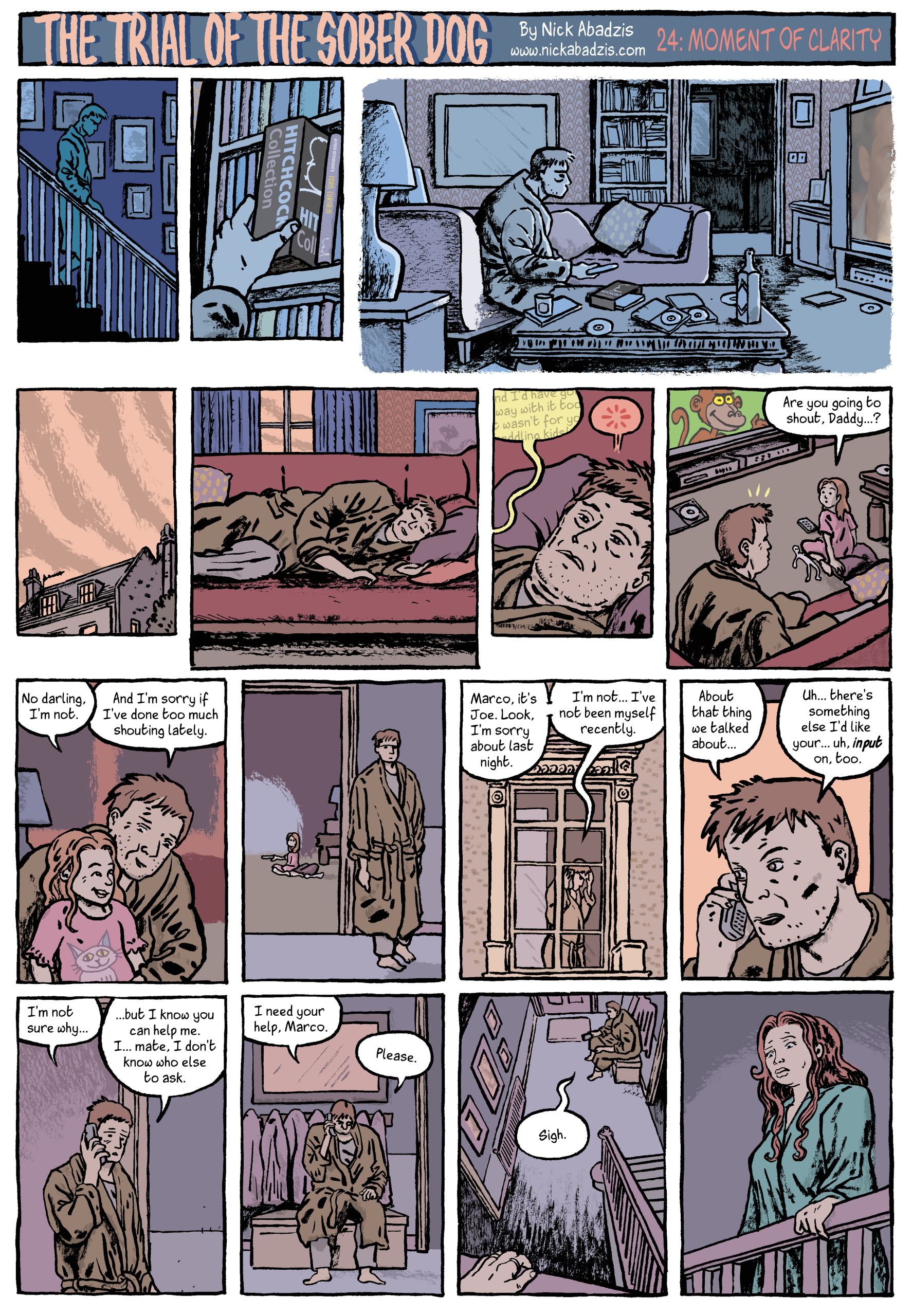
So it grew into more of a traditional comic?
Yeah. They got a lot of really good feedback from it, but it was a very exasperating experience on occasion. There was one reader who absolutely hated it. This one nutcase would write to me — this was just prior to social media, to Twitter, anyway, so he used to email me via the contact page at my website — telling me how much he hated certain episodes, and that I couldn't draw. He hated the characters. He was some kind of professional philistine, a neophobe. He was very easy to dump in the same box as I put all those art teachers who told me I couldn't draw.
On reflection, I know that I'm not perhaps, technically speaking, the strongest kind of comic artist out there, but I know how strong my storytelling and cartooning are. I know how good with character I am, and if I can't find the perfect way of drawing the emotional effect I’m going for, I'll invent something new and find a way of showing it to you and immersing you in the story in a way that you will feel something.
I think I learned that from Schulz. He could stun you with a four-panel comic strip. Postage stamp-sized, tiny people, characters that could make you laugh or cry, and everything in between. I learned a lot of that from him, or I took my cue from it, at least.
How you’ve utilized your own self-doubt really resonates with me. I feel the same way, I know I’m not the strongest artist but I have a lot of self-trust in myself as a writer.
Yeah, and I don’t think it’s just writing per se. For example, if I tried to write a novel, I’m not sure that I could be as fluid as I am with comics architecture and the language of comics. It’s more about wanting to understand the language of comics in a really deep grammatical way, understanding the punctuation of it, understanding the possibilities of it as an episodic story unfolds in front of you. You understand how the gutters work. The gutters are almost like incidental music, or the incredibly brief silences between notes. You understand the relationship of this language to other art forms, including music. And I know I maybe come across as someone who thinks maybe too deeply — “Hey, it’s only lines on paper folks,” words and pictures — but it isn’t. It’s what human beings are hardwired for, going back into our deepest ancestry.
Oh yeah, in Arizona I saw those petroglyphs on rocks and felt a deep kinship. Those were our people! Cartoonists with hammers and chisels!
Yeah, and the Lascaux cave drawings. They didn’t just get good one evening with a bunch of dyes and horsehair brushes and daub those on. There’s incredible drawing skill there. We don’t know where they practiced their drawing skills, but maybe they’d draw on the sandbanks of the local river, or on the beaches by the sea, and of course all that is washed away instantly, lost to time. But those kinds of skills, that ability to capture movement, emotions and moments, is really deep storytelling. It’s symbology, both a way of describing the world and of thinking and problem-solving visually, and cartoonists who work with that in a modern way, are rooted in that ancient tradition. We're very old in that sense, the way our brains work, the way we’re hardwired. So I’m not having any bullshit about, “Oh, it’s not proper comics if it’s not superheroes.” Nah, you’re not understanding your own relationship with how deep into time this goes back. It’s a very old technology, one of the oldest we have. Probably older than fire.
Okay, so now the hairs on my neck are standing on end. That’s my cue to wind this down! Reading The Trial of Sober Dog, I noticed it has so many elements of your work that are so you — it’s psychologically deep, it’s about human relationships. You’re creating this character who’s a reluctant participant in other people’s psychodramas, but he ends up finding his own path through it.
Yeah.
There’s not enough stuff like that around, so my hope is you’ll do more of it! Because I want to read, I’m here for it.
Thank you. Sober Dog has never been collected, and that’s an accident of circumstance, but I did just find the files! I finished My Beloved Other and I have too many ideas. Hugo is basically back on scene as a possibility too.
Oh, I’d love more Hugo Tate! Yes please!
Well, that character exists more strongly for me than any other, which maybe sounds weird as he’s basically a stickman.
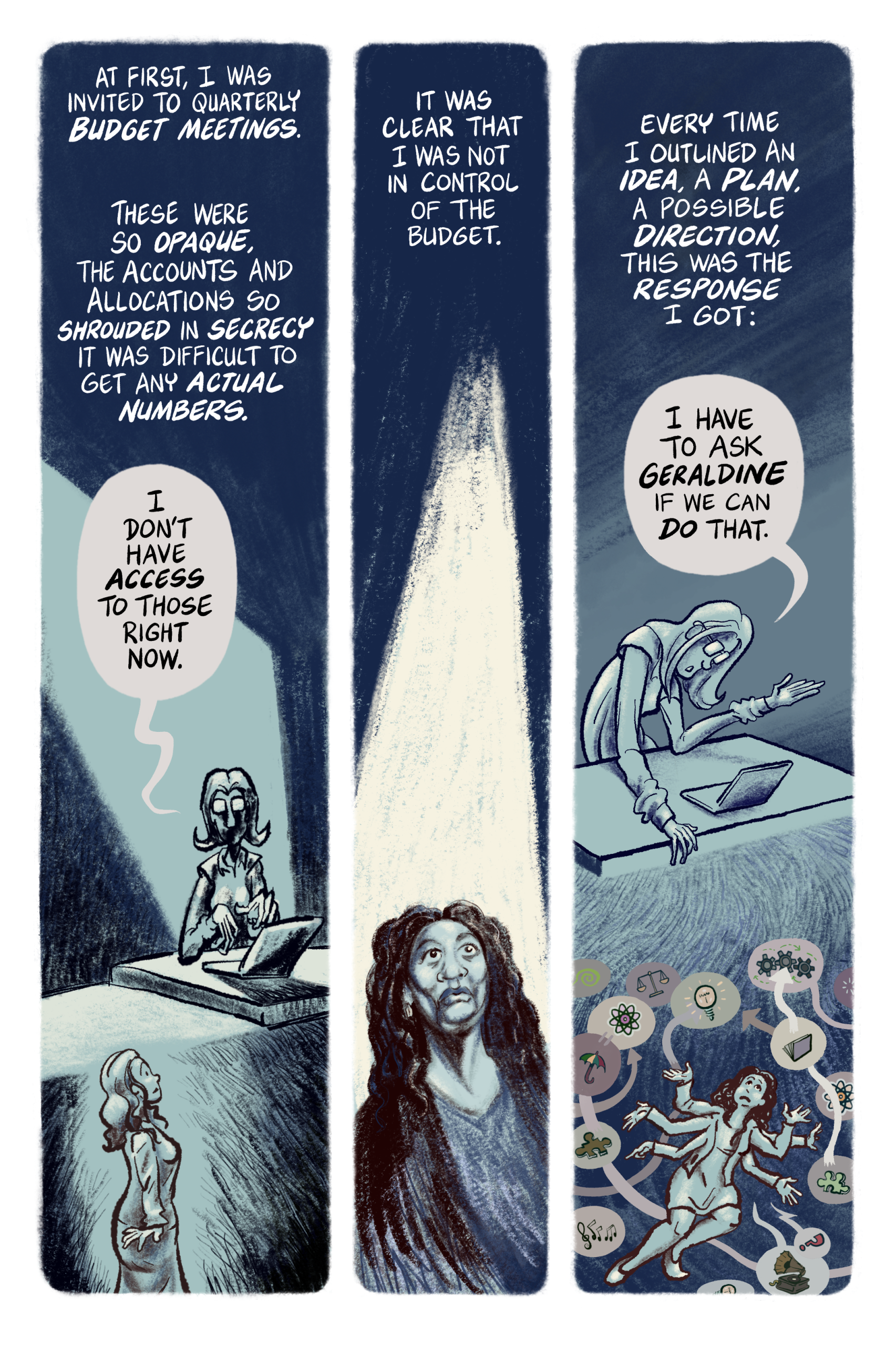
He was more than a stickman at the end, the elliptical way you figured out how to draw him with the hair and eyes, he was perfect. I always wanted to know what happened to him, like had he fathered a child back in London? The reader never found out.
Good question. I want to go back to him with a real story to tell, a realistic continuation but something that I can bite into. I can’t bore myself. If I give myself enough of a loose set of parameters and change him as I go along, then a new Hugo project has a chance to get finished.
The great thing about My Beloved Other was that I could employ lots of different aspects of grammar and oblique corners of comics, plus fun things I’d learned from graphic recording, bring in all kinds of diagrammatic stuff, a different sense of pacing, lots of tricks I’d learned over the years, and also in the USA, to make this uncomfortable stuff into a cohesive whole.
I’m gifted with a low boredom threshold and a great sense of focus. If those two can meet in the middle, it balances out.
And finally, you mentioned a project called Josie and the Blitz? Are you ready to talk about that?
Yeah. My mum was such an interesting character to me, but I think she could be to the world, also. I was her carer for the last three months of her life, so I was back living in my childhood bedroom in the family home and while I was there, she consented to a lot of interviews. She and I, when we talked, often had a gallows sense-of-humor and she told me a lot of stuff about her early life, her perceptions as she was dying, and it was all incredible. The grinding poverty she grew up in is difficult to get a grip on now. It was third world in nature, almost impossible to imagine for us today. She was born in 1931 and she was eight years old when World War II broke out and fourteen, almost fifteen, when it ended. She had very clear memories of VE Day and of the celebrations and national sense of jubilation. She’d been bombed out of her home three times, survived, lost her childhood friend and I believe, suffered from PTSD for the rest of her life. She had very definite ideas about fascism, what it is, and what it does to people. And she was a fantastic raconteur, like my Greek father, both of them always putting the world to rights. She was also a compulsive hoarder, a very creative person stymied by what happened to her, yet who still lived life to the full.
Yeah, hoarding’s a trauma symptom for sure.
Indeed, and we all had to live with it. The idea behind it is a map through that, her childhood and the end of her life. She was a real force of nature. Make it a biography of sorts. Not sure of the structure, yet.
Well, talking to you and having just read My Beloved Other, you carry a tremendous amount of your family stories. It’s like you have your own inner city full of friendly spirits!
They were good people who deserve to be remembered, as do so many, many others who’ve shuffled off this mortal coil, and I feel strongly about continuing to tell their stories. A lot of good people on this planet died doing their duty in two world wars, fighting fascism, to try to preserve their own sense of family and they did it not out of ego, but out of love. Maybe that sounds a bit hippie, not very punk. But that is an underlying motivation, tell stories because you love it, not simply to make money out of it. Do it because it’s the right thing to do and the most human thing to do.
Thank you so much Nick, this has been really special.
The post <i>Deadline,</i> Hugo Tate and sober dogs: An interview with Nick Abadzis, part 2 appeared first on The Comics Journal.


 Hello, my name is Jack Sparrow. I'm a 50 year old self-employed Pirate from the Caribbean.
No comments:
Post a Comment